

Four years ago, we were all in lockdown. It was total confusion. With empty shelves, many wondered if Canada was facing a food shortage and if prices would be affected, of course. With varying health restrictions from region to region worldwide, supply chains were heavily strained.
And almost two years later, it was a catastrophe in Ukraine. Russia’s illegal invasion pushed the prices of most agri-food products to record levels. For example, the price of wheat reached $12 per bushel for the first time in history. Indeed, our food inflation rate reached 11% over a year ago, much to the dismay of consumers here and elsewhere.
Some believe that food prices have doubled since 2020. Well, if you believe Statistics Canada’s data, prices have increased by 21% since March 2020, across all categories. It’s not double, but 21% is a lot. Due to price volatility, many people feel like the increase is closer to 100%. The product that has increased the most is olive oil at 83%, followed by cantaloupes at 76%. These two categories have been affected by production issues related to climate change. Cantaloupes were even affected by a major recall a few months ago. Vegetable oil has increased by 72%, canola oil by 51%, margarine by 67%, and strawberries by 58%. All products are more expensive than in 2020, but there are exceptions.
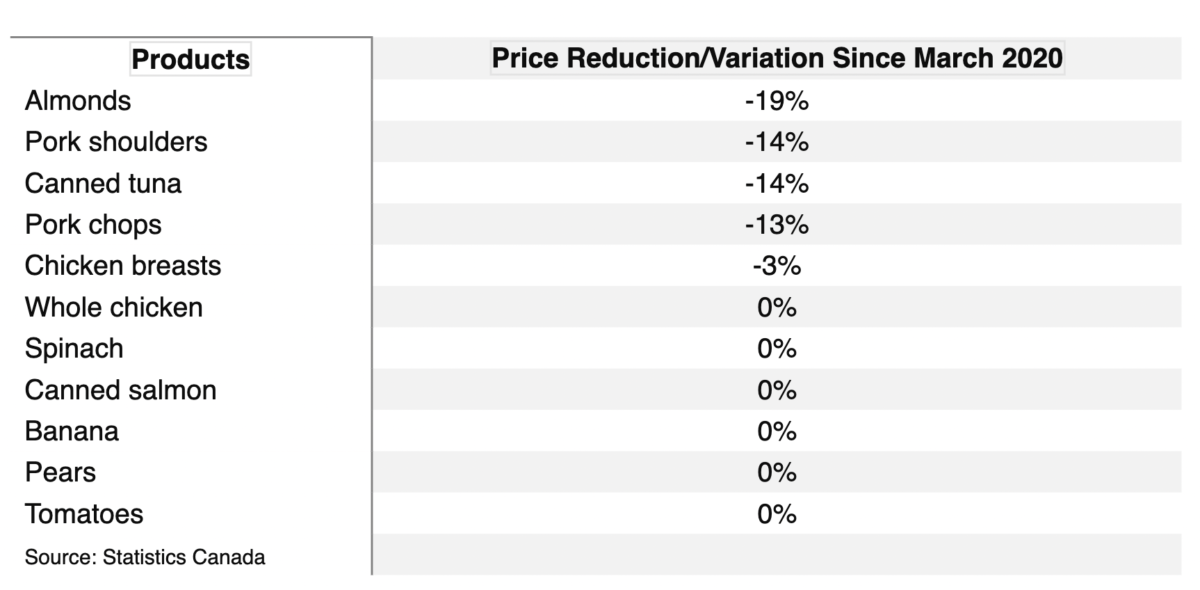
Some will be surprised to learn that some products are cheaper than they were in March 2020, four years ago. Yes. First, almonds are 19% cheaper than in 2020. Pork shoulders are 14% cheaper than in March 2020. Pork ribs are also 13% cheaper. Canned tuna is also less expensive, at 14%. Even chicken breasts, according to Statistics Canada, are 3% cheaper. A year ago, a viral photo of expensive chicken breasts angered everyone, leading to a social media campaign condemning possible grocer abuses. It was panic, or almost.
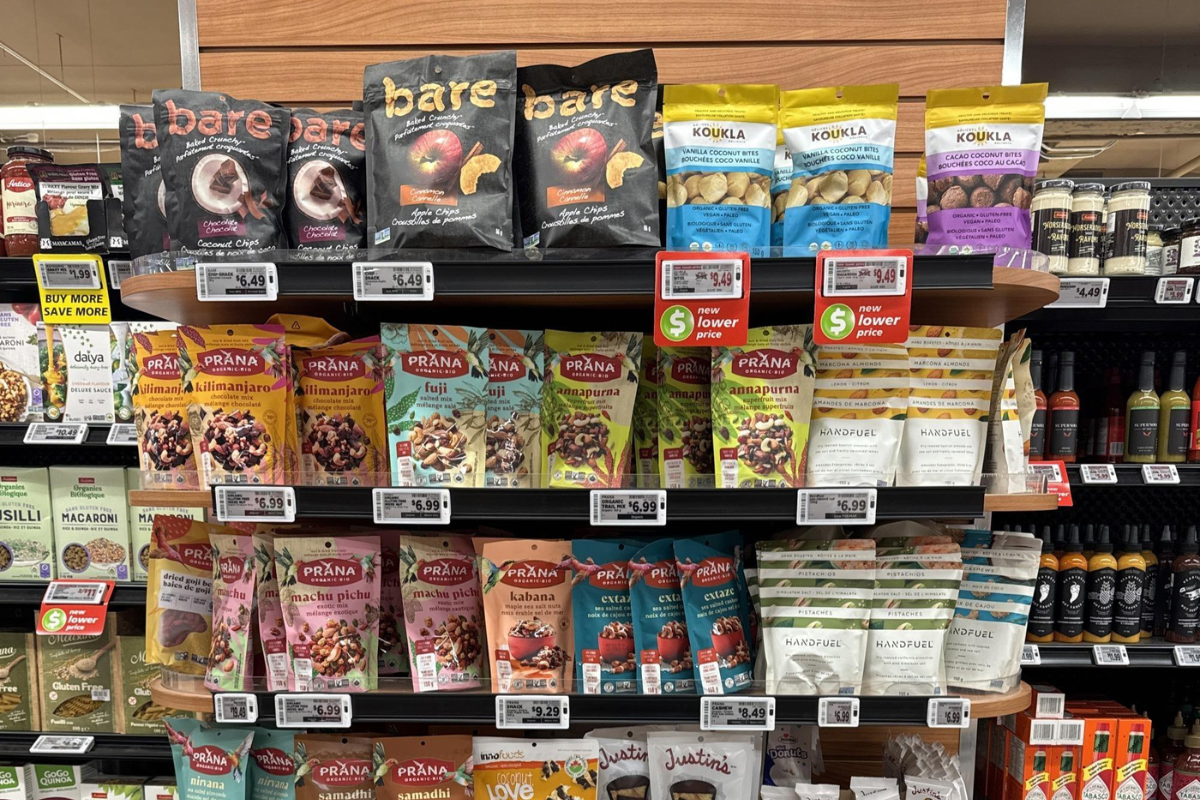
Products roughly the same price are whole chicken, spinach, canned salmon, the famous banana, pears, and tomatoes.
If all this is hard to believe, it may be because our trust in Statistics Canada is not very high. Perhaps.
Despite this data, it is certainly not what people feel when paying for groceries. While some food categories may have some immunity to inflation, likely, our perceptions are often influenced by price volatility. Let’s look at the standard deviations of prices over the past four years.
Since March 2020, the category with the highest standard deviation is beef. Not surprising. Depending on the cut, the standard deviation varies between 4 and 5. The standard deviation of food prices can tell us how much food prices vary compared to their average. Salmon has a standard deviation of over 4. Chicken breasts and vegetable oils also have high standard deviations compared to the average. As well as margarine, tomatoes, peppers, white rice, and mayonnaise.
Interestingly, meats have increased about as much as plant protein products like hummus, tofu, lentils, and dry beans, but popular perception is that meat counter prices have skyrocketed more than elsewhere in the store. Perceptions often deceive us.








I’m not sure where the Statistics Canada information is from overall but if they’re saying canned tuna is 14% cheaper, they’re not shopping where I’m shopping! Years ago, i was able to get the cheaper version – flaked or chunk – for 99 cents on a regular basis. Today, I’m lucky if I can find it for $1.00, and I’m talking any brand name or no name or store brand. More likely, it’s $1.29, $1.49 or more. And that’s not even considering the pricier versions of canned tuna. Also, and I know canned soup is not mentioned, but what used to .49, .59, or .69 cents now goes for anywhere from $1.79 to $3 a tin, and I’m just talking about Campbells basic tomato, chicken noodle or vegetable condensed soups. Similarly, I’ve seen stories saying grocery prices have not increased anywhere near the perception that shoppers seem to have. Well, all I have to say to that is that I get sticker price shock each time I go into the grocery store these days. Don’t even get me going about the prices for a box of cereal!
This article is incorrect. First of all everything and I mean everything has increased in price and decreased in size of item or amount. A simple bag of chips is double the price and they put less in the bag! A cheap pizza has the crust is so thin they look like pitas with sauce. All companies and organizations have cut back on the amount of items and distribution.
Groceries , please understand I shop where the sales are. Our groceries now are double the price! Even the basic noname items are double. I feel that these stats are either completed by people that don’t have financial restrictions or are a sham that want us to believe that changes are being made. When infact people are suffering for food, shelter and basic necessities of life. We the people are in price shock and can’t even live anymore. People are not going to be able to go to work anymore . Then what?? If there isn’t enough food for lunch, gas for transportation, affordability for child care. Even quality of product, production will decrease. It is the people that are valuable. Take care of all individuals and that is where the wealth, strength and power will supersede.