A new report by Trendex North America, a marketing research and consulting firm, said Canadian apparel retail sales growth slowed in 2023, but certainly exceeded the reported 2.2 per cent in total retail sales last year.
The report said the specific growth rate cannot be determined as Statistics Canada changed during 2023 its methodology for reporting apparel sales. But what can be determined by Statistics Canada’s new data set are: Apparel sales totaled C$37.6 billion in 2023; Sales in apparel specialty stores increased a strong 6.8 per cent; and Women’s apparel sales increased at a faster rate than men’s sales.

Randy Harris, president and owner of Trendex North America, said 2023 was a pretty good year for the Canadian apparel market.
“The growth in the apparel market was greater than the two per cent growth in overall retail sales. So there is not a whole lot of indication that consumers were being squeezed by inflation and high interest rates as it affects their apparel purchasing behaviour,” said Harris.
“Apparel was one of the standout categories last year that the government tracks. Women’s apparel grew faster than men’s with all women’s categories increasing. When we look at the specific segments of the market from a channel standpoint, sporting good stores were probably the big winner and that is because of the addition of stores like Decathlon and an increasing apparel offering by retailers like Sporting Life.
“The other outstanding segment is the luxury apparel segment which probably grew at about 10 per cent last year and there were two major reasons for the growth. One is the rebound in tourism, especially from Asia. And number two is the expansion in the number and quality of doors of luxury retailers. So everything that you’re seeing on the Mink Mile (Bloor Street in Yorkville) or in Yorkdale where luxury retailers are expanding their stores or upgrading them is having an effect on sales.”
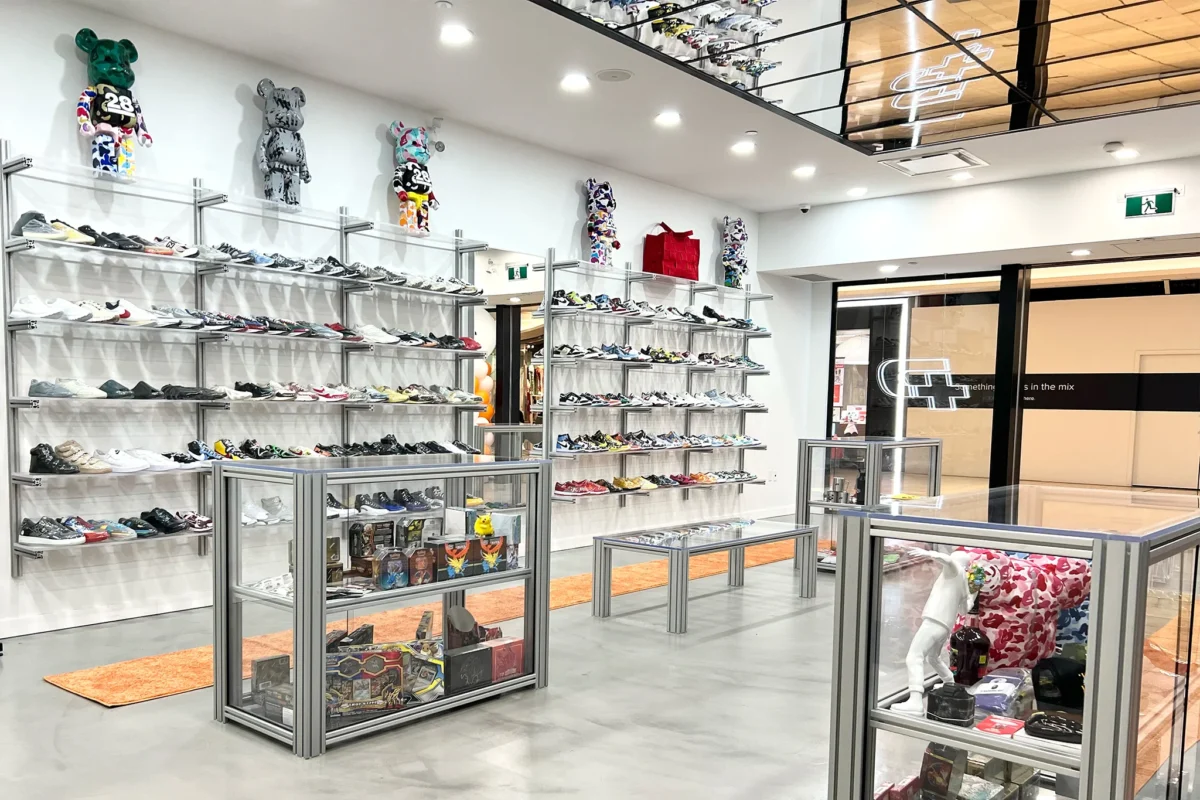
Harris said another segment that is growing is the resale apparel market – the fastest growing segment in the market.
“That’s because there are consumers that have been stretched financially and that segment has gravitated towards the resale apparel segment. Also it’s kind of an in movement with younger people to say I bought my stuff at a Salvation Army or a Goodwill. It’s kind of an in thing right now. And the other thing is there’s some general concern about the issue of sustainability but I’m personally not convinced to the degree that Canadians are actually buying a product because it’s been used as opposed to buying a new product. Conventional wisdom is saying that but I’m not sure that’s in fact as important as people think it might be. I think only time will tell about that.”
Harris said other winners last year were apparel retailers who cut back their inventory levels dramatically. It had a very little effect on their sales but it did improve, relatively speaking, their profitability.
“Retailers really made an effort last year like Reitmans to cut back their inventory levels. It’s very hard to give specific numbers in terms of what an individual retailer did because very few retailers as you can imagine publish those numbers,” he said.
“But we did have an eight per cent drop overall in apparel imports last year which was unheard of. Nobody has talked about that.”
The only loser last year for apparel was ecommerce, said Harris.
“In the United States, apparel ecommerce fell one per cent and we think in Canada it fell between one and three per cent,” he said. “One of the reasons that apparel ecommerce did not grow is that luxury apparel ecommerce did not grow. This is the same thing that’s happening in the United States. People have decided that when it comes to buying a luxury item they would rather go into a store, feel it and touch it and see how it looks for them.
“Now that we have an increasing number of luxury retailers, people want to go into those stores and buy it. They don’t want to order something online when they can go in and try a number of them.
“The other thing that’s interesting is with the growth of SHEIN and Temu, these are low priced ecommerce retailers. So what’s happening is the more the consumer buys them they’re not buying from other traditional apparel retailers whose prices on average are higher. What you have is the same number of units being sold via ecommerce but they’re less dollars.”

Some key findings from the Trendex report:
- Not surprisingly after 2022, a “gang buster” year, sales for men’s apparel in 2023 reverted to a more normal 5.4 per cent growth rate;
- The one men’s statistic for 2023 that didn’t come as a surprise was the 2.0 per cent decrease in men’s suit/sport coat sales. The decrease came on top of an 27.6 per cent increase in 2022 as men returning to the office had the need to either purchase new styles or purchase larger size suits post-COVID;
- Women’s apparel sales (+14.5 per cent) increased at a faster rate than men’s sales (+5.4 per cent). A real surprise was the 19.9 per cent increase in juvenile apparel sales;
- The large increase in women’s apparel sales seemed to have occurred across the board as all women’s merchandise categories registered double-digit increases. Outerwear (+23.3 per cent) and hosiery (+25.4 per cent) registered the largest increases, while dresses/suits (+13.7 per cent) and lingerie (+14.3 per cent) had the smallest growth;
- Sales in apparel specialty stores, the largest channel of distribution for apparel increased 6.8 per cent in 2023 and was up 14.5 per cent from pre-COVID (2019) levels. The largest provincial gains during 2023 in apparel specialty store sales occurred out west in Alberta (+10.3 per cent) and British Columbia (+13.3 per cent). Sales in Saskatchewan (-1.4 per cent) decreased, while Ontario’s growth (+2.1 per cent) was less than Quebec’s (+6.4 per cent);
- Apparel retailer bankruptcies were for all practical purposes nonexistent, however with little notice, many apparel specialty chains closed underperforming stores;
- The number of sporting goods chain doors continued to increase and in the process negatively affected Sport Chek’s corporate share of apparel. Overall the sporting goods channel gained the most market share in 2023
- Non-traditional mall experiences drove mall traffic back almost to pre-COVID levels;
- Luxury apparel sales growth exceeded that for the total market as a result of a resurgence in foreign tourism and the expansion of key luxury apparel sites (e.g. Yorkdale;
- Luxury apparel brands continued to open/expand flagship stores. The result was a decrease in luxury apparel e-commerce sales;
- Better/luxury casualwear was the strongest performing segment of the men’s apparel market;
- Holt Renfrew’s share of the women’s luxury apparel market increased as a result of Nordstrom’s demise and the continued expansion of its own concessions model;
- Winners was Canada’s largest apparel retailer. The 10 largest apparel retailers accounted for 34.7 per cent of the market;
- H&M (+8.9 per cent) and lululemon Canada (+10.5 per cent) recorded the largest increases in apparel sales;
- Thirteen foreign apparel retailers entered Canada in 2023 versus nine in 2022;
- Although it is early, Trendex is forecasting a 2.8 per cent increase in 2024 Canadian retail apparel sales.