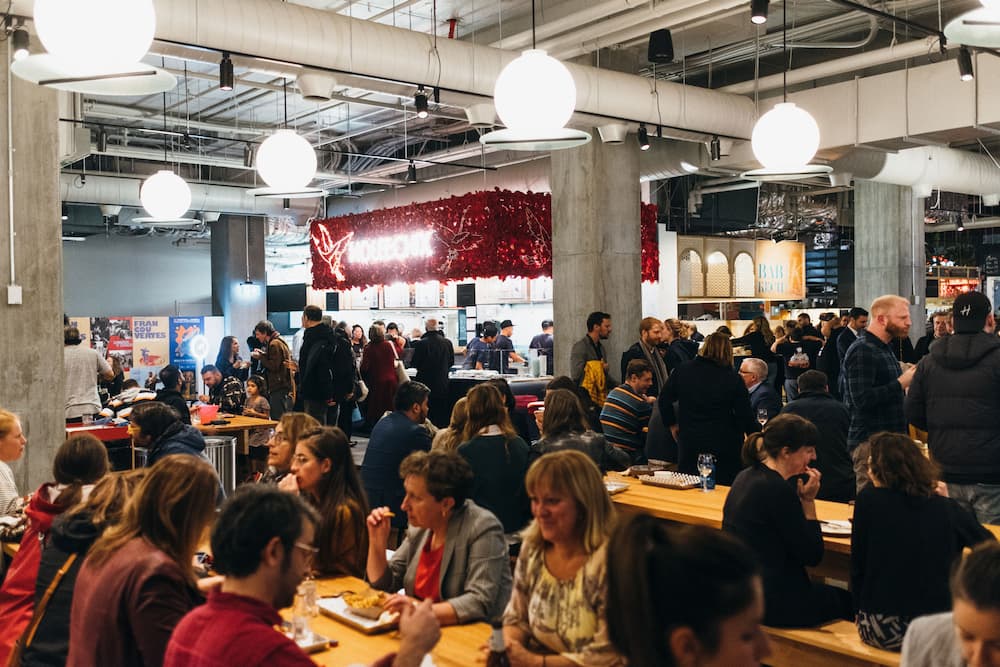
It’s lunchtime on a Thursday and Montreal’s Le Cathcart food hall is bustling. As the smell of fresh pizza fills the air, a man chows down on an enormous Italian sandwich in the sun-filled Biergarten while a woman perched on three-inch stilettos chats with a co-worker over poke bowls. Later in the day Le Cathcart will transform into a trendy bar and fill up with young professionals mingling, drinking elaborate cocktails and dancing to local DJs.
Le Cathcart is one of Montreal’s hottest food halls, a cafeteria-style market concept that has gained momentum across Canadian cities over the last few years. Unlike food courts, which typically comprise an assortment of fast-food operators, food halls are curated with local, artisanal restaurateurs and often serve alcohol. They are a popular spot for social events and gatherings due to the large array of food they offer and the community feeling they foster.
“The food hall trend is well beyond taking off, it’s spreading rapidly, but what’s interesting is that the concepts keep getting better,” says CBRE Montreal’s Christopher Rundle. “Landlords are finding creative ways to fill big spaces on the ground floors and basements of their buildings and making their assets more appealing in the process.”
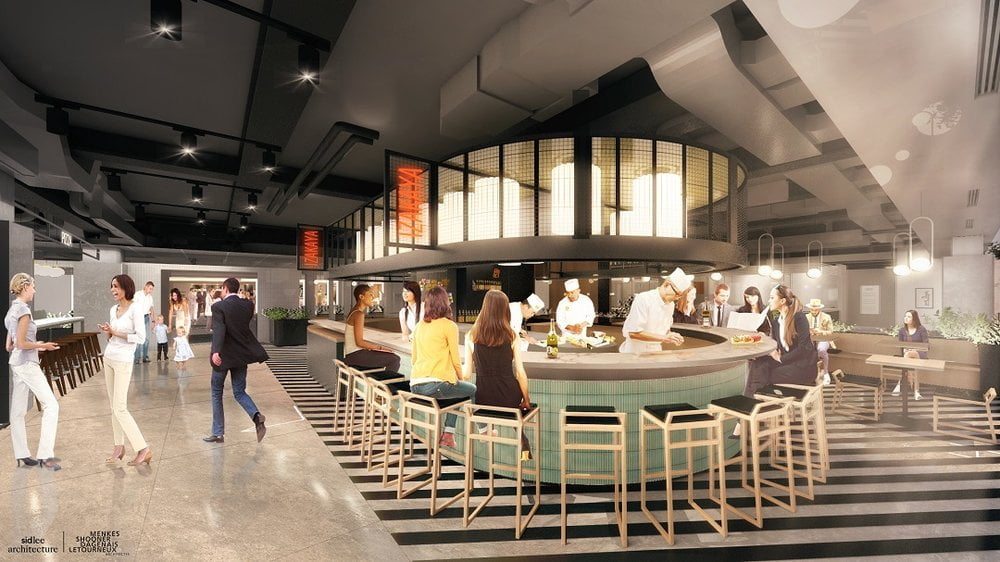
Canada’s Booming Food Hall Scene
Le Cathcart is one of several food halls that have opened in Montreal in recent years. It was preceded in 2019 by Le Central, a gastronomic hub in Montreal’s Quartier des Spectacles and Time Out Market, a trendy Lisbon-based concept that opened in Montreal’s Eaton Centre. Royalmount’s Le Fou Fou is on track to become Montreal’s next food hall sensation when it opens later this summer, with 12 eateries, four bars and 900-plus seats.
“Food halls have great atmosphere and hip offerings that attract big crowds,” says Rundle. “That’s why so many office and mall landlords are opting for them these days.”
Montreal isn’t alone in seeing the growth of the food hall trend. North Vancouver boasts The Quay Market and Food Hall at Lonsdale Quay Market, a waterfront carnival-style marketplace that opened for Expo ‘86. The market has recently been revitalized with new seating and food offerings and a bar featuring local brews on tap.
Calgary has First Street Market, a fully licensed food hall designed by Calgarians for Calgarians that serves local beers and cocktails, and District at Beltline, part of a mixed-use complex in one of the city’s up-and-coming neighbourhoods.
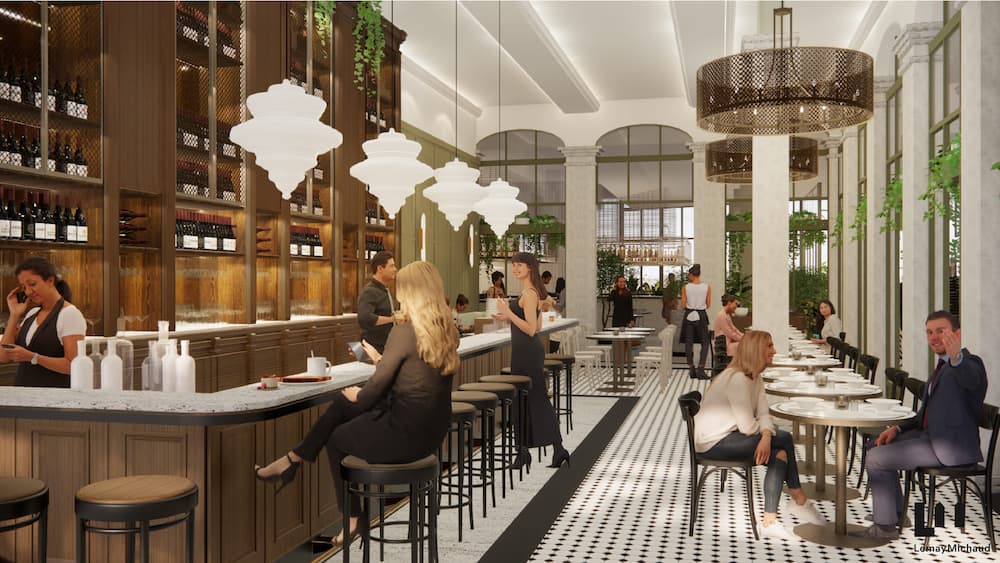
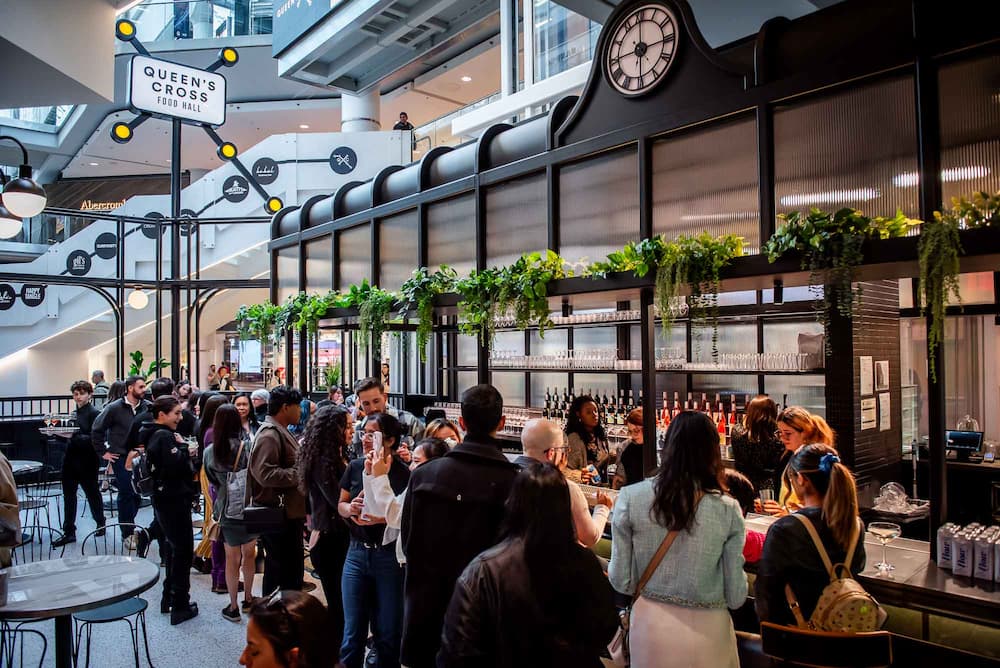
Toronto saw PATH-adjacent Chefs Hall open in 2018 and TABLE Fare and Social open on the fourth floor of CIBC Square, a downtown office tower, in 2023. These were followed by the launch of three food halls in 2024 alone: CF Toronto Eaton Centre’s Queen’s Cross Food Hall opened in April followed by The Well’s approximately 50-vendor Wellington Market in May and Waterworks Food Hall in July.
Ottawa also has a food hall, Queen St. Fare, featuring one of the city’s top mixologists and six local food vendors, including a Mexican street food stall by Top Chef Canada winner René Rodriguez.
“Food halls are not the food courts you grew up with,” says CBRE Urban Retail Team’s Alex Edmison, whose team brokered the retail deals at The Well. “They pull people in with authentic local food vendors, cool designs and atmospheres that make you want to be there.”
Ingredients for Success
Food halls may be on the rise but Edmison says they require certain circumstances to succeed. “They can work to differentiate large-scale developments such as malls, office complexes and mixed-use properties,” says Edmison. “They can help sell the vision for a property and draw people to less centralized locations by providing an experience they can’t get anywhere else.”
For landlords, transacting with independent food retailers can be more labour-intensive than doing business with international fast-food brands that have extensive real estate experience and know how to build spaces efficiently. “Food halls are just not scalable like traditional food courts,” says Edmison. “But under the right circumstances, they can add a lot of value to a development or property. We can help clients determine whether a food hall is feasible for their project.”
Food halls can require larger up-front investments on behalf of the landlord, who may have to contribute more resources towards the original build-out. Alternatively, they can head lease the space to groups such as Time Out, which manage the process of sourcing the tenants and getting them open for business. Under either scenario, food halls can be attractive for smaller restaurant operators who have less experience building out spaces and may not want to compete with large franchises that can offer quicker and cheaper food options.
“It’s pretty much plug-and-play and involves minimal start-up costs,” Rundle says. “Food halls enable restaurant operators to focus on what they do best and provide the public and nearby tenants with a cool food venue.
“Whether or not food halls will bring about a dining revolution is yet to be seen.”
Preliminary success is encouraging retail and office landlords to double down on this concept to help revitalize properties and increase utilization post-pandemic. Whether the trend has legs is unclear, but in the meantime, eat and drink up, Canada!
(This content comes from CBRE’s Advantage Insights blog, your one-stop source for news and views from across the Canadian commercial real estate landscape.)