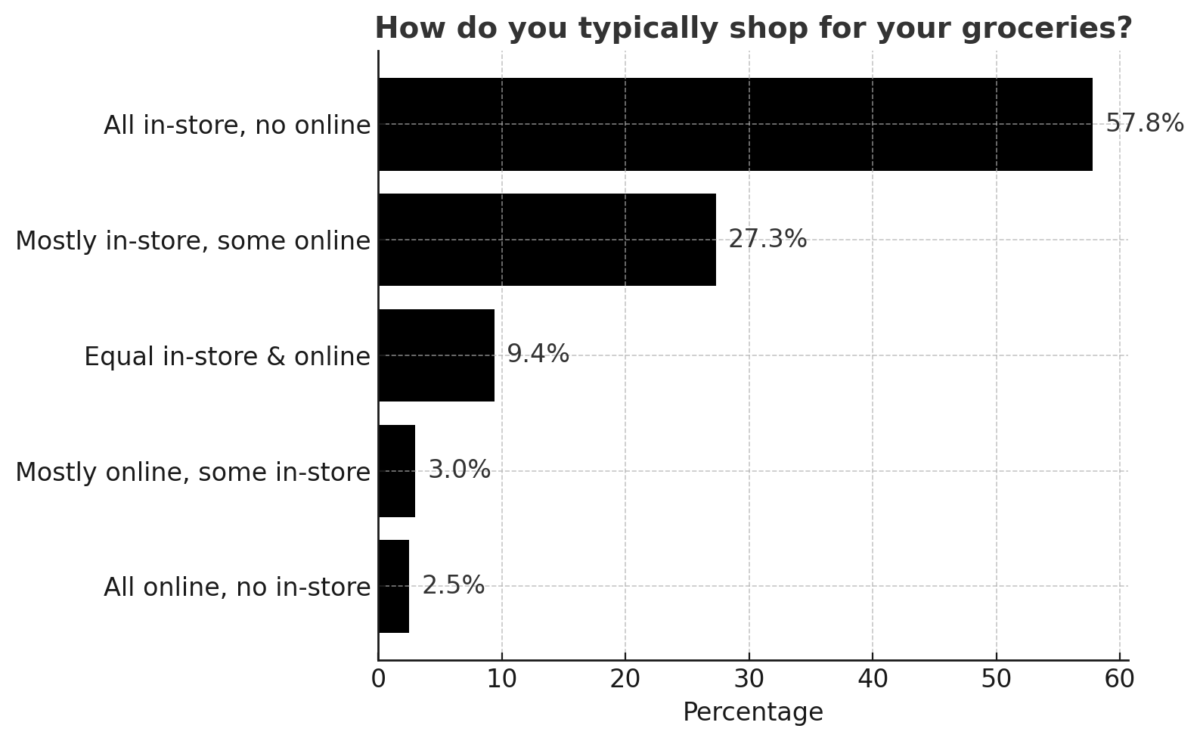
Despite the digital transformation reshaping industries worldwide, grocery shopping in Canada remains deeply rooted in traditional in-store experiences. A recent survey by Dalhousie University and Caddle, which polled 2,501 Canadians, found that 57.8% of respondents still do all their grocery shopping in-store without using grocery apps, while only 2.5% rely exclusively on digital platforms. Additionally, 3.0% primarily shop online but still visit physical stores occasionally. This data underscores a clear divide between technological adoption and consumer preferences, reflecting deeper economic and behavioural trends in food retail.
Nearly 60% of Canadians still prefer to see and touch fresh food before purchasing, reinforcing their hesitation to fully embrace digital grocery shopping. Trust in product selection, particularly for fresh produce, meat, and dairy, remains a key reason why many consumers continue to favour a hands-on approach. Price sensitivity amid rising food costs also plays a role, as shoppers want to ensure they are getting the best value. Many remain skeptical about entrusting the selection of perishable goods to third parties, fearing lower-quality items, improper substitutions, or poor handling.
Online Grocery Shopping is More Popular for Non-Perishables
Survey data suggests that consumers are more comfortable purchasing non-perishable items online. Pantry staples such as rice, pasta, and canned goods are the most frequently ordered online, making up 32.6% of digital grocery purchases. Snacks and beverages follow at 13.0%, while ready-to-eat meals account for 12.2%. Fresh produce, despite consumer hesitancy, still represents 11.9% of online grocery orders. However, dairy and meat—two categories where freshness is critical—make up just 4.4% and 3.3% of online purchases, respectively. The fact that fresh and perishable goods remain among the least frequently ordered categories highlights ongoing consumer reluctance to trust digital grocery platforms for items requiring quality assurance.
Economic factors are another significant barrier to online grocery adoption. While the convenience of digital shopping is appealing, the additional costs—such as delivery fees, price markups, and service charges—deter many budget-conscious consumers. With food inflation remaining a major concern in Canada, shoppers are focused on maximizing savings through in-store discounts, flyer promotions, and price comparisons across brands. Many are unwilling to pay extra for a service they do not fully trust, especially when alternative shopping methods allow them greater control over spending.
Common Challenges With Online Grocery Shopping
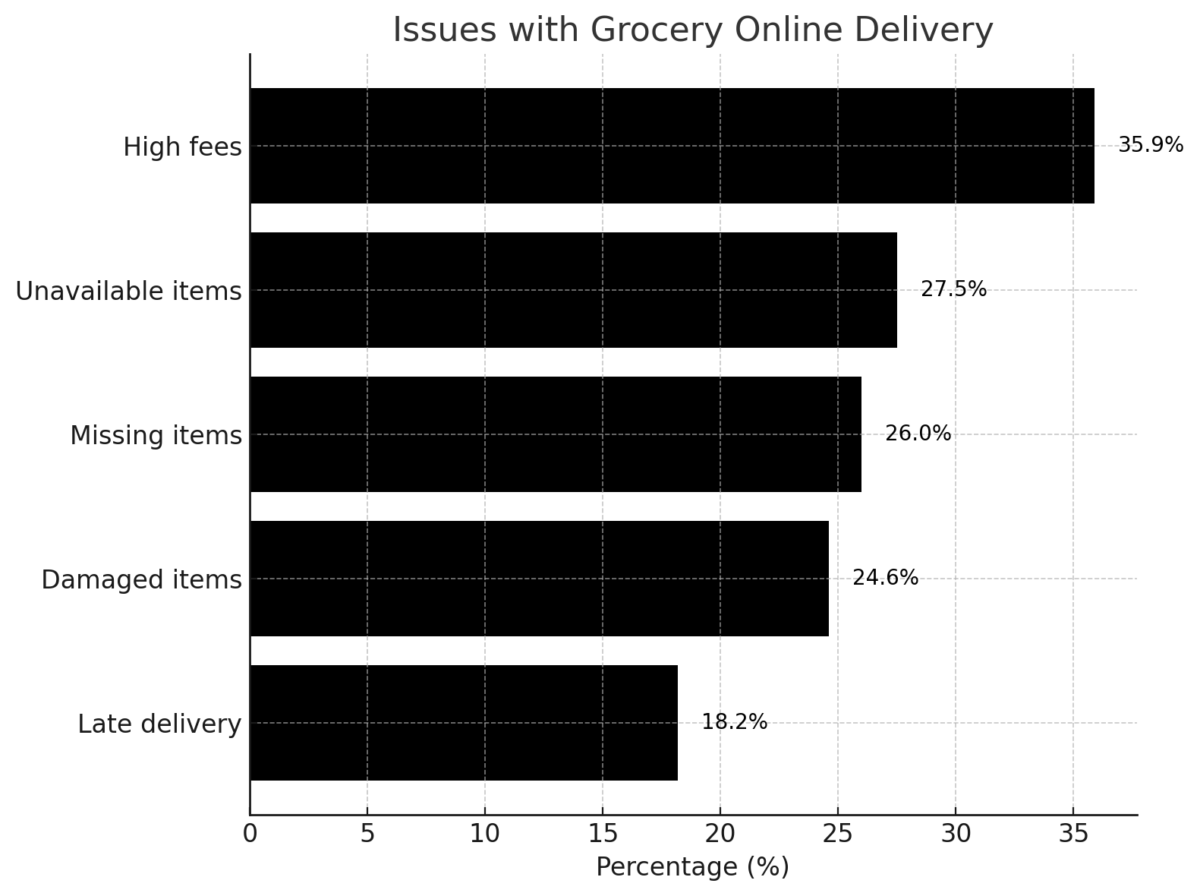
Challenges with online grocery shopping extend beyond cost concerns. According to survey data, the most common complaint among consumers is high delivery fees, cited by 35.9% of respondents. Other key frustrations include substituted or unavailable items (27.5%), missing items (26.0%), and poor packaging or damaged goods (18.2%). Additionally, 14.1% of respondents reported late or missed deliveries, reinforcing skepticism about the reliability of grocery apps. While 24.6% of consumers stated they had no significant issues, the majority still encountered at least one problem, highlighting persistent logistical inefficiencies and consumer dissatisfaction with digital grocery services.
When choosing a grocery delivery service, price is the most important factor for 25.3% of consumers, followed closely by delivery fees. Convenience, delivery speed, reliability, and customer service also influence decision-making, though to a lesser extent. The availability of preferred brands and participating retailers remains another key factor, suggesting that online grocery shopping in Canada is still limited by the presence and reach of digital platforms.
Currently, online grocery sales in Canada account for an estimated 4.5% of total grocery revenue, representing nearly $9 billion in sales. However, compared to other countries, Canada lags behind in digital grocery adoption. In the United States, online grocery sales represent between 10% and 15% of total grocery spending, a significantly higher proportion than in Canada. China has emerged as a global leader in this space, with a highly digitized retail infrastructure enabling widespread online grocery shopping. In Europe, urban centres like London and Paris have seen higher adoption rates, while more rural areas exhibit shopping behaviours similar to those observed in Canada.
The Future of Grocery Shopping in Canada
Looking ahead, grocery shopping in Canada is likely to evolve gradually rather than shift dramatically toward digital platforms. For online grocery services to gain greater traction, they must enhance their value proposition by reducing delivery fees, offering competitive pricing, and improving customer experience through personalized AI-driven recommendations. Stronger loyalty programs and strategic partnerships with grocery retailers could also help drive adoption.
Major Canadian grocers such as Loblaw, Sobeys, and Metro have already invested in automated fulfillment centers and frictionless checkout technology, signaling that a hybrid model may be the future of food retail. As food affordability remains a top concern for Canadian households, any technological innovation in grocery shopping will need to strike a balance between convenience and cost efficiency.
Rather than a binary shift between in-store and online shopping, the future of grocery retail in Canada will likely be a convergence of both. Consumers will continue leveraging the advantages of each, depending on their needs, preferences, and financial realities.