

Retail strategist Carl Boutet believes Ruby Liu’s ambitious plan to revive Canada’s former Hudson’s Bay locations under a new retail banner is high on vision but must now face the realities of scale, risk, and stakeholder alignment. Speaking with Retail Insider, Boutet stressed that Liu’s next steps must be patient, strategic, and collaborative if her vision is to avoid becoming another Canadian retail cautionary tale.
“Unfortunately, this is a game of patience,” said Boutet. “This can’t be all fireworks at once.”
Liu, a billionaire real estate investor and entrepreneur originally from China, has already secured three Hudson’s Bay leases in British Columbia at malls she owns for $6 million, including Tsawwassen Mills, Mayfair Centre, and Woodgrove Centre. Her larger aim is to acquire 28 former Hudson’s Bay and Saks locations and repurpose them into an experiential department store-style format branded under her own name.
But opposition is mounting. Of the remaining 25 leases, 23 landlords, including some of Canada’s largest, such as Cadillac Fairview, Oxford Properties, and Primaris REIT, have voiced serious concerns. In court documents, some landlords described Liu’s approach as opaque and lacking meaningful disclosure. Others questioned the financial assumptions behind her break-even timelines.
The Need for Measured Steps
Boutet says Liu’s strategy would benefit from an incremental approach.
“If she can show it works in one or two locations, that buys her goodwill. You don’t need to win the entire country overnight,” he said.
There’s precedent, Boutet noted, for rolling out retail concepts in stages, learning from each market before expanding. “This isn’t Asia where you can launch 25 stores at once because you have the population base. In Canada, our markets are smaller and spread out. The dynamics are different.”
He added that landlords will want more than an idea. They need confirmed retail partners, architectural renderings, and strong financial backing to feel confident.
“They’re managing pension funds,” he explained. “You could have a million signatures on a Change.org petition, and it wouldn’t outweigh the fiduciary responsibility these firms have to their investors.”
The Scale Challenge
A key concern is scale — not whether Liu’s concept can work in three malls, but whether it can be expanded nationally.
“Can this work in 25 places, all at once, across the country?” asked Boutet. “That’s the question landlords are asking.”
He suggested that Liu would be better served by focusing her initial energy and capital on a smaller footprint to create a successful prototype. That store could then become a calling card to win over skeptical landlords elsewhere.
Boutet noted, “Get that one location running, build momentum, and then let landlords come to you. You don’t want to force a square peg into a round hole.”

A Potential Cultural Shift for Malls
Liu’s concept, which draws inspiration from Asian department stores, includes retail, dining, play zones, and event spaces. This mix is unorthodox for traditional Canadian department stores but reflects a broader industry move toward experience-driven shopping environments.
“Larger landlords are thinking about mixed-use development already, including residential, healthcare, hospitality,” Boutet said. “They’re open to change, but it has to be tied to a viable business case.”
Boutet believes that if Liu’s concept proves it can drive traffic and revenue, many traditional prohibitions in mall leases, like those restricting food service or children’s areas, could be negotiated.
“If it attracts more people to the property, the co-tenancy clauses start to look more flexible,” he said. “But that requires goodwill. You won’t get that if you’re suing the landlord.”
Avoiding Hostile Lease Takeovers
Much of Liu’s current plan hinges on whether courts will force landlords to honour older lease agreements, even if they prefer not to. Boutet warns that this strategy could backfire.
“If she wins the leases in court, but has to operate in a hostile landlord environment, that’s not a good foundation for success,” he said. “These landlords know how to make life difficult without breaking a single clause in the contract.”
Examples like garbage delays or deferred maintenance might seem petty, but they can impact customer experience and tenant morale.
“Your best bet is to build goodwill. You want to enter spaces where people are rooting for you to succeed—not waiting for you to stumble.”
Beyond Department Stores
Boutet cautions against framing Liu’s venture as a department store revival.
“This isn’t a department store in the traditional sense,” he said. “It’s a curated, multi-brand environment. Think of it as a mini-mall rather than a department store.”
That distinction could help Liu overcome some of the skepticism. “When you say ‘department store,’ people think of risk and failure. But there’s a real appetite for curated, immersive retail experiences, especially ones that bring something new to the community.”
Still, the financial model needs clarity.
“You can’t just count on brands to build out their own spaces and hope the infrastructure takes care of itself,” Boutet added. “Some of these buildings are mechanically outdated. Just getting the lights and plumbing working again could eat up your renovation budget.”
The Reality of CapEx and ROI
One of the red flags raised by landlords is Liu’s claim that she could break even within 18 months of launch. Boutet calls that “unrealistic.”
“From what we’ve heard, the numbers just don’t make sense. Landlords have seen many business plans over the years. This one didn’t pass their smell test.”
While Liu has reportedly submitted budgets to some landlords, Boutet says what’s missing is a credible cost breakdown that considers the mechanical condition of the stores and the required investment to bring them up to modern standards.
“She may be underestimating the CapEx,” he said. “Even if she expects brands to build out their spaces, the base building costs will be significant. And landlords know exactly what’s wrong in each property.”
A Time for Polish and Strategy
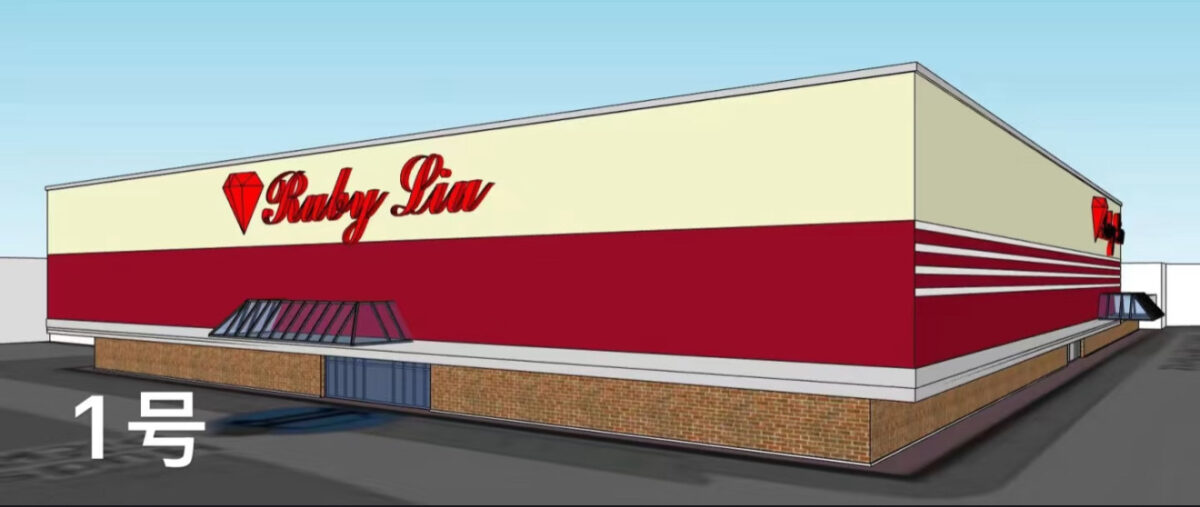
Aside from business modelling, Boutet notes that Liu’s branding and visual identity require refinement.
“There has to be a level of polish if you’re asking for hundreds of millions in real estate,” he said. “This isn’t a pop-up on Robson. You’re asking for buy-in at a national scale. That means hiring the best branding people in the business.”
He draws a comparison to Tina Lee and T&T Supermarket: “Tina’s social media may feel spontaneous, but it’s backed by the strength of Loblaws and a proven business model. Ruby doesn’t yet have that scaffolding behind her.”
A Strategic Path Forward
In Boutet’s view, the path forward is clear, but difficult.
“Start with one great store,” he said. “Make it amazing. Get brands and customers excited. Prove that you can operate at a high level.”
That store could become a prototype for further expansion, building trust with landlords, suppliers, and investors. And while Liu has the advantage of being a private investor with significant capital and autonomy, Boutet warns that even a billion dollars doesn’t guarantee success.
“The retail environment is brutal,” he said. “If brands with 50-year track records are struggling, this is no time for shortcuts.”
Still, he says Liu has already succeeded in one respect: “She’s become a household name in Canada. That’s impressive. But now, she has to deliver.”








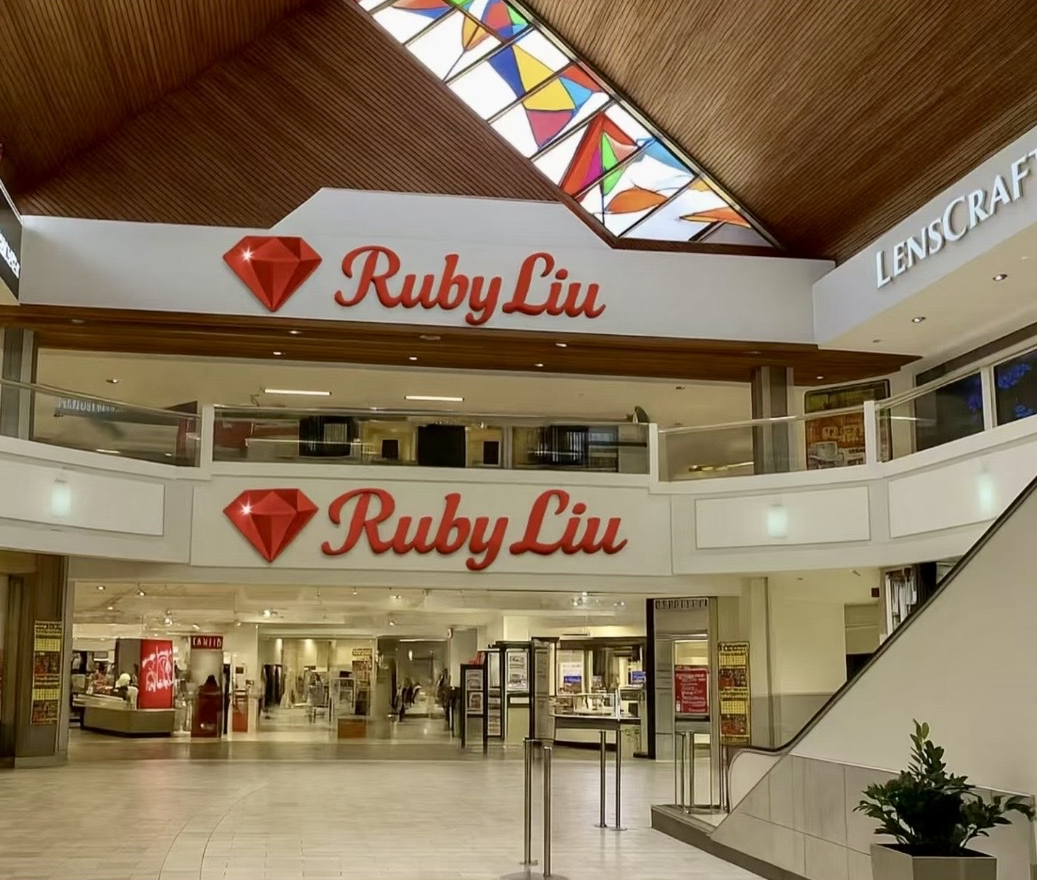
Naming the stores after herself is narcissistic. If she kept it simple and just called it “Ruby”, she might get more approval. Also, people in Canada are wary of Chinese investors with a lot of capital, especially with their potential for CCP ties. I don’t believe she will find success across Canada based on these issues, especially under the name “Ruby Liu”. No offense, just my personal opinions. For reference, I’m Canadian born Chinese and in my 40’s. If Target couldn’t make it work here, I think she will have bigger issues under a relatively unknown name. Good luck winning Canadians over, though.
One with big dreams like Ms Liu would think that learning about the Canadian and American marketplace would have done minimal background homework of what works and doesn’t.Re:Her LOGO Font.Saks took a nosedive when they changed theirs and Recovered it’s clients when they changed it back to its classic elegant signature. IMHO
Ms Liu s font reflects Pokemon quality in visual presentation. Anchors away…and so do the customers;)
This is never gonna happen, and is nothing but a pipe dream. Canada is not Asia, and her format sounds like a glorified Chuck E. Cheese. likely one of the reasons there is so much resistance from landlords to allow her to have the leases to some prime real estate.
Chucky have you been to Richmond Chinatown
is that really the store name and logo….good god
Canada isn’t China, we have a completely different culture and customer experience. Start with the name, i believe that she isn’t aware that many Canadian avoid anything from this specific country. Before you can start such type of business in a different country you come from, make a lot of research and a great business plan. She didn’t have produced either of those things it looks like.