German fashion brand Marc Cain is positioning for a broader Canadian expansion as Jessica R’Bibo, President of Marc Cain Canada and North America, leads a new North American growth strategy centred on premium shopping centres, elevated customer experiences, and the continued rise of understated luxury fashion.
R’Bibo joined Marc Cain earlier this year following a 23-year career with Michael Kors and was quickly promoted to oversee the company’s Canadian and U.S. operations across both retail and wholesale channels. Her appointment comes at a time when many premium fashion brands are reassessing how consumers shop, where physical stores matter most, and how luxury customers increasingly gravitate toward quality and longevity over trend-driven dressing.

“The customer today is shopping much more intentionally,” said R’Bibo. “She’s looking for quality, craftsmanship, and pieces that feel refined without being overly logo-driven.”
Founded in Germany more than 50 years ago, Marc Cain has developed an international following through collections rooted in European craftsmanship, sportive leisurewear, knitwear, outerwear, and elevated everyday dressing. The brand has built a loyal customer following through its combination of refined design, quality fabrication, and a distinctly European fashion sensibility. Marc Cain currently operates seven Canadian stores, including a recently opened location at Royalmount in Montreal, alongside one outlet store and a substantial wholesale business through independent fashion retailers.
Ontario and Western Canada Lead the Next Phase of Growth
R’Bibo said Marc Cain’s next phase of Canadian expansion will focus primarily on Ontario and Western Canada, with Vancouver representing one of the company’s most significant opportunities.
“There’s tremendous opportunity in Western Canada,” she said. “Vancouver remains a very important market for us, and Ontario continues to be a major focus as well.”
The company continues to evaluate additional locations across the country. Rather than expanding aggressively, R’Bibo said the company is taking a highly disciplined approach centred on demographics, lifestyle patterns, and long-term brand positioning.
“I like to understand a market before making decisions,” she said. “You need to study how people shop, what their lifestyle looks like, and what they expect from a premium fashion brand.”
Her long-term vision includes growing Marc Cain to approximately 15 Canadian stores while simultaneously expanding the brand’s U.S. footprint. Luc Lavigne of brokerage Oberfeld Snowcap is working with Marc Cain on the expansion.
Top Shopping Centres Remain Essential in Canada
While some luxury brands continue experimenting with high-profile street-front retail, R’Bibo believes Canada remains fundamentally driven by dominant enclosed shopping centres that concentrate affluent consumers and destination retail.
“Top shopping centres continue to matter enormously in Canada,” she said. “Properties like Yorkdale, Sherway, Pacific Centre, and Oakridge attract the customer we’re targeting.”
She said accessibility, parking convenience, climate protection, and concentrated retail density continue to make leading enclosed malls especially important for premium fashion retailers operating in Canadian markets.
The strategy also reflects broader shifts taking place across Canadian retail real estate. As traditional department stores continue to disappear, premium brands are becoming increasingly selective about physical locations while placing greater emphasis on direct customer relationships and experiential retail environments.
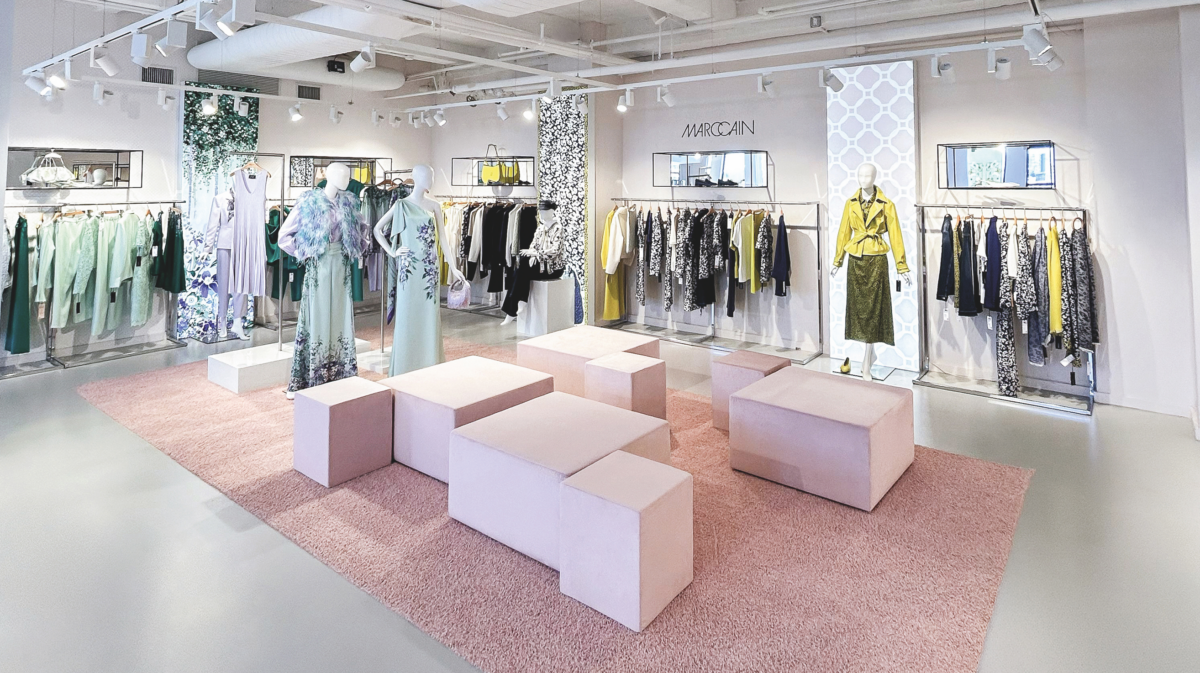
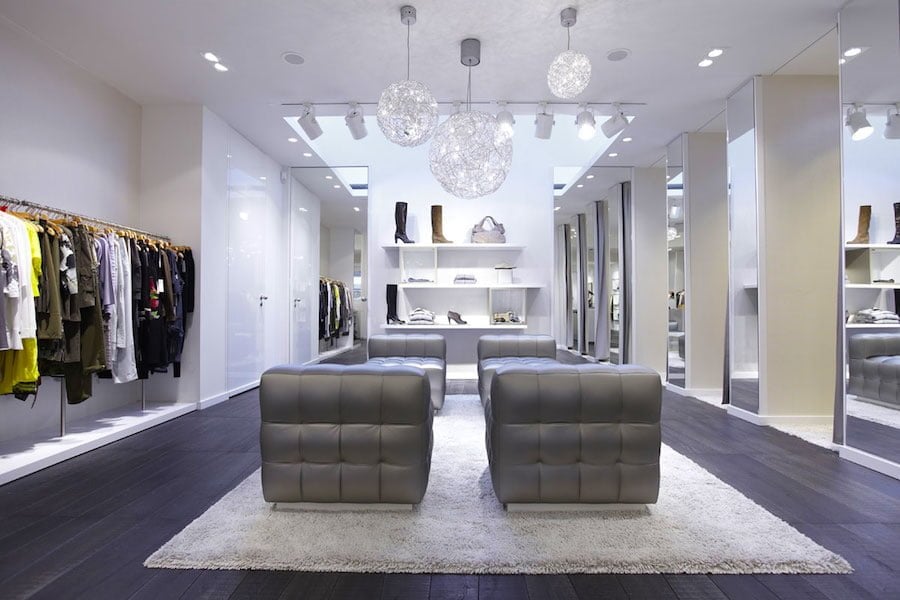
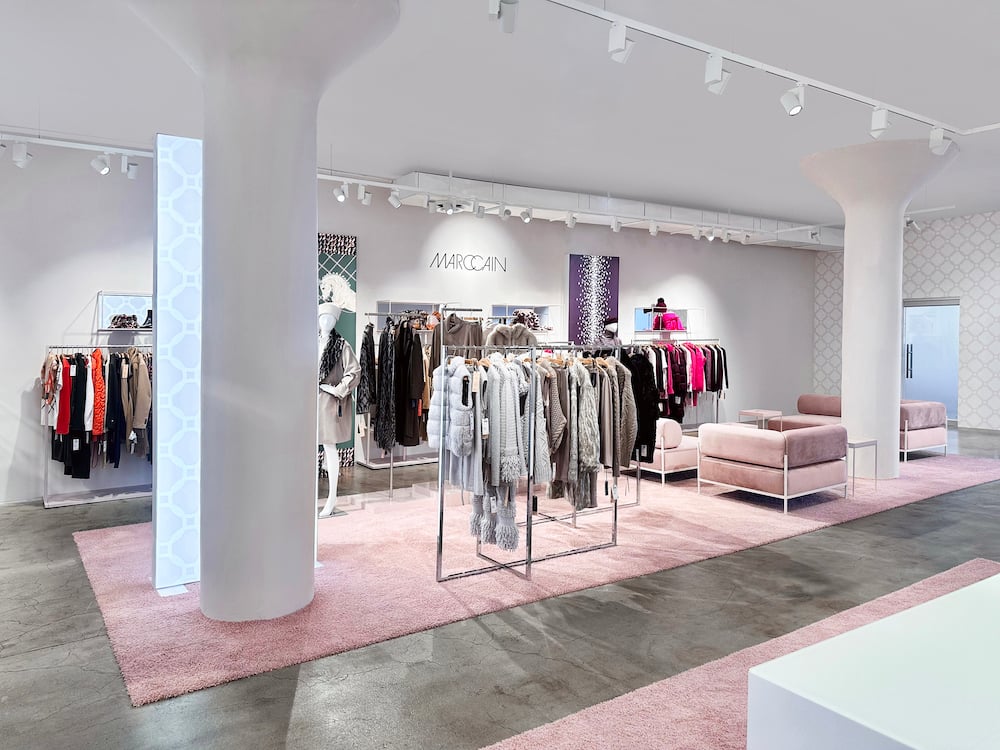
Marc Cain stores generally perform best within the 1,800-to-2,100-square-foot range, according to R’Bibo, allowing the company to fully present its broader lifestyle assortment spanning ready-to-wear apparel, handbags, footwear, outerwear, scarves, and accessories.
Understated Luxury Continues to Shape Fashion Spending
R’Bibo describes Marc Cain’s core customer as a professional woman, generally aged 40 and older, who values tailoring, consistency, craftsmanship, and sophisticated wardrobe investment pieces over overt branding or fast-moving fashion cycles.
“She wants an elevated wardrobe that feels sophisticated, wearable, and timeless,” said R’Bibo. “Our customer appreciates exceptional fabrication and pieces that can remain relevant beyond one season.”
That positioning aligns closely with growing demand for understated luxury, a shift that has seen many consumers gravitate toward refined silhouettes, exceptional quality, and longer-lasting wardrobe investments over highly logo-driven fashion.
Marc Cain’s European heritage remains central to that identity. The company continues to manufacture knitwear in Germany through its own production facilities, something R’Bibo said continues to resonate strongly with North American consumers seeking authenticity and craftsmanship.
“There’s trust associated with European craftsmanship,” she said. “Customers appreciate understanding where the product is made and the quality behind it.”
Outerwear and Knitwear Anchor the Canadian Business
Although Marc Cain is widely recognized for women’s apparel, the company has evolved into a broader lifestyle brand encompassing multiple categories.
Outerwear and knitwear remain cornerstones of the Canadian business, driven both by climate and by the company’s longstanding expertise in those segments.
“Canada and Germany have very similar climates, and Marc Cain has always been exceptionally strong in outerwear and knitwear,” said R’Bibo. “Those categories continue to resonate very strongly with Canadian customers.”
The company has also expanded its Glam division, focused on elevated occasion dressing and sophisticated after-five fashion, reflecting renewed consumer interest in special-event and evening wardrobes.
“There’s renewed interest in dressing up again,” she said. “Customers are looking for refined pieces that work for dinners, events, and special occasions.”
Localized Merchandising Allows Greater Market Flexibility
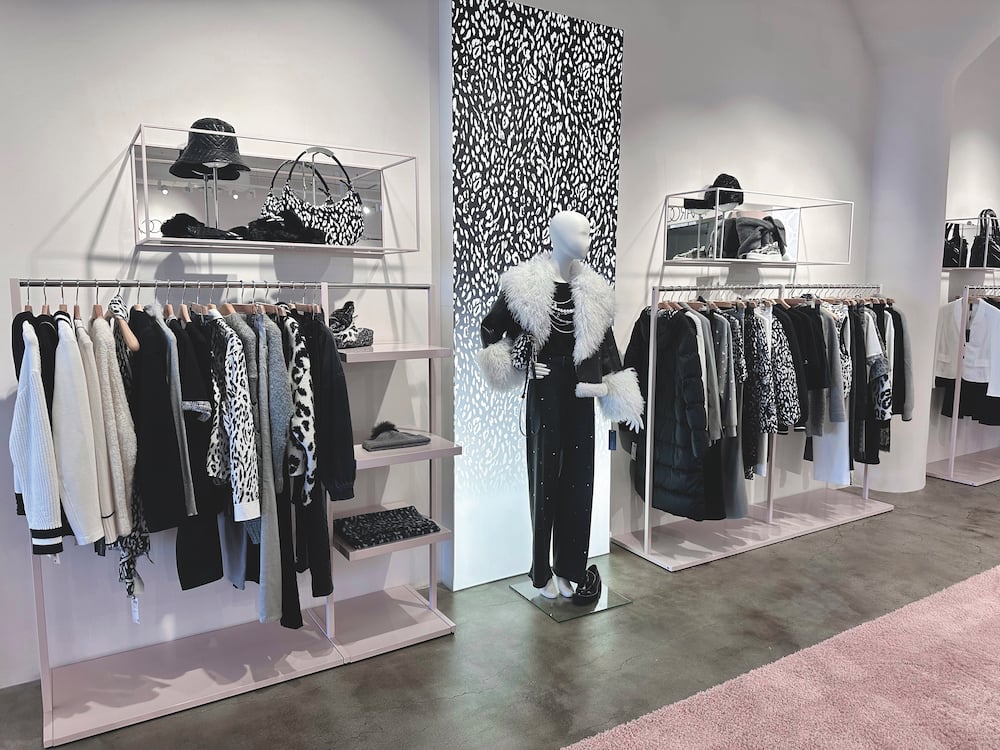
One of the operational approaches R’Bibo emphasized is Marc Cain’s localized merchandising strategy, which gives individual stores greater flexibility in tailoring assortments to local clientele.
Rather than standardizing assortments nationally, store managers actively participate in buying decisions and help shape selections based on regional market preferences.
“What works in one city may not work in another,” said R’Bibo. “Our teams know their clients very well, and assortments are built around those local needs.”
That flexibility allows stores to respond more directly to regional differences in climate, colour preferences, sizing, lifestyle, and professional dressing expectations.
R’Bibo said those distinctions are particularly important in Canada, where fashion preferences can vary considerably between Montreal, Ottawa, Toronto, and Vancouver.
Independent Retailers Continue to Play a Key Role
Even as Marc Cain expands its direct retail footprint, independent boutiques remain central to the company’s Canadian strategy.
“There’s a very strong wholesale business in Canada, particularly in Ontario and Quebec,” said R’Bibo. “Many of those retailers have carried the brand for decades.”
Retail currently represents roughly 35 percent of the Canadian business, with wholesale accounting for the balance. R’Bibo said preserving that balance remains an important priority moving forward.
“Our wholesale partners in Canada and the U.S. are extremely important to us, and we highly value those long-standing relationships,” she said. “We want to continue growing together while listening closely to the evolving demands and expectations of today’s consumer.”
The continued importance of wholesale also reflects the structure of Canada’s premium fashion market, where independent boutiques often remain critical discovery channels for European luxury and contemporary brands.
Personalized Service and Experiential Retail Regaining Importance
R’Bibo believes premium retail is increasingly shifting back toward personalization, styling, and experiential shopping following years of digital acceleration.
She sees opportunity in expanding trunk shows, private shopping events, styling appointments, and customer-focused retail experiences designed to strengthen loyalty and long-term relationships.
“Customers want service and they want an experience,” she said. “They want to feel welcomed, understood, and taken care of.”
That relationship frequently extends across multiple product categories, with Marc Cain shoppers often purchasing complete looks rather than individual items.
“They’re building wardrobes,” said R’Bibo. “They want guidance and confidence in what they’re buying.”
While e-commerce continues to grow and now represents roughly 20 percent of sales, she said physical retail remains essential because stores allow customers to engage directly with fabrication, fit, styling, and the broader brand environment.
Building Marc Cain’s Next Chapter in North America
Since joining Marc Cain earlier this year, R’Bibo has quickly emerged as one of the executives shaping the brand’s next phase of North American growth.
The company currently operates showrooms in Montreal, New York, and Los Angeles while also evaluating additional U.S. opportunities in markets such as Dallas.
For R’Bibo, the path forward centres on disciplined expansion, strong retail partnerships, elevated service, and maintaining a clear luxury positioning within an evolving fashion landscape.
“If you have the right product and you truly understand your client, there’s tremendous opportunity,” she said.
As consumers continue gravitating toward quality, craftsmanship, personalized service, and more intentional forms of luxury spending, Marc Cain appears well positioned to expand its presence within Canada’s evolving market for understated luxury fashion.