

As Simons launches two new major stores in Toronto, its ninth and tenth with long-time design partner Andrew Gallici of global design firm Gensler, as the brand stakes a deeper claim in English-speaking Canada amid a changing retail landscape.
He is Senior Associate, Design Director at Gensler.
Gallici, who has worked with the Simons family for over two decades, told Retail Insider the new stores represent more than just another retail rollout.
“I have a 25-year history with the Simons family,” he said. “These two stores represent number nine and ten that I’ve designed with them. Had that not been the case, my answer might be different.”

That relationship has given Gallici unique insight and a long-standing appreciation for the Simons brand.
“I’ve had a client-designer courtship with this client for a very long time,” he said. “I did not design the Square One store, and I have been in the retail scene in Toronto specifically for my whole career. This is like year 32 or something of that.”
“I worked in Eaton’s in the Toronto Eaton Centre. That’s how I fell in love with retail, and then studied design from there.”
For Gallici, the connection to the Simons brand is deeply personal.
“I’ve been a lover of the Simons brand for many years since I first met them. I understand their point of differentiation. I think many people in English-speaking Canada have still yet to learn who they are.”
With that in mind, the goal behind the new store designs is much more ambitious than simply aesthetics.
“I think the goals were far deeper than just a great designer opening a great store in a mall in 2025,” he said. “There was a lot of personal investment in this. For me, I was never going to be thrilled with my career if I couldn’t help manifest these two locations.” The Yorkdale Shopping Centre and CF Toronto Eaton Centre.
The new stores are positioned in some of the country’s highest-performing retail centres.
“I really wanted to make sure that their introduction to the urban Toronto market was as successful as it could be,” Gallici added. “And I think I understand them as a client very well and knew which buttons I could push to stretch them more than perhaps in the past.”
Simons’ expansion into Toronto comes as the broader department store sector contracts.
“I’ve had my suspicions around the Bay and the lesser Canadian brands that are no longer Canadian over the years,” Gallici said.
“For me it was always a matter of time. I think the Bay became a real estate play probably 20-plus years ago.”
In contrast, Gallici said Simons remains true to its core values.
“At their core, they’re about delivering premium product and premium service in a very democratic way.”
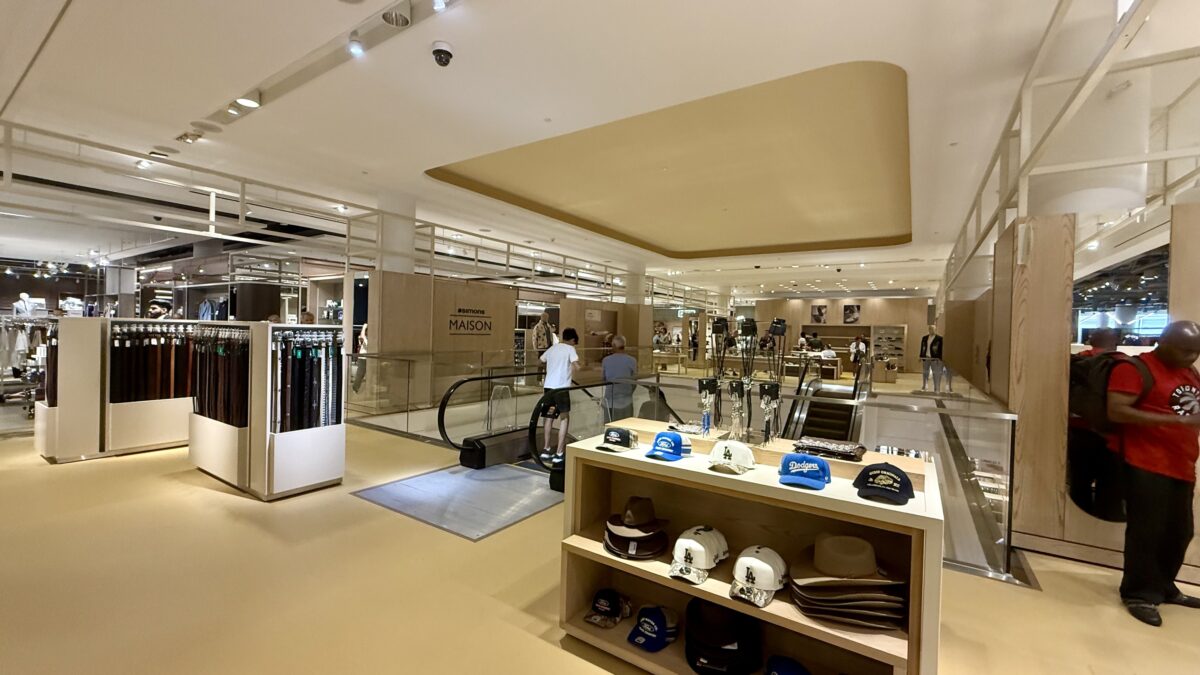
The new stores will also make use of former Nordstrom spaces, and that comes with both opportunity and responsibility.
“When Nordstrom vacated, they left a great bone structure. So how could we then slide in our environmental responsibility and say what of this can we salvage and reuse while creating a whole new experience?”
The Yorkdale location has opened with the Eaton Centre store following closely behind.
Looking beyond Simons, Gallici also weighed in on the future of shopping malls, many of which are dealing with vacated anchor tenant space. In Calgary, for instance, CF Chinook Centre’s former Nordstrom remains largely empty, while Southcentre Mall only recently redeveloped its old Sears footprint.
“I firmly believe that in 2025, no one is really going turn around and build a single-use space,” Gallici said. “A shopping mall by virtue of the way it was designed back in the 50’s and 60’s was intended for shopping . . . Its prime focus is still pretty singular. And I think today we’re much more about mixed-use environments.”
Malls are slowly shifting in that direction, Gallici noted.
“What you can see the shopping malls doing in many cases is starting to look at redeveloping their parking lots to say, how can we put in office towers and residential towers to support you build in a bit more of an everyday audience.”
However, he believes developers need to think beyond the usual mixed-use strategy.
“I am excited for the day when the retail developers start to rewrite some of their business formula to acknowledge that maybe some of the large spaces you’re talking about get assigned to other things like cultural centres,” Gallici said. “Could we have an art gallery in the mall? Can we have live theatre venues in the mall?”
He adds that there are examples already emerging.
“At the corner of Dundas and Yonge in downtown Toronto, TMU — Toronto Metropolitan University — took a piece of that real estate that used to be a parking garage and actually erected an outpost campus there.”
The possibilities, he said, are wide open — whether educational, medical, or cultural.
“It reinvents the business equation for developers,” he said. “Until which point they really dig hard and start to look at some of those metrics, I don’t know that we’re going to see a lot of really revolutionary things.”
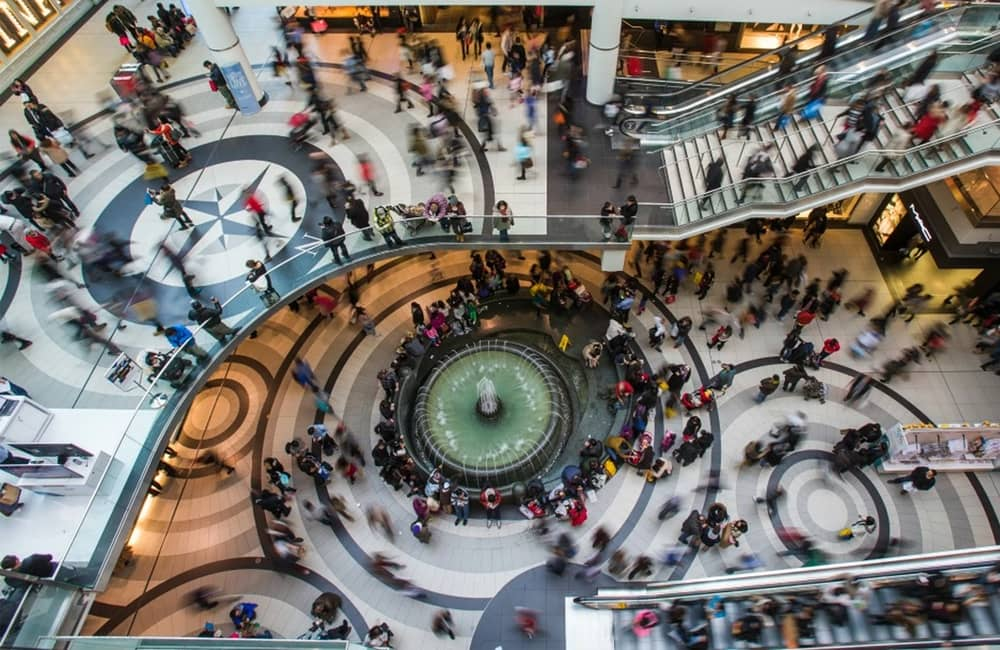
Gallici cited his own work at the Toronto Eaton Centre as an example of adaptive reuse in action.
“Before Simons in Toronto Eaton Centre, it was Nordstrom. Before Nordstrom, it was Sears. Before Sears, it was Eaton,” he explained. “That Eaton store was seven storeys. When Sears took it over, Sears put their offices up on level seven down through five.”
“When Sears shut down and Nordstrom took it over, Gensler worked with Cadillac Fairview to convert a bunch of that upper floor level into what is now a BMO office.”
He noted that Simons now occupies floors three, two, and one in that location.
But retrofitting these legacy retail spaces, like the standalone Bay stores, comes with complications.
“Those floor plates are massive,” Gallici said. “You don’t have a huge amount of light spill into the space. So how you start to slice and dice those floor plates for new future uses. I just don’t see the sustainability (in filling them all with retail).”
Despite challenges, he remains optimistic.
“I think we’re at a very fascinating time in the reinvention of retail and shopping malls altogether, and I do not think they will go away.”
“We’re at this really fascinating time where I think business equations have to get rewritten. We have to really assess what we can do with these spaces for reinvention. And I think the world’s our oyster.”
Related Retail Insider stories:












I believe Mr. Gallici is absolutely correct in saying the purchase of HBC by U.S. based Richard Baker was a real estate play from the get-go. Go Simons Go! I am a long time online customer and am so excited for their expansion outside of Quebec with brick and mortar stores. Keep it in the family & stay Canadian!