I listened to the Nike Inc. (NYSE: NKE) Q1 Fiscal 2026 earnings call on September 30th after the bell. The call was hosted by Elliot Hill (President & CEO) and Matthew Friend (EVP & CFO). Nike is in the middle of a turnaround and although it has made some progress there is a lot of work to be done to return to glory.

GAAP Financials (all in $ USD)
Overall, for Q1/Fiscal 26, Nike revenue was $ 11.7 billion, up +1% vs. last year. Nike Wholesale was $ 6.8 billion, up + 7%. Nike Direct revenue was $ 4.5 billion, down -4%, which includes Nike Digital, which was down -12% & Nike Stores, which was down – 1%. Revenues for Converse were $366 million, down – 27%.
Gross margin rate for the quarter was 42.2%, down – 320 bps vs. Q1/ Fiscal 2025. This was a result of increased wholesale discounts, higher discounts at Nike factory stores, higher product costs (including new higher tariffs) & channel mix headwinds.
SG&A was $ 4 billion, or 34.3 % of revenue, down -1% for the quarter or down 60 bps to last year as a percentage of revenue. This was due to lower brand marketing expense. Operating overhead was flat to last year.
Operating income for the quarter was $ .927 billion, or 7.9% of revenue. This was down from $ 1.2 billion last year which was 10.4 % of revenue.
Nike’s effective tax rate for the quarter was 21.1%, up from 19.6% last year. This was due to a benefit from stock based compensation in Q1/Fiscal 2025.
Net income for the quarter was $ .7 billion or 6.2% of revenue, down -31% to Q1/Fiscal 2025. Last year net income was 9.1% of revenue.
EPS was .49 cents per share, down – 30% from last year.
Cash & cash equivalents were $ 7 billion, down -17%. Inventory was $ 8.1 billion, down -2% to last year. Cash generated from operations in the quarter was $ 222 million, down – 44% from $ 394 million last year.
Nike returned $ 714 million to shareholders in Q1, made up of $ 591 million in dividends, up + 6% to last year and share buybacks of $ 123 million.
Let’s look at how key Nike geography’s performed in the 1st quarter.
North America
Q1 revenue up +4%, Nike Wholesale up +11%, Nike Direct down -3%, Nike Digital down -10%, Nike Stores flat to LY, EBIT down -7%.
Nike indicated this region is “furthest ahead” on its transformation. The running, training & basketball businesses are all up double digits vs. last year. Sportswear also grew in the quarter but work still remains in that business. The Wholesale division returned to growth but was in part a result of higher liquidation volume to value channels. Nike feels it is reaching new customer segments. Inventory is down in units but up in dollars due to tariffs. The company says it’s closeout mix is approaching normalized levels.
Europe, Middle East & Africa (EMEA)
Q1 revenue up +1%, Nike Wholesale up 4%, Nike Direct down – 6%, Nike Digital down -13%, Nike Stores up +1%, EBIT down -7%.
Nike indicated that this region has a largely clean marketplace and that they have built momentum with sports & wholesale partners. The digital business is close to being exclusively full-price but issues remain in site traffic & demand. The running business enjoyed double digit growth in Q1, while the football & footwear businesses had low single digit growth. Sportswear declined low single digits. Nike selectively leveraged discounts to lower inventory in the region, which was down mid single digits by the end of the quarter.
Greater China
Q1 revenue down -10%, Nike Wholesale down -9%, Nike Direct down – 12%, Nike Digital down -27%, Nike Stores down – 4%, EBIT down -25%.
Nike indicated that low store traffic and poor in-season sell through are headwinds. Running is the bright spot growing high single digits. The market responds well to innovation. The region is highly promotional and relies heavily on local platforms that require discounts for events like 11/11 a.k.a. Singles Day. Inventory in the market is down about -11% to last year and the closeout mix is elevated. Nike’s priority for China is to increase seasonal sell through by refreshing store concepts around sport, creating greater brand distinction & merchandising, and lowering the mix of aged inventory at partners.
Asia Pacific & Latin America (APLA)
Q1 revenue up +1%, Nike Wholesale up + 6%, Nike Direct down -6%, Nike Digital down -8%, Nike Stores down -5%, EBIT down – 13%.
The region had mixed results as there are pockets of elevated inventory levels & much promotional activity. The market enjoyed double digit growth in running and high single digit growth in training. Sportswear declined low single digit. Inventory grew high single digit vs. last year. Nike plans on tightening buys and lowering inventory in some countries.
Management Commentary
Hill discussed the companies “win now” actions which include changes to Nike’s culture, product, brand marketing, marketplace & ground game.
So far, Nike has seen results across it’s top priorities including: it’s running business, the North America region and it’s relationship and growth of it’s wholesale business. According to Nike, consumers are responding.
Hill also mentioned that the company has onboarded about 8,000 employees to it’s new “sports offense” way of working. This includes organizing the company around it’s 3 main brands: Nike, Jordan & Converse. The company is migrating to smaller cross-functional teams who will be divided by brand & sport but also by country & type of account/channel of distribution. This is a change to Nike’s previous organization that was structured by men’s, women’s & children’s products. Nike’s long term vision is to use it’s sport offense approach to succeed beyond the traditional sports that the company competes.
The idea is that these more focused groups of product developers and brand marketers will obtain sharper consumer insights that enable them to connect with athletes in a more meaningful way to produce a “better coordinated attack”. More nimble, the athlete and the sport will become the center of attention again.
Hill acknowledged that there is still work to be done with: the sportswear business, the Greater China region & the Nike Direct channel.
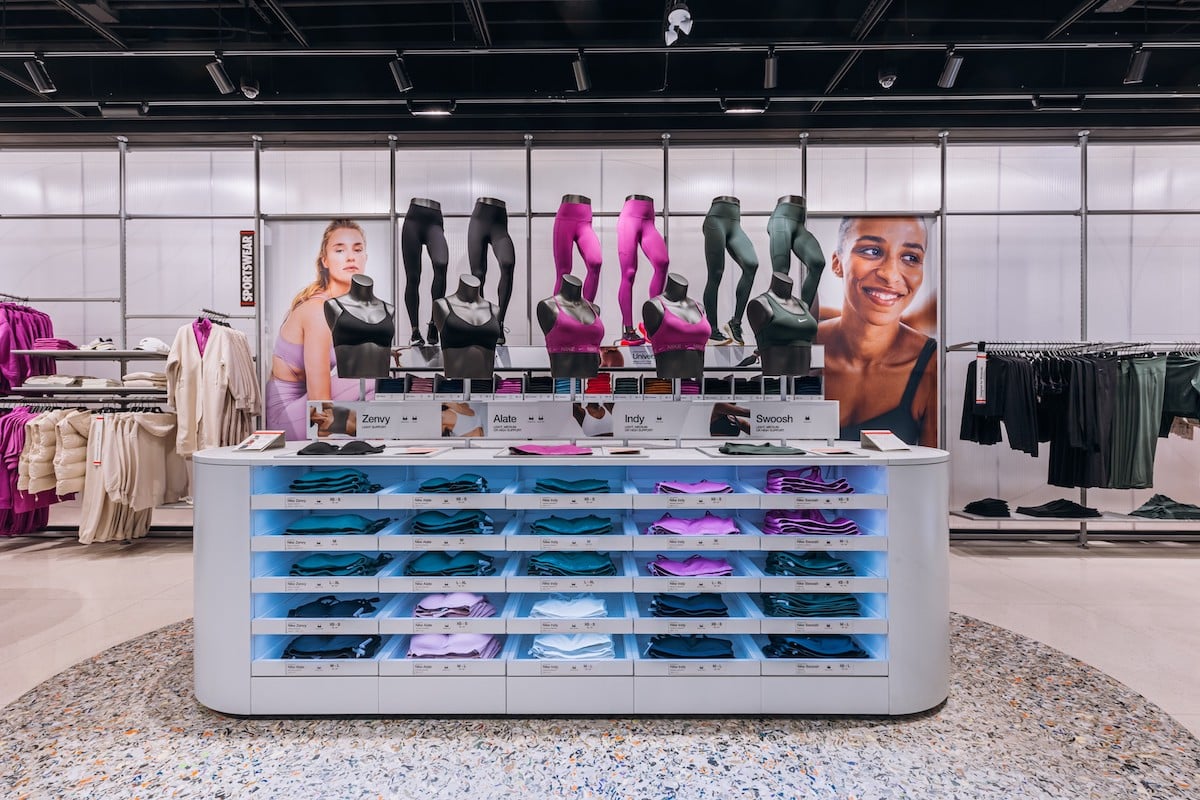
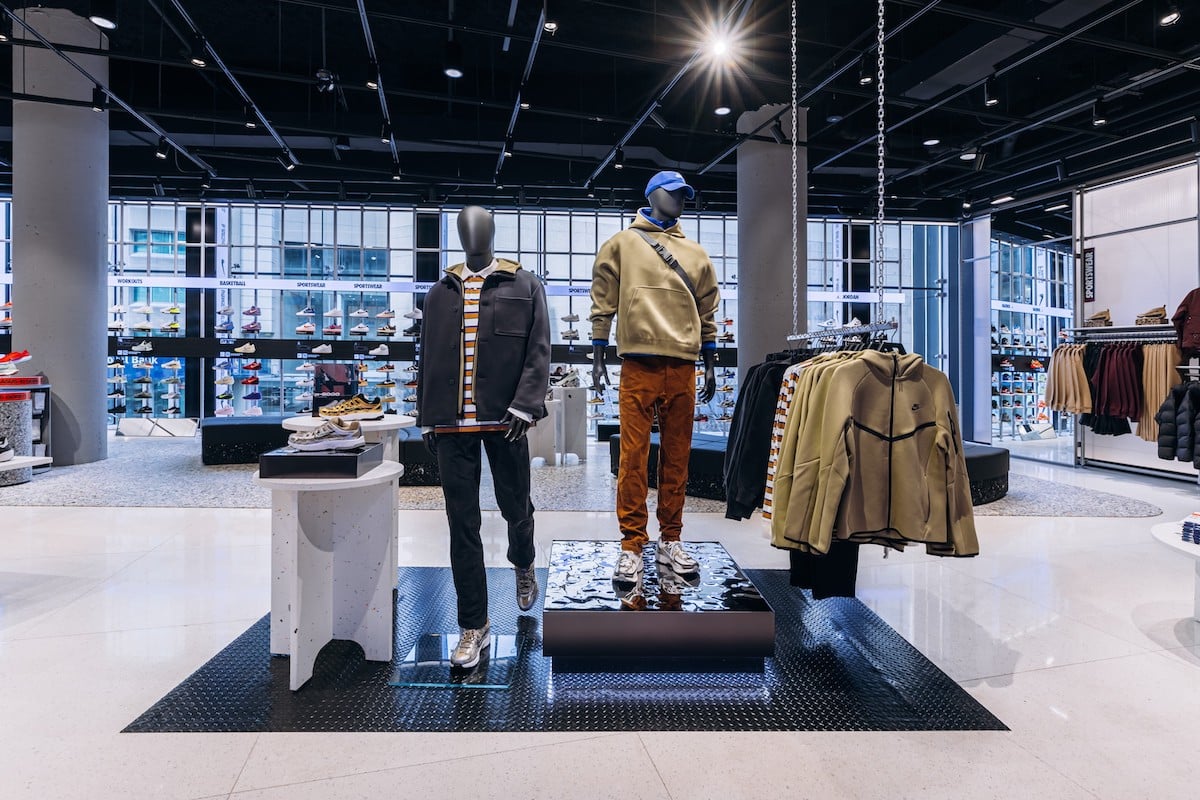
The CEO used the Nike House of Innovation flagship in New York as an example (I have visited this store and it is quite incredible). The store creates a unique retail experience by sport. A recent refresh has led to double digit revenue growth for this location. The idea is for Nike to create more of a specific point of view in retail. This clarity “works in smaller formats too”. Another example is the recent refresh of the Austin store that focusses on running & training and has seen a significant sales increase as a result.
Nike mentioned how they used the US Open to style several athletes during high profile moments at the tournament. Hill says “sports & the worlds greatest moments will always be Nike’s runway”.
Hill discussed how one of Nike’s advantages and differentiators is that it focusses on so many channels (wholesale, direct) across so many price points for so many athletes in so many geographies.
Running
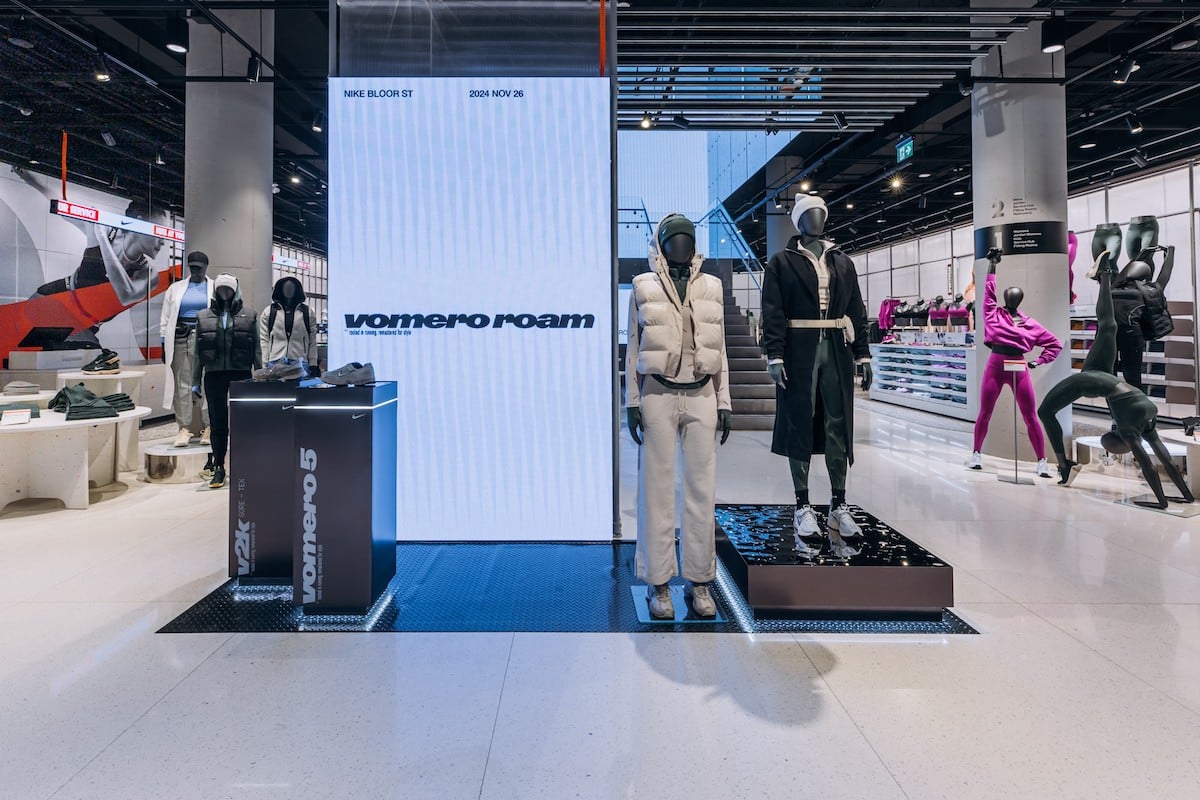
The CEO discussed how the Nike running business was the first division to embrace the new way of working. Research indicated that runners want 3 things: 1) big cushioning 2) stability or 3) an everyday shoe that returns energy. Therefore Nike redesigned the “Vomero”, “Structure” & “Pegasus” models based on these insights while integrating other Nike technologies such as: Nike Air, Flyknit, ZoomX & Reactx. Hill indicated that Nike plans to introduce one new style each season. The idea is to create a “relentless flow of innovation”. Early results show the running business is up + 20% in this quarter.
The opportunity for Nike is to apply this formula to: global football, basketball & training sports.
Global Football
Nike is gearing up for the 2026 World Cup and has targeted a younger consumer with 3 unique silos at 3 different price points. The company has relaunched the “Phantom 6” with strong sell through thus far. In Q3 Nike will launch it’s new “Tempo” & new “Mercurial” cleats after that. The team used the “scary good” campaign to help build awareness and results on some of the new products.
ACG
Nike also invested resources in it’s All Conditions Gear (ACG) business with a new breathable platform called “Radical AirFlow” and a new ACG super shoe with “ultra fly”. The company also launched a new ACG elite race team as well.
NikeSKIMS Partnership
Hill discussed Nike’s partnership with SKIMS and how this tie-up brings a new customer into the Nike ecosystem. The partnership has created performance training product with a very different look. The company recently debuted 58 silhouettes and early results are very strong.
Sportswear Transformation
This business continues to decline and Hill acknowledged that there is a lot of work to be done. It is a major priority at Nike to be fixed. The Nike Air Force 1 business is “stabilizing” and the Nike Air Jordan 1 inventory levels are “returning to health”. The Nike Dunk line is being aggressively managed down in all regions of the world. The Chuck Taylor line is in the early stages of a “global market reset”. The Converse brand has new leadership to get that brand back to profitable growth.
North America
The Nike North America division took a number of positive steps to get the business back to profitable growth. The team worked hard to get product access to more premium locations. About 1,300 running spaces were reset at numerous retailers including Dick’s & Nordstrom in the quarter.
Hill indicated that Nike is pleased with the Nike brand store on Amazon and that it is performing better than anticipated.
There is still much work to do in the North American region as Nike strives to elevate & integrate the marketplace. Specifically as it relates to digital & physical channels and wholesale & Nike Direct. Nike would like to use work completed in North America as a blueprint for all other geographies.
For continued North America growth, Nike will focus on “win now” actions:
- Focusing on the athlete
- Marketing through emotional storytelling
- Great product
- Driving an integrated marketplace
- Activate ground game
Greater China
There are “structural challenges” that Nike is facing in Greater China as it’s business was down -10% in Q1/Fiscal 26. Seasonal sell through was lower than expected which created large markdowns in order to keep the marketplace clean of excess inventory.
Nike remains committed to China as the country is passionate about several sports including basketball, football, running & training.
The plan for China is to lead with innovation & have sponsored athletes visit. This increases demand (this is the Nike formula for all regions). For Nike, sport is the pathway to winning in China.
Globally
Nike Digital is still “trying to find solid ground”. Although organic growth has slowed, the division is “pulling back” on promotions. Nike is trying to find the right assortment and marketing mix to bring consumers back to the Nike Digital “ecosystem”.
Nike has a presence in almost 190 countries and Hill warned that not all sports, channels & countries will recover on the same timeline. Nike’s recovery is not linear.
Hill is “realistic” that Nike is turning itself around at a time of fragile consumer confidence, evolving tariff dynamics and a Nike team that is “still settling” into it’s sport offense mentality. Nike realizes it has a lot “more to prove” and remains “hyper focused” on the athlete.
Tariffs
On the previous earnings call, Nike signaled that it was facing an annual tariff impact of $ 1 billion. Based on recent developments, this number has grown to $ 1.5 billion. Therefore, Nike forecasts that tariffs will negatively impact gross margin rate for fiscal 2026 by -120 bps, worse from the previous estimate of -75 bps 90 days ago.
Nike outlined a number of initiatives that are underway to try and mitigate some of this margin erosion.
Management Guidance
Q2/Fiscal 2026
The CFO indicated that Nike is anticipating revenue to grow by a low single digit percentage in Q2. He indicated that Nike Digital will face greater headwinds in Q2 than Q1. Gross margin rate is guided to be down between -300bps to -375bps in the quarter (this includes net headwinds to gross margin rate of – 175bps due to increased tariff impact). SG&A will grow by a high single digit percentage, which includes growth of operational overhead by a low single digit percentage. Nike’s tax rate for Q2 is anticipated to be in the low 20% range, due to changes in earnings mix.
Balance of Full Year – Fiscal 2026
Nike anticipates it will continue sales momentum with wholesale partners (returning to modest growth rates) as the companies spring order book is up over 2025. Growth will be led by sports. One of the priorities for fiscal 2026 is to fix Nike Digital and make it into a full-price business. Nike Direct will not be able to return to growth for fiscal 2026. North America will lead Nike’s recovery. Both Greater China & the Converse turnaround will require more time as well. There will be a modest headwind to revenue in both the Nike wholesale and Nike Direct businesses. Foreign exchange rates will be a tailwind to reported revenue overall. This will offer minimal benefit to margin rate however, as Nike is hedged. SG & A will grow low single digits as investments in demand creation are spent. Progress will not be linear for fiscal 2026.
As it relates to fiscal 2026 margin rate pressure, Nike discussed 3 drivers: 1) sell through, product mix, channel mix headwinds 2) transitory impacts from “win now” actions & 3) newly implemented tariffs.
Nike is planning to exit the first half of fiscal 2026 with a “healthy” marketplace. In the 2nd half, gross margin rate may be better as less is spent on discounts.
Analysts asked Nike if they will return to double digit profitability over time and management thinks this is achievable.
Nike indicated that the path back to double digit operating margins lies with organic growth. Nike aspires to have a greater full price mix which will help. Organic growth will drive operating leverage on SG&A and operating overheads.
Stock Dynamics
At the end of day September 30th, Nike stock was trading at $ 69.83 on the NYSE. Earnings were released after the bell and the stock opened October 1st at $ 73.03, up + 4.6%. The stock jumped further to $ 76.50 to open October 2nd but has since cooled to $ 71.74 at the time of writing (October 6th at 1:30 pm EST). Over the last year, Nike stock has dropped by – 12.7% & is down -43.3 % over the last 5 years.
My Commentary
Nike is a great brand and has shown signs of making progress on it’s transformation & recovery but much work remains. Although North America has shown positive signs in wholesale, overall global profits are down considerably and I wonder if the company needs to cut operational overhead further as more investment may be needed in product development and marketing. Emerging tariffs have hit Nike hard and must be mitigated to preserve gross margins. You can see the brand’s performance sinking in key markets like China & it’s Nike Direct business is not performing. I like Hill’s approach to turning around the company through it’s win now & sport offense methodology but time will of course tell how successful these efforts are given the new ultra competitive landscape and frugal consumer.
More from Retail Insider: