

The Webster in Toronto is preparing to close after four years in operation, ending the Miami-based luxury multi-brand retailer’s only Canadian presence. The boutique opened in late October 2021 in Toronto’s Bloor-Yorkville district and marked The Webster’s first international store. Its closure follows the retailer’s majority acquisition by Frasers Group in 2025, a deal that has shifted strategic focus and placed greater emphasis on strengthening the company’s United States footprint. With no plans to maintain a single Canadian outpost, the Toronto store will soon complete its wind-down.
When the boutique first arrived, the move was seen as a major development for the Canadian luxury market. Few global multi-brand retailers of its prominence had made a physical entry into the country, and The Webster Toronto was expected to diversify Yorkville’s retail landscape with its distinct residential-inspired design and curated mix of designer labels. While the boutique delivered on aesthetic sophistication and assortment, the long-term financial and operational pressures proved challenging.
Staff confirmed that the entire store is discounted at 40 percent this week, with remaining stock expected to be marked down to 70 percent next week as the closing process continues.
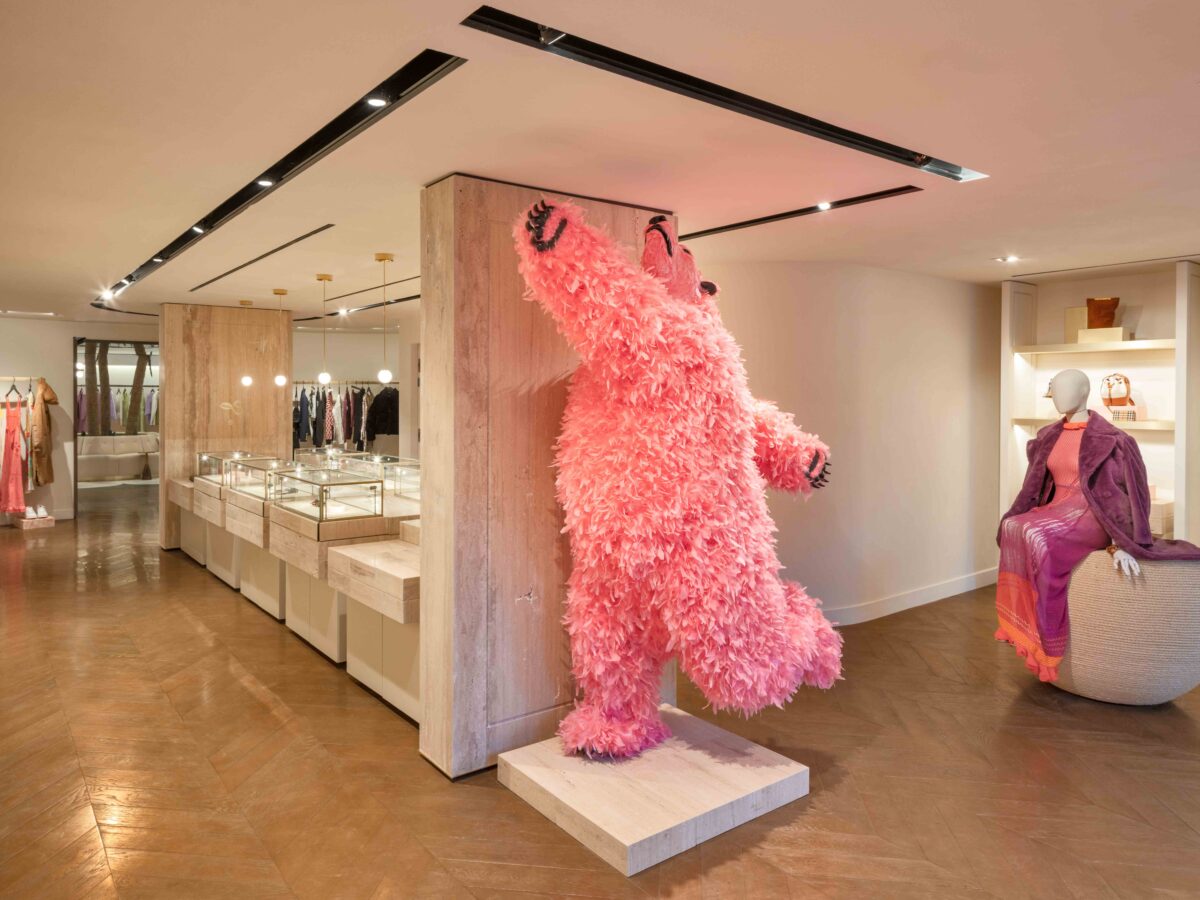
A High-Profile Opening in the Heart of Yorkville
The Webster Toronto opened on October 30, 2021 at 121 Scollard Street, a heritage Victorian building from the 1880s owned by First Capital REIT. The location sits just north of Yorkville Avenue, within walking distance of major luxury houses and some of Canada’s most valuable retail real estate. The store’s pink-toned brick façade stood out immediately and aligned with the retailer’s artistic, visually driven brand identity.
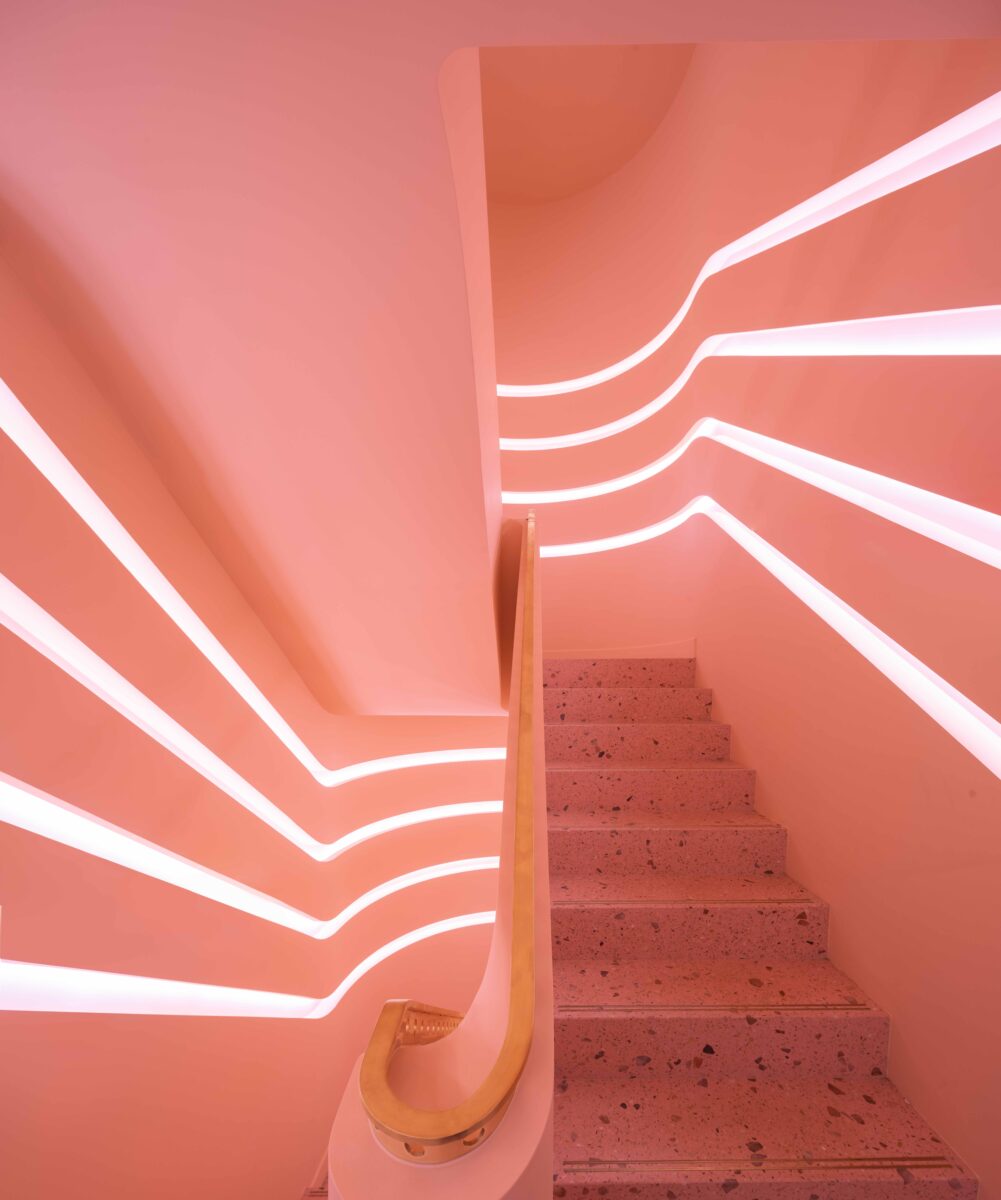
Inside, the boutique spans approximately 6,500 square feet across three levels, connected by an illuminated pink staircase that became one of the most photographed elements of the store. French designer Stéphane Parmentier created interiors that reflected The Webster’s signature residential concept, using salon-style rooms, sculptural furniture and curated art pieces to cultivate an intimate, gallery-like atmosphere.
The ground floor showcased jewelry, accessories, home objects and women’s ready-to-wear. The second floor expanded on the selection of womenswear, handbags and footwear, arranged in a layout intended to feel like a living room. The third floor emphasized menswear and sneakers and brought together both established designers and smaller labels. Throughout the store, merchandisers used a cross-brand approach that encouraged wardrobe building rather than siloed brand shopping. Toronto clients encountered labels such as Loewe, Courrèges, Balenciaga, Chloé, Jacquemus, Fear of God, Amiri and Palm Angels in carefully curated vignettes.
The boutique introduced a level of mixed-brand luxury retailing that had been uncommon in Canada and offered an alternative to the dominant mono-brand flagship model used by many global houses.

The Webster’s Evolution and International Expansion
The Webster was founded in 2009 by Laure Hériard Dubreuil, who brought luxury fashion experience from her roles at Balenciaga and Yves Saint Laurent. The flagship store in Miami Beach opened in a renovated 1930s Art Deco hotel and quickly became known for its experiential approach to merchandising. The store offered a blend of established luxury labels and emerging designers displayed in intimate rooms styled as wardrobes or private residences. This focus on curation, discovery and atmosphere shaped the brand’s early identity and guided its expansion strategy.
Over the next decade, The Webster opened boutiques across the United States, including Bal Harbour, SoHo in New York, Houston, Costa Mesa at South Coast Plaza, Los Angeles at Beverly Center, Montecito at Rosewood Miramar Beach and Palm Springs. More recently, the network expanded to Atlanta, Austin and Las Vegas. The retailer operated a global e-commerce platform and built extensive relationships with leading luxury fashion houses, carrying more than one hundred designer brands across its physical and online channels.
The entry into Toronto marked the retailer’s first international venture and signaled interest in exploring markets beyond the United States. A planned location in Vancouver’s Gastown area never materialized.

Operational Challenges in a Shifting Market
As Toronto’s luxury retail landscape continues to evolve, The Webster Toronto faced challenges that became increasingly difficult to overcome. Although the company has not publicly commented on the closure, conversations within the store and among industry observers pointed to several pressures. The boutique struggled with limited marketing and modest brand awareness, which limited its ability to reach a broader luxury consumer base. Buying decisions were often made by teams in the United States and did not always align with local Toronto preferences. It was also noted that having more strong personal shoppers would have been required for the store to succeed.
The previously anticipated Vancouver location never materialized, which left Toronto as an isolated Canadian outpost without a national network to reinforce visibility or cross-promotional momentum.
While The Webster Toronto offered a unique and highly curated experience, it needed sustained investment to build market awareness and attract consistent traffic in a competitive district dominated by household-name luxury houses. In addition, the boutique operated within a format that depends heavily on personalized service and local fashion intelligence, both of which require time and staffing resources to scale effectively.
The Frasers Group Acquisition and Strategic Repositioning
The closure of The Webster Toronto coincides with a major shift in the retailer’s corporate trajectory following Frasers Group’s majority acquisition in October 2025. The UK-based conglomerate, which has been expanding its luxury division through brands such as Flannels, described the purchase as a key step in its global elevation strategy. The company indicated that The Webster would remain under the creative leadership of its founder and maintain its curated, experiential identity while benefiting from Frasers’ operational scale, digital infrastructure and financial resources.
However, statements from Frasers Group and subsequent coverage emphasized the United States as the primary growth market for The Webster. With a boutique network spread across major American cities and resort destinations, the retailer is well-positioned to deepen its presence domestically with additional support from its new parent company. International expansion remains a possibility, but the near-term focus appears aligned with reinforcing and optimizing existing US locations rather than operating single-store markets abroad.
Within this strategic context, maintaining The Webster Toronto became less practical. The store required localized buying strategies, targeted marketing campaigns and a dedicated clienteling structure, all of which would operate independently from the brand’s larger US systems. The closure reflects a rebalancing of resources and priorities as Frasers seeks to consolidate The Webster into a more unified operational model.

Impact on Yorkville and the Future of 121 Scollard Street
The departure of The Webster Toronto will leave a distinctive gap in Yorkville’s retail landscape. The store offered a multi-brand luxury concept not widely available elsewhere in the Canadian market, and its residential-style interiors and artistic approach contributed to the neighbourhood’s cultural texture. The boutique also helped expand Scollard Street’s profile as an emerging luxury corridor that complemented the more established retail clusters along Yorkville Avenue and Bloor Street.
Yorkville remains one of Canada’s strongest luxury retail zones, and the closure is not expected to affect the broader momentum of the district. Global fashion houses continue to open new stores or expand their existing footprints, and recent years have seen significant investment from brands such as Chanel, Hermès, Balenciaga, and Brunello Cucinelli. While The Webster Toronto offered a different type of retail experience, the district’s ongoing evolution ensures continued demand for high-end retail space.
The building at 121 Scollard Street is owned by First Capital REIT, which has cultivated a major presence in Yorkville through long-term acquisitions and redevelopment plans. The property’s historic character, architectural prominence and strategic location are likely to generate strong interest from both international and domestic tenants. Its scale and layout make it appropriate for another luxury boutique, an art-driven retail concept or a specialized lifestyle retailer that aligns with the neighbourhood’s positioning.

More from Retail Insider:
- The Webster Opens 1st Canadian Storefront in Toronto’s Yorkville Area [Feature/Photos]
- Luxury Multi-Brand Retailer ‘The Webster’ to Open 1st Canadian Store in Toronto’s Yorkville Neighbourhood
- Podcast: The Webster Opens 1st International Store in Toronto
- The Webster Chooses a Facade Colour for its First Canadian Store in Toronto’s Yorkville Area
- International Brands Continued to Enter Canadian Market by Opening Stores Over the Past 12 Months with More to Come [Feature/Analysis]







lol, probably cause they couldn’t off load their antique silver pencil sharpeners @ $1,150 a pop. I get the idea of a luxury brand, but honestly…