

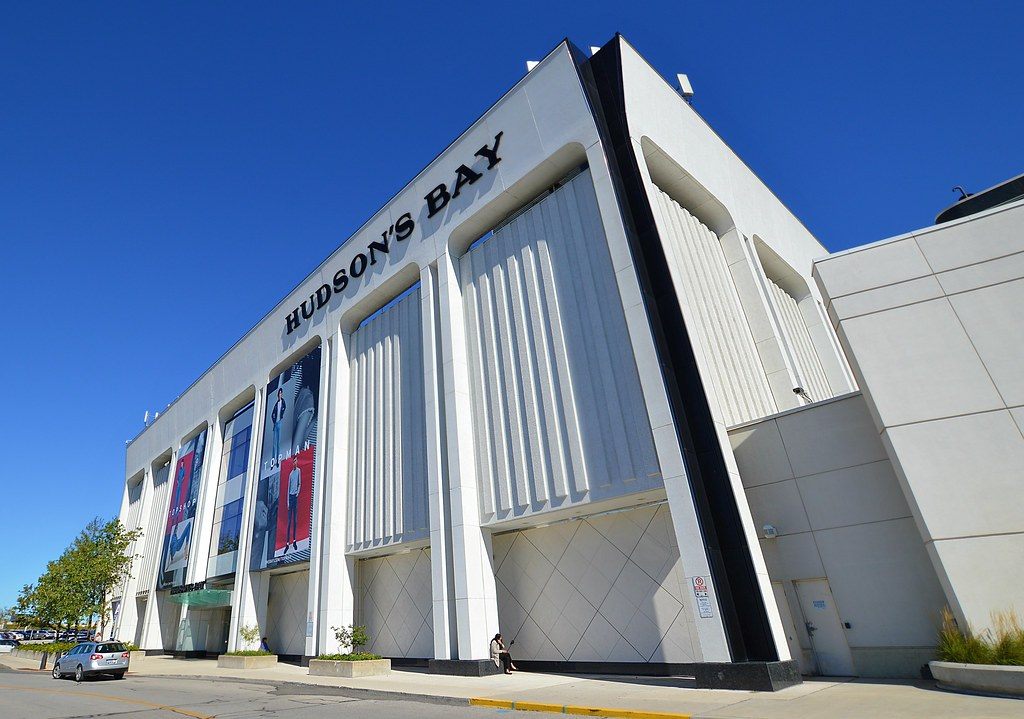
A major leasing dispute at Canada’s most productive shopping centre has been resolved in court, with Oxford Properties successfully blocking a proposed department store concept from taking over the former Hudson’s Bay anchor at Toronto’s Yorkdale Shopping Centre. The ruling is expected to influence how large vacant department store spaces are repositioned across the country in the wake of Hudson’s Bay’s restructuring.
The decision centres on a proposed sublease that would have seen Fairweather-controlled Les Ailes de la Mode occupy the roughly three-level former Bay space at Yorkdale. The court ultimately determined that the arrangement was not commercially viable, siding with Oxford’s argument that the tenant would not be appropriate for the luxury-focused centre.
Ontario Superior Court Justice Jessica Kimmel refused to approve the proposed sublease that would have installed Les Ailes de la Mode in the former Hudson’s Bay space. The judge concluded that the plan was not commercially sound or viable within the context of the receivership and the long-term economics of the property.
In her ruling, Justice Kimmel determined that the proposed arrangement did not meet the threshold of being commercially reasonable, effectively preventing the department store concept from proceeding at Yorkdale under the terms advanced by the receiver and RioCan.
The ruling brings a decisive end to a high-profile Yorkdale anchor dispute that had pitted Oxford Properties against RioCan and the proposed operator. It also underscores the court’s willingness to weigh long-term asset strategy and positioning when evaluating restructuring proposals involving major retail spaces.
Key Parties in the Yorkdale Anchor Dispute
Oxford Properties, the institutional owner and manager of Yorkdale, has long positioned the centre as a premier luxury shopping destination. The company argued that it must maintain strict control over the tenant mix and brand positioning of its anchor spaces.
RioCan REIT, which held the Hudson’s Bay lease interest through a historical joint venture with HBC, had supported the proposed sublease to Fairweather and its Les Ailes concept. The REIT viewed the arrangement as a way to restore income to the space following Hudson’s Bay’s creditor protection filing and subsequent store closures.
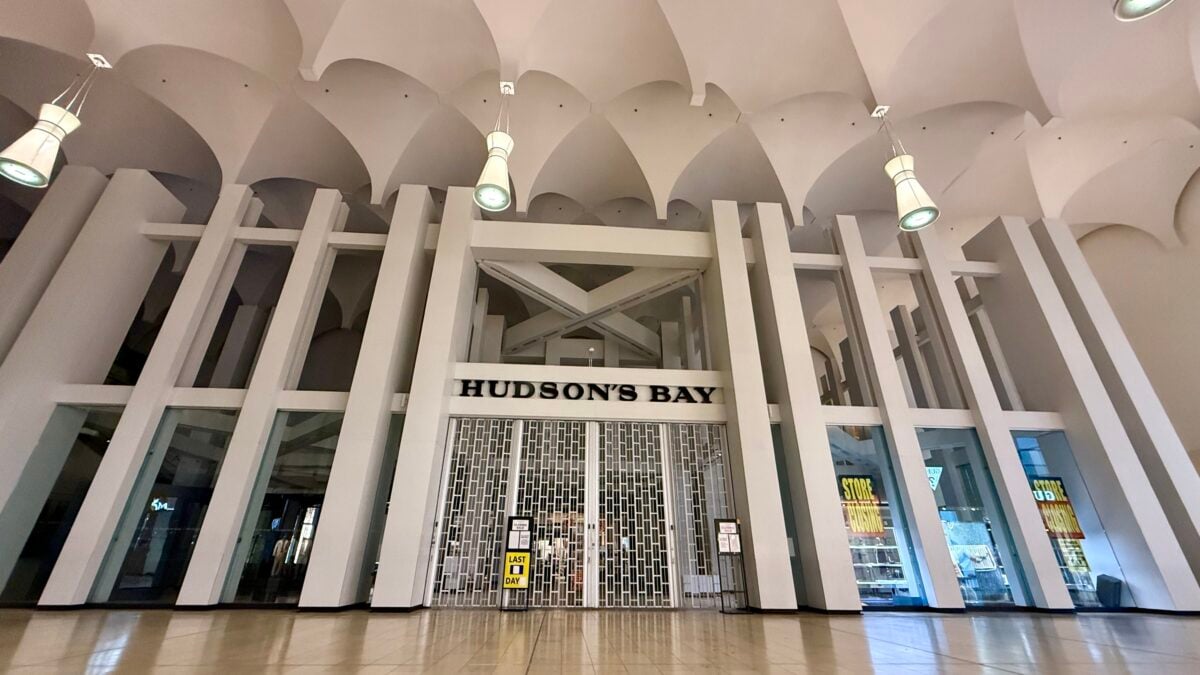
Hudson’s Bay had operated the Yorkdale location as a major anchor before its financial collapse. The store’s closure left the large space in receivership, triggering the dispute over how it should be re-tenanted.
Fairweather Ltd., controlled by retail entrepreneur Isaac Benitah, proposed to install a large Les Ailes de la Mode department store in the space under a long-term sublease. The concept was presented as a mid-tier department store that would include apparel, footwear, home goods, and accessories.
The court-appointed receiver, FTI Consulting, supported the Fairweather proposal as a way to preserve value for creditors by bringing in a replacement tenant quickly.
Oxford’s Concerns Over Brand Fit and Long-Term Value
Oxford’s opposition to the proposed tenant focused on both brand positioning and financial considerations. The company argued that Fairweather and its Les Ailes concept were inconsistent with Yorkdale’s luxury orientation and would undermine decades of curated tenant mix strategy.
Oxford maintained that the proposed operator lacked experience running a store of more than 300,000 square feet and warned that the installation of a value-oriented department store could deter higher-end tenants. The landlord also argued that the concept’s perceived positioning could negatively impact the overall performance of the centre.
In a November affidavit, Oxford vice-president Nadia Corrado wrote, “I cannot overemphasize how inappropriate and detrimental it would be to have Fairweather occupy the most prominent premises at Yorkdale for even one year, much less the next 50 years as contemplated by the proposed Fairweather transaction.”
She added, “This would have the effect of compromising decades of significant investment and planning by Oxford and create a cascading negative effect for Yorkdale’s existing tenants.”
Oxford also emphasized the financial structure of the proposed deal. Before Hudson’s Bay’s collapse, the Yorkdale store paid approximately $2.8 million annually in rent. The proposed Les Ailes sublease would have generated about $1 million per year or 12 percent of gross sales until 2029, a structure Oxford argued would lock in a below-market anchor and impair long-term asset value.
RioCan and Fairweather Argued for Viable Replacement Tenant
RioCan supported the sublease, arguing that Fairweather was a creditworthy operator capable of taking over the large space. The REIT maintained that bringing in a new tenant would help stabilize the asset and support loans tied to the joint venture.
RioCan also pointed to the Benitah family’s experience across multiple retail banners. The group has operated chains such as International Clothiers and Fairweather, and previously controlled home goods banners Bombay and Bowring. More recently, the family acquired the intellectual property for the Zellers brand from Hudson’s Bay and began relaunching it in a former Bay location in Edmonton.
RioCan told the court that the Les Ailes concept planned for Yorkdale would differ from the value-oriented Fairweather banners. The proposed store was described as a mid- to high-end department store carrying a mix of branded and private-label merchandise across apparel, footwear, housewares, accessories, and confectionery.
Suppliers including Reebok, Chaps, Billabong, and Laura Ashley had reportedly committed to supplying the store, according to court filings cited by RioCan.
History of Les Ailes de la Mode
Les Ailes de la Mode originated in Quebec in the 1990s as a fashion-forward regional department store chain. The first location opened in 1994 at Mail Champlain in Brossard, inspired by an upscale, service-oriented department store model.
Early stores featured experiential elements such as in-store restaurants, coffee shops, play areas for children, and live piano music. The chain expanded to major Quebec malls, including Carrefour Laval and Place Sainte-Foy, before opening a flagship in downtown Montreal in 2002.
In 2005, the chain was sold to the Fairweather Group, controlled by the Benitah family. Under the new ownership, the concept shifted toward a discount-oriented model focused on private labels and clearance merchandise from Fairweather’s other banners. Over time, several locations closed and the brand lost much of its original profile.
Court filings in 2025 and 2026 outlined plans to revive the brand as a full-line department store in former Hudson’s Bay locations, including sites in Montreal and Quebec City. The Yorkdale proposal was part of that broader strategy.
Financial and Operational Context
The Yorkdale anchor dispute unfolded within the broader restructuring of Hudson’s Bay and the wind-down of its department store chain. The closures left multiple large anchor boxes across Canada in receivership, creating tension between landlords, creditors, and potential replacement tenants.
At Yorkdale, court filings described significant deferred maintenance at the former Bay site. Immediate repairs were estimated in the multi-million-dollar range, with additional capital required over several years.
Oxford argued that accepting a discounted, lower-profile anchor would compromise the long-term positioning of one of Canada’s highest-grossing shopping centres. The landlord maintained that it would prefer a vacant space over an unsuitable anchor that could negatively affect other tenants and future leasing opportunities.
Broader Implications for Department Store Redevelopment
The outcome of the Yorkdale anchor dispute reflects a broader national challenge facing landlords and creditors as they work to reposition large department store spaces left behind by Hudson’s Bay.
Across Canada, property owners are attempting to maintain brand positioning and long-term value, while receivers and creditors seek income-producing tenants to stabilize assets. The Yorkdale decision signals that courts may consider the strategic positioning of a property when evaluating such proposals.
With the Les Ailes plan blocked at Yorkdale, attention is likely to shift toward alternative uses for the space. Oxford has not publicly outlined its next steps, but the landlord has historically taken a highly curated approach to anchor replacements and luxury expansions.












Thank goodness …. this would have been a disaster for Yorkdale.
It’s going to be hilarious when Yorkdale ownership, unable to find other viable tenants to occupy the Hudson’s Bay building, ends up demising the space and leasing it to No Frills, Dollarama and Value Village.
Les Ailes was never able to make a successful go of it in Montreal. The failure of the store at Le Centre Eaton on Rue Sainte-Catherine was high profile, almost the equivalent of what happened with Nordstrom in Vancouver. It was a very attractive store in a sleekly designed eponymous space, but its offering was not compelling and the atmosphere was a bit sleepy (the same tinny anglo pop-music playing through the speakers like the average retail outlet). So there’s no way Oxford would allow its number one blue chip shopping mall to be tainted by even an upmarket iteration. I wonder if the concept, with some tweaking, would have greater traction in Montreal now since the city has seen a renaissance since the 1990s, and Royalmount has come along to prove that luxury can be a viable business in Quebec. Les Ailes’ backers won’t find out about that in Ontario, that’s for sure.