

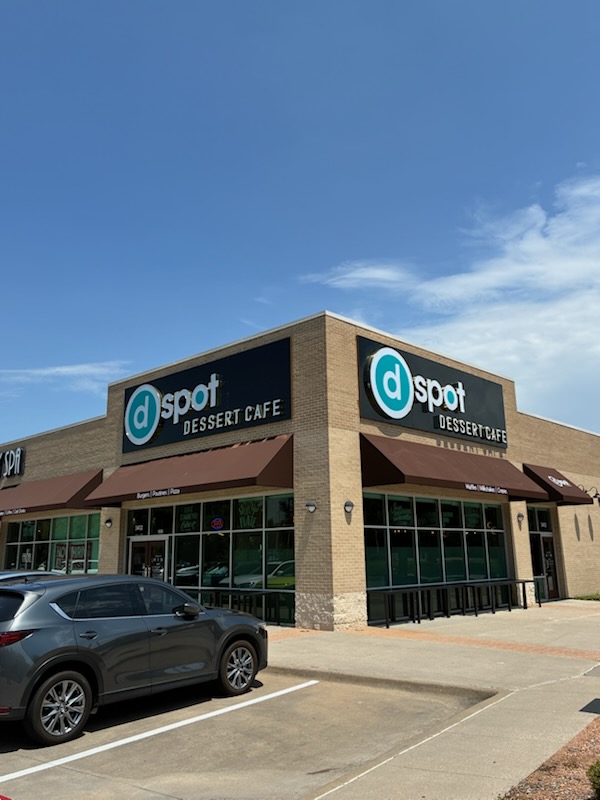
D Spot Dessert Café, a Canadian leading dessert café brand, is embarking on its international expansion plans with its first location in the United States. The new café, located in Dallas, Texas at 3432 E Hebron Parkway, Suite 100, has opened and the company has its sights on more U.S. openings as it continues to expand through franchising.
“This opening marks a significant step in D‑Spot’s growth strategy as we expand into the U.S. market,” said Kaan Sayiner, CEO and President, D Spot Dessert Café. “With a strong Canadian footprint, we’re excited to bring our dessert experience to new communities as part of our broader U.S. expansion.”
The brand was founded in 2014 and has more than 55 locations across Canada.
In an interview with Retail Insider, Sayiner spoke about the company’s growth and its plans for the future.
Question: Why did D Spot choose Dallas for its first U.S. location, and what factors made the city the right launch market?

Answer: Dallas was a very deliberate choice for our first U.S. location. We were looking for a market with scale, strong consumer energy, demographic diversity, a sophisticated dining culture, and room for a premium dessert café concept that is experiential rather than transactional.
The Dallas–Fort Worth market checks those boxes. It is one of the largest and fastest-growing metropolitan areas in the United States, with the City of Dallas reporting the DFW MSA at just under 8 million residents, and the U.S. Census Bureau reporting that Dallas–Fort Worth–Arlington added nearly 178,000 residents between 2023 and 2024, making it the third-largest gaining metro area in the country. That matters because our model performs best where there is density, family traffic, evening traffic, multicultural demand, and a customer base that is open to bold, highly shareable food experiences.
Dallas is also an excellent bridgehead for the broader U.S. market. It is a major business, travel, and lifestyle hub, with DFW Airport serving more than 87.8 million passengers in 2024 and offering service to more than 260 destinations. For a Canadian brand entering the United States, that combination of local demand and national connectivity made Dallas the right place to prove the concept.
Most importantly, Dallas has a serious food culture. Consumers there understand quality, they are adventurous, and they respond to brands that deliver both substance and experience. That is exactly where D Spot is positioned.
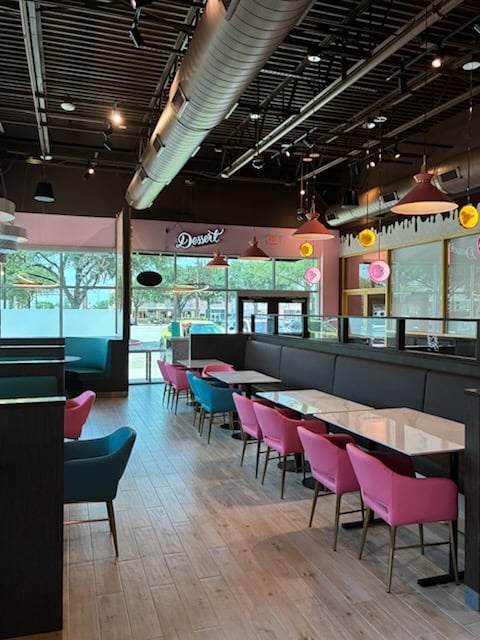
Q: The U.S. dessert café market is highly competitive. What differentiates D Spot from established American chains and independent dessert concepts?
A: The U.S. market is competitive, but that is precisely why differentiation matters. D Spot is not a single-product dessert shop, and it is not a traditional café with desserts added on. We are a full premium dessert experience built around choice, indulgence, hospitality, and visual impact.
Our differentiation starts with the menu architecture. The brand is known for a broad dessert platform, including Belgian waffles, crepes, sundaes, milkshakes, milk cakes, croffles, skillet desserts, and build-your-own options. That gives guests a level of customization and discovery that is difficult for narrower concepts to match.
Quality is also central to the brand. D Spot’s own brand positioning emphasizes homemade ice creams, fresh-daily batters, Belgian chocolate, and made-from-scratch cakes. That matters because consumers are not just looking for something sweet; they are looking for premium indulgence that feels worth the occasion.
The other major differentiator is that D Spot is built as a social destination. The products are visually expressive and highly shareable, but the concept is not dependent on novelty alone. It has the operational foundation of a scalable franchise system, with multiple concept formats, a recognizable brand, and a flexible operating model. That combination — premium dessert, savory breadth, operational discipline, and a highly social guest experience — is what separates us from both established chains and independent dessert operators.
Q: With more than 55 locations across Canada, what lessons from Canadian growth are shaping your U.S. expansion strategy, and how quickly do you expect to grow south of the border?
A: The biggest lesson from Canada is that disciplined growth matters more than simply adding units. D Spot has grown from a Canadian concept into a national brand with more than 55 locations, and that growth has taught us that the right operator, the right real estate, and the right market sequencing are non-negotiable.
In Canada, we have learned how important it is to build around demand clusters: strong suburban communities, family-oriented trade areas, student and young professional traffic, multicultural neighbourhoods, and high-visibility retail corridors. That experience will directly shape how we grow in the U.S.
Our intention is to scale aggressively, but not recklessly. The first priority is to establish Dallas properly, support the franchise partners, validate the operating model in the U.S., and then expand in a sequenced way through strong regional markets. Our location pipeline already includes Houston, Atlanta, Chicago, and Nashville. Those are the types of cities that align well with our brand: large, diverse, high-growth, food-forward markets where consumers are actively looking for new dining experiences.
In parallel, we will continue building Canada with strategic infill and new-market development. That includes deepening our presence in British Columbia and pursuing Atlantic Canada, while ensuring our existing markets continue to mature. The ambition is to become the leading premium dessert café brand in North America, and over time, to take the concept into select international markets where the demand profile is strong.
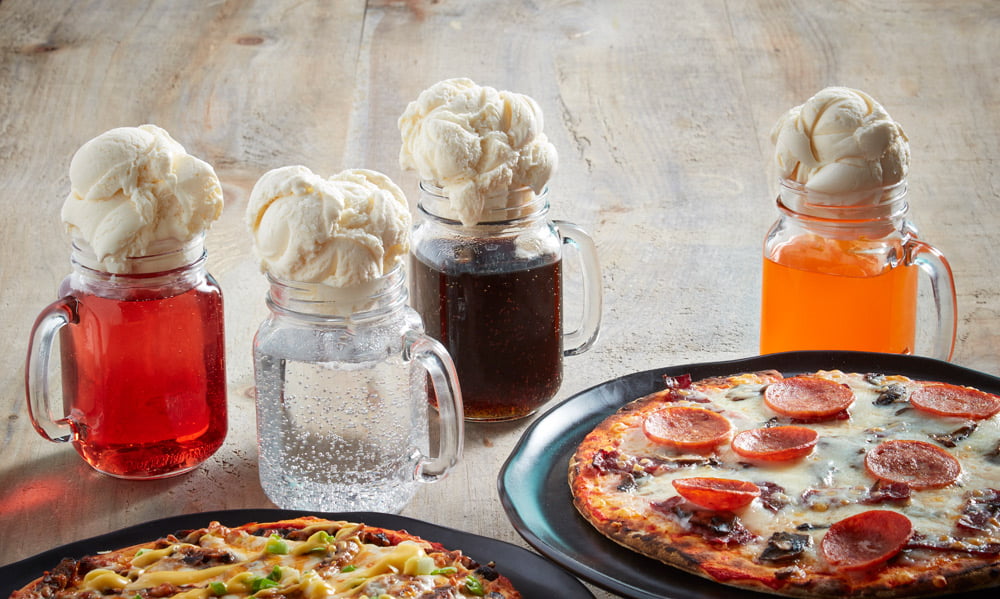
Q: Your menu combines desserts with a substantial savory offering. How important is that all-day dining approach to the brand’s success, and do you expect to adapt the menu to suit American tastes?
A: The savory offering is very important because it expands the role D Spot plays in a guest’s day. We are not limited to the after-dinner dessert occasion. Guests can come in for a meal, stay for dessert, celebrate, meet friends, bring family, or visit late in the evening. That gives the brand more daypart flexibility and more reasons for repeat visits.
D Spot’s full-concept locations include savory items such as smashburgers, sliders, grilled sandwiches, poutine, and loaded fries alongside waffles, crepes, sundaes, milkshakes, and other signature desserts. Nation’s Restaurant News also noted savory items such as burgers, pizza, pasta, wings, and poutine in the U.S. opening coverage. That is a meaningful advantage because it broadens the guest base beyond the pure dessert occasion.
In the U.S., we will protect the core of the brand while being thoughtful about local adaptation. The heart of D Spot is premium indulgence, generous choice, and an experience that feels memorable. That will not change. But we will listen carefully to American guests and franchise partners on flavor preferences, portion strategy, beverage innovation, savory mix, and local-market relevance.
The goal is not to become a different brand in the U.S. The goal is to make D Spot feel immediately relevant to U.S. consumers while preserving what made the brand successful in Canada.
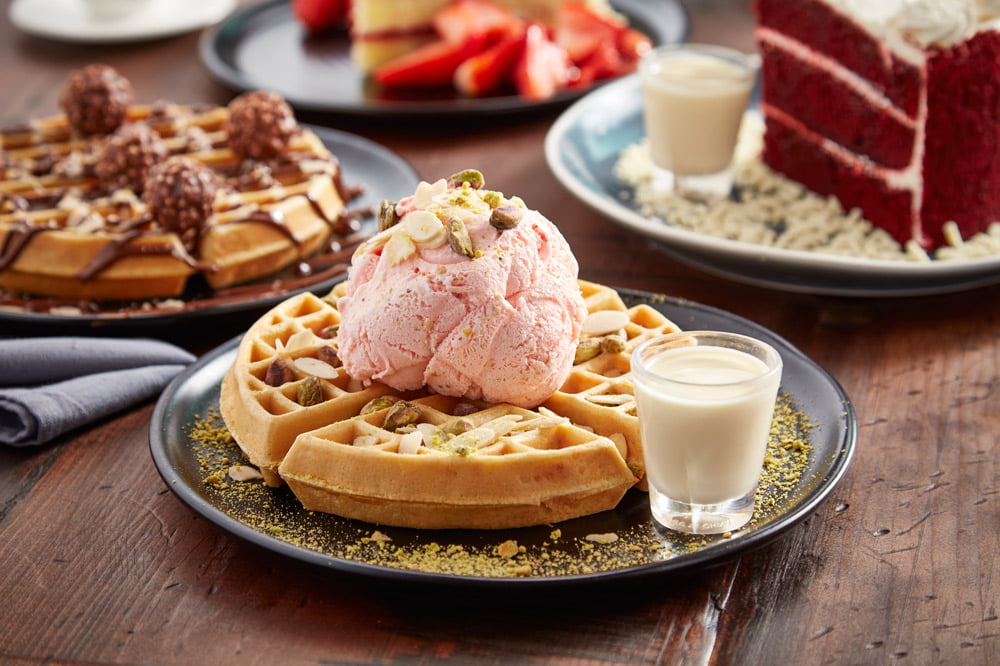
Q: What are your long-term ambitions for the U.S. market, and which regions or cities are priorities after the Dallas opening?
A: Our long-term ambition is clear: we believe D Spot can become the leading premium dessert café platform in the U.S. The market is large, fragmented, and still underdeveloped when it comes to scaled experiential dessert cafés. There are strong chains and excellent independents, but there is significant white space for a brand that combines premium desserts, savory food, late-day occasions, social energy, and franchise scalability.
The broader restaurant market remains substantial. The National Restaurant Association projects U.S. restaurant industry sales of $1.55 trillion in 2026, with operators continuing to focus on guest connection, value, productivity, and technology. Within desserts specifically, publicly available market research also points to continued growth in frozen desserts and premium/artisanal categories. Future Market Insights reports the global ice cream and frozen dessert market at approximately $148.7 billion in 2025, projected to grow at a 7.5% CAGR from 2026 to 2036; Global Market Insights reports the artisanal ice cream market at $8.9 billion in 2025, projected to reach $18.7 billion by 2035 at a 7.6% CAGR. Those trends support what we are seeing directly from consumers: demand for indulgence, quality, customization, and experience remains strong.
After Dallas, the priority is to build regional momentum in markets where the demographics and real estate fundamentals align with our model. Houston is a natural next step in Texas, and D Spot’s public location pipeline also identifies Atlanta, Chicago, and Nashville as upcoming U.S. markets. Beyond those, we see strong potential in major Sun Belt markets, select Midwest cities, and dense suburban trade areas around large metros.
Internationally, the opportunity is also meaningful, but the U.S. is the immediate growth priority. Canada gave us the platform. Dallas is the first step in proving the U.S. opportunity. From here, the focus is disciplined execution, strong franchise partners, and building D Spot into a category-defining brand.
More from Retail Insider:











How can you not address that 80% of the locations are losing money? We are struggling, can’t even flip our locations!
Franchisor is no help. D Spot is a scam, praying on newcomers.
You shouldn’t be promoting these scammers!