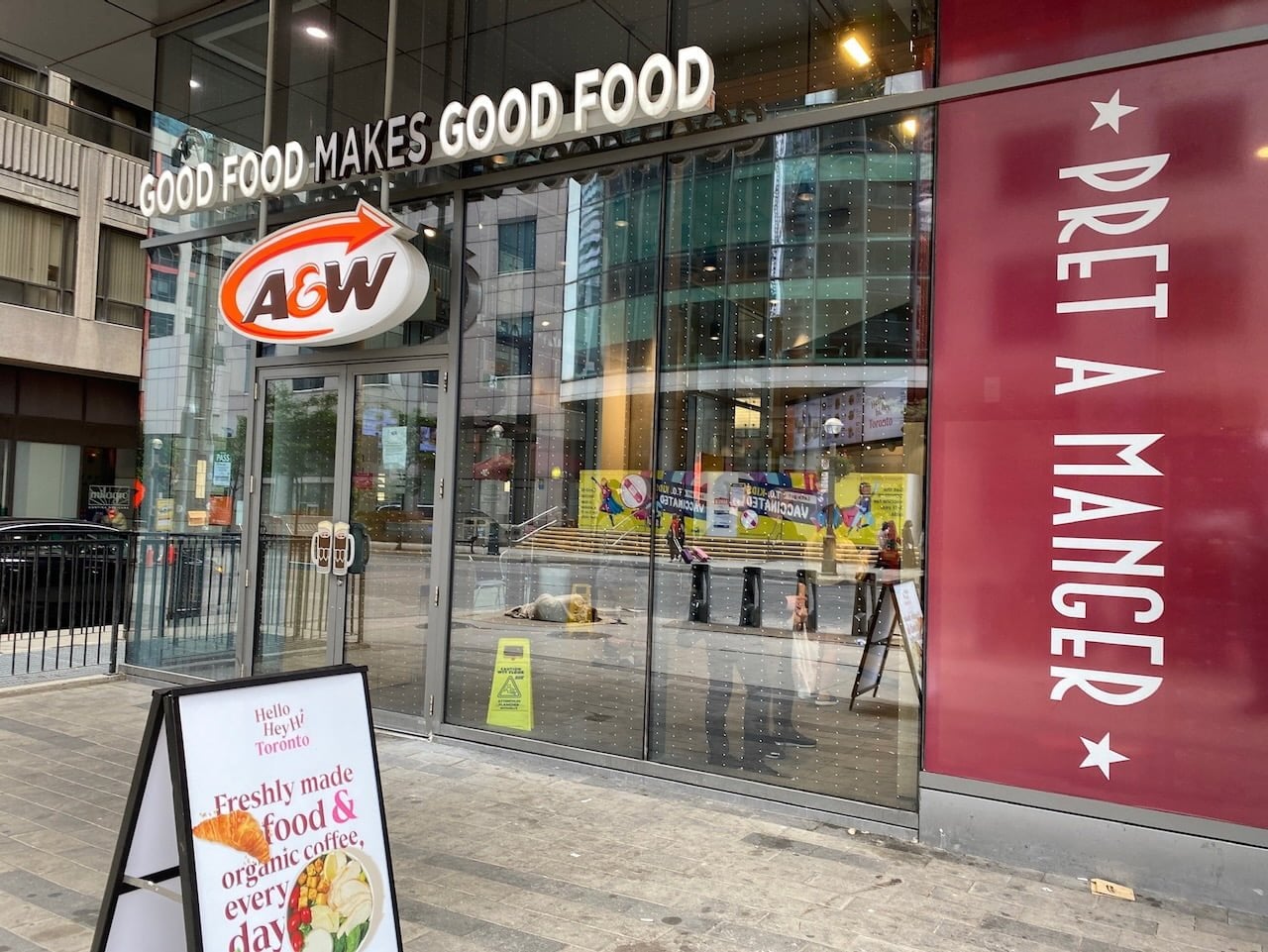
Retail Insider has released Q2 2026 Canadian Food Service: Scale, Value and New Formats, a new quarterly report authored by Craig Patterson examining the Canadian food service sector as operators compete for traffic in a market that remains active, but increasingly selective.
The report is part of Retail Insider Reports. Retail Insider Reports are designed to deliver executive-level insights across major retail sectors and can be accessed through the Retail Insider Report Hub. The report examines Canadian food service retail, including quick-service restaurants, full-service restaurants, cafés, food halls, chains, franchised operators and consumer dining trends.
General Themes
- Resilient spending, harder traffic: Food service demand has not broadly weakened, but operators are competing harder for each visit as household budgets remain cautious.
- Value remains central: Promotional offers, bundles, loyalty and accessible pricing are increasingly important as consumers weigh restaurant spending against other costs.
- Franchise platforms are gaining influence: Foodtastic and Happy Belly Food Group show how multi-brand operators are using acquisitions, shared infrastructure and franchising to scale concepts across markets.
- Coffee and breakfast are becoming more competitive: Dunkin’s planned Canadian return through Foodtastic adds pressure to a category where Tim Hortons continues to invest heavily in new restaurants and renovations.
- Legacy QSR brands are improving core menus: Burger King Canada and A&W are using menu upgrades and product launches to reinforce relevance in a crowded quick-service market.
- Specialty concepts are producing uneven results: Tahini’s and HEAL Wellness show the upside of culturally resonant and wellness-oriented concepts, while PLANTA’s contraction shows the limits of premium specialty positioning without durable unit economics.
- Real estate formats are widening: Food halls, food courts, mixed-use dining, office catering, entertainment venues and smaller urban formats are changing how food service captures consumer occasions.
Retail Insider Coverage
Retail Insider’s coverage shows that scale is becoming one of the clearest advantages in Canadian food service. Foodtastic’s acquisition of Kinton Ramen added a Canadian-born Asian dining brand with locations across Canada and the U.S. to a growing multi-brand platform, while its master franchising agreement to bring Dunkin back to Canada positions the company as a growth partner for a major international brand returning to the market. Happy Belly Food Group also illustrates the platform model, reporting $63.1 million in system-wide QSR sales for fiscal 2025, up 108 per cent year over year, with its restaurant count rising from 43 to 77.
The report also tracks how value, menu relevance and real estate strategy are shaping the quarter. Pizza Pizza faced same-store sales pressure, while Boston Pizza reported same-restaurant sales growth of 3.1 per cent. Burger King Canada invested in core menu upgrades, including buns, fries, packaging and chicken products, while A&W launched a nationwide smash burger. In coffee, Dunkin’s planned return comes as Tim Hortons and its restaurant owners invest $400 million in Canada in 2026, including 80 new restaurants and 400 renovations.
Food service real estate is also becoming more strategic. The Kitchen at Mirvish Village, a 19,000-square-foot food hall and event venue, reflects the growing role of food and beverage in mixed-use placemaking. Kinton Ramen’s first food court concept at Vancouver’s Waterfront Centre shows how brands can use smaller formats in high-traffic urban environments, while Splitsville Bowl and Oakridge Park point to the overlap between dining, entertainment, community and destination retail.
Broader Industry Coverage
The broader industry story is not a collapse in dining demand. Statistics Canada data cited in the report shows total sales at food services and drinking places increased 0.8 per cent in April 2026 to $8.8 billion, with limited-service eating places up 0.7 per cent and full-service restaurants up 0.5 per cent. Restaurant food prices were up 3.0 per cent year over year, which helps explain why traffic remains harder to earn even as spending continues.
For operators, the market is becoming more disciplined. Expansion announcements matter less than site quality, franchisee economics, throughput, labour productivity and repeatable execution. Platform operators may have an advantage because they can share systems, real estate relationships, franchising infrastructure and capital market visibility across multiple concepts. The risk is dilution: scaling too many brands too quickly can weaken consistency if operations and franchisee economics do not keep pace.
For landlords, food service remains one of the strongest tools for traffic and dwell time, but the category is no longer limited to conventional restaurants and food courts. Mixed-use developments, food halls, drive-thru sites, compact urban formats, office catering, entertainment venues and wellness-oriented concepts are giving landlords more options, but also require sharper curation. The strongest food service tenants will be those that create repeat visits, not just opening-week attention.
Editor’s Take
The central conclusion of the report is that Canadian food service remains resilient, but more demanding. Consumers are still spending, yet they are more selective about value, convenience, quality and occasion. That favours operators with scale, strong franchise systems, menu discipline and flexible formats. Tim Hortons has national reach and franchisee investment behind it. Foodtastic is becoming a more important platform through Dunkin and Kinton. Happy Belly shows how emerging brands can scale through acquisition and franchising, though execution will matter more than portfolio growth alone. The market is likely to reward brands that can combine affordability with product relevance and operational consistency. It will be less forgiving to concepts relying mainly on novelty, premium positioning or expansion headlines.
The full Q2 2026 Canadian Food Service: Scale, Value and New Formats report is available through the Retail Insider Report Hub, along with other Retail Insider Reports covering major Canadian retail sectors.