Most retailers have access to reports showing what sold, what did not, and how much inventory remains on hand. Determining what to do next is often the more difficult challenge.
For Reine Slim, that challenge became increasingly familiar during a career spent making buying decisions across the furniture, bedding and appliance sectors. Sales reports, inventory dashboards and business intelligence tools could explain what had happened in a business. Turning that information into action still depended on experience, analysis and judgment.
Now Slim is working to translate that decision-making process into software.
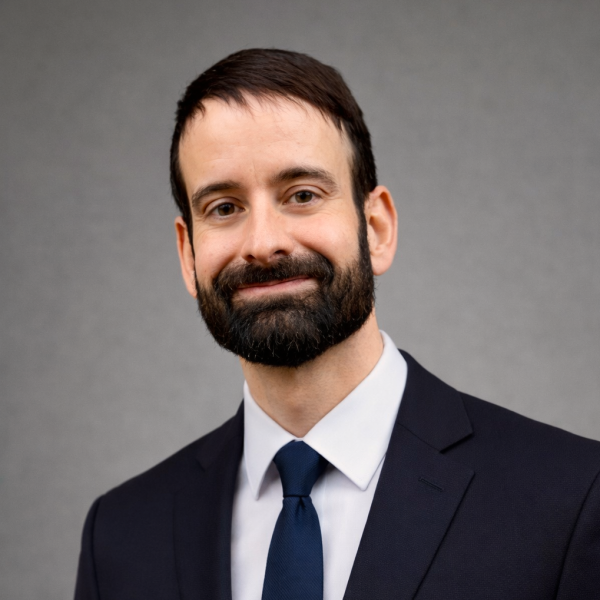
The Montreal-based retail executive recently co-founded Helios AI with technology leader Carine Lahoud. Incorporated in May 2026, the company has developed thingsIQ, a merchandising intelligence platform designed to help independent retailers make decisions around inventory, pricing and assortment planning.
The company’s vision extends beyond another analytics tool.
“We want to be the Circana of independent retail in Canada — the demand-intelligence layer for the channel nobody else measures,” said Slim. “We’re giving independent retailers decisions, not dashboards and building the benchmark data no one of them could create alone.”

A Retail Problem Hidden in Plain Sight
Slim did not set out to build a technology company.
After studying marketing and fashion, she built a career in retail buying, eventually managing purchasing decisions for 17 stores across Quebec, Ontario and New Brunswick before joining Corbeil Appliances as a buyer.
The work involved far more than selecting products. Buyers must evaluate trends, negotiate with suppliers, manage inventory levels, assess pricing strategies and make countless decisions that influence sales and profitability.
Furniture retail can be particularly unforgiving. A product that misses expectations may occupy valuable floor space for months. Excess inventory ties up capital. Missed trends can result in lost sales opportunities.
Over time, Slim began questioning why so much of the decision-making process remained manual.
Businesses had more data than ever before, yet owners and buyers still spent significant amounts of time interpreting reports, reviewing spreadsheets and trying to determine the best course of action.
“I wanted literally to automate what I did,” said Slim. “Bring everything I learned, the lessons, the experiences and the analysis, and automate it.”
The idea eventually led to a partnership with Lahoud, who serves as Co-Founder and Head of Tech. Lahoud brings an MBA, two bachelor’s degrees and PMI-ACP certification, along with experience in digital transformation, AI product development and data strategy.
The partnership combined two very different perspectives. Slim brought years of merchandising and buying experience. Lahoud brought the technical expertise needed to transform those ideas into a functioning platform.
“We complement each other so well,” said Slim. “I had this crazy idea, and somebody developed it.”
The company conducted its first targeted demonstrations in early May and landed its first client shortly afterward. Today, Helios AI has three active clients and is building a pipeline of additional retailers and strategic partnerships.
Helping Independent Retailers Compete
Although technology platforms are often designed with enterprise retailers in mind, Slim’s focus has been on independent and small-to-medium-sized businesses.
Large retail organizations often have dedicated buying teams, analysts, enterprise software and access to extensive market research. Independent retailers frequently operate with far fewer resources while facing many of the same merchandising challenges.
In many businesses, owners are responsible for purchasing, staffing, payroll, operations and customer service. Competitive shopping, trend analysis and assortment planning often become additional responsibilities squeezed into already demanding schedules.
Slim encountered that reality repeatedly while working with independent furniture retailers.
“A lot of them, especially outside the metropolitan area, are very old school,” she said. “They’re still calculating their inventory minus one plus one on an Excel sheet. This is not sustainable.”
That observation became one of the driving forces behind Helios AI.
Rather than requiring retailers to replace existing systems, thingsIQ connects to platforms they already use, including Shopify, Lightspeed, Magento, ERP systems and other data sources.
Slim said affordability and ease of implementation were important considerations during development. The platform is designed to work with retailers’ existing technology infrastructure and can typically be connected within days rather than requiring a lengthy IT project. Pricing is structured to make the platform accessible to independent retailers and scales based on factors such as store count, warehouse locations and user seats.
The goal is not to generate more reports. It is to help retailers make better decisions using the information already available to them.
Turning Data Into Action
The platform is organized around three practical merchandising questions: what should a retailer carry, what should it push, and what should it pull?
Using inventory, sales, margin and product data, the system generates recommendations that can include reordering products at risk of stockouts, identifying pricing opportunities or flagging slow-moving inventory before it becomes a larger problem.
The dashboard itself reflects that philosophy. Rather than presenting a collection of charts and reports, it highlights recommended actions and opportunities for review.
Slim believes that distinction is important because many retailers already have access to data.
What they often lack is time.
“Your POS system tells you what happened in your inventory and what you sold,” she said. “We tell you what to do next.”
The platform was initially developed with furniture retailers in mind, reflecting Slim’s professional background and industry relationships. Since launch, however, Helios AI has attracted interest from additional categories including sporting goods and electronics.
“What we built was developed for furniture as a beachhead,” said Slim. “But it’s open to all retailers.”
Building a New Layer of Retail Intelligence
One of the company’s longer-term ambitions involves creating benchmark data for independent retailers.
A retailer may understand how products are performing within its own business, but gaining insight into broader market behaviour can be more challenging, particularly for smaller operators.
Helios AI hopes to address that through anonymized benchmarking generated across participating retailers.
As the network expands, the company believes retailers will gain greater visibility into pricing, product performance and demand patterns beyond their own four walls.
For Slim, that opportunity is central to the company’s future.
The goal is not simply to help retailers understand their own data. It is to create a broader intelligence layer that helps independent businesses make more informed decisions while preserving ownership of their information.
The company says customer data remains owned by the retailer and is not sold or used to train models for other clients. Data residency is maintained in Quebec.
Those principles have become increasingly important as retailers evaluate AI tools and data-sharing arrangements.
Looking Ahead
Helios AI remains in its early stages, but the founders have ambitious plans.
The company is targeting 50 clients by the end of 2026 while continuing to refine thingsIQ based on customer feedback. Future plans include exploring tools for manufacturers, an area Slim knows well from years spent working alongside suppliers and product development teams.
For now, however, the focus remains on helping independent retailers navigate an increasingly data-driven marketplace.
The story of Helios AI is ultimately about more than software.
It reflects a broader shift taking place across retail, where technologies that were once accessible primarily to large organizations are becoming available to smaller operators as well.
Slim remains optimistic about the future of independent retail. Throughout her career she has worked with entrepreneurs, family businesses and owner-operators who continue to adapt to changing consumer behaviour, new technologies and economic uncertainty.
She believes those businesses deserve access to better decision-making tools without needing the infrastructure of a national chain.
“We just figured out we don’t belong in a box,” she said. “So we decided to make our own.”
That mindset helped transform years of buying experience into a new business. If Helios AI succeeds, it may also help independent retailers make faster and more confident decisions in an increasingly competitive marketplace.