There’s a counterintuitive story sitting right now at the centre of retail: in a world of infinite digital options, physical presence has become a competitive advantage — not a legacy cost. The brands figuring that out are pulling ahead on both trust and conversion.
The conventional wisdom is that e-commerce has made physical retail an afterthought. The data says otherwise. In-store retail media ad spending is expected to climb 33% in 2026. Nearly three-quarters of Gen Z shop in-store weekly. And experiential campaigns — when done right — are delivering returns of 3:1 to 5:1 on spend.
The question isn’t whether in-person brand moments work. It’s why so many brands still can’t execute them
Also: 80% of consumers say in-person events are the most trusted way to discover new products — and 85% are more likely to make a purchase after engaging with a brand in person.
Meanwhile, e-commerce keeps growing. So why are smart brands investing more in physical experiences, not less?
In an interview with Retail Insider, Jeff Snyder, founder and Chief Inspiration Officer at Inspira Marketing, elaborates on what’s happening.
Question: What are the biggest mistakes brands make when trying to turn in-store experiences into actual sales rather than just foot traffic?
Answer: When someone interacts with your brand in person, whether it’s a pop-up or live demo, they internalize it. That kind of engagement drives long-term brand relationships because it simultaneously taps into emotion, memory, and relevance.
The biggest mistake brands make when launching in-store experiences is failing to define what they want to achieve before designing the experience. The second mistake follows closely behind: not setting clear KPIs to measure progress toward that goal. We know experiential marketing delivers on emotional engagement, brand loyalty, and long-term value, but if the actual objective is increasing on-site sales or CRM signups, the experience needs to be architected so that the outcome happens organically.
Take a new product launch as an example. Cross-channel storytelling, pre-seeded social content that builds demand ahead of time, and influencer content introducing the product before it hits the shelves all work together to prime consumers. By the time someone engages with the product in-store, the groundwork has already been laid, and increased sales follow naturally, while the in-person experience builds relevance and long-term affinity for the brand, not just the product.

Q: Why are some brands succeeding with experiential retail while others still struggle to execute meaningful in-person activations?
A: It comes down to creating community and a sense of belonging. Shoppers gravitate toward stores that immerse them in multi-sensory brand worlds rather than simply presenting products on a shelf. When we think about retailers doing this well, a few come to mind right away: Sephora offers personalization and education, Alo hosts in-store workout classes, and Nike’s House of Innovation in New York turns retail into a showcase and innovation studio. Apple lets customers try new products and take classes on the spot. Even Home Depot and Brass Pro Shops pull this off in their own ways, proving the approach works across very different categories.
Brands and retailers are now driving engagement through hyper-local, multi-touch strategies. I expect experiences to keep moving toward something more community-based and tailored, with local stores and small businesses curating products and moments around local tastes, perhaps leaning on AI to understand what those tastes are. In practice, that looks like community collaborations, food tastings, and pop-ups built for a neighbourhood rather than a national template.
Q: How has the path from an in-store brand interaction to a purchase decision changed in the last few years, particularly with Gen Z consumers?
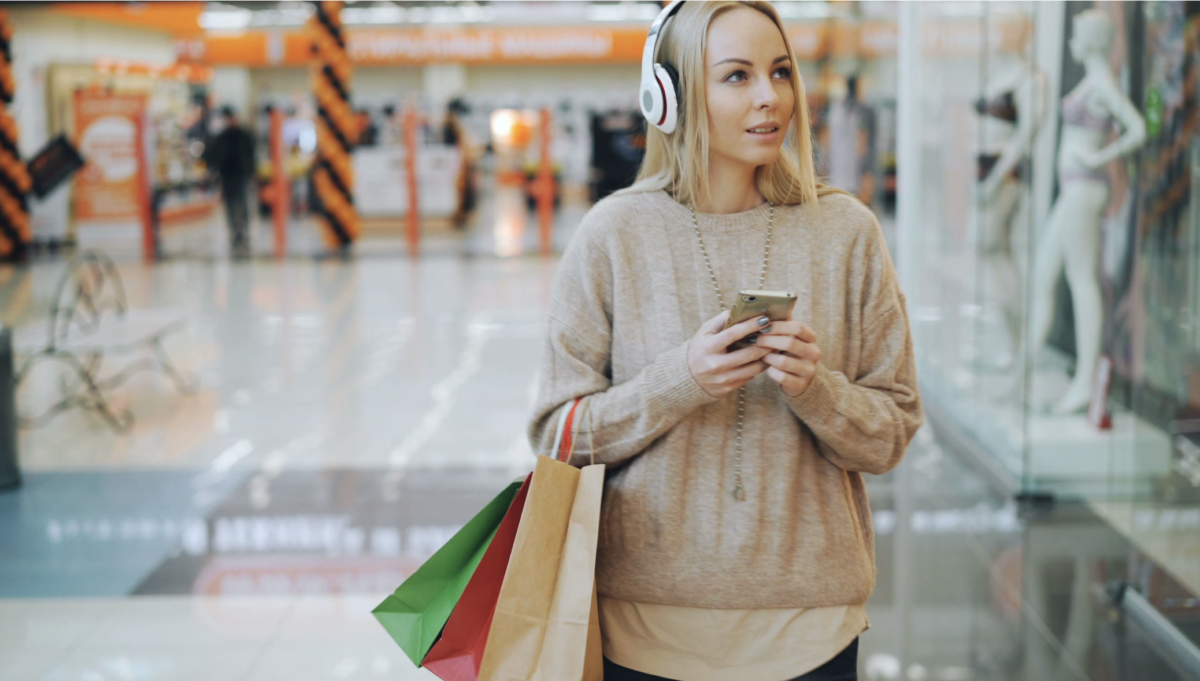
A: Once Gen Z is standing in the store, the phone doesn’t go away; it becomes part of the decision. Gen Z expects a frictionless omnichannel shopping experience, using their phones to compare prices, check reviews, and browse online while shopping in physical stores.
Gen Z might discover a product on social, price-compare in-app, and transact in-store, meaning the “research” phase doesn’t end when they walk through the door. They’re often pulling up reviews, comparing prices against other retailers, and checking whether a friend or influencer they trust has posted about the exact item in their hand. In fact, they may be crowdsourcing the decision on social from the try on room. It’s an entirely different decision-making process than prior generations.
For brands, that changes what physical stores need to deliver. It’s no longer competing against other brick-and-mortar shops; it’s competing against whatever’s on the shoppers’ screen in that moment. QR codes, in-store social proof, and staff who can speak to what’s being said online now matter as much as the product display itself.
Q: You’ve said winning brands think more like experience designers than merchandisers — what does that mindset look like in practice?
A: Thinking like an experience designer means starting with the feeling you want to leave someone with, then building backward from there, rather than starting with shelves and merchandise and hoping something sticks. Where a merchandiser thinks about placement, an experience designer thinks about the story someone is walking into, what they’ll touch, how they’ll move through the space, and what they’ll want to share after. The best retailers are already doing that. They’re paying attention to the areas shoppers gravitate toward, where they slow down, and what they come back to.
Q: With in-store retail media spending rising so quickly, how should brands measure ROI and determine whether an experiential campaign is truly effective?
A: In-store retail media is growing fast. In-store retail media ad spending in the U.S. is forecasted to grow an average of 31% through 2028. With that much money invested, brands need real proof it’s working. That means tracking a full stack of signals together: foot traffic lift against pre-campaign baselines, dwell time in the experience zone, conversion from engagement to purchase, and customer acquisition cost compared to other channels.
The real shift is connecting the in-store moment to what happens after someone leaves. If someone shows up to an event, then buys something in an email follow-up, or online a week later, or back in-store next month, that all counts as one connected result. Loblaw and Sam’s Club, for example, now have systems that follow a consumer’s activity for months after an event, so brands can see what really worked long-term instead of guessing. Brands that get the most out of experiences are the ones that decide upfront, before the event ever happens, what they’re trying to achieve and how they’ll know if it worked.
More from Retail Insider: