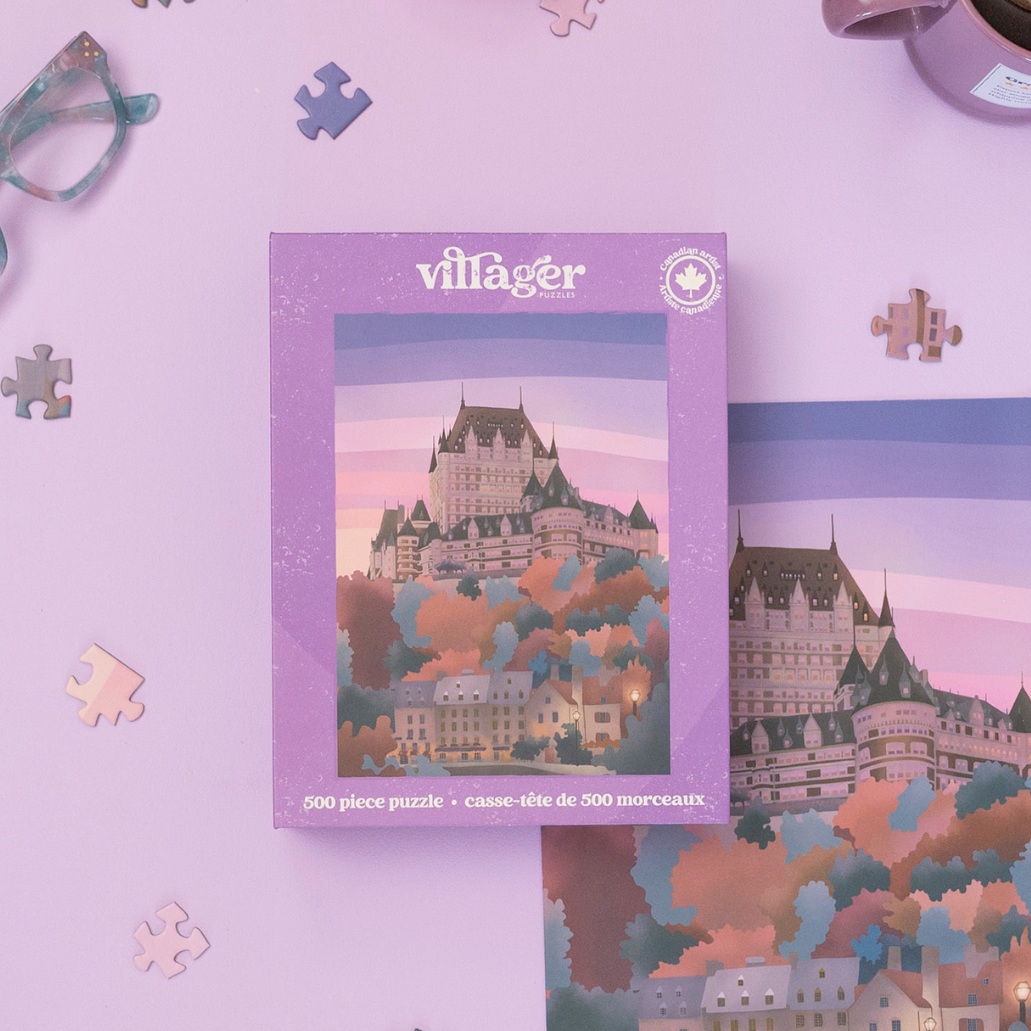
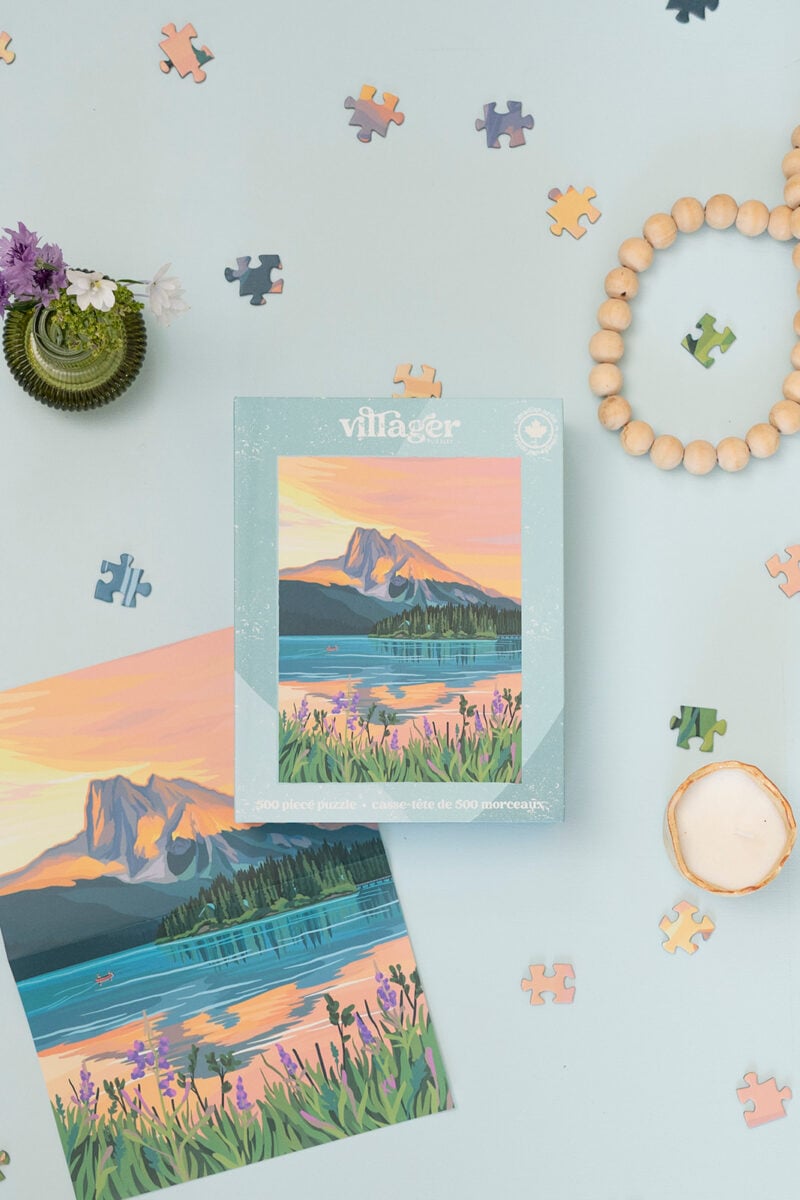
Villager Puzzles, a bootstrapped, women-founded Canadian puzzle company, is experiencing impressive retail growth. The brand has sold more than 200,000 puzzles since launch and is now available in over 800 retail locations nationwide, recently adding Simons to its retail network across all locations.
Villager Puzzles collaborates with Canadian women artists, who receive uncapped royalties from every puzzle sold. Some artists have earned between $10,000 and $28,000 over the past year.
Founder & CEO Kelly Strimer, who describes herself as a “Puzzle Snob,” spoke to Retail Insider about the retail concept.
Question: What has driven Villager Puzzles’ growth from its launch to more than 800 retail locations across Canada, and what does the addition of Simons mean for the company?
Answer: The idea for Villager Puzzles started with my love of puzzles. I found them to be such a great way to relax, but I never really loved the artwork. I saw an opportunity to bring beautiful artwork from Canadian women artists and create puzzles people would be proud to give as a gift, display on their coffee table and, of course, put together.
From the beginning, we’ve focused on three things: great art, strong storytelling and a really high-quality puzzle. Every puzzle introduces customers to an artist. That artist connection has become a big part of what makes Villager different.
When I launched the company, I didn’t have a marketing budget, so I turned to social media to get feedback, share the journey and connect with people who believed in what we were building. That’s where I found our “village” — puzzle lovers, artists and independent retailers — and that community has been one of the biggest drivers of our growth.
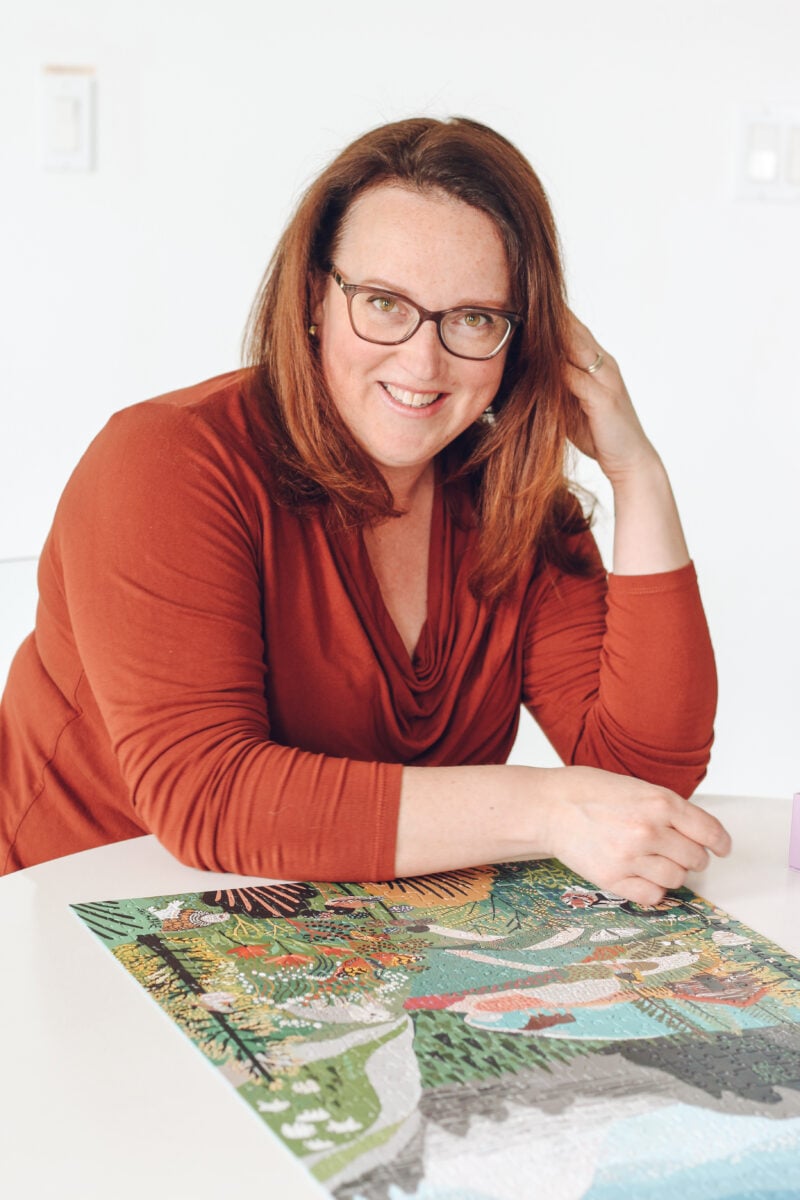
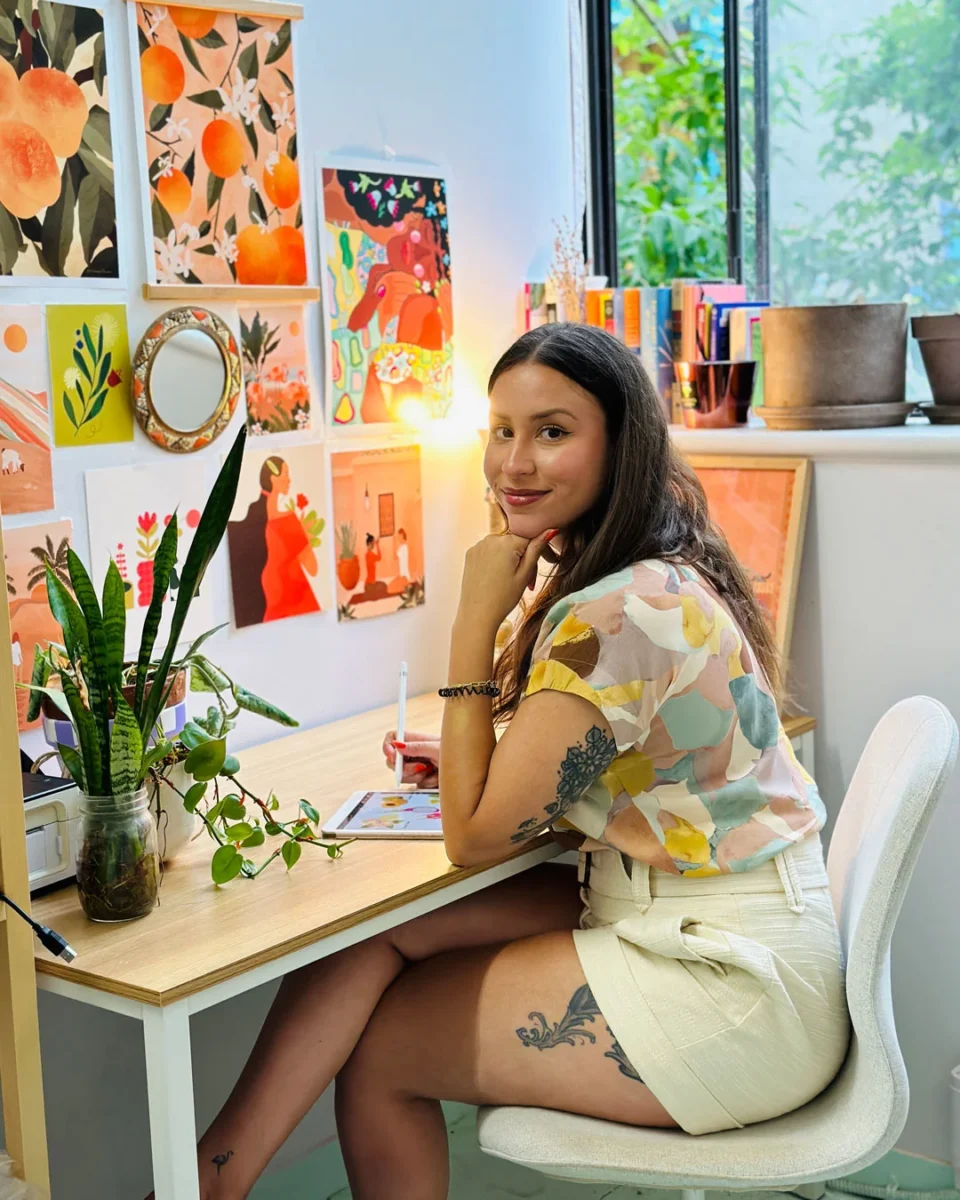
It also shaped our retail strategy. We’ve intentionally built relationships with specialty Canadian retailers that share our values around supporting women artists, Canadian businesses and shopping local. That focus has helped us grow to more than 800 retail locations across Canada.
Having Simons join that community is an exciting milestone. They have a strong Canadian identity and a reputation for discovering interesting brands, so it feels like a natural extension of the strategy we’ve built from the beginning. It’s also a meaningful endorsement of what we’ve created and an opportunity to introduce Villager and our artists to an even broader Canadian audience.
Q: How has the company’s bootstrapped, women-founded model influenced the way you have approached growth, product development and retail expansion?
A: I think being bootstrapped and women-founded has shaped Villager pretty fundamentally. We’ve had to be very financially disciplined because every dollar we spend comes from the business itself. Everything we’ve built has been funded by sales and reinvested back into the company, and I’m really proud of that. When we appeared on Dragons’ Den, I know a lot of people assumed we accepted the deal, but behind the scenes, we decided to go it alone. No Dragon required—yet!
Villager is also a community brand, and one of our core values is shared success. That’s especially evident in how we work with our artists. We pay royalties on every puzzle sold because if an artist’s work succeeds as a puzzle, we believe she should share in that success. Honestly, one of my favourite days every quarter is royalty day. I love seeing those numbers and knowing we’re helping artists grow their own businesses.
Being women-founded has also influenced how we build relationships—with artists, retailers and customers. We’re collaborative and relationship-driven. We want our retailers to feel like partners, our artists to feel supported, and our customers to feel part of something bigger than simply buying a puzzle.
For me, growth isn’t about growing as quickly as possible. It’s about building something that lasts: a profitable, financially healthy company that continues creating opportunities for the people in our community. That’s what success looks like to me.
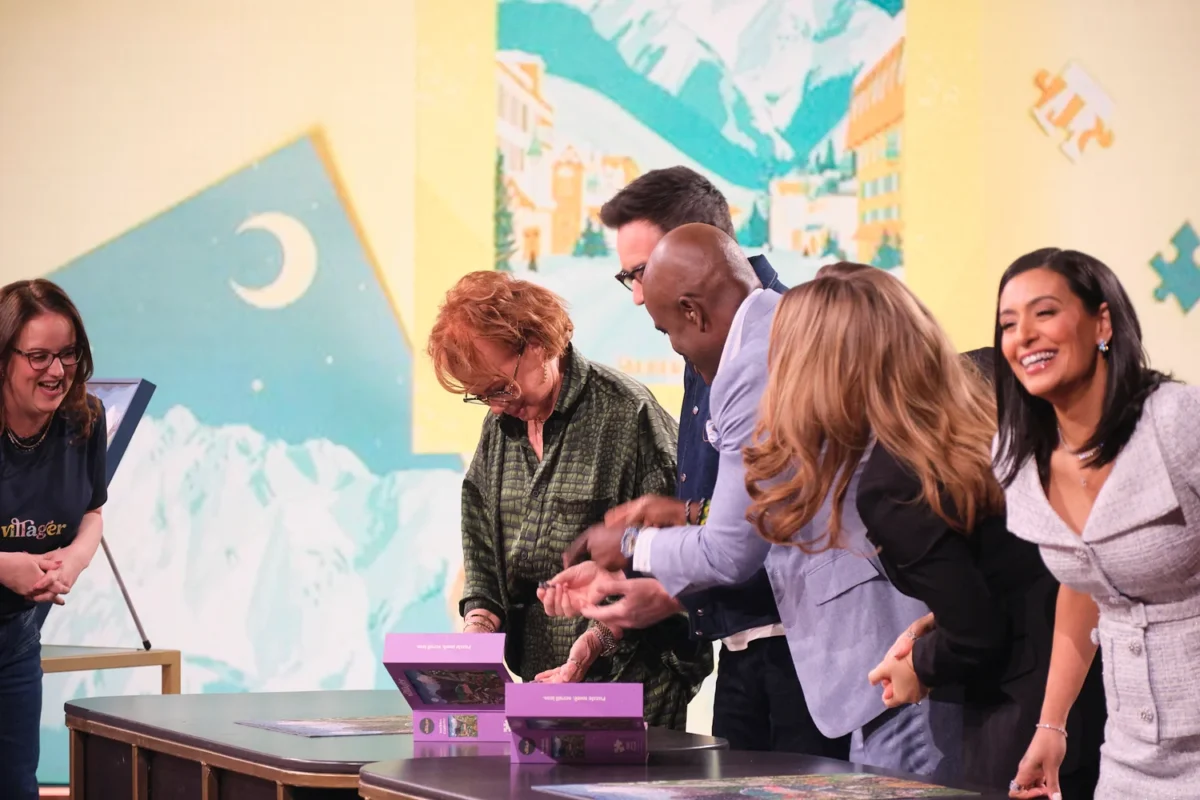
Q: What are you seeing in terms of consumer demand for puzzles and other leisure products, and who is the Villager Puzzles customer today?
A: I think we’re seeing an interesting shift in the way people are thinking about leisure time. There’s a growing appetite for activities that allow us to step away from screens and actually be present—whether that’s through puzzles, crafts, reading, gardening or other hobbies. There’s something appealing about doing something with your hands and having a tangible sense of accomplishment at the end of it.
Puzzles sit at this intersection of mindfulness, creativity, wellness and connection. You can do one on your own as a way to unwind, but you can also bring one out when friends or family are visiting, or give it as a gift. And I think there’s also a bit of nostalgia involved. People remember doing puzzles growing up, but today’s puzzle customer is looking for something that feels much more design-forward and reflective of who they are.
That’s really where Villager fits. Our customer is someone who cares about beautiful things and loves the story behind what they’re buying. They’re drawn to the artwork, but they also care about the quality of the puzzle and the experience of completing it. And because our puzzles feature artwork from Canadian women artists, there’s an added opportunity for customers to discover and support an artist while they’re enjoying the puzzle.
What I love most is that there really isn’t one “puzzle person.” Our customers span generations and life stages. We have people buying puzzles for quiet evenings at home, families doing them together, friends bringing them on vacation, and people looking for a thoughtful gift. There’s also a real desire to support Canadian and women-owned businesses, so I think our customers are often buying into the story and values behind Villager as much as they’re buying the puzzle itself.
Q: How does the royalty model for the women artists you work with function, and what impact have earnings of $10,000 to $28,000 had on the artists and the company’s ability to attract new creators?
A: Our royalty model is pretty simple: our artists receive an uncapped royalty on the selling price of every puzzle featuring their artwork. So as a puzzle sells, the artist directly participates in that success — there’s no cap on what they can earn.
That’s something that was really important to me when I started Villager Puzzles. I didn’t want the artists to simply be paid a one-time fee for their artwork and then watch someone else benefit from its success.
I remember at the end of last year, I wrote a $10,000 quarterly royalty cheque to one of our artists for the first time. She had just had a baby, and knowing that this income was arriving at such an important moment in her life was incredibly meaningful to me. It really brought home what this model can mean — not just as an extra cheque, but as recurring income that can make a tangible difference in an artist’s life.
Q: With more than 200,000 puzzles sold and a presence in more than 800 stores, what are your growth plans for Villager Puzzles over the next few years?
A: I think the next stage of growth for Villager is going to be thoughtful expansion — continuing to build on the things that have gotten us here: incredible Canadian women artists, high-quality products, great storytelling and a strong specialty retail community.
We’ll continue bringing more artists into the Villager community and expanding our holiday collection, but we’re also starting to explore new puzzle formats and products. This year, for example, we’re launching an advent calendar for the first time. Longer term, I see an opportunity to take the relationships we’ve built with artists and our customers and expand into other creative hobbies — things like paint-by-number or craft kits.
A big part of how we’ll make those decisions is by listening to our “village.” We want our community to have a voice in what we create — whether that’s the art, the artists we work with, the puzzles themselves or what products we explore next. If we’re going to grow, I want us to grow alongside the people who have helped build this company.
More from Retail Insider: