Shopping malls, underground corridors, aging buildings and places caught somewhere between their original purpose and whatever comes next are becoming destinations in their own right through Liminal Assembly, the Toronto-based project founded by Aryeh Bookbinder.

The concept is expanding this month through LoiterFEST 2026, a collection of events examining overlooked, transitional and sometimes deeply nostalgic places. Programming began September 4 and continues through mid-September, with events in Toronto and elsewhere in Ontario, along with experiences reaching Moncton and Los Angeles. Walking tours, a liminal-space photo contest, a book club, scavenger hunts and other excursions are built around places people might otherwise pass through without giving them much thought.
Retail environments remain prominent. A September 5 field trip with millennial.ca began at Dufferin Mall, while a September 13 excursion led by Dan Seljak, called “The Malls: Highway 427’s Backrooms,” is scheduled to depart from Kipling Station. Liminal Assembly is also hosting a September 16 excursion through the PATH beneath Toronto’s financial district.
For Bookbinder, the expanding festival represents the evolution of an idea that initially gained attention through tours of unusual and declining shopping centres around the Greater Toronto Area. Liminal Assembly has taken participants into malls and commercial properties that sit outside conventional definitions of a successful retail destination, encouraging visitors to pay attention to architecture, history, remaining businesses and the emotional responses these environments can produce.
Retail Insider previously spoke with Bookbinder as interest grew around Cumberland Terrace in Toronto’s Bloor-Yorkville neighbourhood. The experience demonstrated something he has continued to explore: aging commercial properties can attract considerable interest because traces of their earlier identities remain visible.
Opening Liminal Assembly to Other Organizers
The latest evolution extends the concept beyond experiences led by Bookbinder himself. LoiterFEST provides an umbrella under which other organizers can propose events based on their own interpretations of liminal places, allowing the idea to spread well beyond the locations Bookbinder could explore on his own.
“I’d love for people who are serious about potentially running their own events to reach out,” he told Retail Insider. “They can submit a concept, and I’m accepting almost everyone with the idea that I can help them make it great.”
That approach is visible across the festival calendar. Niagara Walking Society hosted a “Slabtown Saunter,” while Mustafa Zebuun is behind a liminal-spaces photo contest in London, Ont. Programming also includes a tour of the Westin Bonaventure Hotel in Los Angeles and an exploration of forgotten areas of Moncton, while events around Toronto and Waterloo further broaden the geographical reach of the concept.
The expanding roster makes Liminal Assembly increasingly difficult to define simply through its “dead mall” excursions. Shopping centres remain important to Bookbinder, but the broader subject is the built environment and the way people relate to places that appear suspended between eras, purposes or identities.
Growing Up as a ‘Mall Baby’
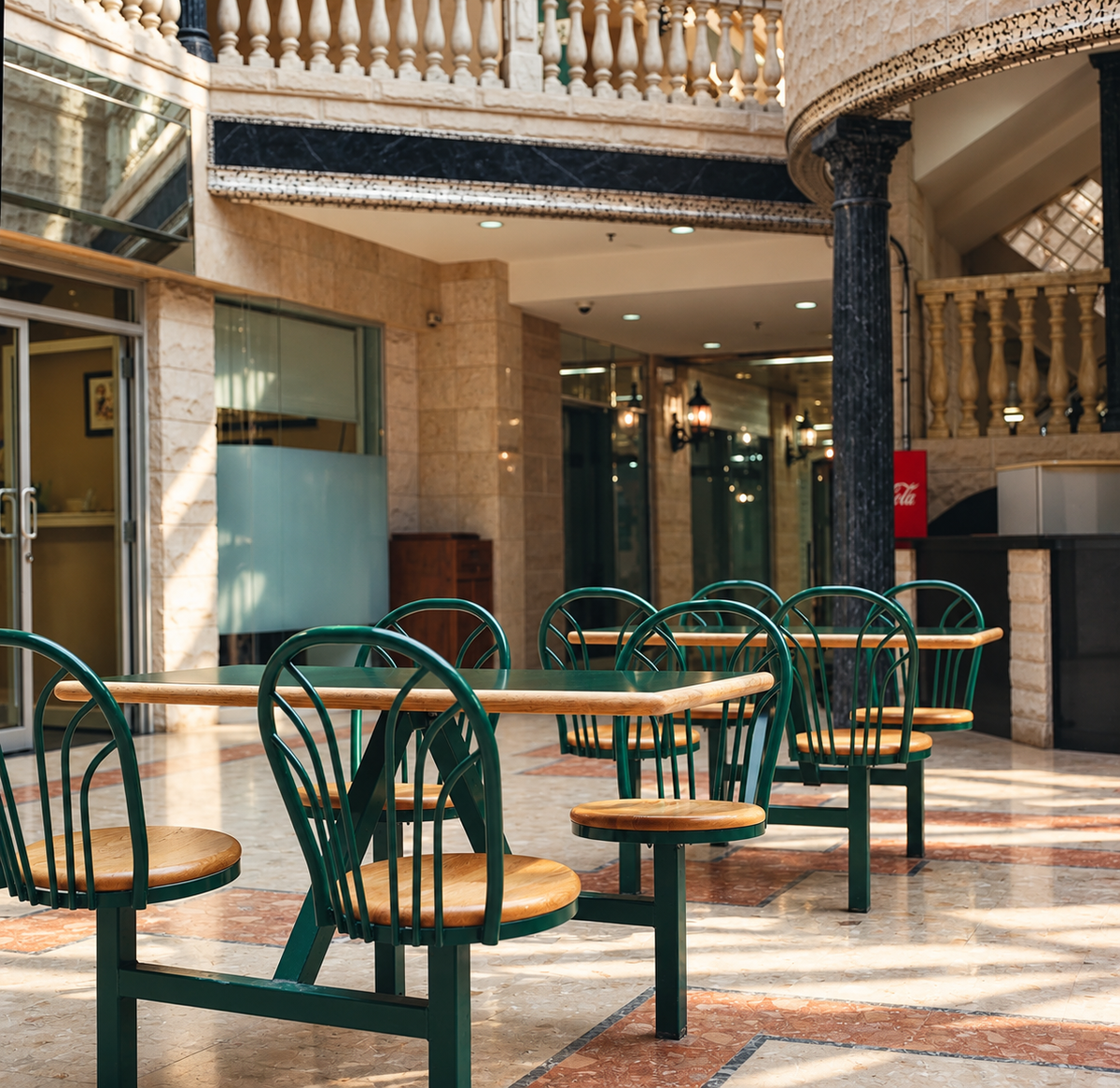
Bookbinder’s interest in shopping centres is personal. He grew up near Promenade and Centerpoint malls north of Toronto and describes himself as a “mall baby.”
“Malls were places where I would run into my grandmother, run into my cousins and just be surrounded by adults talking,” he said. Some of his earliest spatial memories are tied to mall interiors, including details as ordinary as where buttons were positioned inside an elevator.
Promenade, in particular, made an impression. Bookbinder remembers an environment that once felt elaborate and almost enchanted, with architectural elements, fountains and greenery forming part of the experience.
Those memories help explain why Liminal Assembly’s mall excursions can resonate with people who may have little conventional interest in architecture or commercial real estate. A brick floor, old railing, fountain, particular type of lighting or even the proportions of a corridor can summon memories that have little to do with shopping itself.
During the Retail Insider interview, the conversation turned to whether that reaction comes from architecture, visual cues, smells or other sensory associations. There may be no single answer. A mall that has changed relatively little over several decades can function as a physical archive, confronting visitors with details they may not have consciously remembered until they see them again.
Nostalgia and a Search for ‘Innocence’
Bookbinder believes the growing fascination with nostalgic environments reflects something deeper than fondness for old architecture.
“People are yearning for the past, but if you go a little deeper, they’re yearning for innocence,” he said.
He points to the extraordinary pace of technological change, including the internet and artificial intelligence, as part of the environment in which that yearning is developing. For Bookbinder, nostalgia can offer adults a temporary connection with an earlier period of their lives, with the physical environment acting as a trigger.
The experience can be surprisingly emotional. Someone entering an older mall may encounter a visual cue associated with childhood, family members or a period of life they had largely stopped thinking about.
Bookbinder raised another intriguing question during the interview: whether the stronger reaction comes from recognizing how much a place has changed or discovering how little it has changed.
“When you notice how little something has changed, that’s when you really notice how much you’ve changed,” he said.
That idea sits close to the heart of Liminal Assembly. The buildings matter because of the memories and associations people bring into them.
When Malls Were Places to Linger
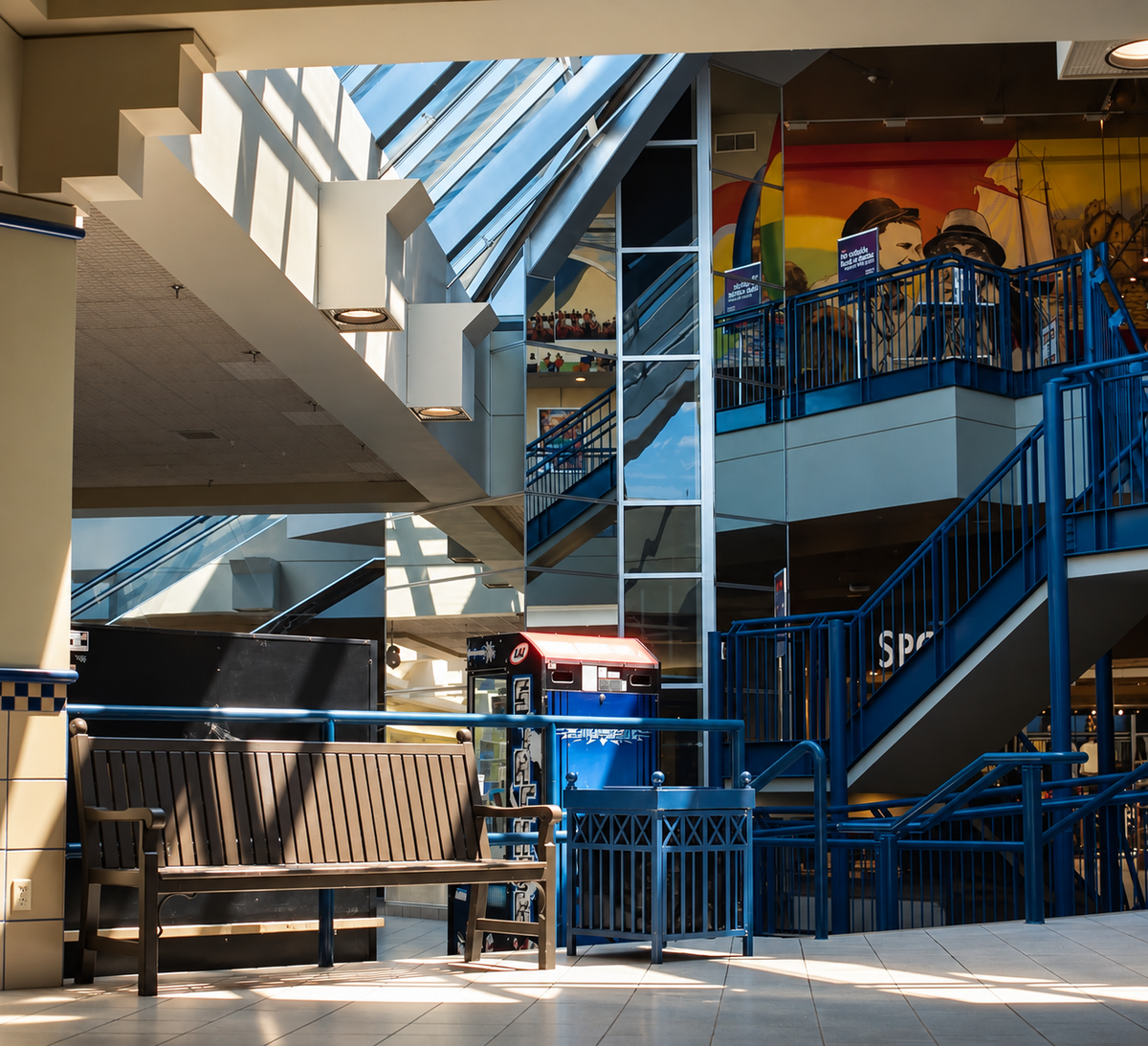
Bookbinder’s childhood recollections highlight another dimension of shopping centres that has become increasingly relevant to landlords and retail strategists: malls have long functioned as social infrastructure. For generations of Canadians, a shopping centre could be somewhere to spend hours without having a precise objective.
People shopped and ate while also meeting friends, sitting near fountains, watching other people, bringing children and unexpectedly encountering neighbours. Older centres sometimes devoted substantial areas to landscaping, seating, fountains and architectural gestures that contributed to the overall environment, while many have subsequently been renovated as consumer expectations, leasing economics, accessibility requirements and design preferences evolved.
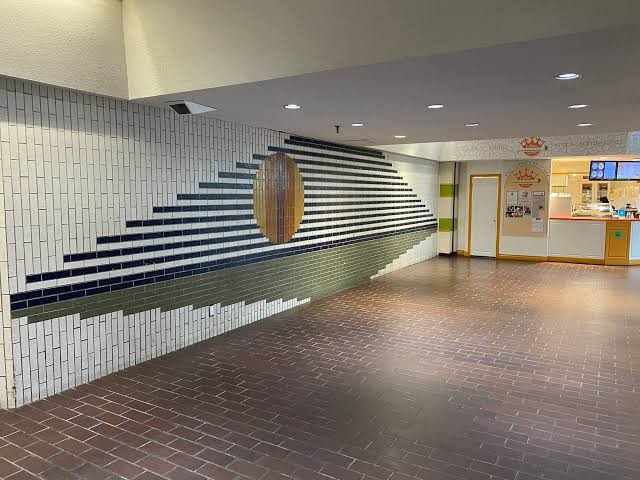
Bookbinder is particularly interested in details that survived those changes. During the interview, the discussion moved through Toronto examples where older brickwork, hallways and unusual layouts remain embedded inside otherwise contemporary commercial environments.
This is also where the term “loitering” takes on a different meaning. Liminal Assembly participants are encouraged to explore respectfully and support businesses operating in the places they visit, while avoiding restricted areas or behaviour that could make property operators uncomfortable.
Bookbinder said that relationship works particularly well when participants also become customers.
“They’re there to buy,” he said. “They’re buying so they can loiter.”
For these visitors, lingering becomes part of the attraction.
Finding New Life for Retail Space
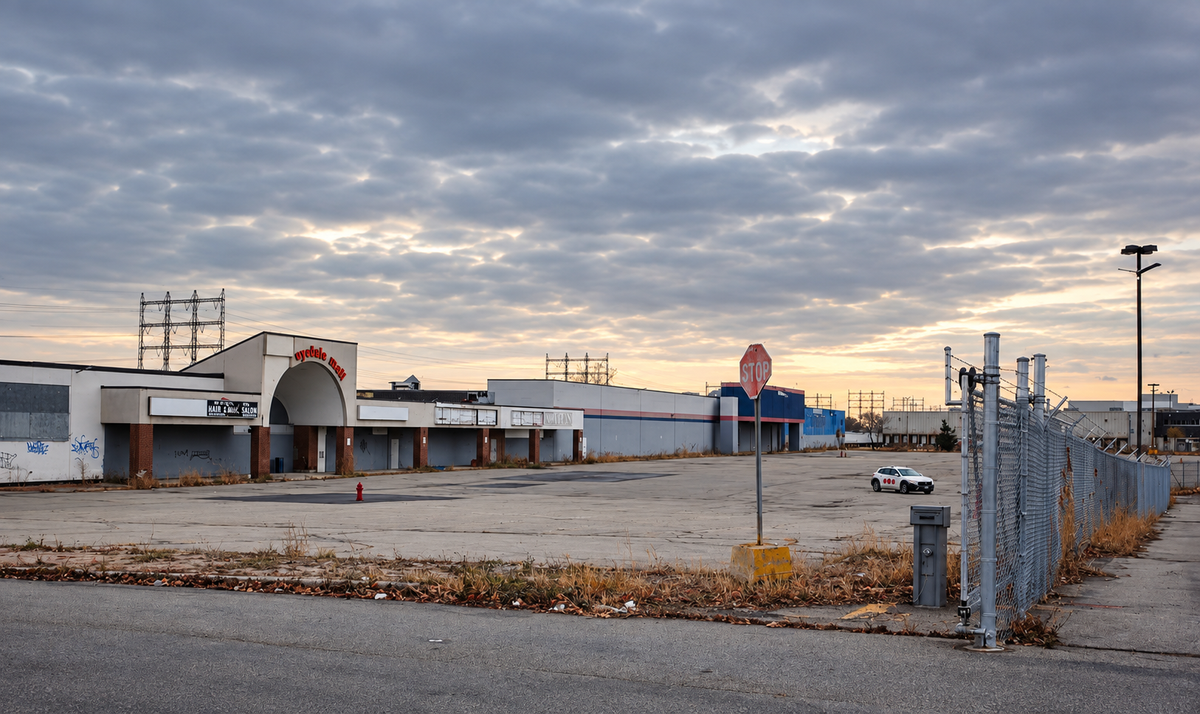
The idea has particular relevance as Canadian shopping-centre owners work through another period of change in physical retail. Former department stores, oversized retail units and other vacancies can remain in transition for extended periods while landlords pursue new tenants, subdivisions or larger redevelopment plans.
Temporary entertainment, cultural and recreational uses can put some of that space back into circulation while longer-term plans take shape. A current Toronto example is unfolding at Woodbine Mall, where SUSO Skate Co. plans to open a roller-skating pop-up on September 25.
SUSO has opened more than 15 pop-ups in vacant retail spaces across the GTA and has welcomed more than 250,000 skaters since 2021. Co-founder Henry O’Brien previously told Retail Insider that the model can provide landlords with community activity, foot traffic and increased dwell time, while flexible leasing allows SUSO to occupy space that might otherwise remain vacant.
Woodbine is particularly relevant because of the nostalgia surrounding the mall and its longstanding Fantasy Fair indoor amusement park. Bookbinder connected with the SUSO team after recognizing the overlap between its use of former retail space and his own interest in liminal environments.
The concepts operate differently, but both point toward a question confronting commercial real estate: what can a property become during the period between its previous use and its next one? A former department store can become a roller rink, an aging mall can become the subject of an excursion, and an underground concourse can become an experience when people are encouraged to slow down and look at their surroundings differently.
For property owners, temporary activation can generate traffic and activity while preserving flexibility over the longer-term future of a site. It can also reveal forms of demand that conventional leasing strategies might overlook.
Technology Helping People Meet Offline
Liminal Assembly is also changing the digital infrastructure it uses to bring participants together. Bookbinder has moved his events from Eventbrite to Wygo, a Canadian platform focused on helping community organizers create and manage in-person events.
He told Retail Insider that he likes the emerging nature of the platform because participants currently have to make a deliberate effort to find some of the experiences listed there. For a project built around people actively seeking unusual experiences, Bookbinder sees that selectivity as an advantage.
Wygo was co-founded in 2023 by University of Waterloo systems design engineering graduates Jocelyne Murphy and Christopher Oka. The company secured nearly $1.6 million in pre-seed funding in 2026 from investors including N49P, StandUp Ventures, Garage Capital, Zero 21 Partners, Backbone Angels, Good Future and Shopify CEO Tobi Lütke.
The platform helps organizers create events, attract attendees and manage event finances. Its growth comes amid rising demand for in-person social experiences following the pandemic.
Digital tools are playing an interesting role in the renewed interest in physical gathering. They can help people discover reasons to leave their screens, enter unfamiliar places and spend time with people they might otherwise never meet.
‘Revenge Meetups’
The years following pandemic restrictions produced extensive discussion around “revenge shopping” and travel as consumers returned to activities that had been inaccessible or constrained. Bookbinder sees another version developing around social interaction.
During a discussion about the proliferation of in-person events, social clubs, dating concepts and other businesses encouraging people to meet physically, he offered a phrase for what may be happening: “revenge meetups.”
The idea is straightforward. After years in which digital communication became deeply embedded in work and social life, there remains considerable appetite for experiences built around being physically present with other people.
That matters for retail because stores, malls, restaurants and commercial districts ultimately depend on people wanting to leave home. An expanding ecosystem of offline communities can create additional reasons for them to do so, sometimes with relatively simple programming rather than elaborate permanent attractions.
In the case of Liminal Assembly, the experience can be as straightforward as a group of people agreeing to explore the same strange building together.
Cumberland Terrace and Yorkville’s Layers of History
Few places illustrate Bookbinder’s interest in accumulated commercial memory as clearly as Cumberland Terrace. The underground Toronto shopping centre became part of Yorkville during a period of significant development in the neighbourhood, and portions of the property retained architectural details capable of immediately evoking another era.
Cumberland Terrace also existed within a very different Yorkville social ecosystem. TIFF activity was once heavily concentrated in the neighbourhood, with the festival’s operational base spread around Cumberland Terrace and nearby hotels and film screenings taking place at venues including Cumberland Cinema and the Varsity Theatre.
Bookbinder said former Cumberland Terrace merchants have told him that actors, broadcasters and other festival personalities would pass through the shopping centre, including people collecting tickets during TIFF. Those recollections are especially timely as Toronto again hosts the film festival this month.
The stories illustrate how commercial properties accumulate histories that can be almost invisible to someone encountering them decades later. One visitor may see dated brickwork and an obsolete retail layout, while another remembers a restaurant, a former retailer, an afternoon with a parent or the excitement surrounding the film festival.
Liminal Assembly is interested in the distance between those experiences.
Experiencing Places Before They Change
Buildings require investment, cities evolve and commercial properties need to respond to changing economic conditions. Liminal Assembly’s approach is to pay attention to what exists during that process of change.
A tour can document an architectural detail before renovation, bring people into businesses that remain open and create another layer of memory around a property. Photography and storytelling can preserve pieces of an environment even when the physical setting eventually changes or disappears.
LoiterFEST expands that idea by allowing organizers in different cities to identify and interpret places within their own communities. The subject can be a mall, hotel, underground walkway or another environment that has somehow fallen between familiar categories.
Sometimes an older building makes people aware of how dramatically their city has changed, while other places reveal how much of the past remains hidden in plain sight. And occasionally, as Bookbinder observed, encountering something unexpectedly unchanged becomes a reminder of how much the visitor has changed instead.
LoiterFEST continues through September, with upcoming events and information on submitting an event concept available through Liminal Assembly’s calendar on Wygo. Bookbinder hopes people with serious ideas for unusual gatherings will reach out and help extend the concept into places and communities Liminal Assembly has yet to explore.