Lululemon is reducing the number of products carried in its stores and testing more localized assortments as the Vancouver-based retailer rethinks its physical retail strategy amid weaker sales across North America.
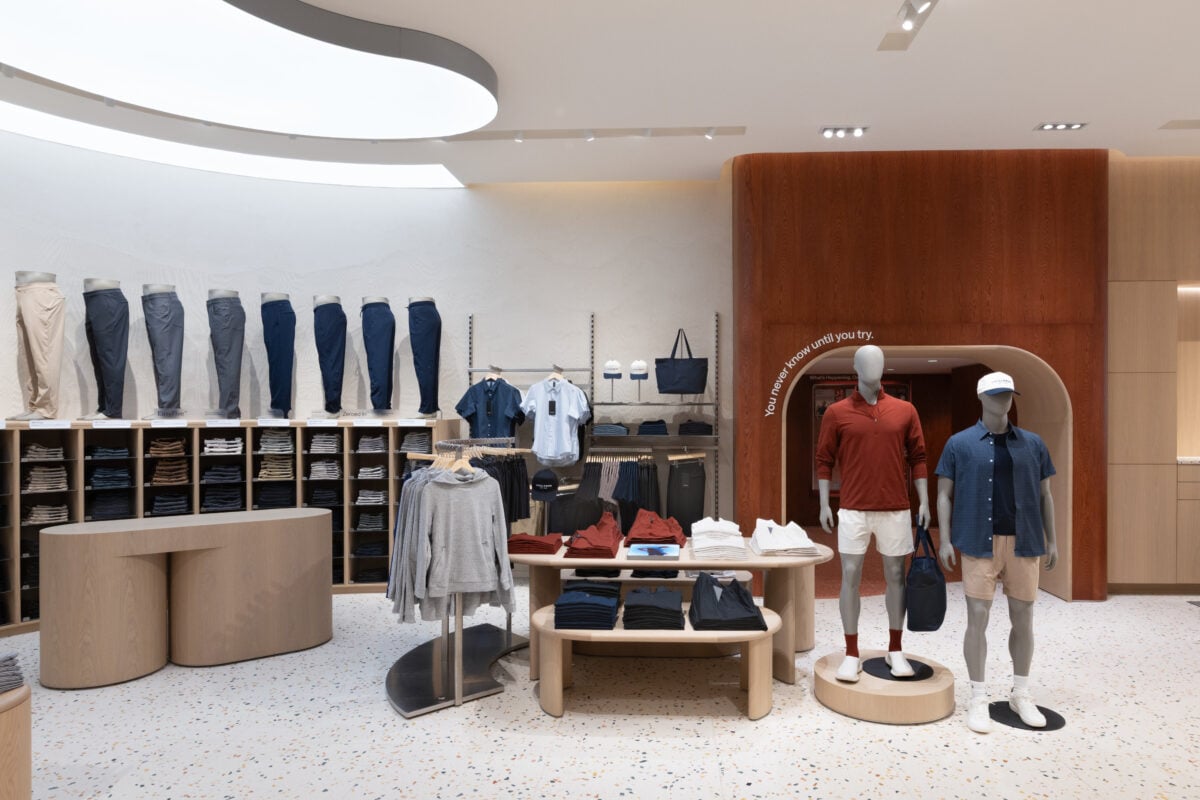
The company has reduced store SKUs by approximately 15% to create a less-dense shopping environment, with the changes being rolled out across its store network. Lululemon is also testing further SKU reductions in selected locations, along with localized assortments, new fixture packages, additional imagery and mannequins highlighting specific activities.
Management said merchandise is increasingly being organized around activities and lifestyle, with the aim of making stores easier to shop and improving how products are presented to customers.
The changes come as lululemon faces declining sales in its largest markets. Canadian revenue fell 11% in the second quarter, while U.S. revenue declined 8%. Management has identified weaker traffic, pressure on conversion and inconsistent product performance among the issues affecting the business.
At the same time, lululemon is becoming more selective about adding stores. The retailer has reduced its expected net new openings globally this year while continuing to invest in approximately 35 store optimizations.
Fewer Products, More Curated Stores
The 15% reduction in store SKUs comes after years of assortment growth across women’s and men’s apparel, footwear and accessories.
Management said the lower SKU density is being rolled out across the fleet, while a smaller number of stores are testing additional reductions. The company is examining how different assortment levels affect customer engagement and store performance before deciding which elements to introduce more broadly.
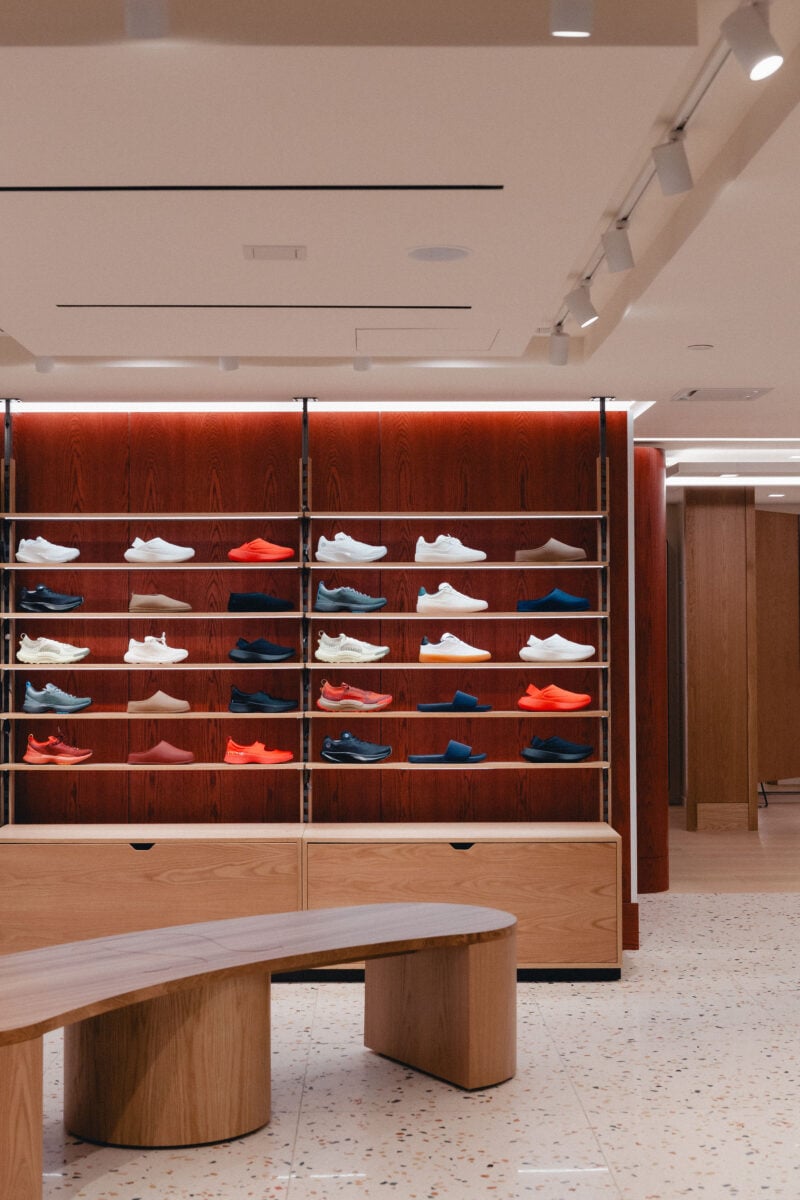
The tests extend beyond the amount of merchandise on the sales floor. Lululemon is experimenting with localized assortments, different fixture packages, additional imagery and activity mannequins, while organizing merchandise more closely around specific activities and lifestyles.
Localized assortments could give stores greater flexibility to emphasize products that perform particularly well in individual markets. Management said the strongest elements from the current tests can ultimately be scaled across the wider store network.
Changing Fashion Trends Put Pressure on the Assortment
The changes are unfolding as lululemon adjusts to a notable shift in women’s bottoms, historically one of the most important areas of its business. Women’s legging sales declined approximately 20% during the second quarter, considerably more than the decline in lululemon’s overall business.
Management said customers are increasingly moving toward looser, “away-from-body” silhouettes. Products including the Groove Wide-Leg, Align Foldover Jogger, Breezily and an updated Dance Studio Pant have performed well as the company responds to that shift.
Overall bottoms sales declined in the mid-single digits, meaning stronger demand for newer silhouettes is offsetting some of the weakness in leggings. Lululemon maintains that leggings remain an important category, particularly for yoga and Pilates, and said it continues to invest in newness within the category.
The changing product mix is also relevant to the work underway inside stores. As the assortment expands across different silhouettes, activities and uses, lululemon is testing how those products are grouped and presented to shoppers.
Lululemon Moves Faster on Products That Sell
Lululemon is also increasing its ability to respond when products perform better than expected. The retailer said it is chasing approximately 20% more product volume this year compared with last year.
That gives the company greater capacity to place follow-on orders for stronger-selling merchandise rather than committing as much inventory before demand becomes clear. Management has also been working to shorten parts of the product-development cycle.
Consumer research conducted by the company found that customers want more differentiated merchandise and innovation, an issue lululemon has acknowledged as it works to improve product relevance. The increased chase capacity complements the changes underway in stores, where the company is reducing SKU density and experimenting with more localized assortments.
Downtown Montreal Store Highlights Localization Strategy
A more selective approach to expansion has not stopped lululemon from making significant investments in established Canadian markets.
In May, the retailer opened a two-level store at 1035 Sainte-Catherine Street West at Peel Street in downtown Montreal. The approximately 11,600-square-foot location replaced a nearby store that had operated for 16 years and is one of lululemon’s larger recent Canadian store investments.
The store incorporates references to lululemon’s Pacific Northwest origins while adding design elements specific to Montreal. These include localized messaging, work by Montreal artist Jason Cantoro and other design details intended to connect the store with the city.
The larger footprint provides additional space for women’s and men’s apparel, footwear and accessories across categories including yoga, running and training. The store also reflects themes lululemon has been applying to its evolving retail strategy, including localization, elevated presentation and clearer activity-based merchandising.
The relocation illustrates how lululemon can invest in an established market without materially increasing its overall store count. The company had 71 company-operated stores in Canada at the end of fiscal 2024 and fiscal 2025, with the count increasing to 72 earlier this year.
Playbook 2.0 Store Concept Opens at Oakridge Park
Lululemon has also introduced one of its newest store concepts in its home market of Vancouver. The retailer returned to Oakridge Park in May with an approximately 5,900-square-foot store as part of the first phase of the redeveloped shopping centre. The location is among the first stores built under lululemon’s new “Playbook 2.0” design standard.
The concept draws from the landscapes and culture of the Pacific Northwest, incorporating softer forms, curved fixtures, natural materials and local references. Clear sightlines and a more open sales floor also make the store feel less compartmentalized than some older lululemon locations.
The Oakridge Park store includes space dedicated to local ambassadors, events and activity routes, while the retailer is using the location as a hub for community programming.
Together, the Montreal and Vancouver stores show that lululemon continues to invest in prominent Canadian locations even as it takes a more cautious approach to overall expansion.
Net Store Expansion Slows
Globally, lululemon now expects to open approximately 35 net new company-operated stores during fiscal 2026, down from its earlier expectation of around 40. The company continues to expect approximately 35 store optimizations, maintaining investment in existing locations even as the pace of net additions slows.
Management said every new store and optimization project is being scrutinized as the company becomes more disciplined about real estate.
North America is seeing particularly limited net expansion. Approximately 10 net new stores are expected across the region this year, including seven in Mexico.
Among the North American openings, roughly half involve converting existing pop-up locations that have already demonstrated strong productivity. The remainder involve strategic locations or additional stores in markets where management believes there is room for further penetration.
Pop-Up Store Count Set to Decline
Lululemon expects to end fiscal 2026 with approximately 40 pop-up stores, down from 65 at the end of 2025. The format has given the retailer a way to establish a presence in markets before making some permanent store commitments. Management’s decision to convert productive pop-ups among this year’s North American openings shows how those locations can also provide evidence of demand before a longer-term investment is made.
The lower pop-up count, reduced net opening target and continued investment in optimizations point to a more measured approach to North American real estate. Management indicated that it expects to remain disciplined on new stores heading into 2027.
Canada’s Sales Decline Comes Without Major Store Expansion
The relative stability of lululemon’s Canadian store count provides important context for the company’s recent sales deterioration. Canadian revenue grew nearly 10% in fiscal 2024 before growth slowed to less than 1% in fiscal 2025. Revenue declined approximately 3% in the first quarter of fiscal 2026 before falling 11% in the second quarter.
Those declines have occurred without significant growth in the Canadian store network. Management has instead pointed to weaker traffic, pressure on conversion, product performance and brand sentiment among the issues affecting its North American business.
The company expects Canadian revenue to weaken further during the third quarter, performing below a North American business that is forecast to decline in the mid-teens.
Against that backdrop, productivity at existing stores is taking on greater importance. Recent investments in Montreal and Vancouver, alongside the wider assortment and merchandising tests, show where lululemon is directing some of its attention as net expansion becomes more selective.
Lululemon has been making changes to its digital experience, including its homepage, category pages and product-detail pages, as it works to improve product discovery and conversion online.
Both channels are facing pressure. Store-channel revenue and digital revenue each declined 6% during the second quarter, increasing the importance of improving how shoppers find and evaluate products across the business.
Store Strategy Will Be Part of Broader Review
The retail changes are already underway as Heidi O’Neill prepares to become lululemon’s Chief Executive Officer on September 8. O’Neill joins following a 27-year career at Nike that included senior responsibilities across consumer strategy, product, brand and marketplace development. Lululemon has said she will conduct a deep review of the company’s strategy and the action plan currently being implemented.
She will inherit a store network already undergoing changes. Net expansion is slowing, the number of pop-ups is being reduced, existing stores continue to receive investment, and the assortment inside stores is becoming more curated.
Recent investments in Montreal and Vancouver demonstrate that physical retail remains important to lululemon even as sales weaken in its home market. The company’s current direction puts greater emphasis on the productivity, assortment and presentation of individual locations as it becomes more selective about adding stores.