

‘Main Street’ — the most quintessential of community geographies. It’s where neighbourhood residents go to shop.
But who runs these places, and represents the interests of the shopkeepers?
While municipalities are the ‘local government’, they provide a range of services to the entire city. Their jurisdiction includes investing in infrastructure, maintaining streets, creating parks, operating recreation centres, planning land uses, processing development applications, setting budgets, to dog licenses and general administration – order of importance may vary depending on who one asks.
Cities and Business Improvement Associations
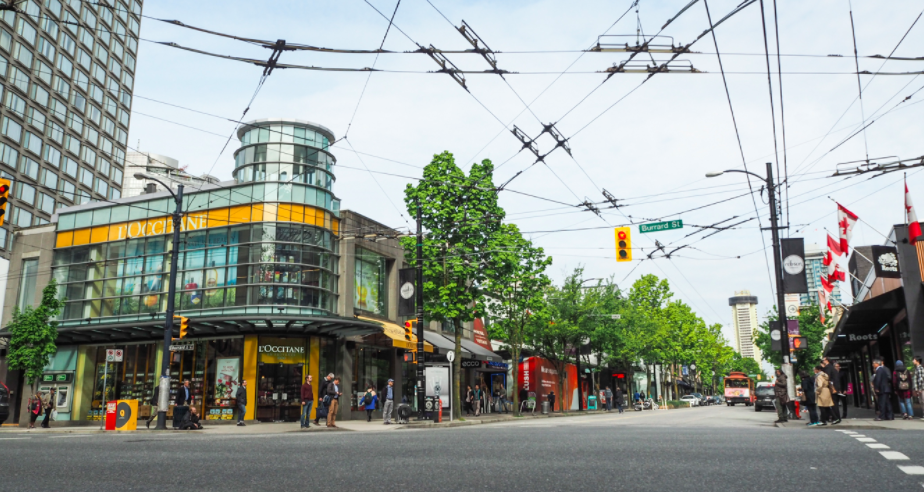
A Business Improvement Association or Area (BIA) is an organizational structure created to support the success of businesses in specific commercial areas, through funding, programing, coordination, and pooling of resources to address local priorities. Normally they cover retail streets or districts to improve their vibrancy and viability. BIAs are established as a non-profit organization, and have a board of elected volunteers and paid staff.
BIAs are, as proponents say, the voice and advocate of the small business owners and local merchants.
The City of Vancouver has 22 BIAs, a significant proportion of the 70 BIAs in the province of British Columbia. City Council is responsible for the periodic renewal of BIA mandates, through establishment of bylaws.
While it may seem like a BIA is an extension of the city, it’s different and more than that. BIAs supplement city services, rather than replace them. BIAs support their area and membership through programs like marketing campaigns, promotional branding, special events, ongoing services, and information sharing. To improve the image of the area and make it a more desirable place to visit and operate, BIAs may also deal with social issues such as homelessness, panhandling, graffiti, and parking. The cycle of enticing more people to the area in turn further attracts shoppers and grows businesses.
Hyperlocal Services
Unlike a shopping centre that is operated by a single property manager that wants to optimize the mix of unit tenants and may organize some programs for the overall facility, properties along retail streets are all individually owned, operated, and occupied. This lack of programing may lead to less cohesion – or to an interesting eclectic mix of independent shops that can’t be found at the mall.
In terms of budgets, BIAs are funded through an additional levy on properties within their defined benefiting area. Although this money is collected by the city, it is transferred to the BIA to cover their operating costs. The BIA levy on the business varies by assessed value and size of the property. To provide a sense of the amount, for example: a small restaurant would pay about $2,000 annually towards the BIA, which is equal to about five percent of their property tax bill.
Benefits, and Costs

While there’s benefits, there’s also costs. The additional BIA levy is applied to all non-residential properties in the geographic area. Through standard triple-net commercial leases these additional charges are paid for by the tenant occupant rather than the building owner. This is the same for property taxes, building upkeep, and overall maintenance.
While the BIA is providing a service to all its members, not all if its ratepayers may understand the operation or feel like they benefit. This can create tension between parties, with issues including:
- Lack of clarity about what exactly the BIA does. Questions about if the BIA is providing some services that otherwise could or should be delivered by the city, and thus would instead be covered through general property taxes. This can be especially touchy as property taxes increase and overburdened businesses struggle.
- Some types of businesses do not benefit as much from BIA programs. Often BIAs focus on attracting shoppers to a commercial area, directly benefiting street-fronting retailers with more customer traffic. This may be of less relevance to other tenant types like offices, industry, and hotels who serve different groups.
There should as much as possible be a match between the funding sources and the distribution of assistance. Those who receive the majority of benefits from the BIA should be the ones who pay the majority of its costs. However, a precise financial allocation of service provision arrangement would be difficult to administer. Nevertheless, the BIA needs to demonstrate the value it provides to members.
Past Failure, and Considerations for Future Success
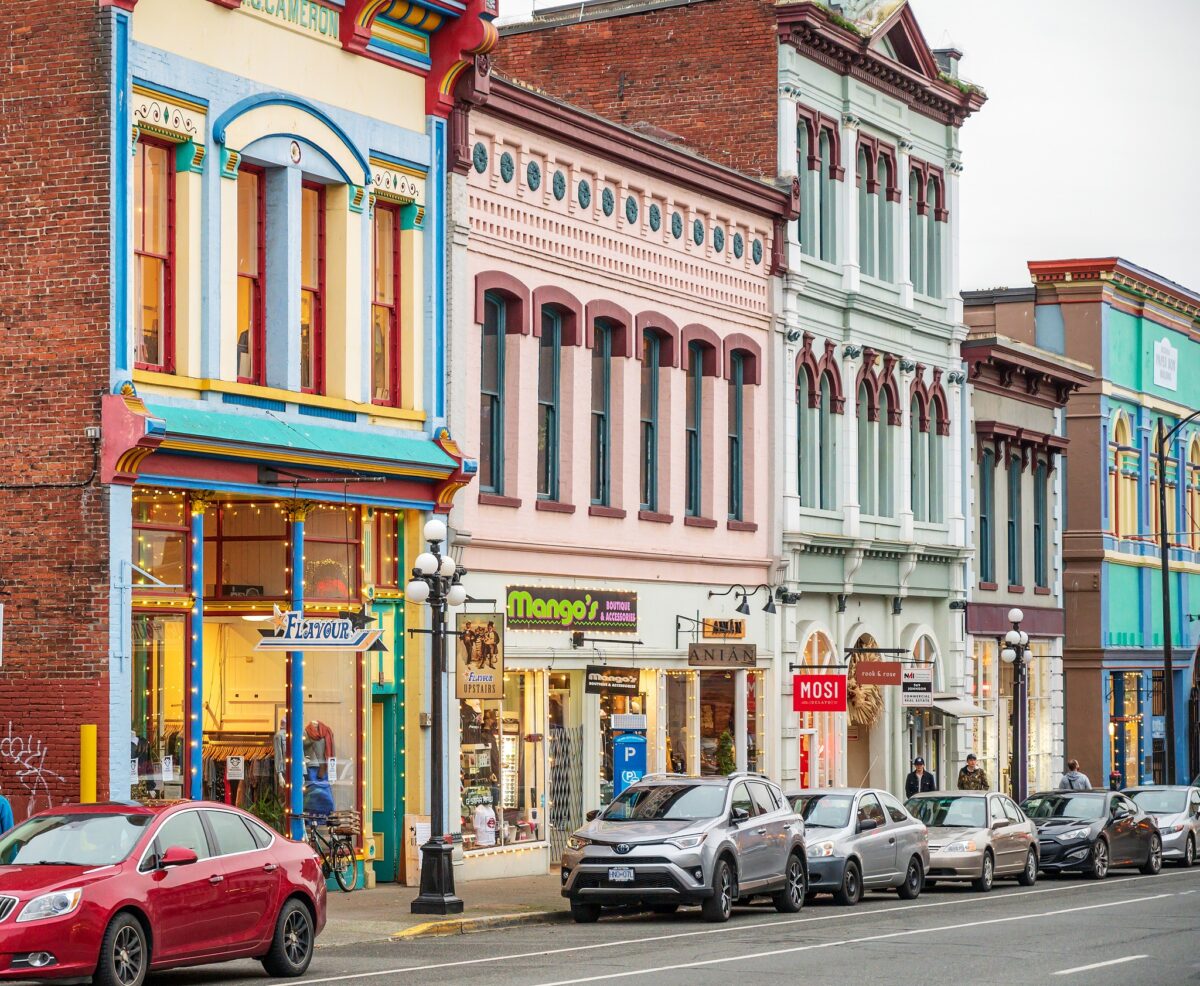
BIA mandates are reconsidered typically every five years though a formal engagement program and decision-making process. Almost always they are renewed, with ongoing refinement and consultation to align the association programing with the needs of members.
Often, but not always.
In 2001, the Downtown Victoria Business Association’s (DVBA) mandate was not renewed, and thus it ended after ten years. While that was two decades ago, some lessons are still relevant today.
From a report exploring the matter at the time, some contributing factors were identified (An Investigation of the Dissolution of the Downtown Victoria Business Association, by Eric Aderneck, Queen’s University, 2002). Although many merchants were satisfied with the association, property owners overwhelmingly opposed the DVBA. Some participants indicated that the mandate of the Victoria BIA was unfocused – trying to address too many issues but not well, and that the proposed programming and funding mandate expansion was too ambitious for ratepayers.
Specific lessons learned from the Victoria experience that could be applied to other BIAs to better ensure success:
- Widely agreed upon mandate and focused objectives.
- Full communication and participation with stakeholders, particularly property owners.
- A match between those who pay for the association and those who benefit from it.
Strong support for the association and its goals among all stakeholders must be developed from the onset and continuously communicated. Objectives and programs to fulfill these goals should be focused with clear deliverables. Ultimately, members must feel that the association provides value and is addressing the concerns that are important to them.

Eric Aderneck, RPP, MPL, BCOM, DULE has two decades of diverse experience including working for the public and private sectors in the Metro Vancouver region through several different capacities including planning policy, real estate development, consultant, and instructor. His expertise is in industrial and employment land use planning and associated matters. He can be reached at eric@aderneck.ca or https://www.linkedin.com/in/ericaderneck.

