Canada has lost a remarkable amount of department-store space in recent years with the exits of Nordstrom, Hudson’s Bay and Saks Fifth Avenue. At the same time, the availability of premium and luxury menswear is expanding as established Canadian retailers invest in stores, new concepts enter the market and international luxury houses build larger standalone boutiques.
Harry Rosen is spending approximately $50 million over five years transforming its Canadian store network. Holt Renfrew continues to rethink menswear at its 50 Bloor Street West flagship in Toronto, while La Maison Simons is bringing substantial men’s departments into new markets as it expands across Canada. Henry Singer has relocated longstanding downtown stores in Edmonton and Calgary, TNT The New Trend invested in a large Yorkville Village store, and newer concepts including HANK and Modern Ambition have plans to grow.
At the luxury end, the expansion is even more visible. Yorkdale Shopping Centre, Oakridge Park, Royalmount, Bloor-Yorkville and Vancouver’s Alberni corridor have accumulated growing collections of international luxury boutiques, many with significant men’s assortments. Gucci is expected to open an approximately 12,000-square-foot Yorkdale store in November 2026, while Saint Laurent, Loewe and other luxury houses have also invested in large Canadian locations.
The result is a restructuring of Canadian menswear distribution. Department stores that once aggregated dozens of brands have disappeared or contracted, while the selection available through specialists, fashion retailers and brand-operated boutiques has broadened.
Harry Rosen Leads a New Round of Menswear Investment
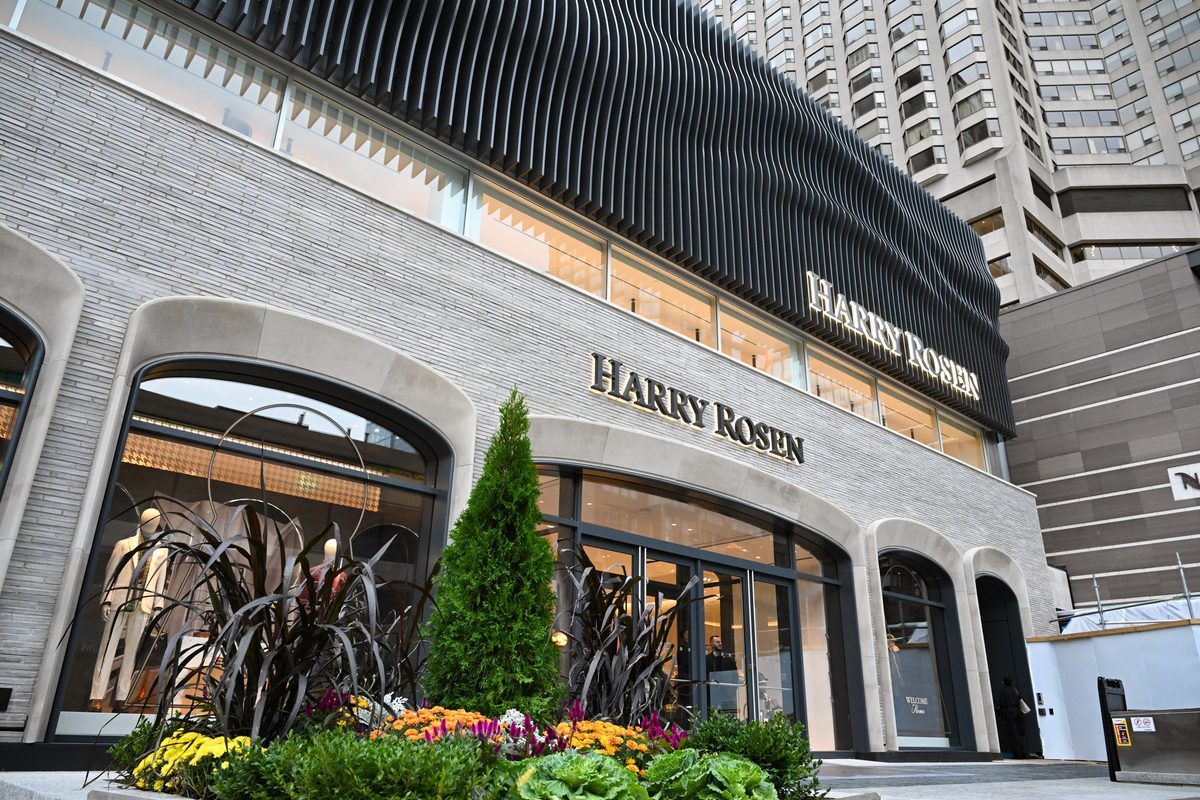
Harry Rosen provides one of the clearest examples of capital being directed toward the category. The Toronto-based retailer is in the midst of an approximately $50-million, five-year program to transform its physical network through renovations and, in some cases, relocations.
Its largest recent project is the new approximately 38,000-square-foot, three-level store on Cumberland Street in Toronto’s Yorkville neighbourhood, replacing its longtime flagship at 82 Bloor Street West. The store incorporates hospitality, private selling areas, tailoring and custom services while displaying fewer products on the selling floor.
The Yorkville opening follows investments at West Edmonton Mall, First Canadian Place in Toronto and Oakridge Park in Vancouver, with additional projects expected as Harry Rosen works through its portfolio. The approximately 17,000-square-foot Oakridge store also reflects a changing merchandise mix, with greater emphasis on luxury sportswear and contemporary fashion alongside tailoring.
The upper end of the market is no longer centred primarily on suits and traditional business clothing. Luxury casualwear, footwear, outerwear and contemporary brands have given retailers more ways to build a high-value men’s business, while custom and made-to-measure clothing remain important service categories.
Henry Singer has made significant physical investments of its own. The Alberta retailer moved from an upper level of Bankers Hall in Calgary to a more visible street-facing location and later replaced its longstanding Manulife Place store in downtown Edmonton with an approximately 10,000-square-foot location at Stantec Tower in the ICE District.
The Edmonton store incorporates Bar Henry along with barbering and shoe-care services. Henry Singer subsequently reported that the location was bringing in new customers while maintaining its established clientele, providing an example of a Canadian menswear operator seeing benefits after investing in a more destination-oriented store.
TNT The New Trend offers another variation on the multi-brand model. Its approximately 20,000-square-foot Yorkville Village store combines men’s and women’s fashion and carries an extensive assortment ranging from contemporary labels to higher-priced designer product.
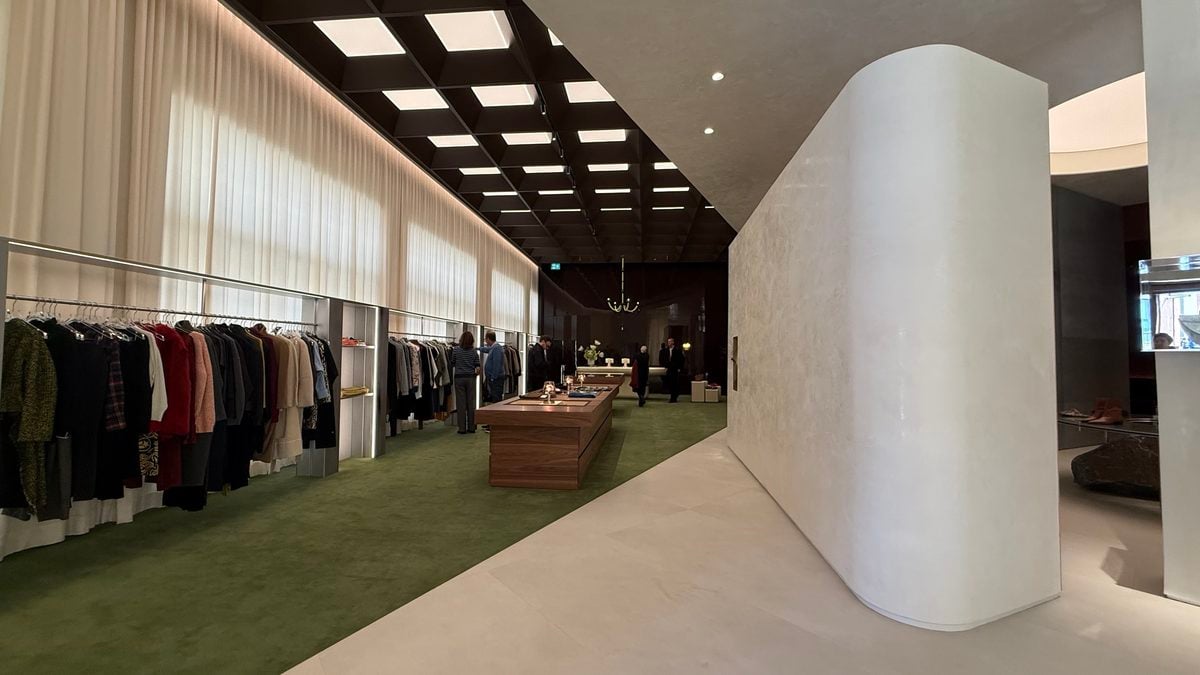
Absolutely Fabrics recently added menswear from a different direction. The Toronto independent opened a 7,000-square-foot flagship at 1091 Yonge Street in Summerhill in September, introducing men’s fashion for the first time alongside its established womenswear business.
Founder Kaelen Haworth had considered the retailer’s smaller Queen Street West location too constrained to introduce menswear in a meaningful way. The larger Summerhill store includes a dedicated men’s assortment with brands such as Aubero, Studio Nicholson, Willy Chavarria, Rier, Martine Rose, ssstein and Soshiotsuki, including labels with limited Canadian distribution.
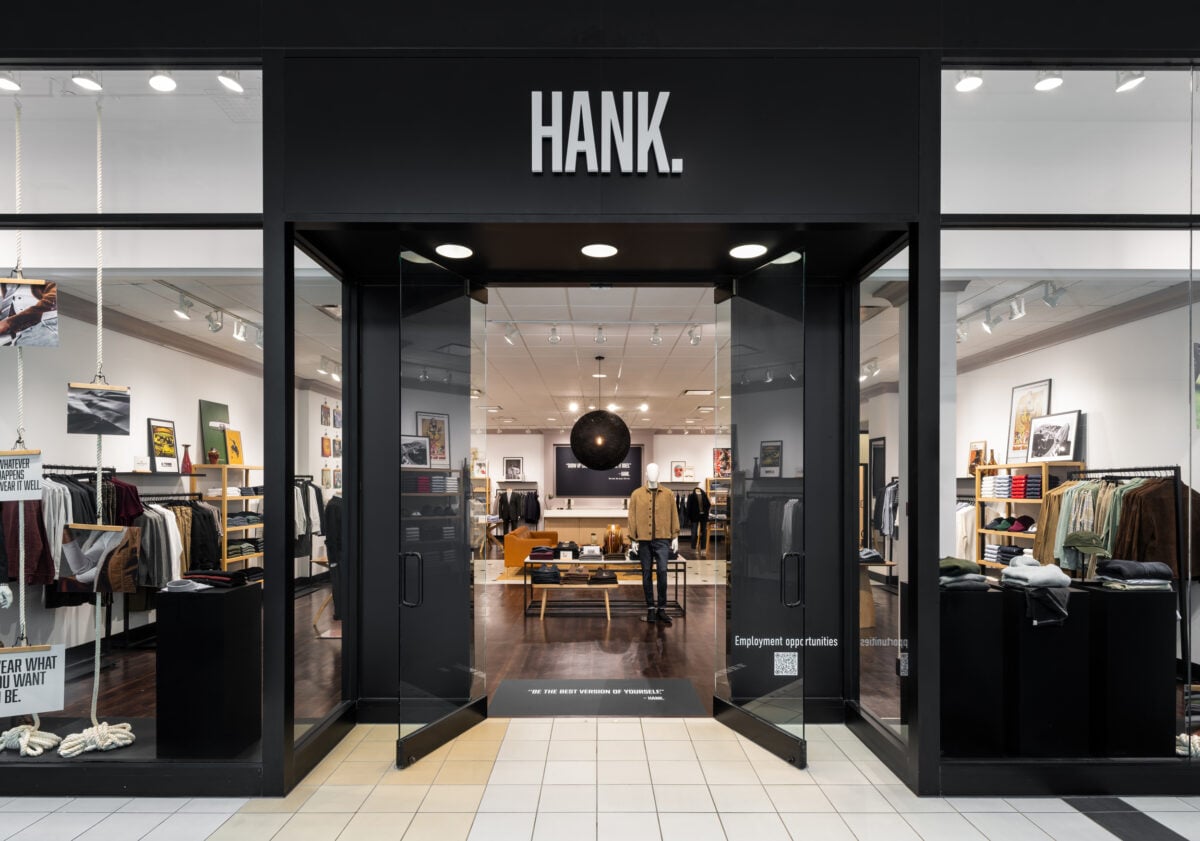
Newer Canadian concepts are also entering the market. Caulfeild Apparel Group launched HANK with stores at Bayview Village in Toronto and Upper Canada Mall in Newmarket, identifying an opportunity in premium menswear following years of retail closures. The concept has since expanded to CF Masonville Place in London, Ontario, as the company considers a much larger national rollout.
Winnipeg-based Modern Ambition has moved into Toronto’s Yorkville neighbourhood and has outlined plans for at least 12 to 14 Canadian stores, including further expansion into Western Canada.
Together, these investments extend well beyond traditional luxury tailoring. Capital is being deployed across different parts of the men’s fashion business, from accessible premium concepts to retailers selling some of the world’s most expensive clothing.
Department Store Contraction Is Changing Distribution
Nordstrom’s 2023 Canadian exit removed six full-line department stores and seven Nordstrom Rack locations. The subsequent collapse of Hudson’s Bay and disappearance of Saks Fifth Avenue eliminated another major source of multi-brand men’s fashion distribution.
Those closures do not establish that spending automatically migrated to surviving specialists. They did, however, remove significant retail capacity at the same time other operators were expanding, leaving brands and customers with a different mix of channels through which to buy and sell men’s fashion.
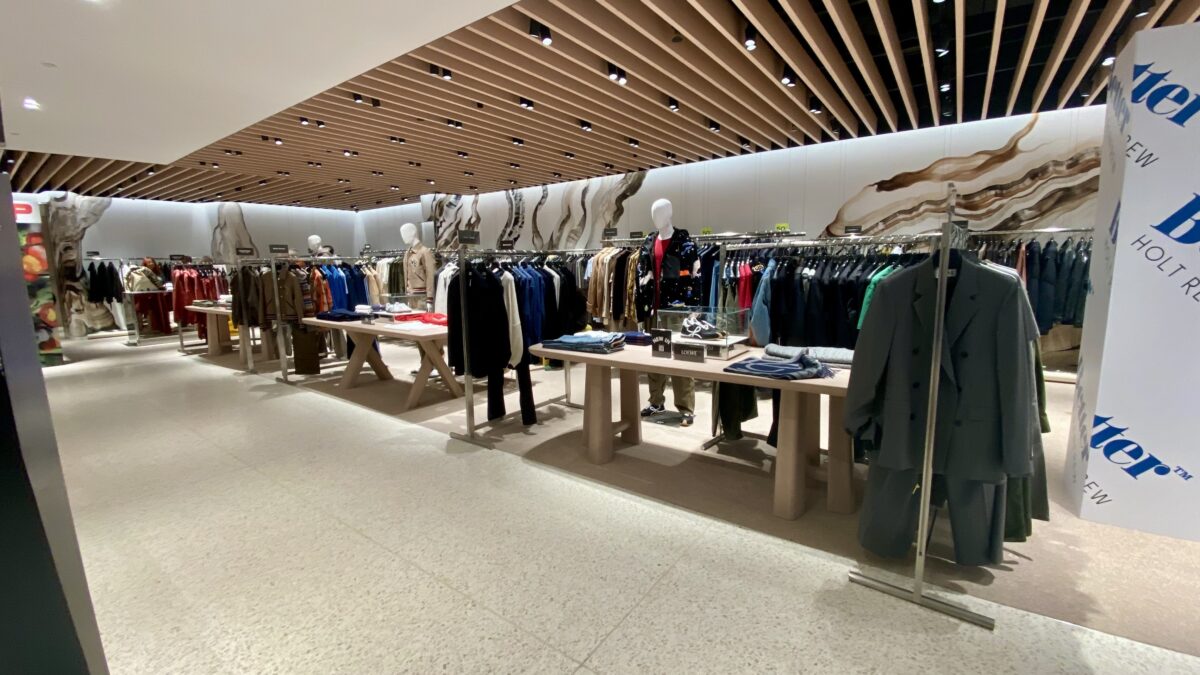
Holt Renfrew remains a major Canadian luxury retailer, but its approach to menswear has also changed. The company closed its approximately 16,500-square-foot standalone men’s store at 100 Bloor Street West in late 2024 and brought the category back into its 50 Bloor Street West flagship through the ON3 concept.
Further investment is expected as the retailer evaluates the flagship, with menswear potentially being expanded or reworked on the third floor or relocated elsewhere within the store. A final configuration has not been publicly announced.
Holt’s evolving approach illustrates a wider issue facing multi-brand retailers. Competition for affluent male customers increasingly comes from outside the traditional department-store channel.
Luxury Brands Build Their Own Canadian Stores
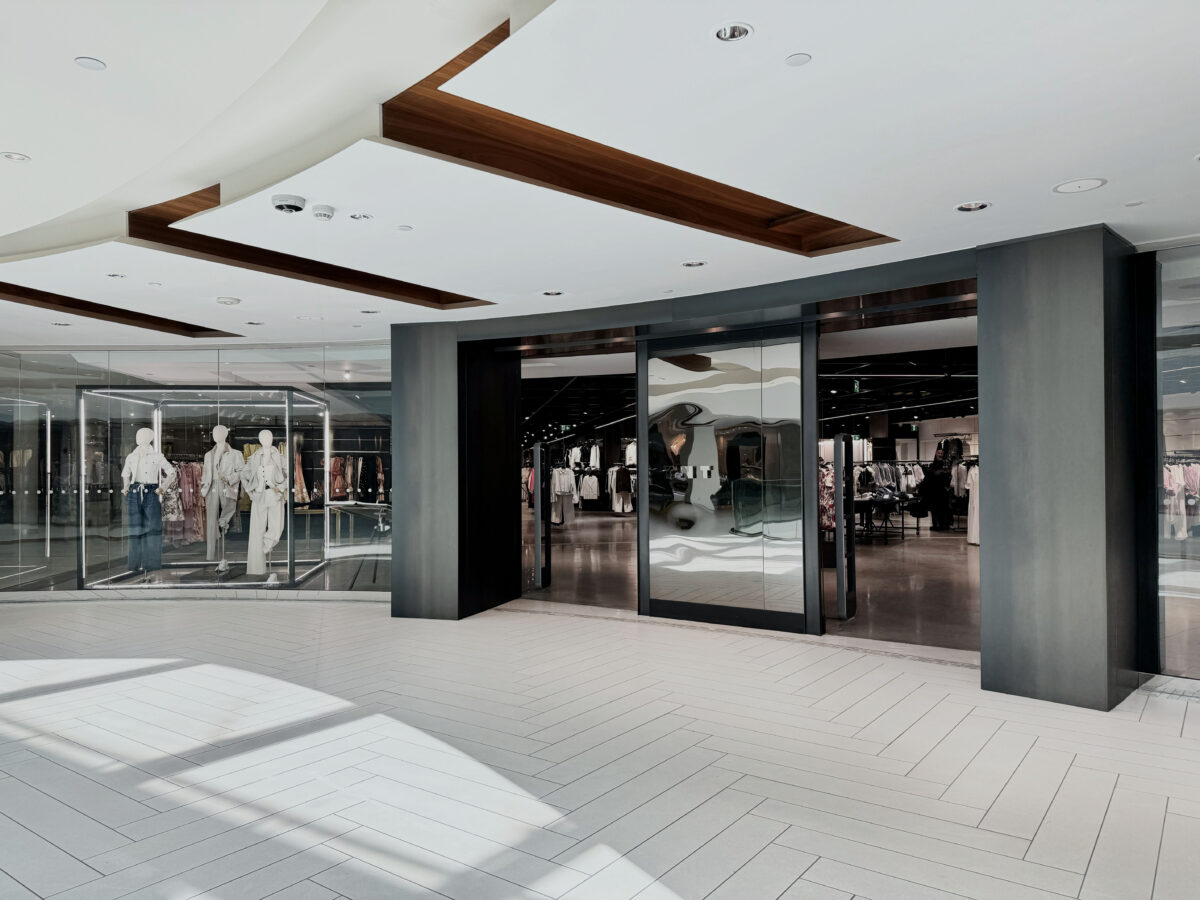
Yorkdale Shopping Centre demonstrates how much that competitive environment has changed. Gucci is expected to open an approximately 12,000-square-foot store at Yorkdale in November 2026, while Saint Laurent and Loewe have also added substantial stores.
They join a luxury mix that includes Brunello Cucinelli, Loro Piana, Tom Ford, Moncler and other international houses with men’s offerings. Oakridge Park in Vancouver has developed another large concentration of luxury brands alongside Harry Rosen’s new store, while Royalmount in Montreal, Bloor-Yorkville in Toronto and Vancouver’s Alberni Street corridor add further clusters of brand-operated luxury retail.
For decades, one of the principal functions of a department store was aggregation. Retailers bought merchandise from numerous fashion houses and put those brands in one building, giving customers access to a broad assortment under one roof.
Canada’s leading luxury shopping centres and districts increasingly perform part of that aggregation function themselves. A shopper at Yorkdale or Oakridge can move among numerous individual luxury boutiques within one property, with each brand controlling its own store, staff, inventory and presentation while the landlord assembles the broader retail mix.
That changes the economics for everyone involved. Luxury brands gain direct control over their Canadian customers and physical presentation, while landlords establish direct leasing relationships with brands that might once have relied more heavily on wholesale distribution. Department stores and specialists, meanwhile, face additional competition from some of the same fashion houses represented on their selling floors.
The shift helps explain why multi-brand menswear retailers are investing in elements that a mono-brand boutique cannot easily replicate.
Curation and Service Become More Important
Harry Rosen, Henry Singer, TNT, Absolutely Fabrics, Neighbour and Lost & Found can assemble clothing from multiple designers into a wardrobe, introduce customers to less familiar labels and provide advice across brands. Tailoring, custom clothing, personal shopping, private appointments, special orders and longstanding relationships with sales advisors deepen that proposition.
Absolutely Fabrics also demonstrates how curation can extend the market. Its men’s assortment includes designers with limited Canadian distribution, giving fashion-focused customers access to labels they might otherwise have difficulty experiencing physically in Canada.
Harry Rosen has said its custom clothing business has been particularly strong. Its newer stores devote significant space to fitting, private selling and hospitality alongside conventional merchandising.
As luxury brands expand directly, access to a desirable label becomes less of a competitive advantage when that brand operates a large store nearby. Selection, expertise and service therefore become increasingly important to the multi-brand model.
Simons provides another indication that the expansion in Canadian menswear reaches beyond luxury. The Quebec-based retailer has been growing its national footprint with two Toronto stores, further expansion in Calgary and a Vancouver entry on the way, bringing substantial men’s departments into each market.
Its model covers a broader range of price points than Harry Rosen or a luxury mono-brand boutique, combining private labels, contemporary fashion and outside brands. The expansion adds another source of sophisticated men’s fashion in markets where the category was once more dependent on traditional department stores and established specialists.
New Concepts Continue to Test the Market
Original Luxury is preparing another substantial physical investment in Toronto. The retailer carries high-end men’s brands including Kiton, Stefano Ricci, Zilli, Luigi Borrelli, Jacob Cohen and Moorer and will open a large storefront at the base of the Aqualuna condominium development on Toronto’s waterfront in spring 2027.
The location is notable because it sits outside Toronto’s established Yorkville and Yorkdale luxury clusters. Original Luxury has developed through online sales and a showroom model, making the Aqualuna store a significant move into conventional physical retail and a test of whether a luxury menswear destination can draw customers to the city’s growing eastern waterfront.
The investment taking place across the sector does not mean every high-end concept succeeds. The Webster closed its Toronto location in Yorkville in late 2025 after about four years in the market, ending the U.S. luxury retailer’s physical presence in Canada. The store had carried men’s and women’s designer fashion.
Its departure, along with Holt Renfrew’s decision to close its standalone men’s store, shows that retailers continue to experiment with the economics, size and location of upscale menswear stores. Capital is flowing into the category, but there is no single format that has emerged as the answer.
Canadian Menswear Distribution Broadens
The larger change is the number of ways a Canadian customer can now access premium and luxury men’s fashion.
Established specialists including Harry Rosen and Henry Singer operate alongside fashion independents such as TNT, Absolutely Fabrics, Neighbour and Lost & Found. HANK and Modern Ambition are building newer concepts, Holt Renfrew and Simons provide substantial multi-brand assortments, Original Luxury is expanding its physical presence, and international fashion houses increasingly operate their own Canadian stores.
The structure differs considerably from a market where access to upscale international menswear was more heavily concentrated among a relatively small group of department stores and established men’s retailers.
Household wealth provides part of the economic backdrop. Canada’s highest-wealth households control a large majority of household net worth, supporting discretionary spending at the upper end even as many Canadian consumers remain under financial pressure. Commercial real estate firms have similarly identified polarization in retail expansion, with value and luxury attracting investment while parts of the middle market face greater challenges.
That polarization is also visible in where menswear investment is occurring. Capital is concentrating in highly productive destinations including Yorkdale, Oakridge Park, Bloor-Yorkville and Royalmount, while specialists are spending money on stores intended to give customers reasons to visit beyond access to merchandise.
For landlords, retailers and luxury brands, the competition is increasingly about who controls the customer relationship. Brands can sell directly, specialists can compete through curation and service, and shopping centres can assemble collections of luxury houses that once might have depended more heavily on department stores for Canadian distribution.
Canada has lost several of its largest multi-brand sellers of men’s fashion, but the category is increasingly distributed across other channels. With Harry Rosen continuing its national store program, Holt Renfrew reconsidering its flagship configuration, Simons expanding and additional brand-operated boutiques and specialist stores on the way, the reshaping of Canada’s menswear market is continuing.