Toronto fashion designer Shaun Mascarenhas is moving Demascaré into its next stage, expanding the independent label into ready-to-wear as he works to build a stronger commercial business around the aesthetic that first brought his work attention.
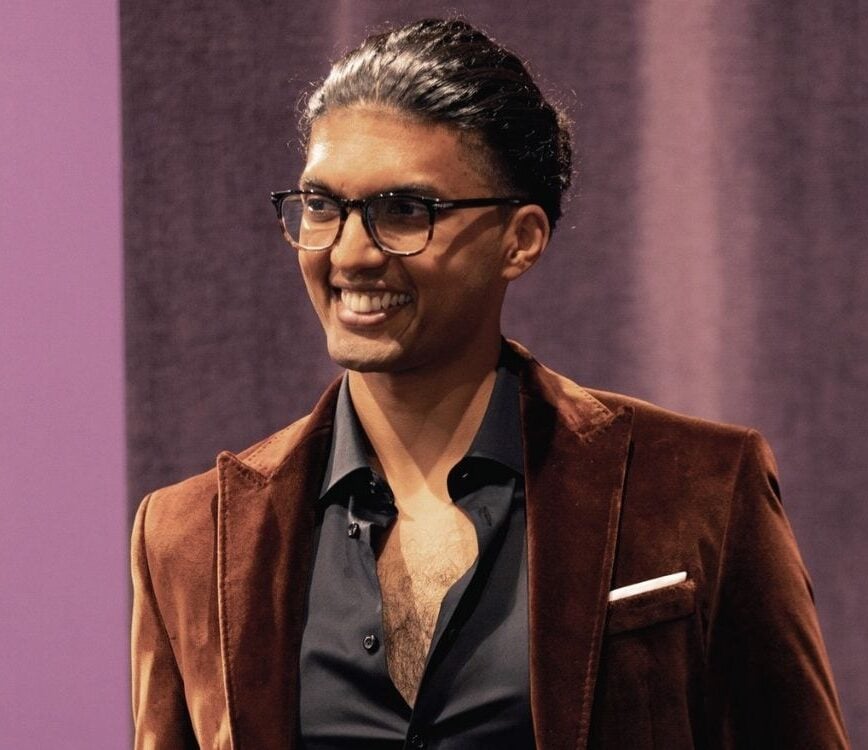
The Toronto-based brand has so far been known largely for custom work, demi-couture and expressive statement pieces. Mascarenhas is now developing clothing that can move more easily through retail while retaining the draping, fit and architectural elements associated with Demascaré.
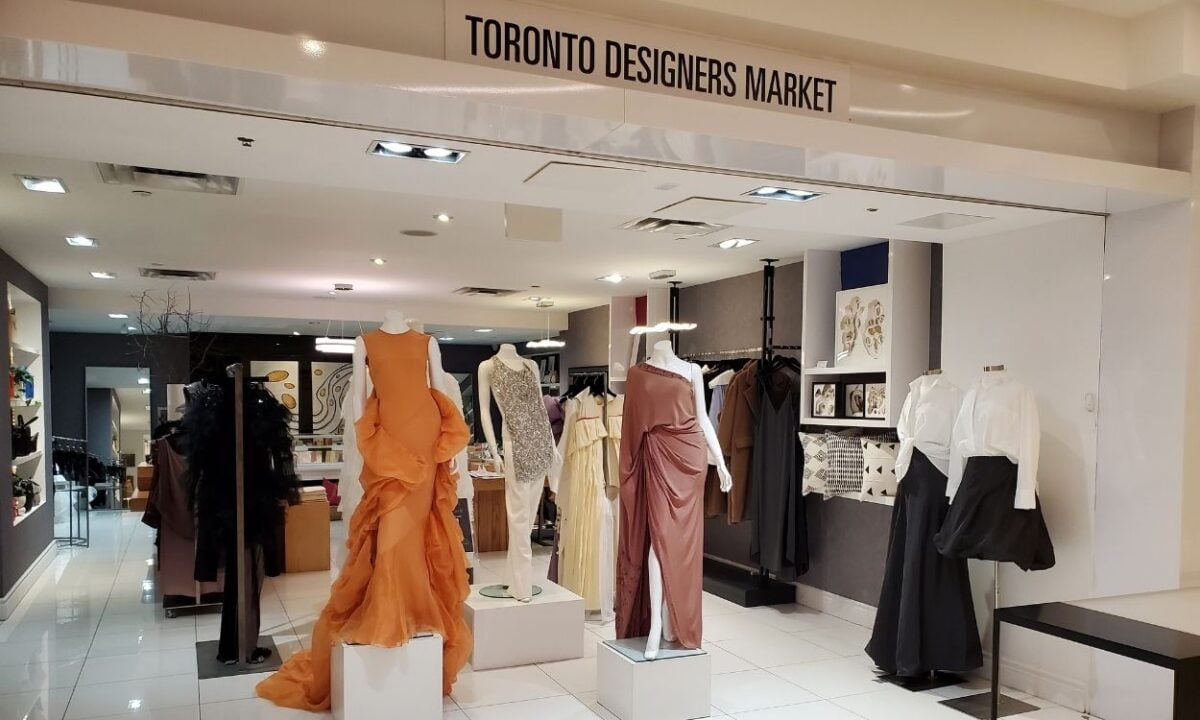
The shift comes as the brand establishes a clearer retail presence. Demascaré is currently sold through Toronto Designers Market at the Holt Renfrew Centre on Bloor Street, its only physical retail location, while a broader ready-to-wear assortment is being prepared for online sale. Mascarenhas is also beginning to explore selective wholesale distribution.
“I just completed a year with the store,” he said of Toronto Designers Market. “It’s been a great learning experience. I’ve had some really good months and some really slow months, so I’m still trying to understand the business.”
From Architecture to Fashion
Mascarenhas was born in India and originally pursued architecture before realizing early in his studies that he did not see it as a lifelong career. He remembers sitting in the studio late one night when the question occurred to him: could he imagine doing this for the rest of his life? His answer was no.
Supported by his parents, Mascarenhas shifted into fashion, later studying in the United States and moving to New York, where he secured an internship in the atelier at Oscar de la Renta. The experience exposed him to the technical side of high-end fashion and garment construction at a level that would continue to influence his own work.
His architectural training also stayed with him. Structure, proportion and linearity continue to appear in his silhouettes, often balanced by draping and movement.
His early career included experience around designers and fashion houses including Zac Posen, J. Mendel and Romona Keveza. After relocating to Canada, Mascarenhas spent years working in Toronto’s bridal and eveningwear sector. The pandemic ultimately prompted him to reconsider where he wanted his career to go and whether it was time to create something of his own.
Building Demascaré During the Pandemic
Mascarenhas launched Demascaré during COVID after years spent helping create collections for other companies. The name combines elements of his middle and last names, allowing him to establish a brand identity separate from his personal name.
That separation was deliberate. Mascarenhas wanted the company to stand independently from him and potentially develop value beyond his identity as its designer. Sustainability was also part of the concept from the beginning.
“I didn’t just want to be another designer who bought fabric off Queen Street and made clothes,” he said.
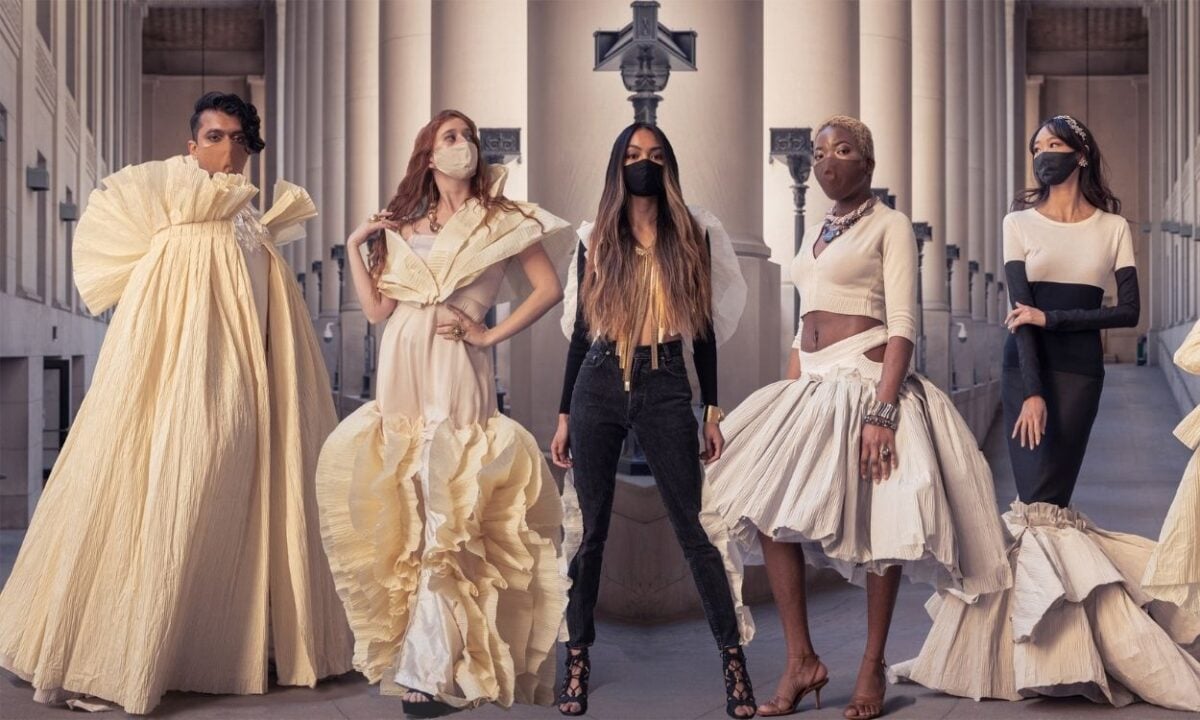
His first major collection pushed that thinking in an experimental direction. Mascarenhas worked with paper that would otherwise have been discarded from fabric pleating processes and layered it over existing garments brought in by models, altering and repurposing those pieces in the process.
The resulting collection was presented through Fashion Art Toronto at Union Station. Stylists subsequently began contacting Mascarenhas to borrow garments for editorial shoots, giving the young label early visibility and showing him that people were responding to the originality of the work.
What happened with his next collection would prove equally influential.
An Early Lesson in What Makes a Brand Sell
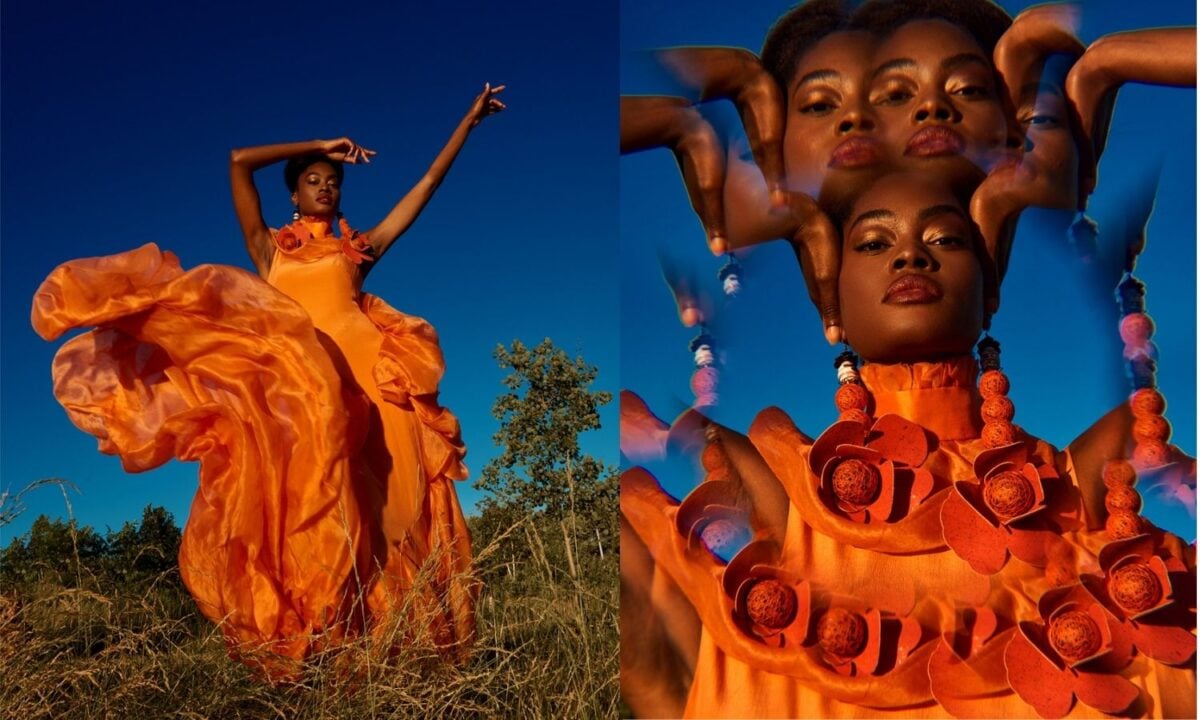
After attracting attention with highly distinctive pieces, Mascarenhas decided his next collection should be easier to sell. He made the clothing more conventional, expecting that a more commercial assortment would appeal to a wider group of customers.
The response was weak.
“I was thinking, ‘This is very sellable. Why isn’t anybody buying it?’” he recalled.
The feedback he eventually received was straightforward: people had been interested in his original work precisely because it was different. In trying to make Demascaré more broadly commercial, he had removed some of what made the label recognizable.
Mascarenhas stepped back, spent more time learning the Toronto and Canadian market and returned to eveningwear and custom pieces. A later collection led to an early custom order for a client attending the Canadian Arts & Fashion Awards, and Demascaré gradually developed a business around one-of-a-kind and made-to-measure clothing.
The custom work gave Mascarenhas considerable experience with clients, fit, alterations and the practical realities of producing clothing for individual customers. It also exposed a commercial limitation: Mascarenhas said the demi-couture and custom business was largely covering its costs rather than producing enough profit to support the kind of company he wanted to build.
That realization pushed him toward ready-to-wear.
Translating the Demascaré Aesthetic Into Ready-to-Wear
Mascarenhas did not want commercialization to mean stripping away the qualities that distinguished the brand. He spent months working with a fit model and developing base patterns that could provide consistency while still allowing him to drape and manipulate garments in ways that felt recognizably Demascaré.
Fit became particularly important in that process. Mascarenhas believes customers have started to associate the brand with how its clothing sits on the body, making that one of the qualities he wants to protect as he moves beyond purely custom work.
The new collection spans daywear and eveningwear and is designed around a customer who follows fashion but also wants clothing to function in everyday life. Mascarenhas describes that customer as someone who travels, attends events and wants pieces that can move through different parts of the day while still feeling special.
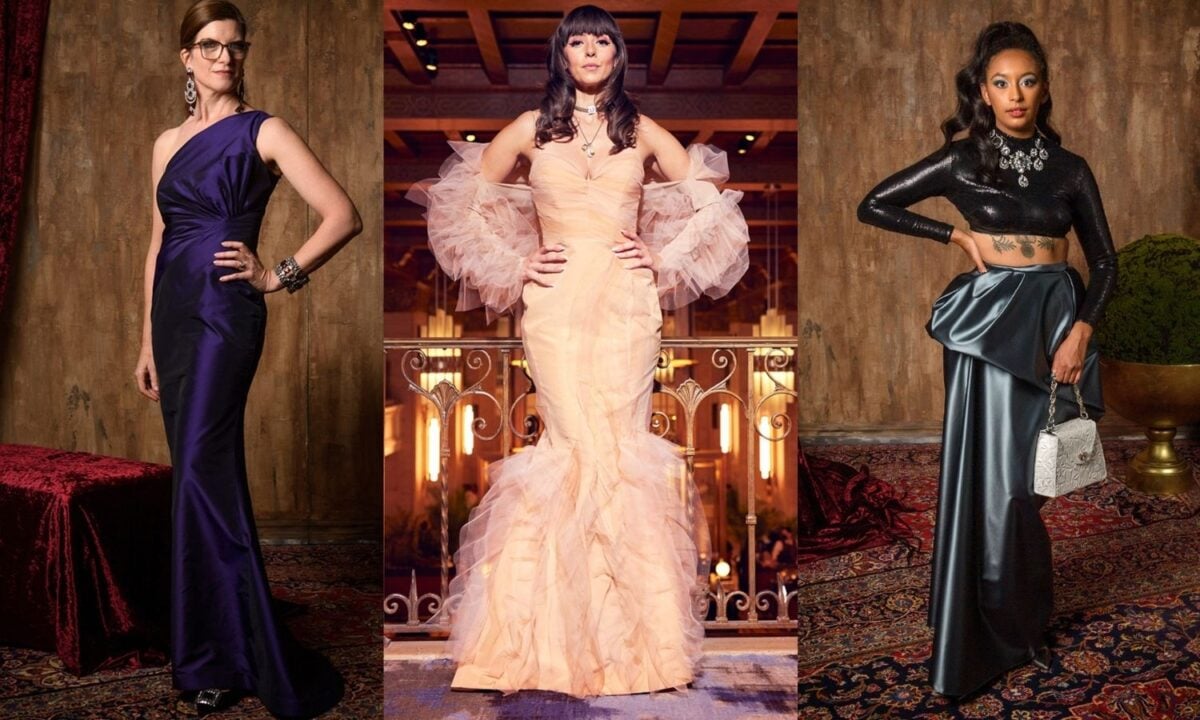
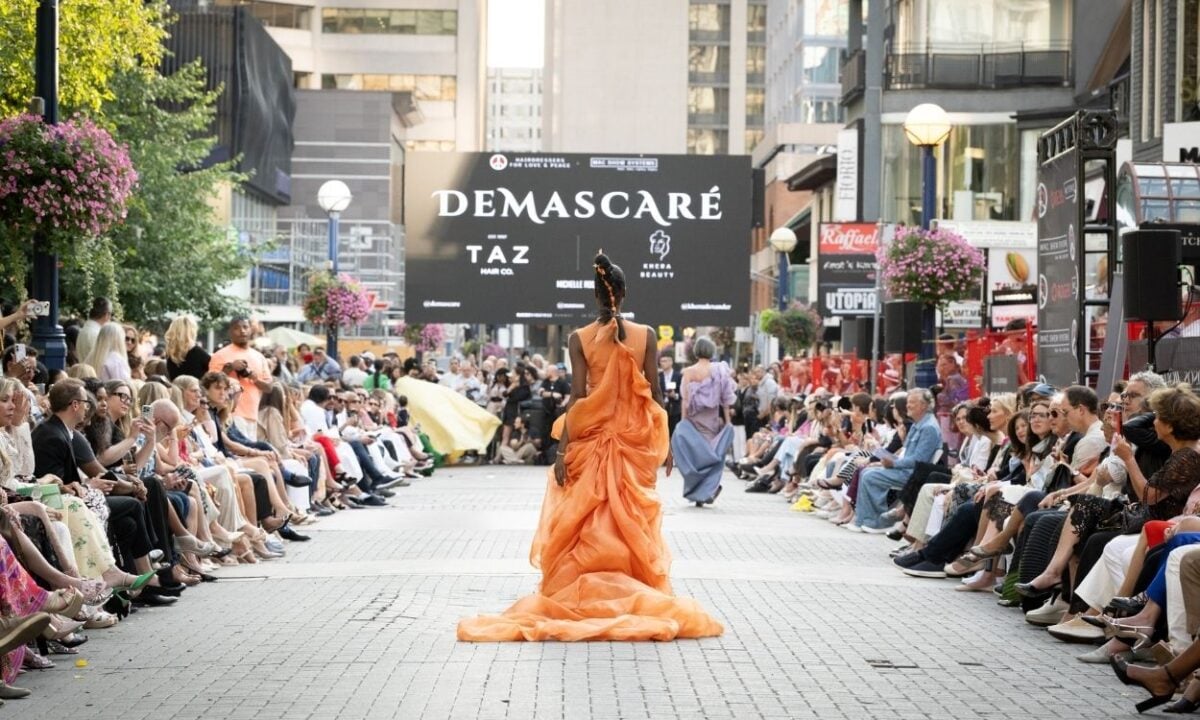
His recent presentation at Couture for a Cause in Yorkville included a mix of couture and ready-to-wear, giving audiences an early look at the new direction. The response was encouraging, although the event also exposed a weakness in the retail infrastructure behind the brand.
When Attention Arrives Before the Business Is Ready
Following Couture for a Cause, Mascarenhas saw a noticeable increase in traffic to the Demascaré website. People had seen the clothes, searched for the brand and arrived online, but the new collection was not yet available to purchase.
Instead, visitors found older product rather than the pieces that had generated their interest. Mascarenhas readily acknowledges that the website should have been prepared ahead of the event.
“What I should have done was have my website ready to go,” he said.
He has since completed a new lookbook shoot and is working to bring the ready-to-wear offering online. The experience offered a practical lesson about the gap between exposure and commerce: a runway appearance or publicity moment can generate immediate interest, but the product, website and fulfilment operation have to be ready if that attention is going to translate into sales.
For Demascaré, building that commercial infrastructure has become an increasingly important part of the business.
Toronto Designers Market as a Retail Testing Ground
Physical retail has played a similar role. Mascarenhas initially hesitated when he was encouraged to bring Demascaré into Toronto Designers Market because he was not convinced the business was ready, but he eventually took the opportunity and has now spent roughly a year selling through the store.
The experience has given him something difficult to replicate online: direct evidence of how customers react when they encounter the clothing in person. He can learn which garments attract attention, what customers try on, how pieces fit and where shoppers hesitate.
Feedback from the store has helped Mascarenhas better understand how Demascaré performs in a retail setting and reinforced his decision to move further into ready-to-wear. He describes the first year as uneven but valuable, with strong periods as well as slower months.
Toronto Designers Market remains Demascaré’s only physical retail location. Mascarenhas is now looking at where the brand could go next, while remaining selective about the type of stores he believes make sense.
Made in Toronto, in Small Quantities
Demascaré is not being built around mass production. Mascarenhas said the brand’s current production is done in Toronto, with him cutting the garments himself before working with experienced local seamstresses to complete the pieces.
That approach is more expensive than large-scale offshore manufacturing, but it gives Mascarenhas greater control over production and fits the model he wants to maintain. The brand is largely made to order and frequently works with deadstock fabrics.
Because quantities of a particular textile may be limited, a garment produced in one fabric may exist in only three or four examples. For Mascarenhas, that scarcity adds value.
“I’m not a mass-production brand,” he said. “I’m very one-of-a-kind or few-of-a-kind.”
He wants customers to feel they are buying something unusual and to keep those garments in their wardrobes for years.
The production model also exposes another challenge facing Canadian fashion businesses. Mascarenhas said experienced seamstresses with the technical skills required for his work are becoming harder to find, and he is conscious that younger generations are not necessarily entering the trade at the same rate. For a small designer trying to grow locally, access to skilled production can become as important as access to customers.
Sustainability Built Into the Production Model
Demascaré’s production strategy is closely connected to its sustainability positioning. Deadstock fabrics, repurposed materials, local production and made-to-order manufacturing are all part of the model, reducing the need to hold large quantities of finished inventory.
One of the more distinctive applications involves vintage sarees. Mascarenhas has been transforming existing sarees into contemporary gowns and cocktail dresses, combining his South Asian background with the circular design principles behind the brand.
He also sees a practical opportunity in the idea. Traditional garments can carry considerable emotional or cultural significance within families, even when younger generations raised in Canada may not expect to wear them in their original form.
Mascarenhas sees the possibility of preserving that connection while reworking the textile into a garment suited to a contemporary wardrobe. The saree remains recognizable in the finished piece, while the resulting clothing gives the material another use and potentially another generation of wear.
Expanding Through the Right Retailers
As the ready-to-wear business develops, Mascarenhas wants to add a small number of retail partners rather than pursue broad distribution.
One retailer he specifically identified is Absolutely Fabrics, the Toronto fashion retailer known for carrying distinctive and less widely distributed labels. There is no announced relationship between the companies; Mascarenhas sees it as an example of the type of retailer where Demascaré could potentially fit.
He is also interested in independent boutiques on Queen Street West and elsewhere in Toronto that cater to consumers looking for unusual fashion.
That selectivity reflects both the positioning of Demascaré and the realities of its production model. A company using limited deadstock fabrics and producing in small batches does not require an extensive store network. Mascarenhas is instead looking for retailers capable of putting the brand in front of customers who understand the product and its price point.
He describes his core customer as a middle-aged to mature woman who enjoys fashion, travels, attends events and wants clothing that feels distinctive while remaining practical.
“The clientele is out there,” he said. “It’s just trying to get in front of them.”
Holt Renfrew Is the Longer-Term Goal
There is one Canadian retailer Mascarenhas is particularly interested in reaching.
“Holt’s is on my list,” he said. “That’s the dream.”
For Mascarenhas, placement at Holt Renfrew would represent a significant milestone for Demascaré and a validation of the brand within Canadian luxury retail. During the interview, he also discussed the potential conceptual alignment between Demascaré and Holt Renfrew’s sustainability-oriented H Project.
There are no announced discussions or arrangements between Demascaré and Holt Renfrew, and Mascarenhas described the retailer as a future ambition rather than an active deal.
Longer term, he is also interested in international markets, particularly Europe. Mascarenhas said he feels a strong affinity with European fashion culture and could eventually see opportunities in markets including France, Italy and the United Kingdom, though his immediate focus is building a stronger foundation in Canada.
The Challenge of Scaling Canadian Fashion
That task is complicated by the environment in which independent Canadian designers operate. Mascarenhas points to several obstacles at once, including access to capital, the cost and availability of local manufacturing, limited retail distribution and the difficulty of building customer awareness.
Asked which presents the greatest challenge, he said the answer is effectively all of them.
He is particularly concerned about the level of institutional support available to the Canadian fashion sector and believes the country has considerable design talent without the supporting ecosystem found in larger fashion centres.
“There are so many talented designers in Toronto and in Vancouver and Montreal,” he said. “There’s a lot to offer.”
Mascarenhas pointed to the 2026 closure of Toronto Fashion Incubator as one example of the shrinking infrastructure surrounding emerging designers. He also contrasted the Canadian environment with markets such as New York, London and Paris, where fashion occupies a more established place within the broader creative economy.
For an emerging label, those structural issues eventually become practical business decisions: where to manufacture, how much to produce, how to finance inventory, which retailers to approach and how much can be spent acquiring customers. Demascaré is now working through each of those questions as it attempts to grow.
Building the Business Around What Made Demascaré Different
Mascarenhas has already learned what can happen when he tries to make his work look more conventionally commercial. His early attempt to simplify the product generated less enthusiasm because it also removed some of the identity that had attracted people to Demascaré in the first place.
The ready-to-wear strategy takes a different approach. Mascarenhas is trying to make the business around the clothing more scalable while retaining the qualities of the clothing itself.
That means developing repeatable fits, building a functioning e-commerce operation, maintaining limited production and finding retail partners capable of connecting Demascaré with the right customer. The company remains small, and considerable work lies ahead.
Mascarenhas has already demonstrated that his designs can attract attention. The next stage will determine whether Demascaré can turn that attention into a durable Canadian fashion business.