Vessi is taking a deliberate approach to expanding its brick-and-mortar footprint, adding stores cautiously while working to shift customer perception from a digital-first brand to a physical retail presence.
Josh Larsen, director of retail and store development at the Vancouver-based footwear company, said the business now operates four stores following a U.S. launch earlier this year, with plans to continue expanding in Canada while refining its in-store experience.
“We want to be exactly where our customer is, and we’re going to follow them every step of the way,” Larsen said in an interview. “But we’re intentionally moving really cautiously and carefully and making calculated decisions with our spaces.”
Retail growth builds on early success
Vessi’s push into physical retail began with its first store at Metrotown in Burnaby in 2022, which Larsen described as a “crazy success” that confirmed demand for in-person shopping.
“That taught us that our customers really want to see us and be around us in person,” he said.

The company followed with a second location at Square One in Toronto and later opened a temporary store at Toronto’s CF Eaton Centre, initially planned as a short-term activation but extended to roughly a year due to strong performance.
“That popup was a brand-defining popup for us,” Larsen said. “We had such great traction from it … it helped establish and refine our market in the East and connect with a whole different group of customers in Toronto.”
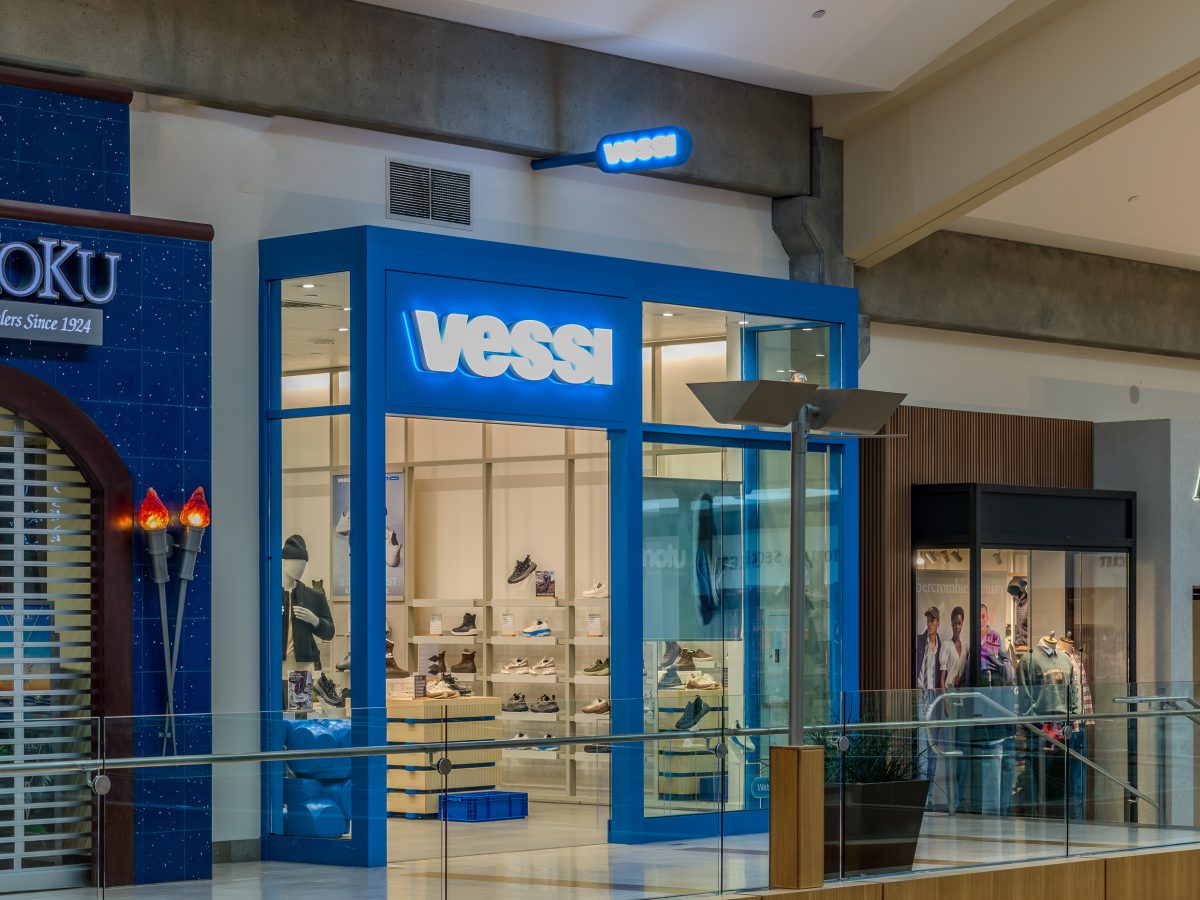
A second Vancouver-area store at Richmond Centre opened in November 2024, and the company entered the U.S. market with a Bellevue, Wash., location in January.
Balancing awareness with growth
Despite steady sales, Larsen said one of the company’s biggest challenges is building awareness of its physical retail presence among customers who still primarily associate the brand with e-commerce.
“Our customer still doesn’t really see us as a physical retailer as much,” he said. “We’re fighting for awareness in the same breadth that we’re still wanting to make sure that we’re driving revenue and growing all channels of the business.”
That dynamic differs from traditional retailers, where physical stores are often central to brand identity. For Vessi, the shift requires ongoing effort to ensure customers know where stores are located and view them as part of the overall brand experience.
“We’re still needing to make sure that people can know us and see us as a physical brand as well,” Larsen said.
Consumers seek value as spending patterns shift
Larsen said broader consumer behaviour is also shaping the company’s strategy, with shoppers increasingly focused on maximizing value.
“The value flywheel is running hard right now,” he said. “Consumers are just looking for the highest return on every dollar they spend.”
That has implications for pricing and promotions, with retailers weighing how often to discount products while maintaining margins.
From Vessi’s perspective, customers remain willing to spend but expect more in return.
“They just want to get more for less,” Larsen said, adding that this is showing up in transactions that include more items rather than fewer high-priced purchases.
Focus on experience and integration
Looking ahead, Larsen said a key priority is aligning the company’s online and in-store experiences so customers encounter a consistent brand across channels.
“We want our customer to feel really comfortable in both of those spaces and have these visual references that connect them,” he said.
That includes ensuring product displays, signage and marketing campaigns are consistent, making it easier for shoppers to transition between digital browsing and in-store purchases.
Beyond consistency, the company is also investing in in-store programming and experiences to draw customers into physical locations.
“Our stores need programming. They need things that are happening in the space to make sure that people really do feel connected to it and that they have a reason to visit,” Larsen said.
One example is what the company calls its “splash experience,” where customers can test waterproof footwear by stepping into water while trying on shoes.
“That delivers what we refer to as a magic moment,” he said. “They’re like, ‘Oh wow, this actually works.’”
Larsen said these kinds of interactions are memorable for customers and help differentiate the in-store experience from online shopping.
Smaller stores, high energy
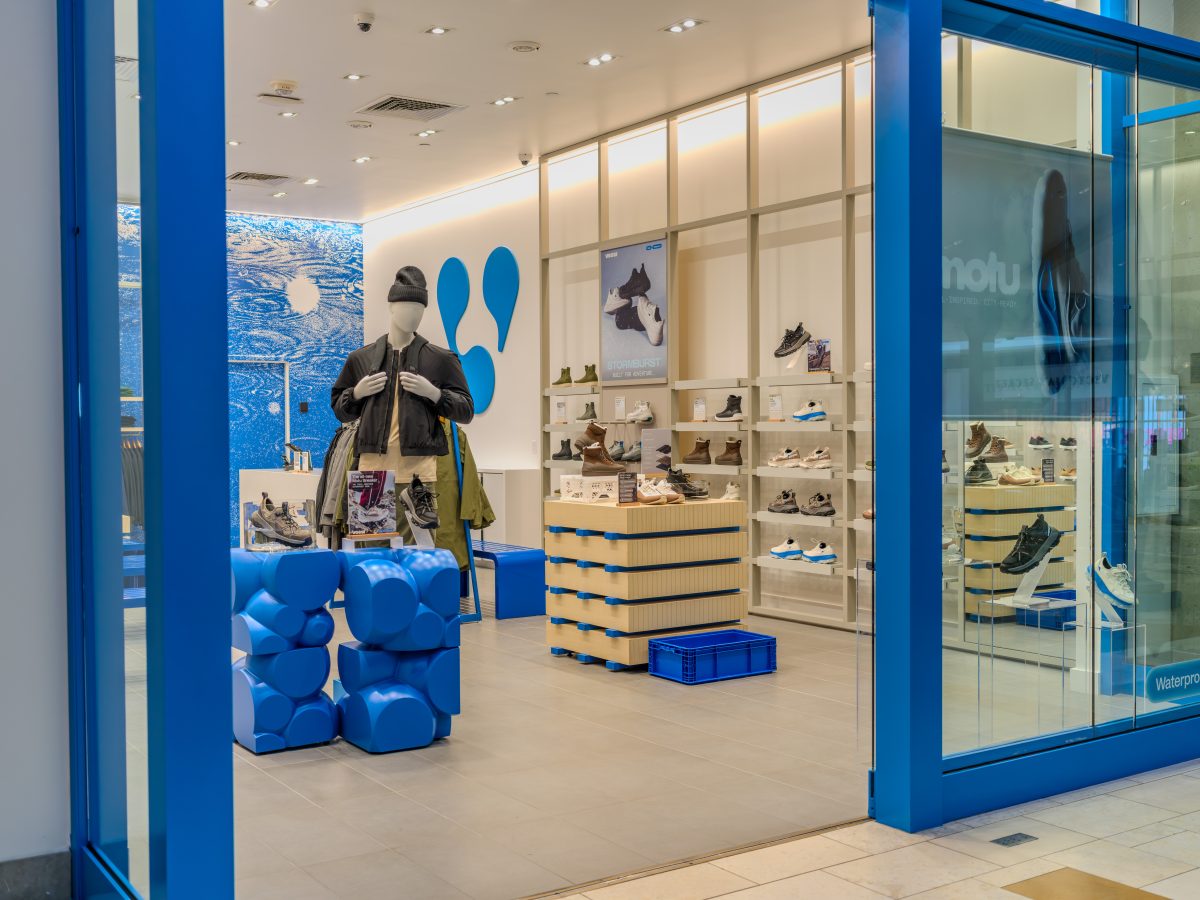
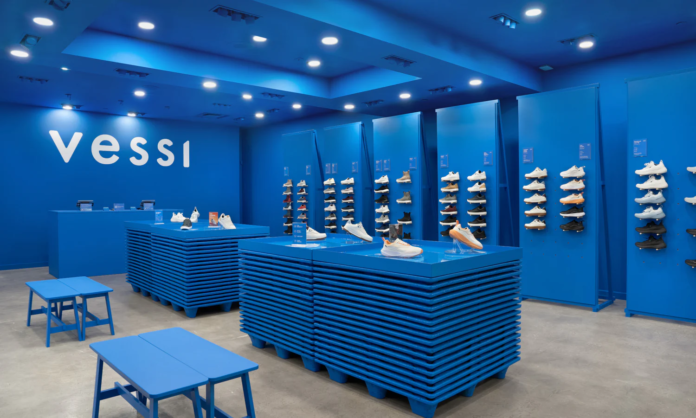
Vessi’s retail strategy also emphasizes relatively small store footprints, typically between 1,400 and 1,800 square feet, designed to feel active and engaging.
“What really makes our stores feel exciting is how dense and full of energy they feel,” Larsen said.
He contrasted that approach with larger flagship stores, which can feel empty or uninviting if not properly activated.
“When you look inside, they feel alive and there’s movement and activity happening,” he said.
While early locations sometimes saw long lineups, particularly at Metrotown, Larsen said the company has adjusted operations to manage demand while maintaining a sense of energy in-store.
Toronto remains a key market
In Ontario, Larsen said the company continues to see opportunity, particularly in Toronto, where customer demographics differ from suburban locations.
“They’re younger, they’re in motion, they’re on transit, they are looking for solutions to make their lives easier,” he said.
Vessi plans to explore additional retail formats in the market, including potential popups or short-term locations, while evaluating longer-term options.
“We know our customer is still in that market,” Larsen said. “We can tell from the data that we have and from who we met at Eaton Centre.”
Measured approach in a shifting retail landscape
Larsen said Vessi’s cautious expansion comes at a time when many digital-first brands are reassessing their physical retail strategies, with some scaling back while others accelerate growth.
“There’s this dialogue of digital brands building physical stores,” he said. “Everybody kind of wants to find brands that are doing it or moving fast at it, or maybe are peeling back.”
For Vessi, the priority is not rapid expansion but ensuring each location meets customer needs and strengthens the brand.
“Our number one goal is not like, ‘OK, let’s get to 15 or 20 stores,’” Larsen said. “It’s like, we’re going to refine the spaces that we’ve got and make sure that we’re making moves that are dictated by our customer.”