

Purchase agreements have been signed for several of Canada’s most prominent former Hudson’s Bay properties, marking a significant step in the dismantling of the retailer’s real estate portfolio following its 2025 insolvency. Court filings show that deals are in place for landmark locations in Vancouver, Calgary, Ottawa, and Windsor. The Ottawa transaction is currently before the court for approval, while the Vancouver, Calgary, and Windsor (Devonshire Mall) transactions have been signed and are expected to be brought forward for approval in the near future.
The properties were part of the RioCan-Hudson’s Bay joint venture, which entered receivership after the retailer ceased operations and closed its stores in mid-2025. The sales process marks a key milestone in unwinding one of Canada’s more complex retail real estate partnerships.
The buyers signal a clear shift in direction — the purchasers are primarily developers and real estate firms. As a result, the future of these sites is expected to move away from traditional department store use toward redevelopment, repositioning, and mixed-use intensification across major Canadian markets.
From Joint Venture to Receivership
The properties were held within the RioCan-HBC joint venture, a complex structure formed in 2015 that combined retail real estate assets under shared ownership. When Hudson’s Bay filed for creditor protection under the Companies’ Creditors Arrangement Act in March 2025, the relationship became increasingly difficult to unwind.
By June 2025, the joint venture was placed into receivership, with FTI Consulting Canada appointed to oversee the assets. Many of the properties were left vacant, and the costs of maintaining them quickly added up. Court filings indicate that carrying costs exceeded $9.8 million during the process, creating pressure to move toward a sale.
A national marketing effort led by CBRE attracted strong interest. Dozens of potential buyers signed confidentiality agreements across the four assets, reinforcing that these were highly sought-after urban properties rather than distressed leftovers.
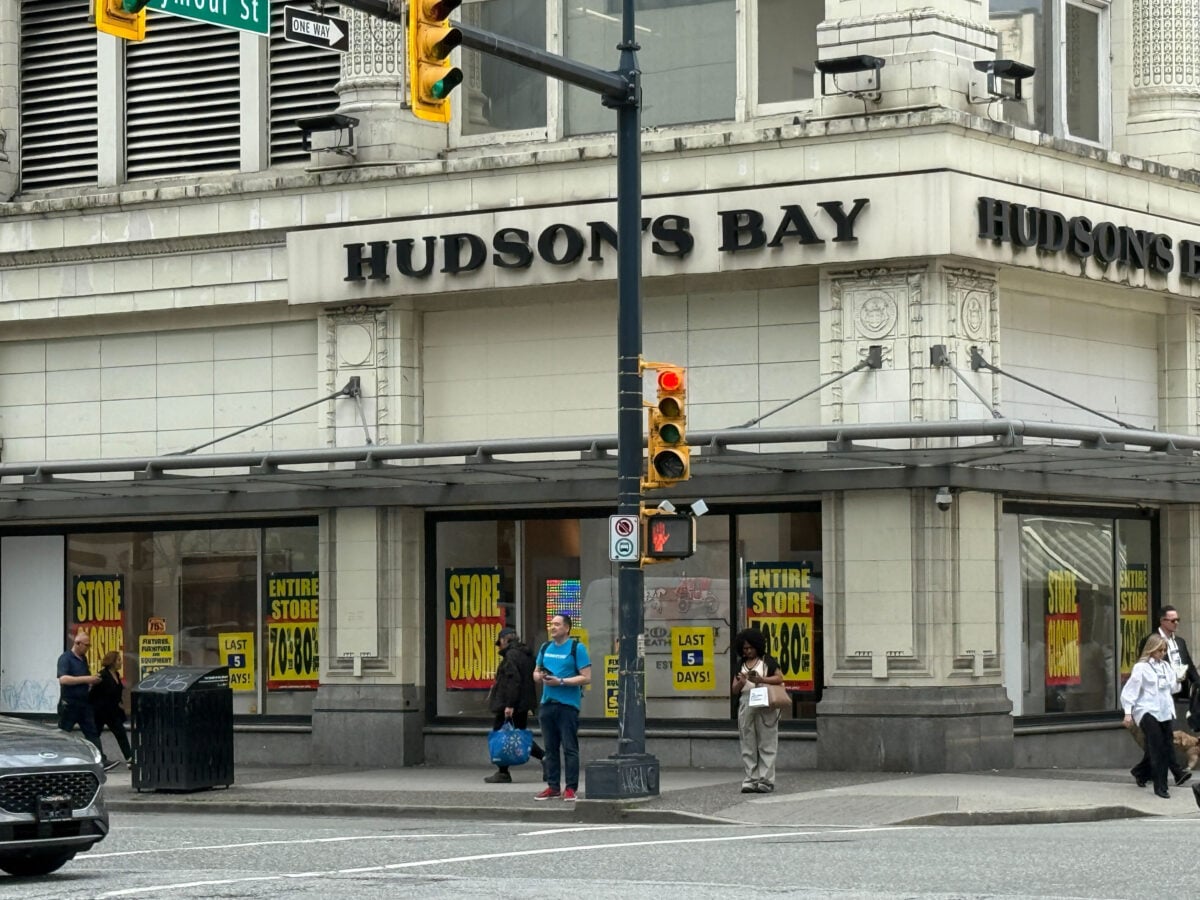
Vancouver: Onni Targets a Key Downtown Asset
The Vancouver Hudson’s Bay building at 674 Granville Street is being acquired by Onni Group, one of the city’s most active developers.
The property sits in the heart of downtown Vancouver, an area facing ongoing challenges tied to shifting retail patterns and post-pandemic recovery. At the same time, it represents one of the most strategically located redevelopment opportunities in the country.
While specific plans have not been disclosed, Onni is known for large-scale mixed-use projects. Therefore, one might expect the site could eventually incorporate residential, hotel, or office components alongside a reimagined retail presence.
The transaction is notable for including a break fee, an uncommon feature in this process, which reflects the complexity and significance of the deal.
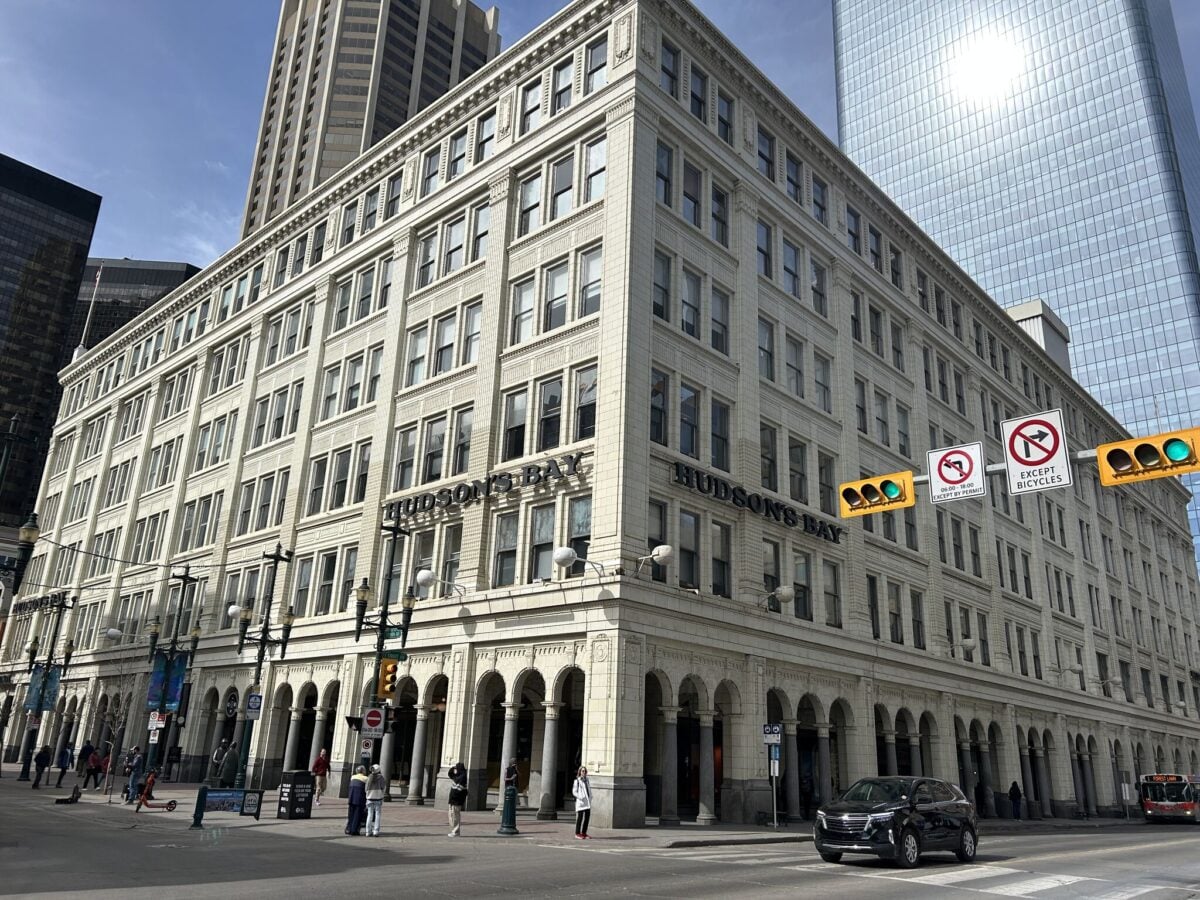
Calgary: Conversion Potential in the Downtown Core
In Calgary, the Hudson’s Bay building at 200 8th Avenue SW is set to be acquired by Astra Real Estate Corp., the parent company of Peoplefirst Developments.
The firm has been active in office-to-residential conversion projects, a strategy that aligns with broader efforts to revitalize Calgary’s downtown. As office vacancy remains elevated, conversion to residential use has emerged as a key tool in repositioning underutilized buildings.
The Hudson’s Bay site presents a strong candidate for this type of transformation. Although final plans have not been confirmed, the acquisition signals continued momentum behind adaptive reuse in the Calgary market.
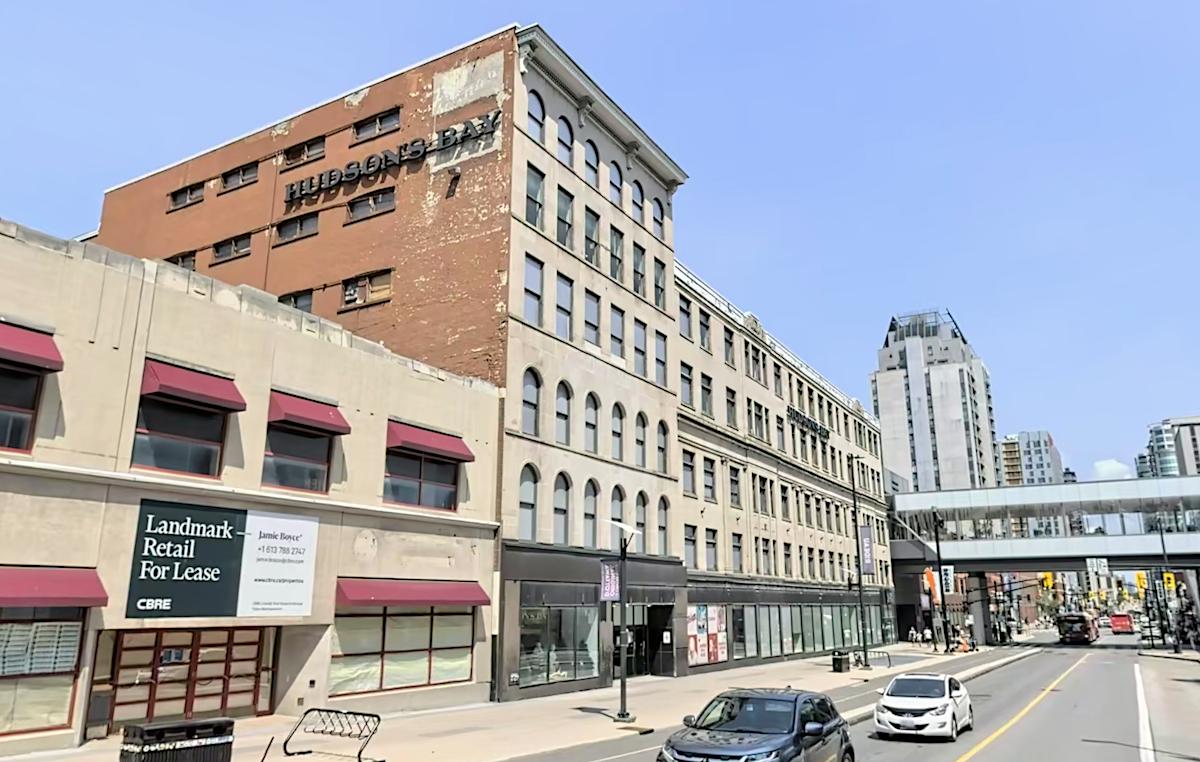
Ottawa: Residential Intensification in the Capital
The Ottawa Hudson’s Bay property at 73, 85 and 87 Rideau Street is being acquired by 2808771 Ontario Limited, with the agreement signed by Neil Malhotra of Claridge Homes.
Located in the heart of downtown Ottawa, the site sits within a market that continues to evolve as residential demand reshapes the urban core. Claridge has been active in high-density residential development, and the acquisition suggests a similar direction for the property.
The building’s scale and location provide flexibility for redevelopment, including the potential for mixed-use integration that combines residential, retail, and possibly office space.
The Ottawa transaction is the first of the four to be formally brought before the court for approval, according to the Receiver’s Sixth Report.
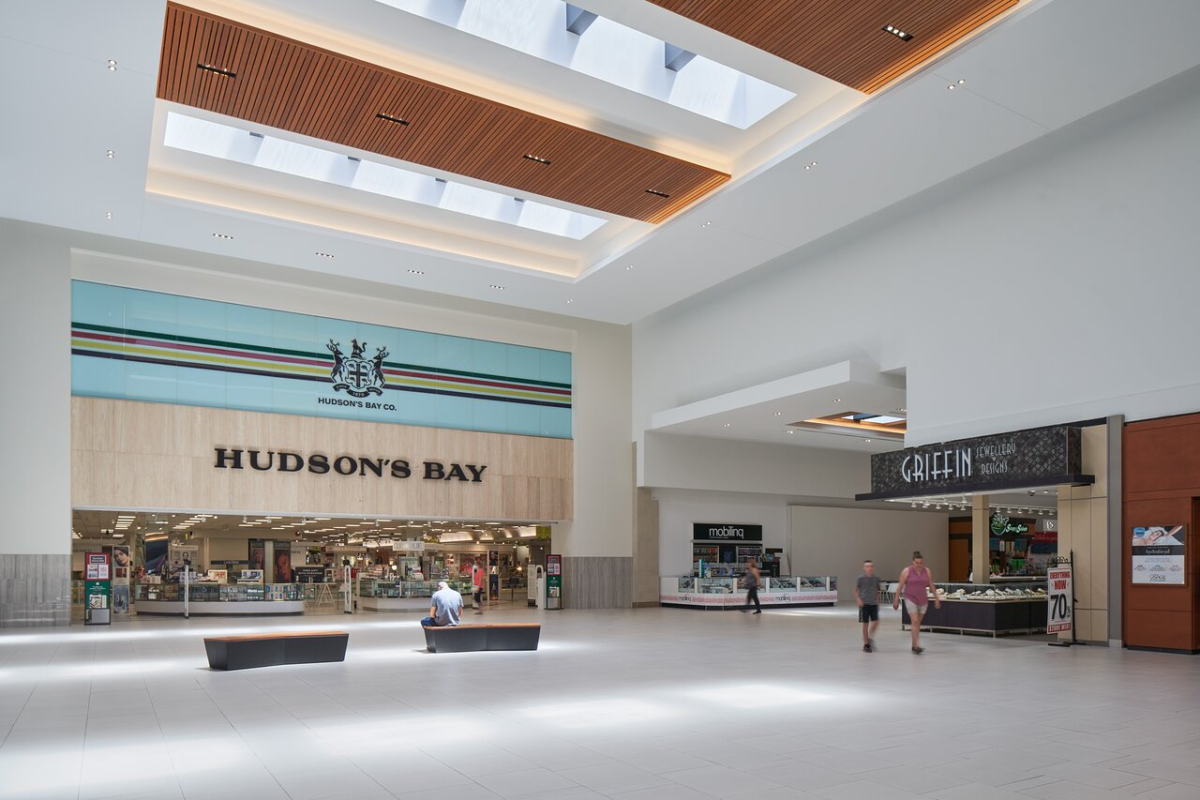
Windsor: Strategic Consolidation at Devonshire Mall
The former Hudson’s Bay space at Devonshire Mall in Windsor is being acquired by Primaris REIT, which already owns the shopping centre.
This transaction stands apart from the others. Rather than a redevelopment play, it represents a strategic consolidation of ownership within an existing retail asset.
By acquiring the space, Primaris gains full control over one of the mall’s key anchor locations. This allows for repositioning, re-leasing, or subdivision of the space in line with evolving tenant demand, without the complications of a third-party owner.
Toronto and Montreal Flagships Reflect Diverging Paths
While these four transactions move forward, the most prominent Hudson’s Bay flagship properties in Toronto and Montreal are unfolding under different circumstances.
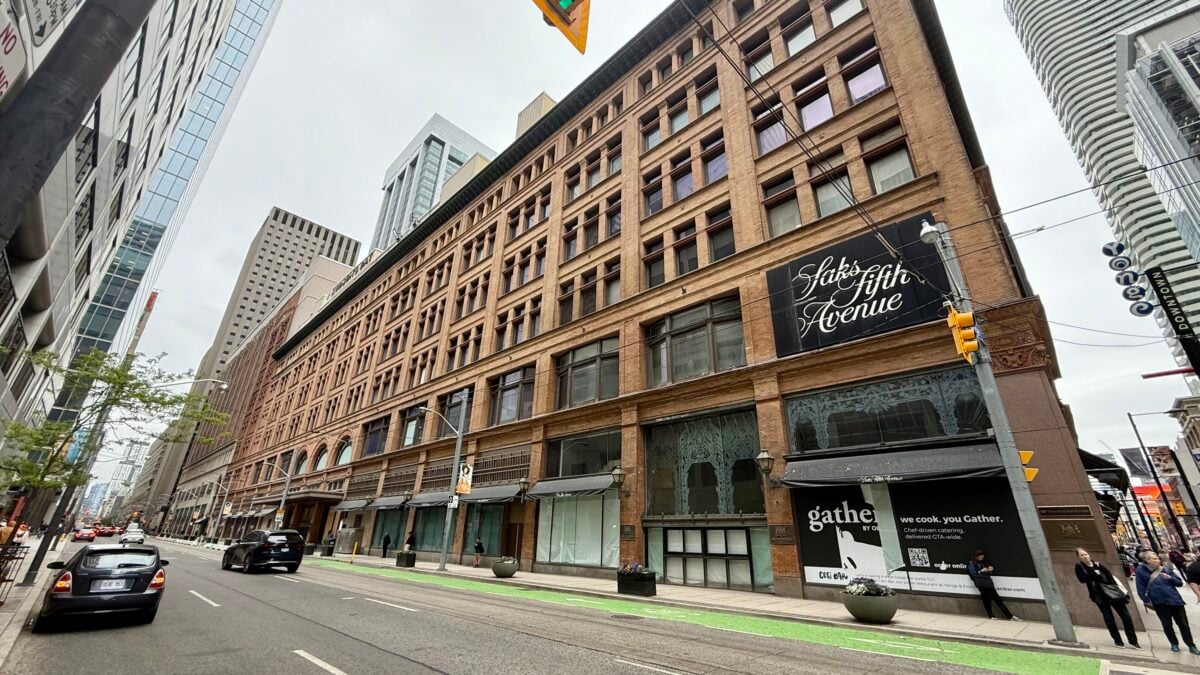
In downtown Toronto, the Hudson’s Bay building on Queen Street is owned by Cadillac Fairview and is not part of the receivership process. The site forms part of the CF Toronto Eaton Centre complex, and its future will be determined independently through Cadillac Fairview’s long-term plans.
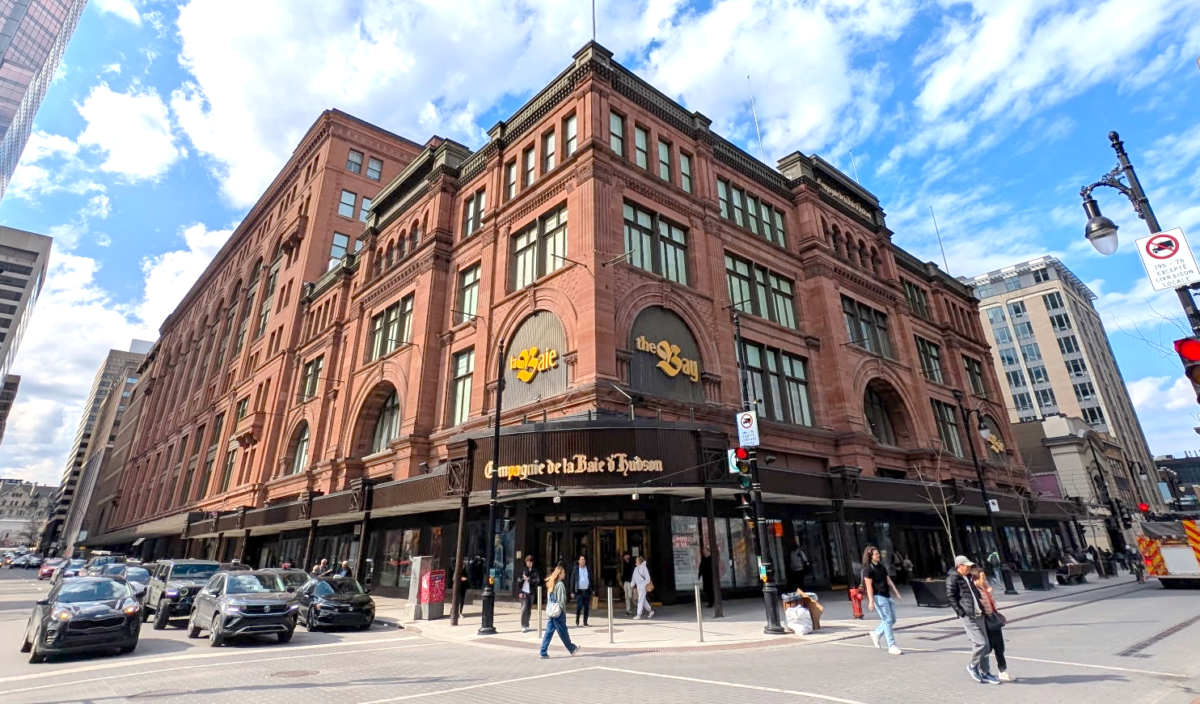
Montreal presents a far more transformative proposal. A bid led by the James Bay Eeyou Corporation, in partnership with JHD Immobilier, aims to acquire and redevelop the flagship property at 585 Sainte-Catherine Street West as part of a $400 million mixed-use project.
The proposal would reposition the historic building as a cultural and commercial hub anchored by Indigenous-led programming. Plans include a Cree heritage museum, an Indigenous cultural centre, hospitality uses such as a hotel, as well as retail and office space.
The initiative carries deep historical significance, reflecting the long relationship between the Cree Nation and the Hudson’s Bay Company. It also emphasizes architectural restoration, including preservation of the building’s 19th-century façade. If approved, the project is expected to open later this decade and play a role in downtown Montreal’s broader revitalization.
Strong Demand Underscores Asset Value
The sale process highlights the continued value of well-located urban real estate, even as traditional retail formats decline.
Court documents indicate that 32 parties signed confidentiality agreements for the Vancouver property, while 16 to 19 parties did so for the other assets. This level of interest demonstrates that, although the department store model has weakened, the underlying real estate remains highly desirable.
At the same time, the agreements reflect current market realities. Purchase prices have been redacted, and the Receiver has described the transactions as the “highest and best” available under current conditions.
A National Shift Away from Department Store Anchors
Taken together, these transactions mark a turning point in how large-format retail spaces are used across Canada.
For decades, Hudson’s Bay locations served as anchor tenants in downtown cores and shopping centres. Today, those same buildings are being repositioned for a very different future.
Developers are exploring residential conversions, mixed-use projects, and experiential retail concepts. Meanwhile, landlords are rethinking how anchor spaces can be subdivided or repurposed to meet modern demand.
This shift reflects broader changes in consumer behaviour, urban development, and the economics of retail. It also underscores how quickly the market is adapting to absorb millions of square feet of former department store space.
What Comes Next
The Ottawa transaction is expected to be the first to receive court approval, with the others anticipated to follow in the near term as administrative steps are completed.
Closing timelines suggest that deals could be finalized as early as May and June 2026, although extensions remain possible.
As these transactions move forward, attention will turn to redevelopment plans and timelines. Each site represents a major opportunity to reshape its surrounding neighbourhood, and together they signal the beginning of a new chapter for some of Canada’s most recognizable retail properties.







A year later and it’s still shocking and heartbreaking to see Hudson’s Bay be chopped up like this. All that history just gone. How we as Canadians let HBC fail is beyond me. Really wish leadership at Hudson’s Bay could have ran the business correctly. There is and was a market for Hudson’s Bay, listen to what Canadians wanted from HBC and change with the times. We’ll never get that history back and part of Canada truly feels like it died with Hudson’s Bay.
Well
Said 💔
Still all blame to business but no one questions business in Canada is terrible due to politics and bureaucracy, so many hidden fees and taxes, hence why more business are closing then opening. Canada is not business friendly, they wanna stick it to those business owners and expect free hand outs, free health care, free oat milk free plz
Craig! I wish they’d let you or someone take professional pictures of the inside and outsides of these historic Hudson’s Bay buildings. Would love to preserve the history
Always fascinating that anchors to shopping centres were separately owned. It just seems to fly in the face of the basic public perception of malls.
Hi Gary
It has been quite some time since Canadians owned HBC. You can still see the continued fallout with Saks and Neiman Marcus. Very sad. However, two of Canada’s most prominent families have teamed up to buy the original HBC Charter to ensure it remains in the country
Excellent update and thank you for keeping us informed with timely and credible information. Thank you Craig Patterson @the Retail Insider!
HBC was bought with the intention to strip it of any real chance of surviving as a going concern, so that there would be nothing left aside from the real estate. Things went exactly as planned.
A little retail history…the Windsor store was originally Simpson’s. In the photo included in the article the “glassed-in” 2nd floor with the stripes logo was the in-store restaurant (The Arcadian Room). It closed in the early 2000s.
It’s cool that it was called the ‘Arcadian Room’ — a reference to the Arcadian Court restaurant at the Queen St. flagship. It’s sad how much of Canada’s once-great retail is now history.