

For years, Dunkin’ Donuts’ collapse in Canada was viewed as one of the great business failures in the country’s foodservice sector. Once a formidable rival to Tim Hortons, especially in Quebec, Dunkin’ gradually disappeared from the Canadian landscape before officially exiting in 2018. Many assumed the brand was gone for good.
Now it’s coming back.
And the reason matters.
The decision by Foodtastic to revive Dunkin’ in Canada is not really about donuts. It is about identifying weakness in a market that, for decades, looked untouchable.
For years, Tim Hortons dominated Canada’s quick-service coffee market with extraordinary efficiency. It wasn’t just a coffee chain; it became part of Canada’s cultural identity. But dominance can create complacency, and the Canadian marketplace today is very different from the one Dunkin’ left behind.
Consumer loyalty has weakened. Canadians are far more willing to switch brands than they were twenty years ago. Inflation has changed buying habits. Consumers are increasingly critical of value, quality, consistency and service. At the same time, the coffee market itself has evolved dramatically.
Coffee is no longer simply about caffeine and donuts.
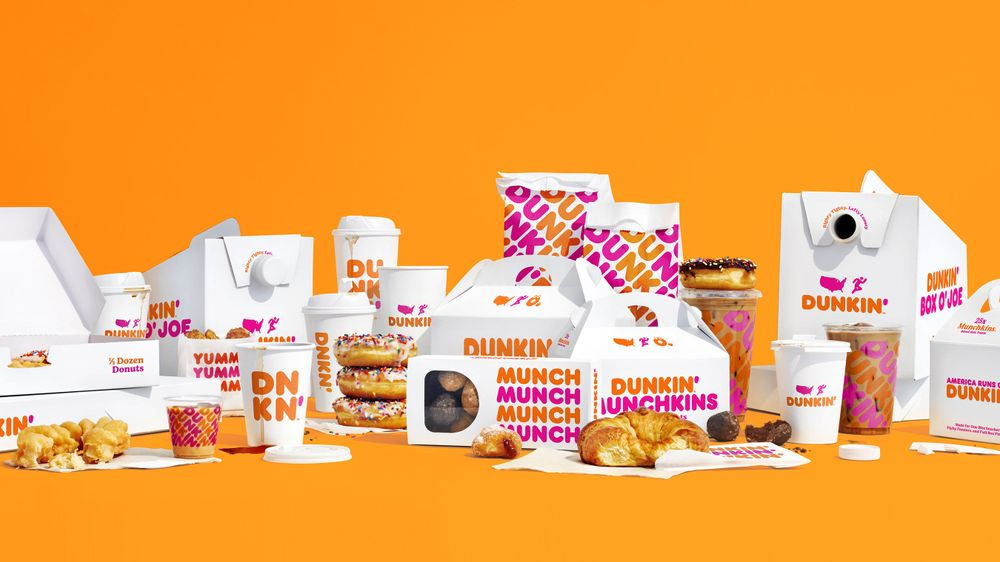
Today’s market revolves around specialty beverages, convenience, digital ordering, customization and brand experience. Starbucks owns the premium space. McDonald’s has become a major coffee competitor in Canada. Independent cafés are thriving in many urban centers. Meanwhile, Tim Hortons still commands enormous market share, but it no longer enjoys the same unquestioned dominance it once did.
Foodtastic sees that opening.
The Montreal-based restaurant consolidator has built a reputation for aggressively acquiring and revitalizing brands across Canada. Pita Pit, Second Cup, Freshii and Quesada are all examples of Foodtastic betting on established brands with fading momentum but strong consumer recognition. Dunkin’ fits perfectly into that strategy.
And unlike many foreign operators trying to enter Canada, Foodtastic actually understands the Canadian and Quebec markets intimately.
That matters.

Many Canadians forget how significant Dunkin’ once was in Quebec. At one point, the chain operated hundreds of locations and had genuine consumer loyalty. Older consumers still remember it fondly. Nostalgia alone will not guarantee success, but it certainly lowers the barrier to re-entry.
The bigger question is whether Canada’s coffee market can realistically support another major player.
It will not be easy.
Canada is arguably one of the most competitive coffee markets in the world on a per-capita basis. Tim Hortons remains a giant. McDonald’s has quietly built one of the strongest coffee programs in the country. Starbucks dominates affluent urban consumers. Convenience stores have upgraded their offerings dramatically. Even grocery stores are now competing more aggressively with ready-to-drink beverages and premium beans.
But Foodtastic is likely betting on something very specific: fragmentation.
The Canadian consumer today is less loyal, more price sensitive, more curious and more willing to experiment than at any point in the last two decades. That creates opportunity for challenger brands.
Ironically, Dunkin’s return may say less about the strength of Dunkin’ itself and more about the reality that Tim Hortons is no longer viewed as invincible.
That alone makes this story worth watching carefully.
















It is hard to find good doughnuts in Chilliwack, BC. If your doughnut company set up shop here you sure would make alot of money from me.
Chilliwack would be a great place for Dunkin’ — I suspect something along the main highway could become a very busy location.
Please put Tim Hortons out of business!
Please don’t let it turn into Tim Hortons!
Has everyone forgotten the First Mover Effect in Canadian retail? The Canadian market tends to reward first movers in a particular industry and they become dominant. Later arrivals tend to fail. Walmart Canada has been a smashing success, Target Canada failed miserably (and rapidly). Home Depot Canada dominates its segment, Lowe’s Canada failed. Costco Canada is the market leader in its segment, Sam’s Club failed fast. Now Dunkin’ is attempting (with its Canadian partner) to re-enter an industry that has been dominated by Tim Horton’s (coffee, fresh food) and Starbucks (upscale coffee) for decades. Dunkin’ has the mother of all uphill battles against two behemoths that are top of mind with consumers, have market penetration and all the best real estate from coast to coast.
Dunkin’ doesn’t even have anything particularly unique to differentiate its offering. Recall the fanfare that accompanied Krispy Kreme’s entry into Canada (and at least Krispy Kreme had a somewhat unique product) and yet Krispy Kreme struggled mightily to make much of a dent.
I wouldn’t put my money behind Dunkin’s Canadian expansion.
The fast food industry is much different than super sized big box category killer brands like Home Depot, Costco, Best Buy, etc. People need to eat multiple times a day. How do A&W, Wendy’s, Burger King succeed in Canada despite McDonalds? How does Panago Pizza succeed despite Dominos, Pizza Pizza, Pappa Johns? How does Mary Browns succeed despite KFC, Church’s, Popeyes and Jollibee? Chipotle despite Quesada, Much Burrito? How do four telecom companies coexist (Bell, Rogers, Telus, Freedom)? Home Depot didn’t kill Rona, Costco didn’t kill Real Wholesale Club. Firehouse subs is doing very well despite Subway being the market leader. Visions Electronics exists despite Best Buy. Superstore exists despite Walmart. People appreciate variety and competition breeds improvement in choice, value and convenience. How do 20+ car brands coexist? Target failed Canada, Canada did not fail Target.
Tim Hortons has gone drastically downhill in recent years. Even their doughnuts are not as fresh as they once were. I, for one, no longer patronise the chain. They do need some serious competition from someone, although it’s a pity this competition is not Canadian…