Advertisement
Advertisement

Faulty Meat Scales Cost Canadians Millions

Date:

Share post:

Once again, it took the media to remind us that food fraud is not a relic of the past—it is very much a present-day risk embedded in our food system. After the maple syrup scandal, CBC News has uncovered yet another troubling issue: inaccurate scales at the meat counter. This is not anecdotal noise. It is a structural concern. When consumers pay for more than they actually receive, the consequence is not just irritation—it is a silent erosion of trust in one of the most expensive categories in the grocery store.

The implications are far from trivial. Canada counts roughly 16 million households, each spending over $16,000 annually on food. If about 20% of that goes to meat, we are looking at a $50-billion market. The discrepancies identified suggest overcharges ranging between 4% and 11% on affected packages. If this were systemic—which it likely is not—the exposure would be staggering. But even under conservative assumptions, where only 10% to 25% of transactions are impacted, the national cost still ranges from roughly $200 million to $1.4 billion annually. That is not statistical noise; it is a hidden tax on consumers—one that never shows up in inflation data, yet directly affects household budgets at a time when affordability is already stretched.


But this raises a far more uncomfortable question: where are the inspectors? Where are the regulators? Canada does not lack oversight bodies. Measurement Canada is mandated to ensure accuracy in trade measurement, while the Canadian Food Inspection Agency plays a broader role in food integrity and compliance. Yet, when it takes investigative journalism to uncover issues of this magnitude—twice in two years—we have to question whether the system is adequately resourced, sufficiently proactive, or simply too reactive.

This concern is amplified by recent signals that the federal government is cutting inspector positions within the CFIA. At a time when scrutiny should be intensifying, capacity may in fact be shrinking. We do not yet know the full impact of these reductions, but the timing is difficult to ignore. Fewer inspectors could mean fewer audits, slower response times, and ultimately weaker surveillance across the food system. In other words, the very moment Canadians are demanding more oversight may coincide with a diminished ability to deliver it.
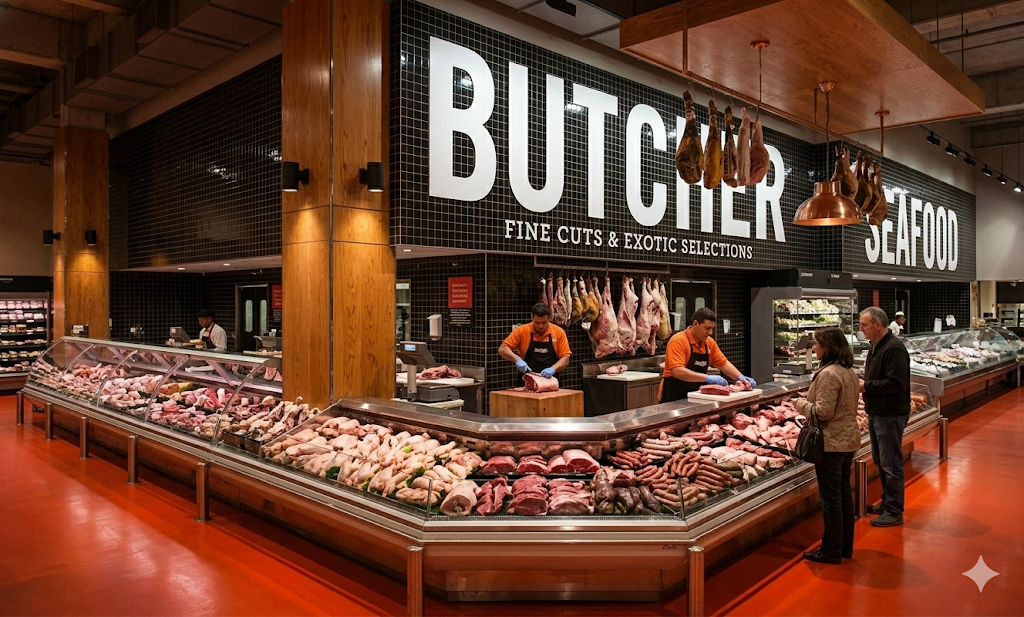
Grocery store meat butcher department. Image: RI/Google
 

What is perhaps more concerning is how normalized these discrepancies appear to be. Social media is now filled with consumer testimonies showing mismatches between labelled and actual weights. Years ago, such incidents would have been dismissed as isolated errors. Today, in a high-inflation environment with heightened consumer awareness, they signal something deeper: a lack of rigour. Whether these inaccuracies stem from malfunctioning equipment, inadequate calibration, or poor staff training is almost secondary. The outcome is the same—consumers are paying more than they should, and confidence in the system is weakened.

Some grocers have issued apologies, but apologies alone are insufficient. This is not about intent; it is about accountability. When the integrity of measurement is compromised, so too is the integrity of pricing. And in a country where food affordability is already under intense pressure, even small discrepancies compound into meaningful financial burdens for households.

Consumers, for their part, are not powerless. A simple kitchen scale—costing less than $20—can act as a first line of verification. If discrepancies are found, they should be documented and brought to store management. Under the Scanner Price Accuracy Code, consumers may be entitled to compensation—typically up to $10, or $15 in Quebec. Reporting issues to regulators is also essential, even if enforcement can be slow. Increasingly, however, consumers are turning to public platforms—because reputational damage often travels faster than regulatory action.

Ultimately, grocers must recognize that having a “thumb on the scale,” whether intentional or not, is indefensible. But regulators must also accept their share of responsibility. Oversight cannot rely on whistleblowers and journalists to function effectively. Precision in measurement is not optional in food retail—it is foundational. And right now, Canadians have every reason to wonder whether the system designed to protect them is weighing in at all.


More from Retail Insider:

1 COMMENT

LEAVE A REPLY

Please enter your comment!
Please enter your name here

More From Retail Insider

RECENT RETAIL INSIDER VIDEOS

Advertisment

Subscribe to the Newsletter

Subscribe

* indicates required

RECENT articles

Amazon expands partnership with NHLPA for communities

As part of the expanded partnership, NHL players will visit Amazon facilities in all 32 cities throughout the 2026–2027 NHL season, connecting with employees and presenting donations to local organizations.

Go Lime expands retail footprint through Home Depot and Walmart Canada

The dual-channel expansion extends Go Lime's reach to millions of Canadian households.

2nd annual Walmart Canada Growth Summit a boost for small businesses

The 2026 Walmart Canada Growth Summit is an opportunity to bring the Canadian seller and business community together and provide the resources they need to grow with Walmart Canada.

Asian lifestyle and beauty brand SUKOSHI opening at Calgary’s Southcentre Mall

Since launching in 2018, SUKOSHI has expanded steadily across Canada and the United States, with more than 20 locations and plans to surpass 40 stores by the end of 2026.

The key to low-carbon advertising: Vistar Media

Marketers should be paying more attention to “media waste” because it's been hiding in plain sight. 

Daily Synopsis: Apr 21, 2026

Distillery District retail shift, discount grocery banners expand, Montreal man wanted in CF Fairview shooting, Costco to open in NE Edmonton, and other news.

Tim Cook Transitioning to Apple Executive Chairman as John Ternus Becomes CEO

Apple has announced a leadership transition, with Tim Cook stepping into the role of executive chairman while John Ternus takes over as CEO effective September 1, 2026. This change is the result of a long-term succession planning process approved by the Board of Directors.

Johny Srouji Appointed Apple’s Chief Hardware Officer in Significant Leadership Shift

Apple has appointed Johny Srouji as its Chief Hardware Officer, succeeding John Ternus. Srouji has been instrumental in driving the company's silicon strategy and will now lead an expanded role in hardware engineering.

Toronto’s The Distillery Historic District announces opening of The Cooperage Marketplace (Photos/Video)

The Cooperage Marketplace is in one of the site’s most historic buildings, from the 1860s.

Toronto aligns on the future of tourism with new Destination Master Plan

Following a record-breaking year in 2025, with 28 million visitors generating over $9 billion in spending at businesses all throughout the city, Toronto is attracting more visitors than ever before.

Some Canadian businesses may be eligible for U.S. tariff refunds: CFIB

Approximately one-third of small Canadian exporters faced tariffs on goods that did not qualify for the CUSMA exemption.

ByWard Market Launches Vendors at Hudson’s Bay Site

ByWard Market launches a vendor village at the former Hudson’s Bay site to boost foot traffic and support local businesses in Ottawa.

Hillberg & Berk Expands Toward 30 Stores in Canada

Hillberg & Berk expansion in Canada accelerates with new Langley store and plans for 30 locations by 2027, with focus on Ontario and BC.

Goodfood Market reports $7 million net loss in Q2

Second quarter results reflect the impact of a temporary Canadian Food Inspection Agency (CFIA) license suspension and a softer demand environment.

Proposal before Calgary Co-op AGM seeks clarity on CEO position

A proposal at Calgary Co-op's 2026 AGM seeks a written update on the cooperative's long-running permanent CEO vacancy.

Nedap partnering with VF Corporation for retail inventory management

The deployment starts in Q2-2026 with The North Face and will expand to additional VF brands over time.

Ediya Coffee Enters Canada with First Toronto Store

Ediya Coffee opens its first Canadian location in Thornhill, marking a strategic North American expansion with a localized menu.

Pickleplex plans to double footprint by end of year

Very strong, consistent demand for high-quality indoor and outdoor racquet sport experiences.

Public Grocery Stores Debate Gains Traction in Canada

Debate grows over public grocery stores in Canada as experts question feasibility, costs, and impact on food affordability.

Meat and Produce Prices Rise Together in Canada

Meat and produce prices are rising together in Canada, signaling ongoing food system pressure and persistent grocery inflation.