Canada Goose delivered strong growth in fiscal 2026, but the more revealing part of the company’s earnings call may have been how often executives discussed conversion, customer engagement, and cautious shoppers rather than traffic growth.
Executives repeatedly focused on store productivity, staffing, customer behaviour, and increasingly selective spending patterns, offering a revealing look at how luxury retailers are adapting to a more cautious consumer environment.
Canada Goose reported 18% fourth quarter revenue growth and a 10% increase in direct-to-consumer comparable sales, even as management acknowledged softer traffic in some tourism-heavy urban markets and a more uncertain outlook for luxury spending heading into fiscal 2027.
The contrast is becoming more visible across luxury retail. Consumers are still spending, particularly at the high end of the market, but purchases now appear far more considered than they were during the post-pandemic luxury surge.
Luxury Retailers Shift Focus Toward Conversion
During the earnings call, Canada Goose repeatedly pointed to stronger conversion across stores and e-commerce, suggesting that while fewer people may be casually browsing, shoppers entering stores are arriving ready to buy.
North American revenue increased 11% during the quarter despite softer traffic in some tourist-oriented urban locations, while direct-to-consumer comparable sales rose 10%.
Management also spent considerable time discussing staffing, training, customer experience, and digital integration as the company works to improve productivity across its retail network.
“We are applying greater rigor to improve productivity across our network,” said Chairman and CEO Danny Reiss.
Luxury retailers are investing more heavily in client relationships, experiential retail, and digital integration as discretionary spending becomes less predictable.
Retailers are also paying closer attention to the productivity of each store visit rather than relying primarily on higher mall traffic to drive growth.
Canadian Consumers Becoming More Careful With Spending
Recent Canadian consumer research points to similar changes in shopping behaviour.
NielsenIQ said many Canadians are becoming more cautious with discretionary purchases as affordability pressures continue affecting household budgets. The report also noted that consumers are placing greater focus on controlling spending and making more selective purchasing decisions, including among higher-income households.
Consumers are still spending, but impulse purchases appear less common than they were several years ago.
Even within luxury retail, shoppers remain willing to spend on products they see as differentiated or worthwhile, though many purchases now appear more researched and prioritized.
Canada Goose’s own results reflected that dynamic. The company reported strong apparel growth and improving direct-to-consumer performance, even as executives acknowledged softer tourism flows and uneven traffic patterns in some markets.
Luxury Market Becoming More Polarized
Industry analysts have also pointed to a cooling luxury environment as aspirational luxury consumers begin pulling back after several years of elevated spending.
A recent Bain luxury market analysis found that growth across the sector has slowed as luxury brands become more dependent on higher-income shoppers.
In Canada, similar patterns are emerging. Earlier this year, a JLL retail study described what analysts called a “barbell” retail economy, where luxury and value-oriented retailers continue outperforming while middle-market discretionary retail faces greater pressure. Retail Insider JLL luxury retail analysis
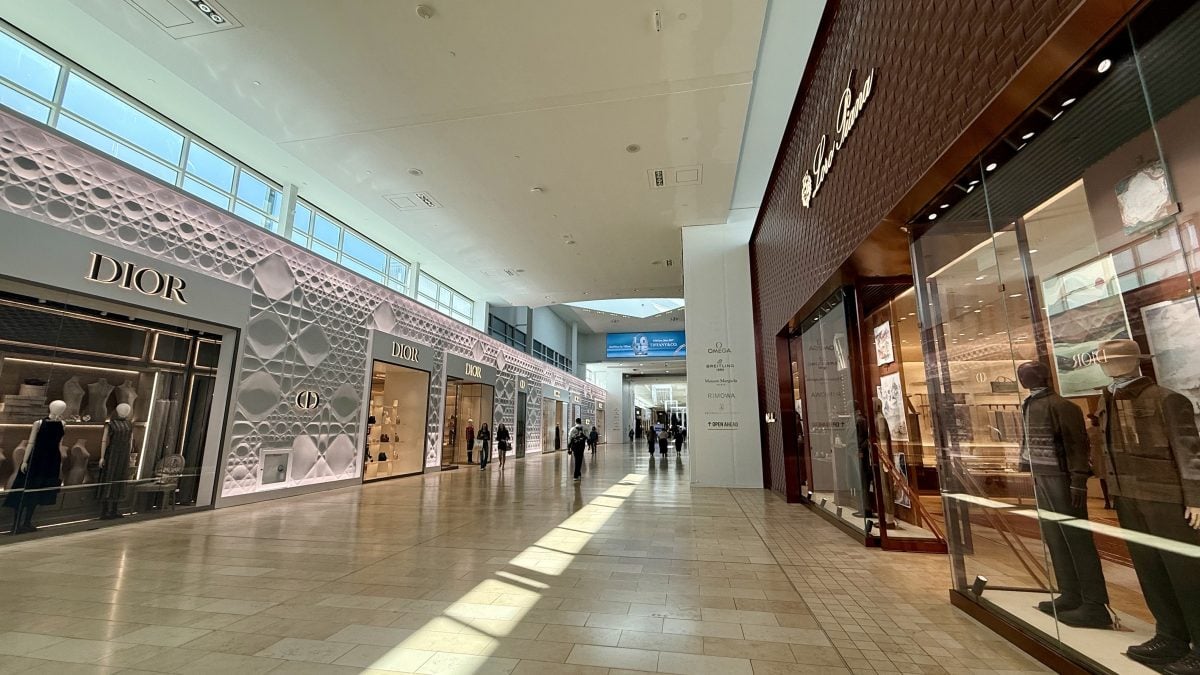
In Toronto’s Bloor-Yorkville district, luxury brands continue expanding even as broader discretionary retail spending remains uneven.
Canada Goose executives also cited geopolitical tensions, softer tourism flows, and cautious discretionary spending as ongoing risks facing the luxury sector.
At the same time, the company still delivered strong growth, particularly in apparel and direct-to-consumer retail, suggesting affluent consumers remain willing to spend when products and brand positioning resonate.
Retailers Working Harder for Every Sale
Luxury retail has changed considerably since the rapid spending surge that followed the pandemic.
For several years, many brands benefited from unusually strong demand, rising tourism, and aggressive discretionary spending. The luxury environment now feels far more cautious than it did several years ago.
Consumers are still shopping, but retailers no longer seem able to rely on traffic growth and impulse purchasing the way they once did.
Instead, the focus has shifted toward stronger conversion, customer retention, tighter inventory management, and making each store visit more productive.
What stood out during Canada Goose’s earnings call was not simply that the company delivered strong results. It was how much of the discussion focused on operating discipline, conversion, and more selective shoppers.
Luxury consumers remain active, but retailers are now operating in a market where every purchase matters more.