Canadian Books & Entertainment increasingly behaved less like a traditional retail category and more like a competition for attention, participation, and emotional engagement during Q1 2026.
The category is no longer moving in one direction. It is increasingly splitting into two different economies competing for the same consumer time and discretionary spending.
One side of the market is built around participation. These businesses monetize engagement, fandom, repeat visits, social interaction, and emotional connection. Consumers are paying for experiences, community, premium outings, collectibles, gaming culture, and culturally relevant moments. In these models, the venue itself increasingly becomes part of the product.
The other side remains tied to older specialty retail structures built around static inventory, seasonal peaks, and conventional merchandising. That side of the market is showing mounting pressure as occupancy costs, supply-chain complexity, digital competition, and shifting consumer behaviour continue reshaping the economics of physical retail.
The divide became difficult to ignore during Q1.
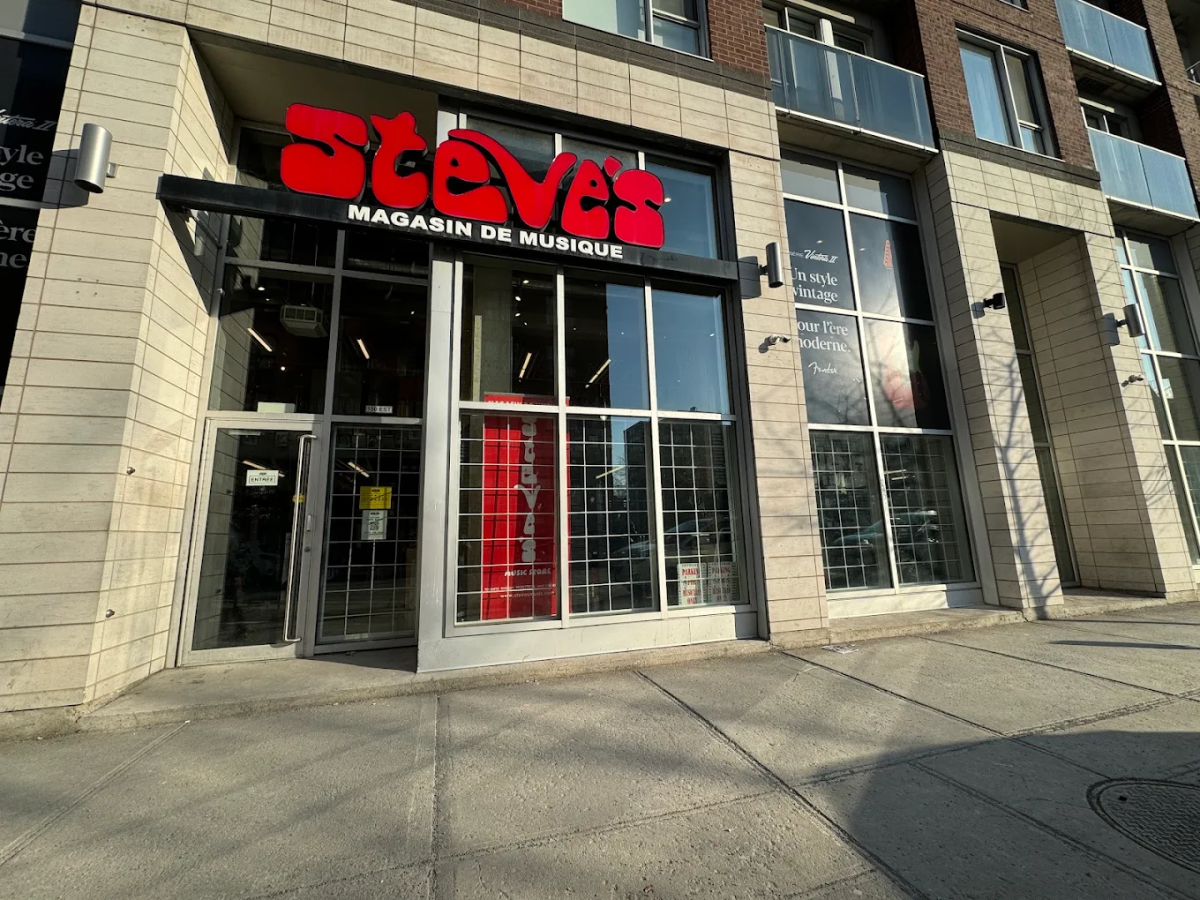
Steve’s Music moved into liquidation across much of its network to focus on a single Montreal flagship and e-commerce operations.
At the same time, operators built around recurring participation continued expanding.
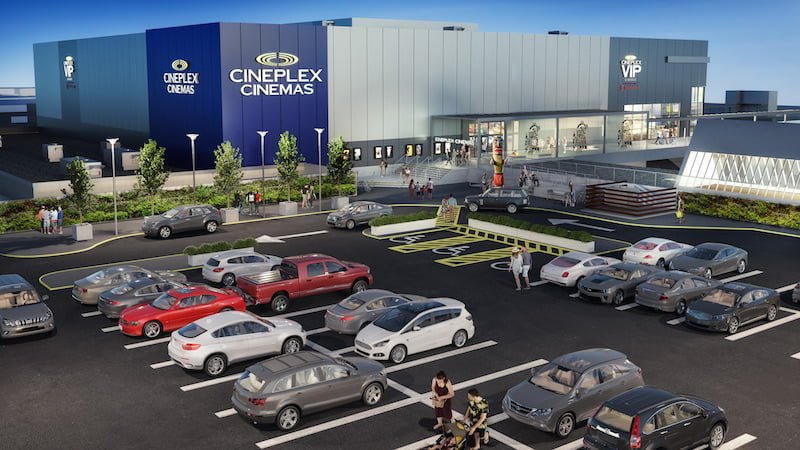
Cineplex continued lifting revenue-per-guest through premium formats, concessions, alternative programming, subscriptions, loyalty, and location-based entertainment. Activate Games expanded its replayable technology-enabled entertainment model, while Splitsville Bowl continued growing large-format venues built around bowling, food, beverage, arcades, and group experiences.
On the commerce side, eBay launched livestream shopping in Canada tied directly to fan conventions, while Funko reset Canadian wholesale distribution through Kroeger Marketing. These moves reinforced another structural shift emerging across the category: fandom, collectibles, and entertainment commerce are increasingly being driven through events, livestreams, communities, creator ecosystems, and digital participation rather than passive shelf merchandising.
For retailers, landlords, investors, vendors, brokers, and service providers, the implication is becoming clearer. The traditional Books & Entertainment playbook weakens fastest when stores fail to evolve into destinations, community nodes, or recurring-visit experiences.
Executive Summary
Several themes defined Canadian Books & Entertainment during Q1 2026:
- Experiential entertainment operators continued outperforming traditional specialty retail.
- Landlords prioritized tenants capable of extending dwell time and generating repeat visits.
- Traditional specialty retail faced renewed financial pressure and restructuring risk.
- Entertainment increasingly merged with hospitality, foodservice, and social activity.
- Livestream commerce and fandom-driven retail ecosystems accelerated.
- Consumers continued spending selectively on premium outings, identity-driven purchases, and culturally relevant experiences.
- Community-building and participation became increasingly important competitive advantages.
The broader shift is becoming difficult to ignore: Canadian Books & Entertainment increasingly rewards operators that monetize emotional engagement and participation rather than simply selling inventory.
Books & Entertainment Becomes a Participation Economy
Retail Insider tracked 9 notable Books & Entertainment stories during Q1 2026, and the mix itself revealed a category moving in two directions simultaneously.
Expansion and experiential growth occurred alongside restructurings, liquidations, shrinking footprints, and operational stress. This was not a stable category. It was a quarter where consumers gravitated toward outings, fandom, experiences, and event-driven spending while some traditional retail formats struggled under rising costs and declining visit urgency.
The strongest operators increasingly shared one characteristic: they created reasons for consumers to actively participate rather than simply transact.
That participation showed up through:
- premium cinema experiences;
- immersive gaming;
- bowling entertainment;
- collectibles;
- conventions;
- livestream commerce;
- fandom events;
- creator ecosystems; and
- social outings.
The weaker side of the category looked very different:
- static inventory;
- fragile supply chains;
- declining visit urgency; and
- retail models dependent on nostalgia rather than recurring engagement.
Books & Entertainment is no longer functioning purely as a specialty retail category. It is increasingly operating as a participation economy where emotional utility, repeat engagement, and community matter as much as merchandise itself.
Consumers Increasingly Pay for Emotional Utility
One of the most important shifts underneath the category is that consumers increasingly justify experiences differently than products.
Commodity purchases are increasingly easy to make online. Physical Books & Entertainment retail now competes more heavily on:
- escapism;
- identity;
- belonging;
- social interaction;
- memory creation;
- participation; and
- cultural relevance.
That helps explain why fandom, gaming, collectibles, entertainment, and social experiences continue attracting consumer attention even as broader discretionary spending remains selective.
The strongest operators are no longer simply selling products or admissions. They are creating environments where consumers feel part of something.
That distinction matters.
Retailers capable of building emotional engagement, rituals, repeat participation, and community behaviour are becoming more resilient. Operators dependent primarily on transactional visits are becoming more exposed to digital substitution and traffic volatility.
Participation has become a retail moat.
What We’re Hearing Across the Market
Several themes repeatedly surfaced across landlord discussions, retailer activity, earnings commentary, and Q1 reporting.
Landlords increasingly value entertainment tenants because they:
- extend dwell time;
- activate evenings and weekends;
- support surrounding restaurant traffic;
- encourage family and group outings; and
- create repeat visitation patterns that many traditional retailers struggle to replicate.
There are also signs that entertainment and fandom-driven uses are replacing weaker discretionary retail categories in some centres. Collectibles, gaming, anime, trading cards, and social entertainment concepts continue generating stronger engagement than many inventory-heavy specialty formats.
Meanwhile, retailers tied to organized communities appear more resilient than operators dependent on broad generic assortment strategies. Release calendars, tournaments, livestreams, creator partnerships, exclusive drops, and conventions increasingly function as recurring traffic infrastructure rather than isolated marketing moments.
The strongest operators increasingly behave less like conventional retailers and more like entertainment, media, hospitality, and community platforms.
Entertainment Becomes Traffic Infrastructure
One of the quarter’s most important real estate shifts is that entertainment tenants are increasingly functioning as traffic infrastructure within Canadian retail environments.
For years, entertainment was often treated as supplementary to shopping. That is changing quickly. Entertainment is increasingly central to how landlords drive:
- visitation;
- evening traffic;
- family outings;
- foodservice demand;
- social activity; and
- dwell time.
That helps explain why concepts such as:
- cinemas;
- social gaming;
- bowling entertainment;
- immersive attractions;
- fandom retail; and
- experiential venues
continue attracting landlord interest despite broader pressure across discretionary retail categories.
The economics are fundamentally different.
The strongest entertainment operators no longer rely solely on admissions or transactional purchases. They monetize engagement time through:
- food and beverage;
- premium upgrades;
- memberships;
- loyalty;
- replayability;
- group events;
- merchandise; and
- social participation.
Cineplex continues demonstrating this model through premium screens, VIP offerings, alternative programming, concessions, subscriptions, and location-based entertainment. Even where attendance remains tied to film slates, revenue-per-patron metrics continue reinforcing the value of premiumization and experiential layering.
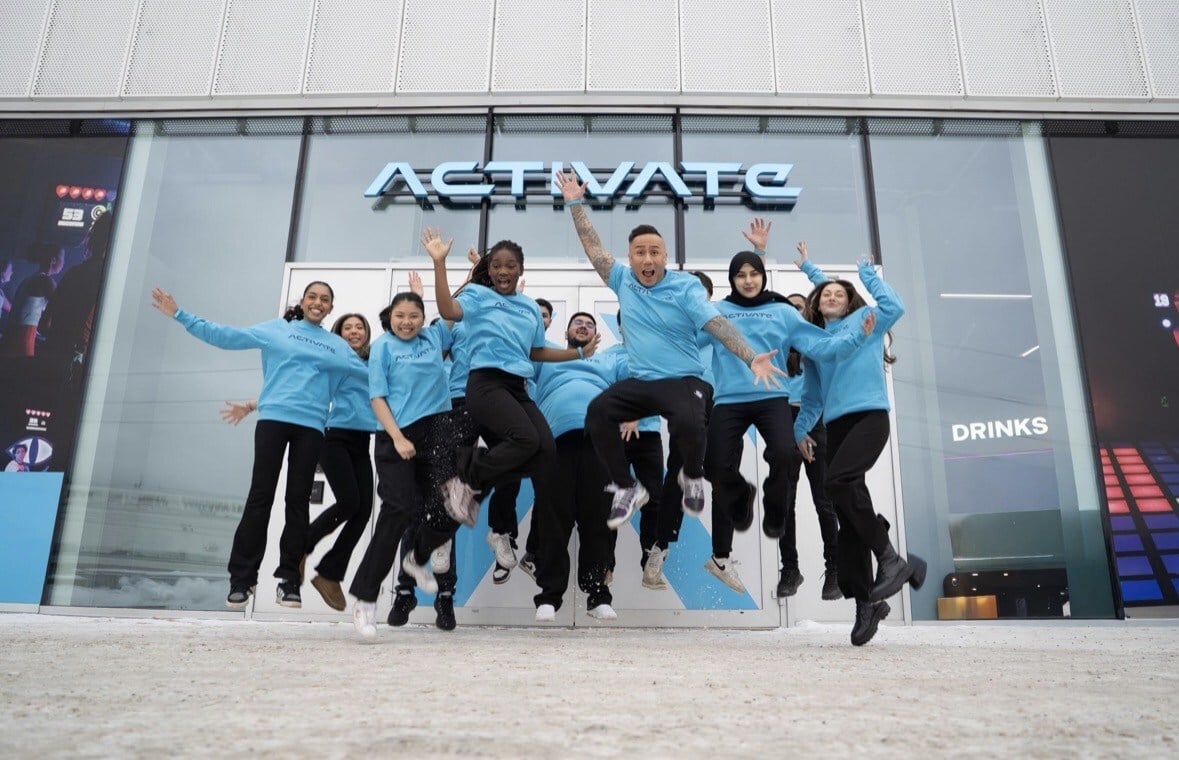
Activate Games operates around repeat participation through replayable technology-enabled rooms, progress tracking, and social competition. Splitsville Bowl similarly monetizes group occasions through bowling, VIP lanes, food, beverage, arcades, and event-driven social experiences.
This convergence between entertainment, hospitality, and foodservice is becoming increasingly important for landlords. Entertainment venues no longer function purely as attractions. In many cases, they help stabilize traffic patterns, extend visit duration, support restaurant ecosystems, and create reasons for consumers to physically gather.
Entertainment tenants are increasingly being underwritten more like traffic infrastructure than discretionary retail.
Fandom Becomes Recurring Traffic Infrastructure
Another major shift emerging from the quarter is that fandom itself is becoming organized retail infrastructure.
Collectibles, gaming culture, anime, trading cards, creator ecosystems, sports partnerships, livestreams, and convention culture are no longer operating at the edge of retail. They are increasingly functioning as recurring demand ecosystems capable of generating urgency, loyalty, repeat visits, and community participation.
Retail Insider’s Q1 coverage reflected this shift through:
- eBay Live Canada;
- EB Games Canada’s Canadian Soccer Business partnership; and
- broader collectibles momentum.
The earnings commentary reinforced the same pattern.
eBay pointed to momentum in:
- trading cards;
- comic books;
- collectibles;
- live commerce; and
- authenticated marketplace activity.
For Canadian operators, the implications are becoming increasingly practical.
Retailers can no longer simply stock fandom. They increasingly need to program fandom through:
- events;
- tournaments;
- drops;
- livestreams;
- creator partnerships;
- pre-orders;
- conventions;
- loyalty ecosystems; and
- recurring community participation.
The store is no longer simply a distribution point.
It is becoming:
- a stage;
- a gathering place;
- a social venue; and
- a community platform.
Omnichannel Evolves Into Event Commerce
In Books & Entertainment, digital increasingly functions less like a checkout lane and more like a live event platform.
eBay Canada’s launch of eBay Live tied livestream auctions directly to convention culture and fan moments, including Fan Expo Vancouver. The significance extends beyond auctions themselves. Live commerce transforms scarcity, fandom, urgency, and participation into real-time retail behaviour.
This changes the competitive environment for specialty retail.
A local collectibles retailer may still possess strong community credibility, but it now competes against platforms capable of:
- staging live events;
- integrating influencers;
- driving national audiences;
- creating urgency; and
- publicly establishing pricing momentum in real time.
The broader lesson extends beyond collectibles.
Passive e-commerce and generic online assortment are becoming weaker competitive advantages than:
- owned audiences;
- creator ecosystems;
- loyalty platforms;
- app engagement;
- livestreams;
- event calendars; and
- community participation.
Retailers increasingly need reasons for consumers to engage before the transaction itself occurs.
Liquidations Put Real Estate Back in Play
The immediate implication for landlords and brokers is increasingly straightforward: vacancy and repositioning risk remain meaningful across parts of the category.
Steve’s Music represents one version of that pressure. Its retreat toward a single Montreal flagship and e-commerce operation reflects how difficult it has become for some traditional specialty formats to support broad physical networks without stronger experiential differentiation.
This creates broader implications for malls, power centres, and urban retail corridors.
Entertainment, gaming, foodservice, fandom retail, and social experiences are increasingly being evaluated not as optional additions, but as strategic traffic drivers capable of stabilizing visitation patterns within increasingly experience-oriented retail environments.
The next wave of category growth is unlikely to come from conventional inventory-led specialty retail. It is more likely to come from operators capable of generating participation, social engagement, repeat visitation, and stronger productivity economics.
Risks to the Thesis
Despite strong momentum behind experiential and fandom-driven retail, several risks remain important.
One risk is oversupply. If every landlord aggressively pursues:
- immersive gaming;
- bowling entertainment;
- social attractions;
- arcades; or
- experiential concepts,
certain markets could eventually become saturated.
Another risk is novelty fatigue. Some experiential concepts remain heavily dependent on repeat traffic and social relevance. Maintaining long-term engagement may become more difficult once novelty cycles fade.
Consumer spending also remains selective. Experiences may currently be outperforming some traditional retail categories, but they remain discretionary purchases vulnerable to broader economic softness.
There is also increasing competition for consumer attention itself. Livestreams, fandom ecosystems, collectibles, conventions, gaming, and entertainment concepts are all competing for finite time and spending capacity.
The strongest operators will likely be those capable of consistently refreshing experiences, building communities, and maintaining cultural relevance rather than relying purely on novelty.
Editor’s Take
The biggest shift this quarter is that Canadian Books & Entertainment increasingly rewards operators that create participation rather than passive consumption.
That sounds subtle, but it represents a major structural shift in how consumers engage with physical retail.
The strongest businesses are no longer simply selling products, admissions, or inventory. They are building ecosystems around:
- fandom;
- identity;
- social interaction;
- repeat engagement;
- events;
- loyalty; and
- cultural relevance.
That is why operators such as Cineplex, Activate Games, Splitsville Bowl, eBay Live, and fandom-driven collectibles ecosystems continue generating momentum.
The weaker side of the category increasingly looks exposed:
- static merchandising;
- fragile supply chains;
- weak digital engagement; and
- formats dependent on nostalgia rather than recurring participation.
The broader implication may extend well beyond Books & Entertainment itself.
Consumers increasingly want reasons to leave home:
- social interaction;
- identity;
- experiences;
- community;
- events;
- escapism; and
- emotionally resonant participation.
Retailers capable of creating those behaviours are becoming more resilient.
Those that remain primarily transactional are becoming more exposed.
For landlords, the lesson is increasingly straightforward: underwrite traffic quality, repeat engagement, and dwell time rather than relying purely on legacy category assumptions or nostalgic brand recognition.
In 2026, success in Books & Entertainment increasingly depends less on what retailers sell and more on whether consumers feel compelled to return, participate, and belong.
Selected Coverage
- Steve’s Music Restructures, Closing Most Stores – Lee Rivett – Feb 9, 2026
- Cineplex sets annual records for box office and concession per patron – Mario Toneguzzi – Feb 11, 2026
- Winnipeg-based Activate Games accelerating international growth – Mario Toneguzzi – Mar 20, 2026
- Aggressive expansion in Alberta for Splitsville – Mario Toneguzzi – Feb 4, 2026
- eBay launches livestream shopping platform in Canada with auctions tied to fan conventions – Mario Toneguzzi – Feb 13, 2026
- Canadian Soccer Business names EB Games Canada exclusive video game retail partner – Mario Toneguzzi – Jan 22, 2026
- Code Ninjas Opens in Vaughan, Inspiring the Next Generation of Coders – Mario Toneguzzi – Jan 28, 2026
- Galerie de Bellefeuille Expanding to New York and Miami – Craig Patterson – Jan 24, 2026