Canada’s retail real estate market entered 2026 facing a contradiction: retailers still want stores, but increasingly struggle to secure economically viable space in the locations they want most.
The market is no longer defined by recovery. It is increasingly being defined by scarcity.
Prime retail availability remains extremely tight across major Canadian markets. Landlords continue reporting high occupancy, rising renewal spreads, and strong tenant demand, particularly in grocery, value, service, fitness, wellness, luxury, and necessity-driven categories. At the same time, rising construction costs, elevated build-out expenses, tighter capital conditions, and longer development timelines are reshaping how retailers approach expansion.
The challenge is no longer proving demand exists. The challenge is converting demand into profitable, affordable, buildable space.
That tension defined Canadian retail real estate during Q1 2026.
Former Hudson’s Bay locations are becoming some of the country’s largest redevelopment and subdivision opportunities. Owners are actively repositioning large-format boxes into mid-sized leasing opportunities while using redevelopment flexibility to rethink tenant mix, intensification, and long-term site planning. Meanwhile, older retail assets without clear reinvestment strategies are becoming increasingly exposed as debt costs, redevelopment complexity, and capital requirements rise.
The result is a market behaving less like a traditional growth cycle and more like a scarce-resource economy.
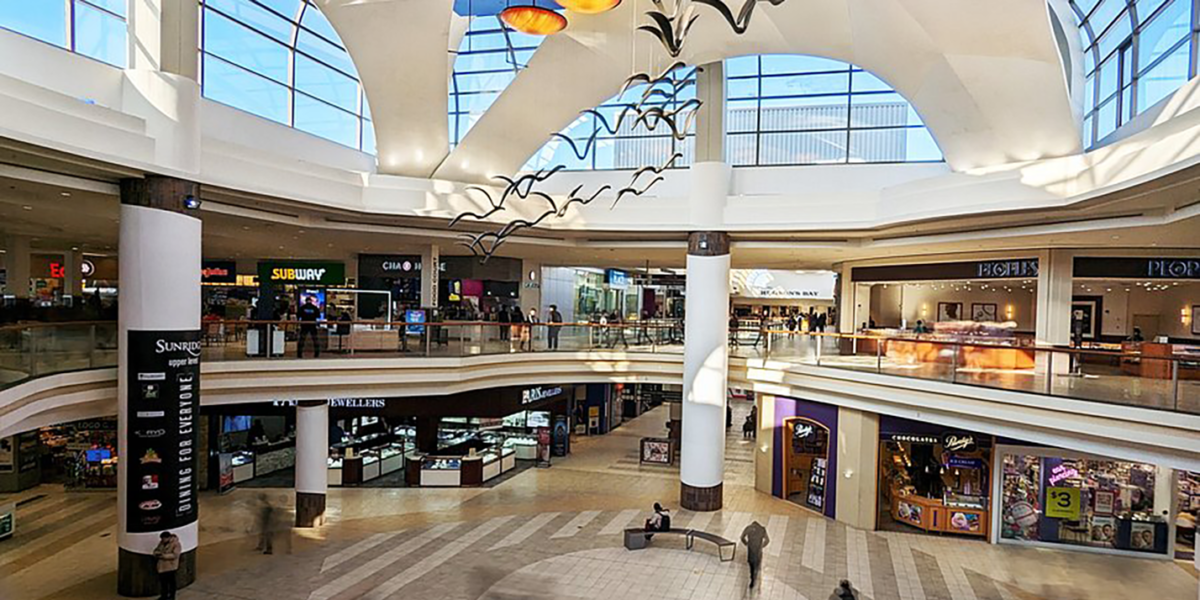
Executive Summary
Several themes dominated Canadian retail real estate during Q1 2026:
- Prime retail availability remained historically tight in major Canadian markets.
- Former Hudson’s Bay locations became Canada’s largest mid-box leasing opportunity.
- Landlords continued pushing renewal and new leasing spreads materially higher.
- Rising build-out and development costs placed increasing pressure on retailer economics.
- Grocery, value, fitness, service, wellness, and necessity retail categories remained strongest.
- Landlords with redevelopment capital widened their competitive advantage.
- Retailers became more selective, flexible, and data-driven in expansion planning.
- Adaptive reuse and mixed-use intensification accelerated across older retail assets.
- Second-generation space became increasingly attractive relative to expensive new development.
The quarter also reinforced a broader structural shift: retail real estate strategy is increasingly becoming capital strategy. In 2026, choosing a site also means choosing a balance sheet.
Q1 2026 by the Numbers
Several metrics illustrated how constrained the Canadian retail real estate market has become:
- 98.6% RioCan committed retail occupancy
- 25.8% RioCan blended leasing spreads
- 58.5% RioCan new leasing spreads
- $175 million–$225 million expected Primaris investment into former Hudson’s Bay repositioning projects
- 15 million square feet of former Hudson’s Bay space analyzed by JLL
- 65% projected Hudson’s Bay absorption within two years through subdivision and re-tenanting strategies
- 97.6% SmartCentres committed occupancy
- 58 Retail Insider real estate and leasing stories published during Q1 2026
These are not indicators of a weak leasing environment. They are indicators of scarcity.
Retail Real Estate Moves Beyond Recovery
Retail Insider’s Q1 coverage revealed a market increasingly focused on optimization rather than broad expansion.
The industry conversation shifted away from pandemic recovery and toward more structural concerns:
- how to reposition large-format vacancy,
- how to justify rising occupancy costs,
- how to intensify aging retail assets,
- and how to deploy capital efficiently in a market where development economics have fundamentally changed.
That shift is visible across Canada.
In Toronto, dominant nodes such as Yorkdale Shopping Centre, Bloor-Yorkville, Ossington Avenue, and CF Toronto Eaton Centre continue experiencing intense competition for space. Vancouver remains defined by luxury demand concentrated around Alberni Street and the emerging Oakridge Park retail district, where more than 30 luxury brands are expected to open stores over time. Calgary and broader Alberta markets continue benefiting from population growth and suburban expansion momentum, particularly in grocery-anchored and necessity-oriented formats.
The issue is not whether retailers want Canadian space. The issue is whether enough viable space exists in the locations retailers actually want.
What We’re Hearing Across the Market
Several themes repeatedly surfaced across earnings calls, leasing discussions, brokerage commentary, and Retail Insider reporting during the quarter.
Retailers are becoming materially more cautious about expansion economics, even while continuing to pursue growth. Many are prioritizing:
- second-generation space over expensive new shell construction,
- flexible footprints,
- phased openings,
- and lower-cost build-out opportunities.
At the same time, landlords are becoming increasingly selective about tenant mix and covenant quality. Grocery, fitness, wellness, value retail, food, medical, pet, and service-oriented tenants continue attracting strong landlord interest because they generate repeat traffic and stronger long-term property productivity.
There are also signs that some discretionary retailers are quietly becoming more hesitant about aggressive expansion, particularly in expensive urban corridors where occupancy costs, fixturing expenses, and construction pricing have materially increased over the past several years.
Meanwhile, competition for well-located mid-box space appears to be accelerating faster than many landlords initially expected following the collapse of Hudson’s Bay.
Retail space is still available in Canada. Economically viable retail space is becoming much harder to secure.
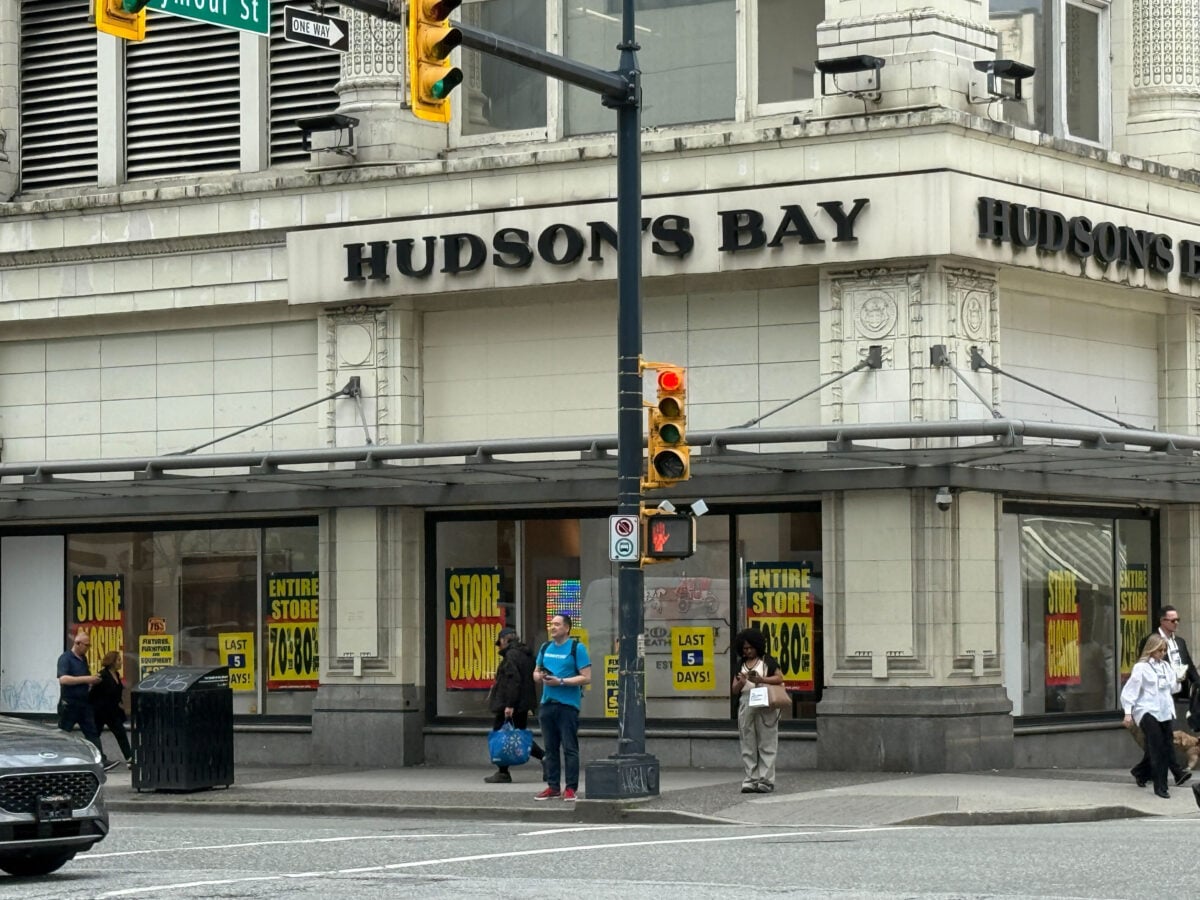
Former Hudson’s Bay Space Becomes Canada’s Largest Leasing Opportunity
The collapse of Hudson’s Bay has created one of the most significant retail real estate repositioning opportunities Canada has seen in decades.
JLL estimates roughly 65 percent of former Hudson’s Bay space could be committed within two years, largely through subdivision strategies that transform oversized department store boxes into smaller, leasable mid-format spaces.
That shift matters because many modern retailers no longer want massive legacy department store footprints. Instead, they want:
- 15,000–40,000 square foot spaces,
- better visibility,
- more efficient layouts,
- lower operating costs,
- and locations within already-proven trade areas.
Primaris REIT is effectively betting on that thesis at scale. The company is preparing to invest between $175 million and $225 million repositioning former Hudson’s Bay locations while also unlocking redevelopment flexibility previously constrained by legacy department store agreements.
This is becoming the new landlord playbook:
- subdivide oversized anchors,
- upgrade tenant mix,
- improve traffic quality,
- and reposition existing assets rather than waiting for traditional department store replacements that may never return.
Some of the strongest leasing opportunities in Canada over the next 24 months may emerge from spaces that currently look transitional and construction-heavy rather than polished and stabilized.
The next leasing opportunity may arrive disguised as a redevelopment problem.
Rising Rents Are Colliding With Retail Economics
The strongest landlords in Canada continue benefiting from significant pricing power.
RioCan’s Q1 leasing spreads reinforced how constrained prime Canadian retail space has become, with new leasing spreads reaching 58.5 percent.
But rising rent is only one layer of the equation.
Retailers are simultaneously facing:
- elevated construction costs,
- higher fixturing expenses,
- more expensive financing,
- labour shortages,
- permitting delays,
- and rising operating costs.
For many retailers, especially discretionary and mid-tier concepts, the issue is no longer simply securing a location. The issue is whether the economics still work once construction, staffing, occupancy, and capital costs are fully modeled.
That creates an important contradiction in the market.
Landlords continue pushing rents higher because space remains scarce. However, retailers still need stores to remain profitable. If occupancy costs move too far ahead of store productivity, the market risks creating hidden fragility beneath today’s strong occupancy metrics.
This is particularly relevant in categories such as:
- discretionary fashion,
- independent restaurants,
- experiential retail,
- and highly customized flagship concepts with expensive build-outs.
Retailers are no longer simply competing for customers. Increasingly, they are competing for viable economics.
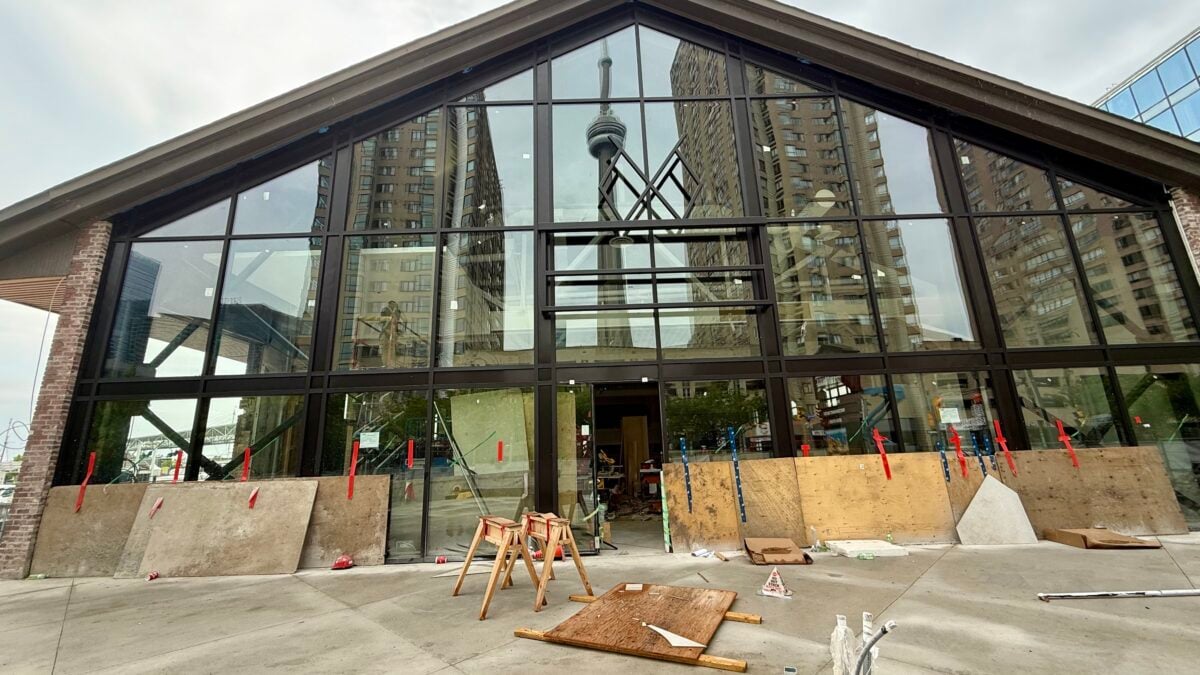
Construction Costs Are Reshaping Expansion Strategy
Canada continues building retail space, but the threshold for development has materially increased.
Public REIT commentary increasingly reflects a more disciplined development environment:
- projects tied closely to leasing commitments,
- phased development,
- selective intensification,
- and targeted capital deployment rather than broad speculative expansion.
That matters because rising development costs are narrowing future supply.
The market increasingly favours:
- second-generation space,
- adaptive reuse,
- former anchor subdivisions,
- and mixed-use intensification.
Retailers capable of operating flexible formats now hold a meaningful advantage.
Brands able to efficiently adapt to:
- 5,000 square feet,
- 12,000 square feet,
- or 25,000 square feet,
using modular fixtures and lower-cost build-outs have materially more flexibility than concepts dependent on expensive flagship prototypes.
This is becoming increasingly visible across Canadian expansion activity. Retailers are becoming more selective about where flagship investments still make sense, while simultaneously pursuing lower-risk suburban, mixed-use, and second-generation opportunities.
The non-obvious implication is that construction inflation is not simply inflating budgets. It is reshaping retail strategy itself.
Landlords With Capital Are Pulling Ahead
Capital access has become one of the defining competitive advantages in Canadian retail real estate.
The former Hudson’s Bay situation illustrates this clearly. Demand for many locations exists, but landlords still require substantial capital to:
- subdivide space,
- modernize infrastructure,
- improve visibility,
- reconfigure loading,
- and reposition aging assets.
Landlords capable of funding these projects are creating opportunity. Owners facing debt pressure or limited redevelopment capacity are becoming more exposed.
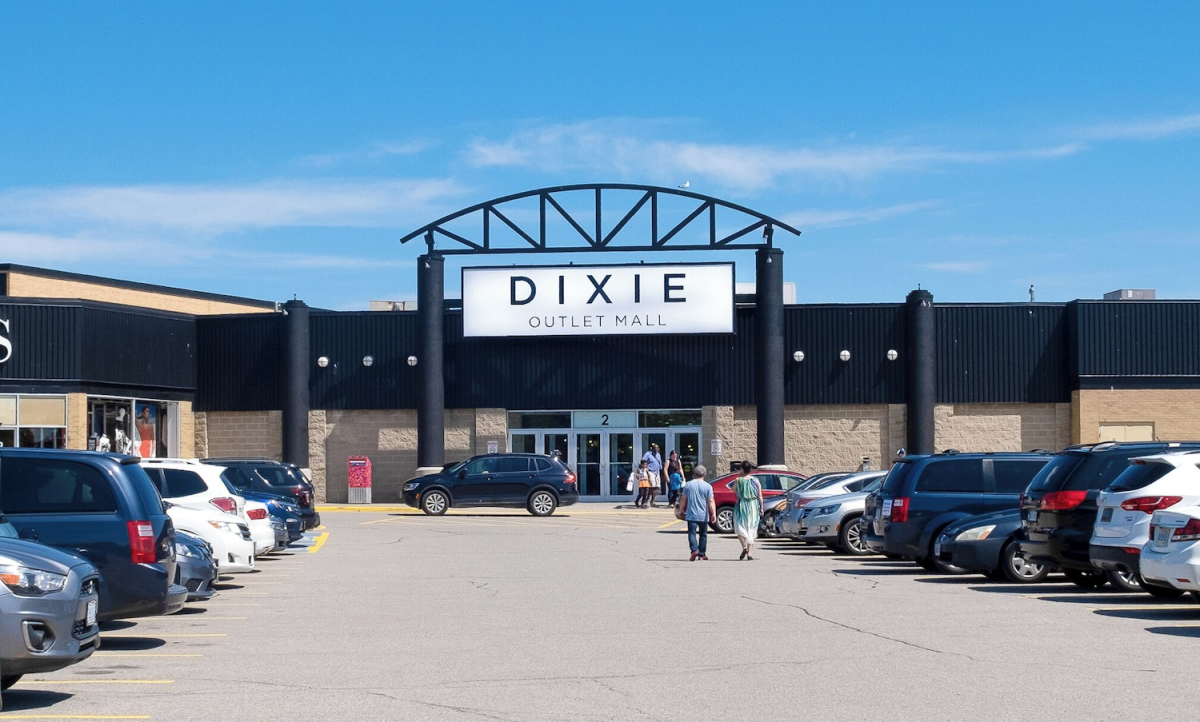
Dixie Outlet Mall’s receivership reinforced this reality. A retail property can remain active, operational, and occupied while still facing financial pressure if the capital structure no longer works.
The divide between well-capitalized owners and weaker operators is likely to widen further over the next several years.
Passive retail ownership is becoming increasingly risky.
Adaptive Reuse Moves From Trend to Necessity
Adaptive reuse has increasingly shifted from theory to commercial necessity.
Older malls and large retail parcels now represent some of the country’s most valuable serviced land within established communities facing housing shortages and intensification pressure.
The issue is no longer whether mixed-use redevelopment will happen. The issue is which properties can realistically execute it.
Leading landlords are already leaning into:
- residential intensification,
- mixed-use redevelopment,
- entertainment uses,
- service-oriented merchandising,
- healthcare integration,
- and adaptive reuse planning.
The strongest owners are repositioning retail properties into broader mixed-use ecosystems rather than relying solely on traditional shopping centre formats.
For retailers, this creates both opportunity and uncertainty. Redevelopment clauses, shorter lease terms, phased construction, parking changes, and shifting access conditions are becoming increasingly common realities.
The exposed assets are those stuck in the middle:
- not dominant enough to command premium rents,
- but not advanced enough in approvals, financing, or redevelopment planning to evolve quickly.
Winners and Pressure Points
Winners This Quarter
- Grocery-anchored retail real estate
- Mid-box subdivision strategies
- Landlords with redevelopment capital
- Alberta suburban retail markets
- Luxury and premium urban corridors
- Necessity-driven retail categories
- Second-generation leasing opportunities
Pressure Points
- Mid-tier discretionary retail
- Older enclosed malls without redevelopment strategies
- High-buildout restaurant concepts
- Retailers facing aggressive lease renewals
- Capital-constrained landlords
- Large-format boxes dependent on outdated merchandising models
Risks to the Thesis
Despite strong leasing fundamentals, several risks could weaken the market’s current trajectory.
These include:
- softer discretionary consumer spending,
- retailer insolvencies,
- financing stress,
- redevelopment delays,
- construction inflation,
- and over-aggressive rent growth.
The market also risks becoming overly optimistic about redevelopment timelines. Former department store boxes remain large, capital-intensive projects requiring:
- patient leasing,
- substantial construction work,
- phased execution,
- and significant redevelopment expertise.
Not every landlord will execute successfully.
There is also a risk that some “healthy” retail properties are currently being protected by limited alternatives rather than genuinely strong long-term economics.
The strongest evidence of resilience remains concentrated among dominant, well-capitalized assets rather than the market as a whole.
Editor’s Take
The biggest shift in Q1 2026 is that Canadian retail real estate is increasingly behaving like a scarce-resource economy.
Retailers still want physical stores. International brands continue targeting Canada. Consumers continue shopping dominant retail nodes. Landlords continue reporting strong leasing demand.
But underneath those fundamentals sits growing friction:
- space scarcity,
- rising rents,
- construction inflation,
- expensive capital,
- and tightening store economics.
The market remains healthy, but it is becoming materially less forgiving.
The strongest landlords are those with:
- redevelopment capital,
- disciplined merchandising strategies,
- data-driven leasing,
- and the ability to actively reposition assets.
The strongest retailers are becoming more selective, more flexible, and more operationally disciplined.
The weakest players are increasingly exposed:
- older assets without clear redevelopment plans,
- retailers dependent on outdated store economics,
- and operators hoping demand alone will solve structural issues.
One of the most important shifts may be psychological. For years, Canadian retail real estate discussions centred around recovery, e-commerce disruption, and store closures. In 2026, the conversation has increasingly shifted toward scarcity, redevelopment, and capital efficiency.
That does not mean every retail asset wins. It means the market is becoming more polarized.
The long-term story is no longer simply retail recovery.
It is scarcity:
- not enough prime space,
- not enough easy development,
- not enough cheap capital,
- and not enough simple anchor replacements.
That scarcity will continue shaping Canadian retail real estate long after the immediate Hudson’s Bay disruption fades.
For executives, the practical takeaway is increasingly straightforward: in 2026, retail real estate decisions are balance-sheet decisions.
Selected Coverage
- VIDEO: Canadian Retail Faces Ongoing Uncertainty as AI and Affordability Pressures Reshape Sector: George Minakakis – Mario Toneguzzi – Jan 15, 2026
- Canada’s retail property markets expected to remain tight as commercial real estate outlook stabilizes: Morguard – Mario Toneguzzi – Jan 16, 2026
- Most Hudson’s Bay Boxes Likely Leased Within Two Years: JLL – Craig Patterson – Jan 22, 2026
- Canadian retail enters 2026 with signs of stabilization: CBRE survey – Mario Toneguzzi – Jan 30, 2026
- Leyad executes “modern retail strategy” across its portfolio – Mario Toneguzzi – Feb 4, 2026
- Primaris REIT announces “strong” Q4 and full year 2025 results – Mario Toneguzzi – Feb 12, 2026
- RioCan REIT reports ‘strong year’ for 2025 with 5 million square feet of leasing activity – Mario Toneguzzi – Feb 18, 2026
- Dixie Outlet Mall in Mississauga Placed into Receivership – Craig Patterson – Mar 6, 2026
- Retail-to-Residential Conversions Gain Momentum in Canada – Lee Rivett – Mar 16, 2026
- Canadian Retail Leasing Market Shows Strength, But Tensions Emerging – Craig Patterson – Mar 18, 2026
- Toronto Retail Availability Hits Record Low – Craig Patterson – Mar 23, 2026
- Rising Costs Reshape Canadian Retail Development – Craig Patterson – Feb 18, 2026
- Calgary retail vacancy rate continues to fall: Barclay Street Real Estate – Mario Toneguzzi – Jan 16, 2026
- Heartland Town Centre adds first-to-Canada concept as leasing surges – Craig Patterson – Jan 21, 2026
- Leyad Acquires St. Vital Centre for $160.5 Million – Craig Patterson – Feb 13, 2026