Amazon Web Services is introducing a new artificial intelligence tool aimed at helping retailers build their own conversational shopping experiences, extending technology developed for Amazon’s own platform to external businesses.
The company said its Agentic Shopping Assistant on AWS packages the architecture, code and technical guidance behind its Alexa for Shopping assistant into a deployable solution for retail customers, allowing them to create customized AI-driven shopping tools using their own data and branding.
The launch reflects a broader push by AWS to commercialize internal innovations from Amazon’s retail operations, offering them as services to enterprise clients. The company says the new tool can reduce development timelines for retailers seeking to build AI-powered interfaces, with deployments possible in a matter of weeks rather than years.
The Agentic Shopping Assistant was developed with the AWS Generative AI Innovation Center and is designed to give retailers a foundation they can adapt to their own catalogues, customer data and business rules. The system provides architecture guidance, starter code and access to AWS experts and integration partners.
Retailers are being encouraged to build their own AI interfaces as conversational tools increasingly shape how consumers search for and purchase products online. AWS said such systems can improve conversion rates compared with traditional keyword-based search, while allowing companies to maintain direct relationships with customers rather than relying on third-party platforms.
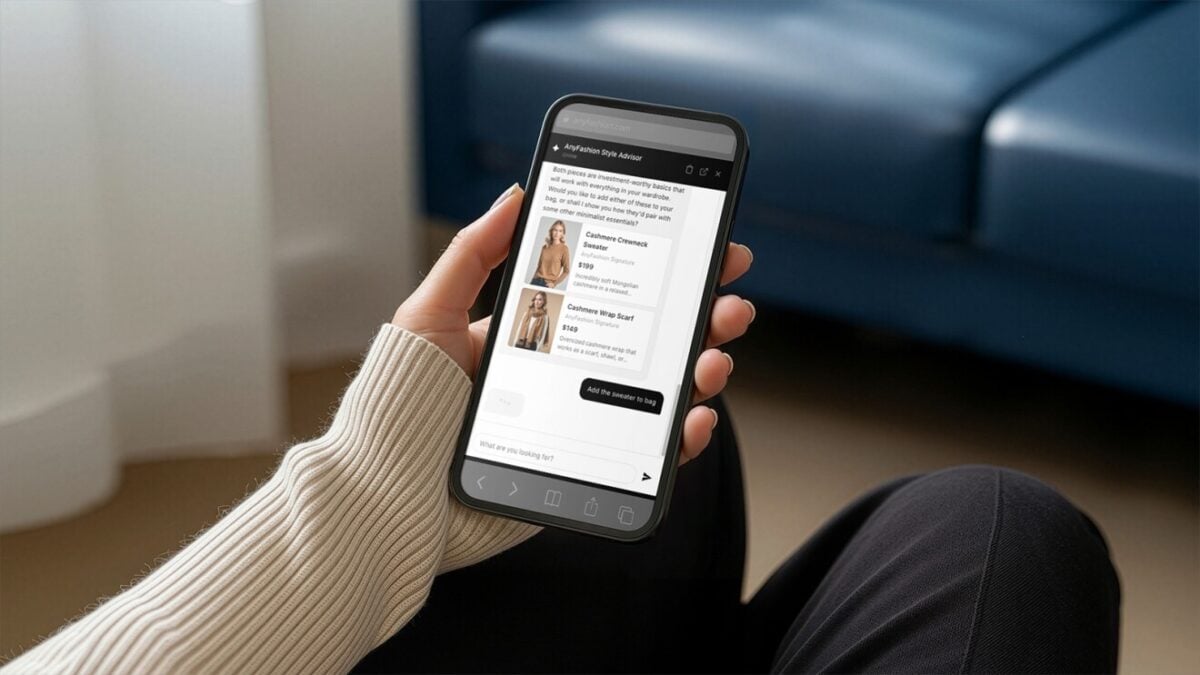
The company positioned the tool as a way for retailers to retain control over their brand voice and customer experience as AI agents become more central to commerce. Each implementation is tailored to a retailer’s specific environment, including its product catalogue and customer base.
Kate Spade, part of Tapestry Inc., is among the first companies to adopt the technology. The brand used the AWS solution to develop an AI-driven gift recommendation tool, launched in April, designed to guide customers through purchase decisions using conversational prompts.
The system engages shoppers by asking about the occasion, recipient and preferences, translating responses into curated product suggestions. The approach is based on insights drawn from customer interactions with Amazon’s Alexa for Shopping assistant.
The Kate Spade assistant was built using Amazon Bedrock AgentCore and Anthropic’s Haiku 4.5 model, with AWS infrastructure supporting functions such as authentication and performance monitoring. The company said the project moved from development to customer-facing deployment after approximately two and a half months of testing.
Yang Lu, chief information and digital officer at Tapestry, said the collaboration allowed the company to tailor the technology to its customers.
“We are excited about the possibilities agentic commerce can bring to our customers. AWS brought the recipe, but together we built the customization our consumers needed.”
AWS said the underlying system has been validated through its use within Amazon’s own retail operations, where AI-driven shopping tools have been refined through large-scale customer interactions. The company describes Amazon as “Customer Zero,” indicating that its internal systems serve as testing grounds for AWS products before they are offered externally.
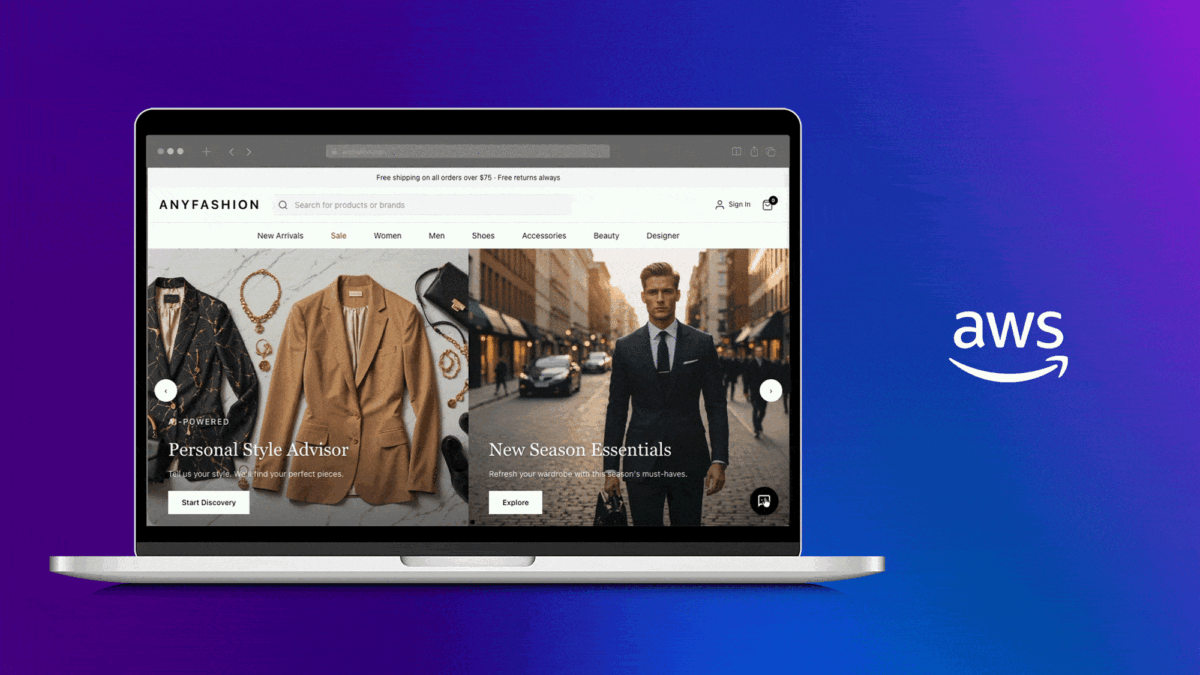
The Agentic Shopping Assistant is built on a suite of AWS services, including Amazon Bedrock, AgentCore and OpenSearch. While the core technology is standardized, AWS emphasized that each retailer’s implementation is customized, allowing companies to integrate proprietary data and maintain competitive differentiation.
The company said retailers can deploy the system in roughly 60 days with support from AWS teams, positioning the offering as a faster alternative to building similar capabilities from scratch.
The move comes as AWS expands its portfolio of generative AI tools aimed at enterprise customers, particularly in sectors such as retail, customer service and business operations. The company said the new offering is intended to help retailers respond to shifting consumer expectations around personalized and conversational shopping experiences.
AWS said additional retailers are currently testing the technology, though it did not disclose names or timelines for broader adoption.
The company is encouraging interested retailers to engage with AWS directly to explore implementation options, signalling further efforts to scale the technology across the sector.
More from Retail Insider: