Toronto’s waterfront commercial market is developing differently from one end of the district to the other, with relatively low vacancy in established areas and considerably more available space in the rapidly developing east.
Across the central and western waterfront, some departing businesses are being replaced quickly. Farther east, new commercial space continues to arrive as buildings open in neighbourhoods that are still adding residents, infrastructure and amenities.
“We continue to see a growth in commercial space as more buildings come online along the eastern waterfront,” said Dorsa Alizadeh-Shabani of Toronto Waterfront BIA. “Along the central and western waterfront, as soon as a business moves out or closes, it is replaced fairly quickly with a new business.”
Alizadeh-Shabani pointed to two recent restaurant closures along the central waterfront where new operators moved in before the spaces were publicly marketed.
“We had two restaurant closures along the central waterfront that were immediately replaced by two other restaurants without even having a ‘For Lease’ sign out on the vacancies,” she said. “I think this is a good sign that the neighbourhood is in demand.”
The BIA’s 2026 Broker Package identifies 300 commercial units within its boundaries, with 260 businesses operating and 26 new businesses identified in the report. The overall commercial vacancy rate is 13.3 per cent.
Vacancy Rates Vary Across the Waterfront
Vacancy is uneven across the district. The BIA reports a rate of eight per cent in the western waterfront and seven per cent in the central area, compared with 27 per cent in the eastern waterfront.
Alizadeh-Shabani said the eastern figure reflects a neighbourhood at an earlier stage of development, where commercial inventory continues to be added.
“The eastern waterfront is the newest part of the waterfront that is still continuing to develop and grow, and the high vacancy is expected at this stage as new buildings are opening,” she said.
Redevelopment is also changing the commercial inventory. The Broker Package notes that commercial space at Quayside and 1 Yonge has been removed as redevelopment proceeds, including seven former business locations and five spaces that had been vacant.
Alizadeh-Shabani said some of the businesses opening in the east suggest growing interest in experience-based concepts.
“I think we expect that there is a higher demand for experience-based spaces,” she said. “We have had a climbing gym, virtual golf venue and a fitness studio move into the neighbourhood within the last couple of years, and I think the visitors and residents would appreciate more of those types of businesses in addition to the food and beverage stores that are there.”
More Year-Round Destinations
Service businesses make up a significant part of the waterfront mix, particularly in residential areas where they serve neighbourhood needs. Alizadeh-Shabani said there is room for businesses that can also give people a reason to visit throughout the year.
“We have a lot more businesses in the service category than anything else,” she said. “While that is great for residents, it would be good to see more businesses that are an exciting destination year-round that can help drive people to the waterfront outside of the summer months.”
Winter remains the most challenging period, according to Tim Kocur, Executive Director of Waterfront BIA. He said businesses and waterfront organizations have been experimenting with ways to sustain activity during the colder months.
“Winter is obviously the biggest challenge, as always, but even there we’re optimistic about year-over-year growth,” Kocur said.
He pointed to Queens Harbour, where seasonal winter décor helped attract customers through January and February. Harbourfront Centre has expanded winter market programming around its skating rink over the past two years, while Boxcar Social hosted Miracle Toronto during the winter.
“Our hope is that creative programming and activation in winter encourages others to learn from and experiment, too,” Kocur said.
Customer Bases Change Across the District
The waterfront serves residents and downtown workers alongside tourists, airport passengers and people visiting its parks, cultural institutions and attractions. The relative importance of those groups changes depending on location.
“We have quite an interesting mix of retailers currently, and in the central waterfront we see mostly businesses that cater to tourists and visitors,” Kocur said. “As we move more west, you can feel a shift in the types of businesses in that they are mostly there to serve the residents.”
Waterfront BIA’s Area Data Package puts average household income among waterfront residents at $151,857. Average household size is 1.8 people and the average resident age is 38.
The residential population exists alongside substantial visitation. Environics data included in the package recorded 74.3 million visit events within the waterfront study area in 2025. The measurement represents visits rather than unique people, meaning an individual can account for multiple visits.
How that balance develops in the east remains an open question.
“It would be interesting to see how the development will shape the type of businesses we are going to see in the east,” Kocur said.
Quayside Will Add a Four-Season Anchor
Major development and infrastructure projects are expected to reshape the eastern waterfront over the coming years.
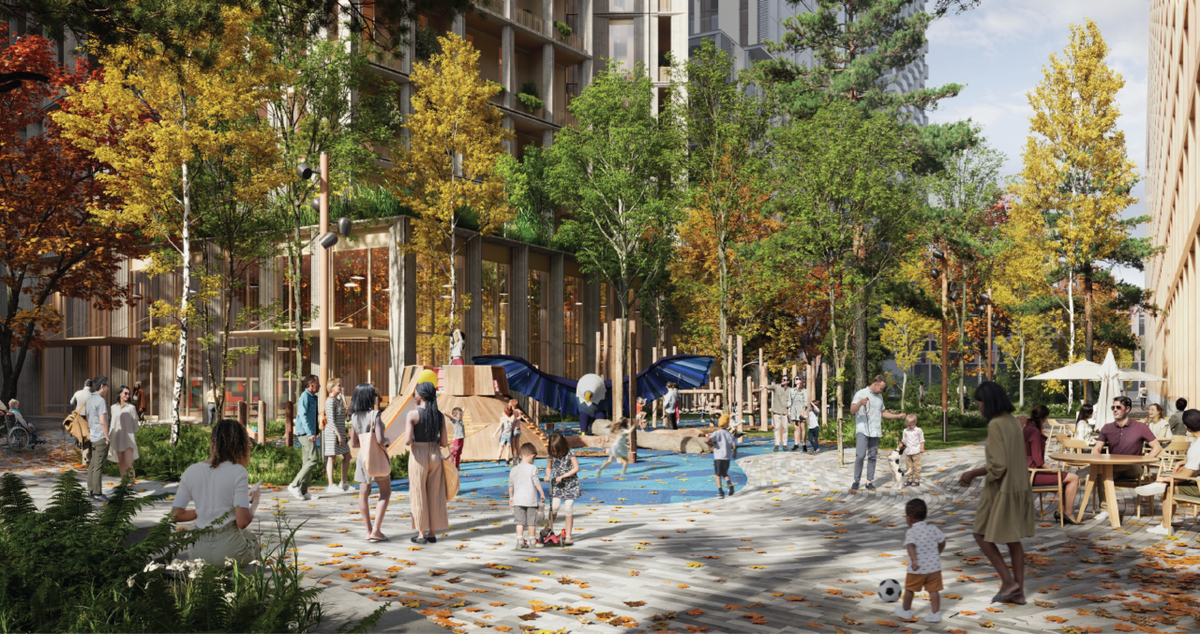
The first phase of Quayside is planned to include more than 1,700 affordable and market rental homes, alongside additional residential development, public spaces and community infrastructure. A Toronto Public Library branch planned for Quayside will be the first TPL branch on Toronto’s waterfront.
Kocur expects the library to contribute to year-round activity.
“The addition of the City’s planned library for the first phase of Quayside on Queens Quay will be a four-season local anchor that will further help draw more retail around it,” he said.
Alizadeh-Shabani believes the larger change in the eastern commercial market could come as transportation and public-realm infrastructure catch up with development.
“I think the build-out is going to be very similar to what we are seeing now,” she said. “I think we’ll see most of the shift once the higher order transit has been put in place and the Queens Quay public realm work has been done on the east to match the western waterfront.”
The Waterfront East Rapid Transit Line is jointly funded by the municipal, provincial and federal governments, with Toronto City Council authorizing early construction work in 2026. The approximately 3.8-kilometre project will extend higher-order transit through the eastern waterfront to Ookwemin Minising, with dedicated infrastructure along Queens Quay East, Cherry Street and Commissioners Street.
Early work includes portions of the Queens Quay East extension and reconstruction, adding another major piece of infrastructure to a district where residential and commercial development continues to advance.
Aqualuna Brings a Significant Retail Commitment
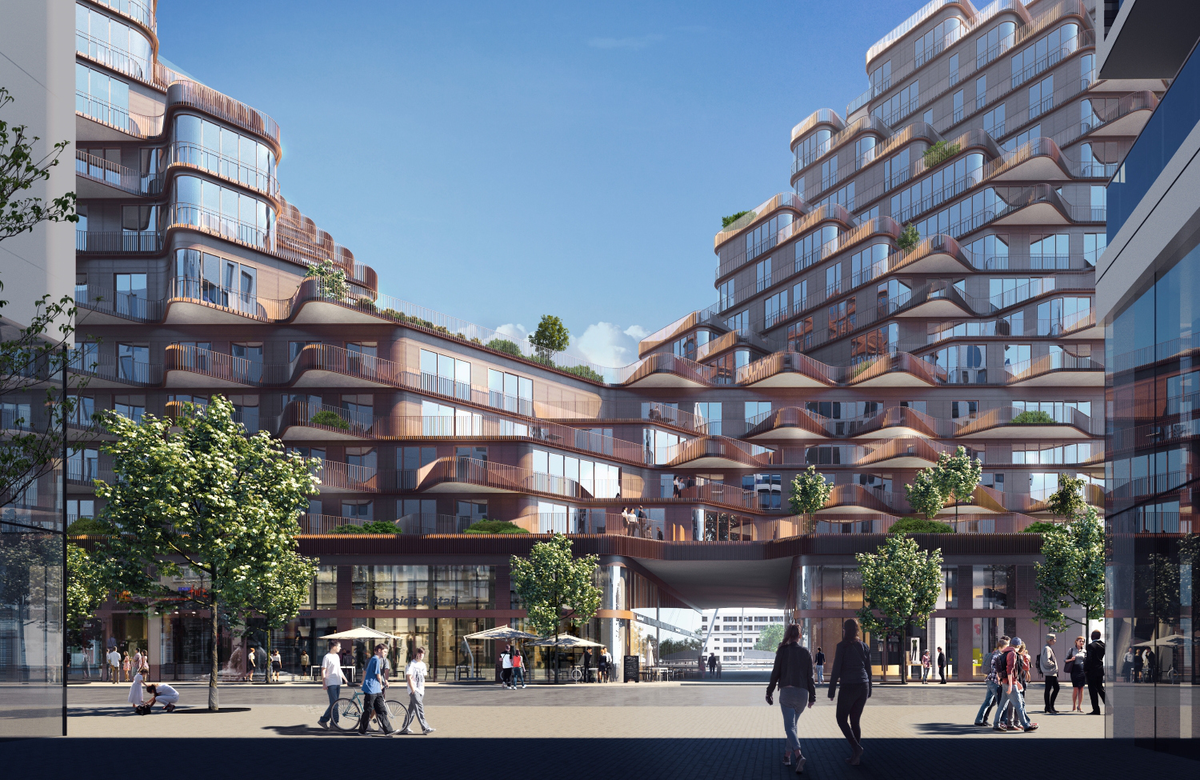
Aqualuna at Bayside Toronto provides a current example of retail investment around Parliament Slip.
The fourth and final residential phase of the 13-acre Bayside Toronto development includes 240 condominium units and approximately 18,000 square feet of ground-floor commercial space. Original Luxury is preparing an approximately 8,500-square-foot flagship at the property, representing a substantial footprint within the building’s commercial component.
Kocur said the Parliament Slip location has attributes that should become increasingly important as the surrounding waterfront is completed.
“The Aqualuna site right on Parliament Slip should be seen as particularly attractive,” he said. “We know from when we do walking or boat tours for visitors that that building is one of the most stunning and beautiful in Toronto now.”
Future pedestrian connections will further integrate the site with the eastern waterfront.
“In 2028, the other side of the slip will have a pedestrian bridge, and at that point this site is essentially in the middle of the Water’s Edge Promenade that will run all the way from Sugar Beach and into the Port Lands and the new Biidaasige Park viewing area looking back at the city that’s already open,” Kocur said.
The Keating Channel Pedestrian Bridge is anticipated to open in mid-2028, connecting the southeast foot of Parliament Slip with Biidaasige Park North on Ookwemin Minising. The bridge will connect the Water’s Edge Promenade east of Parliament Slip with Biidaasige Park and the larger regional park system.
For commercial space around Parliament Slip, those connections will place a much larger stretch of the waterfront within a continuous pedestrian and cycling network.
Opportunities Around Bathurst and Rees Park
Kocur also identified the Bathurst corridor and the area surrounding Rees Park as locations where additional businesses could help generate year-round traffic.
“There are also a couple of opportunities in the Bathurst corridor and around Rees Park that can attract more businesses that generate more foot traffic year-round and are also attractive to visitors landing right at Billy Bishop Toronto City Airport,” he said.
Those areas have different customer dynamics from the central and eastern waterfront. The Bathurst corridor can draw from nearby condominium residents and airport passengers, while the central waterfront has a heavier visitor and tourist component.
Businesses evaluating waterfront locations are therefore looking at several distinct commercial environments rather than a single uniform market.
Waterfront Retail Continues to Evolve
The Broker Package identifies a varied group of businesses that have recently joined the waterfront, including restaurants, wellness operators and personal services.
The established central and western waterfront currently have substantially lower vacancy rates than the east, while Alizadeh-Shabani says some vacated spaces in those areas are being replaced quickly. The eastern waterfront has considerably more available space as new development continues to add commercial inventory.
Its retail environment will take shape alongside new housing, transit investment, public-realm improvements and community infrastructure. Experience-based businesses are already appearing in the mix, while the BIA sees room for additional concepts capable of attracting customers throughout the year.
The differences across the district will remain important as the waterfront grows. Central, western and eastern locations serve different customer bases and are at different stages of development, creating different opportunities for retailers, restaurants and service businesses considering Toronto’s waterfront.