The Toronto Waterfront is rapidly transforming into one of the city’s most dynamic growth corridors, presenting substantial new opportunities for retailers, restaurateurs, and service businesses. With an expanding residential population, major new developments, and targeted initiatives by a number of waterfront stakeholders, the district is positioning itself as an increasingly attractive commercial destination.
“Since 2010, the population along Queens Quay has grown from roughly 10,000 residents to over 30,000,” explained Tim Kocur, Executive Director of the Toronto Waterfront BIA. “During that same period, we’ve seen job locations along Queens Quay expand from about 10,000 to approximately 30,000 positions.”
This surge in both residents and office workers has created a significantly larger customer base for businesses in the area. As new residential towers continue to rise, particularly in the eastern waterfront districts, the commercial viability of the area grows stronger.
Vacancy Rates Falling Despite New Supply
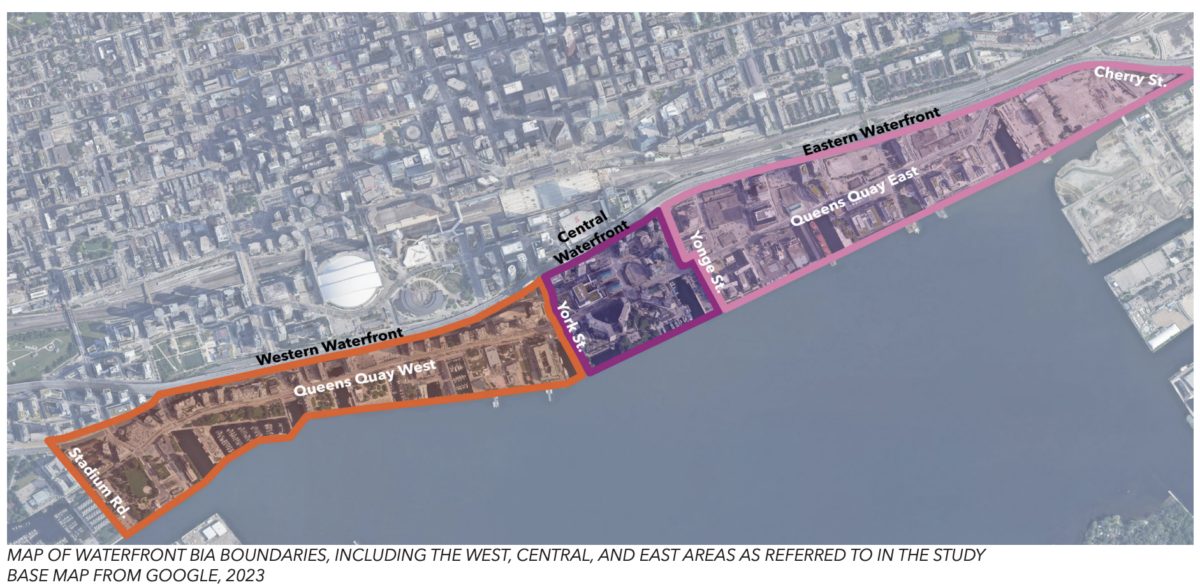
According to the BIA’s most recent Broker Package for June 2025, the waterfront saw 25 new businesses open in the past year, with the total number of commercial units increasing by 21. While some churn occurred, vacancy rates have actually decreased year-over-year despite the arrival of newly constructed but as-yet unleased spaces in the eastern waterfront.
“A significant portion of the remaining vacancy is concentrated in new developments in the eastern waterfront, which aren’t fully built out yet,” said Kocur. “Some landlords are intentionally holding back space until the local customer base has matured and premium tenants can be secured.”
Wave of New Openings Expanding Retail Mix
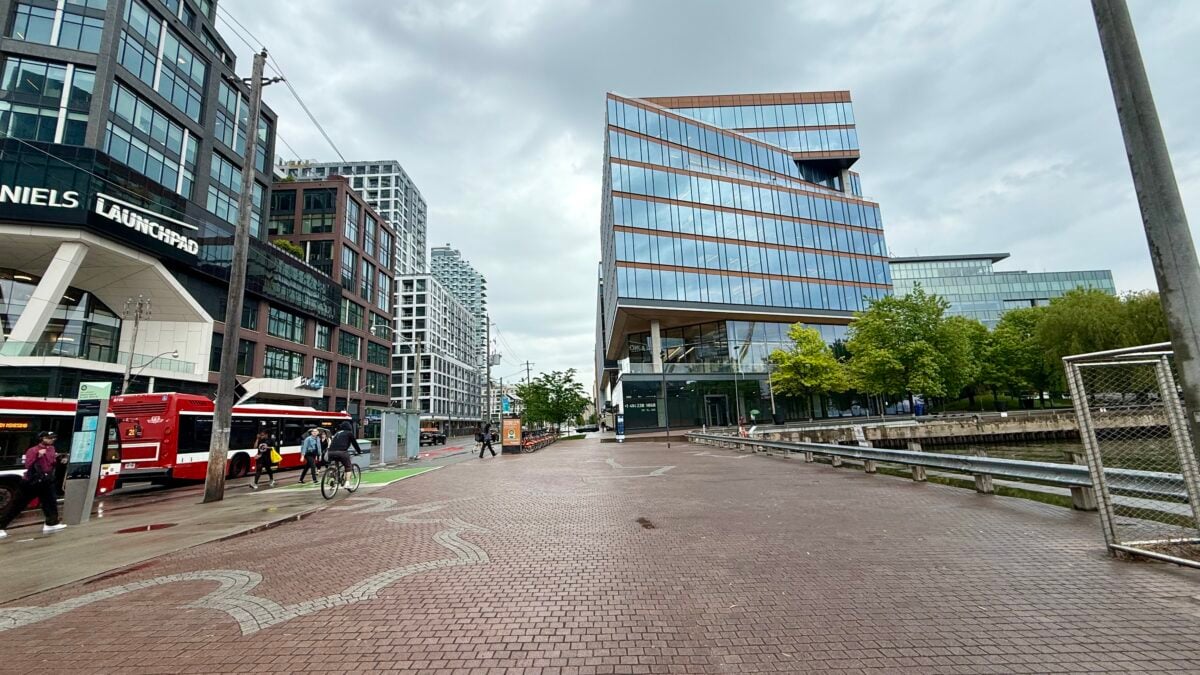
Several new tenants have already chosen the waterfront as home. Queens Harbour Restaurant is scheduled to open on July 11, directly beside the successful Amsterdam Brew Pub, adding 600 indoor seats and an additional 160 patio seats. “It’s going to significantly increase the premium dining capacity right on the water,” Kocur noted.
Other recent or upcoming additions include the Ethos Climbing Gym, the new Farm Boy grocery store (which replaced Sobeys about three years ago), and a Shoppers Drug Mart location in the eastern waterfront. “These kinds of tenants are signs that a critical residential population has already moved in,” Kocur explained, adding that many more residents are still expected.
Wayfinding, Events, and Beautification Initiatives
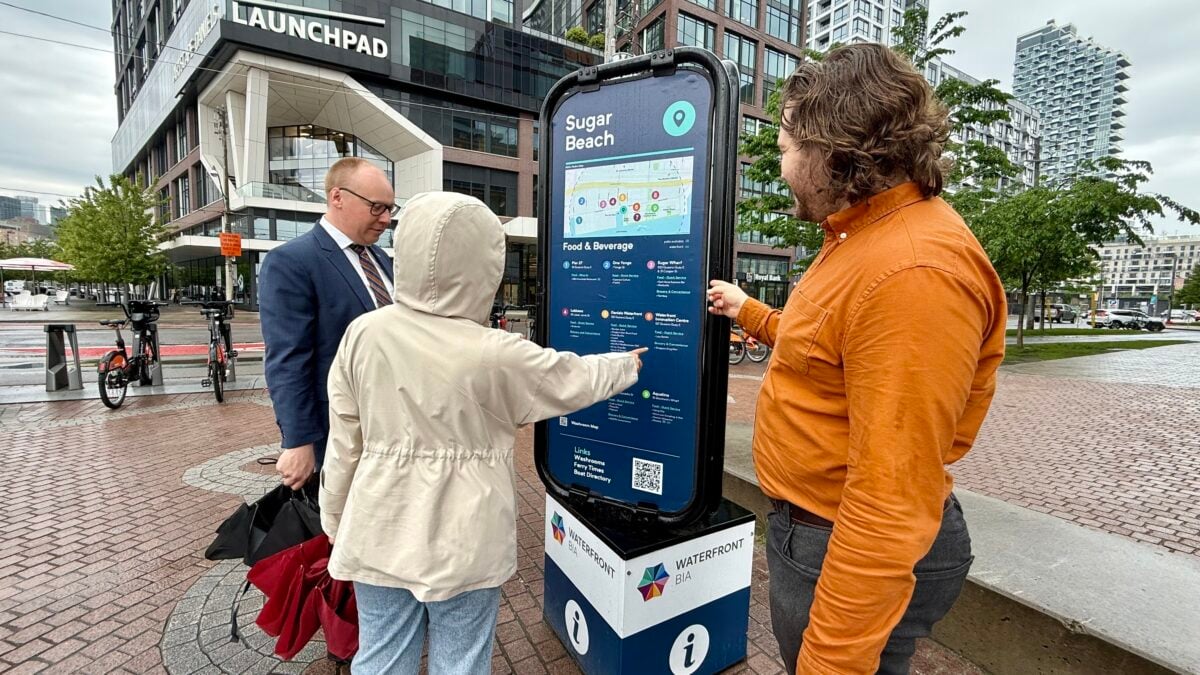
The BIA has taken proactive steps to address longstanding challenges around navigation and visibility. “One issue we’ve consistently heard from businesses is that even visitors only a block away from major destinations like the ferry terminal were asking for directions,” said Kocur.
To combat this, the BIA installed its own network of wayfinding signage throughout the area, with permission from the City. The signs not only provide navigational support but also feature restaurant maps and monthly event calendars. “We’re highlighting where people can eat within 500 metres, and letting them know what’s happening next so they return to the neighbourhood,” Kocur added.
Complementary to the signage efforts, the BIA has partnered with The Bentway, CityPlace-Fort York BIA and the City of Toronto to pilot an enhanced lighting and public safety at the Dan Leckie underpass under the Gardiner Expressway, aiming to make pedestrian connections between downtown and the waterfront more inviting. “The system will be able to be temporarily removed during maintenance work, allowing for both flexibility and consistent safety,” Kocur explained.
Eastern Waterfront: A Development Powerhouse in Progress
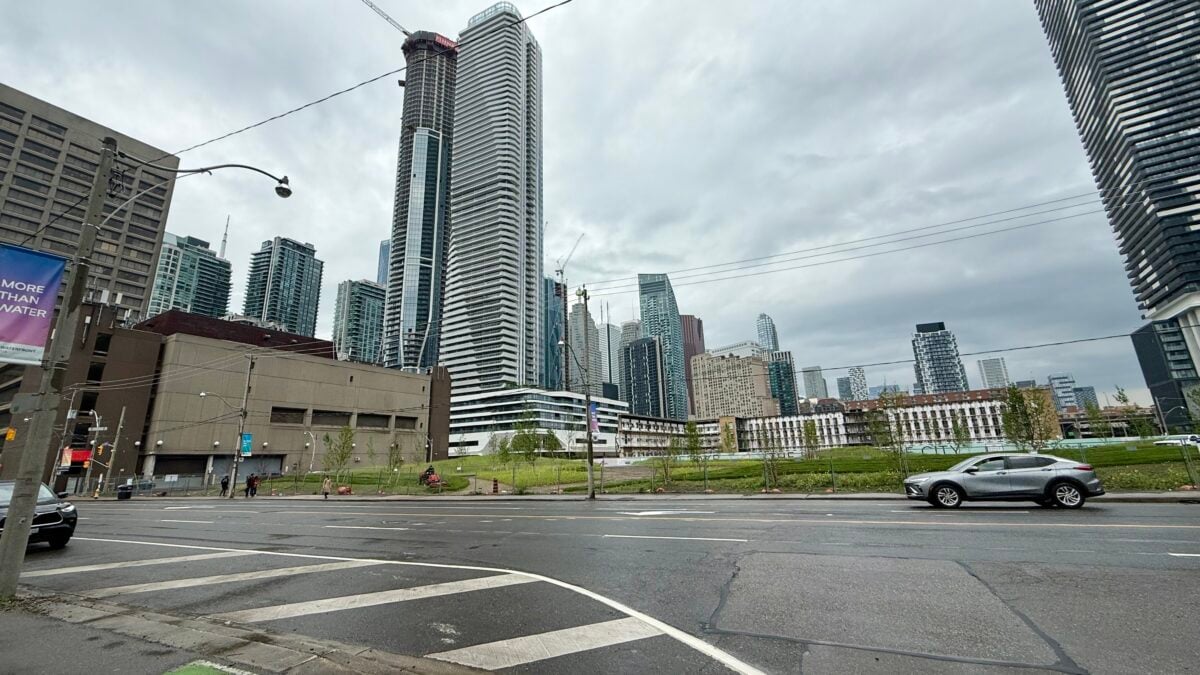
The eastern waterfront continues to experience significant transformation, with much of its commercial inventory still in early stages.
“The density on the eastern waterfront will be significantly higher than on the western side,” noted Kocur. “There are effectively two full blocks of development between Queens Quay and Harbour Street, compared to only one on the west.”
Major projects include the Quayside development, where Dream CA —already the developer behind the Distillery District—is spearheading new retail and residential growth. “Dream’s adjacent properties and their expertise with the Distillery District give us confidence this will become another major waterfront destination,” Kocur said.
The area also benefits from emerging institutional partnerships. George Brown College now owns substantial property in the eastern waterfront, opening possibilities for collaborations with parks, cultural spaces, and foodservice providers. One early focus is activating the long-unused Sherbourne Pavilion, originally designed for foodservice but long repurposed for parks storage. “We’re now seeing opportunities for seasonal activations there—skate giveaways, hot chocolate stands—which hint at the longer-term potential,” said Kocur.
Major Long-Term Opportunities Identified as Part of the 2024 Waterfront Retail Review
The Waterfront BIA released its Waterfront Retail Review in 2024, which was reported on by Retail Insider. The BIA has identified several large-scale projects that could dramatically enhance the waterfront experience over the next decade:
- Redpath Sugar Refinery: “This 300-metre industrial frontage could host retail or museum spaces highlighting Toronto’s food and industrial heritage when the office portions of the building are re-developed,” said Kocur.
- Rees Street Parking Lot Redevelopment: Positioned just south of the Rogers Centre, this site offers what Kocur called “an incredible opportunity” for sports-themed activations, including potential partnerships with sports teams for game-day viewing and foodservice tie-ins.
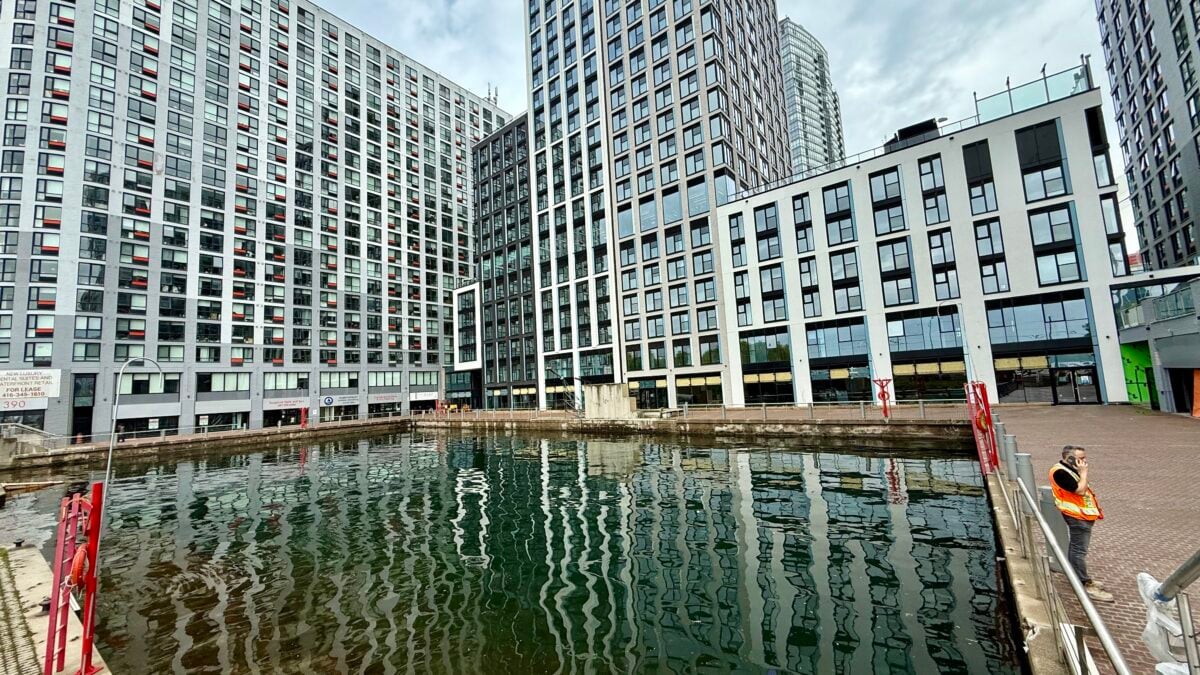
- Peter Street Basin: With hotel developments already planned, Kocur noted that the city and developer need to collaborate on activating this underutilized basin area, potentially expanding parkland or patio spaces for waterfront restaurants.
Focused Vision for Rees Street Park and Peter Street Basin
As part of the ongoing planning for the western waterfront, the Waterfront BIA has placed particular emphasis on the future of Rees Street Park and Peter Street Basin.
“The Rees Street parking lot, located directly south of Rogers Centre, represents one of the best opportunities we have to create a vibrant public park with commercial activation,” said Kocur. The BIA advocates for a balanced design that incorporates playgrounds, dog parks, quiet areas, and highly valuable commercial uses, such as outdoor dining and sports event viewing zones. “We believe that including features like a large screen for sports games could offer 180 days of seasonal programming and draw significant foot traffic to local businesses.”
For the nearby Peter Street Basin, which sits adjacent to the future hotel development at 350-396 Queens Quay West, the BIA has formally submitted its position to the City of Toronto. In an April 29, 2025 letter to City Planning, the BIA emphasized that the basin is currently in disrepair, with deteriorating dock walls and no clear maintenance responsibility between municipal departments and PortsToronto. “Without substantial improvement plans, we recommend that the basin water lot be filled in or covered as part of the redevelopment,” the BIA stated. Such improvements would create new public space and better integrate the site with new retail and hospitality uses planned for the adjacent hotel development.
Western Waterfront Remains Stable with Targeted Growth Areas
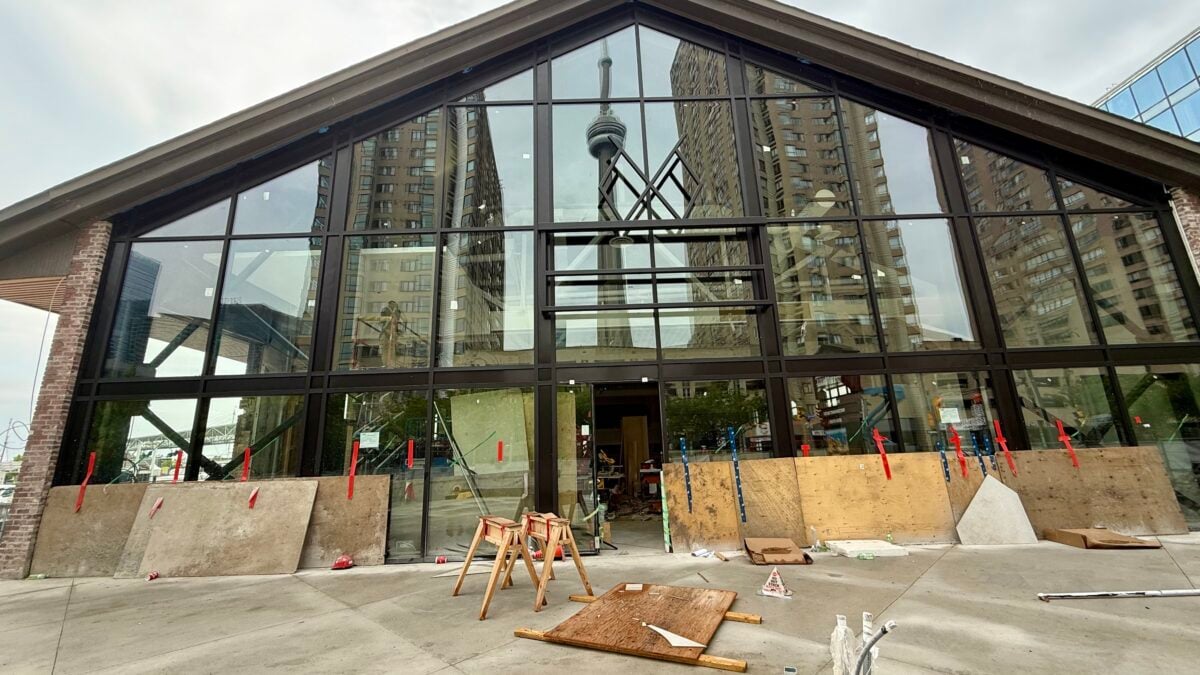
While the western waterfront has fewer large-scale development parcels remaining, some important nodes of potential remain. The Bathurst Quay area near Billy Bishop Airport will likely see interest in a new hotel development and further activation around the historic Malting Silos.
The western waterfront has also been the focus of ongoing pedestrian enhancements, with colourful underpass murals and improved lighting aimed at increasing visitor comfort. “We’re trying to make it safer and more welcoming to cross under the highway and shop at our waterfront businesses,” Kocur explained.
Tourism, Attractions, and Cultural Anchors Increasing
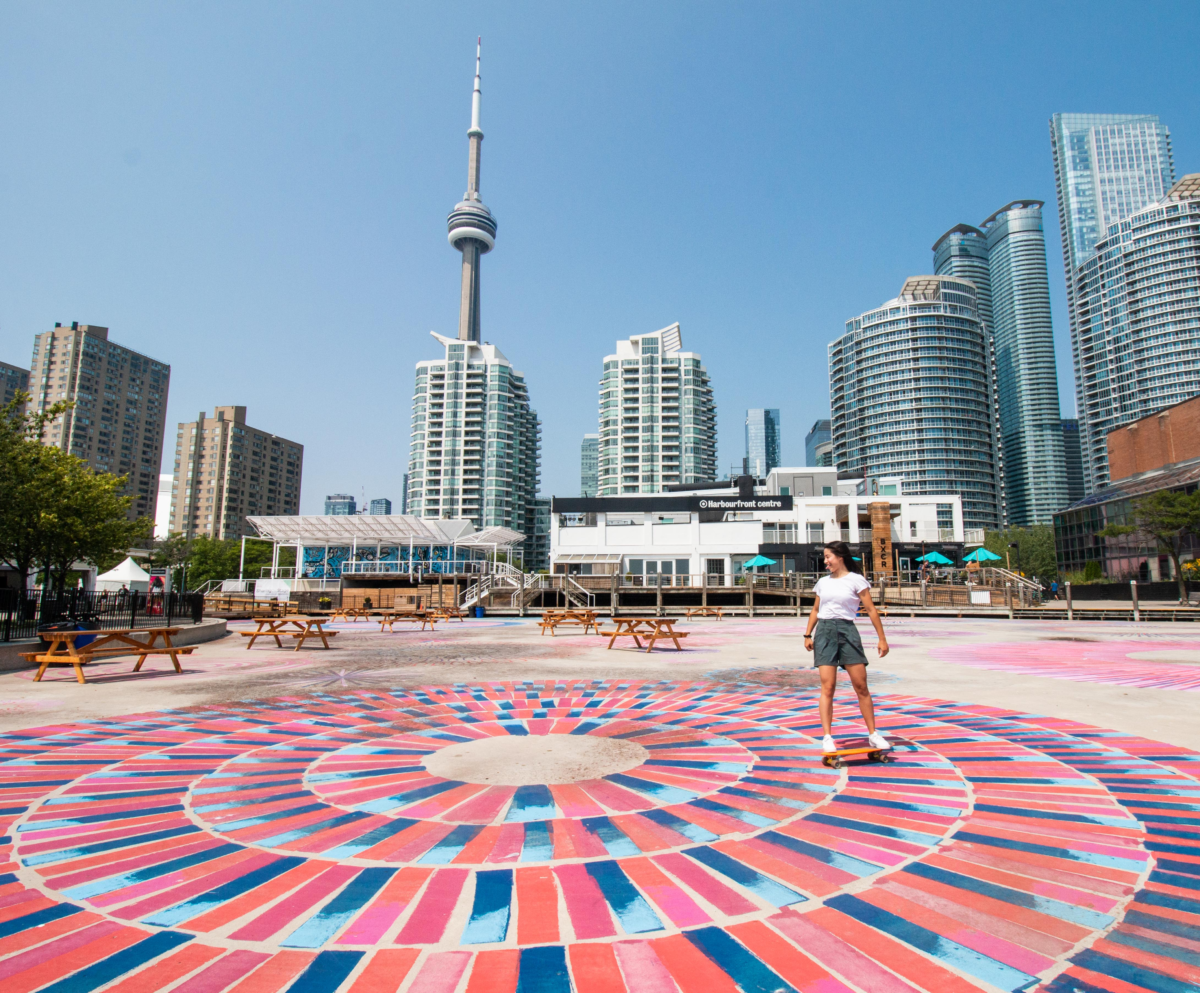
The waterfront is also strengthening its appeal as a tourist and cultural destination. “Harbourfront Centre has three important attractions this summer: a temporary Ontario Science Centre exhibit, a Museum of Toronto basketball history exhibit, and the long-standing Power Plant Gallery—and two of those are free,” said Kocur.
Further east, future attractions like the Parliament Slip redevelopment promise floating restaurants, boat tours, and more immersive water-based experiences.
Connectivity Improvements On the Horizon
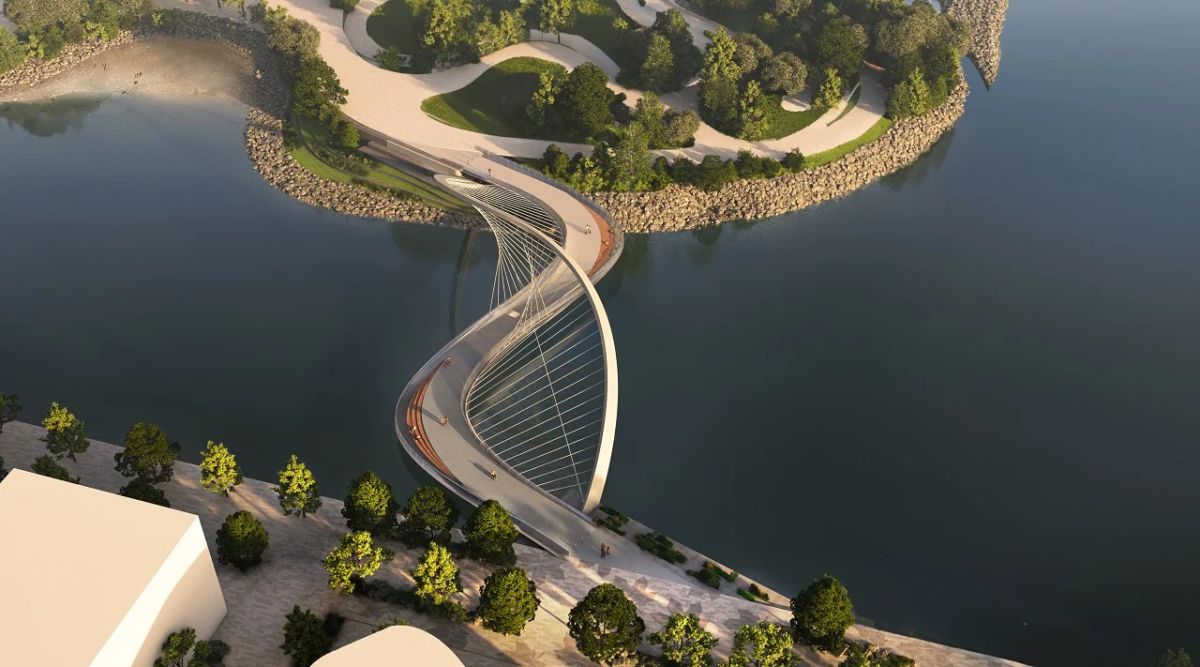
The BIA is also preparing for major connectivity enhancements, including a pedestrian bridge opening in 2027 that will link the eastern waterfront directly to the new parks of the Port Lands. “That’s going to create a whole new zone of pedestrian activity and extend the reach of the waterfront experience,” said Kocur.
PATH network expansions are also under discussion, particularly in the eastern waterfront, to ensure year-round pedestrian access and support for indoor retail spaces.
This month, the TTC introduced dedicated rapid bus lanes along Queens Quay East, where the Waterfront East LRT — which will eventually connect Union Station to the new Port Lands development — is planned for future construction.
An Ecosystem Approach to Future Retail Growth
For Kocur, the ultimate goal is to create a vibrant retail ecosystem that benefits from both residential density and tourism magnetism. “We want more condos, more hotels, more attractions—but it’s equally about making sure we have the right supporting retail, foodservice, and entertainment offerings that will allow people to spend full days here,” he emphasized.
As the Toronto waterfront continues to evolve, the BIA’s approach of marrying short-term leasing opportunities with long-term destination-building appears poised to unlock the area’s full potential. “We want people to explore the entire neighbourhood,” Kocur said. “That means filling in the retail gaps, telling the story of success, and making sure the waterfront becomes one of Toronto’s most vibrant districts for years to come.”
For more information on retail opportunities on Toronto’s Waterfront, the Waterfront BIA has prepared a broker package.