For decades, fashion ecommerce has relied on static product photography to help shoppers decide what to buy. But as AI-powered virtual try-on technology advances, the traditional product image may be approaching its Kodak moment.
At Remark, that shift is already taking shape. The AI commerce platform recently launched real-time virtual try-on technology that allows shoppers to see clothing on their own bodies and in motion directly from a brand’s product page.
Rather than relying on static images and imagining how a garment might translate from a model to themselves, shoppers can see how it looks and moves as they turn, walk and explore different colors, sizes and looks.
Theo Satloff, CEO and Co-Founder of Remark, was raised in New York City by merchants in the luxury retail industry. He grew up immersed in showroom appointments, product demonstrations and runway events, shaping his understanding of exceptional retail from an early age.
A computer science graduate of Colby College, Satloff previously worked as a software engineer at Amazon on the Alexa team, where he focused on reinforcement learning. He has since built his career at the intersection of AI, technology and commerce. Since launching Remark, he has raised tens of millions in funding from investors including Stripe and formed partnerships with leading brands across the retail industry.
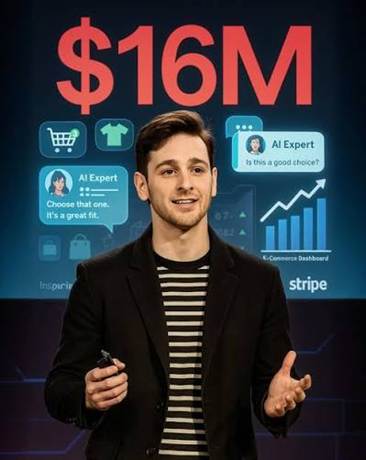

Satloff spoke with Retail Insider about trends in the industry.
Question: What prompted Remark to develop real-time virtual try-on technology, and what are you seeing in terms of how shoppers are responding to it?
Answer: We’ve always been focused on closing the gap between the confidence people feel shopping in a great physical store and what they experience online. In a store, you can hold something up, try it on, move around in it and immediately get a sense of whether it works for you.
Online, we’ve largely asked shoppers to make that same decision based on a handful of static images of someone else. Virtual Try-On felt like a natural extension of what we were already building at Remark. If conversational AI can help a shopper understand what to buy and why, VTO can help answer the next question: What will this actually look like on me?
The response we’re seeing reinforces how important that confidence is. In our beta, brands are seeing a 9 to 16% incremental revenue lift, while returns have dropped significantly. That tells us shoppers aren’t just using VTO because it’s novel. They’re using it to make more informed purchasing decisions.

Q: How significant do you think the shift away from static product photography could become for fashion e-commerce, and what would need to happen for virtual try-on to become a standard part of the online shopping experience?
A: I don’t think static product photography disappears, but I do think its role changes dramatically.
For most of e-commerce history, the product page has essentially said, “Here’s what this looks like on our model.” The next generation of e-commerce will increasingly say, “Here’s what this could look like on you.”
For VTO to become standard, it has to become frictionless. Shoppers shouldn’t need to download a separate app, create a complicated avatar, or leave the brand’s website. It should feel like a natural part of shopping, almost like clicking to see another product image.
The other piece is accuracy and trust. Novelty might get someone to try the technology once, but usefulness is what makes it habitual. If the experience consistently helps shoppers understand a product and feel more confident about buying it, I think we’ll eventually look back at shopping from static images alone as a surprisingly limited way to buy clothing online.
Q: What additional information does seeing a garment on a shopper’s own body and in motion provide around fit, drape, silhouette and overall appearance that traditional product photography cannot?
A: Traditional photography is very good at showing you the product. It’s much less effective at showing you the relationship between the product and you.
Two people can look at the same dress on the same model and have completely different questions. Where will the hem fall on me? How does the silhouette work with my proportions? What happens to the fabric when I move? Is this going to feel like me when I actually put it on?
Seeing the garment on your own body and in motion gives you context that a static image can’t. You get a much more intuitive understanding of the silhouette, proportions, drape and overall appearance. That matters because confidence is really the product in e-commerce. The more uncertainty you can remove before someone clicks “buy,” the better the experience is for both the shopper and the brand.

Q: How close is today’s AI-powered virtual try-on technology to replicating the experience of being in a physical fitting room, and what limitations still need to be addressed?
A: We’re getting much closer visually, but I don’t think the goal should be to pretend that technology can perfectly reproduce every part of standing in a fitting room today.
“There are things a physical fitting room gives you that are incredibly difficult to digitize, particularly touch and the physical sensation of fit. You can feel the weight of a fabric or how a material feels against your skin.
Those are meaningful inputs, and VTO doesn’t replace them.
Where AI can be incredibly powerful is reducing the visual uncertainty that has always existed online. It can give you a much better understanding of how a garment may look on your body, how the silhouette comes together and whether the overall aesthetic feels right for you before you buy.
So I see VTO less as replacing the fitting room and more as bringing one of its most valuable functions, confidence before purchase, to people who are shopping online. Physical retail will continue to matter because touch, trust, and occasion are difficult to replicate digitally. The opportunity is to take the best parts of that experience and extend them across channels.

Q: If virtual try-on becomes widely adopted, how could it change the way fashion brands approach product photography, content creation, merchandising and the overall digital customer experience?
A: The biggest shift is that digital merchandising becomes much more personal. Historically, brands have had to create one relatively fixed representation of a product and distribute it to everyone. You photograph a garment on a model, build the product page and every shopper essentially receives the same visual experience.
VTO starts to turn that model inside out. The brand can still create beautiful campaign imagery and editorial content, but the functional job of helping someone evaluate a product can become individualized. Instead of asking shoppers to imagine themselves in the brand’s content, technology can increasingly put the shopper into the experience.
That has implications well beyond product photography. Merchandising can become more responsive to the individual. AI advisors can help shoppers narrow down what is right for them, and VTO can help them visualize those recommendations. Product content can become more dynamic, and the website itself starts behaving less like a digital catalog and more like a great store.
That’s ultimately where I think e-commerce is headed. The best physical retailers have always made people feel understood. Technology now gives us an opportunity to bring that same feeling to millions of online shoppers at once.
More from Retail Insider: