Major Canadian shopping centres are adding full-sized, full-service restaurants to their properties like never before. It’s a trend recognized by a number of retail experts, with some landlords explaining that they are intentionally increasing space dedicated to food and beverage in order to attract customers, as well as increase revenue. There are challenges to adding restaurants to malls (notes BUILD IT, a construction firm that specializes in restaurant as well as retail construction), though these can be overcome.
Landlord Oxford Properties is in the process of doubling the amount of space that it devotes to food and beverage. In a recent interview, Michael Turner, Executive Vice President for Canada at Oxford, explained that the landlord is looking to eventually dedicate about 20% of its mall space to food and beverage offerings, about double that in its malls today. Canadian malls are following trends seen oversees, with Mr. Turner noting that between 35% and 40% of space in malls in Asia is devoted to food and beverage offerings. Mr. Turner also noted that the landlord’s research shows that about 50% of its customers consume food while at its malls.
Full-service restaurants are definitely a trend being seen in major malls, notes Oren Rubin, Assistant Vice President of Leasing at Mall of America in Bloomington, Minnesota, and formerly a leasing manager at North America’s largest shopping centre, West Edmonton Mall. Mr. Rubin described how West Edmonton Mall was ahead of the curve when it added full-sized restaurants to the mall, creating a themed ‘Bourbon Street’ that is lined with a number of popular eateries. West Edmonton Mall continues to add more space for restaurants, including a busy Cactus Club that is connected to the mall’s Sears store. Mall of America, as well, is adding more food and beverage offerings to create a “complete experience” for visitors, which includes a mix of locals and tourists.
Mr. Rubin also noted that some restaurants can be highly productive in terms of sales, helping boost the overall revenue numbers for a shopping centre property. Popular restaurants can see revenue well in excess of $1,000 per square foot annually, and some smaller food kiosks and retailers can see considerably more.
John Williams, Founder and Senior Partner at retail consultancy J.C. Williams Group, explained how it is an intelligent move to add restaurants to malls. He described how restaurants are “going where the people are,” and that restaurants, generally, are doing a much better job than in the past in terms of their offerings and decor, and landlords are receptive. Mr. Williams noted that clusters are being created in malls where full-sized restaurants are located, and that this could be considered the ‘future’ of malls in Canada. Toronto’s Bayview Village shopping centre is an example — in a recent profile we did of the centre, we dined in the mall’s ‘Restaurant Lane’ which includes a number of top-notch restaurants.
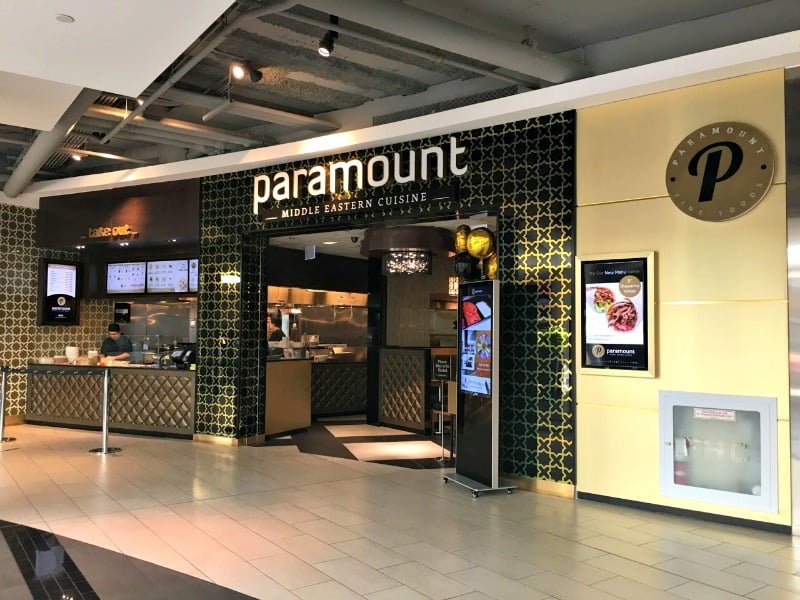
Observers might notice that restaurants often locate on the edge of shopping centres with an external entrance — at Toronto’s Yorkdale Shopping Centre, for example, the mall’s JOEY, Jamie’s Italian and, soon, Cheesecake Factory and Cactus club all face outward towards parking lots, while still being connected to the mall. Simon Shahin, President and CEO of Toronto-based construction firm BUILD IT, explained how ventilation is key to ensuring a restaurant operates optimally, though technology can be used for situations where restaurants are contained within a shopping mall property, without an exterior wall. BUILD IT has two specialties — restaurants and retail, and the company recently completed a number of in-mall restaurant projects, including Paramount Fine Foods at Yorkdale Shopping Centre (2,300 sq ft) and at CF Shops at Don Mills in Toronto, as well as a number of interesting projects such as the under-construction Eva’s Original Chimneys at Square One in Mississauga.
Mr. Shahin noted that working in malls can be challenging for a number of reasons, but that experience and innovation can make it all work. Space can be tight and there are often neighbouring tenants in close proximity — being a considerate construction company means that about 80% of the noisy work has to be done after hours. There is also some ‘red tape’ in terms of design approvals — BUILD IT works with the entire construction process, from design to fixturing, and shopping mall landlords often have strict requirements for various required processes. “Despite what might appear to be obstacles, there are always solutions,” he noted.
For restaurant spaces that are unable to vent directly to the exterior, ‘ecology systems’ can be used to filter out cooking smells that would otherwise waft through the mall. Ecology systems don’t come cheap, however — Mr. Shahin noted that they can cost $30,000 and go up from there per unit, and they can be a challenge to install, though it’s worth it to be able to utilize some spaces that otherwise wouldn’t be able to support restaurant uses.
Mr. Shahin noted that a restaurant also requires enough power and water to be operational, and that some retail spaces might not meet these requirements in some shopping centres, with upgrades being required. As well, kitchens must have exhaust systems and otherwise meet building code, including having a two-hour fire separation as part of its construction — that is, walls in the space must be able to contain a fire for a minimum of two hours, for safety reasons. “Experience is required to address some of these nuances, and fortunately there are solutions”, he explained.
Toronto’s PATH system is home to a number of restaurants, and Mr. Shahin noted that many units lack appropriate ventilation. At Brookfield Place, for example, BUILD IT installed an ecology system for the Paramount Foods that it built for that location. Some food courts have build-in ecology systems, however, with tenants being able to simply hook into these. “Even though a retail space lacks ventilation, it doesn’t mean that it can’t be used. It just requires the necessary modifications,” said Mr. Shahin.
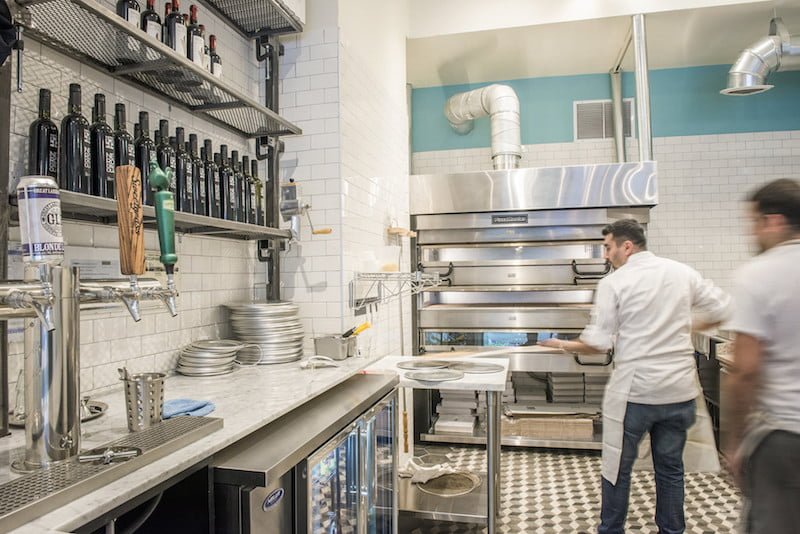
Shopping Centres coast-to-coast are adding full-serve restaurants to the mix. At Park Royal in West Vancouver, Chipotle recently opened a unit in the mall’s ‘North’ area, and a large JOEY restaurant recently debuted at Ottawa’s CF Rideau Centre. There are plenty of other recent examples, nationally.
Department stores are also adding restaurants to their properties, with Nordstrom leading the way with a number of in-store dining options. Holt Renfrew is also including restaurants with its renovations and most recently, its CF Pacific Centre location in Vancouver, as well as its Yorkdale location in Toronto, unveiled new restaurant locations with plush interiors and exclusive menus.
If Canadian malls follow the trend of what’s being seen in Asia and other parts of the world, we’ll be seeing more food and beverage options at our local malls. It makes sense, though — people generally must eat in order to survive, and consumers are now spending more at restaurants than on groceries. Adding strong restaurants to a mall’s tenant mix will ultimately drive traffic to the centre, not to mention revenue. Given the recent phenomenon towards stores closing in malls (including Target’s exit in 2015 and, possibly soon Sears Canada), repurposing real estate will be required, and food-and-beverage might be the solution.
*Top rendering: Tri M. Ly.