The following is the third and final segment in a three-part analytical series of the Canadian cannabis market by retail expert, Bruce Winder. In this section, Winder discusses the opportunities in the cannabis market and concludes this analytical series.
Opportunities
Could be a very, very large market – I would suggest that almost nobody really knows how big the current legal and illegal cannabis markets are. Why? Because it has been underground for so long and it is changing. According to an article in The Financial Post in February by Vanmala Subramaniam, Brightfield, a Chicago based weed research firm pegs the Canadian cannabis industry to be $ 5 BN by 2021. This is in stark contrast to the $ 8 BN the firm previously estimated. The reality is that it will take a few business cycles to get a decent feel for the market and all of the sub-markets that are in play such as edibles, vapes, dried flower, lotions, cosmetics and more. Having said that, I think it is fair to say that the market will grow quickly as the taboo of using cannabis wears off and more nations make it legal.
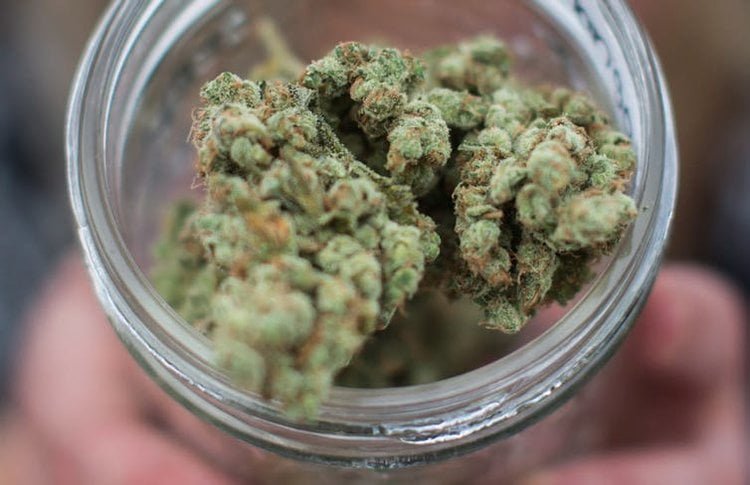
The Canadian CBD market is predicted to reach $ 1 BN over the next 5 years. Not just in Canada, but the CBD market in places such as the United Kingdom is also quickly growing, with companies like Blessed CBD proving popular amongst UK consumers.
Weed is quickly becoming mainstream in Canada and the US. The Associated Press reported that in the US retail sales of cannabis products jumped to US $ 10.5 BN, up 300% from 2017( Veiga)! According to Piper Jaffray & Co. analyst Michael Lavery the US weed market could be as large as $ 35 BN to $ 50 BN, about 10 times that of Canada says Armina Ligaya of The Canadian Press. That’s a lot of gunja and gunja related product !! As reported in Bloomberg, Barneys New York launched high end weed accessories in a California store including a $ 1,100 (US) glass bong and a $ 1,400 (US) weed grinder (Pettersson, 2019). Also, as reported in The Financial Post by Emma Spears in March, Neiman Marcus started selling CBD infused cosmetics at five stores and Sephora has been experimenting with hemp oriented products.
An article by Chris Kudialis in FPs Cannabis Post in March of this year discussed how the two largest weed stores in the world are in Las Vegas. Planet 13 and NuWu Cannabis Marketplace are the poster children for the commercialization opportunities in America. 420, the heralded pot celebration day has received even more mainstream support in the US this year, as reported by The Associated Press. Big brands such as Lyft, Totino’s and Ben & Jerry’s have used the day to connect with users (Veiga, 2019).
Big beverage and big tobacco are jumping in – You know when a new business is hot when big brands start to give it attention. Numerous big brands have ponied up billions to get a stake in or begin to develop an offering in the cannabis industry. As reported in The Wall Street Journal, folks like Constellation Brands, Anheuser-Busch and Molson Coors have either invested or are kicking tires in the industry (Menton, 2019). As reported in The Globe and Mail, tobacco giant Altria Group Inc. invested $ 2.4 BN in Cronos Group Inc.(Nicholson, 2019). One of the big problems with pot infused beverages is the current government regulation that specifies that these drinks cannot be produced in the same factory as regular drinks. This is a huge cost problem as makers need to build separate facilities. This hurts balance sheets and bottom lines.
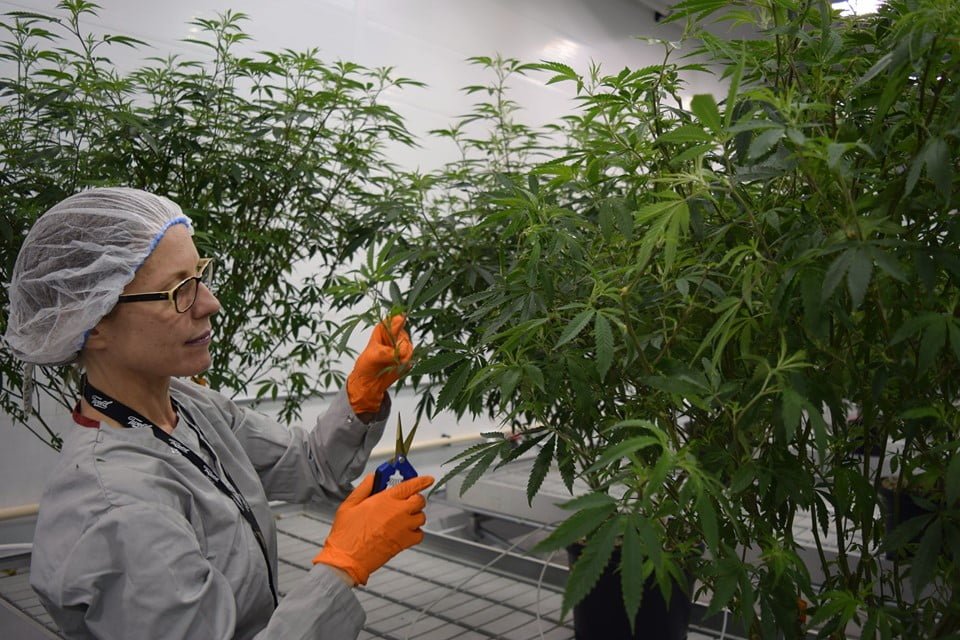
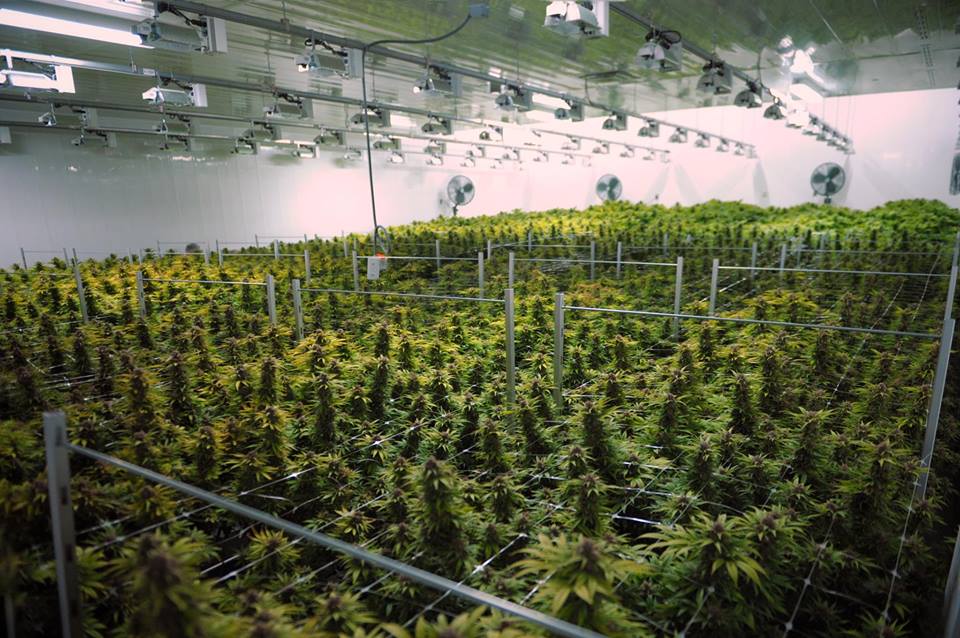
Gross margins can be sweet if leaf is grown correctly – from what I have read the cost to produce a gram of pot can be quite low, depending on the method and scenario. As discussed, outdoor weed can be grown for 3 cents to 20 cents per gram. Even indoor grown weed can cost 90 cents to $ 2 per gram. Considering the retail price, even for illegal weed, is hovering around to $ 6.28 per gram there is money to be made in this industry for sure! Even with the many mouths to feed as described above, gross margins are favourable if managed with care. As Canadian LPs gain more experience growing in larger scale look for costs to decrease further. Having said that, if one believes that government regulation will loosen over time and permit more brand advertising and promotional activity look for selling, general and administrative costs to go up. This will negatively impact earnings before interest, taxes, depreciation and amortization (EBITDA) % but hopefully drive sales and earnings.
Edibles, vapes and other products could be bigger than flower – my understanding is that the dried flower market, while large will be eclipsed by the market for other cannabis derivative products such as edibles, vapes, lotions, creams, cosmetics, infused beverages and the like. It is important to think about the market potential for cannabis from both a THC (the ingredient that gets you high) and CBD (the ingredient that takes away pain and relaxes users). Both ingredients can be mixed in product to customize the desired outcome for users. Cannabis and specifically CBD has become mainstream and is now recognized as a legitimate medication.
USA may legalize federally – the billion dollar question for everyone right now is if and when the US will make cannabis legal at the federal level. Numerous states have already made pot legal and have spawned legitimate new industries. According to a March article from Business Insider (Berke, Gould, 2019) recreational marijuana is now legal in 10 states and medical marijuana is now legal in 33. These numbers are increasing constantly. Will President Trump make cannabis legal? If so, will he alienate some conservatives such as evangelicals? Republicans are all for commerce but the stigma around pot may be too much for them.
Certainly, one would assume that if the Democrats win The White House in 2020, the federal legalization of cannabis will soon follow. Will President Trump win a second term? There is much uncertainty in this important juncture in American pot regulation. As described in a November 2018 article from The Motley Fool (Williams, 2018) federal legalization has numerous impacts for stakeholders beyond the obvious market expansion benefits. Major US stock markets such as the NYSE and Nasdaq won’t allow weed companies to list on them if they sell in the US. Therefore the liquidity and thus valuation of Canadian and US providers stocks may be hampered.
Canadian LPs have found a loophole to this by avoiding US sales (for the short term anyway) to gain the exposure and liquidity that these prestigious exchanges offer. Also, as reported in the Wall Street Journal, big American firms such as Constellation and Scotts Miracle-Grow are pressuring Washington to allow for weed companies to use banks (Ackerman, 2019). Canadian Cannabis firms are at the starting line ready to sprint once weed becomes legal south of the border. Canopy already has an option to acquire a US firm as discussed previously.
Other G7 countries may legalize – Canada has taken on the role of guinea pig for the rest of the developed world with the full on national legalization of grass. It is reasonable to assume depending on how things work out for us and depending on which parties get elected we could see the UK, Germany, France and other G7 countries jump on the weed train. Bloomberg reported in March how investment bankers are getting ready to seize Europe’s budding (my apologies again) market for cannabis (Unsted, 2019). The Canadian Press reported in April that Canopy Growth bought a Spanish licensed producer Cafina.
Brands are still jockeying for supremacy – This is the biggest opportunity for many growers. We have yet to see a Canadian brand jump out ahead as the de facto national brand. Sure there is awareness for some of the bigger names and for sure regionally there would be some solid name recognition. However, due to tight regulations on marketing and advertising the industry still feels like a dogs breakfast (old retail Jedi term we used to describe a store planogram with way too many brands and packages). Once Canada loosens up these constraints (if they do), real brand building will occur and you will probably see aided and unaided brand awareness increase significantly over time. The industry may still feel fragmented, sort of like the craft beer industry but with so much money to burn from investors, don’t be surprised to see marketing expense go through the roof from big valuation LPs.
Further consolidation a for sure – this has already started and boy is it going to accelerate. There are too many players and only the strong will survive long term. Once some of the earnings misses start to pile up and valuations decrease, you will see weak players becoming targets for better financed rivals. Also, as discussed above, additional big beverage or big consumer will buy more weed firms to utilize built up cash and get some exposure in this relatively new business. These investments will burn a hole in the jeans of these young LPs and they will go on a spending spree (like Canopy Growth is currently). Big fish will swallow smaller fish to get brands, scale, talent, country specific growing facilities and the like. An arms race will emerge between the top few to become the next Nestle, Johnson & Johnson or Proctor & Gamble of the weed world.
Government regulations ease up – over time governments will loosen up the restrictive Canadian regulations on all things cannabis. Not from a usage standpoint (must protect minors) but more from an advertising and marketing perspective. Governments will avoid any deregulation that’s puts youths at risk or society at risk through obvious abuse of the substance(s). It won’t happen yet though. We will need to live through the nightmare that will be edibles legalization in October 2019. In a couple of years look for strong, well-funded lobbyists organized by the newly formed Cannabis Beverage Producers Alliance to sway governments with among other things the promise of more tax revenue from a larger, faster growing market and jobs growth as the industry grows.
Nice new industry for Canada (we need it!) – finally, being a Toronto boy, I can’t help but feel proud that we have a new legal industry to strengthen our economy which is too heavily weighted to energy and resources. It is always nice to diversify and be the first at something so topical in the world. I just don’t know if we can keep our pole position over time. Oh well. Enjoy the high while it’s here I suppose.
Conclusion
The Canadian cannabis industry is sure to settle down over the next five to ten years once some of the issues discussed above have been worked through. Like other more mature industries such as alcohol, food and other consumer packaged goods (CPG) sectors, consolidation will eventually lead to a small number of dominant players who control the industry in an oligopolistic fashion. Governments will be tamed into lowering regulations through effective and well-funded lobbyists and power brands will take control much like other arenas. The secret sauce on growing and harvesting in large scale will be found and shared through acquisition, consolidation and employee musical chairs. Until then, enjoy the buzz of the excitement of an industry in its infancy and don’t invest any money in the industry that you are not prepared to lose.