Quebec outdoor retailer La Cordée is shutting down after 73 years in business, ending a six-year turnaround effort that brought new ownership, store expansion and significant investment following an earlier insolvency.
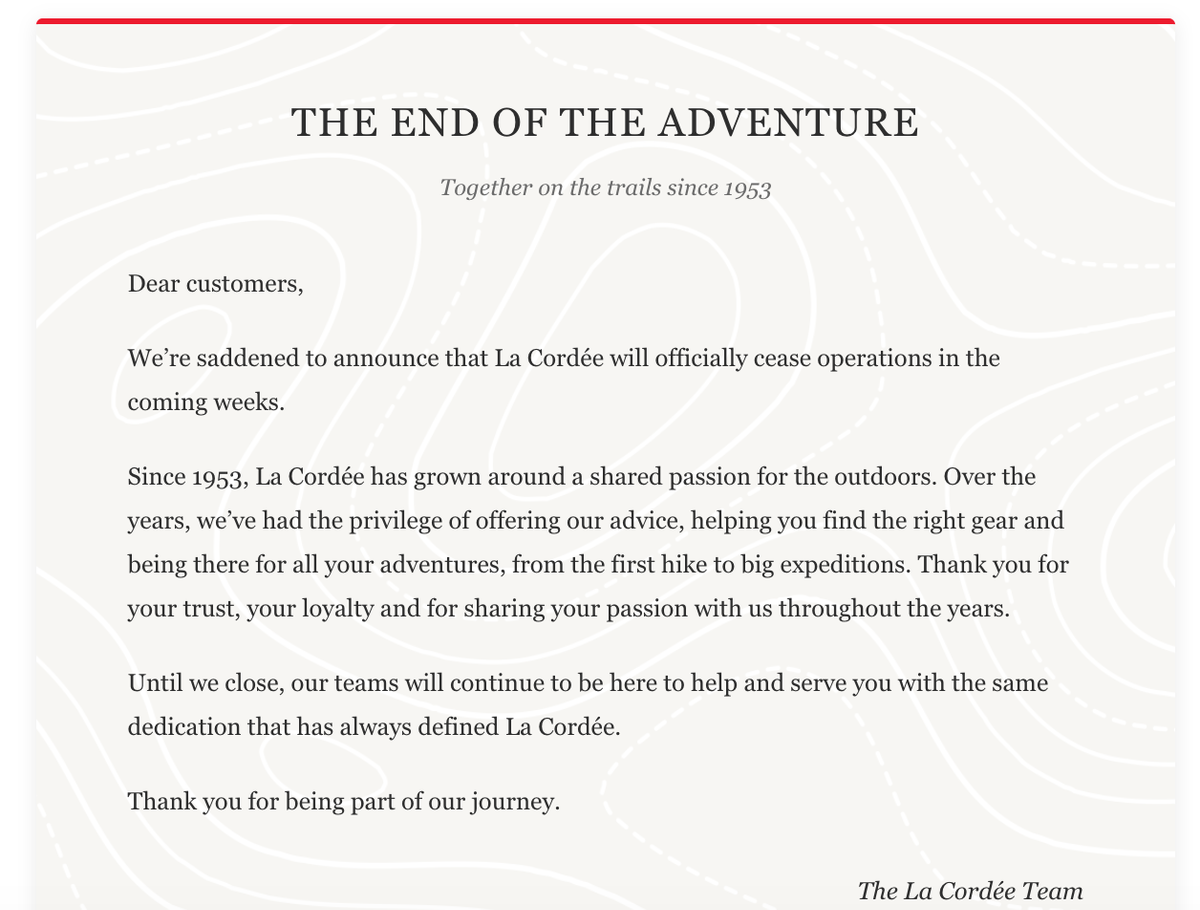
The retailer announced Wednesday that it will cease operations in the coming weeks, with closing sales underway at its remaining locations on Saint-Laurent Boulevard in Montreal, in Saint-Hubert on Montreal’s South Shore, and at La Vie Sportive in Quebec City. The announcement follows the closure of stores in Laval and downtown Montreal earlier in September.
La Cordée filed a notice of intention to make a proposal to creditors under the Bankruptcy and Insolvency Act in July with more than $13 million in obligations. It was the second time in six years that the longstanding Quebec retailer had sought protection from creditors.
The first restructuring resulted in new ownership and an attempted revival. This time, the business is being wound down.
La Cordée’s Second Restructuring in Six Years
La Cordée previously sought creditor protection in February 2020 following several years of financial difficulty. The problems predated the COVID-19 pandemic and included declining revenue and costs associated with the retailer’s 2018 acquisition of Quebec City outdoor retailer La Vie Sportive, where renovations proved more expensive than anticipated.
Mach Capital acquired La Cordée in August 2020 through a transaction approved by Quebec Superior Court. Rather than simply preserving the remaining business, the new ownership pursued growth, with Mach founder Vincent Chiara pointing to La Cordée’s expansion potential at the time of the acquisition.
La Cordée opened a location in Quebec City’s Saint-Roch district in 2022, with then-president Cédric Morisset describing the retailer as Quebec’s equivalent of MEC. The following year brought one of the company’s most visible post-restructuring investments.
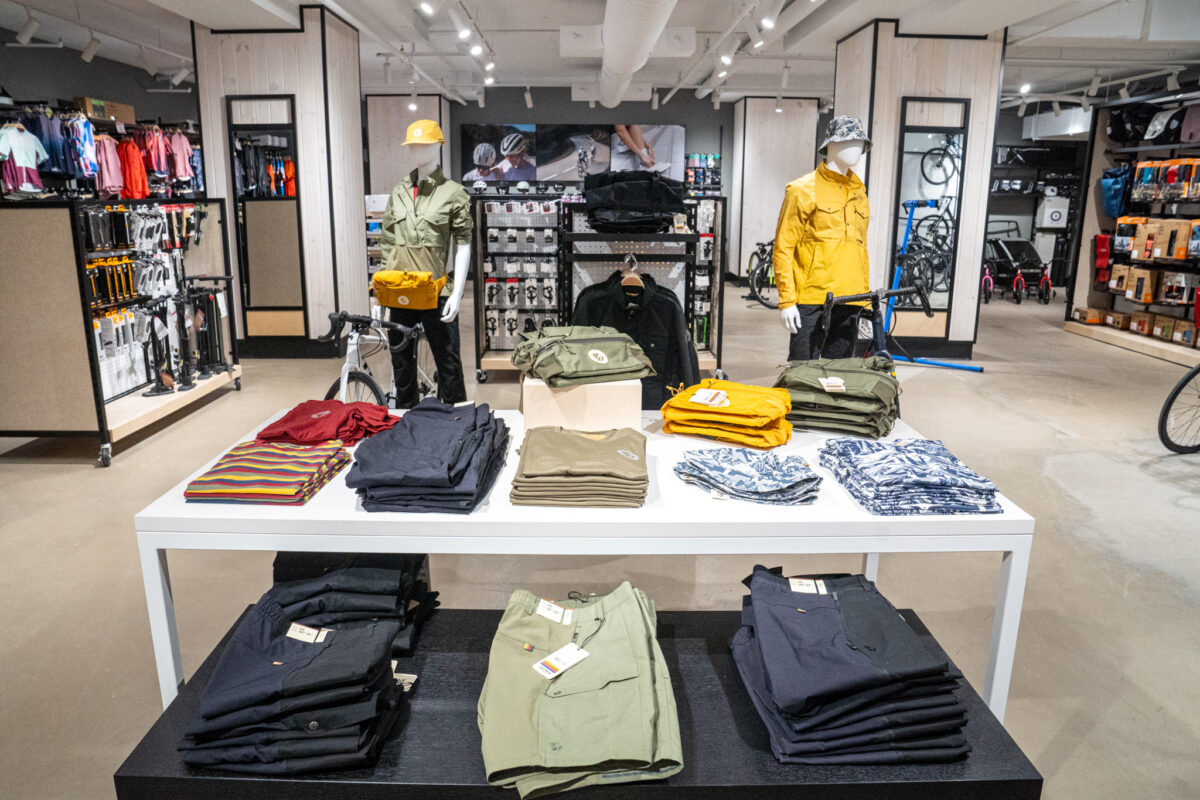
A roughly 25,000-square-foot La Cordée flagship opened at Promenades Cathédrale in downtown Montreal in June 2023. The store included a movable climbing wall and an expanded presentation of outdoor categories, while management positioned it as part of an effort to rebuild La Cordée’s leadership in Quebec.
The expansion brought La Cordée to eight locations. Just over three years after the Promenades Cathédrale store opened, the company is winding down entirely.
New Investors Joined the Business
La Cordée’s ownership evolved again following the Mach acquisition. In 2024, British outdoor industry executive Matt Gowar became the retailer’s principal shareholder alongside existing interests.
Gowar is the former chief executive of Equip Outdoor Technologies, owner of the Rab and Lowe Alpine brands, and controls Livewire Outdoor Investments Limited. Other reported shareholders have included Fiducie Malo, connected in part to Mach founder Vincent Chiara, and Riyadh-based Vision SH Investment.
Management was changing as well. Veteran Quebec outdoor retailer Robert Brunet, who founded Montreal’s Le Yéti in 1985, returned to a leadership role at La Cordée. La Cordée had acquired Le Yéti in 2015.
The company continued talking about growth, stronger supplier relationships and further development in Quebec. La Cordée said Morisset’s tenure had included three store openings and the launch of a new website, making clear that the post-2020 strategy was an attempted rebuild rather than the gradual dismantling of the chain.
More Than $13 Million in Obligations
La Cordée filed its latest notice of intention under the Bankruptcy and Insolvency Act on July 11, 2026, with Raymond Chabot Grant Thornton involved in the proceedings.
Preliminary creditor information reported in Quebec showed more than $13 million in obligations. Accord Financial was identified as the largest secured creditor, with approximately $2.98 million outstanding, while Equip Outdoor Technologies Canada was owed approximately $1.9 million. Another 131 unsecured creditors were collectively owed roughly $6.98 million, with Arc’teryx Equipment among the largest identified unsecured creditors at approximately $530,602.
By September, the financial difficulties were affecting La Cordée’s store network and merchandise position. The Laval location closed after its lease expired, eliminating 31 jobs, while Brunet said the retailer did not have the merchandise required for the approaching fall-winter season.
For a business selling skiing and other winter outdoor categories, entering the season without sufficient merchandise represented a significant operating constraint. It does not establish why La Cordée ultimately failed, but it shows how the financial problems were affecting the retailer’s ability to operate through an important seasonal transition.
More than 175 employees remained with La Cordée immediately following the Laval closure. The Promenades Cathédrale store then closed September 18, leaving three locations before Wednesday’s announcement that the entire business would wind down.
The reversal was rapid. Six years after emerging from its previous restructuring and returning to expansion, La Cordée was back in an insolvency process that ultimately failed to keep the retailer operating.
Quebec Outdoor Retail Remains Highly Competitive
La Cordée’s failure follows considerable disruption in Canada’s outdoor and sporting goods sector, particularly in Quebec.
French sporting goods retailer Decathlon entered Canada through Quebec in 2018, bringing its vertically integrated, value-oriented model into a market already served by La Cordée, SAIL, Sports Experts, MEC and independent outdoor specialists. Competition formed part of the backdrop to La Cordée’s earlier financial difficulties, although the available evidence does not support attributing its eventual failure to any single competitor.
Other Canadian outdoor retailers have faced their own financial problems. SAIL and its Sportium banner entered creditor protection in 2020 after a period of expansion. Sportium was ultimately wound down, while SAIL survived and has since returned to discussing growth following a management-led ownership change earlier this year.
MEC also underwent a major restructuring in 2020, when the former Mountain Equipment Co-op was sold to a private investor and converted into a privately owned business. MEC remains active and continues investing in its assortment and store network, including a push into trail running and plans for a smaller-format Whistler location.
Several retailers selling into Canada’s outdoor market have required major financial or ownership restructurings, but the category itself has not disappeared. Some businesses have emerged from restructuring and resumed investment while La Cordée’s second attempt has ended in closure.
Its departure puts a portion of Quebec’s outdoor spending back into play. SAIL, MEC, Decathlon, Sports Experts and independent retailers compete for many of the same customers, while suppliers are losing a longstanding multi-brand distribution channel in the province.
La Cordée’s post-2020 expansion also demonstrates the limits of treating new stores and investment as evidence that a turnaround has succeeded. The retailer rebuilt its network, invested in e-commerce and opened a substantial downtown Montreal flagship, but those moves ultimately did not prevent another financial restructuring.
From Scout Cooperative to Quebec Outdoor Retailer
La Cordée traces its roots to 1953, when it was established in Montreal as a cooperative serving the Scout movement. It initially sold Scout uniforms and camping equipment before broadening its customer base and expanding into climbing, cycling, cross-country skiing, paddling and other outdoor categories.
The business eventually became one of Quebec’s better-known outdoor specialists. By 2018, La Cordée employed roughly 400 people across five stores and its e-commerce operation and carried products from more than 30 Quebec companies.
Its history has some parallels with MEC, another Canadian outdoor retailer that grew from cooperative roots before undergoing financial restructuring and an ownership change. Their circumstances and outcomes differ, but both businesses illustrate how substantially the ownership structure of Canada’s outdoor specialty sector has changed.
La Cordée’s first restructuring gave the retailer another six years and another attempt at growth. Stores were opened, its digital business was upgraded and a major downtown Montreal location was added before financial pressure returned.
The company now leaves behind a Quebec outdoor market that remains competitive, but with one fewer locally rooted specialist. For the retailers still operating in it, La Cordée’s closure creates an opportunity to capture customers and sales; for La Cordée, it brings an ambitious but ultimately unsuccessful turnaround to an end.