

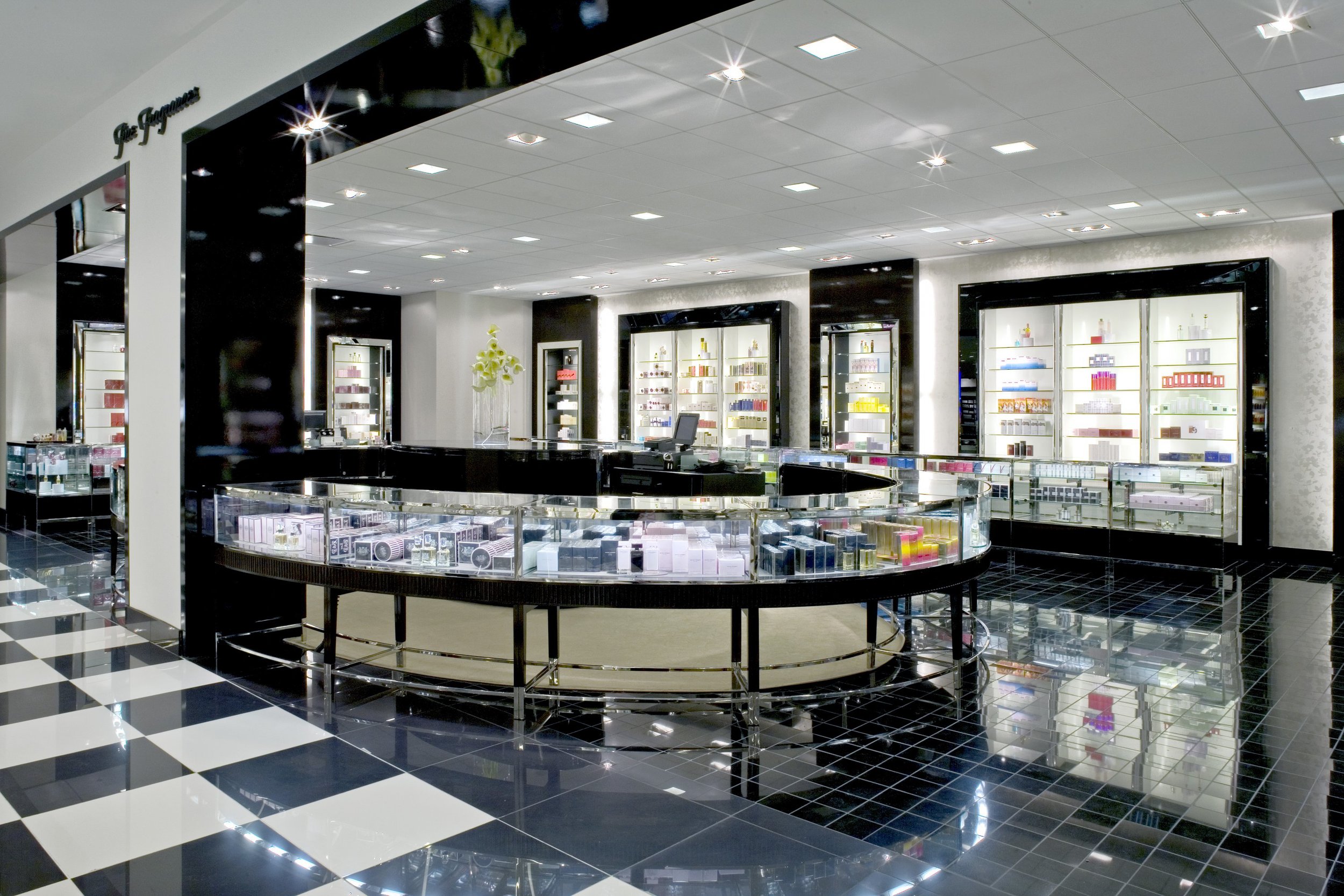
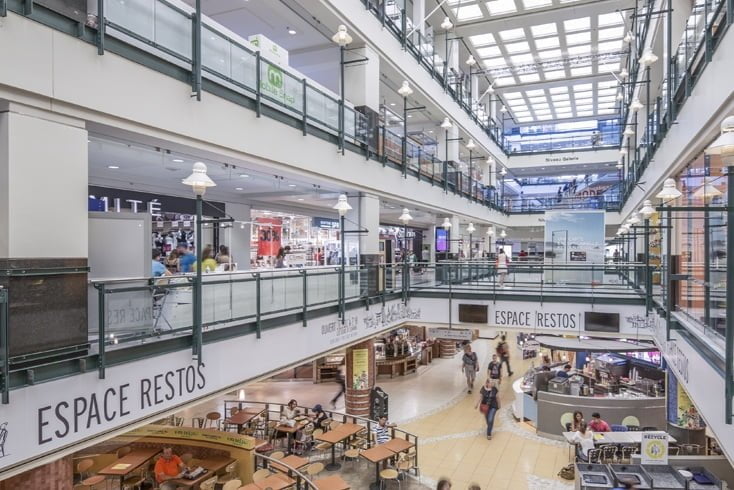
Photo: Callison Architecture
“Reverse Showrooming”: A Bricks & Mortar Retail Benefit
by Janet Valenza, President, Pop-Up Artists
We’ve all heard the Bricks & Mortar retail complaints about “showrooming.” Someone comes into the store to see, touch and experience the product, only to return home to the Internet to shop the price and buy it elsewhere. Yes it’s true, and a real drag. But what if that same Retailer could use “showrooming” to his or her advantage?
The good news is Retailers can! How you ask? By displaying samples of eCommerce Brands, taking orders through the existing eCommerce Brand website and getting a cut of the deal. The Retailer can even charge a base rent, calculated on sales per square-foot, using the same model that Bloomingdale’s uses for its shop-in-shops. Any sales above the base would be eligible for a cut to be earned by the Retailer.
Test New Categories
Here’s how the Retailer wins. First he or she can test new categories, without any financial inventory risk. That’s right: No inventory risk! The biggest risk in retail is removed! Not only that, instead of laying out cash for inventory, the Retailer can take it in with the base rent, adding to profitability.
In a clothing boutique, for example, the Retailer can test jewelry. A small sample presentation can be created, and remain live for six weeks in Bricks & Mortar, with the store staff taking orders through the existing Brand’s website. If it works the Retailer can continue the relationship. If not, the Retailer simply opts to bring in a new brand. The Bricks & Mortar Retailer now has a risk-free way to build their assortment and their business!
Another benefit to the Retailer is ‘newness.’ The sample presentation creates another reason to invite the customer back into the store. It’s a traffic driver. And it’s newsworthy, for publicity purposes.
Turn it over to a PR agency, along with some well-planned events and you can blow the doors off!
Expand Business, Not Footprint
Now that you understand the basics of this type of arrangement let’s take it a step further. What this arrangement amounts to for a Bricks & Mortar Retailer is a vehicle to expand their business using the existing footprint. In other words, without adding any square feet at all, the possibilities to expand the business across categories is virtually (no pun intended) unlimited!
Picture this: Some beautiful, adjacent well-merchandised little nooks displaying a dozen samples each from multiple new categories with a handy tablet (perhaps mounted on the wall) for a sleek look, along with a well-trained incentivized store sales staff to help the customer “round out the brand” using the tablet and close the sale! That means each and every square foot in your store becomes endlessly efficient. All at no risk to you!
Perhaps you are concerned that you keep your customer relationships intact. If they are not already customers then just enter new customers into your own database when they make a purchase. Your customer is also likely buying stuff online anyway. Why not be the resource that introduces them?
I refer again to the old adage: Although your business needs new customers too, it’s much easier to sell more of what they want to your existing customers than it is to get a new customer. What I call e-Pop-Ins is the perfect vehicle to put it to work.
Today in a meeting of CEOs sponsored by the Luxury Marketing Council, I heard Robin Lewis say, “The United States is overstored.” He backed it up with the following statistic. There is 46 square-feet of space for every American citizen compare to 3 feet in the UK. Here is a way for you to expand without adding more space in an already over-saturated market!
Besides that, as a Bricks & Mortar Retailer, you are providing a very valuable benefit to brands growing up online. That is a chance to see, touch and try on the brand. Or in the case of cosmetics, even to smell it! Or, for spices to taste it! What a way to create a memorable in-store experience. The latest buzz is all about “experience and entertainment” over “acquiring.” But I believe that the most exciting stores have the best merchandising combined with the best experiences. Sensory experience leads to emotion which leads to buying and loyalty.
This value cannot be underestimated. From new product launches to new geographic markets, a physical presentation is a critical element for a brand growing up online.
Why is this important to the store? Because that brand by definition, must support the presentation to acquire new customers. When they support it, they drive new customers to your store. So an added benefit for the traditional retailer is new customers too!
A Look at the Future
Let’s take it even one step further and paint the picture of the future. If in fact the store can spend less time on the trade of buying inventory and turning around and selling it and more time getting to know the customer better, wow, now we have something.
The store can really start to understand how that customer lives. What style home do they have? Do they commute to work? From where to where? How? What do they do for fun? How about for relaxation? Are they married? Do they have children? Where do they vacation? The list goes on and on. The retailer can get to know them as a friend instead of constantly worrying about inventory.
What is the benefit in all of this for the store? Well birthday, anniversary and holidays gifts for starters. Secondly, if you sell a certain type of clothing what’s the best fit in terms of home décor? What does your customer like for their homes? What about resortwear? And for the fitness inclined, how about activity trackers?
The point is, the more the focus goes to the customer and the less the focus goes to the management of inventory, the better off you are.
I see it going even one step further. The store become the front-end and the brand website becomes the back-end. What that means is that the store becomes a sophisticated database of details related to customers’ lifestyles with the appropriate “registry” along with a well-segmented and executed online marketing program.
And from a creative standpoint another big WOW! The more the store can understand the customer’s lifestyle the more exciting and focused the merchandising can become. And, the more focused the in-store events can become. Not only is the experience better but your store now becomes the destination for your customer for the way they live.
In this way, as an independent Bricks & Mortar Retailer, you can get everything the big guys get. Now that’s how to make showrooming work for you!

Pop-Up Artists is a strategic marketing agency that creates focused physical shops integrating e-commerce, for retail and luxury brand clients. Janet Valenza, president, is a former c-suite executive from the Young & Rubicam family of companies. She can be reached at 917.497.5319 or janetv@pop-upartists.com.
CANADIAN RETAIL NEWS: Friday, July 4, 2014 (Updated Continuously)
GO BACK





The only thing to be careful with the testing of new categories is that the lease usually have a use of premises clause that limits the activities of the retailer and therefore its often not a possibility, for example, for a clothing tenant to start selling jewellery or electronic goods. This is allows the proprety owner to effectively manage tenant mix.
Very good point, Sam. We’ve encountered this before with a few retail concepts that we’ve worked with. Restrictive covenants must be reviewed closely, to avoid possible legal ramifications.