In response to growing consumer demand for transparency and support for Canadian-made goods, retailers across the country are actively identifying products that are either partially or wholly produced in Canada. However, the process of making claims such as “Made in Canada” or “Product of Canada” involves strict guidelines enforced by the Canadian Food Inspection Agency (CFIA) and the Competition Bureau.
Understanding these regulations is crucial for retailers to maintain compliance and avoid misleading consumers. The following guide provides key insights into how businesses can accurately label their products, ensuring both legal adherence and clear communication with customers.
Food Products: Defining “Made in Canada” and “Product of Canada”
For food products, the CFIA oversees labeling regulations to prevent false or misleading claims under subsection 5(1) of the Food and Drugs Act and subsection 6(1) of the Safe Food for Canadians Act. The use of “Made in Canada” or “Product of Canada” claims is voluntary, but businesses choosing to use them must adhere to strict criteria.
“Made in Canada” Labeling: A food product can be labeled “Made in Canada” when its last substantial transformation occurred within the country. This means that significant processing has taken place to alter the product into a new form.
For example, if a pizza is produced in Canada using imported cheese, dough, and sauce, but the final product is assembled and baked domestically, it qualifies for a “Made in Canada” claim. However, a qualifying statement is required, such as:
- “Made in Canada from imported ingredients”
- “Made in Canada with domestic and imported ingredients”
This ensures that consumers understand the product’s actual origin and composition.
“Product of Canada” Labeling: A food product may be labeled as a “Product of Canada” when nearly all its major ingredients, processing, and labor originate from Canada. Specifically, all significant ingredients must be Canadian, and non-Canadian materials must be negligible (typically less than 2% of the total product content).
Exceptions to this rule include:
- Trace amounts of ingredients not typically produced in Canada (e.g., spices, cane sugar, coffee, vitamins, and minerals)
- Imported packaging materials, as the focus remains on the food product itself
- Agricultural inputs such as seeds, fertilizers, and animal feed sourced from outside Canada
Local Food Labeling
The CFIA also provides guidelines for local food labeling. A product is considered “local” if it is:
- Produced and sold within the same province or territory
- Sold across provincial borders within a 50 km radius of its production location
While “local” claims are voluntary, businesses are encouraged to provide additional qualifiers such as the name of the city or region to better inform consumers.
Documentation and Compliance for Food Labels
Retailers and manufacturers are not required to submit formal documentation for “Made in Canada” or “Product of Canada” claims. However, businesses must be prepared to provide supporting evidence to substantiate their claims if challenged by regulators. Additional guidelines on country-of-origin claims for commodities like meat, seafood, and dairy are available through CFIA’s Origin Claims on Food Labels guidance.
Non-Food Products: Compliance with the Competition Bureau
For non-food products, country-of-origin labeling is governed by the Competition Bureau under several acts, including the Competition Act, the Consumer Packaging and Labelling Act, and the Textile Labelling Act. Similar to food products, businesses are not required to display country-of-origin information, but any claims made must be truthful and not misleading.
“Product of Canada” for Non-Food Items: A non-food product can be labeled “Product of Canada” if:
- The last substantial transformation of the product occurred in Canada.
- At least 98% of the total direct costs (e.g., labor, raw materials) were incurred in Canada.
“Made in Canada” for Non-Food Items: A non-food product can use the “Made in Canada” label if:
- The last substantial transformation occurred in Canada.
- At least 51% of the total direct costs were incurred in Canada.
- The claim includes a qualifier, such as:
- “Made in Canada with imported parts”
- “Made in Canada with domestic and imported components”
- “Made in Canada with imported parts”
This distinction ensures consumers are aware of the product’s actual domestic content.
Use of the Maple Leaf Symbol
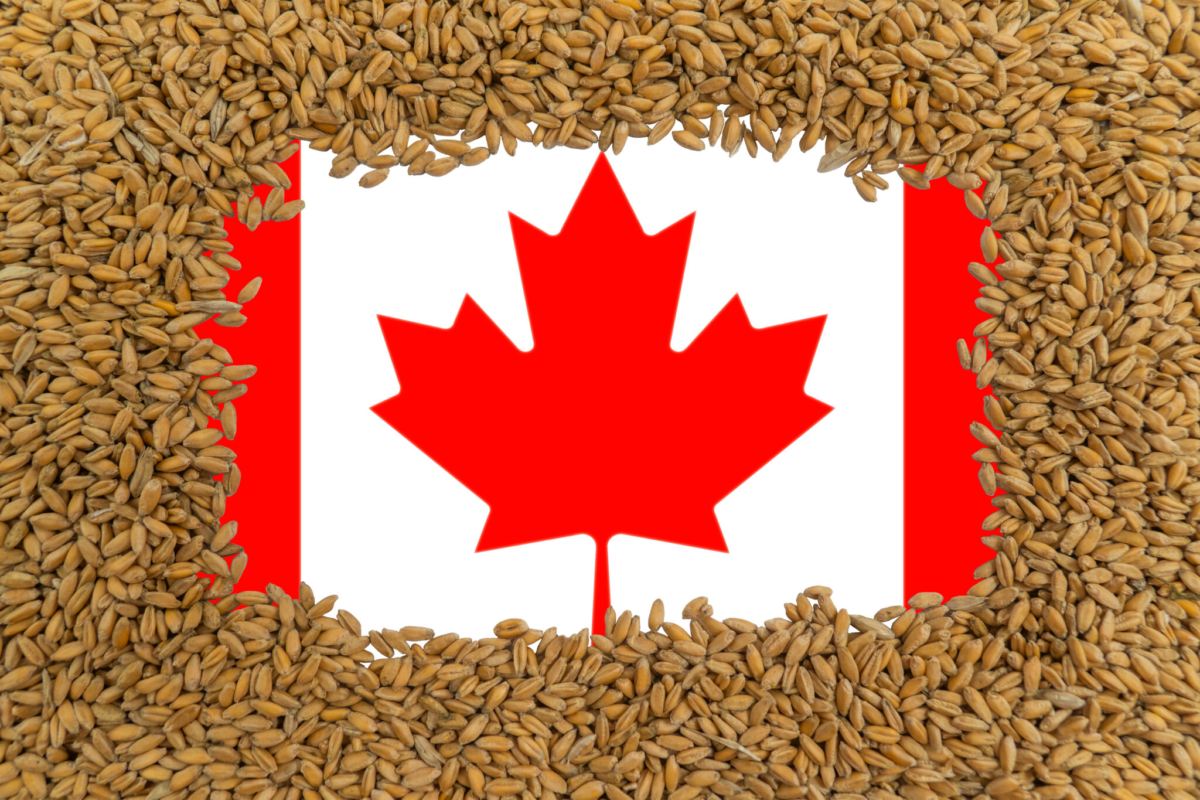
The iconic 11-point maple leaf, as seen on the Canadian flag, is a symbol of national pride but comes with specific usage restrictions. The Department of Canadian Heritage requires businesses to obtain permission to use this stylized maple leaf on their products.
However, general maple leaf designs (excluding the official 11-point symbol) can be used freely on food and non-food products. If a maple leaf symbol is included in a product’s packaging, businesses should ensure it does not imply a misleading “Made in Canada” or “Product of Canada” claim unless the product meets the relevant criteria. In such cases, an accompanying domestic content statement is recommended.
Key Takeaways for Retailers
- “Made in Canada” claims require substantial transformation within Canada and must specify imported or domestic ingredients/components.
- “Product of Canada” claims require nearly all content, processing, and labor to be Canadian.
- The CFIA regulates food product labeling, while the Competition Bureau oversees non-food items.
- Retailers must ensure labeling accuracy to avoid misleading consumers and regulatory penalties.
- The use of maple leaf imagery should be carefully considered to align with labeling claims.
As Canadian consumers increasingly prioritize locally made and sourced goods, retailers must navigate these guidelines carefully to maintain compliance and consumer trust. Businesses should consult with legal advisors and regulatory bodies such as the CFIA and the Competition Bureau to ensure their labeling practices meet federal standards.