Advertisement
Home Blog Page 1045

Large Conglomerates Dominate the Canadian Retail Industry: Report

Retail Sales Associate

The CSCA Retail 100 report, created by the Centre for the Study of Commercial Activity at Ryerson University, has found that the top 100 retail conglomerates in Canada account for 75 per cent of non-automotive retail sales in the country.

The report by Christopher Daniel and Tony Hernandez said that those conglomerates collectively operated 424 retail chains and controlled $267 billion in total retail sales in 2017, accounting for a large majority of Canada’s retail economy.

The top three conglomerates (Weston Group, Walmart Stores Inc., and Costco Wholesale Corp.) account for 28 per cent of total non-automotive retail sales in Canada, said the report.

“This illustrates that a significant share of Canada’s retail buying power is concentrated in the hands of a small number of very large retail organizations. In addition to these top three conglomerates, there were a total of 33 organizations with at least one billion in total sales, and this ‘Billion Dollar Club’ (BDC) accounted for 67 per cent, or $246 billion, of non-automotive retail sales in Canada for 2017. BDC retailers controlled a network of approximately 21,500 stores and accounted for almost 439 million square feet of retail store space. The BDC accounts for 89 per cent of total CSCA Retail 100 sales, 67 per cent of total Canadian non-automotive sales, and 42 per cent of total Canadian retail sales in 2017,” said the report.

In an email, the authors of the report said the purpose of the Retail 100 study is to identify and track metrics on the leading retail conglomerates in Canada as ranked by total sales / market share so that insight can be gained into the structure of the Canadian retail economy, evaluate how that structure is changing over time, and to understand what role the largest retail conglomerates play within it.

“The largest retail conglomerates with the dominant share of the Canadian retail market operate differently than mid-sized and small retailers because their size and market control gives them many important advantages,” said the authors.

“The top 100 retail conglomerates control 75 per cent of non-automotive retail sales in Canada. This means that a small group of corporate entities are able to exert a considerable amount of influence on the Canadian retail economy in the form of competitive pressures on other medium and small size retail firms and also on the commercial leasing companies that provide the retail space in which these top retail conglomerates operate. Understanding the marketing strategies and positioning that these top level retail conglomerates adopt gives us additional insight into the ongoing processes that are continuously shaping Canada’s retail economy at the highest levels of market share.”

Ted Rogers School of Management (Image: Ryerson University)

Daniel and Hernandez said the key findings of the report include market control and market concentration.

“Over the years, the Retail 100 report has highlighted a small but steady decline in the ratio of Canadian controlled companies versus those headquartered in the United States. Our research has shown that from 2012 to 2017, Canadian controlled firms’ share of the Retail 100 has declined by two per cent while U.S. firms have increased their control by 1.5 per cent and other countries increased collectively by 0.5 per cent,” they said.

“We measure concentration ratios by looking at the market share of the top four conglomerates within a given retail sector – our CR4 measure. Six out of the nine retail sectors in Canada have CR4’s above 40 per cent.  So, basically, within six out of nine retail sectors, the top four leading retailers in the sector control over 40 per cent of the market share. This number varies markedly by retail sector, general merchandise is highly concentrated, fashion retail less so.”

The researchers said the findings track the changing structure and control of market share by leading retailers operating in Canada.

“With the findings you’re left asking yourself whether the level of Canadian control of the retail industry or corporate concentration (i.e., how many firms that dominate a sector) matters,” they said. “These are long-standing debates across many industries that have become even more complex in our global retail marketplace. For example, the competition bureau in Canada allows market concentration ratios to be relatively high as a way of allowing Canadian companies to generate globally competitive economies of scale. Does this ‘economies of scale’ argument result in a better deal for Canadian consumers? How significant is the leakage of retail sales dollars outside of Canada? The jury is divided.”

Daniel and Hernandez cite the following as trends in the retail industry identified in the report:

●     Corporate concentration is high, with a relatively small number of conglomerates collectively controlling a large proportion of Canadian retail spend;

●     The top three conglomerates control just over 28 per cent of non-automotive retail sales;

●      The top 10 conglomerates control 50 per cent of non-automotive retail sales;

●     The Billion Dollar Club (BDC) controls 67 per cent of non-automotive retail sales;

●     The CSCA Retail 100 controls 75 per cent of non-automotive retail sales;

●     The level of concentration and market control varies by retail sector, from very high in general merchandise to relatively low in the fashion sector;

●     The importance of U.S. retailers in Canada with these foreign players accounting for almost 42 per cent of the market; and

●     The nature of competition within the Canadian retail industry, with a small number of conglomerates leading in each retail sector with the exception of the fashion sector where a large number of retailers compete.
Flexible Workspace Company LAUFT 1ST Mall Location in Canada with Plans for Global Expansion [Photos]

LAUFT at Upper Canada Mall in Newmarket

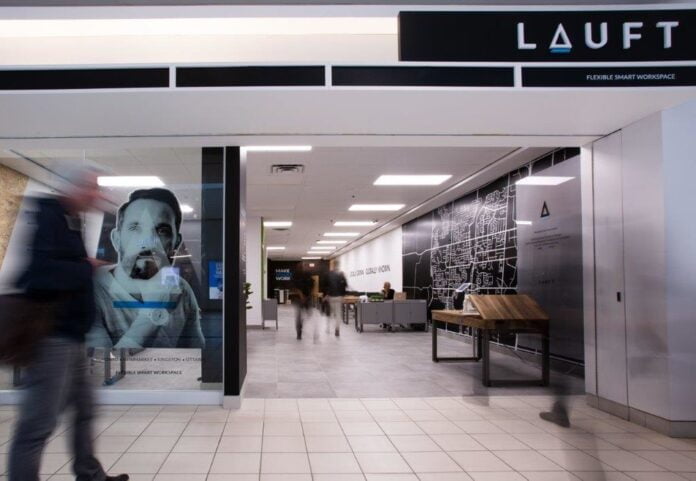
A new flexible workspace startup called LAUFT has opened its first location at Upper Canada Mall in Newmarket, north of Toronto, and is pursuing an ambitious growth strategy which will eventually see a vast network of locations across Canada and around the world.

As flexible co-working spaces become increasingly popular, and with opportunities for locations in a wide range of retail, commercial and even residential spaces, the concept presents a potentially transformative real estate trend for the years to come.

“It’s a global vision,” says Graham Wong, CEO and co-founder of LAUFT. “We think we can be fairly disruptive, building the largest network of workspace.”

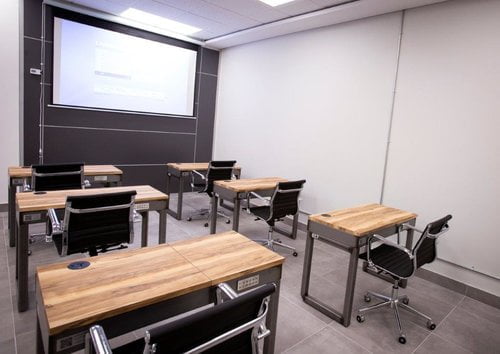
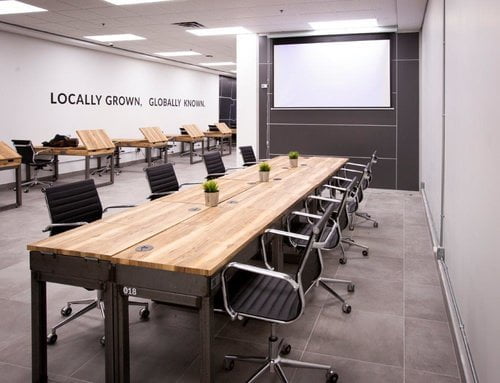
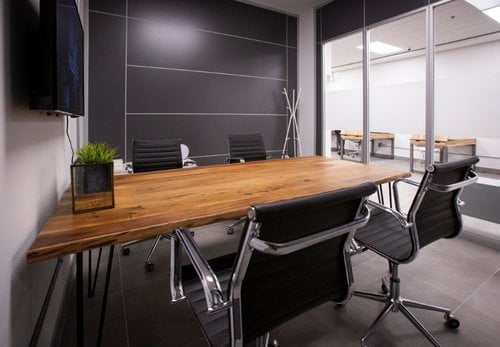
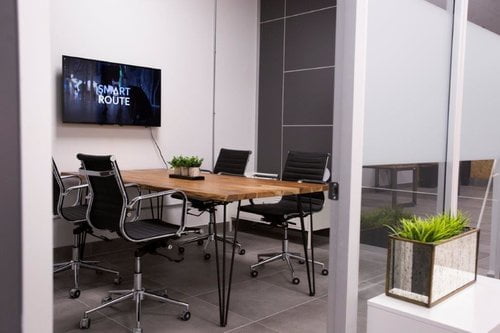
LAUFT locations include desks, meeting rooms and workshop spaces that can be booked by the hour, by the day or by the week through a mobile application. Reserving a desk for one hour costs $5, with the hourly rate descending for longer bookings. The locations also feature secure WIFI and amenities such as printers, scanners, fax machines, white boards, projectors and lockers that customers can use to keep their belongings safe.

TORONTO LOCATIONS. PHOTO/MAP: LAUFT/GOOGLE MAPS

The company caters to a broad target market—“anyone who works,” as Wong puts it. That includes entrepreneurs, freelancers, independent consultants, sales teams, commuters and anyone else looking for a quiet, professional space to get work done or meet with clients or colleagues.

Wong and co-founder Andrew Laufer came up with the idea for LAUFT upon experiencing their own frustrations in past roles, when they were on the road and trying to find suitable spaces to work in between client meetings.

“Inevitably, you end up with a few hours free, and you end up going to a coffee shop or a restaurant. You need a table or a desk to sit at, or somewhere to meet,” Wong says. “You want an environment where it’s more professional.”

Flexible workspace also provides a solution for the growing portion of the population engaging in freelance and contract work—often with irregular hours—amid the rise of the gig economy.

The initial LAUFT location in Upper Canada Mall, which opened in December, boasts 2,400 square feet of space. Shopping centres present attractive locations for LAUFT, Wong says, since they’re high-traffic destinations that are convenient for customers. For families visiting the mall together, LAUFT provides an option for one person to get some work done while the others shop, before meeting for lunch or dinner.

From the perspective of the landlord, adding workspace to the tenant mix in a shopping centre presents an appealing opportunity in today’s retail environment. The rise of e-commerce and shifting consumer behaviour has resulted in lots of under-performing retail space, and as a result, landlords are looking to re-invent some of that space. A growing number of malls feature amenities such as fitness clubs, and by adding flexible workspace, shopping centres can attract an even broader array of customers who are likely to make purchases while they’re there.

“As the future of shopping centres continue to evolve, adapting our real estate as not only a place to shop and be entertained but also a place for the community to come together. With the flex economy brings a need for short term flexible work spaces,” said Nick Iozzo, Senior Director Retail Innovation & Lead Generation at Oxford Properties. “LAUFT provide an ideal platform in our retail environment for a drop-in, short term work space that compliments the new uses we are introducing in our centres such as Market & Co.”

“It takes the ‘working out of a coffee shop’ up a notch with a state-of-the -art platform which we see as an ideal addition to our merchandise mix. Oxford Properties is proud to have partnered with LAUFT for their first shopping centre location and will continue to grow with them across Oxford’s portfolio of shopping centre and office building asset across Canada,” he said.

Beyond the retail world, Wong sees vast potential for LAUFT locations in other types of spaces, such as airports, hotel lobbies, existing office buildings, conference centres and condo buildings.

“Our core model would be to partner with landlords and property holders who have underutilized space where they want to generate traffic,” he says.

Many condo buildings now feature retail space at the base of the building, and Wong says that’s an example of a space where LAUFT would fit in nicely.

“We’d be able to set up a LAUFT and also create a heartbeat of workers who can engage with other tenants. They might be buying coffee, they might be buying clothes, or they need to get their dry-cleaning done,” he says. “Providing that ecosystem or that footprint really benefits everybody. It benefits the landlord, it benefits us and it benefits the other tenants.”

LAUFT has partnered with architecture firm large [medium] design office inc. on the design of the locations.  The project has been a unique challenge, according to Francesco Martire, principal of the firm.

“We were immediately intrigued in the possibilities of taking the traditional working experience and turning it on its head. Creating innovative spaces and ideas is extremely important to us and our alliance with LAUFT has given us an opportunity to explore new avenues in not just the working environment but also how we work,” Martire says. “Helping create a flexible system and allowing environments to be reshaped by user needs is a huge design challenge which we found compelling. The ideas embedded in the LAUFT experience have reverberations beyond the scale of the retail space and into the city at large.”

The Upper Canada Mall location is bright and modern in design, featuring neutral colours and open-concept spaces. As LAUFT expands, each location will boast a similar look and feel, Wong says.

“You’ll get a consistent experience and you’ll know what to expect, very much like you would going into a Starbucks,” he says.

Two more LAUFT locations are set to open later this month – one in Ottawa’s Lansdowne Park retail complex and one at Queen’s University’s Innovation Park in Kingston. LAUFT is also exploring locations in Toronto, including both commercial and retail spaces.

“The goal is to have LAUFTs in airports, conference centres, hotels—pretty well anywhere that a worker would see value in finding an on-demand work experience,” Wong says. “That’s the global vision.”

Galeries de la Capitale Unveils Overhauled Méga Parc Amusement Centre [Photos/Video]

exc-5c450ddbbba2236720229a51

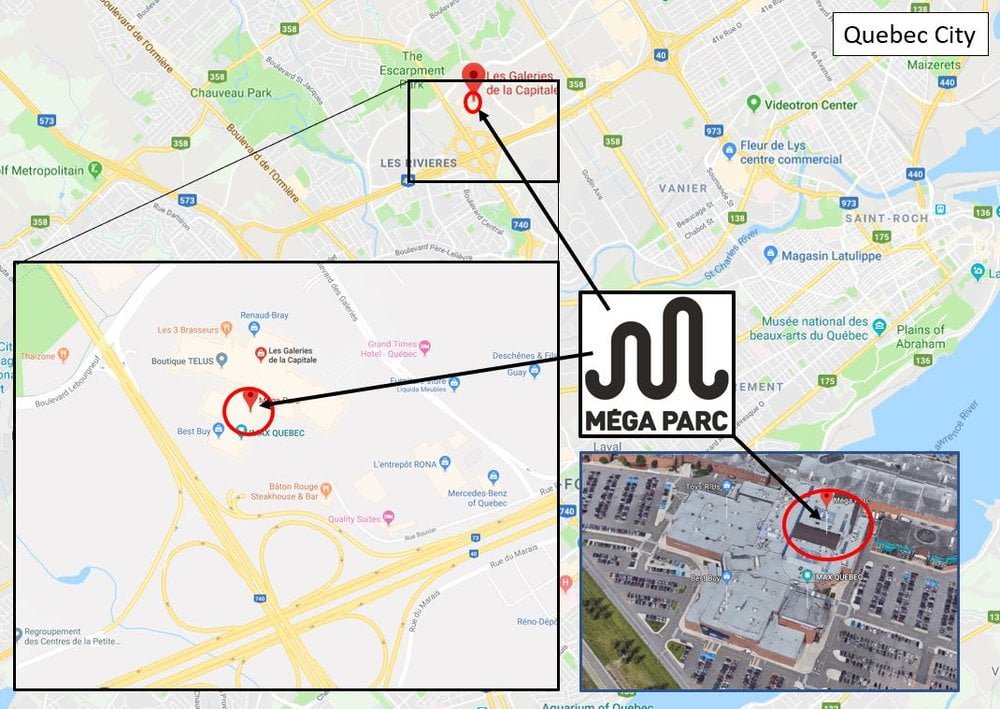
Landlord Oxford Properties has re-opened the Méga Parc amusement centre at massive Galeries de la Capitale shopping centre in Quebec City, which now includes a Steampunk theme as well as the first spokeless Ferris Wheel in North America. It’s part of a trend of mall landlords adding entertainment and other non-retail uses in order to drive foot traffic at a time when consumer tastes are shifting and many choose to shop online.

It’s the largest indoor amusement park in Quebec, and the second-largest nationwide (the largest is at West Edmonton Mall).  Méga Parc was closed for over a year and after a $52-million overhaul, it now features 18 rides and experiences, 14 of which are entirely new. The four restored rides include the ‘Force G’ gravity ride, ‘Condor’ plane ride, the Carrousel, and the ‘Électro’ roller coaster. 

An interesting addition to the centre is Zénith, which is said to be the first spokeless Ferris Wheel in North America. Other new attractions include the Patinarium, which is a 750-foot ice skating circuit that runs through the park — it’s also is the longest indoor skating trail in Canada. The Télégraphe is described as a 40 foot high suspended glider coaster that runs right through the spokeless Ferris Wheel. The Pendule is a giant spinning pendulum that is appropriate for all ages, as is the interactive 4D Cortex theatre and the many arcade games in the ‘Salle des machines’. Other attractions include the Arsenal, the Piston, the Centrale, the Hélix, the Express, the Convoyeur, the Pare-chocs, and the Mini-mousse amusement park for toddlers — Méga Parc’s website provides further information on all of these. 

Included as well are high-tech elements such as state-of-the-art lighting and sound, a giant screen, a stage for shows, and a large water fountain with lights. Oxford Properties explained how the entertainment centre is a highly functional venue for gatherings that has three rooms fully equipped for children’s parties and private events, and the entire amusement park can be rented for corporate events. 

The Steampunk theme is a nod to the past as well as a point of differentiation as Méga Parc aims to be a regional tourist attraction. “The Méga Parc offers an unbeatable and unique experience you won’t find anywhere else in Canada,” said Stéphan Landry, General Manager of Galeries de la Capitale. “Locals are going to love this new entertainment offering, but it will also be a big draw for tourists and people visiting the Québec City area, especially since it’s an indoor activity families can enjoy all year-round.” 

Bradley Jones, Head of Retail at Oxford Properties Group said, “The new Méga Parc is an incredible attraction that will help redefine the entire customer experience at Galeries de la Capitale. Retail is changing, and the mall is no longer simply just a place to shop but a destination to enjoy world-class experiences across fashion, food, and entertainment that can’t be recreated online.”

Shopping centre landlords such as Oxford Properties are adding entertainment components to their centres. It’s a strategy to get people into the centre and to also get them shopping. It’s something that’s more common in major shopping centres in Asia and the Middle East, and North American landlords are now recognizing the trend by adding non-retail uses, which also include expanded food and beverage offerings. 

Galeries de la Capitale has seen considerable investments over the past several years in an effort to maintain its position as a dominant centre. Recent renovations have proven fruitful — the centre’s updated food court (called ‘Espace Gourmet’) is now one of the most productive in the country, and new stores are being added as retail space is reconfigured. The modernization strategy commenced about four years ago, with more than $200 million in investments having been announced for the centre’s retail and entertainment components. 

Méga Parc will likely lead to further lift in visitor footfall at the centre, which saw a 7.75% increase in foot traffic in 2017 as it added new stores and others were renovated.

In March of 2018, La Maison Simons opened a first-of-its kind store in Quebec City, which uses industry leading technologies to eliminate its carbon footprint. The impressive space includes some unique features not found in other Simons stores as the company continues to refine its retail strategy. Simons moved into a former Target box from a smaller location in the mall. 

Opening later this year, as well, will be a new food marketplace in the former Simons space, which is described as being a modern space inspired by European marketplaces that will showcase local food vendors and their products. A variety of artisans and merchants will offer specialties including meats, fish, seafood, cheese, spices, oils, olives, bread, pastries, juices, coffee, and various other fine products. The goal will be to offer quality and freshness at one location. 

As part of the food hall redevelopment, the region’s first RICARDO Boutique + Café recently opened in the centre in a 9,000 square foot location. It includes a boutique (featuring cookware, the art de la table collections and gourmet favourites) and a café that seats about 90 people. An adjacent 745 square foot patio can accommodate more than 50 people. It is Ricardo’s third location (its second opened in Laval in November of 2017) representing an investment of nearly $2 million that led to the creation of 60 jobs. 

Along with RICARDO, the new food marketplace will feature two other restaurants as well as a kitchen space reserved for fine-dining demonstrations, workshops and conferences. It’s the third such food marketplace in an Oxford Properties mall, and its first for the landlord in Quebec. 

RICARDO AND BRIGITTE IN THE RICARDO Boutique + Café LAVAL SPACE.

Canadian mall landlords are investing in their properties like never before, with billions of dollars being poured into centres to continue to attract shoppers. Landlords are looking beyond traditional retail models and are seeking to add new food and beverage concepts, as well as entertainment concepts, in order to attract a broader range of shoppers and keep them on-site. Given the demise of Target and Sears in Canada, landlords have more options to repurpose space in their malls beyond that of traditional fashion and anchor retailers. 

Galeries de la Capitale scores high with ‘retailtainment’ with its in-mall amusement park as well as housing the only IMAX movie theatre in the area. The centre is the largest in Quebec with almost 1.5 million square feet of GLA, with about 280 stores and 10 million annual visitors. 

Mobile payment tech ‘Mobeewave’ Helps Pop-Up Merchants in Canada Increase Sales

exc-5c3e7e5f0e2e72888f837963


Photo:    MENTRENDSPhoto:    MENTRENDS

Photo: MENTRENDS

By Sarah Duquette , Zenergy Communications

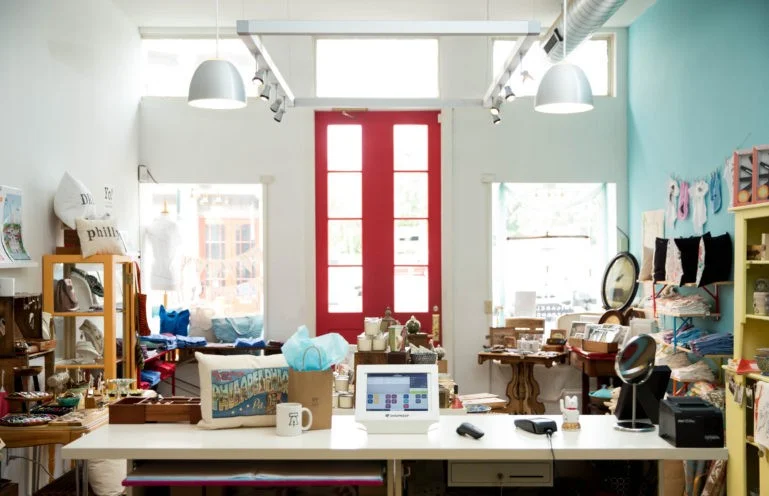
Pop-up shops, which are often temporary, informal locations with limited or non-existent internet access and electrical plugs, do not operate in the same way as most conventional businesses as most of their sales are made over a short period of time. Pop-ups can be anything from retail to food vendors to beauty or fitness. Commonly, these businesses are only open for a certain number of days or weeks at a time, so every sale counts. Very often, their customers are visiting the area or have stumbled upon their business in passing. Finally, as we move towards a cashless society, sellers need to ensure that they can accept any form of payment to increase their chances to close on single opportunities to sell.

Having a mobile point of sale is important for these types of business operations but having reliable, secure payment infrastructure is essential. Due to their temporary nature, pop-up sellers are not interested in signing a long-term contract to rent or purchase a traditional payment terminal since they may only need it for a short time. Moreover, cost savings is a priority since many pop-ups are launched as a means for testing brick-and-mortar, and since sales are conducted during a short period of time, profit margins can be quite thin when reconciling profit over the whole year.


Photo:    MENTRENDSPhoto:    MENTRENDS

Photo: MENTRENDS


edited.jpgedited.jpg


Photo:    MENTRENDSPhoto:    MENTRENDS

Photo: MENTRENDS

Temporary merchants such as pop-up vendors and entrepreneurs can avoid investing in expensive and complicated terminals and adding extra costs to their expenses by adopting mobile contactless payment technology.

Montreal-based FinTech company Mobeewave has been a pioneering force in the mobile payment space since its inception in 2011, and has created a patented solution enabling anyone to accept money from a contactless card or a mobile wallet using only a smart mobile device, eliminating the need for external hardware or terminals.

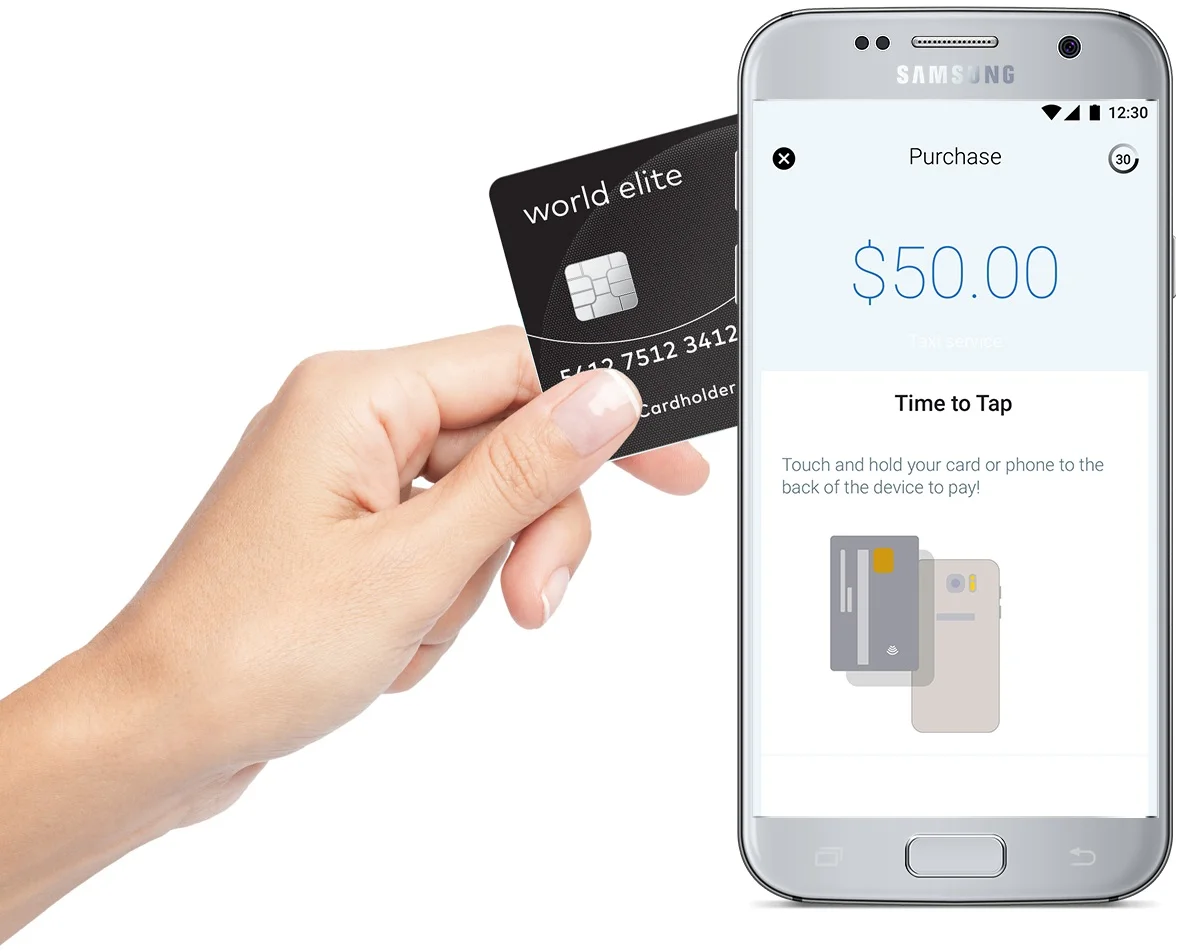
This technology is revolutionizing the way small businesses operate as it allows merchants to collect payments with just a tap of their customer’s debit/credit card or mobile wallet against their smartphone and presents great opportunities for merchants to meet the growing expectations of consumers with regards to ease of payment in today’s new mobile age.

In an increasingly cashless world, Mobeewave’s simple and secure solution increases revenue and ensures that pop-up retailers and temporary merchants optimize their sales during their limited period of operations.

The Company says it is challenging every aspect of the current mobile payment paradigm.


Mobeewave Tap On Phone.pngMobeewave Tap On Phone.png

“We’re digitizing the last sector where cash is still king: the world of cash-in-hand peer-to-peer and micro-merchant transactions,” says Vincent Alimi, Chief Growth Officer of Mobeewave. “Our patented and secure technology makes it possible for people to accept money with just a simple tap on their phones.” This resulted from intense research and development of innovative technology using NFC (near-field communications – a set of communications protocols that enable two electronic devices to establish communications between them) capability for use on mobile devices.

“While developing our patented solution, we knew that security was a major priority for in-person payments. That’s why our technology uses an extremely secure piece of hardware embedded on the phones called the secure element and as part of our due diligence, we tested the technology by establishing strategic pilots with partners such as Visa and Global Payments. Our solution has been proven in key initiatives such as with Princess Margaret Cancer Foundation’s fund-raising events, transactions for micro-merchants and our fact-finding mission for in-person money acceptance with PayMeTap.”

Alimi said the service is currently being used by more than 200 small businesses in Canada, 300 in Poland and 100 in Australia.

“We serve the underserved. Rather than target the end consumer, we target the micro-, small- and medium-sized merchants who can’t really afford to have electronic payment terminals because it’s too costly,” said Alimi.


In Canada, the company partners with National Bank and Global Payments. In Australia, it’s with the Commonweatlh Bank of Australia. And in Poland, with PeP, one of the leading payment processors.

“In the short term, we are going to continue our focus in a major way on Canada, Australia, the UK and Poland,” said Alimi.

In June 2018, Mobeewave announced its patented in-person contactless payment acceptance platform will be rolled out in the United Arab Emirates (UAE) – representing the Company’s first project in the Middle East and Africa (MEA) regions. It will enable merchants to accept payment from a contactless card or mobile wallet using just their phone – essentially turning their smartphone into a payment terminal.

The flexibility of the Mobeewave solution means that the platform is not limited by geographical restrictions. The fact that it can offer value to licensees in both mature and emerging contactless markets means that the platform could ultimately be deployed globally.

*Partner content. To work with Retail Insider, email: craig@retail-insider.com

Gymboree to Close All 49 Canadian Stores Amid Bankruptcy

exc-5c412d401ae6cf6e655f69a6

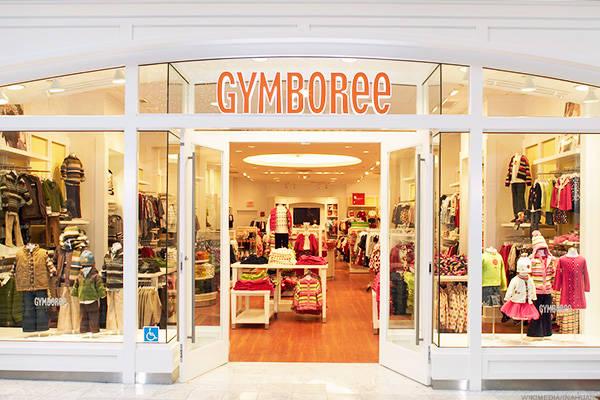
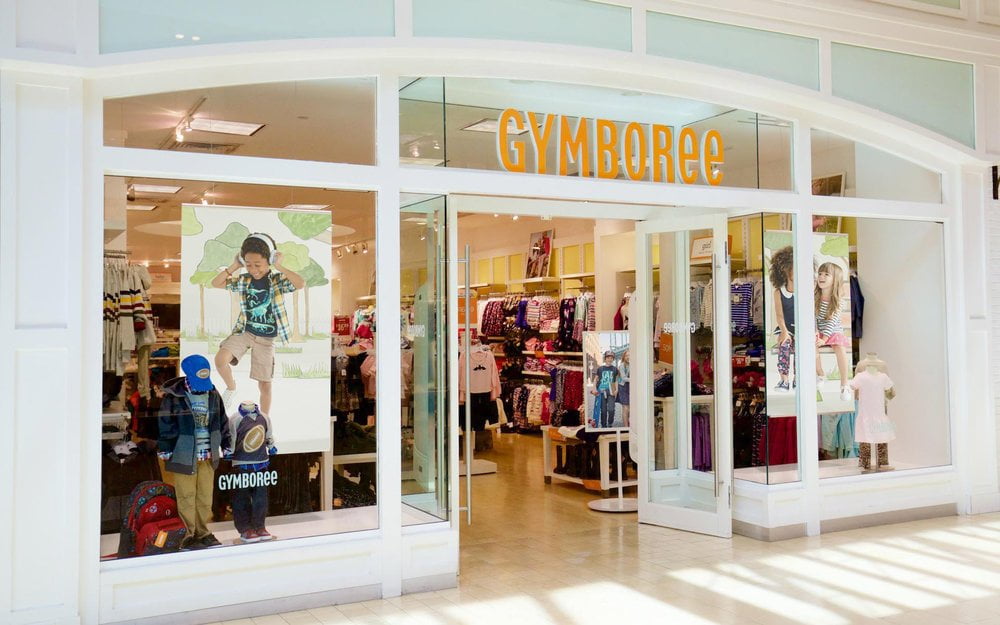
San Francisco-based children’s apparel retailer Gymboree has filed for bankruptcy for a second time in less than two years. This time the company says it will be closing most of its stores, including all 49 of its Canadian Gymboree-branded locations. The announcement comes at a time when other retailers are closing stores in Canada, proving a challenge for brokers and landlords attempting to fill vacant spaces. 

Gymboree confirms that it will close all of its Gymboree and Crazy 8 stores while at the same time attempting to sell its more upscale ‘Janie and Jack’ chain of stores, as well as related intellectual property and e-commerce operations. 

In a statement, Gymboree CEO Shaz Kahng said, “The company has worked diligently in recent months to explore options for Gymboree Group and its brands, and we are saddened and highly disappointed that we must move ahead with a wind-down of the Gymboree and Crazy 8 businesses.”