Advertisement
Home Blog Page 1073

Canadians are going Trump-free — until it becomes too expensive

U.S. PRESIDENT DONALD TRUMP LEFT THE RECENT G7 SUMMIT IN A FURY ABOUT JUSTIN TRUDEAU AND VOWING AN ESCALATED TRADE WAR. CANADIANS ARE RESPONDING BY GOING TRUMP-FREE AT THE GROCERY STORES – BUT IT WILL LIKELY BE SHORT-LIVED. (AP PHOTO/EVAN VUCCI)

In a nutshell, here is what happened at the G7 summit: Justin Trudeau played nice with Donald Trump, Trump tore Trudeau apart on social media, Trudeau played nice again. While Trudeau showed very Canadian diplomacy, poise and resilience, the Canadian public seems to be taking another approach.

Everywhere on social media, Canadians are encouraging one another to go “Trump-free” — that is, to shop for groceries without buying a single American product.

Even restaurants are jumping on the bandwagon by serving “Trump-free” dishes. These are interesting reactions in the face of Washington’s somewhat contradictory foreign trade policies.

The “Buy Canadian” campaign targeting food products is nothing new. We have shown our solidarity in the grocery store before. Canadians tend to rally to support specific sectors when they’re faced with adversity.

In 2003, during the mad cow disease crisis in which the cattle industry took a $7 billion hit, Canadians showed their love for Canadian beef, so much so that Canada became the first country in the world to see its domestic demand for beef go up after its first native mad cow case.

But this support was short-lived compared to the crisis itself, which lasted for more than two years. In this case, retail sales for beef in Canada remained high for about the first nine months, and then decreased steadily afterwards.

That’s because consumers have busy lives, fixed habits and, most importantly, specific budgets. Once the media had moved onto the next crisis, most people had already forgotten there had ever been a mad cow crisis in the first place.

Mad cow did lasting damage

Many Canadian farmers ended up losing their farms because of mad cow. But the public tends to react to things that are front of mind, and that affect them directly.

Trade disputes are notorious for their capacity to damage economies, affecting everyone involved. We trade for a reason. Some nations can produce certain goods at a lower price than others.

A nation’s competitive advantage can both develop its own economy and serve other economies in need of innovative products they can’t produce themselves for one reason or another.

With food, however, innovation is not nearly as big an issue as food security. Food systems operate with the premise of serving a budget-stretched consumer. Studies have shown we are bargain-hunters, whether we realize it or not.

Food is temporary, and as such, cannot really help consumers impress a certain social class, perceptually speaking. Unlike durable products, consumers cannot show off their new jam, strawberries or freshly purchased chicken.

This is the nature of “cupboard economics.” People can visit a beautiful home but never see what’s kept inside the cupboards. At the restaurant, though, it’s different. Here, the “Buy Canadian” campaign is more fitting.

Buy Canadian as Canada Day approaches?

Patriotism ranks second to price. This is the ideal time of year to use patriotism to justify some of our retail purchases. As Canada Day approaches, more consumers will feel the urge to buy Canadian, and why not?

But here again, consumers are fickle and will opt for the product that offers the best quality for the lowest price. In other words, they will most often choose the lowest-priced item, regardless of country of origin.

But here’s another reality while consumers are on their quest to find Canadian products. The highly integrated nature of the U.S. and Canadian economies plays out on our grocery store shelves.

Many American food products have at least one Canadian ingredient, and vice versa. Defining what a Canadian product is can be tricky.

It’s hard to go Trump-free with processed foods

In the produce section, for example, it’s easy to choose Canadian items over American ones, since fruits and vegetables are clearly labelled as to country-of-origin.

It’s much less obvious with processed goods. Finding a maple leaf on the package is only half the battle. Many ingredients in packaged foods come from elsewhere, since current regulations only require Canadian manufactured food products to undergo the last stage of processing in Canada.

In short, if we want to be assured of buying Canadian, we should go out to eat Canadian more often, or buy fresh products in the grocery store.

Kudos to those Canadians willing to do so. However, if our trade war with the U.S. escalates, not only will we not have a choice in buying Canadian, it will also cost us a lot more to feed ourselves.

*This article was originally published on The Conversation. Read the original article

Laline Announces Canadian Entry with 7 Confirmed Store Locations

PHOTO: LALINE

International Bath/Body/Lifestyle retailer Laline has announced that it plans on entering Canada with multiple locations this year, beginning with a unit that is opening this morning that we previously reported on at CF Sherway Gardens in Toronto. The company has now revealed that it will open six other stores over the next year, all of which will be in Southern Ontario, prior to expanding into new markets in other parts of Canada. 

“Our new stores in Canada will be tailored after Laline’s unique design concept that offers a complete in-store pampering experience for customers,” said Lital Frankel, Laline’s VP of Marketing. “From our airy, open-concept and dreamy store design – completely outfitted with a bathtub for the complete customer ambiance – to our unique product range with a variety of fragrances, textures and ingredients, the Canadian consumers are in for a new and exciting experience.”

(PHOTO: MAGDA BIERNAT

The CF Sherway Gardens store spans about 750 square feet and is located in the mall’s new ’Nordstrom Wing’ which houses several smaller retailers such as Loding and L’Intervalle shoes, as well as larger flagship locations for Zara and Nordstrom

Laline is taking its Canadian expansion seriously. The company confirms that it has also secured leases for what appears to be six other stores in Ontario over the next few months, spread out across Southern Ontario in the cities of Toronto, Mississauga, Hamilton, Markham, Kitchener and London. These include the following locations: 

-Toronto: Yorkdale Shopping Centre

-Mississauga: Square One shopping centre,

-Markham: CF Markville

-Hamilton: CF Limeridge

-Kitchener: CF Fairview Park, and 

-London: CF Masonville

These locations indicate partnerships with landlords Cadillac Fairview (all malls marked with ‘CF’) as well as Oxford Properties for its Yorkdale and Square One locations. All seven malls are located at premium centres, with almost all of them ranking among Canada’s most productive shopping centres according to Retail Council of Canada’s Shopping Centre Study

Laline’s strategy of opening stores in various parts of Southern Ontario may be an indication that this is the beginning of a much bigger expansion that could see stores open in major as well as sub-markets Canada-wide. Often when brands enter Canada, they’ll typically choose to open one or more stores in a large city centre such as Toronto and Vancouver. Laline, which has chosen markets such as Kitchener, Hamilton and London early on in its expansion, is a refreshing deviation that could see the brand gain awareness in smaller markets. 

In a previous comment to Retail Insider, Laline stated, “As the Canadian market is one of our main strategic markets we expect to open dozens of branches in the next few years,” and when asked about its growth plans, Laline confirmed that its “main focus for 2018-2019 is the Ontario region”. 

The company has since confirmed that after it has developed a strong presence and loyal customer base in Ontario, Laline will seek to move into other Canadian markets such as Montreal and Vancouver. 

Laline was founded in 1999 by Revital Levi and Merav Cohen in Tel Aviv, and now boasts more than 100 stores in Israel, as well as international locations in Japan, Spain and in the United States in San Francisco and Hawaii. Laline is a division of the FOX Group and according to the company, Laline targets women, men, babies and teens, and its Canadian stores will have some collections tailored to the local market, with price-points being lower than luxury brands in order to become a ‘one-stop shop’ for beauty products. 

As part of its entry into Canada, Laline is promoting its fragrances as part of a ‘scent series’. Each scent series is designed to “benefit the body and enhance your well-being”, with several branded products within those ranges that include body care items, bath products, fragrances, skincare, gift sets and textile products as well as various bath sponges, pumices and candles. Laline also carries skin peeling products as well as nail polish, makeup and related accessories. The vast scent series collection is referred to as “The World of Scent” and consists of more than 20 products per the 10 signature scents and addresses several wellness benefits including stress relief, relaxation, nourishment and happiness.

In a previous statement, Laline told Retail Insider that, “Our new stores in Canada will be in Laline’s unique design concept that offers a complete pampering experience. From our white and dreamy store design to our unique products with a variety of fragrances, textures and ingredients, the Canadian consumers are in for a new and exciting experience”. 

How Shoplifters Justify Theft at Self-Service Checkouts

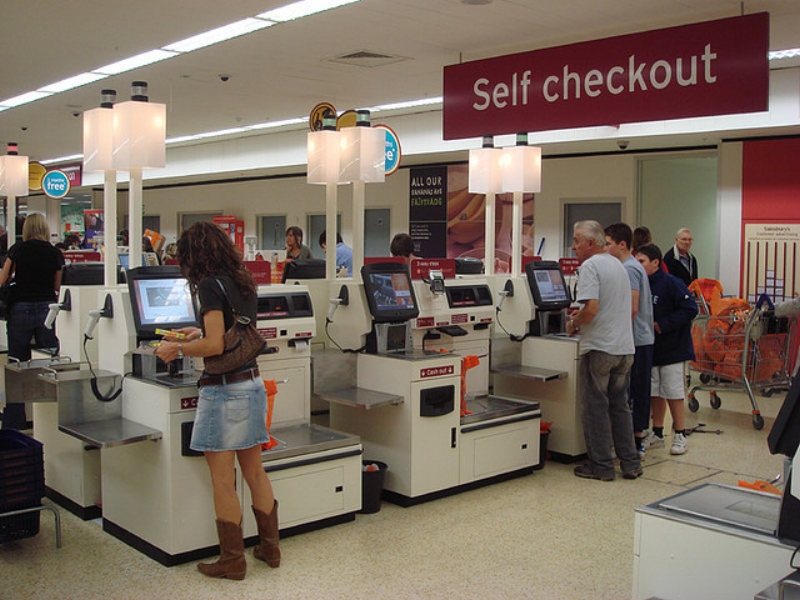
Self checkout in a store.

By Mario Toneguzzi

The proliferation of self checkout lanes in retail stores continues but companies need to consider some important things when implementing these systems, cautions a Canadian retail security expert.


Stephen O'KeefeStephen O'Keefe

Stephen O’Keefe

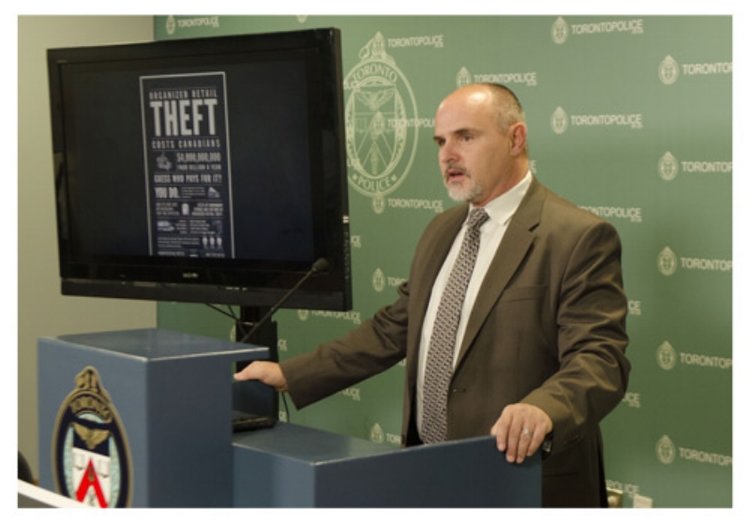
And one of the major considerations is theft, said Stephen O’Keefe, a Toronto-based veteran of the retail industry.

He recommends that retailers do their math to inform a decision about self checkout registers. And that math would look at things like additional sales projections, the cost to implement such a system, the wage reduction benefit but also the overall risk of loss.

“If at the end of the day that math shows an ROI (return on investment), great. If it shows a bottom-line impact, then the retailer needs to decide if they will be the ones to lose market share if they do not put in self checkouts,” said O’Keefe, President of Bottom Line Matters, a web-based loss prevention and risk management solutions company for small to mid-sized retailers.

O’Keefe has had many years of experience with some of the giant retailers in Canada and globally.


Scanning less expensive item and putting expensive item in cart. Photo:  PointOfSale.comScanning less expensive item and putting expensive item in cart. Photo:  PointOfSale.com

Scanning less expensive item and putting expensive item in cart. Photo: PointOfSale.com

“There are several things to consider when implementing a self checkout system. The sales must offset the anticipated increase in shrink just to break even,” he said.

“The retailer must also consider the advantage of synergy. One supervising chair can accommodate four to six transactions at a time. This must be factored in as well, and for the most part is the primary reason why a retailer implements the system, cost savings in wages. The unfortunate aspect of shrink is that the cost is not quantified until the retailer conducts an inventory, and then it is not an exact science to say what the contributing factor was.”

O’Keefe was Walmart Canada’s VP Loss Prevention & Risk Management for 15 years. He currently advises on loss prevention affecting shrinkage and profitability for retailers and has more than 30 years experience in retail theft prevention with some of Canada’s largest retailers.

He is considered a leading authority on loss prevention, security, risk management, health and safety and process improvement.


Before establishing his own consultancy firm, O’Keefe held a variety of loss prevention management positions with Sears Canada, Zellers, The Hudson’s Bay Company and Walmart Canada.

In 2016, he was awarded the Retail Council of Canada’s Loss Prevention Lifetime Achievement Award.

“The interesting part of self checkout is that they are used primarily in retail chains that have low margins. Low margin retailers cannot afford the additional shrinkage,” said O’Keefe.

“In retail chains with high margin, the system is not typically used as the customer interaction demands one-on-one attention, not one with a machine.”


Stephen-Okeefe-2a-500.jpgStephen-Okeefe-2a-500.jpg

O’Keefe said part of the problem is that there has not been a study that does any type of deep dive into the issue.

“It is an afterthought when a retailer discovers a high shrink and conducts a review to determine the cause. There is a race to the finish line of innovation. A retailer is reluctant to raise their hand to say there is an issue for fear of being outpaced by the competition.”

O’Keefe said the first generation of self checkouts were very problematic because thieves would be able to put more expensive merchandise within other merchandise that was being swiped at the counter.

The second generation of self checkouts had scales but O’Keefe said because of the amount of items that are in a large retailer’s inventory – thousands of items – not all products can be programmed into the system.

Some issues for first and second generation self checkouts also included the lack of detection for counterfeit bills.

“So people were actually using counterfeit cash and throwing them in there in order to launder their money. So they would put a $100 bill in for a chocolate bar and then they would get all of their change,” said O’Keefe.

Today, the problem is when only one person supervises a number of cash registers they can easily get distracted.


Capture.pngCapture.png

“The thing that the retailer needs to be cautious of is that they’re not looking at today’s expenses which are the salary dollars associated with processing the transaction versus the shrink dollars which are not going to hit the P&O (profit and overhead) for at least 12 months in some cases,” he said.

“So your shrink is not billed to your P&O the day you lose the merchandise. It’s only billed to the P&O the day you count your inventory and realize there’s something missing, which could be a year later. It could be deceiving.”

So his advice to retailers is simple. Do a full analysis and return on investment research. Take into consideration some of the deferred expenses.

“And they’re not living the high life today and suffering tomorrow,” said O’Keefe.

“There’s so many of them in place right now. You don’t want to necessarily discourage people and say the sky is falling but there’s been so many studies that suggest that shrink and risk go up. If you have more of the risk appetite, if you’re prepared to accept the fact that your shrink can go up a little bit because of that then you better make sure that your sales go up a lot more to offset it or at least to take market share away from a competitor. There’s got to be a strategic reason why you’re going to do it and not just I’m keeping up with the Joneses.”


Mario Toneguzzi, based in Calgary has 37 years of experience as a daily newspaper writer, columnist and editor. He worked for 35 years at the Calgary Herald covering sports, crime, politics, health, city and breaking news, and business. For 12 years as a business writer, his main beats were commercial and residential real estate, retail, small business and general economic news. He nows works on his own as a freelance writer and consultant in communications and media relations/training. Email: mdtoneguzzi@gmail.com

Chloé Opens 1st Standalone Canadian Store [Photos]

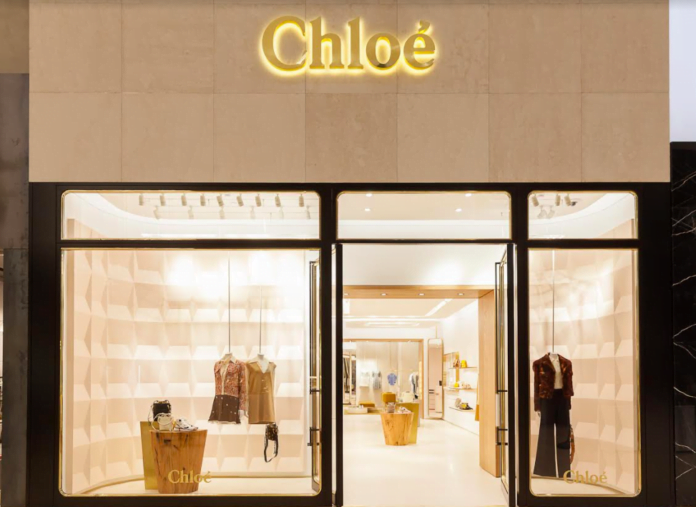
Chloé at Yorkdale Shopping Centre (Image: Chloé)

Paris-based women’s luxury brand Chloé has opened its first Canadian standalone store at Toronto’s Yorkdale Shopping Centre. The impressive looking boutique is the first in North America to feature the brand’s newest concept. 

Stone, glass and polished brass characterize the bright space, which features a series of salons housing the brand’s selection of leather goods, jewellery and accessories, footwear, as well as ready-to-wear. Each room is framed in warm oak and includes hand-plastered walls in the front salon, as well as hand-tooled wall finishing in the ready-to-wear salon at the rear of the store. Chloé’s iconic powdery rose beige colour scheme can be found throughout, along with shades of white and mustard, offset with brushed or polished natural brass. Vergo Construction built the new Yorkdale store, as well as the Ladurée salon located directly across from Chloé

Suspended mannequins on the window-pane storefront showcase Chloé’s latest collections, and the store was remarkably busy when we visited last week. The store is said to already be doing exceptional business, which makes sense given its location amongst other luxury brands — Chloé is bookended by standalone locations for luxury brands Saint Laurent and Mr. and Mrs. Italy, and is also across from the prestigious multi-brand David’s Shoes which will commence its national store expansion this fall.

Chloé at Yorkdale Shopping Centre

Over the past several years, Chloé has been growing its presence in Canada through its wholesale accounts including upscale retailers such as Holt Renfrew,  Saks Fifth Avenue and Nordstrom. Over the past three years, Chloé has opened several shop-in-stores in Canadian locations for Nordstrom and Saks, beginning with separate ready-to-wear and accessory boutiques at Nordstrom in Vancouver in September of 2015. 

As well, in February of 2016, Chloé boutiques opened at both of Saks Fifth Avenue’s Toronto stores — CF Toronto Eaton Centre and CF Sherway Gardens — and in October of 2016, Chloé shop-in-stores opened along with Nordstrom’s 200,000 square foot location at Toronto’s Yorkdale Shopping Centre.

Yorkdale is Chloé’s eighth standalone store in North America. In the United States, Chloé operates boutiques in New York City (850 Madison Avenue and at 93 Green Street), Las Vegas (Forum Shops at Caesar’s and Wynn), Los Angeles (Melrose Place), Costa Mesa CA (South Coast Plaza) and in Miami at the Bal Harbour Shops

Yorkdale is Canada’s top mall in terms of annual sales per square foot, and the clustering of luxury brands at Yorkdale is becoming world-class. More first-to-market luxury brands will be announced for Yorkdale this month — the centre continues to attract wealthy shoppers and because of this, Holt Renfrew is also in the process of expanding its highly productive store at the mall, with construction commencing this fall. 

Chloé is part of the Richemont Group conglomerate, which includes some of the world’s top luxury brands. Designer Natacha Ramsay-Levi joined the company as Creative Director in the spring of 2017. Several of Richemont’s brands already operate at Yorkdale near the new Chloé boutique, including CartierVan Cleef & ArpelsIWC SchaffhausenJaeger LeCoultreMontblancPaneraiVacheron Constantine and Piaget. Chloé, which was founded in Paris in 1952, has stores globally as well as a network of concessions and wholesale partnerships that include a presence in some of the world’s top multi-brand stores. 

BRIEF: Kimberlite Diamonds Opening 1st Store, Danier Opens Flagship, Hermès Ready for Vancouver Construction

exc-5b301d88575d1fd783b52b4d

By Helen Siwak, Retail Insider Brief Editor

Danier Leather Continues Canadian Store Expansion with 2nd Downtown Toronto Store at CF Toronto Eaton Centre: After seeking credit protection in February 2016 and closing 76+ stores that were in operation, Canadian fashion brand Danier Leather was purchased and quickly relaunched in the fall of that year. With the first location, under the new owners that opened in Oshawa Centre, the company proceeded to launch eight more Ontario locations in quick succession in Ontario and Manitoba. Store number nine has opened at CF Toronto Eaton Centre with on Level 2 between Thomas Sabo and Uno de 50, and across from Free People and M Boutique, in a retail space that formerly housed multi-brand pop-up concept ‘HiO’. 

The CF Toronto Eaton Centre Danier spans about 2,400-square-ffeet, making it the largest store in the company to date. It’s also the second downtown Toronto location for Danier, after it opened a unit last year in the city’s Financial District. Retail Insider will be featuring a more in-depth story on Danier’s progression as the revived brand continues to expand with a mix of leather goods and fashions. Opening at CF Toronto Eaton Centre is a smart move in terms of exposure — the shopping centre is the busiest in North America with more than 50-million annual visitors, and it’s also one of Canada’s most productive centres in terms of sales per square foot

Danier continues to work with David George of brokerage NorthWest Atlantic to secure new locations, ideally in the 1,500-square-foot to 2,000-square-foot range, located in major shopping centres and outlet centres. 

Kimberlite Diamonds Launching with ‘Go Big or Go Home’ Philosophy of Bling: Launched in 1996, China’s Kimberlite Diamonds is opening its’ first North American flagship at 2828 Granville Street on Friday, July 6th. The 2,012-square-foot space on South Granville was formerly occupied by Rogers Cellular and is next door to M.J. Jewellers, who have been creating custom jewelry for over 30 years at their location.

CEO Kellan Dong will be on hand to welcome VIP invitation-only guests to view ‘The Moon Goddess’ haute masterpiece necklace with a 25.05-carat main moon-shape diamond with a total weight of 108 carats.

Chief Designer Zhu Wenjun will attend and present live art of her signature masterpieces. Kimberlite’s pieces are structurally different from traditional diamond pieces in that they are organic in shape and tend to be larger, contouring the neck, shoulder, and décolleté.

At a jewelry show in May at Shanghai’s Oriental Pearl Tower, Kimberlite presented 100 pieces of high-end jewelry on 100 models, in 100 luxurious evening gowns, with 100 singers and 100 dancers. This company defines ‘go big or go home!’ philosophy of bling.

Kimberlite Diamonds is one of China’s top five jewelry brands and is known for their curated classic and contemporary brand jewelry collections. According to their website, the company has 700 locations in China.

Vancouver-based Cutler designed the new store, and Peregrine is creating many of the fixtures. We look forward to seeing the finished product.  

Art Deco Flagship Property Opportunity in Montreal, QC: Sometimes a building comes along with so much character and presence that you cannot help but get excited about.  I am speaking of 1181 Sainte-Catherine Street West in Montreal, QC. This magnificent property was built in the 1920s but was recently upgraded to the highest standards, offering both old-school charm and modern amenities.

This 14,076-square-foot leasing opportunity is undoubtedly one of the most beautiful spaces on Sainte-Catherine Street and is ideally situated in the heart of Montreal’s most vibrant destination. The street is home to all the major retailers, as well as the finest restaurants. 

The property was purchased by Maurice Fefer in 1978 and recently completed a major $1.5-million renovation of the premises, with upgrades both inside and out. From the street, 1181 Sainte-Catherine stands out as a stylish art deco building with architectural details and abundant windows. Inside, the space is infused with natural light and double-high ceilings. The premises is column-free for the first 100-feet and offers 19-foot clearance at the mezzanine. It’s the perfect backdrop for a marquee brand or company looking to make a statement.

The 15,700-square-footage breakdown:

  • Ground Floor: 4,488-square-feet,

  • Mezzanine: -850-square-feet,

  • 2nd Floor: 4,468-square-feet,

  • 3rd Floor: $1,573-square-feet, and
  • Basement: 4,320-square-feet.

This flagship opportunity stands out and is sure to be of interest to brokers and prospective tenants seeking a high profile and a very high-traffic location with fabulous co-tenants, including Victoria’s Secret, Browns Shoes, Claires, BMO and more.

Sainte-Catherine Street West is a shopping destination known around the world, and this stunning property will put the right brand on the map. For leasing information, contact Tony Flanz at the Think Retail Team.

Hermès Prepares to Commence Construction of Vancouver Flagship: French luxury brand Hermès is expanding its Canadian operations. Last November, it opened a spectacular two-level flagship at 100 Bloor Street West in Toronto, with more than 6,000-square-feet of retail space in a leased space spanning nearly 13,000-square-feet. 

Vancouver certainly will not be left out, as Hermès prepares to start construction on a two-level flagship that will anchor the southwest corner of West Georgia Street and Burrard Street in the city’s ‘Luxury Zone’. Hermès will replace several retail spaces, including a Bell Mobility retailer, Montblanc, the Chevalier men’s store and the Suki’s hair salon upstairs which ended up securing a new space in the same building. 

Hermès’ Canadian President, Jennifer Carter, was said to have been recently staying at the Four Seasons Hotel in downtown Vancouver (which will be closing in January of 2020) to finalize some details on the new space, which is expected to feature a magnificent facade and interior. And next to the new store on West Georgia Street, as well, will be a ‘real estate trade’ of sorts — Starbucks and Birks-owned jewellery retailer Brinkhaus are said to be trading places with new stores, giving Brinkhaus the closer space to the massive new Hermès, which will feature about 100-feet of street frontage along West Georgia Street, as well as an additional 35-feet along Burrard Street just north of Tiffany & Co.’s recently expanded flagship

Muskoka Inspires Mindham Fine Jewelry to Build a Jewel Cabin: Myles Mindham, designer and founder of Toronto jewelry studio Mindham Fine Jewellery, and long-time summer resident of Muskoka, ON, is launching the Jewel Cabin in the heart of Port Carling. Known for his Toronto atelier with more than 25 years in business, the designer has a high recognition level for his exquisite work in multiple themes, including Hardwear, Genesis, Love Links, and Magical Woodlands.

The Jewel Cabin will feature collections created exclusively with Muskoka in mind, ranging in price from $200 to $5,000. In addition, outside brands such as Verdura, the legendary New York City jewelry house, luxury timepieces from Franck Mueller, and Gold and diamond designs by Heather Hogarth, of HH Designs, will be stocked. Clients will also have access to repair services.

The Jewel Cabin will be located at 99 Maple Street and will cater to summer vacationers who flock to Canada’s most admired lakeside destination.

Judith & Charles Hitting-Up Halifax in Their Canada-wide Expansion: With an anticipated launch in September 2018, the new store at 5421 Spring Garden Road in Halifax will see Judith & Charles continue their brand expansion into Atlantic Canada.

The 1,176-square-foot upscale store will adhere to the brand’s “less is more” aesthetic and showcase clean lines, matt marble floors, curated lighting, and a neutral palette. Art and ideas are engrained in the philosophy of Judith & Charles, with each store exhibiting works by Canadian artists. The store’s first official exhibition will feature the work of Montreal-based artist, David Umemoto.

Having recently opened on Granville Street in Vancouver as well as a flagship in downtown Montreal, Judith & Charles are known for providing a retail experience that embodies their time-honoured vow to offer women style and comfort they can count on season after season. There is no kowtowing to trends at Judith & Charles. The designs are sophisticated yet comfortable and suitable for business and easily transitioned to dress casual with a bit of accessory styling.

Street-front retail is a new focus for Judith & Charles, which until 2014 operated stores exclusively within malls. In the spring of that year, Judith & Charles opened a store at 2207 West 4th Avenue in Vancouver’s Kitsilano area, and the retailer has been steadily moving ahead ever since.  

Blubird Flies Down Alberni and Lands in Strellson’s Former Nest: Blubird, a curated luxury contemporary fashion boutique specializing in women’s wear launched a new 2,200-square-foot flagship boutique one block west of their flagship location at 1108 Alberni Street in downtown Vancouver. The official grand-opening last week was wall-to-wall with customers, bloggers, and fashionista galore.

Blubird joins the expanding hub of upscale shopping in downtown Vancouver at the western end of Vancouver’s ‘Luxury Zone’ across the street from the Shangri-La Hotel and around the corner from Versace and Saint Laurent.

Blubird’s owner, Vestis Fashion Group, is led by Founder and President, Catherine Guadagnuolo, who felt that it was time to rebrand and relocate after 10 years. Blubirds’ clientele had matured in the past decade from Juicy Couture to Red Valentino, and were demanding higher quality garments and in-store experiences.

The family-owned boutique, stocks designers and labels from fashion capitals around the world including Milan, Paris, New York and LA, many of which are unique and exclusive to the Vancouver stores. Each season, Blubird buyers travel the world sourcing the hautest new looks.

Formerly occupied by Strellson men’s wear, the new Blubird location has floor to ceiling glass windows, high ceilings, modern decor, and design.

Vestis Fashion Group Inc. is a Vancouver-based, family-owned, luxury brand retail company founded in 1985. Brands under the Vestis umbrella are Granville Street’s Max MaraWeekend Max Mara in Oakridge CentrePomellato in CF Pacific Centre, and Blubird. 

The 745 Thurlow Street building where Blubird is now located is owned by bcIMC and is managed by QuadReal —  Larissa Jacobson negotiated on behalf of the landlord. CBRE’s Martin Moriarty and Mario Negris coordinated on behalf of the tenant. 

Many of the fixtures in the new store were manufactured by Vancouver-based Peregrine, which has worked with some of the country’s leading retailers and restaurants. [See Peregrine’s ‘Cool Project’ page for Blubird]

Remenyi House of Music in Toronto to Close? According to a report in Costar, Remenyi House of Music recently sold its iconic 18,873-square-foot building at 210 Bloor Street West, located a few steps away from the prestigious retail strip on the other side of Avenue Road. Costar reports that the purchase price was about $25-million, which positions the site for potential redevelopment. The retailer has occupied the well-located space since 1979, which faces the University of Toronto and Royal Ontario Museum.  

Toronto’s land prices have been escalating for some time, and at $250/buildable square foot, buyer Tribute Communities might expect to construct a tower spanning about 100,000-square-feet. Given the size of the site, that could result in a building as tall as 25-30 floors, though this is more speculation at this time. A tower here would be less than 40-feet in width, though the location warrants some impressive density to take advantage of the views. 

Noah Schwartz of Lennard Commercial Realty is said to have listed the space. 

Helen Siwak is the publisher of EcoLuxLuv.com Magazine, a freelance content creator specializing in retail and luxury lifestyle. She is a regular content contributor to Boulevard Vancouver (English & Chinese), Retail-InsiderBLUSH Vancouver, and has lifestyle blogged for StyleDemocracy and Daily Hive. When not writing, she is attending fashion events, traveling, and advocating for animal/human rights. helensiwak@yahoo.com.

Furla Plans to Enter Canada with Standalone Stores 

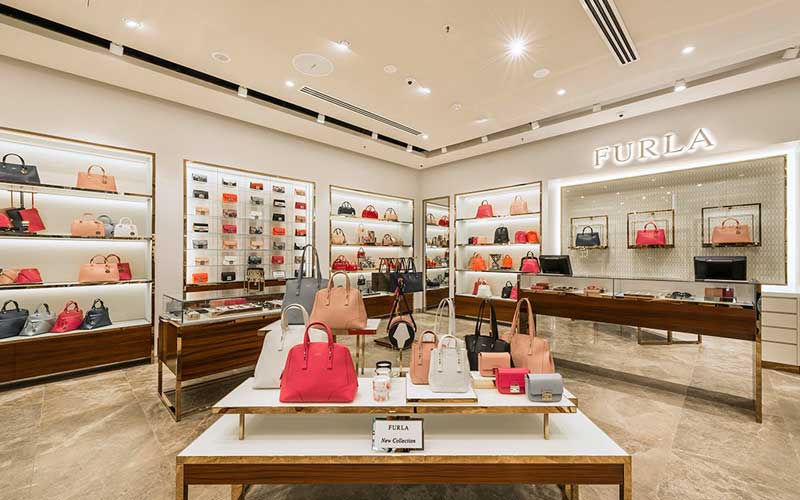
FURLA BONDI JUNCTION, SYDNEY AUSTRALIA. PHOTO: FURLA

Italian luxury brand Furla is seeking retail space in Canada for new stores, as the company expands its direct-to-consumer operations into new markets. Furla has partnered with Halcyon Brands for a joint venture in Canada and brokerage Aurora Realty Consultants for its brick-and-mortar expansion into the Canadian market. 

Furla was founded by the Furlanetto family in 1927, and it remains family-owned. The company produces various product categories that include leather goods such as handbags and shoes, as well as an expanding category of accessories that include eyewear, jewellery and watches. The company’s goal is to become something of a lifestyle brand. Furla’s headquarters are in Bologna, Italy, in an historic 18th-century villa and in 2015, the company opened a five-storey tall ‘Palazzo’ in central Milan. 

The brand’s pricing is a bit lower than that of some of its competitors, which Furla says gives it a competitive advantage. “It is the only brand in the fast-growing premium segment that gives customers an authentic Italian experience with an attractive value for money proposition, positioning itself as one of the major global players in the leather goods market,” according to the company’s website. Furla also has regional headquarters in New York City, Hong Kong and Tokyo. 

Furla employs more than 1,600 people and interestingly, about 90% of these are women who represent more than 100 nationalities, with an average age of 36. 

Jeff Berkowitz of Aurora Realty Consultants is representing Furla in its Canadian expansion. 

In Canada, Furla operates a licensed shop-in-store at the Peace Arch Duty Free store on Highway 99 in Surrey, south of Vancouver, which might fall under the company’s ‘travel retail’ classification.   

Furla’s Canadian expansion is timely — the company continues to expand its network of stores in the United States, which tend to be located at prestigious addresses. For example, a Boston store is located at Copley Place, while a New York City flagship has an address in the heart of Fifth Avenue. Furla also operates outlet stores in selected markets. 

It’s also not the first time that Canada has seen standalone Furla stores, though previous locations were franchised. A Furla boutique was located at 41 Avenue Road south of the former Hazleton Lanes years ago, and a location in Vancouver operated across from the Fairmont Hotel Vancouver at the southwest corner of Burrard Street and West Georgia Street (1008 W. Georgia Street). 

Cirque du Soleil Announces Location of 1st Mall-Based Entertainment Centre 

Vaughan Mills (Image: Ivanhoé Cambridge)

Montreal-based entertainment and theatrical company Cirque du Soleil plans to launch shopping centre-based family entertainment centres next year, with the first in the world set to open in September of 2019 at the Ivanhoé Cambridge– owned Vaughan Mills, north of Toronto. More locations are expanded in other Ivanhoé Cambridge properties, as well as potentially with other landlords. 

Maurizio Bevilacqua

The announcement was formally made during the City of Vaughan’s 2018 Mayor’s Gala on the evening of Thursday, June 21, with Vaughan Mayor Maurizio Bevilacqua saying, “After much media speculation, I am proud to announce that Cirque du Soleil Entertainment Group and real estate developer, Ivanhoé Cambridge, owner of Vaughan Mills, have chosen Vaughan to be home to the world’s first-ever indoor CREACTIVE family entertainment centre, which is scheduled to open in September 2019 at Vaughan Mills.”

Mr. Bevilacqua went on to say, “CREACTIVE will be a first of its kind, an innovative concept of indoor family entertainment experiences specially designed by Cirque du Soleil for retail locations, like Vaughan Mills. It will add to Vaughan’s already thriving tourism, creative arts, entertainment and recreation industries. Our city is known for its commitment, appreciation and celebration of arts and culture. We are blessed and enriched by diversity – our people speak 105 different languages. It will be here in Vaughan, where families can stretch their imagination and embrace the grandeur of being a Cirque du Soleil performer.

The city of Vaughan is one of Canada’s fastest growing communities. Incorporated in 1991, the city now boasts a population of 335,000 — that’s larger than cities such as Saskatoon and Regina, not to mention most cities in Canada’s Maritime Provinces. The Greater Toronto Area is home to more than six-million residents, and is said to be growing by more than 100,000 people annually. Vaughan recently became connected to Toronto via the TTC subway network, which extended past Toronto’s borders for the first time with the opening of two stations north of York University. 

The intention of such entertainment centres is to further drive foot traffic to malls, as landlords seek to create ‘community hubs’ that include various non-retail uses. In some respects, West Edmonton Mall got it right the first time — create an engaging destination that includes multiple uses that include retail, and give consumers a series of experiences that will also have them coming back for more.

Vaughan Mills, as well, already has a Legoland Discovery Centre — Cirque will be another family-friendly attraction for the busy centre. 

VAUGHAN MILLS. PHOTO: IVANHOÉ CAMBRIDGE
Zebras from O

CREACTIVE is described as being an “immersive, creative and participative family experience”, where visitors “can stretch their imagination, flex their muscles, explore newfound circus skills, and take a bow on the virtual Cirque du Soleil stage”. The Vaughan Mills location is expected to span nearly 25,000 square feet when finished, and will offer a range of acrobatic, artistic and other Cirque du Soleil-inspired recreational activities such as bungee jumping, aerial parkour, wire and trampolines, mask design, juggling, circus track activities, and dance.

“Our fans regularly express their wish to experience Cirque du Soleil from an insider’s perspective, to peek behind the curtain and imagine themselves stepping into our artists’ shoes. With CREACTIVE, we make that possible by inviting families to jump on stage, offering them another way to explore our creativity beyond our live shows”, said Marie-Josée Lamy, Cirque du Soleil’s Producer of CREACTIVE.

Cirque du Soleil already operates two highly successful outdoor theme parks along the same lines —  Club Med CREACTIVE by CIRQUE DU SOLEIL has locations at Club Med locations in Punta Cana, Dominican Republic and in Opio, France. 

Ivanhoé Cambridge is reimagining its retail properties as experiential destinations. In an earlier interview, the company’s president, Claude Sirois, explained how malls are becoming a “collection of experiences” and how “brick and mortar is here to stay”, provided that it includes what consumers are actually looking for. CREACTIVE is the second major announcement for the landlord in less than a month, after announcing in late May that it had struck a partnership  to open a Time Out Food Market at its Montreal Eaton Centre project — one of only a handful worldwide (currently there’s just one, in Lisbon Portugal). 

Cirque du Soleil confirms that it’s negotiating for other locations with other partners, and that it’s also in discussions with Ivanhoé Cambridge for additional locations in Canada as well. 

2018 Global Retail Trends and Innovation: Trend Four: ‘Responsibility’ [Video]

2018 Global Retail Trends and Innovation: Trend Four: 'Responsibility' [Video]

This is the last of four videos describing some of the world’s top retail trends, as presented by John Williams and Maureen Atkinson, Senior Partners at J.C. Williams Group. The topic of the video ‘Responsibility’ — consumers want to feel that they are part of something greater when buying a brand, which means that brands should provide them with an opportunity to support a good cause. It’s all about caring, and purpose, and the best brands are addressing this. 

We’re at a time in Canada’s history when an unprecedented number of international retailers are entering the country while at the same time, the best homegrown companies are innovating. It’s therefore a time to look internationally for best practices in the video above, where some European examples are showcased. 

J.C. Williams Group is part of the bigger Ebeltoft Group, which has now released its 2018 Global Retail Trends & Innovations Report. This book highlights some key insights into what innovative retailers are doing around the world. The release includes these video discussions as well as a free downloadable version of the book, available here

Feel free to comment below the video. As well, directly below are four videos —  an introductory video which announced the ‘Retail Innovation of the Year’ winner of the 2018 Global Retail Trends & Innovations Report. As well, the other videos discuss: Trend One: ‘Smart Shopping’ and Trend Two: ‘Interaction’, and Trend Three: ‘Emotional Retail’. 

[Download the full PDF report]

Canadian Retailers Must Embrace Experiential Retail To Survive: Study

exc-5b1ae09c70a6ad394e6c43ef

Wowing customers and creating unforgettable experiences is becoming more critical for retailers these days in an increasingly competitive marketplace.

The recent sixth annual Canadian Retail Insights Report, by American Express Canada, found that 87 per cent of retailers agree their customers are getting more selective about where they shop.

Kerri-Ann Santaguida, Vice President and General Manager, Merchant Services, American Express Canada, said retailers are focusing on improving their in-store experience while investing in new technologies to provide seamless shopping experiences as a way to maintain their competitive edge these days.

She said the survey tracks key metrics year-over-year, giving retailers an understanding of the areas of opportunity.

VIRTUAL REALITY SEATING AREA at Samsung store in CF Toronto Eaton Centre. CUSTOMERS WERE ENJOYING THE EXPERIENCE WHEN WE VISITED THE STORE.

“It’s not good enough to be good anymore. Retailers need to be unforgettable,” she said. “With emerging technologies poised to disrupt the industry, the stakes have never been so high. Businesses can’t afford to ignore these trends as they have the potential to completely transform the customer experience and grow market share if executed well.

“Amidst rising competition, Canadian retailers understand that winning customer loyalty is about offering more than just products and services. It’s really about distributing unforgettable experiences. The data overwhelmingly showed that key message come out.”

Some of the survey’s key highlights include:

  • 97 per cent of retailers agree that improving the in-store experience is important and 69 per cent agree investing in new technology is integral to driving business success;
  • 58 per cent say they plan to make more updates to the in-store experience this year;
  • 29 per cent are interested in investing in new technologies like automation or data personalization and 14 per cent are looking to artificial intelligence or augmented reality to provide a better in-store experience; and
  • 82 per cent of retailers surveyed that adopted new payments practices in the past 12 months said they did so to meet customer expectations.

“Retailers are investing in new technologies and they’re focusing on the in-store experience to deliver this seamless shopping experience across all customer touchpoints,” said Santaguida.

“Retailers are adopting this payment everywhere strategy that prioritizes the role of the automatic payment and emerging technologies.”

She said the “unforgettable experience” part of the survey was coming through “loud and clear.”

“It’s about meeting the customer wherever they are and giving them choice in a way that they interact with their businesses,” said Santaguida. “Some of the data showed that 97 per cent of retailers believe that the in-store experience is important but they also understand it’s critical to meet the customer where they want to transact. So whether that’s online, offline or both.

“They’re leveraging these new solutions to deliver a fully integrated customer experience but they’re also making investment in ways to make that experience resonate for the customer whether it’s online fulfillment, buying online and pickup in store, email/text marketing, payments technology, mobile apps. They’re really making sure that those experiences are meeting the customers’ expectations but not only meeting but they’re looking for ways to exceed the customer’s expectation.”

Santaguida said customers will definitely shift their loyalty and their brand recognition from those retailers that do not follow the trends.

Ladurée at Toronto’s Yorkdale Shopping Centre offering the colonial style of the 18th century to bring a bit of Paris to bustling Toronto.

She said the Millennial generation is mobile in nature and its purchasing behaviour is driving trends in the retail industry.

“If you’re not making an immediate impression from a customer experience point of view on Millennials you’ll lose the touchpoint with them and they won’t be a customer in the future. So I think it’s really important to get it right up front for all customer segmentations but it’s really critical for the Millennial point of view because they’re quick to make a judgement and move on to the next experience or retailer,” added Santaguida.

The survey also found:

  • Nine in 10 retailers have a positive business outlook for the year ahead;
  • 52 per cent say their sales have increased over the last year and of those, 72 per cent attribute the growth to a focus on delivering better customer experiences – beating out new products and improved product quality;
  • 53 per cent, excluding the gas industry, currently offering online shopping, reservations or ordering say it has increased sales and revenue;
  • 45 per cent say they’re making investments in online fulfilment solutions like “buy online, pick up in store,” email and text marketing (42 per cent), payments technology (38 per cent) and mobile apps (38 per cent);
  • 69 per cent say that investing in new technologies this year is important to the success of their business;
  • 29 per cent of retailers will consider using automation or data personalization to improve the experience in-store, and 14 per cent are interested in implementing artificial intelligence or augmented reality;
  • 48 per cent of retailers in the quick service industry introduced new payments technology in the last year, compared to only 28 per cent in 2017; and
  • Key types of payments technologies adopted by retailers this year includes mobile wallet (66 per cent), in-app payments (49 per cent), tablet POS (45 per cent) and web portal payments (28 per cent).

Canadian Mattress-in-a-Box Brand ‘Endy’ Announces Expansion Amid Explosive Success

Photo: Endy

Toronto-based mattress-in-a-box brand Endy is seeing explosive sales growth in Canada as the company continues to grow its operations. Despite increasing competition, the company is seeing rapid year-over-year growth of 300%, resulting both from expansive marketing efforts as well as consistently high ratings among purchasers. Growth has been so rapid that the company is announcing that it is opening a distribution centre in Western Canada to keep up with the demand. 

“We are excited to announce the opening of our Western Canada distribution centre, which will enable us to deliver even faster on our promise of a better sleep for all Canadians,” said Mike Gettis, CEO, Endy. “This investment will ensure our customer experience is exceptional across the country, from first click to delivery, and marks a major milestone in our evolution from a startup to a truly national brand.” 

The new distribution centre will be in Langley B.C., near Vancouver, and it is being built to keep up with demand. Western Canada is Endy’s biggest growth region, according to Mr. Gettis, with Calgary in particular being its second-fastest growing market as well as second for overall sales, trailing the much larger city of Toronto. The new distribution centre will serve customers living in Alberta, British Columbia, Saskatchewan, Northwest Territories, and the Yukon to most addresses, allowing for delivery time that will be cut in half, to just three days or less. Endy’s other distribution centre is in Mississauga, Ontario. 

MIKE GETTIS

Another benefit to the new distribution centre is that service hours will be extended for western timezones — customer service is key to the company, according to Mr. Gettis. 

Endy was founded in 2015 as an online ‘sleep brand’ and the company is in line to do $50-million in sales this year. Mr. Gettis noted that Canada is Endy’s target market and remarkably, the company’s revenue is now about 10% of that of Sleep Country Canada, which is the largest bedding retailer in the country with more than 250 brick-and-mortar stores as well as e-commerce. 

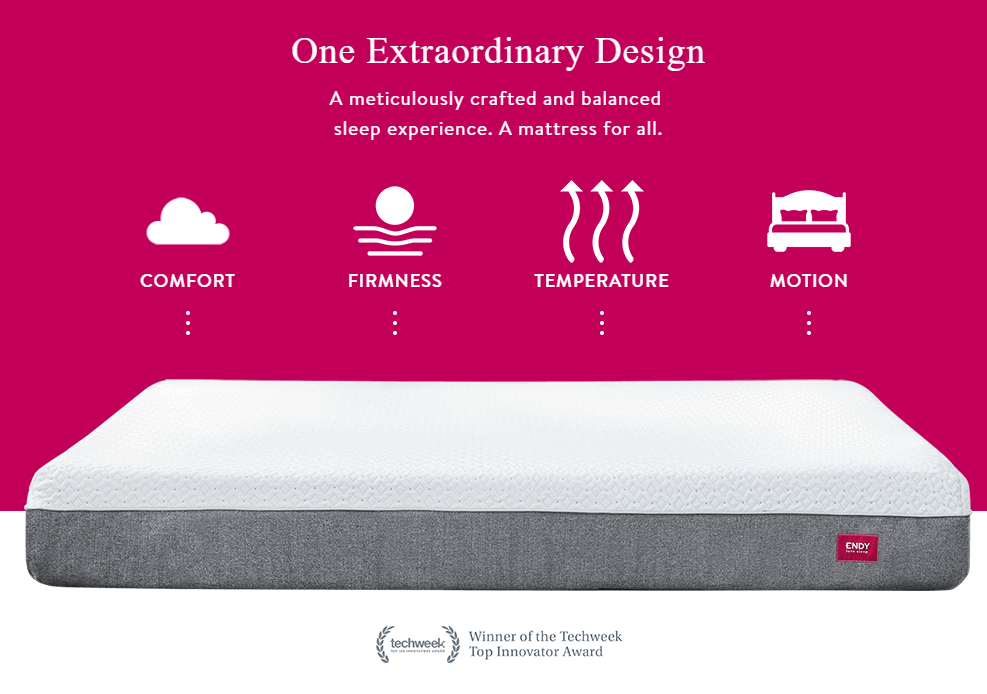
Its mattresses are said to be engineered to offer the “perfect balance of comfort and support,” featuring an open air cell foam that relieves pressure points, eliminates motion transfer, and releases body heat faster than conventional foam. 

Shipping is free in a box that is about the size of a hockey bag. Endy says that it’s the top-selling online mattress brand in Canada, with the highest customer reviews as well as the lowest rate of returns (customers can try the mattress for 100 nights and return it if not satisfied). It’s one of Canada’s fastest growing e-commerce companies and in 2016, it won Techweek’s Top 100 Innovation Award

Endy mattresses are made in Canada, which is a point of pride for the company. The company continues to see explosive gains despite the introduction of new mattress-in-a-box brands in this country. It also has expanded its product offerings to include sheets and pillows, with more categories in the works. 

In November of 2017, Endy appeared on television program Dragons’ Den, securing one of the largest investments in the show’s history. 

Endy has partnered with dozens of independent retailers across the country to display its bedding offerings so that consumers can touch and feel. Mr. Gettis says that the company will eventually look to open its own standalone stores, though it’s continuing to focus in the meantime on its explosive online growth as well as its brick-and-mortar partnerships. 

Advertising had been initially focused on urban areas with the young urban professional being an important target market. Expansive campaigns with entities such at Toronto’s TTC has seen Endy advertising occupy entire subway cars, no doubt helping the company gain brand awareness to the hundreds of thousands who ride transit in Canada’s biggest city, daily. Endy is now expanding its advertising to suburban and other parts of Canada, according to Mr. Gettis, as the company “doubles down” on the Canadian market in an effort to continue to dominate the market. 

Endy also has a charitable component that also helps the company sleep easier. Each year, the company donates thousands of mattress to Canadians in need through local charity partnerships.