“After a thorough search process, we’re tremendously excited, proud and fortunate to have attracted someone of Andrew’s caliber to the Calgary Co-op, a true leader who understands our cooperative principles,” said Sandy Edmonstone, Board Chair, Calgary Co-op. “Andrew brings the right mix of drive to increase the bottom line and will lead our cooperative with passionate vision.”
The company had been without a permanent CEO since the departure of Ken Keelor in October 2024.
Spanning more than 30 years in retail, Clarke brings extensive experience on four continents and in more than a dozen countries. He also brings board and governance experience, giving him a strong appreciation for the partnership between boards and management. Throughout his career, his deep appreciation of his humble beginnings, as the son of an egg and cheese merchant, has shaped his leadership and he has never forgotten where it all started, said the company in a news release.
“I’m genuinely honoured to be joining Calgary Co-op,” said Clarke. “This is an organization with 70 years of history, built by members, for members. It’s what makes Calgary Co-op unique. My job is to listen to what members want from their Co-op and then work with our teams to deliver it.”
Co-op said Clarke is a globally experienced retail leader, beginning his career at Marks & Spencer in the UK, through senior retail roles in Europe, the United States, and beyond. He brings deep expertise in retail strategy and operations, and a proven record of building high-performing teams and leading businesses through complex and consequential moments.
Featured by CNBC and Time Magazine in 2025 for his authentic and values-driven approach, Andrew has created extreme growth and value for public and private investors in a variety of ownership models. He has delivered multiple financial, brand, product and cultural transformations and was an early adopter of AI, it said.
Andrew Clarke
“Andrew brings a breadth of experience and retail acumen to our business,” said Edmonstone. “He’s committed to listening first, focused on what matters most to our members and employees, and building on the strong foundation already in place. I’m confident he’ll help lead Calgary Co-op into its next chapter while staying true to what makes this organization unique.”
Owned by members, Calgary Co-op is one of the largest retail co-operatives in North America. Locations in Calgary, Airdrie, Cochrane, High River, Okotoks, and Strathmore include food centres, pharmacies, gas stations, car washes, home health care centres, wine, spirits, and beer locations and cannabis. Calgary Co-op owns and operates Community Natural Foods, Beacon Pharmacies, and Willow Park Wines & Spirits and is the majority shareholder of Care Pharmacies.
The company is approaching 500,000 members with 3,800 employees, assets of $1.2 billion and annual sales of $1.5 billion.
In April, Co-op reported sales of $1.55 billion for the fiscal year ending November 1, 2025 compared to $1.48 billion the previous year.
It reported net earnings of $6.1 million compared to a net loss of $10.04 million the previous year. Its long-term debt rose to $413.46 million from $378.62 million the year before.
Sales in the Food category rose to $568.4 million from $552.56 million while sales for Pharmacy of $338.7 million were up from $242 million the prior fiscal year. The Petroleum category saw sales dip from $429.4 million in 2024 to $392.1 million last year.
In the Spring, the grocery chain closed two of its stores.
In a letter to members from Edmonstone, it said Clarke describes himself as a shopkeeper at heart, and he means it literally. He grew up in his family’s egg and dairy business just outside the village of Cheddar in rural Somerset, England, watching his father build something from nothing after a mid-life transition from corporate banking.
Calgary Co-op photo
“It was not always plain sailing,” said Clarke. “One thing kept my family going: the love of what we did and our complete dedication to serving our customers and our community.”
“There is no greater responsibility than putting food on a hard-working customer’s table.”
Sandy Edmonstone
Edmonstone said Clarke has spent the past three months immersed in Co-op’s food stores, gas stations, pharmacies, and operations, listening to team members, walking sales floors, and hearing directly from members “about what makes our Co-op special and where we can do better.”
“Close to 500,000 members own this co-operative. Members own our grocery stores, our gas stations, our pharmacies, our liquor stores, our organic supermarkets, healthcare and cannabis locations. Every dollar spent in our stores goes back into Calgary. That makes us genuinely unique as a retailer,” said Clarke in the letter.
“New strategies and improving our financials are important, but my number one priority is serving members better. Because when we do that, we win, and in turn, our members win. We are not here to process transactions. We are here to serve members. Everything starts and ends with that premise.
“It says CEO on my badge, but I lead with a shopkeeper mindset. I am not here to tell members what they want. I am here to listen to what members want and develop the strategies and lead our teams to deliver exactly that.
“My tenure at Calgary Co-op has started on the sales floor, and it will continue there. I truly believe our best ideas can come from anywhere in our organization. I would love for you, our members, to join me and my new team in continuing to tell us how you want your Co-op to serve you better.”
You can learn more about Clarke by watching his welcome video here.
EXTERIOR OF SOBEYS GROCERY STORE. PHOTO: SUPERMARKET NEWS
Sobeys’ parent company, Empire Company Limited, released a statement on Tuesday saying it will not enforce restrictive covenant interests on any properties, including those previously sold and it is not placing or registering restrictive covenants on any properties.
Three years after concluding that property controls may be limiting grocery competition in Canada, the Competition Bureau Canadaannounced in late June it was expanding its investigation into Sobeys and continuing a campaign that has already led to voluntary concessions from major grocers and new legislation in Manitoba.
The Bureau announced that it had obtained a Federal Court order requiring Empire Company Limited, the parent company of Sobeys, to provide records and information as part of an expanded investigation into the company’s use of property controls across Canada.
The investigation remains focused on grocery retailing. However, it is being watched by competition lawyers, commercial real estate professionals, landlords, developers and retailers because property controls are commonly used in retail leasing and real estate agreements.
“Empire Company Limited’s comprehensive approach to property controls reflects its ongoing commitment to a competitive and accessible grocery market for Canadians,” said the company in its statement.
“Property controls, including restrictive covenants and exclusivity clauses, are widely used across various industries and can support investment, enable market entry and sustain developments, particularly in underserved communities.
“While these arrangements are not inherently anti-competitive, we recognize the increased scrutiny in this area and the importance of ensuring they are used appropriately. We have engaged constructively with various stakeholders, including the Competition Bureau, and that dialogue has helped inform our ongoing practices in this area.”
It outlined the following in its approach.
Exclusivity clauses:
Not enforcing exclusivity clauses on the properties specifically identified in the June 2026 order obtained by the Competition Bureau.
Not enforcing exclusivity clauses re-registered in Manitoba following the passage of Bill 31.
Not enforcing or entering into any radius clauses to allow for increased retail activity surrounding our grocery store sites.
Not enforcing or entering into exclusivity clauses restricting specialty food retailers (e.g., butchers, bakeries) that sell only a subset of the products typically sold by a grocery store.
Governance and broader actions taken:
Maintaining a formal, consistent and principles-driven approach to reviewing and responding to property control waiver and removal requests, with affected parties encouraged to contact propertycontrols@sobeys.com. Empire considers all such requests with a view to removing restrictive covenants and limiting the enforcement of exclusivity provisions to only those that are justified.
Limiting the geography, product scope and duration of exclusivity provisions in all future grocery store leases across Canada.
Regularly reviewing existing property controls to identify opportunities to remove or modify those where an Empire banner is the only grocery store in a community.
Encouraging all grocery industry participants to adopt similar principles to support a consistent and balanced approach.
Continuing to work constructively with the Competition Bureau and all levels of government to advocate for a clear and consistent legislative and regulatory approach to property controls across grocery and all industries.
“Customers remain at the centre of our focus. We are committed to ensuring they continue to benefit from choice, value and access,” it said.
Image: Sobeys
“I think Empire’s announcement on property controls reflects the undue pressure the grocery industry faces from governments. In my opinion property controls were not unreasonable as grocers spend tens of millions of dollars of capital to build stores and need to yield a reasonable return on that investment in that trading area,” said retail analyst Bruce Winder.
Bruce Winder
“As grocery net margins are already thin at 2-4%, taking away property controls will not be the panacea that governments think it will be to lower prices.
“Much of the inflation we see at the grocery store is a combination of geopolitical issues, structural issues within Canada’s food processing supply chain & input cost issues related to global weather patterns.”
In June, the Competition Bureau said it obtained court orders to advance its investigation into Empire Company Limited’s use of property controls in Canada. Empire is the parent company of Sobeys, Farm Boy, Safeway, IGA, Foodland and FreshCo, among others.
“The Bureau’s investigation is examining the company’s use of property controls across Canada to assess whether their practices harm competition in the retail grocery industry. Lack of competition in the grocery industry can result in higher prices, lower quality and less availability,” it said.
“The court orders, granted by the Federal Court, require the production of records, written information and oral testimony relevant to the Bureau’s investigation.
“Earlier in the investigation, the Bureau obtained an initial court order requiring Empire to produce information focused on property controls in the Halifax Regional Municipality. The new orders will provide the Bureau additional information about the scope of Empire’s practices in Canada, including how the company negotiates property controls and their potential impacts on competition across Canada.”
The Bureau said its investigation is ongoing and there is no conclusion of wrongdoing at this time.
Property controls are restrictions on the use of commercial real estate that limit how a property can be used by others. These property controls are common across Canada, especially in retail settings. They can harm competition by making it difficult, or even impossible, for businesses to open new stores, it said.
In June 2023, the Bureau published its grocery market study, which concluded that property controls can limit competition from new grocers and can deny consumers the benefits of competition including lower prices, greater choice and increased innovation.
In June 2024, the Bureau obtained two court orders to advance its investigations into the use of property controls by Sobeys’ and Loblaw’s parent companies related to property controls in the Halifax Regional Municipality.
Retail Insider has been ranked third worldwide in FeedSpot’s Top 100 Retail Blogs (2026 Edition), placing the Canadian publication among some of the retail industry’s most recognized news organizations and trade publications.
The annual rankings also place Retail Insider first among Canadian retail publications included on the list.
FeedSpot publishes annual rankings across a wide range of industries, evaluating publications using factors that include website quality, authority, freshness of content and audience engagement. The 2026 retail rankings feature publications covering retail news, commercial real estate, merchandising, e-commerce, technology and consumer trends from around the world.
Founded in 2012, Retail Insider was created to provide dedicated coverage of Canada’s retail industry at a time when relatively few publications focused exclusively on the sector. Since then, it has grown into a daily source of retail news, executive interviews and analysis, covering store openings and closures, shopping centre development, commercial real estate, restaurants, luxury retail and broader industry trends across Canada.
Over the past 14 years, Retail Insider has documented significant changes in Canada’s retail landscape, from the arrival of international brands and major shopping centre redevelopments to evolving consumer behaviour and the transformation of the country’s retail real estate sector. The publication regularly features interviews with retail executives, developers, landlords, brokers, analysts and other industry leaders, providing readers with insight into the people and businesses shaping the industry.
Retail Insider’s readership includes retailers, shopping centre owners, developers, brokers, investors, consultants, suppliers and other professionals involved in Canada’s retail sector.
The 2026 FeedSpot rankings place Retail Insider alongside internationally recognized publications and organizations including Retail Dive, the National Retail Federation (NRF) and RetailWire.
“This recognition reflects the support of our readers and the generosity of the many people across the retail industry who have shared their time, knowledge and perspectives with us over the years,” said Craig Patterson, Publisher and CEO of Retail Insider Media Ltd.
“When Retail Insider launched in 2012, the goal was to create a publication dedicated to covering Canada’s retail industry in depth. Since then, we’ve had the privilege of documenting an extraordinary period of change for the sector while telling the stories behind the brands, businesses and people driving retail forward.”
Patterson also acknowledged Retail Insider’s contributors, photographers, researchers, editorial team and advertising partners, noting that the publication’s growth has been made possible through the support of the broader retail community.
“We’re grateful for the trust that retailers, property owners, industry organizations and readers have placed in us,” he said. “That support has allowed Retail Insider to continue investing in original journalism and in-depth coverage of Canada’s retail industry, and we’re excited to continue building on that work in the years ahead.”
U.S. President Donald Trump’s threat to impose a 50% tariff on nearly $20 billion of imports from Canada continues to create economic uncertainty for retailers and businesses across Canada.
“But we still must take this seriously as this one hits the very fundamentals of the CUSMA (Canada, United States, Mexico Agreement) agreement. A huge swath of Canadian exports would now be affected, killing sales for many small and large businesses.
“And more than anything, this adds to the massive uncertainty that has stalled our economy for months.”
“Retailers have seen tariff threats announced, delayed, modified or withdrawn often enough that some may conclude the latest proposal will follow the same pattern. However, dismissing a threatened 50% tariff as political theatre could leave businesses dangerously flat-footed if the administration decides it must proceed to maintain credibility and demonstrate that trading partners cannot simply wait it out. Retailers cannot react operationally to every political announcement, but neither can they afford to ignore one carrying such substantial cost and supply-chain implications.
“The broader problem is the continuing uncertainty. Retailers can model and manage a known tariff, even an unwelcome one. What is much harder to manage is a trading environment in which the rate, scope, implementation date and possible exemptions can change repeatedly.”
Gary Newbury
Retailers are making purchasing commitments, setting prices and planning seasonal inventory months ahead. Constant policy volatility makes those decisions slower, more expensive and more defensive. The result may be higher safety stocks, duplicated sourcing arrangements, reduced supplier commitments and postponed investment. All of which add cost before a tariff is even collected, explained Newbury.
“Canada’s response creates another potential layer of risk. The federal and provincial governments understandably want to resist measures they consider unjustified, but retaliatory tariffs, procurement restrictions and provincial bans on American products can increase Canadian inbound costs and restrict consumer choice. The continuing removal of U.S. alcohol from provincial channels has become part of the dispute rather than simply a symbolic Canadian response. Retailers and consumers on both sides of the border are therefore caught in a political contest they neither initiated nor need. Businesses face higher landed costs and greater operational complexity, while consumers ultimately experience the consequences through increased prices, reduced assortment or both,” he said.
“Some Canadian retailers and importers may consider accelerating cross-border shipments before any new Canadian retaliatory measures take effect. That can be commercially sensible where the goods have already been ordered, demand is reasonably certain, warehouse capacity is available and the tariff avoided exceeds the additional freight, handling and inventory-carrying costs.
“The danger arises when businesses import stock early, or buy more than the sales forecast supports based on gut feel and defensiveness. They may avoid a potential tariff only to create a certain working-capital and inventory problem.”
That risk is especially acute for seasonal, fashion, technology and discretionary merchandise. Inventory brought into Canada early may occupy expensive warehouse capacity for an extended period, delay cash conversion and eventually require markdowns to achieve sell-through, added Newbury.
“Obsolescence, storage costs and margin erosion can quickly become more damaging than the tariff the retailer hoped to avoid. Retailers must not exchange a possible tariff cost for a certain inventory problem. Any decision to accelerate imports should be supported by SKU-level demand forecasts, scenario modelling and clear assumptions regarding the timing and probability of government action,” he said.
“The political calculation in Washington is also far from straightforward. A significant tariff increase could raise costs for American manufacturers, importers and consumers close to the U.S. midterm elections, when affordability and inflation will remain politically sensitive. Even if the administration believes it can continue using presidential powers delegated under existing trade legislation, losing control of Congress would create greater scrutiny, investigations and resistance to the wider policy agenda.”
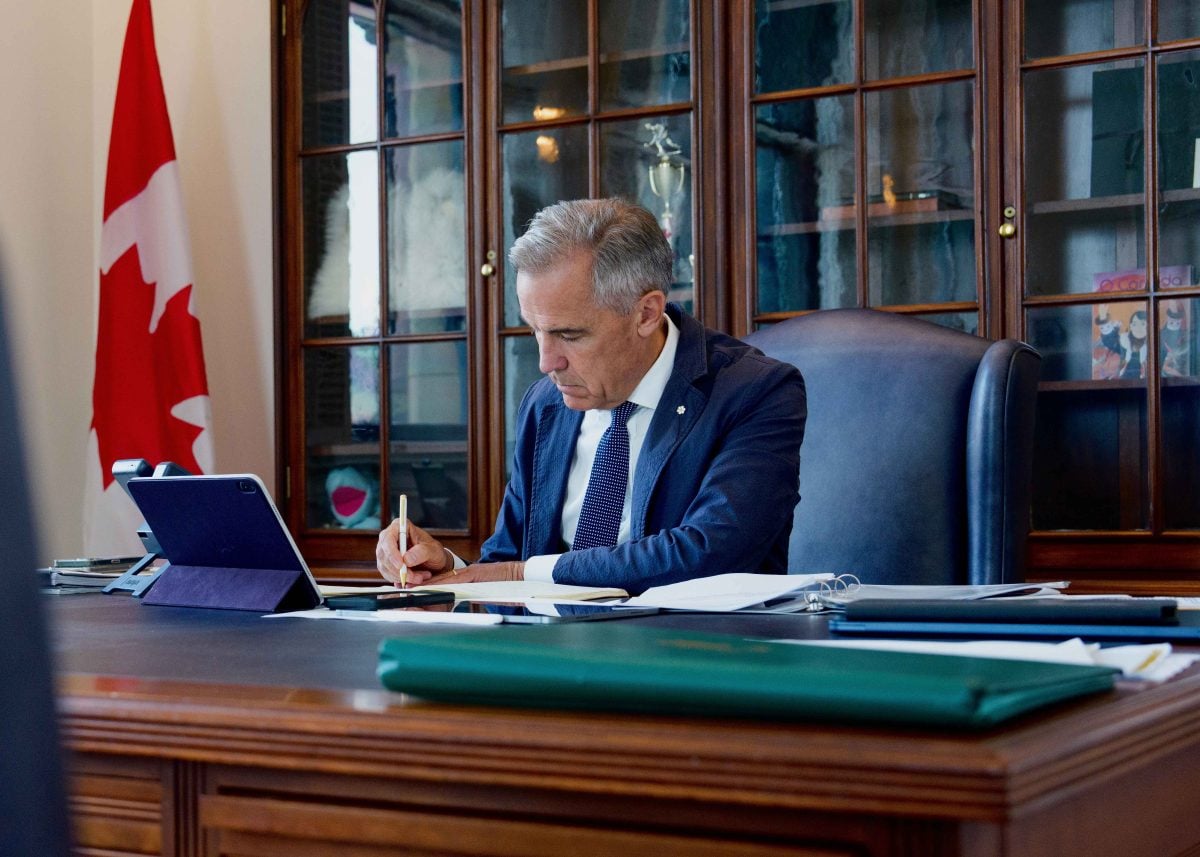
Prime Minister Mark Carney
Tariffs imposed under existing executive authority may continue, but the political and economic consequences would not disappear merely because Congress had changed hands, noted Newbury.
“The immediate question is therefore who blinks first. Canada does not want to begin negotiations from a position that looks like capitulation, while Trump will want a concession he can present domestically as a victory. The dispute over provincial alcohol bans may provide a practical opening for negotiations, while the extraordinary argument over Canadian wildfire smoke adds another unpredictable element. Both governments need a face-saving route back to the table. Until that happens, retailers should treat the tariff as a credible scenario, prepare proportionately and avoid panic-driven inventory decisions,” he said.
“The greatest damage may not ultimately come from the tariff itself. It may come from the inability of businesses to plan confidently while trade policy is repeatedly used as a negotiating weapon.”
Bruce Winder
Retail analyst Bruce Winder said: “The Trump administration’s new planned tariffs on Canada hurt retailers on both sides of the border. In Canada, retailers face greater business uncertainty and a nervous consumer who fears job loss and therefore may cut back on spending in an already challenging economic environment.
“In the U.S., retailers face further cost inflation to the extent that they import finished goods from Canada that are included in the new tariffs or buy from U.S. suppliers who import raw material from Canada. Overall, the tariffs just add to the uncertainty for retailers which can negatively impact investment, earnings and other metrics.”
What the latest tariff actions indicate is something Canadians should not overlook: Canada matters to the U.S. economy, and we have something American businesses need — Canadian consumers, said George Minakakis, Founder and CEO of Inception Retail Group.
“Look at the issues being raised, from wine and liquor to automobiles and other American products that are not being bought or are not accessible to Canadian consumers. That’s not our doing.
George Minakakis
“If we don’t surrender and accept their trade arrangements and demands, Canada will face higher tariffs. I don’t see the logic. Why further anger a consumer market you want to do business with?
“That turns normal commerce and trade logic on its head. Businesses normally compete for customers through better products, better service, innovation and value, not through the threat of tariffs when consumers choose to buy elsewhere.”
The United States remains an enormously important trading partner, and our economies are deeply interconnected. But strong trading relationships work best when they are mutually beneficial, fair and equitable, added Minakakis.
“Canada did not initiate the breakdown in this trading relationship, but we do have to determine what we do next,” he said.
“For Canadian retailers and businesses, I believe there is an enormous opportunity here. Build stronger Canadian brands. Give Canadians more reasons to buy from Canadian companies. Develop made-in-Canada services and source products strategically from Canada and other markets to create genuine differentiation.
“And for Canadians, there is an equally important message: keep buying, building and investing in Canada. Trade relationships may change. Our commitment to building a stronger Canadian economy should not.”
In a statement, Canadian Prime Minister Mark Carney said: “Canada believes in the benefits of free and fair trade, as evidenced by our new government signing more than 20 new economic and security partnerships. This trade dispute has raised costs for families, particularly in the U.S. Canada stands ready to engage intensively to address outstanding issues with the U.S. to the mutual benefit of our citizens.
“In all circumstances, Canada will work relentlessly and take any measures necessary to build our strength at home and to support Canadian workers, farmers, businesses, and families.”
Danielle Smith
In a LinkedIn post, Alberta Premier Danielle Smith said the new tariffs will hurt both Canadian and American businesses and workers.
“Tariffs are an economically destructive policy and have been proven time and again to hurt the people of the countries that impose them,” she said.
“I will be meeting with Premiers from across Canada and the Prime Minister later this week to discuss this issue and will reaffirm my position that the path to a positive resolution with our U.S. partners lies in strong, consistent diplomacy and a commitment to working to address shared priorities. I firmly believe that Canada and the U.S. are both stronger when we work together.”
From left to right: Frederic Larochelle (Shareholder, Materiaux Miron Plus); Mathieu Mercier (Shareholder, Materiaux Miron Plus); Eric Kingsley (Regional Director, Home Hardware Stores Limited); Ian White (CEO, Home Hardware Stores Limited); Christian Miron (Shareholder, Materiaux Miron Plus); Rosaire Lalonde (Employee, Materiaux Miron Plus); John Pierce (Chief Retail Operations Officer, Home Hardware Stores Limited); Ghislain Jalbert (Shareholder, Materiaux Miron Plus); Dominic Leclerc (Dealer Development, Home Hardware Stores Limited)
Home Hardware is expanding its dealer-owned network in Quebec with the addition of Matériaux Miron Plus, a 90-year-old family business that says it chose the Canadian retailer to support future growth while preserving its independence.
The Salaberry-de-Valleyfield business will operate as a Home Building Centre, gaining access to the company’s buying power, distribution network and national programs while remaining locally owned and managed.
Home Hardware says the move reflects its strategy of attracting established independent retailers rather than simply adding new locations.
Company executives say the dealer-owned model gives local businesses the scale, operational support and purchasing power of a national organization while allowing owners to continue making decisions based on the needs of their communities.
For Matériaux Miron Plus, which has become a leading supplier to professional contractors and builders in the region, the partnership is intended to strengthen its position without changing the identity that has defined the business for three generations.
The announcement comes as Home Hardware looks to deepen its presence in Quebec and invest in businesses serving both homeowners and professional contractors amid shifting economic conditions.
The company says Canadians are placing greater value on trusted advice, reliable product availability and local expertise as they renovate and repair their homes, while contractors are seeking dependable supply and competitive pricing. Home Hardware says supporting independent dealers with expanded resources, while keeping them locally owned, remains central to its long-term growth strategy.
Eric Kingsley
“As we looked at the different options available to support the future growth of our building materials business, Home Hardware gave us the greatest confidence in its programs, strategic direction and Dealer-Owned structure,” said Christian Miron, Dealer-Owner of Matériaux Miron Plus. “Joining the Home Hardware network allows us to continue providing the quality products, expert advice and service our customers have come to expect while becoming part of a community of passionate Dealers who are committed to delivering an exceptional customer experience and helping drive Quebec’s construction industry forward.”
“We are thrilled to welcome Matériaux Miron Plus to the Home network,” said Eric Kingsley, Regional Director, Quebec Retail Operations, Home Hardware Stores Limited. “Their decision to join Home Hardware reflects the strength of our programs and support model for independent building materials Dealers in the Quebec marketplace. With a 90-year history of serving its community, Matériaux Miron Plus has built an outstanding reputation, and we look forward to supporting their continued growth and success in the years ahead.”
Home Hardware was founded just over 60 years ago in St. Jacobs, Ontario and is the country’s largest Dealer-Owned and operated home improvement retailer with nearly 1,000 stores.
Question: What made Matériaux Miron Plus such a strong fit for the Home Hardware network, and why was it important to bring this long-established Quebec business into the organization?
John Pierce
Answer: Matériaux Miron Plus has built a strong reputation over the past 90 years by putting customers, service and community first. With a focus on serving professional contractors, builders, and tradespeople, the business has become a trusted source for the products, expertise and support needed to keep projects moving. Bringing Matériaux Miron Plus into the Home Hardware network was an opportunity to partner with an established, respected independent business that shares our belief that local ownership and strong relationships are at the heart of great service.
The significance of this announcement is that a long-established Dealer like Matériaux Miron Plus made a deliberate choice to join Home Hardware. These decisions are made carefully, and we believe Home Hardware is uniquely positioned to support independent Dealers with the scale, expertise and resources to help them succeed.
We’re proud to welcome them into the Home network and look forward to supporting their continued success for years to come.
Q: Home Hardware is Canada’s largest dealer-owned home improvement retailer. How does the dealer-owned model benefit both independent business owners and the communities they serve?
A: For over 60 years, our Dealer-owned model has been what sets us apart. Every one of our stores is independently owned and operated by a Dealer with a deep understanding of their community. That means decisions are made locally, relationships with customers are built over time, and the success of the business stays rooted in the community. At the same time, Dealers have the backing of a national organization that helps them compete and grow while remaining proudly independent.
With access to national buying power, industry expertise, and operational support, Dealers have the resources to succeed while maintaining the flexibility to meet the unique needs of their local customers. This balance remains a powerful advantage for our Dealers.
Q: With nearly 1,000 stores across Canada, what is Home Hardware’s current store count, and how has the network grown over the past year?
A: Home Hardware is the country’s largest independent home improvement retailer. Our store count changes regularly as we evaluate opportunities, strengthen our network by welcoming new Dealers, and continue partnering with well-established retailers like Matériaux Miron Plus.
Q: Quebec continues to be an important market for the company. Whatopportunities do you see for further growth and attracting more independent dealers in the province?
A: Quebec is an important market for Home Hardware because of its size, strong network of independent businesses, and volume of building activity. We see significant opportunities to continue growing our presence by partnering with independent business owners such as Christian Miron and his partners, who share our commitment to customer service.
Q: The home improvement industry has faced changing economic conditions in recent years. What trends are you seeing among Canadian homeowners and professional contractors, and how is Home Hardware adapting to meet those needs?
A: Even as economic conditions continue to evolve, one thing hasn’t changed: Canadians want to trust that they’re getting quality products and expert advice. Many homeowners are being more thoughtful about how they spend, often choosing to repair, renovate, or tackle projects in stages, while professional contractors are looking for reliable product availability, competitive pricing, and knowledgeable support to help keep projects on schedule.
Our stores provide the personalized service and practical expertise customers rely on, whether someone is planning a weekend DIY project, managing a larger renovation, operating a professional contracting business, or building homes single and multi-family homes.
Home Hardware continues to adapt by ensuring Dealers have access to the products, programs, and support they need to serve these changing customer expectations.
Image: Home Hardware
Q: As Home Hardware continues to expand, what are the company’s key priorities over the next few years, and what can customers and independent dealers expect from the brand moving forward?
A: As Home Hardware continues to grow, our priorities remain focused on strengthening the Dealer-owned model that has been the foundation of our success. Our goal is to continue supporting independent Dealers with the tools, resources, and capabilities they need to grow their businesses.
This means continued investment in the areas that help them compete and succeed, including our distribution network, product assortment, technology, marketing support, and business services. Home is uniquely positioned to help Dealers succeed in both hardlines and building materials, serving both retail consumers and Pros. As Dealers increasingly pursue growth across both areas, our model will continue to be a key advantage.
Q: Home Hardware says nearly 98 per cent of Canadians live within 30 kilometres of one of its stores. How important is maintaining a strong presence in smaller and rural communities?
A: Home Hardware was built on serving communities of every size, and that’s still central to who we are today. Maintaining a strong presence in smaller and rural communities is important because in many of these communities, the local Home Hardware is more than a home improvement store – it’s an important resource for homeowners, farmers, tradespeople, and local businesses.
Whether it’s supporting Canadian farmers through our extensive farm and ranch assortment or providing the products and building materials needed to help address Canada’s housing needs, Home Hardware is uniquely positioned to support the communities we serve.
The transition of a store like Matériaux Miron Plus is a great example of how independent, community-focused businesses can continue serving their customers while benefiting from the support of a larger network.
Q: What does joining the Home Hardware network mean for existing customers of Matériaux Miron Plus—what changes will they notice, and what will remain the same?
A: Joining the Home Hardware network gives Matériaux Miron Plus access to Home Hardware’s buying power, distribution network, product assortment, and business support, while continuing to make decisions based on the needs of the local community. For customers, that means many of the things they value most will remain the same – the knowledgeable service, trusted relationships, and local expertise they’ve always relied on. What they’ll notice is an even stronger offering, with access to a broader range of products, national programs, and the resources of the Home Hardware network.
Home Hardware Building Centre in Lloydminster. Photo: Home Hardware
Q: This year marks the 90th anniversary of Matériaux Miron Plus. How does preserving the identity of long-standing family businesses fit into Home Hardware’;s overall strategy?
A: Businesses like Matériaux Miron Plus are exactly what Home Hardware was built for. The strength of our network comes from independent businesses that have earned the trust of their communities over generations. Our role isn’t to change what made them successful; it’s to support that success and help ensure it continues for many years to come.
Q: Can you share your long-term vision for the Home Hardware network in Canada? Is there a target number of stores you’d like to reach over the next several years?
A: As Canada’s largest independent home improvement destination, we remain focused on strengthening our network by investing in our independent Dealers and ensuring they have what they need to succeed and continue serving Canadians for the long-term.
Our focus is not simply on adding locations, but on partnering with the right independent businesses (like Matériaux Miron Plus) who share our commitment to customers, communities and the Dealer-owned model.
We also know there’s an important role for our industry to play in addressing Canada’s housing needs and supporting the skilled trades that keep our communities growing. By working alongside our Dealers, we’re ensuring PRO Contractors have access to the products, expertise and local support they need to build more homes, strengthen the skilled trades workforce, and invest in the places they call home.
Taco Bell Canada is betting that even its biggest fans are ready to embrace change as the quick-service chain expands beyond its traditional menu with new products designed to spark conversation and keep customers coming back.
The company is introducing Crispy Chicken Nuggets — its entry into one of the restaurant industry’s fastest-growing categories — alongside Mountain Dew Baja Midnight, the first Mountain Dew Baja Blast flavour innovation in over two decades
Company executives say the launches reflect a broader strategy of evolving the brand while staying true to its flavour-first identity. Innovation is a key driver of Taco Bell’s growth plans, with new menu items chosen where consumer demand, cultural relevance and the company’s distinct approach intersect.
Limited-time offerings are intended to balance familiar favourites with fresh experiences that encourage repeat visits and generate buzz in an increasingly competitive quick-service market.
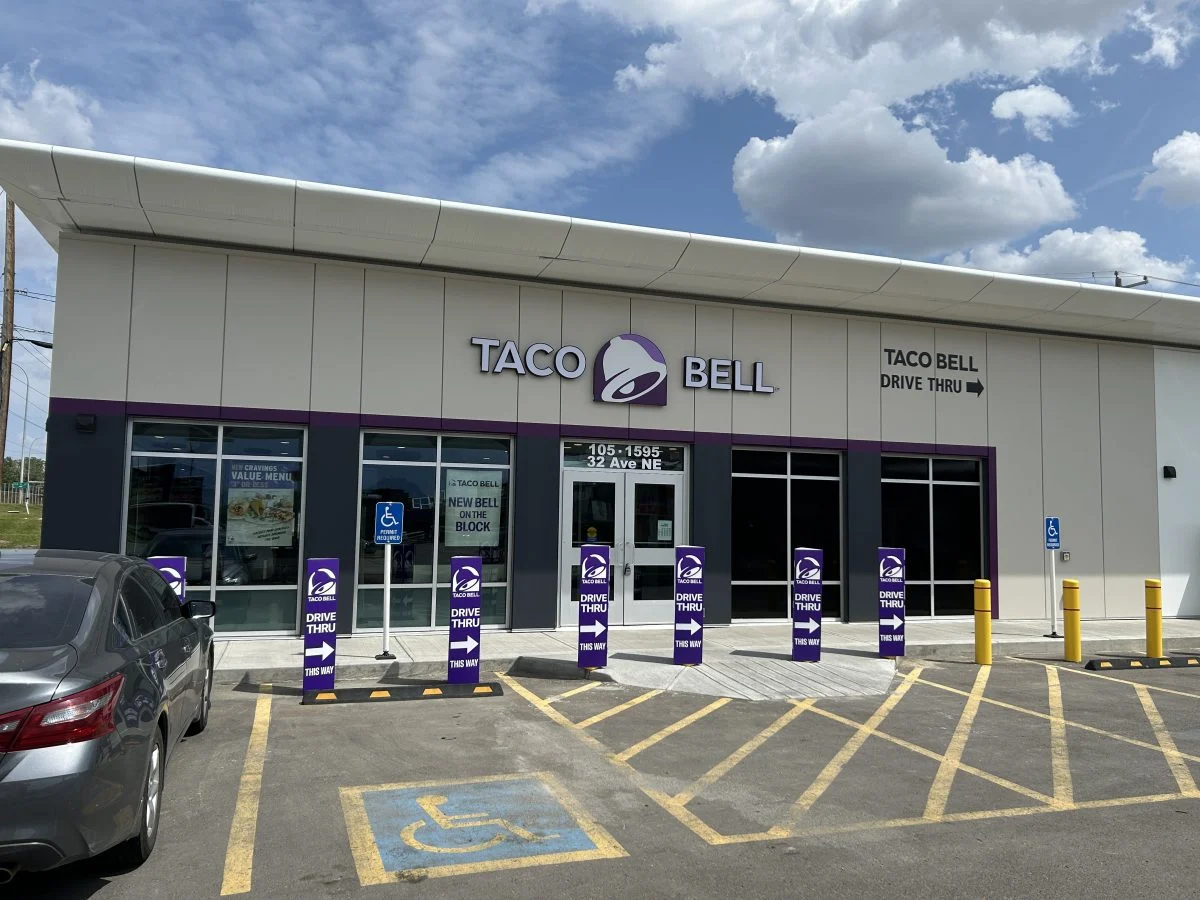
The menu push comes as Taco Bell continues expanding its Canadian footprint, with 171 restaurants nationwide after opening 11 net new locations in 2025. Executives say the chain sees significant room for further growth across the country and plans to keep introducing unexpected menu items, arguing that continual innovation is essential to attracting new customers, maintaining relevance and giving Canadians new reasons to visit.
“That is exactly what makes this launch strategically exciting. Mountain Dew Baja Midnight gives us a rare opportunity to build on an iconic flavour platform, while Crispy Chicken Nuggets allow us to stretch the brand into a high-interest category in a way that still feels bold and unmistakably Taco Bell.”
Question: Taco Bell is known for pushing the boundaries of its menu. Why was now the right time to introduce Crispy Chicken Nuggets?
Answer: Innovation has always been at the heart of the brand. Crispy chicken is one of the most competitive and fastest-growing categories, and we saw an opportunity to bring a fresh perspective, rather than simply follow the crowd. Our Crispy Chicken Nuggets are unmistakably Taco Bell; crispy, boldly seasoned, and paired with a distinctive dipping sauce that delivers the flavour experience our fans expect. For us, this isn’t about adding another menu item; it’s about showing that even in a familiar category, Taco Bell can surprise people and give them something worth talking about.
Q: Some people might wonder, “Should Taco Bell really be making chicken nuggets?” What would you say to those skeptics?
A: I’d say that’s exactly the reaction we expected, and probably the one we were hoping for. Taco Bell has always challenged expectations, whether that’s through bold flavours, unexpected menu innovation, or creating entirely new food experiences (remember jalapeño wine). These aren’t our version of someone else’s nuggets, they’re unmistakably Taco Bell. They’re made with juicy all-white meat chicken, seasoned with our signature Mexican-inspired spices, and paired with bold dipping sauces like Jalapeño Honey Mustard. We’d simply encourage people to try them first and believe once they do, they’ll understand why we’re in the chicken game.
Matt Shaw
Q: What makes your Crispy Chicken Nuggets and the new Jalapeño Honey Mustard Sauce different from what Canadians can find at other quick-service restaurants?
A: We didn’t set out to make just another chicken nugget. Rather, we set out to make a Taco Bell chicken nugget. That’s the difference. From the bold Mexican-inspired seasoning to the crispy coating, and our new Jalapeño Honey Mustard Sauce, every element is designed to deliver the flavour-forward experience people expect from our brand. The sauce brings together sweetness, heat, and a tanginess, in a way that’s distinctive and highly craveable. In a category where many products feel very similar, we’ve created something with a personality of its own.
Q: Mountain Dew Baja Blast has developed a loyal fan base over the past two decades. Why introduce the first flavour extension in more than 20 years, and what inspired Baja Midnight?
A: Mountain Dew Baja Blast has earned iconic status with Taco Bell fans globally, so we knew any evolution had to be worthy of that legacy. Baja Midnight isn’t change for the sake of change; it’s about giving fans a new way to experience a beverage they already love. We kept the unmistakable tropical lime foundation of Baja Blast and layered in a bold passionfruit twist, to create something that’s both familiar and unexpected. It reflects what today’s consumers are looking for: exciting, limited-time experiences that give them a reason to come back and discover what’s next at the brand.
Q: How important is innovation to Taco Bell’s strategy, and how do you decide which bold ideas actually make it onto the menu?
A: Innovation is one of the biggest drivers of our growth strategy, but it has to be disciplined. We look for the intersection of consumer demand, cultural relevance and what only Taco Bell can credibly deliver. If an idea creates excitement, is operationally executable and strengthens our brand, that’s when we know it’s worth bringing to Canadians.
Q: Canadian consumers are always looking for something new to try. How do limited-time menu items like these help keep the Taco Bell experience fresh and exciting?
A: Limited-time experiences are a core part of how we keep the brand culturally relevant around the globe. They give fans a reason to come back, create conversation, and let us continually introduce new flavours and formats. It’s about balancing the familiarity of the menu people love with the excitement of discovering something new every time they visit Taco Bell.
Taco Bell photo
Q: Without giving too much away, can fans expect more unexpected menu innovations from Taco Bell in the months ahead?
A: If there’s one thing our fans know, it’s that we never stand still. Innovation is core to our strategy, and our goal is to keep giving Canadians new reasons to visit Taco Bell. We’ve already teased the return of the Quesarito at Live Más Live Canada, and while I can’t give too much away, I can say there’s plenty more to come.
Q: How many locations are there in Canada now? How many new locations opened in 2025? How many new expected to open this year? How many can the brand grow to in Canada eventually?
A: We now have 171 Taco Bell restaurants across Canada, and we’re continuing to build momentum with a strong development pipeline. We opened 11 net new units in 2025. In the last six months, we’re proud to have expanded into Newfoundland with our Mount Pearl location and the new St. John’s Ropewalk Lane restaurant. Additionally, we’re excited to continue that growth with another new restaurant that just opened in Trenton, Ontario. We see significant runway for Taco Bell in Canada, and our focus is on disciplined, coast-to-coast expansion, bringing the brand to more communities while ensuring every new restaurant sets both our franchisees, and the brand, up for long-term success.
Despite concerns of AI-driven job losses, a new study from JLL finds that a majority of senior business leaders expect their workforces to grow (60%), not shrink (40%) – similarly, most expect AI to reinvent human roles (60%), rather than replace them (40%).
JLL’s 2026 Future of Work Survey finds this picture is more pronounced among the most AI-advanced organizations, which are utilizing technology as a workforce augmenter and focusing on strategic expansion — even though they recognize it will not be uniform and some jobs will still be cut. Hence, more than others, they lean toward hiring full-time employees, investing in entry-level talent and actively redesigning roles to be enhanced by AI rather than eliminated, said the real estate company.
The biennial survey, conducted from January to April 2026, offers a comprehensive snapshot of the state of work through the lens of the key priorities, challenges and strategies of over 2,200 C-suite and CRE leaders across 21 countries, it added.
“The public conversation around AI has been dominated by its impact on jobs and our research reveals that most companies are focused on the opportunities that come with AI,” said Neil Murray, CEO of Real Estate Management Services at JLL. “Most forward-thinking leaders aren’t just buying technology; they are investing in their people. They are pursuing a strategy of human-machine enhancement to create additional roles, boost productivity and drive sustainable growth.”
The 2026 survey found that despite 78% of respondents expecting AI to drive significant changes to their real estate portfolio strategy, only 31% are actively preparing to redesign spaces for human-AI collaboration and just 15% have reached the optimizing stage of AI adoption. The gap between what organizations believe and what they are doing defines the central challenge of the moment and it is being driven by critical tensions in terms of execution decisions, capabilities and budget constraints, said the company.
Neil Murray
“While AI is generally expected to enhance human roles according to JLL’s survey, most organizations are still examining the impacts on their organization, which leaves them in early stages of adoption. A small pool of respondents (15%) is in the optimization phase, moving beyond the pilot and scaling phases to actively prepare for the redesign of roles and places of work. However, the majority are in the monitoring and analysis stages, with 46% focused on tracking AI trends and 40% analyzing potential impacts on their CRE function. These CRE leaders are depending on workforce decisions as it relates to AI adoption in order to define their organizations’ space transformations, creating a holding pattern that prevents forward progress,” said JLL.
“AI is also requiring new skills and expertise from CRE teams for them to make an impact on their organizations, with skills gaps in AI, analytics and emerging technologies (36%) being cited as the top barrier in doing so in the next three to five years. Limited change management expertise (26%), organizational silos (25%) and measurement challenges (23%) further compound the problem.”
JLL said this creates a “technology dilemma” that reflects the vulnerabilities of an increasingly connected and AI-driven business environment. Organizations must invest in advanced technology to achieve productivity goals, which is seen as a core CRE key performance indicator (KPI), beyond traditional cost metrics, according to C-suite respondents (46%). However, three of the top four portfolio risks are technology-related — including cybersecurity and data privacy (47%), technology/AI disruption (41%) and uncertainty around AI’s impact on space (40%), with economic volatility and budget pressures (43%) being the other top concerns. This layering of competing priorities requires new, adaptive strategies to navigate a landscape where challenges converge.
“We are seeing a fundamental shift in what defines a high-performing company. It’s no longer just about market position, size and scale – it’s about becoming an AI-powered enterprise with the adaptability and organizational readiness to transform effectively amid continuous disruption,” said Peter Miscovich, Global Future of Work Leader at JLL.
“Leading organizations are demonstrating deeper integration between real estate, HR, and technology to support their business strategies. These companies leverage data-driven AI decision intelligence to reimagine their workplaces for greater human performance and to achieve superior business outcomes. This fully integrated approach is the new blueprint for building a resilient enterprise that can thrive amid continuous disruption.”
Alberta business leaders are optimistic about the province’s economic outlook, with nearly two-thirds expecting economic conditions to improve over the next year and many planning to increase investment, hiring and revenue growth, according to the inaugural Business Council of Alberta (BCA) CEO Pulse Survey.
Adam Legge
“Our CEO members make the investment, hiring, and growth decisions that shape Alberta’s economy, making their perspective an important indicator of business confidence,” said Adam Legge, President of the Business Council of Alberta. “The survey tells us Alberta has momentum and CEOs are optimistic. The opportunity before government now is to build on that momentum and optimism by creating the conditions for even greater investment.”
The Council said its inaugural CEO Pulse Survey, which will be conducted twice yearly, establishes a new benchmark of business confidence among the province’s leading CEOs and entrepreneurs. It tracks expectations for the economy, business performance, investment and hiring intentions, while also identifying the issues having the greatest impact on business growth and competitiveness. The survey will help inform BCA’s ongoing work to strengthen the province’s competitiveness including research on reducing barriers to investment, reducing regulatory burden, strengthening the labour market, expanding trade opportunities and growing Alberta’s economy.
The findings come at a time when Alberta is seeing renewed private-sector investment and major project activity, while businesses continue to navigate global uncertainty, evolving trade tensions, and the lead-up to the province’s October referendum on separation, it said.
Key findings include:
65% of EOs expect Alberta’s economy to improve over the next year.
More than half (55%) plan to increase capital investment, 51% expect stronger revenue growth and 50% plan to increase staffing.
Regulation was by far the issue most likely to be identified as a major barrier (45%), suggesting it is the biggest competitiveness challenge facing Alberta businesses.
When both major and moderate barriers are considered, taxes were identified most frequently (82%), followed by input costs (74%) and regulation (74%).
Nearly half (47%) of businesses continue to face labour shortages, while 63% say they have the capacity to meet increased demand.
Alberta businesses remain optimistic despite a business environment shaped by global uncertainty, major investment opportunities, and the upcoming referendum on separation.
US President Donald Trump. Image: Wikimedia Commons
The United States has announced a sweeping 50 per cent tariff on Canadian goods, citing discriminatory treatment of American alcohol, automobiles and dairy products. The duties are expected to take effect August 19 and, unusually, will reach some products that would ordinarily receive preferential treatment under CUSMA. Energy, potash, fish and critical minerals are among the reported exemptions.
For Canada’s food and beverage economy, the stakes are significant. Canada exports approximately $1.4 billion in alcoholic beverages to the United States annually, representing roughly 90 per cent of our alcohol exports. Spirits are particularly exposed. Canadian dairy exports to the United States, while much smaller, are worth approximately $360 million annually.
But the immediate trade flows are only part of the story. The larger issue is how badly Canada has misread Washington—and how little influence Ottawa now appears to have over events.
The tariffs rely on Section 338 of the U.S. Tariff Act of 1930, a rarely used presidential authority allowing Washington to retaliate when another country is deemed to discriminate against American commerce. It is an obscure and potentially contestable instrument, but the warning signs were visible. Canada’s removal of American alcohol from provincial shelves and its administration of dairy tariff-rate quotas have featured prominently among Washington’s complaints.
This was only a matter of time. Last week, Prime Minister Mark Carney was asked about the future of CUSMA. His answer to Canadians was: “I’ll keep you posted.”
Well, consider us posted.
New tariffs are coming, negotiations appear stalled, and Canadian exporters are again being asked to absorb the consequences. Canadians deserve more than cryptic reassurances and strategic ambiguity. They deserve to know who is negotiating, what Canada is prepared to concede and how Ottawa intends to protect market access without inflicting even more damage on Canadian businesses and consumers.
President Trump has given himself a 30-day off-ramp. The delay may be legally required, but it also creates negotiating space. It gives Canada an opportunity to offer a limited, face-saving concession before the tariffs take effect.
That could involve restoring some access for American alcohol, addressing specific concerns surrounding dairy quotas or finding another politically manageable gesture. The objective would not be capitulation. It would be to remove the justification for a measure capable of causing far more economic damage than the concessions required to prevent it.
Ottawa could, of course, escalate. Canada could impose export taxes or restrictions on energy, critical minerals or potash. These are among the few areas in which Canada possesses genuine leverage.
But leverage is not the same as immunity.
Restricting strategic exports would disrupt American supply chains, but it would also damage Canadian producers, weaken investment and raise costs throughout our own economy. Energy infrastructure cannot simply be redirected overnight. Potash customers are not infinitely interchangeable. Once buyers invest in alternative suppliers, some business may never return.
Canada would pay a steep price for the satisfaction of appearing tough.
This is why the “elbows up” approach was always more slogan than strategy. There is no trade war Canada can win by attempting to outmuscle a country representing roughly one-quarter of the global economy. The United States is not simply another customer. It is the destination for approximately three-quarters of Canadian merchandise exports and an essential market for our farmers, processors and manufacturers.
Diversifying trade is necessary, but it is a generational project—not an emergency response. A new trade mission to Asia or Europe cannot replace continental supply chains built over decades.
Mexico understood this earlier. Its government chose sustained engagement with Washington, even when doing so was politically uncomfortable. Mexico has reportedly held detailed discussions with the United States and has more meetings planned. Canada, by contrast, has leaned heavily on public defiance while appearing increasingly absent from the negotiating table.
Mexico chose engagement. Canada chose theatre—and now pain.
Some in Ottawa continue to advocate playing the “long game,” apparently assuming that conditions will improve after the U.S. midterm elections or once Trump leaves office. That is speculation, not strategy. Nothing guarantees that Congress will become more sympathetic to Canada after November. Nothing guarantees that the next administration will abandon protectionism after 2028.
American trade policy has changed structurally. Economic nationalism now extends well beyond Donald Trump. Waiting for the old relationship to return is not a plan.
For Prime Minister Carney, the time for distance, ambiguity and political posturing is over. Canada needs direct engagement with the White House, a clear list of negotiating priorities and a willingness to make targeted concessions where the economic cost of refusing is vastly greater than the cost of compromise.
Working with the United States does not require admiring its president. It requires understanding power, geography and economic reality.
Canada cannot choose its neighbour. But it can choose whether to manage that relationship intelligently.