A Toronto-based technology company is providing accessibility solutions to a growing number of people with disabilities who are finding it challenging to navigate the digital world.
In November, eSSENTIAL Accessibility launched groundbreaking technology giving people with physical disabilities a barrier-free mobile experience with its Android application.
The application for Android devices allows people with limited dexterity to overcome barriers through hands-free technology, touch-replacement tools, and voice recognition capabilities. The technology benefits those with quadriplegia, Parkinson’s disease, multiple sclerosis, Cerebral Palsy, and other conditions that make it challenging to use touchscreen smartphones and tablets.
Spiro Papathanasakis, one of the co-founders and a director with the company, says the company has been in business for almost 10 years.
“We’re really a social enterprise that helps organizations create more accessible digital platforms. We help through the integration of assistive technology. We offer web accessibility evaluation and remediation services to help organizations ensure that their content is accessible,” he says.
“And by implementing this solution, brands are able to enhance their digital customer experience for folks with disabilities. It not only helps them build on that customer experience but it also helps with meeting current regulations and standards. And also as a brand for an organization it helps them project an inclusive and obviously disability-friendly presence in one of its most important channels – right now of course being digital. It’s critical that brands connect with all consumers and of course employees as well.”
“By working and partnering with us they’re able to improve and ensure that they are connecting and not leaving anyone behind.”
The technology is available on a no-cost-to-user basis through eSSENTIAL Accessibility’s brand partners.
The company also has a presence in Brazil, in the United States and Switzerland.
“We’ve got a global presence in terms of our people,” said Papathanasakis.
“Mobile is becoming more and more important for all organizations, but especially for retailers. So ensuring that mobile apps are built to be accessible, ensuring that there are assistive technology solutions available for mobile is also becoming a critical piece,” says Papathanasakis. “So from both perspectives, from the technology being available to consumers and from the standpoint of ensuring that the content itself whether it’s mobile or whether it’s apps and so on they should be made accessible and in that way a retailer will not leave anyone behind.”
“This isn’t just about doing the right thing or meeting regulations, this is about ensuring as a retailer that all consumers have access to your products and services.”
The company offers the following key points to consider:
A survey of shopping and consumption behaviours by people with disabilities asked about their experience accessing product information before making a purchase at a retail store. Only 50- 60 per cent of consumers with disabilities were satisfied with their experience;
Over half (54 per cent) of consumers with disabilities would shop more frequently or spend more money in restaurants and stores that have made an effort to be accessible and welcoming to people with disabilities;
58 per cent of consumers with disabilities feel that companies all too often introduce new products or services without any consideration of disability-related needs. This number rises to 80 per cent among people who use wheelchairs or scooters;
71 per cent of customers with disabilities will leave your website once they realize it’s difficult to use. The spending power of these customers represents about 10 per cent of total online spending; and
Nine out of 10 customers who encounter accessibility barriers on your website won’t take the time to let you know about it.
Montreal’s Centre Rockland is in a state of transition, and landlord Cominar REIT has announced that it will invest millions into an overhauled food and beverage component that will reflect some key trends seen among the country’s leading shopping centres. The project is particularly unique in both what’s being built, as well as what will be done in the interim to replace the mall’s food vendors while a new space is built-out.
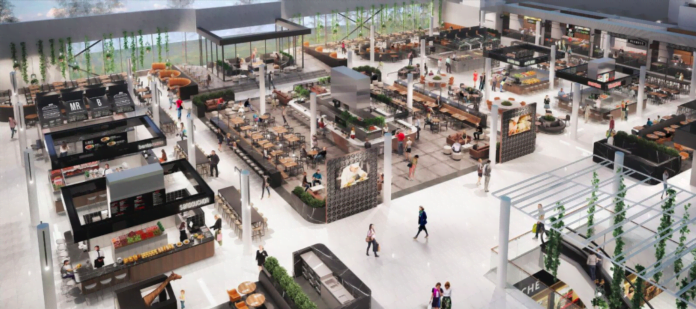
Cominar is investing about $10 million into its former food court, which will result in something considerably different for the centre when it’s unveiled this fall. Manon Larose, Vice President of Retail Leasing at Cominar, explained that the replacement of the mall’s food court won’t be necessarily a food hall per se, but will be something of a culinary experience that will be a mix of permanent and temporary vendors, and there will even be an area where master chefs can demonstrate their wares.
It’s all part of an effort to attract more shoppers to the centre, and Montreal residents are known to be foodies. The completed redesigned space will be both modern and warm, featuring an interior garden-styled environment, according to Cominar.
“We are delighted to offer Rockland’s customers a vibrant and authentic food court that will host culinary demonstrations where professional chefs will present unique gastronomic events. It will feature a central bar offering a fresh visual and tasting experience, as well as a diverse selection of food trucks every three months. Its new Children’s Garden will cater to families by offering a range of services for their well-being”, said Ms. Larose.
“This new space, which focuses on international and healthy cuisine, will feature a large atrium and an outdoor terrace where customers can enjoy abundant natural lighting and a variety of entertaining activities. The only remnant of the traditional food court is the variety of food options; other than that, everything else has been reinvented”, added Jean Laramée, Executive Vice-President, Development at Cominar.
As the current food court space has been shuttered for the renovation, Cominar came up with a unique idea to provide customers with food and beverage, with a popular Montreal twist. Four food trucks will be parked outside of the centre (including La Gaspésie, Gras Dur, Mignon and Jerry’s) to serve its shoppers as of today (February 23) and customers will have access to these outdoor food trucks through a heated indoor corridor and will be able to enjoy their meal in a seated indoor dining area. It’s a first of its kind in Quebec, according to Cominar, and was inspired by the success of Mandy’s food truck, which has been set up in Rockland’s center court since October of 2017.
Centre Rockland has several other dining establishments on-site, and these will not be affected and will remain open during the food court overhaul. Locations for Starbucks, Eggspectation, Café Dépôt and Okane Sushi are contained within the mall, and in May of this year one of Montreal’s best known pizza restaurants, NO.900, will open in the centre.
Enhanced food and beverage offerings in malls is a significant trend, as identified in Retail Council of Canada’s latest Shopping Centre Study. Some of the country’s top malls have renovated and expanded their food and beverage offerings with considerable success — consumers now, more than ever, are seeking out experiences, and strong culinary experiences are bringing shoppers into centres, keeping them there, and having them return.
Canada’s top mall landlords continue to invest in their malls, and over the past several years have invested billions of dollars into their centres. The investments are unprecedented, as malls compete for shoppers that are also changing their spending patterns. Technology spending is on the rise (the new iPhone X is the most expensive yet), and many are seeking out experiences that they otherwise can’t get online — and that’s important to note, considering the increased popularity of e-commerce in Canada. The cost of living in Canadian cities is going up as well — higher housing costs, stagnating incomes and high taxes are all playing a role in putting a dent in Canadians’ wallets and as a result, retailers and malls are fighting vigorously for Canada’s limited shopping dollars, particularly in Quebec.
Shopping Centre landlords in the Montreal area are investing in their centres to address competition, which will become even fiercer with the arrival of Carbonleo’s multi-billion dollar mixed-use Royalmount project, which will include about 2.5 million square feet of space only about three kilometres west of Centre Rockland. Cadillac Fairview’s CF Galleries d’Anjou recently saw renovations as well as the addition of La Maison Simons as well as Montreal’s first Saks OFF 5TH, and to the north, CF Carrefour Laval continues to add new tenants as it maintains its position as a super-regional centre. Downtown Montreal is expected to continue to hold its own with the renovation of its primary shopping street, Sainte-Catherine Street West, which is seeing new retailers as well as an expanded Holt Renfrew Ogilvy and within a few years, a renovated La Maison Simons flagship.
Back at Centre Rockland, Ms. Larose noted that the centre will be seeing some new retailers in 2018 and 2019, and that some of these will be revealed at a later date due to confidentiality. One existing tenant, Linen Chest, will see a revamp as part of an updated store concept.
Centre Rockland is positioned as a mid-to-upscale centre serving nearby affluent communities such as Outremont. The centre has almost 160 boutiques and includes some well-known, upscale retailers such as Marie Saint Pierre, Judith & Charles, Michael Kors, Stuart Weitzman, Massimo Dutti, and Karen Millen (the only Millen boutique in Canada). Centre Rockland’s interior uses high-quality materials, according to Cominar, to reflect its location as well as its upscale positioning. The centre opened in 1959 and was originally anchored by retailers including Morgan’s and Holt Renfrew — Morgan’s is now Hudson’s Bay, and the Holt Renfrew store, along with several others in the region, shuttered in the 1990’s.
Beyond the great work being done in Canada, it behooves Canadian retailers to also look south of the 49th parallel for inspiration and one story that seems to be consuming much of the innovation oxygen lately is the newly opened Amazon Go store in Seattle.
And while the retail industry can use all the good press it can get, I’m not sure this is it.
It was a strange juxtaposition to see giddy customers line up for hours for the privilege to ‘grab and dash’ a box of granola bars and a vanilla soda only to avoid a check-out line in the store – an ironic twist that was amusingly lampooned on a recent episode of The Daily Show with Trevor Noah.
As much as check-out lines are the bane of retailing – a legitimate friction point that causes some shoppers to switch from bricks to clicks and buy online – cashier-less checkout is not a panacea for the challenges brick-and-mortar retailers are facing.
Image: Amazon Go
Cashiers aren’t the problem – a lack of cashiers is
While some retailers are quick to blame diminishing mall traffic or confounding Millennials’ and their erratic buying behavior for their same-store sales woes, they need look no further than their own stores. It’s obnoxious to make customers wait an inordinate amount of time to hand-over their hard-earned money, but that’s exactly what happens in retail stores every hour of every day.
The ‘check-out problem’ so many retailers seem to have is largely self-inflicted. Retailers, it seems, are genetically conditioned to cut expenses, and as every retailer knows, store labor (including cashiers) is the largest expense. It is utterly blasphemous for a well-intentioned store manager to ask for additional labor hours, even when she witnesses disgruntled shoppers storming out of the store in disgust, leaving abandoned shopping carts in their wake.
Part of the problem is that many retail executives today believe that they can algorithm their way to success – if AI and Machine Learning can help cure cancer then surely it can solve the comparatively trivial issue of improving the shopper experience in retail stores. But it’s as close to reality as humans living on Mars – with all due respect to Elon Musk – it’s theoretically possible, but mind-bogglingly impractical.
Image: Amazon Go
Sensors versus people
The 1,800-square foot Amazon Go store is chock full of hundreds of sensors, cameras and scanners, according to Devin Coldewey a writer for TechCrunchInside Amazon’s surveillance-powered, no check-out convenience store. While the details of exactly how all this technology works and what it cost was not disclosed, it’s hard to image that it was nothing short of a small fortune. And, the ongoing expense of maintaining this super-computer disguised as a convenience store would likely consume a substantial portion of a sizable retail chain’s entire annual IT budget.
While the technology overhead alone would exclude virtually every brick-and-mortar retailer from an Amazon Go-esque deployment at scale, there’s another issue that would be troubling to most retailers – theft. According to TechCrunch’s Coldewey, “a certain amount of ‘lossage’ is anticipated [by Amazon]…and if you manage to get out without paying for something, the company doesn’t officially care.” Well most retailers do care about theft and the impact it has on their bottom line. Bill Turner of Loss Prevention Magazineraises some interesting questions in,Now Amazon Doesn’t Care If You “Accidentally” Shoplift.
There’s no doubt that the ‘cool-factor’ and publicity Amazon receives makes the return on investment more than acceptable. However, when you consider that a typical 1,800-square foot convenience store might have two cashiers being paid $12 per hour (if they’re lucky), it would be impossible for even the largest, most successful retailers to make a rational financial case for this – at least not using the current technology available.
Frankly, I doubt that Amazon will expand their Go concept any time soon or very far. Furthermore, I’d bet my RRSP that there’s close to a zero-percent chance that they will roll-out the ‘Go-platform’ to their 474 Whole Foods stores, which average 39,000-square feet in size. Simple math says these stores would require five or six thousand sensors – each. Even the mighty Amazon, awash in cash from their wildly successful web services business, would have a hard time making the numbers make sense.
Image: Amazon Go
Retailers High Jump and Amazon Pole Vaults
Amazon’s relentless pursuit of innovation is truly impressive and even inspiring, but they are playing an entirely different game than most every other retailer. Brick-and-mortar retailers that try to chase Amazon are destined to fail – they can’t possibly sustain the retail moon-shots Amazon seems to make every other quarter.
And yet, the retail industry is undergoing cataclysmic change. Business results are challenged and stores are being shuttered. Traditional approaches and strategies that have worked reliably in the past do not today. As one retail executive confided, “nothing seems to be working…we’re questioning everything.”
The allure of technology as the panacea for all that ails brick-and-mortar retailing, like the type epitomized by Amazon Go, is compelling. But technology is hardly a panacea. And for some retailers, too many misplaced technology bets could exacerbate an already precarious financial situation and waste precious time as the next earnings call approaches.
My advice to retailers is to simply install a single sensor at the entrance of their stores so they can know exactly how many shoppers are visiting and when. Then, they should hire enough store staff to serve the shoppers in a way that delights them and causes them to happily make a purchase and return again and again in the future.
Retailers – Canadian and American – don’t need Amazon Go to be successful or innovative. Frankly, it’s a no-go for most of them anyway, maybe even Amazon too.
Mark Ryski
Mark Ryski is author of Conversion: The Last Great Retail Metric and When Retail Customers Count and CEO and founder of HeadCount Corporation (www.headcount.com). Follow him on Twitter at @markryski.
The Conference has just announced that its keynote speaker will be Carlo Venditti — Previously VP of Sales for CIBC, and now Managing Director for SnapPay Canada. INDOCHINO’s President and CEO Drew Green will be the recipient of this year’s Retail Innovation Award. Last year’s recipient was Toni Galli, Country Manager for H&M.
One of the themes will be innovation of retail space, which is a critical conversation to have at a time when more people are shopping online. Physical retail certainly isn’t dead — Canada’s top malls are doing better than ever, and retailers that are putting on their A-game continue to see success.
Image: West Edmonton Mall
The University of Alberta School of Retailing has some of the country’s brightest students, who are also keen on making a career out of being involved in the broader retail industry. Conference attendees will have the opportunity to meet some students.
A day before the conference, on Thursday March 8, Retail Insider’s Editor-in-Chief Craig Pattersonwill be giving tours of the mall as well as some retail spaces — the event is also meant to be fun and educational, and there’s no charge for the March 8 activities which even include a private shopping event and VIP reception.
There are a few tickets left for this year’s Thought Leadership Conference, which is expected to be the best yet, and tickets are available for purchase [BUY TICKETS]
For more information on the conference, contact Emily Salsbury-Deveaux at: salsbury@ualberta.ca.
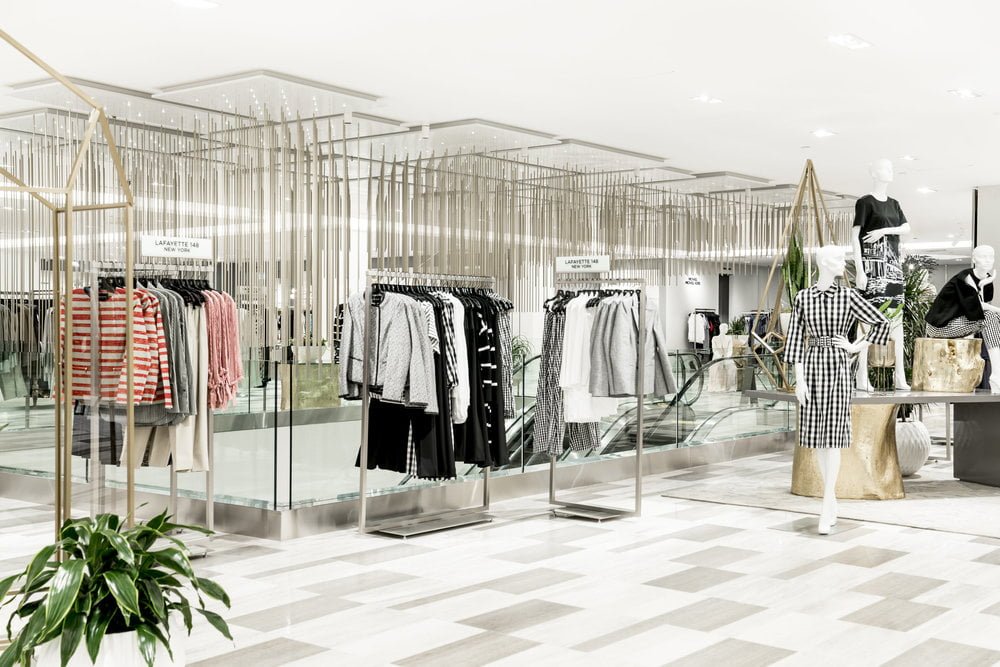
Saks Fifth Avenue has unveiled an impressive store in Calgary, spanning about 115,000 square feet over two floors. It’s Saks’ third full-line store in Canada — Saks entered Canada in February of 2016 when it opened two stores in Toronto. Saks has provided details including departments and designers that are carried in the Calgary store, as well as many of the photos in this article.
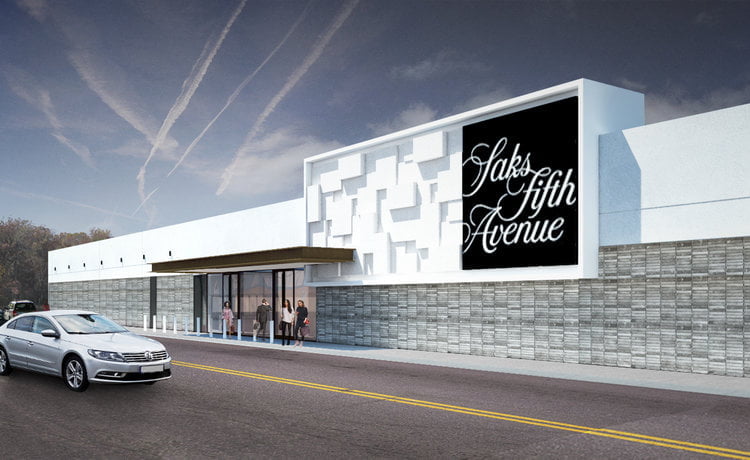
Located at CF Chinook Centre, the new Saks Fifth Avenue is a far cry from its previous tenant — Target, which occupied the space briefly and prior to that, a Zellers store which had been there for years. The entire space has been overhauled with a new exterior and interiors, coordinate by HBC‘s Store Design and Planning Team along with Edmonton-based engineering firm Stantec.
The new Calgary Saks features fashions for women and men, as well as an expansive roster of services that one would expect from such a luxury store. This spring, a new full-service restaurant will open, as well as a beauty salon. While it features most of the product categories and services found at most Saks stores, the Calgary location lacks the food halls (operated by Pusateri’s Fine Foods) found in Saks’ two Toronto stores.
(CLICK FOR INTERACTIVE GOOGLE MAP)
(RENDERING OF THE EXTERIOR OF THE NEW CALGARY SAKS FIFTH AVENUE STORE. IMAGE: VIA CRAIG NEALY/STANTEC)
The store’s layout is conveniently spread over two levels as follows:
First Floor:
Accessories
Cosmetics
Apothecary
Fragrances
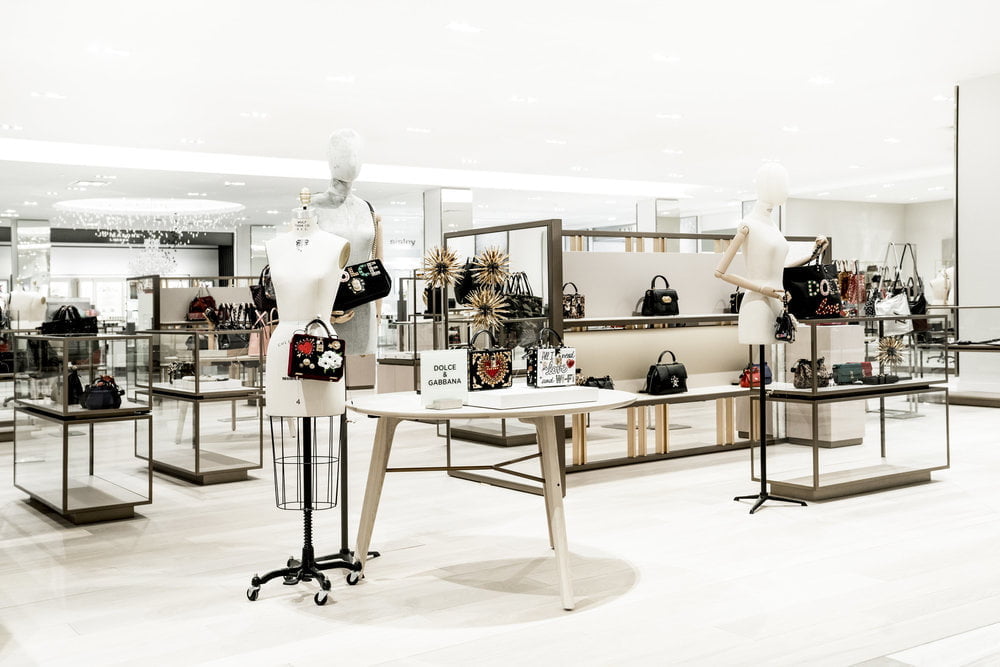
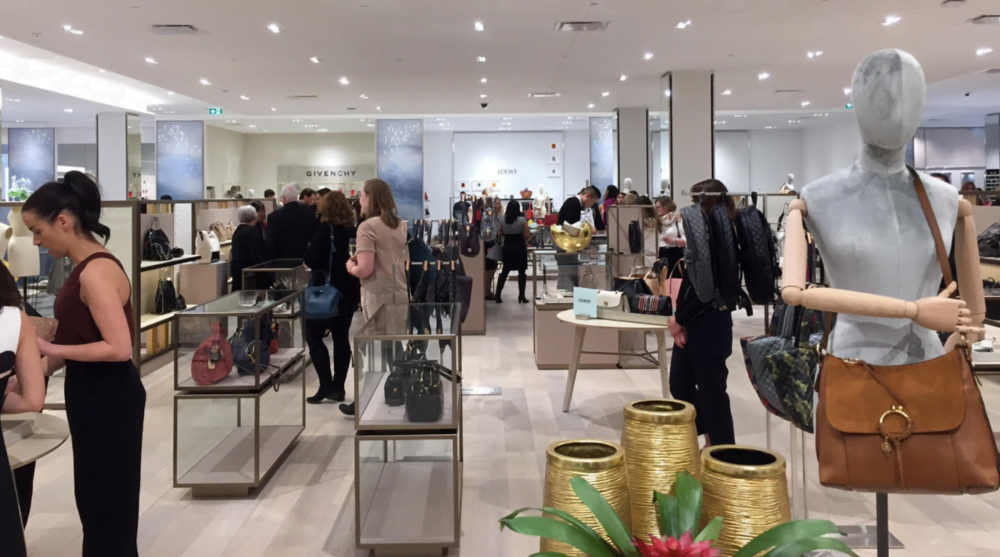
Handbags (including several soft shops for luxury brands as described below)
Jewelry
Jewelry Viewing Room
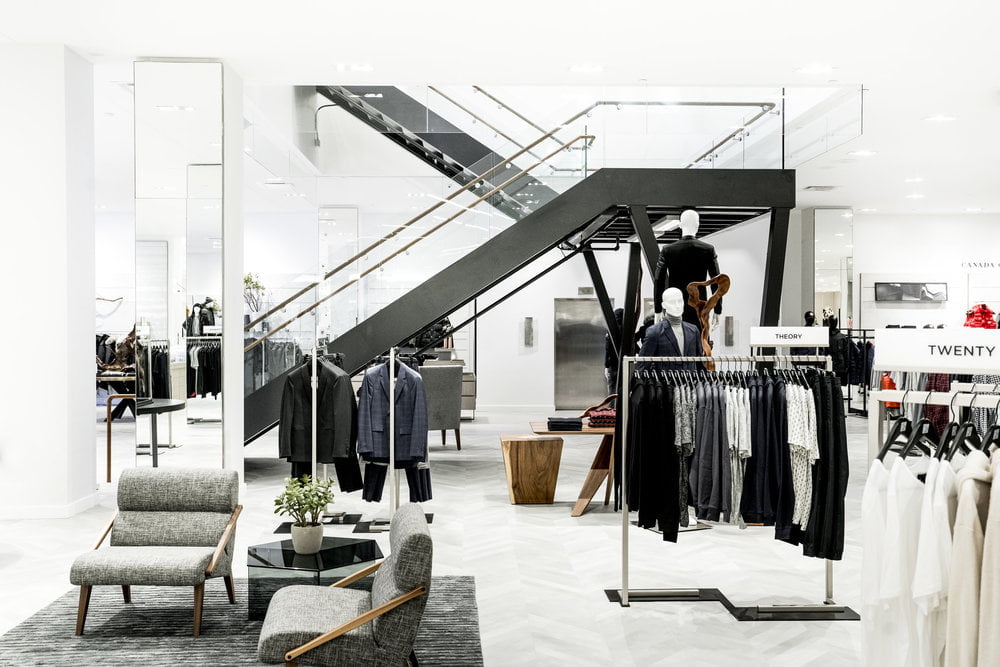
Men’s Store (fashions, footwear and accessories)
Men’s Lounge
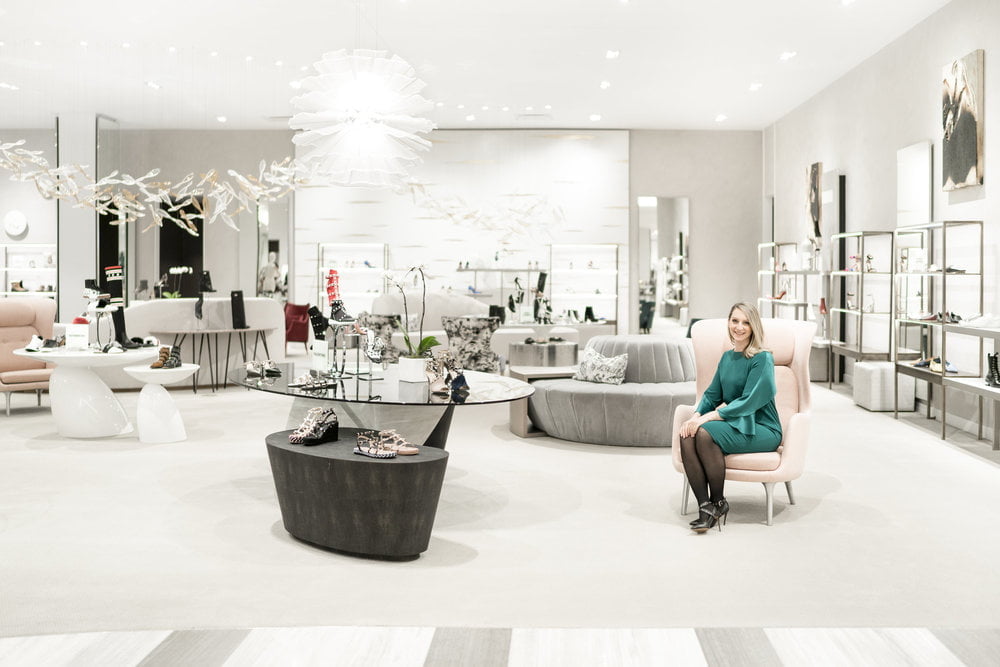
10022-SHOE (Women’s Shoes)
Second Floor:
Private Shopping Suites
Women’s Ready-to-Wear
Women’s Denim
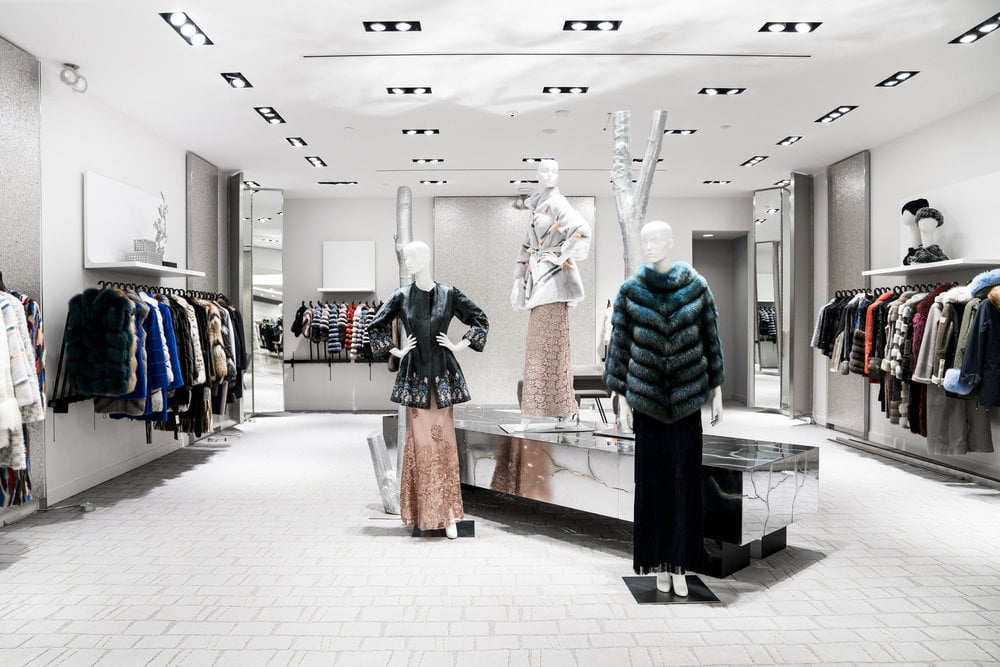
Fur Salon
Lingerie
Beauty Salon (Opening this Spring)
in-store restaurant ‘Buffo’ (Opening this Spring)
Buffo will be the name of the new in-store restaurant that will be operated by Toronto-based Oliver & Bonacini. It’s described as being “inspired by traditional recipes and quality ingredients,” with “the simplicity and generosity of rustic Italian cooking”. Buffo will serve lunch, dinner and weekend brunch, including pizzas, pastas, local meats and seafood.
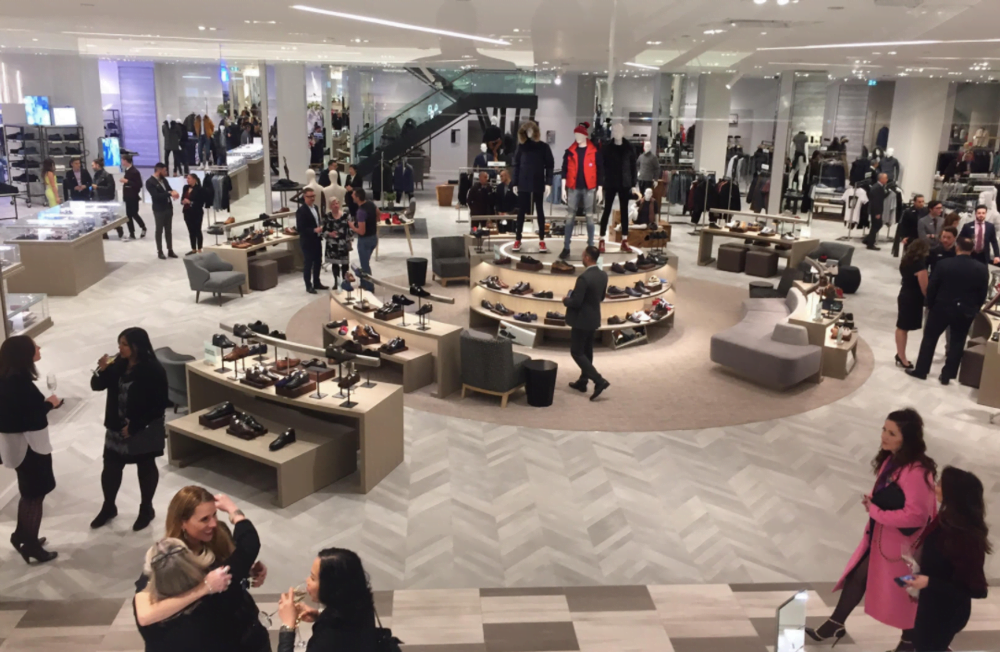
(AT THE PRE-OPENING GALA ON FEBRUARY 21, 2017. PHOTO: CHRIS KAMBOUROFF)
(WOMEN’S HANDBAGS DEPARTMENT. PHOTO: SAKS FIFTH AVENUE)
The beauty salon operator for the Calgary Saks has yet to be released. Interestingly, a beauty salon was supposed to have opened at Toronto’s downtown Saks in 2016 but to this day, the space sits vacant. A John Barrett salon was originally supposed to open but Barrett pulled the plug on a major Saks expansion before Saks opened in Canada amid controversy and litigation.
Calgary’s Saks includes various personalized services. Besides the private shopping suites mentioned above, the store includes styling services, custom creations/in-house alterations, made-to-measure and tailoring experts, treatment rooms and even private shopping parties.
(WOMEN’S CONTEMPORARY ON 2. PHOTO: SAKS FIFTH AVENUE)
This month, the store is also showcasing a temporary installation of local artwork from Newzones Gallery of Contemporary Art and Christine Klassen Gallery. Art will be shown in-store and in the windows throughout by artists including Johnathan Forrest, Yechel Gagnon, Birgit Piskor, Ulrich Panzer and Rocio Graham, among others.
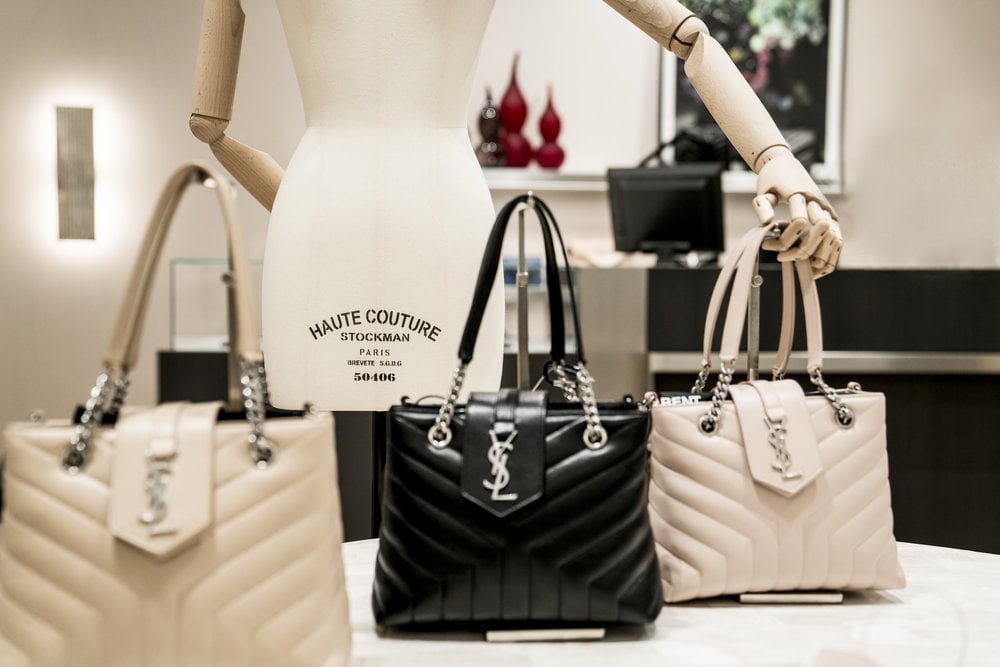
(SAINT LAURENT ACCESSORY BOUTIQUE. PHOTO: CHRIS KAMBOUROFF
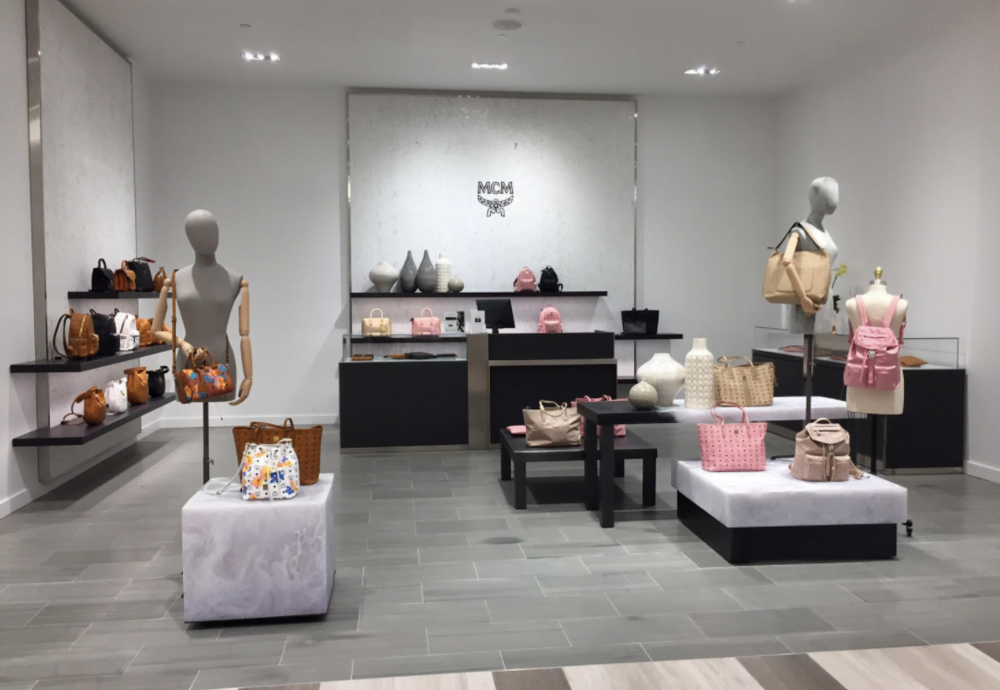
Saks has provided a list of brands carried in the new Calgary store. It would appear that many of the luxury brands carried at Saks in Toronto are not available in the Calgary store, and another interesting feature to note is that the Calgary accessory boutiques appear to be ‘soft shops’, insofar as they feature interiors that are not designed specifically for each brand. This could be a smart move to test designers in the Calgary market and is a contrast to Saks in Toronto, which features an expansive offering of hard shops from some of the world’s top luxury brands.
List/Description of Brands Carried + Observations
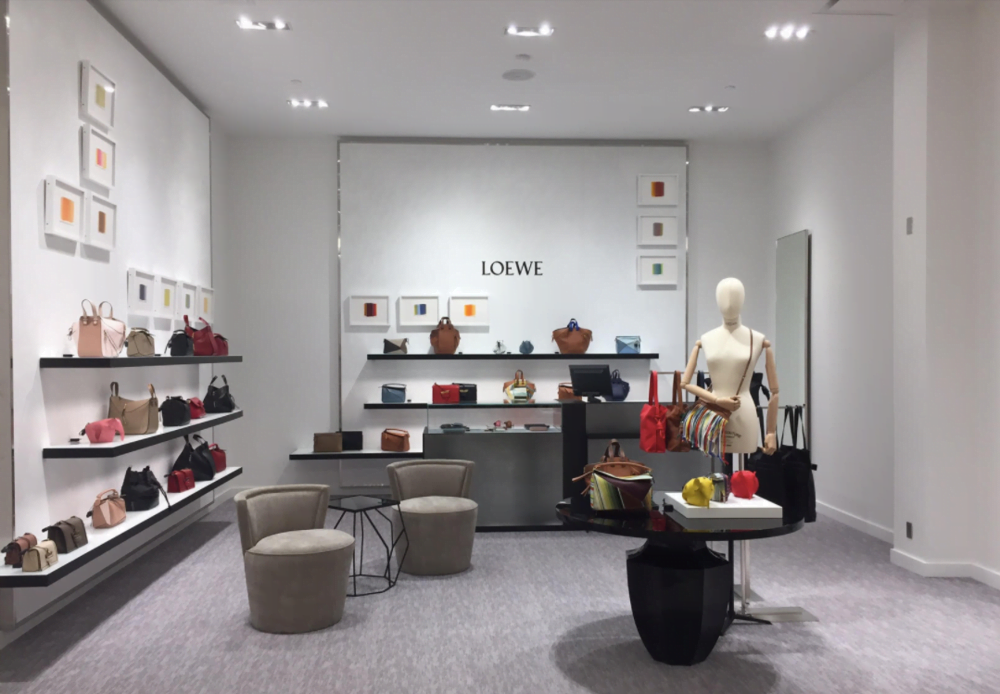
Saks listed designers carried in its women’s shoes and accessories departments. Accessory boutiques such as Valentino, Givenchy, MCM, Saint Laurent and Loewe line the walls of the expansive handbag space, and each of these boutiques are essentially spaces with product and nameplates for each brand. Saks has lumped its women’s shoe and accessory brands together and as of press time, had not responded to a request for a breakdown. Here’s their list:
Alice & Olivia, Alexander McQueen, Alexander Wang, Alexandre Birman*, Bao Bao, APL, Aquatalia, Balenciaga, Céline, Dior, Dolce & Gabbana, Fendi, Ferragamo, Gianvito Rossi*, Givenchy, Gucci, Isabel Marant, Jimmy Choo, Joie, Kate Spade, Manolo Blahnik, Marc Jacobs, MCM, Moncler, Loewe, MZ Wallace, New Balance, Nicholas Kirkwood, Oliver Peoples, Puma, Prada, Rag & Bone, Ray Ban, Rebecca Minkoff, Robert Clergerie, Saint Laurent, Stella McCartney, See by Chloé*, Schutz, Sorel, Strathberry, Stuart Weitzman, Tom Ford, UGGS, Valentino, Veja, and Vince.
Brands with a * are exclusive to Saks in Calgary.
(LOEWE ACCESSORY BOUTIQUE. PHOTO: CHRIS KAMBOUROFF)
(AT THE PRE-OPENING GALA ON FEB 21. PHOTO: CHRIS KAMBOUROFF
The women’s shoe department is called 10022-SHOE, a nod to the postal code of Saks’ Manhattan flagship which features an impressive footwear hall that takes up the majority of one floor and about 30,000 square feet.
Saks’ Calgary women’s ready-to-wear designer listing appears to lack many of the pricey luxury brands carried in Toronto’s Saks stores, such as Azzedine Alaia, Oscar de la Renta, Dior and others. The Calgary designer listing as supplied appears to be primarily contemporary in nature:
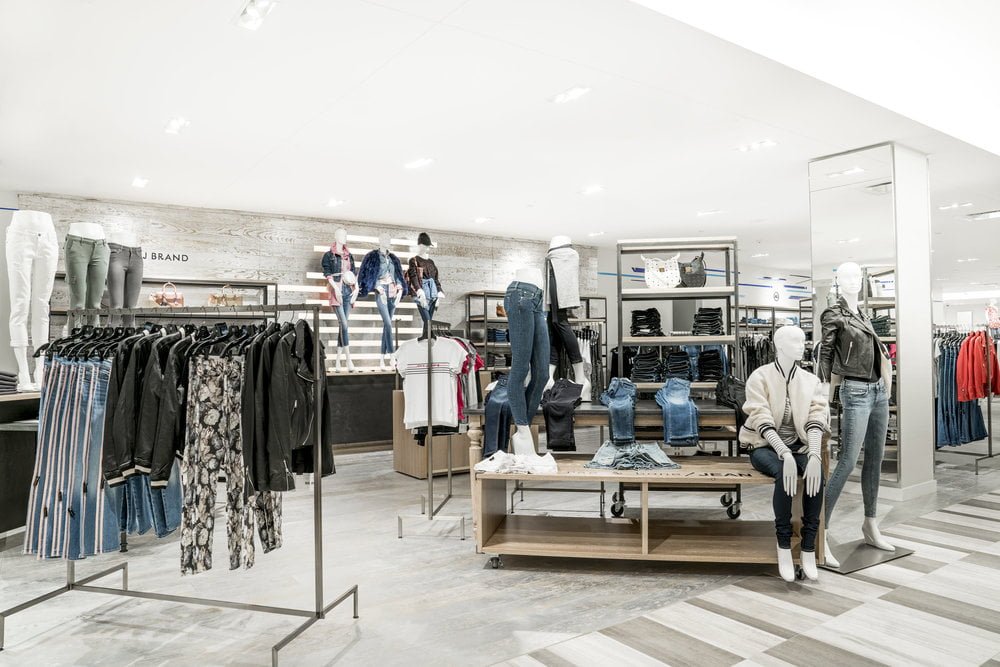
Cinq a Sept, Jane Post*, Barbour, Canada Goose, Moose Knuckles, Mackage, Elie Tahari, Lafayette 148 New York, Nanette Lepore*, Michael Michael Kors, Kobi Halperin, Smythe, Chiara Boni La Petite Robe, David Meister, ML Monique Lhuillier, Badgley Mischka, Aidan Mattox, Theia, Teri Jon, Rag & Bone, Helmut Lang, Derek Lam 10 Crosby, ATM Anthony Thomas Melillo, See by Chloé, Tanya Taylor, Alice & Olivia, Milly, Likely, Ramy Brook, Joie, Theory, AG, Paige, J Brand, 7FAM, Frame, Hudson, Current Elliott, Bailey 44, Equipment, Parker, Scripted*, Nicole Benisti*, and Jen7*.
Women’s jewellery at Saks includes some exceptional brands such as: Adriana Orsini, Alexis Bittar, Anzie, Hearts on Fire, H. Stern, Marco Bicego, Majorica, Ippolita, Pomellato, Lana, Meira T, Sydney Evan, Kenneth Jay Lane, Lele Sadoughi, Nest, and Temple St. Clair.
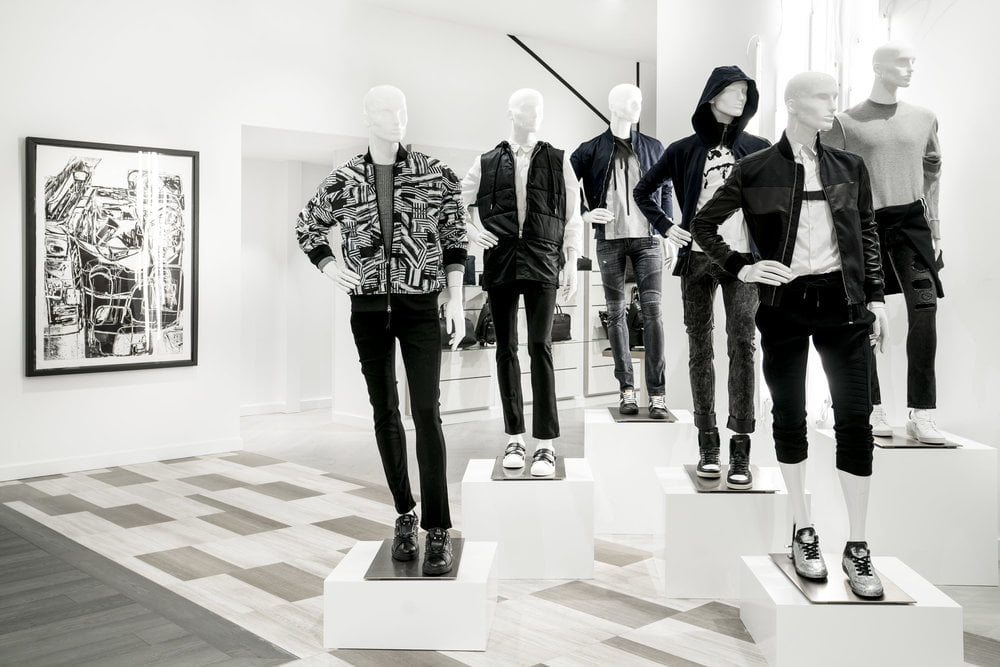
(THE MEN’S STORE ON 1 AND A STAIRWAY UPSTAIRS. PHOTO: SAKS FIFTH AVENUE)
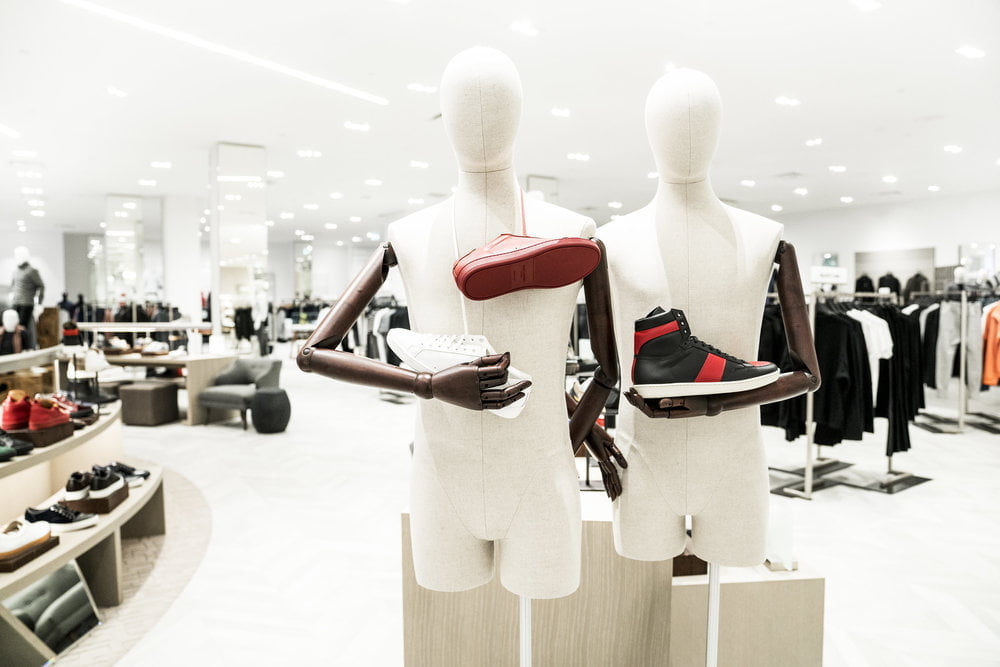
(MEN’S SHOES ON 1. PHOTO: CHRIS KAMBOUROFF
Saks also has a dedicated men’s department on the first floor that is laid out radially, with a bespoke series of hand-cast glass sculptures connecting the men’s department with the 10022-SHOE salon for women. The sculptures were hand-crafted in Czech Republic. We’re not sure if this is the full list of brands, but Saks provided the following: Boglioli, Canada Goose, Corneliani, J. Lindeberg, Helmut Lang, Madison Supply*, Moose Knuckles, MPG, Rag & Bone, Saks Fifth Avenue Collection*, and Theory. Saks in Toronto carries brands such as Dior Homme, Fendi, Saint Laurent and others, and it was pointed out that pieces can be ordered and shipped to the Calgary store.
Men’s accessories seem to include a few more well-known brands including: Bally of Switzerland, Canada Goose, Ferragamo, Giuseppe Zanotti, John Hardy, MCM, Movado, Ron White*, Rimowa, Saint Laurent, Saks Fifth Avenue Collection*, Shinola, Sorel, Tumi, and Valentino. Because Ron White and Sorel are listed, we assume that some of these brands include footwear.
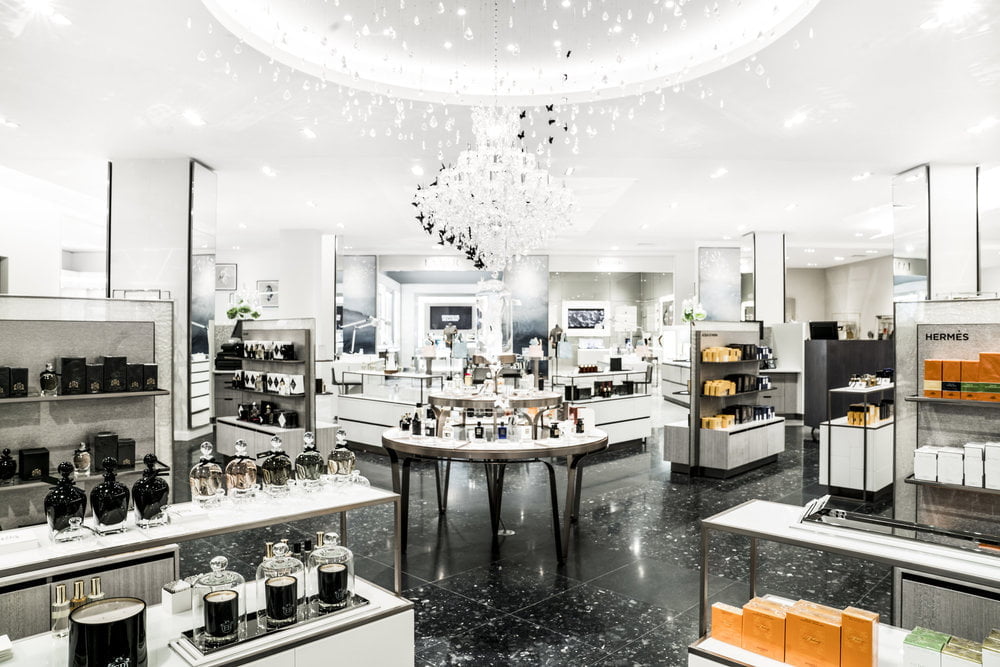
Women’s Beauty, Fragrance and Apothecary brands include the following: Acqua Di Parma, Giorgio Armani, Hermès, Chanel, Creed, Diptyque, EB Florals*, Penhaligons, Maison Francis Kurkdjian*, Ex Nihilo*, Kilian, Clive Christian Fragrance, Jo Malone, Byredo*, Tom Ford, Cellcosmet, La Prairie, Chantecaille*, La Mer, Valmont, Sisley, Clé De Peau, By Terry*, Estee Lauder, Laura Mercier, Tata Harper, and Mario Badescu.
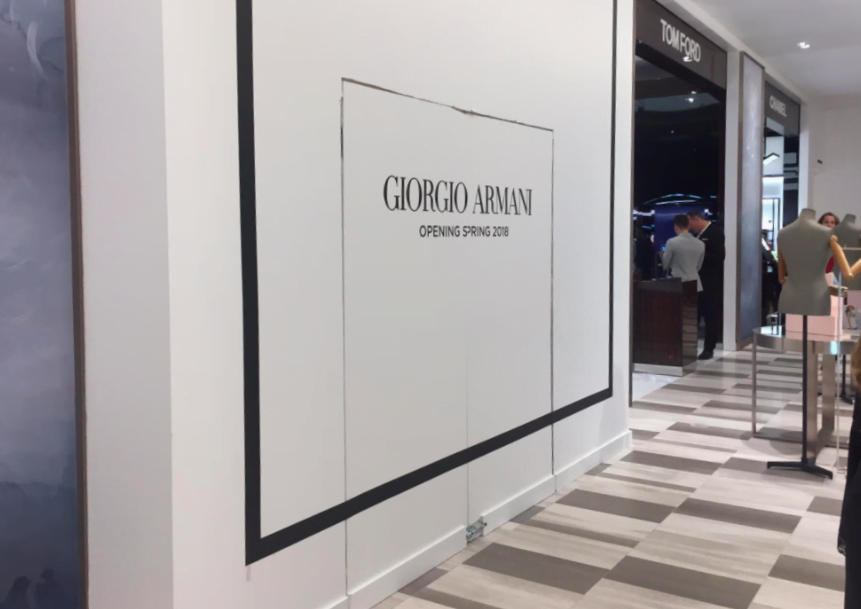
The Giorgio Armani beauty boutique, which will open soon, will be a first-in-the-world concept for the brand, according to Saks.
(OPENING SOON: A FIRST-IN-THE-WORLD CONCEPT GIORGIO ARMANI COSMETIC BOUTIQUE. PHOTO: CHRIS KAMBOUROFF
CF Chinook Centre is one of Canada’s most productive malls, according to Retail Council of Canada’s latest Shopping Centre Study. CF Chinook Centre was also home to Canada’s first Nordstrom store when it opened there in September of 2014 — Nordstrom carries a range of designer brands, though fewer luxury labels than Saks’ new Calgary store. Hudson’s Bay anchors the south end of the centre.
Calgary’s Saks will also compete with Holt Renfrew in the city’s downtown core. Holt’s spans about 150,000 square feet over four levels (three of which are retail) and includes many brands not available at Saks’ new CF Chinook Centre store, including Chanel (ready-to-wear and accessories), Prada, Hermes, Gucci, Louis Vuitton and others. Sources say that Louis Vuitton will be moving into a space at CF Chinook Centre, however, on the ground floor directly across from the mall entrance to Saks. Saks and Holts will compete fiercely in Calgary and while Saks has some leading brands, Holt’s appears to have more of the range one would find in a good Neiman Marcus store.
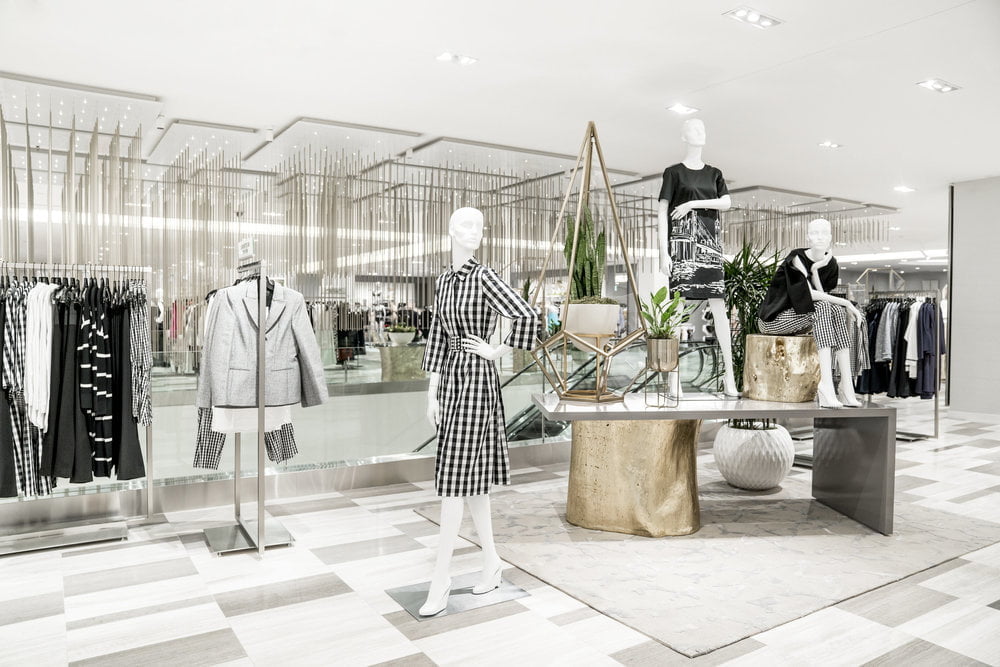
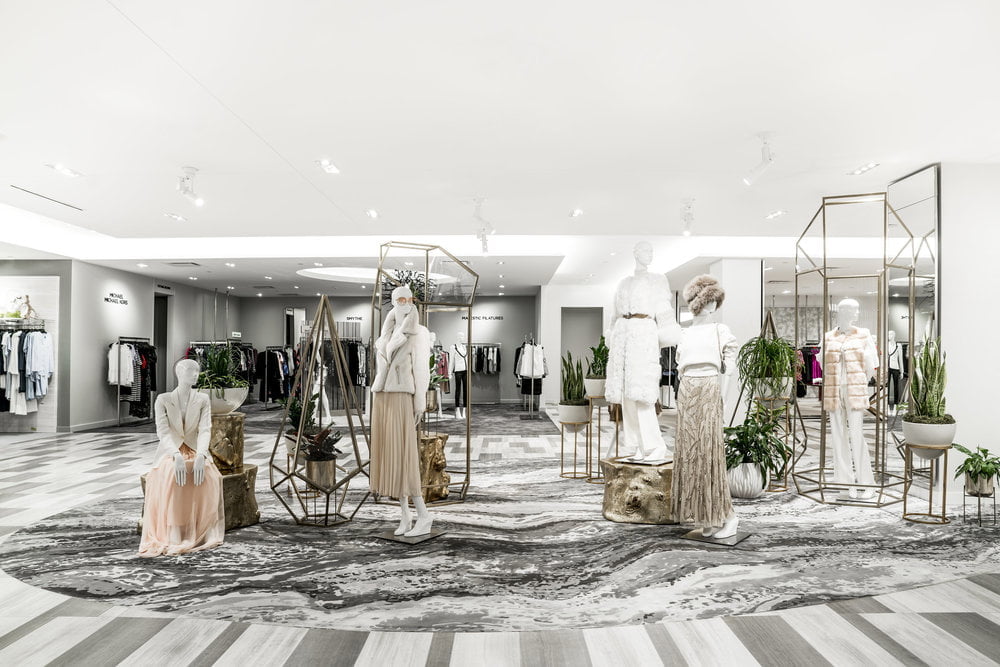
(WOMEN’S DESIGNER DEPARTMENT ON 2 — TORONTO’S SAKS STORES HAVE SIMILAR CARPETING. PHOTO: SAKS FIFTH AVENUE)
(MCM ACCESSORY BOUTIQUE — ONE OF SEVERAL ‘SOFT SHOPS’ THAT COULD BE RE-BRANDED IF A PARICULAR BRAND DOESN’T SELL IN THE STORE. SAKS’ TORONTO STORES FEATURE ‘HARD SHOPS’ CREATED SPECIFICALLY FOR SELECTED BRANDS. PHOTO: CHRIS KAMBOUROFF
Saks Fifth Avenue has also said that it wants to open at least one store in Vancouver, though sources say that a search for space is proving to be a challenge. One option would have been to insert Saks into downtown Vancouver’s existing 637,000 square foot Hudson’s Bay building, in a ‘shop-in-store’ configuration similar to that in downtown Toronto, and proposed for Montreal. Late last year, however, HBC struck a deal with co-working company WeWork to occupy the top two levels of downtown Vancouver’s Hudson’s Bay — sources say that it’s now unlikely that Saks could be an option for inclusion, given the building’s new configuration. As well, there are recent reports that HBC could sell the Vancouver store, which some are saying could fetch close to $1 billion.
The Hudson’s Bay Company also operates a separate off-price division called Saks OFF 5TH, which plans to operate about 25 Canadian stores by the end of this year. So far it has opened 16 locations, which means it will need to pick up the pace of store openings in order to meet the goal. Saks OFF 5TH operates one Calgary location at CrossIron Mills, just north of the city, and a second Saks OFF 5TH will be opening in last 2018 (construction begins in September) at CF Market Mall.
See below for more photos of Saks Fifth Avenue’s impressive new Calgary store at CF Chinook Centre.
1 of 5
(WOMEN'S ACCESSORIES. PHOTO: SAKS FIFTH AVENUE )
(SUNGLASSES AND SMALL ACCESSORIES. PHOTO: SAKS FIFTH AVENUE)
The Vancouver-based Comor Sports has as its motto Go Play Outside.
And since 1974 the retailer has been helping a growing number of people do just that as the company continues to grow its footprint in the market.
Carlos Strachan, part owner and general manager, says the company specializes in ski, snowboard and bike.
“We’ve been a ski and snowboard kind of an institution in Vancouver for 41 years. We’re the longest surviving ski and snowboard retailer in Vancouver,” he says.
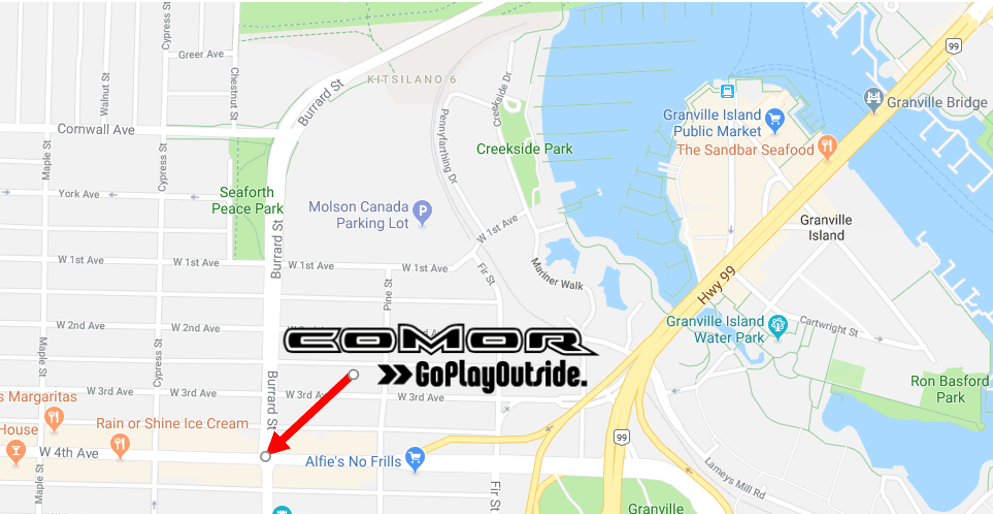
The company opened its new flagship store last month in Kitsilano, at the corner of Burrard Street and 4th Avenue, in 6,400 square feet of space.
The new store was designed by Cutler. The contractor was Krown out of Ontario, the subcontractor was Mekanix of Vancouver and millwork was done by Vancouver-based Peregrine, which is the largest retail fabricator in Western Canada and works with some of the country’s leading retailers.
Comor also has stores in Whistler and North Vancouver. The Whistler store has been open since 2002.
The first store was opened in Burnaby and was in operation for 41 years. That building is just being redeveloped so that location was closed and the retailer moved across to North Vancouver in September 2017.
“That was a Vancouver institution as far as the ski and snowboard community goes,” says Strachan.
Steve Curell has been the majority owner of Comor for 42 years.
Comor has become a destination for outdoor enthusiasts to come check out all the latest and greatest gear.
CLOSING OF BURNABY LOCATION. PHOTO: COMOR FACEBOOK
On its website, the retailer says: “Our team lives the lifestyle that we sell, so whenever you are looking for new gear you can be confident the advice you receive will make sure you have the best day in the mountains or in the city. Comor is very active in the communities we cater to. We support local mountain bike trail associations (WORCA and NSMBA), Bike to Work Week, Whistler Gran Fondo, Vancouver Freestyle Ski Club, Mount Seymour Progression Jam, Globo Surf, as well as many others.”
“We don’t have aspirations to be national. We enjoy doing retail and despite our big footprint we are a fairly small operation. We don’t have aspirations of growing it into a conglomerate by any means. We may add one more store,” says Strachan.
“But we also own Pacific Boarder which is a snowboard and surf shop.”
It’s located right next door to the flagship Comor store and has been a fixture there since the late 1970s. The 6,000-square- foot store boasts the largest snowboard wall in Vancouver, and was one of the first Burton dealers in Canada. In addition to a vast selection of snowboard, surf, and skateboard gear, Pacific Boarder stores carry an extensive selection of stand-up paddle boards, casual wear, footwear, and accessories.
Strachan says what separates the company from the bigger sporting goods stores is its hands-on approach.
“I’ve worked for the company for 15 years and have pretty well done every job in our company. The difference with us is that I’m downstairs on the floor selling stuff, interacting with the staff and being the face of the company on the floor as well as doing the back end stuff whereas in bigger companies . . . you don’t see that kind of contact with the customer from the back office people,” he says, adding the majority of the managers have been with the company for at least 10 years.
“So we have some great staff retention and that along with the local appeal and heritage sets us apart from other retailers.”
Flexiti Financial, a provider of point-of-sale consumer financing and payment technology, is now helping Canadian retailers grow sales through e-commerce – an increasingly critical sales channel.
Peter Kalen
The Toronto-based company has launched an online consumer financing offering at checkout, the first of its kind in the country.
Peter Kalen, founder and CEO of Flexiti Financial, said the launch levels the playing field with U.S. merchants who have had similar options for years due to innovative new lenders entering the marketplace.
The easy to integrate online lending platform offers credit to customers at a low cost to retailers.
“We have created the most technologically advanced financing platform in Canada to provide merchants better sales financing options to boost their bottom line,” said Kalen. “With our platform, our retail partners have seen up to a 380 per cent increase of in-store financed sales. As Canadians continue to embrace online shopping, Flexiti Financial is thrilled to offer our solution to help merchants achieve the same sales online.”
“The objective is to make the purchase more affordable for the consumer and to help retailers grow their sales.”
And that is important in this day and age as the retail market is increasingly more challenging and competitive.
Flexiti Financial, a sales financing company, launched in 2013. The company helps retailers increase their bottom line by providing a better sales financing option than a standard credit card with lower interest rates, longer payment terms and revolving credit. Using a mobile application process and ID scanning technology, it provides retailers with quick, simple and instant POS financing for customers. The financing application can be completed on any device, anywhere, and provide credit approval within minutes. The company says it has higher than average approval rates and offers retailers’ customers flexible payment options at interest rates significantly below current options in the market.
“Every retailer we talk to says they’re blown away by how much their sales are growing through our point-of-sale financing platform,” said Kalen.
The company says its POS lending platform offers low rates for retailers who want to offer their customers flexible payment options, such as zero per cent interest financing. They can simply select “Flexiti” as a payment method during checkout, apply, and receive approval for Flexiti’s virtual credit card – within seconds. Merchants receive payment in less than two days.
The new online financing product provides customers with access to open credit, with interest rates as low as zero per cent, through its virtual credit card, eliminating the need to re-apply for financing towards future purchases. For merchants utilizing the product, this is a major advantage over instalment loans which require new applications for each purchase. The online lending platform is easily integrated with Flexiti Financial’s existing in-store POS system, allowing retailers to offer the same financing solution across all sales channels to increase revenue and build loyalty through repeat purchases, whether in-store or online.
Flexiti says the potential impact of online financing for retailers in Canada cannot be ignored. In the coming decade, it is estimated that 35 per cent of Canadian retail sales growth will be delivered online, up from seven per cent today.
Vancouver-based ecommerce furniture retailer Article continues to see incredible growth in its operations with more revenue, more staff, more warehouses and a bigger headquarters.
Every aspect of the business is growing for the furniture and home decor brand.
Aamir Baig, co-founder, Director and CEO, says the company was founded in 2011 by himself, twin brothers Andy and Sam Prochazka, and Fraser Hall and it launched its first website in 2013.
“We started Article because we saw an opportunity to make a difference. Furniture-buying was a frustrating, time-consuming, expensive experience. People were paying too much, product quality and customer service were inconsistent, and the whole process took way too long. We knew there had to be a better way,” says Baig.
AAMIR BAIG
ANDY PROCHAZKA
FRASER HALL
“We’re engineers by training and started by looking at the inefficiencies that existed in the traditional retail model. We discovered that when it came to furniture, forgoing the brick and mortar experience would allow us to offer a quality of product that is unrivalled for the price, streamline the shipping and delivery process, and deliver a remarkably better experience.
We were confident we could make beautiful, high-quality furniture accessible.”
Just how much growth has the company seen?
In 2016, revenue ballooned by six times and by two times in 2017.
In 2017, Article did $100 million USD in sales and it intends to just about double revenue again this year.
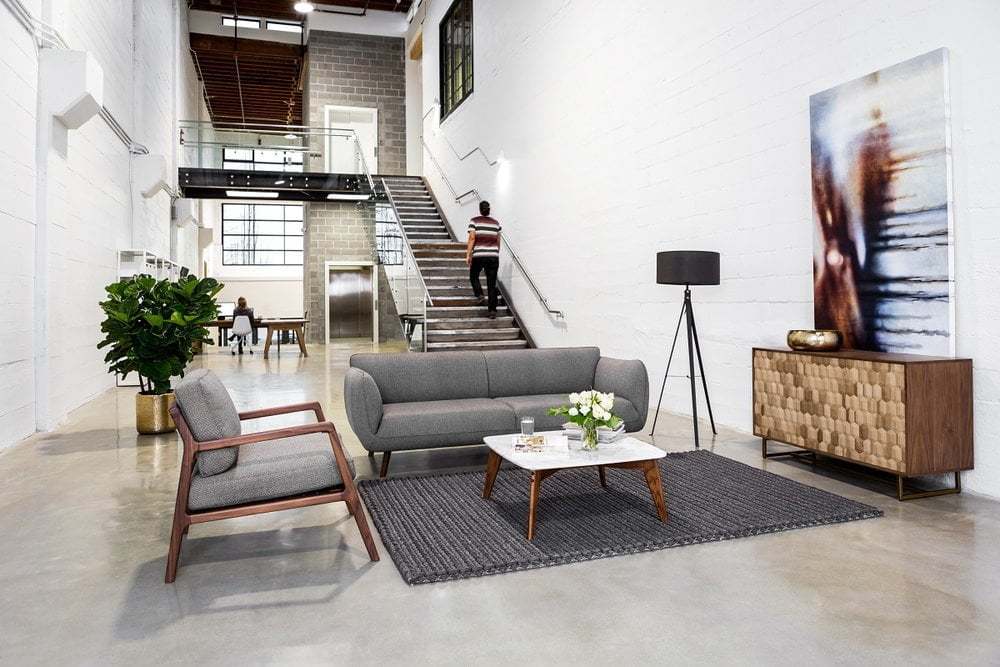
In August 2017, it relocated its headquarters from 5,000 square feet to 115,000 square feet in Vancouver’s industrious Strathcona neighbourhood. It’s now located at 1010 Raymur Avenue.
The number of employees grew from 40 at the end of 2016 to 150 at the end of 2017 and more than 100 were headquarter employees.
The company now has warehouses in Seattle, Los Angeles, New Jersey and Jacksonville.
Baig attributes the company’s growth and success to its obsession of delivering a truly remarkable experience.
“We don’t just aim to be a little bit better, but so much better that people talk about it. As a result our customers don’t hesitate to recommend us to their friends and family – and purchase from us again themselves – which has created a phenomenal foundation of organic growth,” he says.
“For example, the delivery experience and speed is extremely important to our customers, but can be complex when it comes to bulky items like sofas. A traditional retailer could take up to three to four months to deliver a sofa. Today, we deliver more than 10,000 articles of furniture a month. In 2017, more than 80 per cent of our orders were delivered in less than two weeks, and 30 per cent in under a week. We have even begun some same and next-day deliveries in our major markets. When you get that level of service, and you are saving more than 30 per cent on the comparable quality product without sacrificing style, why would you shop anywhere else?”
Baig says the retailer continues to see huge potential for growth in the U.S. and Canada and it plans to stay laser-focused on this market, building a lasting brand that delivers remarkable furniture experiences: high-quality furniture at unrivalled prices, delivered fast through a convenient experience, by taking a digital-first approach.
“For 2018, the delivery experience is going to be a big focus for us. We’ve recently expanded our distribution network and added a fourth warehouse in Jacksonville, Florida to help further drive down delivery times — it is located within an eight-hour drive of 60 million potential customers — which we anticipate will be fully operational by the end of Q1,” he says.
“Also, we will grow new and existing product categories throughout the year to ensure we’re meeting the needs of our customers. We plan to nearly double our existing product range and strengthen our offering in key product categories like bedroom and outdoor.”
Baig says that what makes Article different is that it looks at the furniture industry with a digital-first mindset. It doesn’t think or operate the way a traditional furniture retailer does. It approaches the experience in a new way, applying technology to get high-quality furniture to customers faster.
Baig often uses the word experience because it reflects the company’s commitment to the entire end-to-end process: discovery, inspiration, shopping, delivery, setup, customer support and care.
“Our focus is on building and maintaining relationships instead of processing transactions. This customer-centricity, combined with our ability to unlock efficiency through the application of technology, allows us to create remarkably better furniture experiences,” he says.
“The retail landscape is changing, and this is driven by customer expectations. The demand for convenience, selection, and value is currently being best met by direct-to-consumer ecommerce brands. As long as we continue to create more value for people to shop online, ecommerce will continue to grow. I believe the key is to listen to your customer, observe, understand, and embrace the truth so that you’re always innovating and creating experiences that truly add value. Whoever is able to best fulfill those needs — online, offline, or some mix of the two — will see growth in the years to come.”
In the fall of 2017, Shoppers Drug Mart launched a pilot project which was a standalone Leaside neighbourhood store in Toronto, providing customers with a new resource to help them take charge of the way they age.
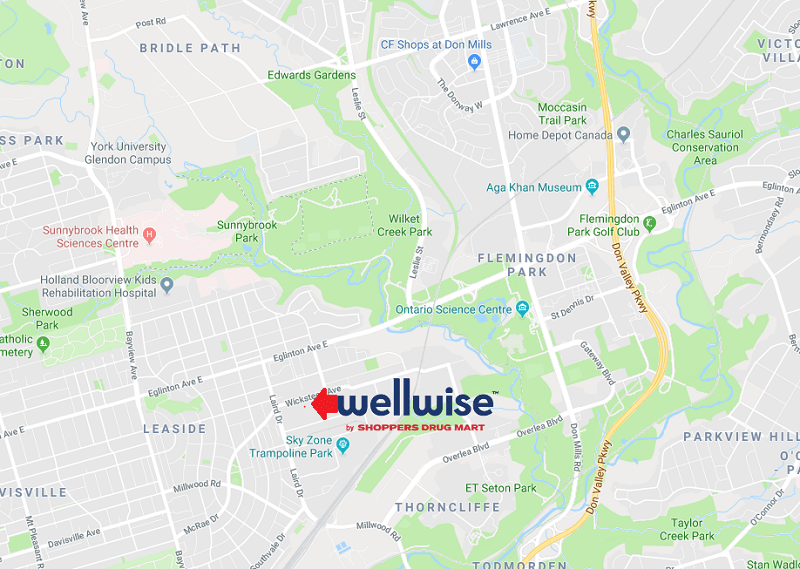
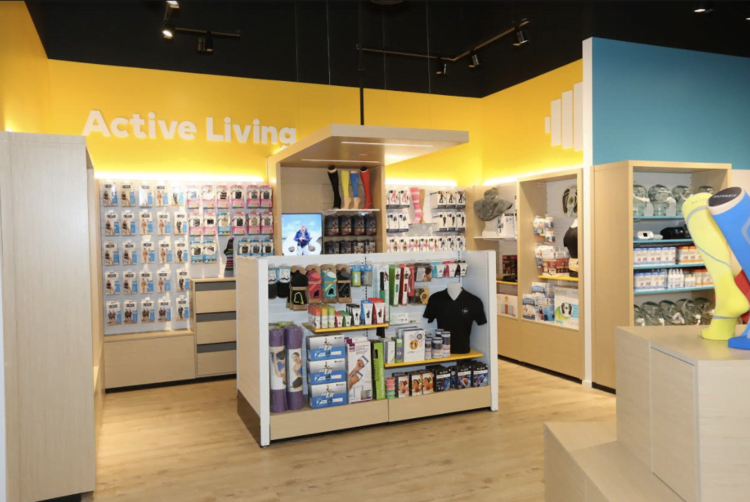
Wellwise, a first-of-its kind retail experience with specialized products and expert advice to help Canadians stay active and well, opened its first location at 65 Wicksteed Avenue, in 2,500 square feet of selling space.
Now the company is building on the success of that bricks and mortar store by launching wellwise.ca – an ecommerce site offering Canadians specialized products to make life healthier, easier and more active.
Scott Wilks, Vice President of Shoppers Home Health Care and Wellwise, said the ecommerce site features a broad product selection and offers direct-to-home deliveries.
“At Wellwise, people can find everything from travel accessories to mobility products to help them stay in their homes longer,” said Wilks. “No matter what stage of life people are in, Wellwise will be an important resource for Canadians looking to take control of how they age.
“What that really does for us is it opens up our offerings to a far greater number of Canadians.”
The ecommerce site will be available to all Canadians, except those in Quebec right now. It will be launched in Quebec later this year.
Offerings include everything from low-impact fitness to compression socks and physiotherapy products to supports and braces, mobility products and tools and gadgets to help Canadians stay active and well.
In addition to single product purchases, the site also offers a subscription service to automatically ship frequently-used items at regular intervals. Customers shopping on wellwise.ca get the added benefit of earning PC Optimum points on their purchases.
Wilks said the ecommerce site opens up an avenue for the caregiver making it much more convenient for them to purchase products for the people they are taking care of.
“In creating Wellwise, we put the focus on wellness, not illness,” said Theresa Firestone, SVP, Healthcare Businesses, Shoppers Drug Mart. “Wellwise offers an enjoyable shopping experience that gives Canadians the tools and advice they need to age powerfully, not just comfortably.”
Wilks said the second bricks and mortar store is a renovation of an existing home health care store in the Etobicoke area and will open in April.
“It’s a larger format. It’s about two and a half times the Leaside store. It comes in about 8,000 square feet,” said Wilks. “It carries a few more of our innovative ideas such as within it we’ll have apartment vignettes that show some of the equipment and how it would look in an apartment, how it would look like in your home.
“We’ll have an innovation corner as well as a community room for lunch and learns and for the community to use as well.”
Wilks said the pilot project for stores will continue to be monitored by the company to see where it goes from these two initial locations. The ecommerce site was always a component of the overall strategy which extends the company’s reach and is a strong complement to the existing Shoppers Drug Mart network.
The first store has seen great response from customers, he said.
“We’ve had overwhelming positive comments just about the experience, the interaction (with products) . . . and a just more pleasant customer experience,” added Wilks.