(CELINE WOMEN'S READY-TO-WEAR BOUTIQUE ON 3. PHOTO: HELEN SIWAK)
French luxury brand Céline has further expanded its presence in Vancouver with two new shop-in-store boutiques. A couple of months ago, LVMH’s Céline opened a women’s ready-to-wear boutique on the second floor of Holt Renfrew in CF Pacific Centre and last week, it unveiled a beautiful new accessory boutique in Holt’s expanded street-level accessory hall.
With the angular store interiors and product directly viewable from busy Granville Street, the modern interior design is similar to other Céline stores around the world. Danish artist FOS is responsible for the creation of custom pieces inside, such as a large copper ceiling chandelier and terracotta sculptures. A concrete edged sofa is centrally positioned with podiums of onyx and tropical plants (including a banana tree) being used to create an intimate industrial space with an ambience that perfectly reflects the sharp style of the brand.
The new Holt Renfrew Céline boutiques has put Holt’s in direct competition with Nordstrom at CF Pacific Centre, which also features separate shop-in-store Céline accessory and ready-to-wear boutiques. Sources say that Céline does very well at Vancouver’s Nordstrom flagship — as do many luxury brands and as a result, Nordstrom’s Vancouver store is a top performer in the chain along with the Seattle flagship.
It is not the first time that Céline has had a physical presence in Vancouver — for a time in the 1990’s, Céline operated two standalone franchised boutiques in the city centre, which were part of the Collections International fashion group. A street-front Céline boutique was located at 755 Burrard Street next to a Chanel boutique — an expanded Coach store now occupies both of the spaces. As well, at one time, the Pan Pacific Hotel boasted a luxury offering that included boutiques for Céline and Valentino, as well as shops such as Furs by Jacques and Farideh French Imports.
Céline is expected to continue its Canadian expansion in Holt Renfrew on Bloor Street in downtown Toronto. More details will be revealed shortly.
See more photos, provided by Helen Siwak, below as well as a video of the Holt Renfrew boutique.
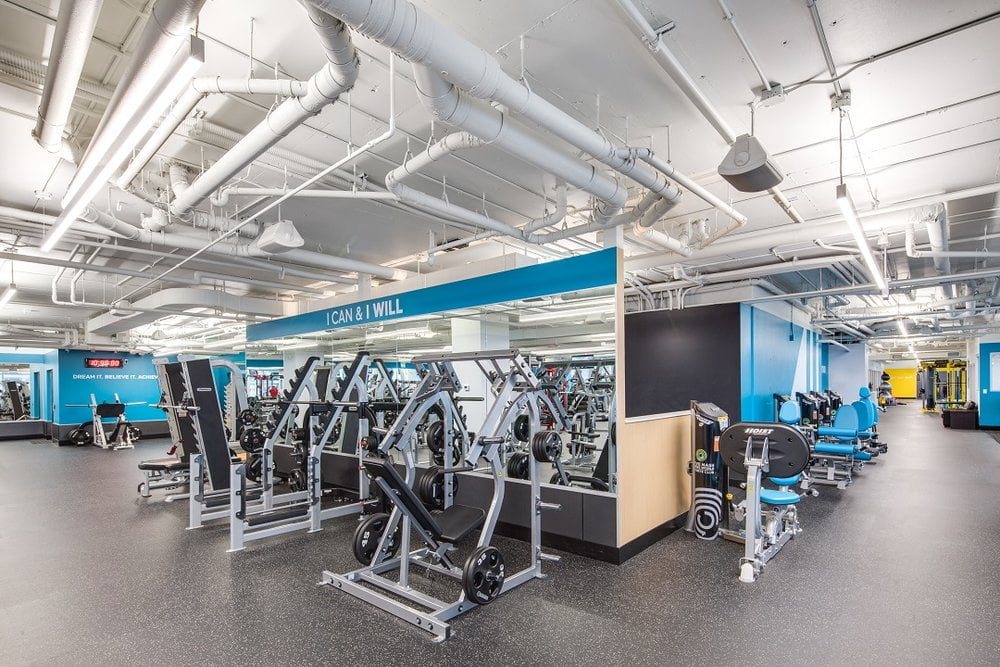
Chris Smith, president and Chief Operating Officer of the popular brand named after the National Basketball Association great player, said the company has grown from 13 clubs seven years ago to 23 today.
“We’ve put 10 more in the ground in the last seven years and intend to continue on that pace of growth and expansion just even here within B.C. and certainly ideally long-term potentially beyond the borders of British Columbia when the right opportunity presents itself and we think it would be beneficial to the business,” said Smith.
There is one location in Kelowna, one on the island in Victoria and the rest of the clubs are all in the Lower Mainland.
It recently opened two new locations on Vancouver’s North Shore – the Lonsdale Fitness World in North Vancouver, and the Park Royal Sports Club at Park Royal Shopping Centre in West Vancouver.
Fitness World itself was originally founded in 1959.
“It was the longest standing fitness presence in B.C. and we always have been and we’re certainly proud of that,” said Smith.
But the company in its current form was essentially born in 2008-2009.
“Everything we do is really about finding the right fit for our culture and the communities . . . Certainly looking for those opportunities as they might exist for us in the future,” said Smith.
He said a few things separate Steve Nash Fitness World & Sports Clubs from competitors.
One is the fact that the company is a local group.
“We’re proud that we’re B.C. and Canadian based,” said Smith.
“Beyond that, there’s certainly a level of service and differentiation there. I think a lot of people in the fitness business would certainly speak to that. ‘Hey our service level is different or we take care of people differently’. But I would just say when you measure factually, objectively, our member penetration rates as it relates to members who participate with a personal trainer or if you were to talk about percentage of members that engage in group fitness on a regular basis, our statistics are fairly overwhelming and I would say far ahead of the North American average in terms of what folks do and how they engage in our business.”
Ultimately, he said, it’s a testament to the team and how they engage members on a regular basis.
“Making sure they have a place that they’re comfortable, confident and motivated to come work out at,” said Smith.
“Everything we do on the fitness side of things or personal training or what we do on the group fitness side of things, we partner with some key strategic partners. The vast majority of what we do is all built in-house. So we have a lot of our in-house development and training and onboarding in course curriculum development. It’s all done from our team to be able to deliver a world-class experience to those members.”
Editor’s Note: Vancouver-based Cutler designed the space and selected fixtures were fabricated by Peregrine.
McArthurGlen Designer Outlets at Vancouver International Airport has announced a significant expansion that breaks ground this week and is scheduled to be completed in the spring of 2019. The award-winning outlet centre opened in July of 2015 and since then, it’s welcomed more than 10 million visitors.
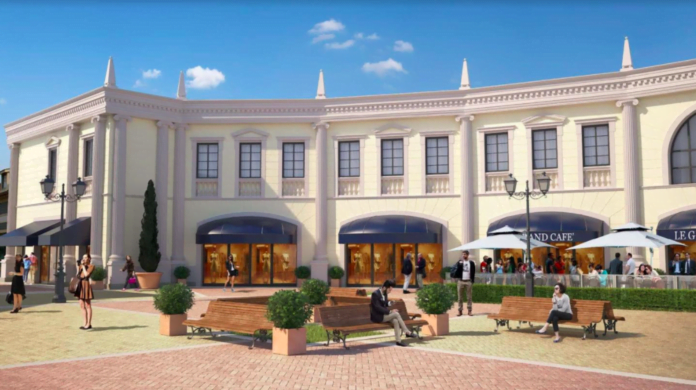
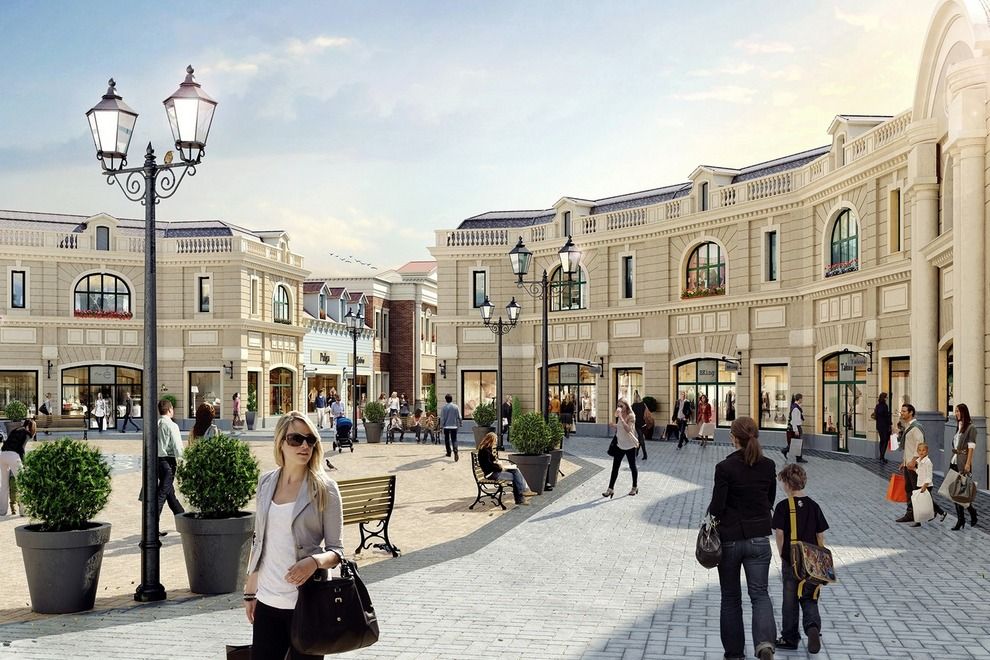
The second-phase expansion will add 84,000 square feet and 35 new retailers to the centre, which currently spans about 240,000 square feet. The centre will remain open during construction. McArthurGlen Vancouver is unique in its design, featuring an open-air village style with piazzas, cobblestone walkways and a variety of historical-looking facades. The aesthetic inspiration for McArthurGlen Designer Outlet Vancouver Airport is drawn from the regional architectural styles of Western Canada, according to the landlord, “combined with the sophisticated European style for which McArthurGlen is so renowned”.
That includes design elements that are inspired by iconic Vancouver architecture such as the city’s first post-office building that was built in 1937, the Vancouver Rowing Club (1911), and the distinctive brick facades associated with the city’s historic Gastown district.
(CLICK FOR INTERACTIVE GOOGLE MAP)
McArthurGlen says that over the past 32 months, the centre has seen consistent growth and increased foot traffic — and it got off to a strong start in 2015 when the centre welcomed over 170,000 visitors on its opening weekend. The centre broke records and has received several accolades including the prestigious Best New Development at the ICSC Canadian Shopping Centre Awards, the NAIOP Commercial Real Estate Award of Excellence for Retail Development and the prestigious MAPIC Award for Best Outlet Center.
Robert Thurlow, General Manager of McArthurGlen Designer Outlet Vancouver Airport, noted that the success of the centre is a result of a mix of locals and tourists. “We have seen tremendous support from local communities and tourists from all over the world and we’re proud of our growing list of awards and various in-centre events and activities. As one of Canada’s best performing malls, we are excited to expand our existing offer, elevating the retail experience for our guests and brand partners,” he said.
“Shopping, Chinese restaurants, visiting Steveston – those are the top three things visitors want to do while in Richmond,” said Bruce Okabe, CEO of Tourism Richmond — Richmond includes a mix of retail that includes Asian-themed malls, independent retailers, and a regional shopping centre (CF Richmond Centre) that features a more mainstream mix as well as a Hudson’s Bay anchor.
Vancouver International Airport benefits financially from having the McArthurGlen Outlet on-site. “The Designer Outlet Centre not only creates jobs and encourages tourism for our local community, it is one of the ways we look at generating revenue outside of airport operations with the goal of keeping costs for our passengers and airlines low. This innovative business model enables us to continue building YVR as a world-class connecting hub,” said Scott Norris, Vice President, Commercial Development, Vancouver Airport Authority.
(A THREE-YEAR OLD LEASE PLAN SHOWS ROUGHLY WHERE PHASE 2 WILL BE LOCATED — NOT ALL TENANTS SHOWN ON THE PHASE 1 PLAN ENDED UP MOVING INTO THE CENTRE)
McArthurGlen Designer Outlets in Vancouver is located near Templeton Station on the Canada Line Skytrain route, and is also accessible by car — being beside the airport has made the centre an attraction for tourists.
In 2015 when we first reported on the centre, plans were said to include a second-phase expansion that would add another 140,000 square feet, with 150 retailers spanning both phases. A spokesperson for McArthurGlen told Daily Hive that a decision was recently made to split the remaining expansion space into two further phases, and that there is no timeline for when the third phase could occur.
McArthurGlen, based in London, UK, is a publicly traded company that develops and manages designer outlet malls. The Vancouver centre is currently its only location in North America — other locations are in the UK and continental Europe. Over the next three years, McArthurGlen plans to add another 1.6 million square feet of retail space to its 24-centre portfolio.
“We’re basically a chocolate lover’s paradise,” said Dominique Brown, CEO of the company. “We have been doing this for several years now. I’m not the founder of the company but I acquired the company in 2012 and we decided to launch what would be a completely new take on a chocolate store. Really create an experience that provides a memorable experience to anyone who walks through the front doors.”
“Basically what Chocolats Favoris is all about is it’s a cross between an ice cream parlour and a chocolate shop.”
Chocolats Favoris Interior
The brand is well known for its high-quality artisanal chocolate as well as its ice-cream dippings made out of pure, real chocolate. It has 12 exclusive chocolate flavours.
It also sells canned chocolate fondue.
“It’s something that we basically invented in 2013 which was an incredible success,” said Brown. “It really is a store that is unlike any other. The concept of it and the look of the store is unique.”
The company was founded in 1979 with its first location in Lévis, just outside Québec City. It was originally a company mostly making molds for Easter.
Today, the company has 32 chocolate shops in Canada with stores in Quebec (27) , Ontario (four) and British Columbia (one).
The B.C. store is in Victoria. Ontario locations are in Orleans, just east of Ottawa, Aurora, Ajax and Vaughan.
“The real unique thing is all the different flavours of chocolate that you can taste at Chocolats Favoris,” said Brown.
Almost every single product in the store is manufactured in Quebec City where its corporate office is located in 42,000 square feet.
The Vaughan store opening is part of Chocolats Favoris’ Ontario expansion plan, which will continue with at least three more chocolate shops in Guelph, Kanata and Barrhaven in the Ottawa region. It also has major plans for international expansion eventually.
Store locations average about 2,000 square feet.
“We’re hoping to conquer the world of chocolate, nothing less,” said Brown. “When I acquired the company in 2012, there were only three locations so we have opened almost 30 since then and we’re opening more and more stores every year. We still have several stores to open in the Quebec market but most of our development will happen in Ontario I would say for the next two years at least. There’s a huge market there for us that we want to expand in.
“And we’re also looking for Alberta and eventually of course British Columbia to continue our expansion there.”
Brown said he didn’t want to commit to a number of how many stores the company will eventually have but did say that by the end of this year he hopes to have at least 40 stores in Canada.
The unique Orangetheory Fitness concept has an ambitious expansion plan for Canada, forecasting the brand will have more than 100 studios in the country by the end of the year.
Hifa Maleki, Vice President, Franchise Development & Operations OTF Canada Inc., said the first location for the brand opened in Fort Lauderdale, Florida in 2010.
The first Canadian location was in St. Albert, Alberta about four years ago. Recently, it opened its 67th location in Canada and about 120 licences have been sold in the country.
“The growth has just been amazing,” she said.
Orangetheory Fitness
“Our development schedule is pretty aggressive for the next 18 months.”
Maleki said the goal is to open more than 200 locations in Canada eventually. The brand will have a minimum of 170 locations opened before 2021.
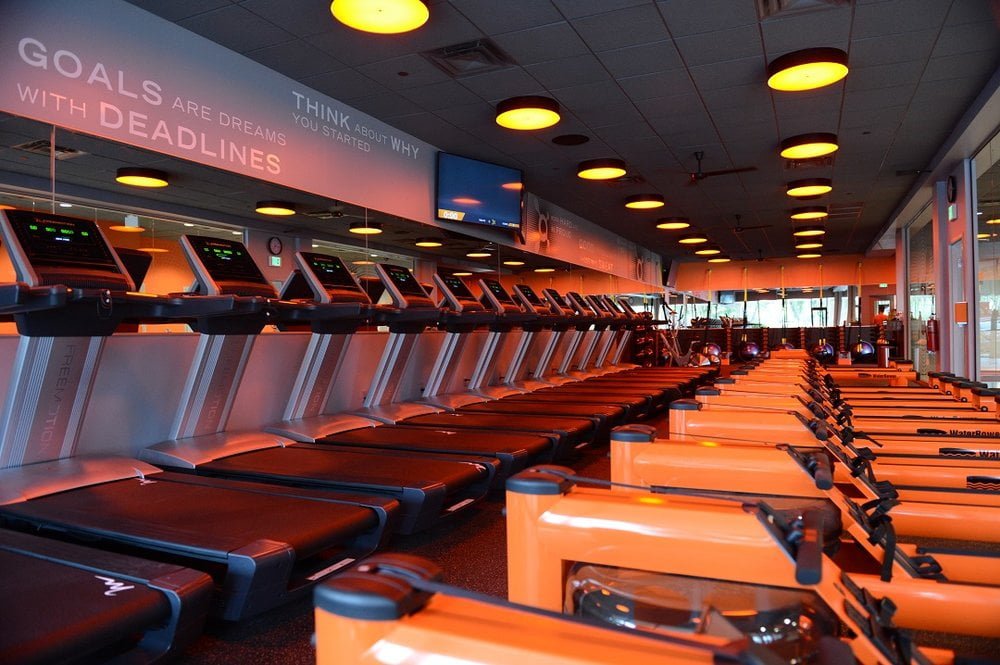
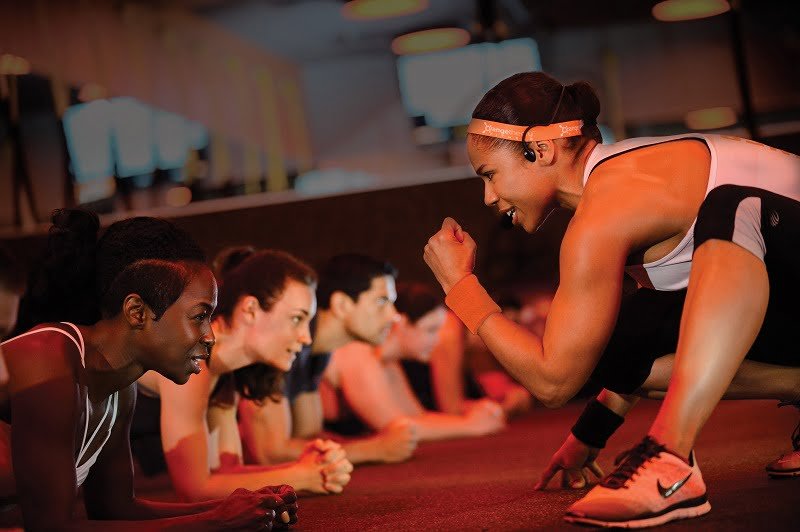
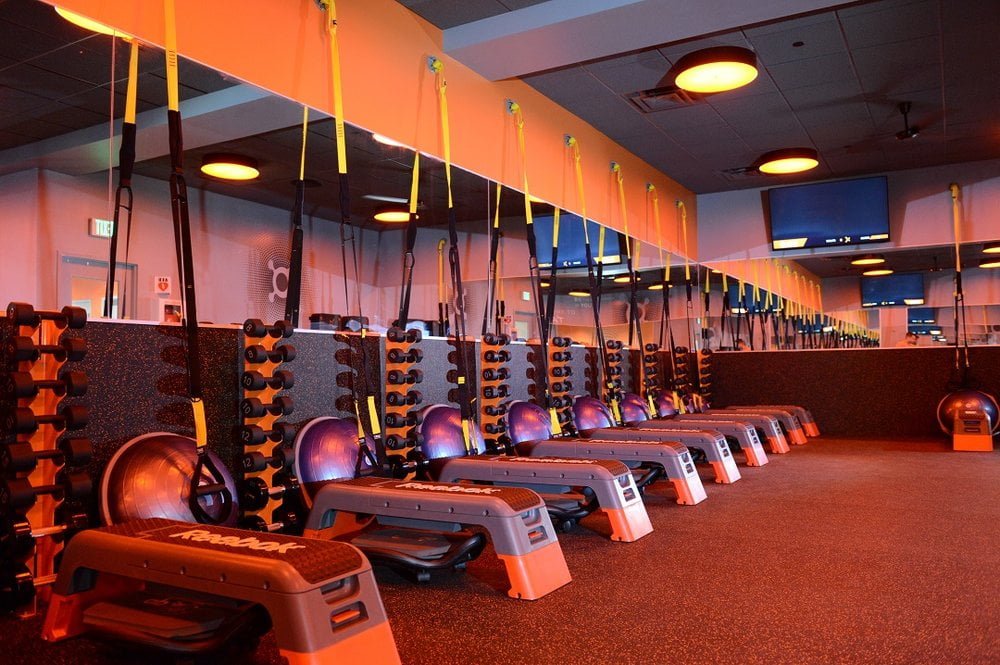
Orangetheory Fitness is a 60-minute HIIT-style (High-Intensity Interval Training) workout that uses innovative heart-rate based interval training, broken into intervals of cardiovascular and strength training. Led by a personal trainer – called a coach – participants use a variety of equipment including treadmills, rowing machines, TRX suspension training and free weights.
What differentiates Orangetheory Fitness from other fitness models is the technology behind the brand; class participants are encouraged to wear heart-rate monitors during each workout. Tracking their heart rates and ensuring that participants are pushing themselves is what enables them to reach their fitness goals faster, says the company.
Maleki said the average location is about 3,000 square feet and the minimum requirement in Canada is 2,800 square feet.
“It’s a total body workout. Everyone comes in with a heart-rate monitor. We are as much a technology brand as we are fitness which is part of the reason we’ve grown so much,” said Maleki.
Orangetheory Fitness
“We say that our workout is actually science backed but it teaches you a lot about the science. You can actually be more connected to your workout through that heart-rate technology and actually see your heart rate on the screen too.”
By 2014, the number of Orangetheory studios in Canada increased to 12 and to 18 in 2015.
“Canadians are busier than ever before and need a fitness routine that easily fits with their lifestyle; Orangetheory packs 60 minutes chock-full of the most optimal exercises, and then has you on your way, and burning calories long after your workout,” said Maleki.
Orangetheory Fitness
“The templates are designed to actually get your heart rate within a certain zone for a certain amount of time so when you reach your max heart rate for 12 to 20 minutes you’ll actually burn a substantial amount of more calories in the class . . . You’ll actually burn additional calories for the next 36 hours after the workout.”
The average class size is 20 to 24 people.
By the end of 2018, Orangetheory Fitness is slated to have 1,000 studios, in 18 countries worldwide.
In the summer of this year, Orangetheory will be launching several apps that focus on fitness outside-of-the-studio. New state-of-the-art equipment will also roll out to all studios this spring.
“The world is evolving. Fitness back in the day was just you show up and you work out. Now I think people are very data driven. They want to know more and we have access to that data,” said Maleki.
“People just want that data. It’s really important to them now. We call it connected fitness. People want that connection. It’s not a matter of just showing up and working out anymore. People are more competitive and they’re competing against themselves and they want to know how they’re performing. The thinking around fitness is evolving and for us we found that being a fitness concept isn’t enough. Having that technology element, we know that’s where the world’s going now. Being able to cater to that is really important to us.”
*Editor’s Note: The Behar Group is working with Orangetheory on its Ontario expansion under the direction of Kelly Faraj. kfarraj@thebehargroup.com, 416.636.8898 extension 249.
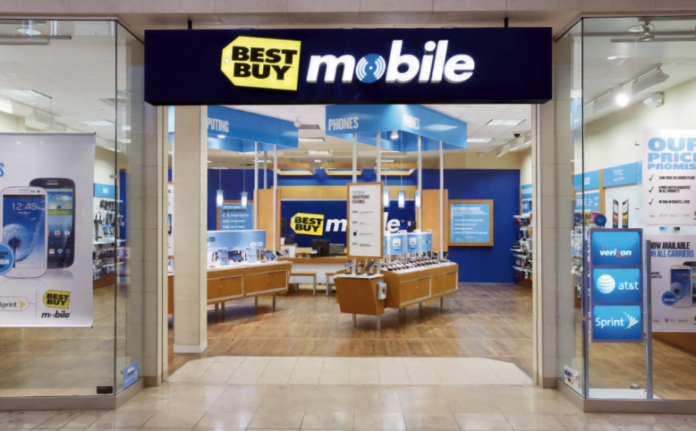
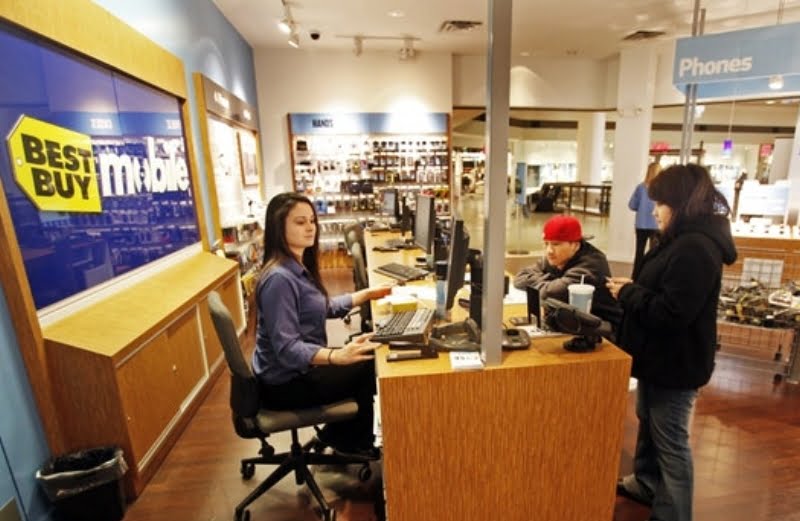
US-based consumer electronics retailer Best Buy has announced that it will close all 250 of its small-format mobile phone stores in the United States, saying that the locations had become less profitable and account for about 1% of total revenue. Best Buy says that its small-format Canadian stores will remain open, however.
On Wednesday afternoon, Best Buy’s US CEO sent a memo to employees that the US stores will close by the end of May, and that every effort will be made to retain workers.
In a statement, Best Buy Canada says:
“The announcement made in the U.S. does not impact our mobile business here in Canada. Best Buy Mobile stores in Canada continue to be an incredibly important part of our overall company strategy and we remain firmly committed to the business.”
Best Buy launched its small-format mobile phone stores in 2006. Things have certainly changed since then — for example, Apple’s popular iPhone hadn’t even launched then.
Stores average about 1,400 square feet each, whereas a typical Best Buy store spans about 40,000 square feet.
Costs to run Best Buy’s smaller US stores are high and many are in higher-rent shopping centres — in the United States, about 85% of these smaller stores are located within about 5 kilometres of a big-box Best Buy store.
“While tempting to spin this as a death of retail signal in the US, it is more likely simply addressing realities in the cell phone specialty category and the move big brands like Apple and Samsung have made in direct-to-consumer. The Canadian mobility landscape is not yet as cutthroat as the US,” said David Ian Gray, consultant and retail strategist/founder of DIG360.
Best Buy operates 56 mobile phone stores in Canada, which represents a penetration about twice that per capita when compared to the United States. The provincial breakdown includes 12 stores in British Columbia, nine in Alberta, 28 in Ontario, six in Quebec, and one in Nova Scotia. Many of these are in the country’s leading malls.
Best Buy entered Canada in 2002 with eight stores in the Greater Toronto Area, and it now boasts almost 200 stores in all 10 Canadian provinces. Its Canadian headquarters are in Burnaby, east of Vancouver.
Montreal-based women’s fashion retailer Reitmans has announced that it will close all of its Hyba women’s activewear stores, and that the Hyba line will continue to be carried at Reitmans stores as well as online.
Reitmans launched the Hyba brand in 2013 and in the fall of 2015, opened 17 standalone Hyba stores in former Smart Set locations. Smart Set was a women’s brand that once had more than 100 store locations coast-to-coast.
All 17 Hyba stores will close by the end of Reitmans’ current fiscal year, being February 2, 2019. The line will be carried in the company’s 270 Reitmans store locations, as well as at www.reitmans.com. Reitmans said that Hyba represents less than 2% of the company’s total annual sales, prompting the store closures.
In a statement, Reitmans said:
“Costs associated with HYBA store closures comprise non-cash asset write-offs of approximately $1.5 million after tax and a provision for onerous store leases of approximately $2.0 million after tax, to be reflected in the Company’s fourth quarter results for the fiscal year ended February 3, 2018”.
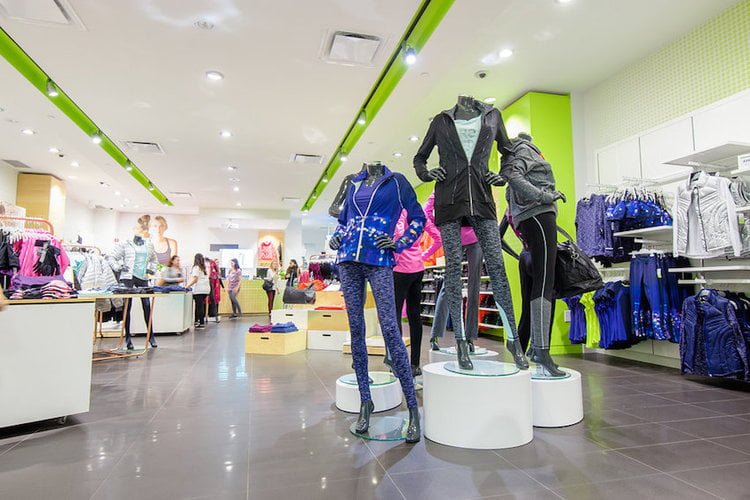
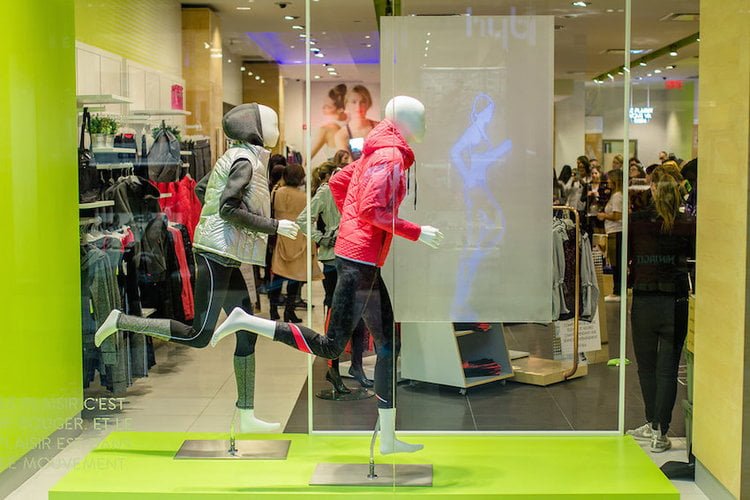
Photo: Hyba
Photo: Hyba
Hyba is positioned as a well-priced, high-quality, style-focused line of women’s activewear in a range of sizes. Hyba’s messaging caters to women who are seeking to become more active without the pressure of becoming a ‘top athlete’, encouraging movement, fun and health. Hyba offers a range of activewear apparel and accessories, including dry wicking performance gear, yoga attire, and style-focused athleisure looks. Sizes range from 2 to 20, which is broader than most competitors.
Hyba’s store interiors feature a combination of bright colours and soft wood, creating positive space that encourages activity, according to the company. The retail concept was expected to be rolled out further and Farla Efros, President of retail consultancy HRC Advisory, went so far as to say that Hyba could have invigorated Reitman’s operations as a whole, leading the company to stronger sales and increased profitability — higher-end yoga pants average more than $100, for example, and Hyba’s prices were less than half that amount.
Hyba’s 17 stores are primarily in enclosed shopping centres, some of them very well known — its CF Toronto Eaton Centre location boasts a mall entrance as well as Yonge Street access, which has made it a target for retailers (such as Tesla) that have been seeking out new retail spaces. Hyba stores are located coast-to-coast, with a focus on Ontario and Quebec. In Western Canada, Hyba has stores in Victoria BC and Kelowna and in the Maritimes, it currently operates units in Halifax and Dieppe/Saint John, NB. The remaining 13 stores are in Quebec and Ontario.
*All photos were provided courtesy of Reitmans when we first reported on Hyba’s retail expansion in 2015.
Vancouver’s popular Robson Street has been in transition over the past several years, with some theorizing that empty storefronts represented a street that is struggling. It’s a narrative not being shared among brokers doing deals on the street as well as the BIA, however — Robson Street is hot again, and several new deals are expected to have the street roaring back with an encore, according to multiple sources.
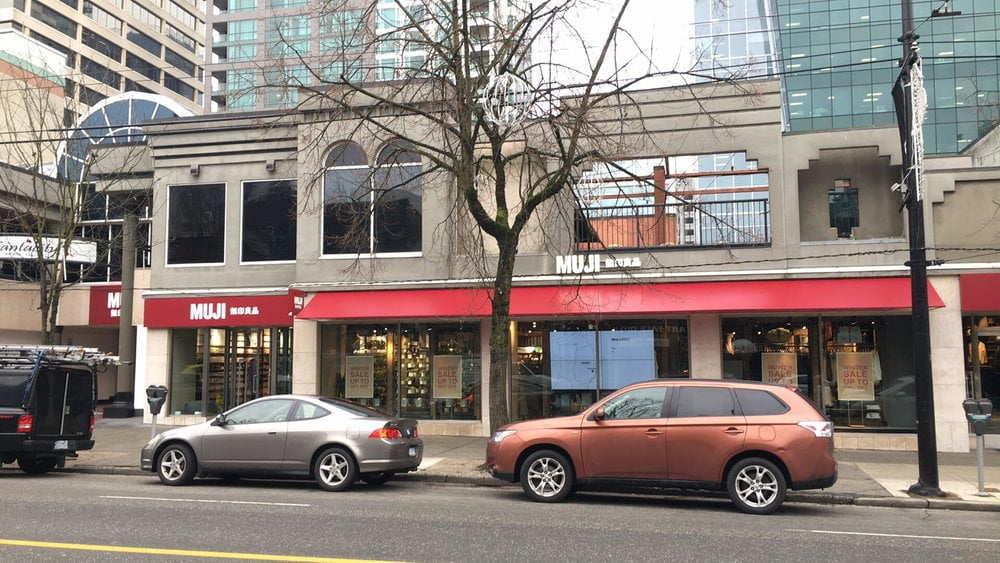
Several international retailers recently moved onto the street. Most recently, minimalist Japanese retailer MUJI opened its largest store outside of Asia at 1125 Robson Street — curious shoppers lined-up to see the new store, which features a dramatic barrel vault glass ceiling that was once part of a small shopping galleria. A few doors down last year, French baker Ladurée opened its first Canadian location and, again, there were lineups every day for weeks just to get in. Both of these openings were on Robson Street’s 1100 block, that some had written off as being past its prime.
That’s certainly not true, according to CBRE Vancouver Associate Vice President Martin Moriarty, who continues to be in talks with international retailers seeking spaces along Robson Street’s 1000 and 1100 blocks. Due to confidentiality, Mr. Moriarty wouldn’t disclose what’s in the works, though he pointed out several recent openings that he was involved with as broker — besides the MUJI and Ladurée deals that he helped coordinate, Mr. Moriarty secured Aussie eyewear retailer Bailey Nelson’s first Canadian corporate location on the strip, as well as Nike and several other popular brands.
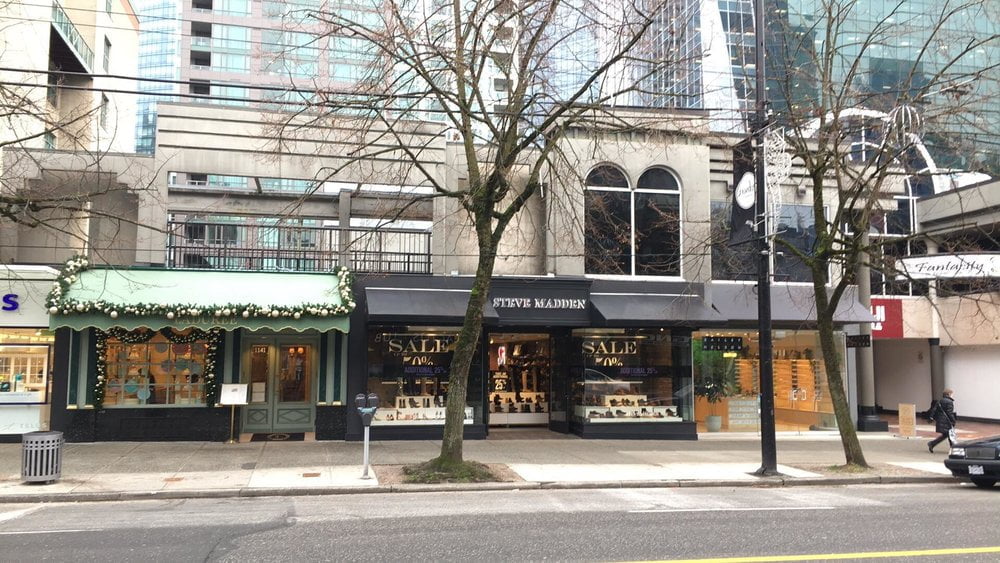
(LEFT-TO-RIGHT: LADURÉE, STEVE MADDEN, AND BAILEY NELSON STORES. PHOTO: LEE RIVETT)
(MUJI OPENED A 14,500 SQUARE FOOT STORE ON ROBSON STREET’S 1100 BLOCK LATE LAST YEAR TO LINEUPS. PHOTO: LEE RIVETT)
Over on the 1000 block (located between Burrard and Thurlow Streets), Canadian ‘cultural department store’ retailer Indigo recently announced that it would move into the former Forever 21 space at 1033 Robson Street, in a sublease deal that will see Indigo occupy a two-level, 29,000 square foot space. Indigo stores tend to be open late and its presence is expected to further draw people into the area — Indigo closed a nearby 53,000 square foot store in June of 2015, with the intention of eventually returning to the area.
Chris Wood, Northwest Atlantic Principal for Western Canada, represented Indigo in the deal and explained how Robson Street is seeing a resurgence along its stretch between the 900 and 1100 blocks — or roughly between Hornby Street and Bute Street. The 1000 block, where Indigo will be located, along with the 900 block, are currently the strongest he said— though the 1100 block is on the upswing, and its slightly lower rents will attract new tenants. Mr. Wood also noted that there could be some redevelopment plays on the street in the coming years, as land prices go up and buildings devalue as they age.
After Nordstrom opened at 799 Robson Street in September of 2015, the vibe on Robson Street began to change — crowds increasingly congregated near Nordstrom’s CF Pacific Centre store, which is a top performer (Northwest Atlantic acted on behalf of Nordstrom for the deal). Though footfall may have been reduced slightly on the westward stretch of Robson Street near the corner of Bute Street, things have more recently picked up with the addition of Ladurée and MUJI and on the 1200 block of Robson Street, Canada’s first location for French pastry retailer L’Eclaire de Genie debuted in the spring of 2017.
(NORDSTROM OPENED ITS WILDLY POPULAR CF PACIFIC CENTRE FLAGSHIP IN SEPTEMBER OF 2015 — THE STORE COMPETES WITH THE SEATTLE FLAGSHIP FOR TOP SPOT, IN TERMS OF REVENUE, AND HOUSES CONSIDERABLY MORE LUXURY BRANDS THAN MOST NORSTROM STORES. PHOTO: TOURISM VANCOUVER)
(LOOKING TOWARDS THE ARITZIA FLAGSHIP STORE AT 1100 ROBSON STREET)
Other recent additions include Japanese-themed variety retailer Miniso, Montreal-based Frank & Oak (which opened a women’s store on a 12-month trial basis), and one of several recent store expansions on the street includes LUSH, which more than doubled the size of its store in the 1000 block. Vancouver-based fashion retailer Reigning Champ is about to open a store on Robson Street’s 1100 block, and Canada’s first location for beauty brand Bellami will debut this spring at 1168 Robson Street, in a retail space formerly occupied by fashion retailer Guess.
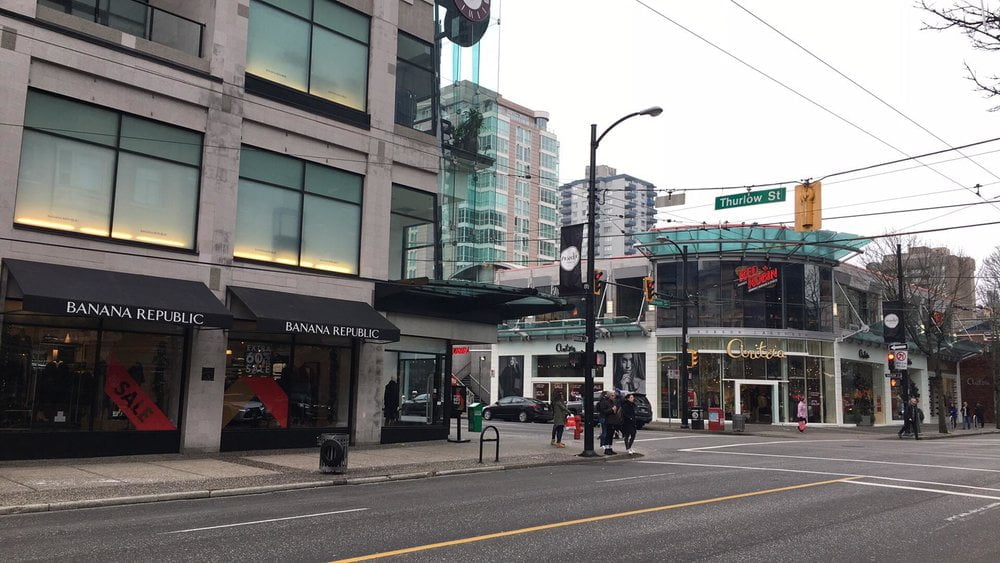
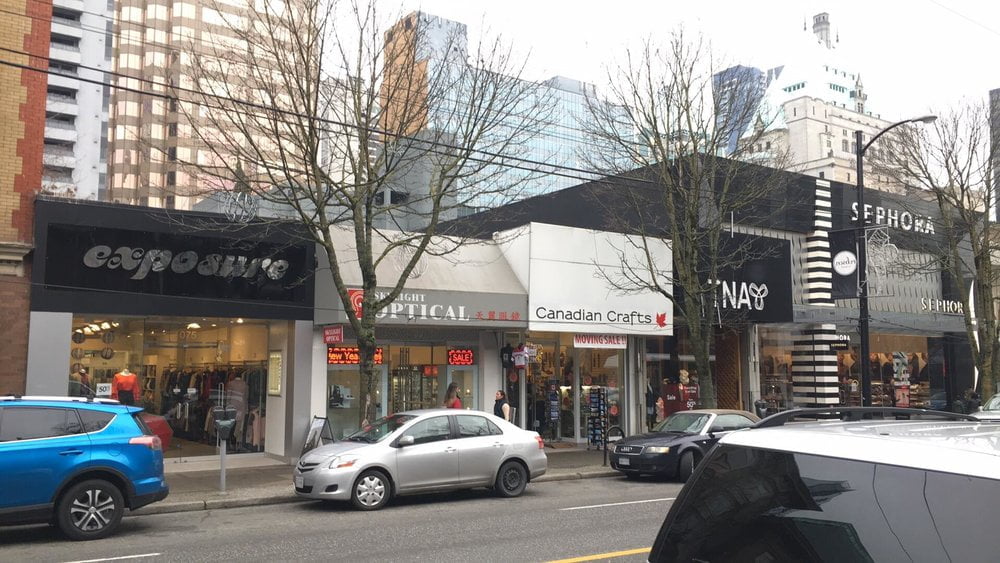
Constantly in flux, Robson Street will see some more changes in 2018 and beyond. On the 1000 block between Sephora and the Manhattan building, a new multi-level commercial building is proposed that could house one or more major retailers. Plans show the potential for a two-level 13,500 square foot space or three-level 20,000+ square foot space. CBRE is marketing the property.
(1067 ROBSON STREET PROPOSAL, RENDERING VIA CBRE)
(CURRENT 1067 ROBSON STREET CONFIGURATION. PHOTO: LEE RIVETT)
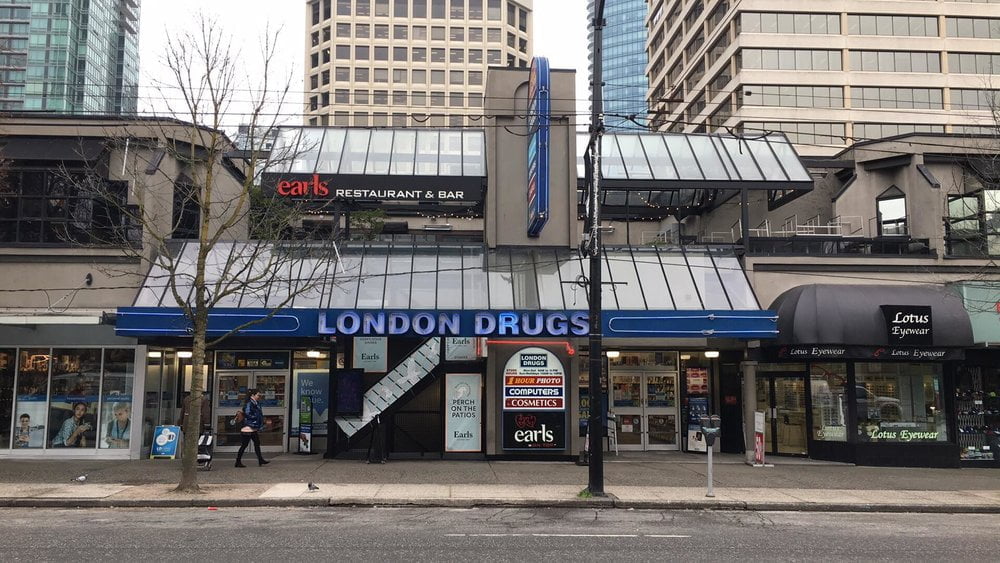
Robson Street’s 1100 block could see some very significant changes in the years to come, particularly to the commercial block currently anchored by London Drugs at 1185 Robson Street. One only has to look at the recently updated BC Assessment to see that a redevelopment play is likely — the property is assessed at $75.8 million and upon closer inspection, that’s almost entirely land value — the current buildings on the site have been assessed at $89,800, making them almost worthless in comparison.
(AN EXAMPLE FROM BC ASSESSMENT OF A SITE WHERE THE LAND IS WORTH A FORTUNE, AND THE BUILDINGS ARE PRACTICALLY WORTHLESS. THERE ARE PLENTY OF OTHER EXAMPLES IN THE AREA, SIGNALLING THE POSSIBILITY THAT, AT SOME POINT, A REDEVELOPMENT COULD BE AT PLAY)
(THE COMMERCIAL BUILDING TIED TO THE ASSESSMENT MAP DIRECTLY ABOVE. PHOTO: LEE RIVETT)
While current zoning wouldn’t allow for skyscrapers along the main Robson Street shopping stretch, multi-level commercial is allowed with height and density restrictions, and increasing rents could be enough to justify some redevelopment opportunities. Examining BC Assessment’s latest numbers, there are other properties on Robson Street that appear to have a land value that is substantially higher than on-site buildings. And while that of itself isn’t an indication that a site will be redeveloped, a cursory look at some of the dated, relatively low-density buildings on the strip provide indication that some properties are ripe for demolition — under the right circumstances, that is, with a goal of securing high-paying commercial tenants with prime street-level space housing retailers that can afford rents that may approach and even exceed $200 per square foot, annually.
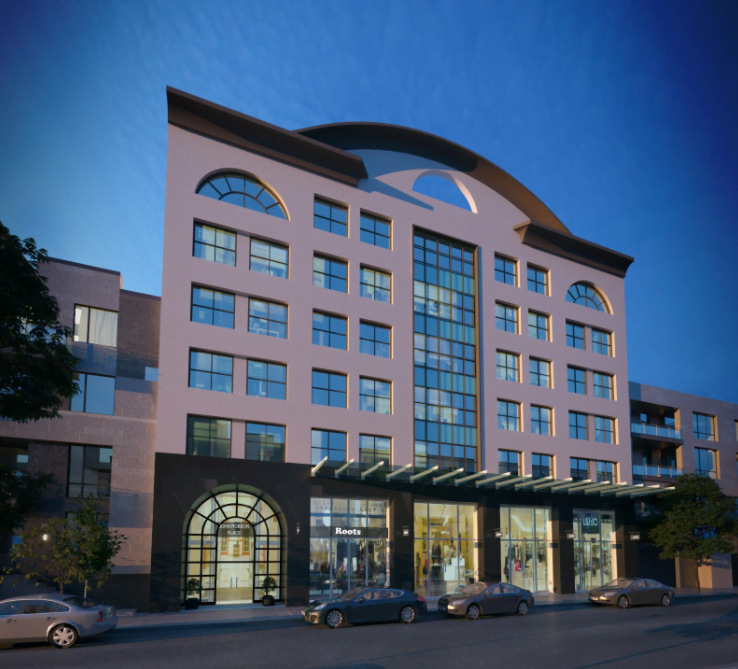
Northwest Atlantic’s Chris Wood noted that the adjacent John Robson Place at 1151 Robson Street is expected to see changes to its ground level retail base — a listing shows an attractive updated facade to the building, which currently has a 1,817 square foot recap space for lease.
(THE ‘JOHN ROBSON PLACE’ BUILDING AT 1151 ROBSON STREET IS EXPECTED TO GET A REFRESH SIMILAR TO THIS RENDERING, VIA CBRE)
(LULULEMON OPENED A UNIQUE FLAGSHIP STORE AT THE SOUTHEAST CORNER OF ROBSON AND BURRARD STREETS IN 2015. PHOTO: LEE RIVETT)
Teri Smith, Executive Director of the Robson Street Business Association, noted that good things are in store for Robson Street in 2018 — streetscape improvements are on the way that will include street furniture, upgraded tree wells and, at some point in the future, mid-block crossings on the 1000 and 1100 blocks. There’s an overall feeling of optimism as more people, including families from the Lower Mainland, descend into the area to see what’s new.
Robson Street’s tenant mix is generally one for mid-priced and to some degree, ‘aspirational luxury’ — at one time, there were several luxury retailers on the street, with Salvatore Ferragamo still occupying 918 Robson Street where it’s been for decades. If a ‘trickle-down’ theory were relevant here, Robson Street stands to gain from impressive growth seen a block north in the city’s burgeoning ‘Luxury Zone’, which continues to add mono-brand luxury stores that are said to be among the top performers in their respective chains, globally. In theory, those wealthy shoppers descending into the area seeking Louis Vuitton bags and Van Cleef & Arpels jewellery may also pay a visit to Robson Street for something a bit more affordable — these days, consumers often tend to shop ‘high-and-low’, though that doesn’t appear to have helped Forever 21 remain in the area. Luxury brands are now encroaching on the periphery of the Robson Street BIA, so there’s tremendous proximity — Versace, Brunello Cucinelli, Saint Laurent, Escada and Moncler are all located on the 700 block of Thurlow Street just north of Robson Street and, soon, luxury streetwear brand Off-White will open a licensed location in the restored alleyway between Robson and Alberni Streets’ 1000 blocks.
(ONE OF THE WORLD’S LARGEST VICTORIA’S SECRET STORES IS LOCATED AT THE NORTHEAST CORNER OF ROBSON AND BURRARD STREETS. PHOTO: LEE RIVETT)
(LOOKING ALONG THE 1000 BLOCK EASTWARD TOWARDS VICTORIA’S SECRET. PHOTO: LEE RIVETT)
The street continues to find its place with a renewed identity, which is being helped by public-realm improvements such as a recent decision to make a temporary parkette on Bute Street permanent — a half-block stretch of Bute Street south of Robson Street was closed off to cars on a trial basis over the summer, with overwhelmingly positive feedback. The plan is to make the plaza a permanent fixture, which will include an investment to make it as people friendly as possible, according to Teri Smith of the Robson Street BIA.
There continues to be optimism in regards to Robson Street, which appears to be having a resurgence as Vancouver’s primary outdoor commercial high street. New retailers, as well as the eventual redevelopment of some properties, will continue to solidify Robson Street as an important retail address. We’ll follow up periodically and provide further updates, as we’re told that there will be several significant retail tenant announcements for Robson Street in the coming months.
Upscale French fashion brands Sandro and Maje continue to open standalone stores in Canada. Construction signage shows that more locations for both brands will be opening this spring/summer — Sandro and Maje will open their third batch of stores in Toronto, and Sandro will open its first standalone store in Vancouver.
A standalone Sandro location will also open in Vancouver’s CF Pacific Centre this summer, in part of a retail space formerly occupied by Guess. Some had expected Sandro (and sister brand Maje) to take up space on the 1100 block of Alberni Street in downtown Vancouver, as the block transitions towards becoming a destination housing contemporary and luxury/aspirational brands. Multi-brand contemporary women’s fashion retailer Blubird, for example, is relocating to a space at 1108 Alberni Street this spring from a location on the 1000 block.
(CONSTRUCTION SIGNAGE IS UP FOR SANDRO’S CF PACIFIC CENTRE STORE. PHOTO: HELEN SIWAK)
Sandro and Maje entered Canada in 2014 with the opening of several shop-in-store concessions at Hudson’s Bay. The partnership has also expanded — Sandro and Maje concessions can be found at Hudson’s Bay in Toronto (Queen Street, CF Sherway Gardens, Yorkdale), Montreal (downtown), Vancouver (downtown) and in Calgary (CF Chinook Centre).
Sandro and Maje are considered to be in the ‘contemporary’ price-point, with fashion-forward designs that are proving popular for Canadian urbanites. Sandro began in Paris in 1984, and is known for focusing on “sleek, chic and effortlessly cool womenswear and menswear” — there are over 500 Sandro stores worldwide, and parent company SMCP (which stands for Sandro, Maje, Claudie Pierlot) operates close to 1,200 points of sale globally in 35 countries, with about 4,300 staff. Sister-label Maje, dedicated to women’s fashions, was founded in Paris in 1998 and with over 400 locations worldwide, is known for “bohemian-chic, solar, and more feminine womenswear collections”, according to SMCP.
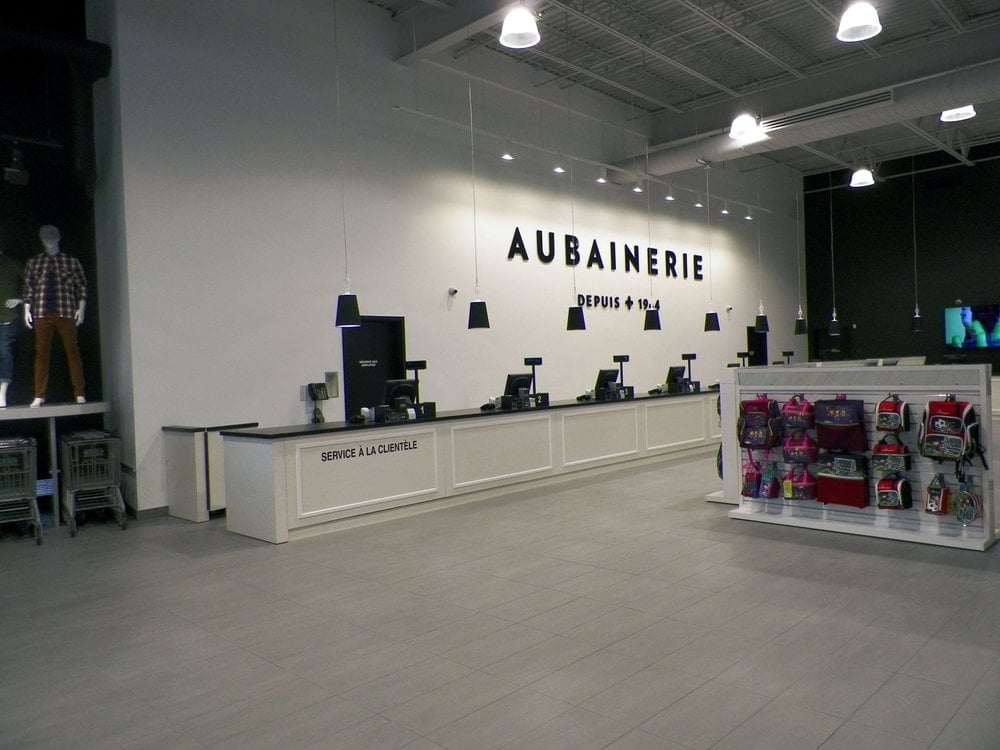
Quebec-based family-oriented clothing company Aubainerie is venturing into the Ontario market, with a new store opening in the Ottawa region in March.
The new store, located in Place d’Orleans shopping centre in the eastern part of Ottawa, will be called AUB44 – a departure from the Aubainerie name that is well known in the Quebec market.
Aubainerie, which was established nearly 75 years ago, operates 57 stores throughout the province of Quebec. The retailer provides trendy clothing for all age groups.
“We sell clothing for the entire family, from baby to teenagers to women and men,” says Chantal Glenisson, CEO of Aubainerie. “Our mission is to offer to the customer trendy, fashionable clothing, but with affordable prices.”
Providing value for customers is core to the company’s philosophy, Glenisson says. “Families today really need to respect their budget for clothing,” she says. “So that’s why we make our prices lower than the competition.”
Aubainerie’s men’s and women’s tops, for example, range in price from approximately $10 to $40, with children’s clothing starting at about $4. In addition to everyday clothing, the retailer carries a range of sportswear, outerwear, sleepwear, beachwear and accessories.
In addition to its regular stores, Aubainerie operates 13 outlet locations, carrying overstock and end of line merchandise at a discount.
The new Ontario AUB44 store, which opens on March 15th, is 24,000 square feet in size.
The company decided to use the name AUB44 since “Aubainerie” could be difficult to pronounce in English, and might not resonate with customers outside of Quebec, Glenisson says.
“We thought it’s time for us to refresh our brand,” she says. If the new name resonates with customers, she says, the company might consider applying the name to more of its stores.
Other than the name, the Orleans store will be the same as Aubainerie stores in Quebec, and will carry the same range of merchandise that is available in the other stores.
Since Orleans has a large French-speaking population in addition to its majority English-speaking population, it represented an appealing location for Aubainerie’s first Ontario location, as the company transitions to the new market.
“For us, it’s a very good first step into the Ontario market to give us the time to really understand the market and the customer,” Glenisson says.
Depending on how well the new store is received, the company plans to explore further expansion opportunities. However, Aubainerie is taking a slow and measured approach to its growth, Glenisson adds.
“It doesn’t happen overnight,” she says. “We need to plan ahead where we want to go, how big the stores are going to be, and do all of the market analysis. This is a lot of work before getting there.”
Aubainerie stores range from 15,000-45,000 square feet. Although the chain operates some locations in enclosed malls, many of its stores are free-standing locations.
“It’s a destination for families – they plan to go to Aubainerie,” says Glenisson.
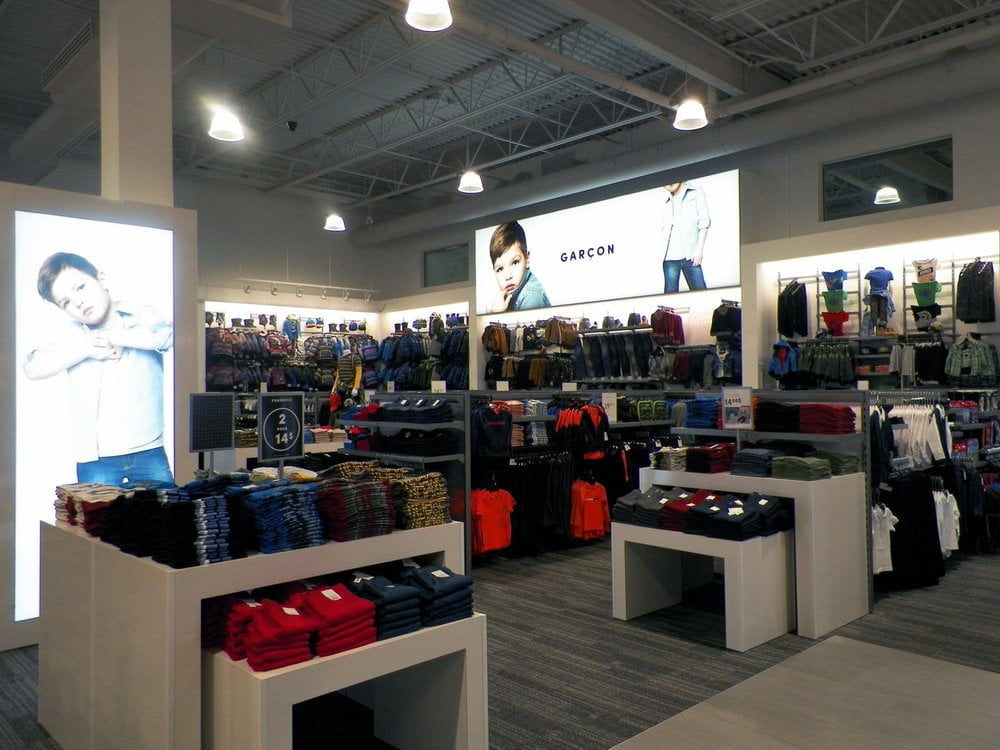
The stores are designed to create a pleasant shopping experience for customers, she adds. Each store is divided into separate departments for each member of the family, with fitting rooms located in the centre of the store.
“The way we build the stores – the colours, the lights – we try to make it a very good shopping experience,” Glenisson says.
Aubainerie currently offers a limited selection of its merchandise for sale on its website, and the company is gradually expanding its e-commerce capabilities. By 2019, the company plans to have all of its merchandise available online.