
Advertisement
Home Blog Page 1099

Q&A: Giant Tiger Launches ‘Carisma’ Line and Campaign

exc-5a95ea579140b782c5f14988

Popular Ottawa-based discount retail chain Giant Tiger recently launched a new exclusive women’s sleepwear, intimates, and basics brand called Carisma, and it’s already a hit among consumers. Giant Tiger hosted it’s first-ever Facebook Live event to ‘talk all things Carisma’ that was launched on “Galentine’s Day” on February 13 — , Galentine’s Day is a relatively new phenomenon where “ladies celebrate ladies”. 

The response to the campaign was exceptional — the company’s video has been viewed more than 40,000 times. The following is a Q&A with Karen Sterling, VP Marketing at Giant Tiger.   

Q: What made Giant Tiger choose the name ‘Carisma’ for its new women’s line? 

A: When we were creating the brand identity, we considered how women would want to feel wearing this collection. We wanted them to put on the pieces and immediately feel good. When you feel confident, it radiates outward. We understand the busy Canadian woman and her desire to feel great all day long.

Q: What can Canadian women expect from the new and exclusive women’s basics brand? 

A: Ultimately, we want Canadians to feel great about fashion without the guilt of overspending. Women can indulge in purchasing great sleepwear or a comfortable bra without compromising on value. At Giant Tiger, we demonstrate value by combining our low prices, our chic styling and our exceptional quality. All our pieces are on trend, they’re easy to mix-and-match and they’re available from small to 3X.

Q: What makes Carisma an “approachable” brand?

A: Carisma is approachable because it’s real, genuine and authentic. It works for our customers; they want quality fabrics that stand up to everyday wash and wear. Carisma “gets” Canadian women; the collection pulls together pieces that allow them to have fun or feel more sophisticated if they want to be. Women need a brand they can count on for whatever they’re feeling that day. We’ve tried to complement this approachability with a convenient and inviting in-store shopping experience dividing Carisma into three categories: intimates, sleepwear, and basics.

Q: Being the VP of Marketing, do you have any favourite Carisma pieces? What about the new brand speaks to you as a “modern, everyday woman”?

A: One of my favourites right now is our retro-chic 2-piece pyjama set. The matching top and bottoms feature the “peachy dream” softness of so many of our PJs; it’s just so comfortable. It’s important to note that our Carisma brand is available in all sizes, including plus. They are so affordable, too, and wash like a dream.  I’ve even bought them for my daughter and some of my friends! These pyjamas definitely give me a sense of Carisma.

Q: Carisma was launched in time for Galentine’s Day (February 13). Why was Galentine’s Day chosen talk about the new brand?

 A: Galentine’s Day is all about celebrating women and the power of female friendship. And Carisma is all about celebrating real Canadian women. It’s just such a natural fit. We also hosted an interactive Facebook Galentine’s Day event. It was a very successful event. To date, the video has been viewed over 40,000 times and the overall engagement has been over 34,000.

Q: Speaking of Galentine’s Day, do you yourself have one or more female friends who inspires and supports you? 

A: Hopefully, we all know people who are simply extraordinary to us. I am humbled by them, in awe of them and all that they accomplish, all that they generously share, and all that they do regardless of their circumstances. I cannot imagine my life without the inspiration, friendship, wisdom, support, laughter, blunt honesty and insight of the amazing women in my life.

Q: Giant Tiger has experienced significant fashion evolution over the last two years. Is there anything else that we can expect?

A: Of course! At Giant Tiger, we are always evolving and looking at how we can best meet the needs of our customers and communities. We are always asking for feedback from our customers and adjusting our strategy accordingly. It is this adaptability that is one of our key strengths.

*****

Rapidly-expanding Giant Tiger was founded in 1961 in Ottawa’s Byward Market area, and has since grown to operate over 240 Canadian stores and employs over 8,300 ‘team members’. Stores carry categories such as family fashions, footwear, groceries, confectionary, pet food, cleaning supplies, housewares, stationery, toys, and health/beauty products. The company’s strategy involves striving to lower prices through continued improvements to efficiency as well as maximizing buying power through economies of scale, as well as increasing market share in existing markets by modifying stores and assortment, based on local needs. The company continues to seek out new markets to further increase revenues via well-researched and planned expansion that involves opening new store locations.
2017 Canadian Retail Sales Growth Hits a 20 Year High

Total Canadian location-based retail sales were up 6.7% in 2017 versus the previous year, according to the latest Statistics Canada numbers. This is the best result since 1997 and a 20 year high. If e-commerce sales by non-store retailers were also included, it would add about 1.5% to the 2017 growth rate. Here’s a summary of the last 5 years.

The Automotive & Related sector clearly contributed the most to overall sales growth, with both vehicle dealers and gasoline station sales recording high increases in 2017. Food & Drug however was a disappointment, especially after a relatively good year in 2016. This was offset by strong results in the Store Merchandise sector, up 6.5% in 2017, an 11 year high.

As the chart above shows, the 3 month growth trend (orange line) has now dropped off from the levels set in mid 2017. The underlying 12 month growth trend (green line), after strengthening for almost 2 years, has flattened out. Nevertheless, both measures are at fairly high levels, so recent trends may well be more of a correction rather than a collapse.

December retail sales results have been reported to be below expectations. But this may be partly because shopping activity is being pulled into November due to promotions like Black Friday and Cyber Monday and by retailers’ efforts to start holiday sales earlier. For November and December combined, total retail sales were up 5.1% in 2017. This is below the average growth for the year, but still a respectable result.

Food & Drug

The underlying 12 month trend for Food & Drug retail sales (green line in the above chart) slid steadily in 2017. The 3 month trend is tracking below this, implying further weakness ahead.

Sales at supermarkets & other grocery stores have been particularly slow, increasing just 0.9% in 2017, and even down 0.7% in Q4 alone. Specialty food stores did well however, with annual retail sales gaining 8.0%.

Retail sales at health & personal care stores ended 2017 up 5.7% for the year. While this is a respectable gain, it’s well behind the 13.8% annual increase recorded for 2016.

Store Merchandise

The underlying 12 month trend for the Store Merchandise sector (green line in the above chart) improved significantly in 2017. A retail sales gain of 6.5% was recording for the year, the best result since 2006. The sales trends however weakened slightly late in the year, although it’s too early to tell if this will continue into 2018.

The two biggest winners in 2017 were electronics & appliance stores with retail sales up 12.8%, and building material & garden equipment/supplies dealers close behind with an increase of 12.7%.

On the other hand, home furnishings stores’ retail sales were up just 0.8% in 2017, the lowest gain of all retailers in this sector.

Note that Statistics Canada is now suppressing the breakdown of general merchandise stores for confidentiality reasons. The figures in the table below are estimates based on previous trends.

Automotive & Related

The Automotive & Related sector continues to be the bedrock of Canadian retail sales. The annual increase in 2017 was 10.1%, a 7 year high.

Gasoline stations are experiencing high growth, with retail sales up 12.9% in 2017. Gasoline stations have now more than recovered the sales losses incurred in 2015 when gasoline prices significantly declined.

Automobile dealers just keep on setting sales records. Their retail sales were up 9.4% in 2017.

By The Numbers

For definitions of store types, see Statistics Canada NAICS.

Canadian E-Commerce Stats

StatsCan started providing ecommerce retail sales data in January 2016. While the amount of data is limited, some trends appear to be emerging. Here are some results.

Overall, e-commerce represented about 2.6% of Canadian retail sales in 2017, including both pure play operators as well as the online operations of brick & mortar stores. Canadian consumers however also buy online from foreign websites, spending which is not captured in these numbers.

Results for 2017 show that Canadian e-commerce sales were up 30.6% from the year before, a much higher gain than for retail in general. But for Q4 2017, the year-over-year increase was 15.6%, indicating that e-commerce sales growth may be slowing down.

Note that location based retail is the same as that in the preceding large “By The Numbers” table. It’s what’s normally reported as Canadian retail sales. Except that it isn’t. Location based retail excludes another section called Non-Store Retailers (NAICS code 454), which covers electronic shopping and mail-order houses, which in turn is where (mostly) pure play e-commerce businesses are. For 2017, electronic shopping and mail-order houses had an estimated $8.8 billion in e-commerce sales.

But that’s not the only source of e-commerce, as (mostly) bricks & mortar location-based retailers also sell online. For 2017, this group had an estimated $6.9 billion in e-commerce sales. With electronic shopping and mail-order houses, there’s a grand total of $15.7 billion in e-commerce sales by Canadian operators over the year. Note that this does not include foreign e-commerce purchases made by Canadian consumers, but it does include purchases made by foreigners at Canadian e-commerce businesses.

For electronic shopping and mail-order houses, an estimated 82.7% of their sales are allocated to e-commerce. For the (mostly) bricks & mortar crowd, it can be estimated that just 1.2% of their total sales come from e-commerce.

In the final section of the above table, (mostly) pure play operators (namely, under electronic shopping and mail-order houses) generated an estimated 56.2% of all e-commerce sales in Canada, while (mostly) bricks & mortar location-based retailers’ share of e-commerce is 43.8%.

For more explanation on the e-commerce numbers, see Statistics Canada: Retail E-commerce in Canada.

How Sears Canada Could Have Been Saved: Expert

SEARS STORE EXTERIOR (PHOTO: GETTY IMAGES)

A veteran Canadian retail consultant says Sears Canada didn’t have to close down its operations and could have stayed alive if the company adopted a unique and innovative strategy.

Mark Healy, a Toronto-based consultant in investment banking, real estate and retail, was a Canadian Tire franchise owner for 20 years and says Sears could have taken a look at creating a system of franchise ownership similar to Canadian Tire.

“About a year and a half ago, I tried to get ahold of Sears,” says Healy. “They were changing CEOs every two years.”

“I was thinking of my Canadian Tire days and how the system works but I’m thinking a lot of the stores at Sears were catalogue stores or actually dealer stores. So my thinking was with regards to Sears to save it you franchise the stores just like the Canadian Tire model.”

Sears Canada closed all its remaining stores in the country in mid-January. At one point in time, the company, which began operations in Canada in 1953, had 190 stores and well over 15,000 employees.

The controversial closure continues to make headline news across the country as former employees battle in court over a pension shortfall.

“I would have franchised it,” says Healy. “A lot of the stores they were hemorrhaging and bleeding with they could have leased them out or you redevelop. You repurpose that land. You build them into condos. You bring the customers to the mall – the vacant mall.”

“The most important thing is they didn’t have an ecommerce platform. They didn’t have anybody that could handle that. Guess what. Amazon’s going out and building brick and mortar stores. Cut a deal with Amazon and get them to handle your back end. Let them take the ecommerce. Let them do the deliveries. Let them do everything. I think there could have been an opportunity there with Amazon. It’s too late now obviously but I honestly believe that Sears didn’t really want to survive.”

PHOTO: CHAIN STORE AGE

Healy says he tried numerous times to present his plan to Sears.

“I couldn’t get through to anybody,” he says. “Couldn’t get through to Fort Knox.”

His idea of the franchise model would have meant that dealers would have had equity in the store.

“And usually like the Canadian Tire model you have some skin in the game. You care if the lights go off at 9:15 that they’re not burning all night. You watch your wages. You run a better store. You have profit sharing,” says Healy.

“What they do (Canadian Tire) is they own the land and the building. They charge the dealers a percentage of sales for rent. They take a mark up on the inventory but the dealers finance in the inventory and the assets. And they own it. And they make it work.”

“You need to have a dealer in there. A GM (general manager) is not going to care. At the end of the day, he’s going to do his best but there’s only so much he can do. But if you have skin in the game you make it work. You’re rotating your inventory. You’re worried about your discontinueds. You’re a buyer on the premises. You know what’s moving.”

Healy says he would have also renamed Sears.

“It’s an old name. It’s an American name. I would have rebranded it,” says Healy. “They brought in all these specialists spending money on fashion, accessories. Just get down to the retail street. Give the customers what they want. Service the heck out of them. I would have changed the name – made it more a Canadian name.”

The State of Retail in 2018 – Turbulent, Transformative, but Surprisingly Healthy

[SOURCE: THE NEW YORKER]

Besides Trump dominance of the airwaves, few other topics got as much attention over the last 18 months than what is happening in the retail sector.

However, the common narrative throughout the year seems misguided. Having just come back from more than 30 years outside North America to become the Executive Director of the soon to be launched Bensadoun School of Retail Management at McGill University, I was immediately struck by an overwhelmingly consistent view on the state of retail. Traditional is on its deathbed, overall retail is in doldrums with only one winner – Amazon. To quote former dot.com executive Seth Godin, “the battle for shopping is over and Amazon has won”. Looking in more detail at what has and is actually happening tells a different story.

Retail is a healthy, growing sector of the economy: Global retail is growing at an average annual rate of 6% over the last five years. Even in North America, retail sales figures indicate a sector of the economy that is healthy and performing well. Over the same period, retail in both Canada and the US has seen average growth rates of over 4%. 2017 was exceptionally good with 4.4% growth in sales in the US and an estimated 7% + growth in Canada if one includes the automotive sector and about 4.2% if we exclude it. The Holiday season year-end period was particularly strong with 5.6% increase in the US and 4.4% in Canada.

Given the estimated 2017 GDP growth figures of 2.6% in the US (Source: Bureau of Economic Analysis) and 3% in Canada (Source: IMF), these are retail figures to be proud of, not those of doom and gloom.

Retail is in a transformative period moving to two extremes: We do, nevertheless, see retail in a transformative period moving to two extremes: 1) convenience & efficiency and 2) experience.

The extreme of Convenience and Efficiency has to do with functional, day-to-day goods which are increasingly, but not exclusively being purchased online — think Amazon. It is allowing consumers to find the right product at the right price and at the right place in the most convenient and efficient way. It is a battle ground where technology plays a critical role through AI, big data, voice, hyper personalization, new payment platforms, … It is also an area where supply chain and retail operations optimization play a significant role in satisfying consumers, both in terms of speed and convenience. It is the ultimate battle ground between Amazon and Walmart. But not just them, we see Costco and the Dollar stores concept (eg. Dollar General, Dollarama, …) performing extremely well with principally a brick and mortar approach. 

At the same time, we are seeing a rise in Experience based retail. This is more associated with our deep needs as human beings for social interaction. It is community-driven, more about doing, experiencing and storytelling. This is not new. Hotel groups such as Four Seasons, Food & Beverage concepts such as Starbucks and McDonalds continue to excel in this area, as do other concepts such as IKEA and Indigo. Experience based retail is also often closer to home or places that we love with locally sourced products in markets, handicraft driven concepts. It is usually more associated with physical shops, but not always. Take for example the online retailerSsense. Its highly curated content and product offering connect completely with its target community – worldly millennials who are fashion forward always looking for the newest and coolest products and experiences.

Image: Toys-R-Us

Retail is turbulent with some big losers: News headlines have focused on the demise of certain retail actors, namely Department Stores like Sears, JC Penney, Macy’s, others like Toys-R-Us. Department stores have seen a sales decrease in 2017 of close to 2% (Sources: NRF and US Census Bureau).

Take for example Toys-R-Us which recently announced the closure of 180 stores. On the convenience and efficiency end, it is losing out to the likes of Walmart, Amazon, Costco and even the Dollar stores, especially for all party related items, by not being strong enough in offering the right range of products at the right price in the right place. On the other end, its experience journey is leaving customers underwhelmed  when compared to other retail concepts & activities that parents and kids love – eg. McDonalds, Ikea, Indigo, even Canadian Tire. Toys-R-Us is a cautionary tale. Choosing the middle of the road strategy is no longer viable, leaving them in a race against time to survive.

Traditional Food retailers are also under pressure with only marginal growth overall in Canada and razor thin margins. Attacked by Amazon, Walmart, Dollar Stores for day to day, repetitive purchases such as tea, coffee, toilet paper, detergent, …. They are also under threat from new business models such as meal kits such Blue Apron, Good Food, … and farm to table concepts. 

As a result, most mall owners are seeing a decrease in footfall & sales. They are scrambling to stay alive by closing underperforming malls and trying to find new ways to do business and engage customers.

… but the emergence of winners

We are, however, seeing the emergence of winners at both extremes. Online retail had a banner year in 2017 with increase in sales of over 10% in the US (Sources: NRF and US Census Bureau) and up 35% in Canada (source: Stats Canada). Amazon was responsible for the lion’s share with about 44 percent of all U.S. e-commerce sales (Source: One Click Retail).

Walmart, for its part, has been aggressively transforming itself into an agile giant capable of operating as effectively off-line as on-line and working on not only bringing everyday low prices, but also trying to maximize convenience to their consumers. As a result, Walmart announced a 3% growth in US sales in 2017 which is impressive given its size and performance relative to other Brick & Mortar competitors.

Dollar Stores have continued to perform extremely well, by focusing on affordable household consumer goods. Home improvement and home furnishings retailers like Home Depot, Lowe’s have also finished strong with 7-8% growth (Source: Customer Growth Partners and US Census Bureau). Consumers want to do it themselves, at least in their homes. TJX with its treasure hunting approach with discount prices continues to perform strongly with a 6% increase (Source: TJX). 

Consumers are also shopping closer to home. Proximity retailers have seen sales grow twice as fast the US market at 7.2% as of end of October 2017. Shoppers are skipping the malls in favor of neighborhood stores and are willing to pay higher prices for the experience and convenience. They are proud community members who are happy to engage with local retailers, buy locally sourced and manufactured products and are keen to keep their local environment thriving.

There are a number of other successful experience based retailers such as Indigo in the bookstore space, Gucci, Simons, SSENSE, Zara in fashion, Apple in the electronics space. A great example is Adidas which announced sales in 2017 increasing by over 15% and profits by over 25%. They have a very keen sense of their brand and the community of enthusiasts that they are engaging. They know what products, services, brand ambassadors and key opinion leaders that their loyal customers crave. They are masters at storytelling and bringing experiences to life that their fans love. And they use technology, trends, new ways of doing things as enhancers to their brand and what they are delivering to their customers.

Image: adidas

The future of retail is both exciting and challenging for the CEOs and C-Suites

It is exciting times for the CEOs and C-Suite members in retail companies, but I do not envy the challenge of optimizing strategic and investment decisions. It seems that the choices are endless, but with finite resources. Do we invest in technology? If so which ones and for what purpose? Do we upscale our operations (IT, Supply Chain, …)? Do we create a data analytics department focused on hyper personalization? How much of our business do we shift online? If so, which stores should we close? Do we invest in store customer experience and how? … So many options of where to strategically invest. Senior leaders will need to be agile, data savvy, but also intuitive and open minded. They will need to fully grasp their brand and the community that they are serving to make the best choices to enhance the effectiveness of their businesses. One thing is for sure, they will need to test, keep what works and discard asap what does not. This atmosphere creates a great mix of exciting times and sleepless nights!!

Charles De Brabant

Charles De Brabant joined McGill University in August 2017 to co-lead the creation of the Bensadoun School of Retail Management (BSRM). He has over 20 years experience in retail in Europe and most recently in China and South East Asia. Born and raised in Montreal, Charles holds a B. Com. from McGill, an M. Litt. in History from Oxford University and an MBA from Stanford Business School. Charles’ focus at BSRM will be on collaboration with local and international industry partners and the administration of the school.   

BRIEF: Simons Prepares to Open Eco-Store, H&M Sees Gains in Canada, Blubird Relocation

La Maison Simons Prepares to Launch 1st ‘Eco’ Store

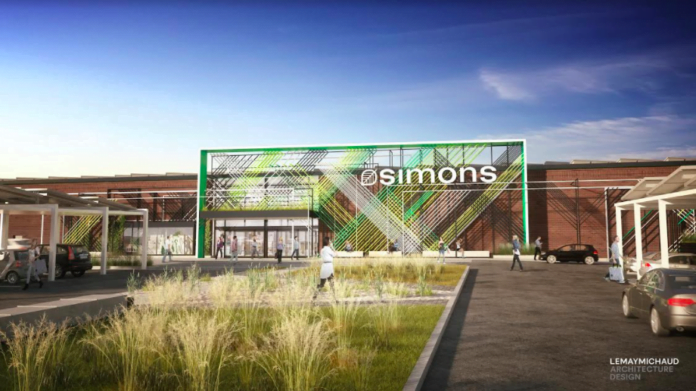
Quebec City-based multi-brand large format retailer  La Maison Simons will unveil its first net-zero department store next month at Les Galeries de la Capitale in Quebec City. The 80,000 square foot store will replace an existing 45,000 square foot location in the same mall. 

Simons is moving into part of the space that was vacated by Target in 2015, when the Minneapolis-based retailer exited its Canadian operations. 

“This is the very first store where the concept of ecology will be ubiquitous”, said company president Peter Simons. The store will occupy about 80,000 square feet and will feature solar panels and recharging stations for electric cars, among other innovations. “The goal is to achieve a zero net footprint”, said Mr. Simons. 

The store will also be a prototype, providing “a unique and improved customer experience through new digital and interactive technologies” that will initially be tested in the new store before being introduced to other Simons locations.

The store officially opens on Thursday, March 15, and Retail Insider will publish a feature article that will include photos of the highly anticipated new store. 

Blubird to Relocate on Alberni

Vancouver-based fashion retailer Blubird will be relocating its 1000-block Alberni Street flagship to Alberni’s 1100 block this spring, as the street continues to transition to become one of North America’s leading luxury addresses. 

Blubird carries a range of popular women’s contemporary brands in two locations — a downtown store that will be relocated in May, as well as a location at Oakridge Centre on Vancouver’s West Side. Blubird is owned by Vancouver-based fashion conglomerate Vestis Fashion Group, which also holds licenses for Western Canada’s Max Mara and Pomellato stores. 

Blubird will move into the former Strellson retail space at 1108 Alberni Street, vacating its current 1055 Alberni Street space that it has occupied for about a decade. The new Blubird will span about 2,200 square feet at the base of the 745 Thurlow Street office tower, which also houses Brunello Cucinelli and Versace along its Thurlow Street side. 

Alberni Street’s 1000 block is transitioning to become a significant luxury address, with recent store openings such as Van Cleef & Arpels, IWC Schaffhausen, Hublot and others — Tiffany & Co. recently expanded, Jimmy Choo will open nearby this year, and Cartier and a new Hermes flagship are going to be announcing stores in the area soon. 

745 Thurlow Street is owned by bcIMC and is managed by QuadReal —  Larissa Jacobson negotiated on behalf of the landlord. CBRE’s Martin Moriarty and Mario Negris coordinated on behalf of the tenant. 

Vancouver-based Peregrine created many of the fixtures in the the Bluebird space that opened in the spring of 2018. Photos can be found here.

Hillcrest Mall Taps into Consumer Demand for Payment Options

(PHOTO: OXFORD PROPERTIES GROUP)

Canadians are actively using mobile devices for shopping and, according to a 2017 Neilson study, 67 per cent of Canadian smartphone mobile payers are or will become mobile wallet users in the next six months. Oxford PropertiesHillcrest Mall in Richmond Hill, recently introduced AliPay and WeChat Pay at Guest Services to capitalize on the uptake in consumer use of mobile pay systems. By allowing customers to use mobile pay services to purchase gift cards, Hillcrest says they saw an increase in sales of over 636 per cent as compared to February of 2017.

To introduce this service to shoppers, Hillcrest offered a special promotion which ran from February 1st to 18th, which saw customers who purchased an Oxford Gift Card Plus with a minimum $200 spend receiving a bonus $10 gift card in return (maximum spend of $7,500 per person). Customers who paid with WeChat Pay or AliPay qualified to receive a discount of ¥2018 Renminbi currency on gift card purchases.

In addition to Guest Services, other Hillcrest retailers have also embraced the use of mobile pay systems. Sporting Life and Chatime/Bake Code also accept payment by both WeChat and Ali Pay, and the Nespresso cafe is completely cashless.

The popularity of tapping a card to pay now feels completely natural to shoppers and introducing mobile pay is a strategic and logical next step that Hillcrest and Oxford Properties are embracing.

Retail lnvestment Opportunity Straddles 2 Provinces

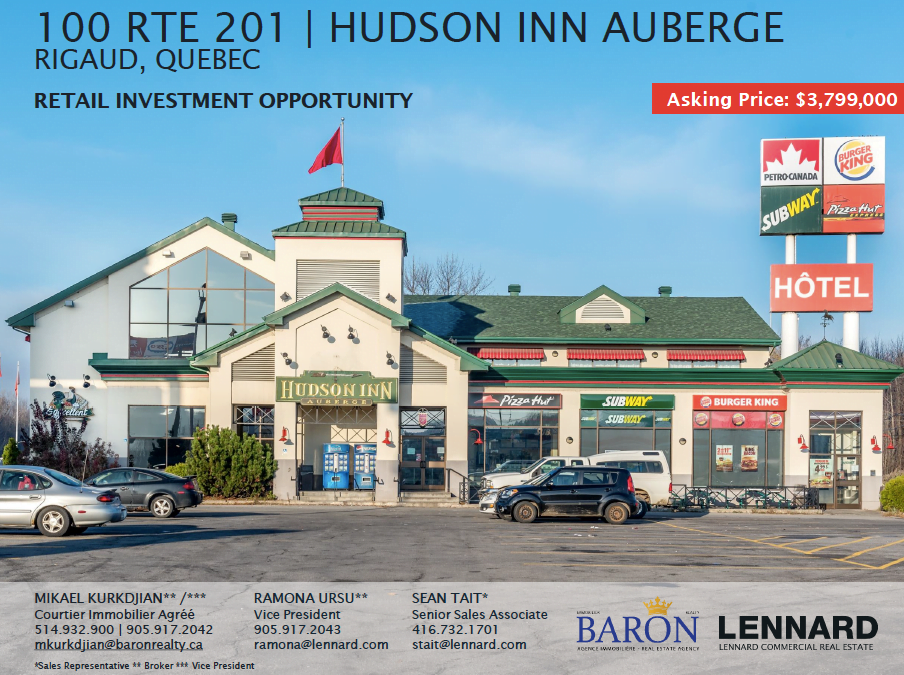
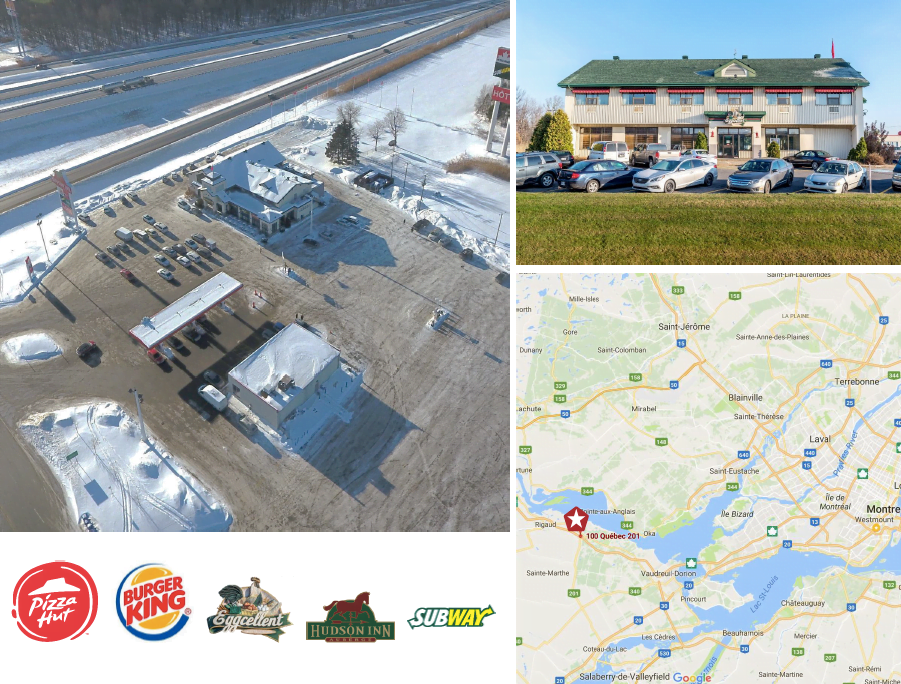
This week Lennard Commercial Real Estate is offering up an investment opportunity in Rigaud, Quebec, near the Ontario border with great growth potential.

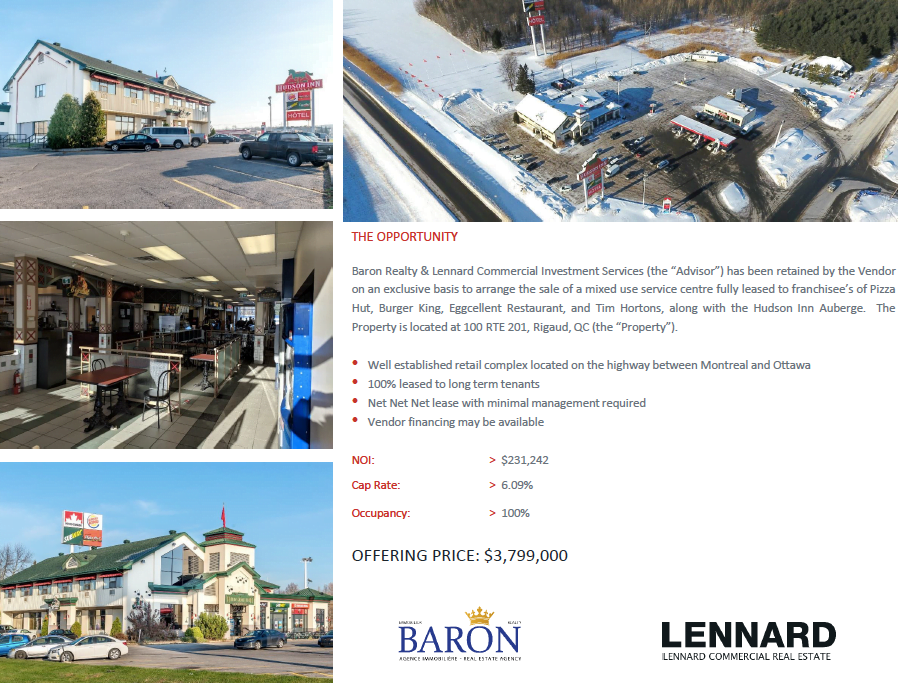
The current owner is seeking to divest and retire (most likely to a warmer climate) and has offered for sale this complete property which includes the Hudson Inn Auberge Hotel and multiple restaurant components: Pizza Hut, Subway, Burger King, Harvey’s, Tim Hortons, and Eggcellent. There are two gas stations on the property drawing in traffic, a Petro Canada and an Esso, but they are not included in this offer.

The restaurant tenants have great brand name pull and combined with the gas stations and hotel, makes this property primed for retail expansion. The property faces the Route 201 highway and the wooded area can be built on to increase development opportunity. 

With an asking price of $3,799,000, net income of $231,242 (NNN), and a 6.09 per cent Cap Rate, this investment ready property is offered with a long-term lease and a 10-year option of renewal.

For more information, contact Ramona Ursu at: ramona@lennard.com or: 905-917-2043. [Download Full PDF Package Here]

INDOCHINO Excels at Following Their Designs

INDOCHINO

Innovative Vancouver-based INDOCHINO, the world’s largest made-to-measure menswear company, is on track with its aggressive North American expansion mode that will see it open four new locations in the southern United States this spring. 

The four new “designed by you” showrooms are to be launched in key business centres with thriving young professional populations, beginning with Charlotte, North Carolina on February 23, followed by Texas showrooms Houston (March 2nd), Austin (April 20th), and Dallas (April 27th). According to CEO Drew Green, these four locations “are already home to thousands of customers who shop with us online and are strong ambassadors of the INDOCHINO brand.”

It was less than three months ago, in December 2017, Retail-Insider reported that INDOCHINO announced plans to open up to 18 locations in 2018 following the 8 which opened in 2017

INDOCHINO launched and established itself online before opening its first bricks and mortar location in Vancouver’s Gastown in 2015 and is continuing to make strides with its immersive and engaging showrooms and its three-week delivery promise on all orders.

Heidi Sopinka Takes Off as New Novel ‘The Dictionary of Animal Languages’ Debuts

Heidi Sopinka is perhaps best known around Toronto as the shop owner and co-founder of Horses Atelier. With a diverse life story that includes time as a bush cook in the Yukon, travel writer in Southeast Asia and a helicopter pilot, one is not surprised that her first novel The Dictionary of Animal Languages is as eclectic as herself.

Sopinka has crafted a story of love, longing, and art set in interwar Paris and appeals to readers of All the Light We Cannot See and The Disappeared. The story revolves around renowned artist Ivory Frame, who in her nineties is a famously reclusive painter who never married, had neither a family nor a child. After finding out she has a grandchild, her world is turned upside down. She soon finds herself returning to a project she had begun in Paris decades ago, and which will consume the rest of her life: a dictionary of animal languages. Part science, part art, the dictionary strives to transcribe the wordless yearning of animals, the lonely and love-laden cries that expect no response. 

The Dictionary of Animal Languages, her first novel, is published by Penguin Random House, and is forthcoming in the UK, US, Australia, New Zealand, and will be translated into Polish. Available now at GoodReads.com.

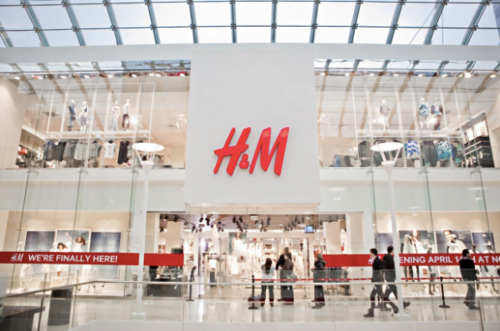
H&M Canada Reports A 7% Sales Increase During 2017

[Courtesy of Randy Harris, President of Trendex North America] H&M, Canada’s seventh largest apparel retailer during 2016, probably moved up two notches in 2017 as a result of a 7% increase in the company’s total sales during the past year. The retailer, whose sales during its fiscal year December 1, 2016 – November 30, 2017 totaled C$692 million, added 8 stores and closed two stores. At the end of the year, the retailer operated 91 stores (vs. 536 stores in the U.S.). Six of the Canadian stores were COS stores. During its fourth quarter ending November 30, 2017, H&M Canada’s sales decreased by 2% even though it added a net of three stores during the quarter.  

For all of 2017, H&M Canada’s parent company reported worldwide sales of C$35.3 billion, an increase of 3% over sales the previous year. During 2017, H&M opened a net of 388 new stores, and ended the year with 4,739 stores in 69 countries. The retailer’s profits decreased 13.2% for the year. During 2018 H&M plans to enter Uruguay and the Ukraine. Additionally, in recogni-tion of the growing importance of e-commerce, H&M plans to open on Tmall, the world’s largest e-commerce platform. [Trendex’s monthly Newsletter available at http://www.trendexna.com/can-apparel-insights]

Fendi Casa/Bentley Home Retail Space Debuts in Vancouver

exc-5a9222639140b7427f193066

Major Interiors opened the doors to their newest luxury retail venture, the Fendi Casa  Bentley Home showroom, in the heart of Hastings Crossing at 300 West Pender Street. This area between Gastown and Yaletown is undergoing rapid gentrification and as a result features numerous trendy boutiques, restaurants, and cafés.

The 5,000-square-foot open concept showroom has exposed brick, large character windows, and impossibly high ceilings, and is divided into several rooms with vignettes that showcase luxury furnishings collections from the brand portfolio of Italy’s Luxury Living Group.

Blending both The Fendi Casa collection, which celebrates the Roman Maison codes, and Bentley Home, inspired by the British luxury car company, into one location satisfies clients with a wide range of taste and styles. Visitors will note the added golden touch of Versace Home plateware and crystal decor peppered throughout the room displays.

Near the back of the showroom is a Steinway & Sons black regular grand piano which is next to the soon-to-be completed private shopping area and adjacent to a section of floor space which will be for seasonal installations where Major will introduce luxury homewares and unique decor from emerging brands that compliment the Fendi Casa Bentley Home lifestyle.

With over two decades of experience working in North America, Major Interior has grown to become a company known for the development, production, and distribution of luxury home products including partners Versace Home and Misura Emme.

Groundbreaking Technology Assists the Disabled with Ecommerce Websites

Image: eSSENTIAL Accessibility

A Toronto-based technology company is providing accessibility solutions to a growing number of people with disabilities who are finding it challenging to navigate the digital world.

In November, eSSENTIAL Accessibility launched groundbreaking technology giving people with physical disabilities a barrier-free mobile experience with its Android application.

The application for Android devices allows people with limited dexterity to overcome barriers through hands-free technology, touch-replacement tools, and voice recognition capabilities. The technology benefits those with quadriplegia, Parkinson’s disease, multiple sclerosis, Cerebral Palsy, and other conditions that make it challenging to use touchscreen smartphones and tablets.

Spiro Papathanasakis, one of the co-founders and a director with the company, says the company has been in business for almost 10 years.

“We’re really a social enterprise that helps organizations create more accessible digital platforms. We help through the integration of assistive technology. We offer web accessibility evaluation and remediation services to help organizations ensure that their content is accessible,” he says.

“And by implementing this solution, brands are able to enhance their digital customer experience for folks with disabilities. It not only helps them build on that customer experience but it also helps with meeting current regulations and standards. And also as a brand for an organization it helps them project an inclusive and obviously disability-friendly presence in one of its most important channels – right now of course being digital. It’s critical that brands connect with all consumers and of course employees as well.”

“By working and partnering with us they’re able to improve and ensure that they are connecting and not leaving anyone behind.”

The technology is available on a no-cost-to-user basis through eSSENTIAL Accessibility’s brand partners.

The company also has a presence in Brazil, in the United States and Switzerland.

“We’ve got a global presence in terms of our people,” said Papathanasakis.

Best Buy, Ashley Furniture, and Famous Footwear are among some of the retailers that have partnered with eSSENTIAL Accessibility.

“Mobile is becoming more and more important for all organizations, but especially for retailers. So ensuring that mobile apps are built to be accessible, ensuring that there are assistive technology solutions available for mobile is also becoming a critical piece,” says Papathanasakis. “So from both perspectives, from the technology being available to consumers and from the standpoint of ensuring that the content itself whether it’s mobile or whether it’s apps and so on they should be made accessible and in that way a retailer will not leave anyone behind.”

“This isn’t just about doing the right thing or meeting regulations, this is about ensuring as a retailer that all consumers have access to your products and services.”

The company offers the following key points to consider:

  • A survey of shopping and consumption behaviours by people with disabilities asked about their experience accessing product information before making a purchase at a retail store. Only 50- 60 per cent of consumers with disabilities were satisfied with their experience;
  • Over half (54 per cent) of consumers with disabilities would shop more frequently or spend more money in restaurants and stores that have made an effort to be accessible and welcoming to people with disabilities;
  • 58 per cent of consumers with disabilities feel that companies all too often introduce new products or services without any consideration of disability-related needs. This number rises to 80 per cent among people who use wheelchairs or scooters;
  • 71 per cent of customers with disabilities will leave your website once they realize it’s difficult to use. The spending power of these customers represents about 10 per cent of total online spending; and
  • Nine out of 10 customers who encounter accessibility barriers on your website won’t take the time to let you know about it.

Largest Canadian Apparel Conglomerates Identified

We have temporarily taken this article down while we confirm some details. Thank you for your patience. 

Cominar Announces Significant Rockland Centre Investment [Renderings]

exc-5a8f6575ec212d5ccd3f23ae

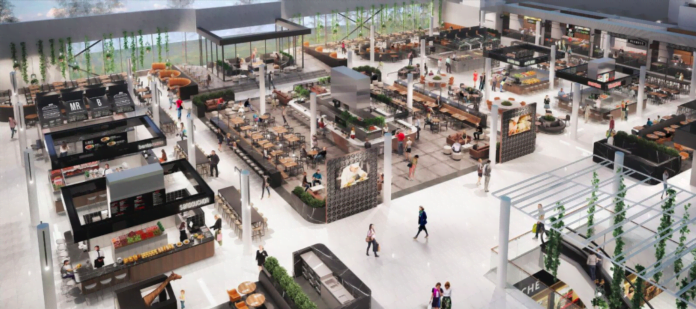
Montreal’s Centre Rockland is in a state of transition, and landlord Cominar REIT has announced that it will invest millions into an overhauled food and beverage component that will reflect some key trends seen among the country’s leading shopping centres. The project is particularly unique in both what’s being built, as well as what will be done in the interim to replace the mall’s food vendors while a new space is built-out. 

Cominar is investing about $10 million into its former food court, which will result in something considerably different for the centre when it’s unveiled this fall. Manon Larose, Vice President of Retail Leasing at Cominar, explained that the replacement of the mall’s food court won’t be necessarily a food hall per se, but will be something of a culinary experience that will be a mix of permanent and temporary vendors, and there will even be an area where master chefs can demonstrate their wares. 

It’s all part of an effort to attract more shoppers to the centre, and Montreal residents are known to be foodies. The completed redesigned space will be both modern and warm, featuring an interior garden-styled environment, according to Cominar. 

“We are delighted to offer Rockland’s customers a vibrant and authentic food court that will host culinary demonstrations where professional chefs will present unique gastronomic events. It will feature a central bar offering a fresh visual and tasting experience, as well as a diverse selection of food trucks every three months.  Its new Children’s Garden will cater to families by offering a range of services for their well-being”, said Ms. Larose. 

“This new space, which focuses on international and healthy cuisine, will feature a large atrium and an outdoor terrace where customers can enjoy abundant natural lighting and a variety of entertaining activities. The only remnant of the traditional food court is the variety of food options; other than that, everything else has been reinvented”, added Jean Laramée, Executive Vice-President, Development at Cominar.

As the current food court space has been shuttered for the renovation, Cominar came up with a unique idea to provide customers with food and beverage, with a popular Montreal twist. Four food trucks will be parked outside of the centre (including La GaspésieGras DurMignon and Jerry’s) to serve its shoppers as of today (February 23) and customers will have access to these outdoor food trucks through a heated indoor corridor and will be able to enjoy their meal in a seated indoor dining area. It’s a first of its kind in Quebec, according to Cominar, and was inspired by the success of Mandy’s food truck, which has been set up in Rockland’s center court since October of 2017. 

Centre Rockland has several other dining establishments on-site, and these will not be affected and will remain open during the food court overhaul. Locations for Starbucks, Eggspectation, Café Dépôt and Okane Sushi are contained within the mall, and in May of this year one of Montreal’s best known pizza restaurants, NO.900, will open in the centre. 

Enhanced food and beverage offerings in malls is a significant trend, as identified in Retail Council of Canada’s latest Shopping Centre Study. Some of the country’s top malls have renovated and expanded their food and beverage offerings with considerable success — consumers now, more than ever, are seeking out experiences, and strong culinary experiences are bringing shoppers into centres, keeping them there, and having them return. 

Canada’s top mall landlords continue to invest in their malls, and over the past several years have invested billions of dollars into their centres. The investments are unprecedented, as malls compete for shoppers that are also changing their spending patterns. Technology spending is on the rise (the new iPhone X is the most expensive yet), and many are seeking out experiences that they otherwise can’t get online — and that’s important to note, considering the increased popularity of e-commerce in Canada. The cost of living in Canadian cities is going up as well — higher housing costs, stagnating incomes and high taxes are all playing a role in putting a dent in Canadians’ wallets and as a result, retailers and malls are fighting vigorously for Canada’s limited shopping dollars, particularly in Quebec. 

Shopping Centre landlords in the Montreal area are investing in their centres to address competition, which will become even fiercer with the arrival of Carbonleo’s multi-billion dollar mixed-use Royalmount project, which will include about 2.5 million square feet of space only about three kilometres west of Centre Rockland. Cadillac Fairview’s CF Galleries d’Anjou recently saw renovations as well as the addition of La Maison Simons as well as Montreal’s first Saks OFF 5TH, and to the north, CF Carrefour Laval continues to add new tenants as it maintains its position as a super-regional centre. Downtown Montreal is expected to continue to hold its own with the renovation of its primary shopping street, Sainte-Catherine Street West, which is seeing new retailers as well as an expanded Holt Renfrew Ogilvy and within a few years, a renovated La Maison Simons flagship. 

Back at Centre Rockland, Ms. Larose noted that the centre will be seeing some new retailers in 2018 and 2019, and that some of these will be revealed at a later date due to confidentiality. One existing tenant, Linen Chest, will see a revamp as part of an updated store concept. 


Centre Rockland is positioned as a mid-to-upscale centre serving nearby affluent communities such as Outremont. The centre has almost 160 boutiques and includes some well-known, upscale retailers such as Marie Saint Pierre, Judith & Charles, Michael Kors, Stuart Weitzman, Massimo Dutti, and Karen Millen (the only Millen boutique in Canada). Centre Rockland’s interior uses high-quality materials, according to Cominar, to reflect its location as well as its upscale positioning. The centre opened in 1959 and was originally anchored by retailers including Morgan’s and Holt Renfrew — Morgan’s is now Hudson’s Bay, and the Holt Renfrew store, along with several others in the region, shuttered in the 1990’s. 

Why Amazon Go is a ‘No-Go’ for Most Retailers

Image: Amazon Go

Innovation is happening all around the Canadian retail industry. Retailers like London Drugs and their new LDExpress stores, La Maison Simons’ synchronizing supply chain and even small retailers like Edmonton-based Poppy Barley are getting in on the innovation act. The David Sobey Centre for Innovation in Retailing and Services and their newly launched Innovation, Strategy and Excellence program is a testament to how important innovation is to Canadian retailers Retail Innovation: Must-Attend Executive Development Program.

Beyond the great work being done in Canada, it behooves Canadian retailers to also look south of the 49th parallel for inspiration and one story that seems to be consuming much of the innovation oxygen lately is the newly opened Amazon Go store in Seattle.

As Nick Wingfield, technology correspondent for New York Times described in his vivid, first-hand account of shopping at the Amazon Go store Inside Amazon Go, a Store of the Future, it’s hard not to get excited about the future of retailing.

And while the retail industry can use all the good press it can get, I’m not sure this is it.

It was a strange juxtaposition to see giddy customers line up for hours for the privilege to ‘grab and dash’ a box of granola bars and a vanilla soda only to avoid a check-out line in the store – an ironic twist that was amusingly lampooned on a recent episode of The Daily Show with Trevor Noah.

As much as check-out lines are the bane of retailing – a legitimate friction point that causes some shoppers to switch from bricks to clicks and buy online – cashier-less checkout is not a panacea for the challenges brick-and-mortar retailers are facing.

Image: Amazon Go

Cashiers aren’t the problem – a lack of cashiers is

While some retailers are quick to blame diminishing mall traffic or confounding Millennials’ and their erratic buying behavior for their same-store sales woes, they need look no further than their own stores. It’s obnoxious to make customers wait an inordinate amount of time to hand-over their hard-earned money, but that’s exactly what happens in retail stores every hour of every day.

The ‘check-out problem’ so many retailers seem to have is largely self-inflicted. Retailers, it seems, are genetically conditioned to cut expenses, and as every retailer knows, store labor (including cashiers) is the largest expense. It is utterly blasphemous for a well-intentioned store manager to ask for additional labor hours, even when she witnesses disgruntled shoppers storming out of the store in disgust, leaving abandoned shopping carts in their wake.

Part of the problem is that many retail executives today believe that they can algorithm their way to success – if AI and Machine Learning can help cure cancer then surely it can solve the comparatively trivial issue of improving the shopper experience in retail stores. But it’s as close to reality as humans living on Mars – with all due respect to Elon Musk – it’s theoretically possible, but mind-bogglingly impractical.

Image: Amazon Go

Sensors versus people

The 1,800-square foot Amazon Go store is chock full of hundreds of sensors, cameras and scanners, according to Devin Coldewey a writer for TechCrunch Inside Amazon’s surveillance-powered, no check-out convenience store. While the details of exactly how all this technology works and what it cost was not disclosed, it’s hard to image that it was nothing short of a small fortune. And, the ongoing expense of maintaining this super-computer disguised as a convenience store would likely consume a substantial portion of a sizable retail chain’s entire annual IT budget.

While the technology overhead alone would exclude virtually every brick-and-mortar retailer from an Amazon Go-esque deployment at scale, there’s another issue that would be troubling to most retailers – theft. According to TechCrunch’s Coldewey, “a certain amount of ‘lossage’ is anticipated [by Amazon]…and if you manage to get out without paying for something, the company doesn’t officially care.” Well most retailers do care about theft and the impact it has on their bottom line. Bill Turner of Loss Prevention Magazine raises some interesting questions in, Now Amazon Doesn’t Care If You “Accidentally” Shoplift.

There’s no doubt that the ‘cool-factor’ and publicity Amazon receives makes the return on investment more than acceptable. However, when you consider that a typical 1,800-square foot convenience store might have two cashiers being paid $12 per hour (if they’re lucky), it would be impossible for even the largest, most successful retailers to make a rational financial case for this – at least not using the current technology available.

Frankly, I doubt that Amazon will expand their Go concept any time soon or very far. Furthermore, I’d bet my RRSP that there’s close to a zero-percent chance that they will roll-out the ‘Go-platform’ to their 474 Whole Foods stores, which average 39,000-square feet in size. Simple math says these stores would require five or six thousand sensors – each. Even the mighty Amazon, awash in cash from their wildly successful web services business, would have a hard time making the numbers make sense.

Image: Amazon Go

Retailers High Jump and Amazon Pole Vaults

Amazon’s relentless pursuit of innovation is truly impressive and even inspiring, but they are playing an entirely different game than most every other retailer. Brick-and-mortar retailers that try to chase Amazon are destined to fail – they can’t possibly sustain the retail moon-shots Amazon seems to make every other quarter.

And yet, the retail industry is undergoing cataclysmic change. Business results are challenged and stores are being shuttered. Traditional approaches and strategies that have worked reliably in the past do not today. As one retail executive confided, “nothing seems to be working…we’re questioning everything.”

The allure of technology as the panacea for all that ails brick-and-mortar retailing, like the type epitomized by Amazon Go, is compelling. But technology is hardly a panacea. And for some retailers, too many misplaced technology bets could exacerbate an already precarious financial situation and waste precious time as the next earnings call approaches.

My advice to retailers is to simply install a single sensor at the entrance of their stores so they can know exactly how many shoppers are visiting and when. Then, they should hire enough store staff to serve the shoppers in a way that delights them and causes them to happily make a purchase and return again and again in the future.

Retailers – Canadian and American – don’t need Amazon Go to be successful or innovative. Frankly, it’s a no-go for most of them anyway, maybe even Amazon too.

Mark Ryski

Mark Ryski is author of Conversion: The Last Great Retail Metric and When Retail Customers Count and CEO and founder of HeadCount Corporation (www.headcount.com). Follow him on Twitter at @markryski.