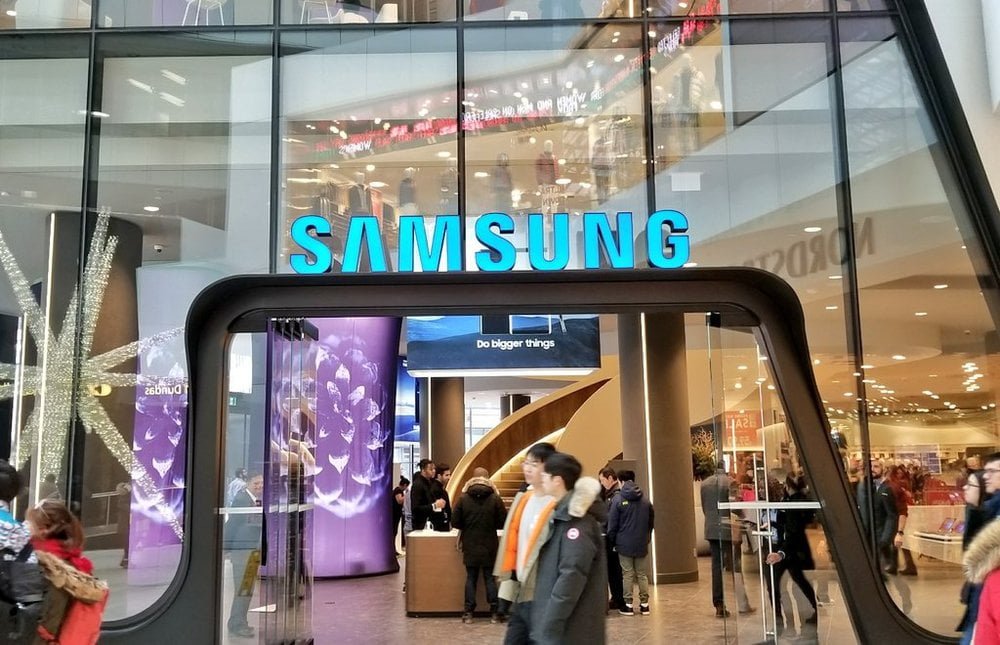
(YONGE STREET ENTRANCE ON A PARTICULARLY CHILLY DAY IN TORONTO. PHOTO: CRAIG PATTERSON)
South Korea’s Samsung has opened its largest store in Canada at CF Toronto Eaton Centre, spanning about 21,000 square feet over two levels. The highly experiential retail space is Samsung’s sixth in Canada, and is considerably larger than its other Canadian stores.
The store features two entrances — a street level access point facing onto Yonge Street, as well as a separate entrance from within the mall, shared by Nordstrom, Uniqlo and H&M. Canadian design firm Quadrangle designed the new space, which is modern and bright, featuring ample windows overlooking Yonge Street and Dundas Square.
On the main floor, the interactive Samsung Gear VR and Gear360 zones ‘transport’ visitors across Canada, over rollercoasters and beyond — it’s already a hit among visitors since the store has been open. The store’s ‘luxe’ TV experience zone showcases Samsung picture, sound and design innovations.
CF Toronto Eaton Centre Lease Plan (Image: Cadillac Fairview)Samsung at CF Toronto Eaton Centre (Image: Samsung)
CF TORONTO EATON CENTRE SAMSUNG (SWEEPING STAIRWAY ANCHORS THE STORE. PHOTO: SAMSUNG)
There’s also a full lineup of Samsung smartphones and tablets, with an expansive assortment of mobile accessories to personalize guests’ favourite Samsung devices. Onsite Samsung Smart Service and trained Galaxy Consultants guide guests through the experience, answer questions and provide technical support and repairs for mobile products. In addition, Samsung mobile device owners are also able to coordinate 1:1, in-person sessions with Galaxy Consultants at CF Toronto Eaton Centre store.
A sweeping staircase guides visitors upstairs to the second level. The stairway acts as a focal point for the store, with warm wood contrasting with white railings.
One of the particularly unique features to the store is a fully functioning Samsung demo kitchen on the second level. Visitors can watch cooking demonstrations and engage with various events and activities that will be held in the store over the course of the year. None of Samsung’s other Canadian stores feature demo kitchens (partly due to lack of space).
The second level also includes seating areas as well as various demonstration areas, which can be modified depending on if there are any scheduled activities. Visitors are also encouraged to come in and relax on the store’s comfortable seating, offering a respite from the hustle and bustle of downtown Toronto.
Samsung at CF Toronto Eaton Centre (Image: Samsung)
Minimalist Japanese retailer MUJI has publicly announced that it will be expanding its first Canadian store, located at the Atrium in downtown Toronto, and that it will temporarily relocate into a temporary space during the construction. The expansion is expected to grow the Toronto store to become more in line in terms of size of MUJI’s two West Coast locations, which are both larger than its current four Toronto stores.
MUJI opened at the Atrium in November of 2014 in a 4,373 square foot retail space formerly occupied by a Blacks Camera store. MUJI then proceeded to open larger stores in some of Canada’s leading malls — its second Canadian location spanning 5,225 square feet opened at Mississauga’s Square One in November of 2015, followed by the October 2016 opening at Toronto’s Yorkdale Shopping Centre (6,375 square feet) and the Summer 2017 debut of a 6,000 square foot space at CF Markville, north of Toronto.
MUJI cracked the 7,000 square foot mark in Canada when it unveiled a 7,770 square foot space to massive crowds in August of 2017 at Metropolis at Metrotown in Burnaby — the crowds were no doubt because this was MUJI’s first store on Canada’s West Coast. An impressive 14,507 square foot store opened on Robson Street in Vancouver in December of 2017, making the store MUJI’s largest outside of Asia.
MUJI’s current location at 20 Dundas Street in the Atrium will temporarily relocate to a space towards Bay Street, as per the floor plan below, while the current space is expanded.
Women’s retailer Long Tall Sally recently relocated from its 3,670 square foot retail space, adjacent to MUJI, to a new one across the hall. The combined retail spaces could see MUJI occupy more than 8,000 square feet and that is the case, this could become Canada’s second-largest MUJI location after the Robson Street flagship in Vancouver.
“After welcoming Muji to Canada with their first store at Atrium in 2014, H&R REIT and Atrium have continued to work closely with this iconic Japanese retailer. We recognize their exceptional performance and strong connection with the Canadian consumer. As Muji moves to a new interim location on the northeast corner of Bay & Dundas within Atrium, we will continue to work closely with their team to achieve optimal positioning and expansion at Atrium in concert with our overall redevelopment objectives,” said Mike Parker, President of MPA Inc., responsible for development and leasing at Atrium on behalf of H&R REIT, its owners.
Mr. Parker went on to further discuss the property, including its exceptional location.
“Atrium is a first class, mixed use office/retail complex of approximately one million square feet in the heart of Downtown Toronto, Yonge and Dundas and spanning a city block bounded by Yonge, Dundas, Bay and Edward Streets. Atrium is directly connected to the TTC Dundas subway platform, Toronto’s amazing underground PATH network, adjacent to Ryerson University and is immediately north of CF Toronto Eaton Centre. Earlier this year, Atrium welcomed Michael Jordan’s first store to Canada at 306 Yonge (approx 15,000sf) and is home to other first-class retailers including LCBO, Canada Post, CIBC, Rexall, The Kitchen Table, Long Tall Sally, Boathouse and more.”
In an interview with Retail Insider in late 2016, MUJI’s Canadian President Toru Akita revealed that the company plans to operate between 15 and 20 stores in Canada by the year 2020. MUJI currently operates 14 American stores, with more to follow as it expands in the US. Of the locations currently open, seven are in the New York City area, three are in the San Francisco Bay area, one is in Boston, and three are in southern California.
Known for being innovative and its products being affordable and unbranded, MUJI carries various household items, furniture, appliances, stationery and apparel. With hundreds of stores worldwide (with 422 in Japan and about 428 internationally), it saves money by spending little to nothing on market research and advertising. MUJI is short for Mujirushi Ryohin, or no-brand superior items, and was founded in 1980 as the private-label brand of a major supermarket chain.
Keep Cool, with its style of providing a balanced, low-pressure gym without judgement or intimidation, says it is the perfect escape from life’s demands and pressures.
Tanguy Saillant, director of operations for Keep Cool Canada, says the Toronto location at 530 Yonge Street will open at the end of January or beginning of February in 6,500 square feet.
“We’d like to open two more locations next year in 2018 in Toronto. My plan at the beginning is to open three gyms in two years and after that I just need to know if the concept is working or not. If we have success or not, and if we have success probably we’ll actually open more and maybe go to franchising,” says Saillant.
(RENDERING OF SIGNAGE FOR THE NEW KEEP COOL AT 530 YONGE ST. IN TORONTO)
He brought the Keep Cool concept from France where it was established in 2002 and it currently has close to 150 gyms there as Franchising Manager.
The Toronto location is its first foray into the North American market.
The company used Montreal-based POTLOC‘s crowdsourcing platform to determine where the demand is for new locations.
POTLOC is transforming the way market research is done in the retail industry. Its mission is to build smarter neighbourhoods by giving consumers a voice. Every citizen in a defined trade area is asked to choose the next stores they would like to see open in their neighbourhood. These hyper-local consumers’ insights are then used by retailers, real estate companies and cities to optimize the local retail offering.
Image: Keep CoolImage: Keep Cool
“We’ve worked with POTLOC to help understand what could be the expectation of Canadian people in the gym. We wanted to understand what is most important for people,” says Saillant.
“For example, complimentary towels. We don’t do this in France but here it was the first thing people asked when I did the survey.”
Keep Cool’s motto is Le Sport Bonheur which translated to English means Sports Happiness. The Canadian motto, modified, will be ‘Fitness from France’.
In Toronto, it will include a bike studio, an elliptical studio, a studio gym, and several learning classrooms. It will have all the amenities of a modern fitness location – WiFi, TVs, Internet, private change rooms and showers, modern equipment, and a team of trainers.
Image: Keep CoolImage: Keep CoolImage: Keep Cool
“The gym is available from 5 a.m. to 11 p.m. every day. You can access the gym when you want and you can do what you want when you want,” says Saillant. “We are trying to create a very welcoming atmosphere.”
Here’s what the company says about itself on its Facebook account:
“We’re not extreme or hardcore. We’re not a tribe or cult. We’re a fitness community. Located in downtown Toronto, our gym is an open and welcome place without judgement or intimidation.
Image: Keep Cool
We believe in balance. In France, the importance of fitness is matched by the importance of wine. A healthy life shouldn’t be one without indulgences. We want you to get something from the journey, to enjoy the satisfaction of small wins and progress in your workouts. You don’t need another exercise or weight loss commitment to obsess over. You need a release from life’s demands and pressures.
You need empowerment, support and guidance from personal trainers who aren’t pushy. You need a gym that’s right for you. You need, Keep Cool.”
About 50 international retail brands entered Canada by opening stores in 2017, which could be a record. As a comparison, we counted 21 brands that entered Canada in 2016, 28 in 2015, and 20 in 2014 when we began counting.
The following list of 2017 international retailers that entered Canada is ordered roughly from the beginning of the year until December, and includes a brief description of each retailer, as well as a link to a Retail Insider article if we wrote about it, where applicable.
Winter 2017: The Winter of 2017 saw a diverse range of openings including very high-end, as well as value-priced retail.
Stefano Ricci
Stefano Ricci: In January of 2017, super-luxury men’s fashion brand Stefano Ricci opened its first standalone Canadian store. The 2,600 square foot boutique is located at 1139 West Georgia Street, next to the new Trump Tower in the city’s expanding ‘Luxury Zone’.
The store features Stefano Ricci’s pricey menswear as well as fragrances, accessories (such as leather goods and cuff links) and home goods such as porcelain and crystal dinner services, silverware and luxury linens. Every item in the store is made by hand in Italy, using the highest quality of materials. The store is co-owned and operated by Manuel Bernaschek, owner of popular Vancouver-based Showcase Pianos.
While there are no immediate plans for more Stefano Ricci locations in Canada, Mr. Bernaschek said that there’s a possibility that Toronto could be the next Canadian city to see a Stefano Ricci boutique.
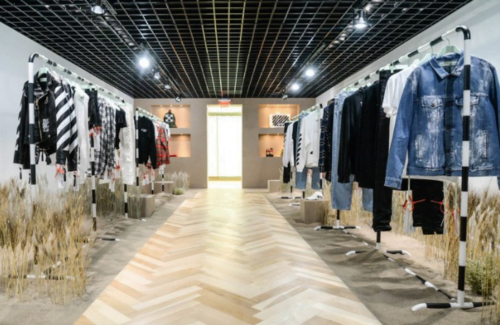
Off-White
Off-White: In early 2017, luxury streetwear brand Off-White officially opened its first North American store in Toronto. Known for its edgy fashions that are a cross between “streetwear and high fashion”, featuring thick diagonal stripes, Off-White’s Virgil Abloh (who is also Kanye West’s creative director) launched the brand online in 2013 and held its first Paris showroom presentation in January of 2014.
Off-White’s Toronto store is located at 83 Yorkville Avenue, in an area that is rapidly adding luxury retailers. Virgil Abloh says that he chose Yorkville over other areas of Toronto for a few reasons. “The Off-White brand is an updated luxury concept,” he said. “I show in Paris because it’s about this younger generation’s influence on high fashion.” He snapped up the Yorkville space because of its proximity to other luxury brands, instead of locating on trendier but less affluent Queen Street West.
We coordinated a 3D tour of the Toronto Off-White space with Warren Vandal of GEOmarketing Solutions, who uses an innovative Matterport platform to photograph stores to make it appear that one is walking through the live space.
Towards the end of this month, Off-White will open a second Canadian store in Vancouver, in a laneway between Robson Street and Alberni Street.
galibelle
galibelle: Innovative Portuguese footwear brand galibelle (spelled with a lowercase ‘g’) opened its first Canadian boutique on Edmonton’s Whyte Avenue in early 2017, and a second in Kelowna shortly thereafter.
The concept is unique and simple — consumers first pick a desired shoe sole, then choose from a variety of potential top straps that interchangeably button onto the sole. With over 30 different sole styles and over 1,000 different interchangeable straps of various colours and materials, women are able to customize their sandals, heels or boots, depending on the occasion.
Canadian master franchisees David and Lisa Broesky brought the concept to Canada after discovering galibelle while on a holiday in Barcelona, Spain. The Edmonton store measures less than 800 square feet in size and carries a wide variety of galibelle styles, as well as the brand’s boots and accessories. The Kelowna store is a bit larger, spanning about 1,200 square feet. As the concept expands, stores could be as small as 500 square feet in size, said Mr. Broesky.
Style Encore (PHOTO: WINMARK)
Style Encore: Minneapolis-based Style Encore, operating under the Winmark Corporation umbrella, officially opened its first Canadian store last winter in Guelph, Ontario. The unique women’s resale retail concept is expanding its Canadian operations rapidly under a franchise model.
The Style Encore retail concept caters to women in their late 20’s and upwards, selling gently-used clothing, footwear, handbags and accessories. Fashions range from casual to dressy, with Style Encore buying items that have been in retail stores within the past couple of years in order to reflect current trends. Sizes range from size 0 to 4X, and the company also makes it clear that it doesn’t sell counterfeits by taking measures to ensure brand authenticity. Style Encore is working with Don Gregor of Aurora Realty Consultants as its Canadian broker.
SoulCycle
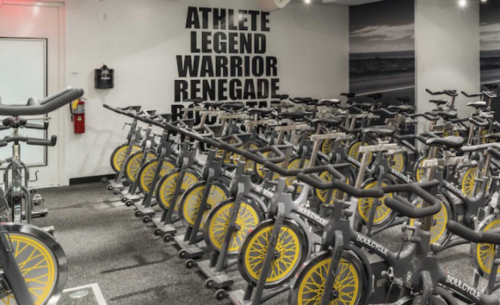
SoulCycle: American spin cycle fitness studio concept SoulCycle entered the Canadian market in early 2017 with a location on King Street West in Toronto. Two more have since opened — one in Toronto’s Yorkville area, and another in Vancouver’s Yaletown area.
“It’s exciting that SoulCycle is opening its first studio in Canada, in a premier brick and beam building along King Street West – right in the heart of the action in downtown Toronto”, said Hilary Kellar-Parsons of brokerage Avison Young, who negotiated the Toronto deal in partnership with Avison Young’s Tyler Sopik.
SoulCycle classes incorporate upper body exercises and high-energy music into each class, set in a dark candlelit room. SoulCycle is known for it’s cult following of riders, with a loyal clientele including names such as Michelle Obama, Oprah Winfrey, David Beckham, Demi Lovato, and Lady Gaga.
Liv Bicycle Boutique
Liv Bicycle Boutique: In January of 2017, Liv Vancouver Bicycle Boutique opened its first Canadian store on West 4th Avenue on Vancouver’s West Side. The store is also the first cycle store in Canada to focus on women.
The store deals exclusively in Liv bicycles, along with Liv and complementary brand clothing and accessories.
Spring 2017: The Spring of 2017 was a busy time for store openings in Canada, again with a mix of value-priced and luxury brands.
Miniso Storefront
MINISO: Chinese variety retailer MINISO, which positions itself as a ‘Japanese lifestyle brand’, opened its first Canadian stores in Vancouver in the spring of 2017, and has big plans for Canada. The company says that it could eventually operate as many as 500 stores in Canada — more than a dozen are now open in BC, Ontario and Alberta, and 100 are expected to be open by the end of 2018.
MINISO is a value-priced retailer that might be classified as a variety store, specializing in household and consumer goods that include cosmetics, stationery, toys and kitchenware. It was co-founded in 2013 by Japanese designer Junya Miyake and Chinese entrepreneur Ye Guo Fu, and is headquartered in Guangzhou, China.
Richard Mille
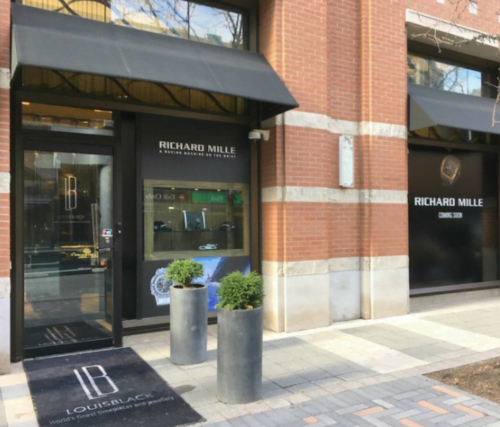
Richard Mille: One of the world’s priciest and most prestigious watch brands, Richard Mille, opened a freestanding store in Toronto’s upscale Yorkville area in the spring. Swiss-based Richard Mille features some watch styles that are priced in excess of $1 million.
The Toronto boutique opened at 118 Yorkville Avenue, at the base of the prestigious Hazelton Hotel. Jeweller Louis Black operates the Richard Mille boutique under a licensing agreement — both of them are on the move, and will soon relocate to the second floor of 135 Yorkville Avenue into a considerably larger retail space.
Richard Mille boutiques are quite rare, with locations in selected cities that boast affluent locals and tourists. In the United States, there are five Richard Mille boutiques in four cities.
Maison Valmont
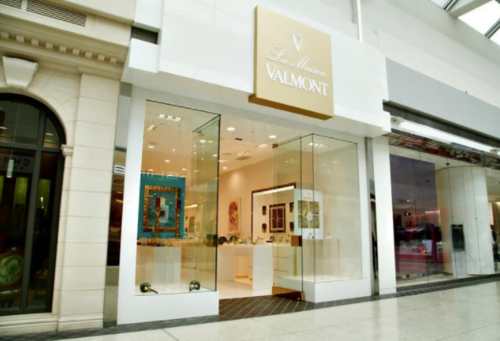
Maison Valmont: Pricey Swiss cellular skincare brand Valmont opened its fourth La Maison Valmont location in the world at Vancouver’s upscale Oakridge Centre. More Canadian locations could follow, though growth will be slow as the company tests out the new format in various global markets, it says.
The Oakridge Centre La Maison Valmont retail space spans 1145 square feet on one level, and is located between Montecristo Jewellers and Shoppers Drug Mart beauty concept Murale. La Maison Valmont features two treatment rooms, a lounge area, and a retail space selling the brand’s skincare along with products by brand By Terry, as well as a selection of jewellery made in Murano, Italy.
Valmont was founded in Switzerland in 1985 by husband-wife team Didier and Sophie Guillon, and the brand is known for its high-performing anti-aging product range, with substantial price tags. Some creams cost in excess of $600 each.
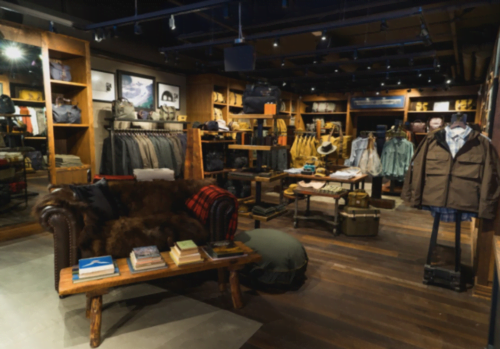
The 2,800 square foot Vancouver store, located at 47 Water Street in the city’s hip and historical Gastown area, features custom furniture built from local salvaged wood, iron beams, wooden floors and imagery of Filson dating back to the late 1800’s. Street level windows will showcase apparel, bags, and accessories for both men and women. Filson’s second Canadian store opened in Toronto at 694 Queen Street West.
Filson (originally named ‘C.C. Filson’s Pioneer Alaska Clothing and Blanket Manufacturers’) was founded in Seattle in 1897, and is known particularly for its clothing and luggage, as well as its guarantee. The company designs, manufactures and distributes its products, which feature rugged designs with prices in the mid to upper-end range. Filson partnered with broker Tony Flanz of Think Retail for its initial Canadian expansion.
Footaction (PHOTO: CRAIG PATTERSON)
Footaction: New York City-based Foot Locker launched the first International location for its Footaction banner in the spring. Located at CF Toronto Eaton Centre in Toronto, the new space is unique in how it includes a number of its brands in separate shop-in-stores. The 6,500 square foot store is located on ‘Level 1’ of the mall.
The three shop-in-stores include Nike Kicks Lounge at Footaction, adidas Originals Collective at Footaction, and Puma Select at Footaction. As well, Footaction is launching “elevated event and retail storytelling spaces” in key North American cities called ‘Capsule’. Toronto’s is called Capsule|416 by Footaction and according to the company, it takes cues from local street style.
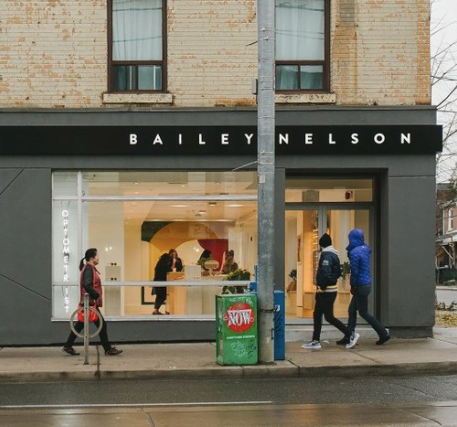
Bailey Nelson
Bailey Nelson: Australian eyewear retailer Bailey Nelson launched its corporate Canadian store expansion in the spring, with plans to expand into various markets over the next several years. Vancouver was the brand’s Canadian launch city, and a Toronto location followed on Toronto’s West Queen West in the fall.
The company will look to open multiple locations in each market it enters, she noted, clustering stores in order to build a customer base. Following Vancouver and Toronto, Bailey Nelson will seek to expand into Ottawa and other major Canadian cities.
Founded in Bondi Beach (Sydney) Australia in 2012, Bailey Nelson retails high-quality, on-trend glasses and sunglasses at a moderate price-point. It designs and manufactures its high-quality frames and uses top-quality lenses.
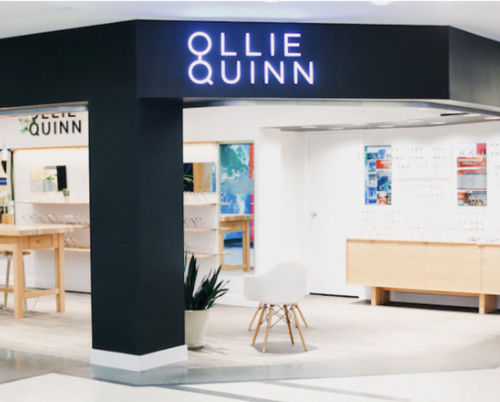
Ollie Quinn
Ollie Quinn: Value-priced UK-based eyewear retailer Ollie Quinn initiated a North American expansion that included launching nine boutiques in Canada in the spring. The company’s growth plans are ambitious, with an anticipated 30 stores expected to open in North America over the next two years, as well as an equal number in the UK.
Ollie Quinn was founded in London in May of 2013 by four friends, two of which are Canadian. Its Canadian operations launched in March of 2014, though its stores have only just recently been rebranded under the Ollie Quinn nameplate.
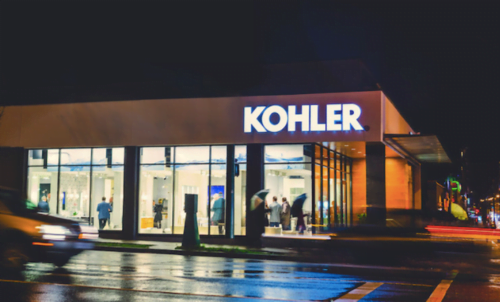
Kohler
Kohler: Renowned kitchen and bathroom fixtures brand Kohler opened its first Canadian Kohler Signature store in Vancouver in the spring of 2017. The 5,000 square foot retail space is located in the city’s upscale ‘South Granville’ retail area.
The store is owned and operated by EMCO Corporation. The retail space provides an upscale shopping atmosphere, as well as expert customer service. Consumers and design professionals are provided a hands-on opportunity to experience the latest kitchen and bath products exclusively from the Kohler Co. brands.
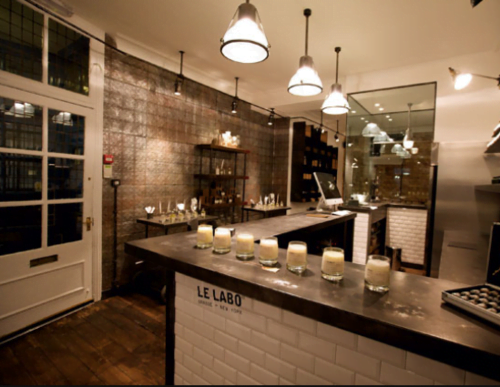
Le Labo
Le Labo: Estée Lauder-owned fragrance brand Le Labo opened its first freestanding Canadian store in Toronto in spring, at 876 Queen Street West. A Vancouver location is expected to be announced shortly.
The pricey Le Labo brand was founded in 2006 as a collection of 10 fragrances by Fabrice Penot and Edouard Roschi. The number in the fragrance name indicates the number of notes in its composition and the name of material (Vetiver, Jasmin, Labdanum) refers to the most prominent note within. The brand now features 45 perfumes, with its most recent having been created in 2015. Prices generally range between $100 and over $500 for fragrances and related products. Le Labo was acquired by New York City-based beauty conglomerate Estée Lauder in 2014.
Emily Masuda negotiated the deal — Ms. Masuda recently joined Marcus & Millichap as Senior Broker and Director, National Retail Group, and she’s been involved with other deals in the area.
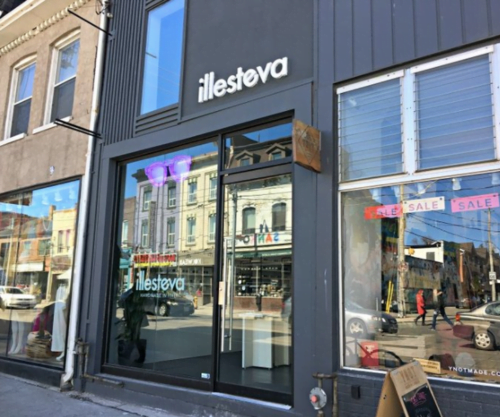
Besides the new Toronto store, Illesteva operates eight store locations, seven of which are in the United States. Illesteva was founded in New York City in 2010, and it sells eyewear that is handmade in France and Italy. Designs include classic shapes that utilize contemporary materials (such as acetate, bamboo, wood, titanium and natural buffalo horn), resulting in a brand that is both trendy as well as pricey. The brand has recently expanded its offerings to include a line of hand-finished leather goods, umbrellas, backpacks and bags, transforming Illesteva into a lifestyle brand.
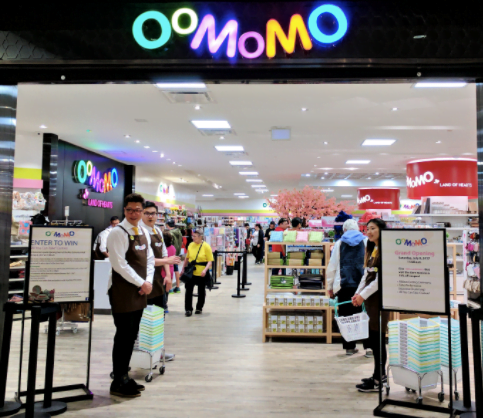
Oomomo (PHOTO: CONNECT2EDMONTON)
Oomomo: The ‘100 Yen’ Japanese variety store concept Oomomo entered Canada with a 6,000 square foot space at West Edmonton Mall in the spring of 2017. More are expected to follow, with the Albertan licensee saying that its focus will initially be on Alberta, prior to expanding elsewhere.
The store is located at busy entrance 48, which is said to be the busiest access point to the mall because it’s also next to a major transit stop.
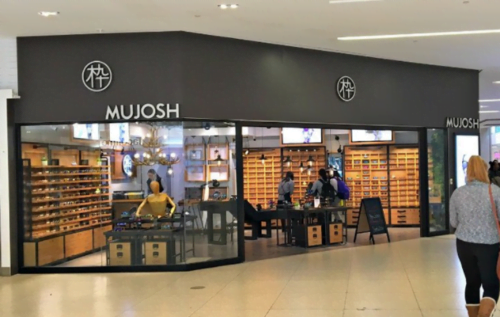
MUJOSH was founded in 2010 and it already has over 700 boutiques globally, operating both freestanding stores as well as department store shop-in-stores. Its stores are in Mainland China, Hong Kong, Singapore, Thailand, Malaysia, Australia and now, Canada. We’re aware that other mall landlords have been in talks with MUJOSH to open stores.
DXL Men’s Apparel: In the spring of 2017, American multi-brand men’s plus-sized retailer DXL Men’s Apparel opened its first Canadian store in Ajax, Ontario. A second store followed soon after in Mississauga. The company is expected to expand across Canada over the next several years.
L’ Éclair de Génie
L’ Éclair de Génie: Popular Paris-based dessert retail concept L’ Éclair de Génie opened its first Canadian location in the spring at 1210 Robson Street in Vancouver.
Pastry chef Christophe Adam has opened over 20 of the éclair shops around the world, including Paris, Japan, Hong Kong, Milan, and Moscow.
“We have 257 kinds of éclairs, and I still have fun playing with new flavours, textures and colours,” said Adam in a press statement. “The éclair must have oomph, with a dazzling, modern look.”
Summer 2017: It was the summer of luxury retailers in 2017, with several pricey jewellery and watch brands opening stores in Toronto and Vancouver.
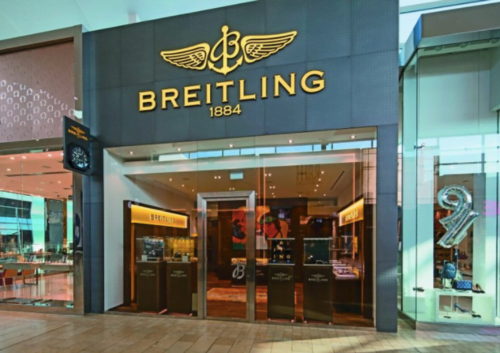
The boutique’s interior features pop art paintings by renowned American artist Kevin T. Kelly, and it is decorated with American walnut floors and quadrille wood paneling. Also included is a VIP seating area. Yorkdale’s Breitling is operated in partnership with local watch and jewellery retailer European Boutique, located in the western part of the mall.
Hublot
Hublot: LVMH-owned Swiss luxury timepiece brand Hublot opened its first freestanding Canadian boutique in Vancouver over the summer. Located in the heart of the city’s expanding ‘Luxury Zone’ at 1080 Alberni Street, the 2,800 square foot store is one of Hublot’s largest globally.
Hublot was founded in Switzerland in 1980 by Italian Carlo Crocco — a scion of the Italian Binda Group dynasty, best known for making Breil watches. Hublot is named after the French word for “porthole”, and the first watch that he created featured the first natural rubber strap in the history of watchmaking — a feat that took three years of research to create. In 1998, Hublot was acquired by French luxury conglomerate LVMH (Louis Vuitton Moet Hennessy), and it continues to operate as a subsidiary.
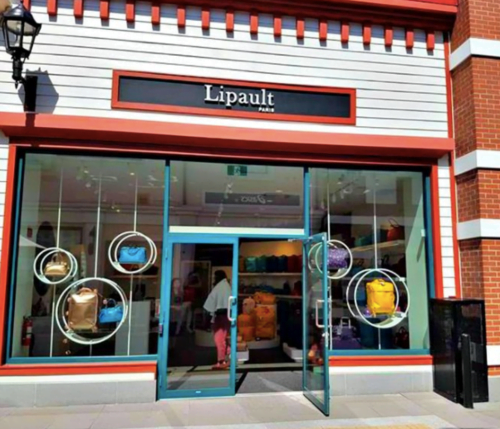
Lipault Paris
Lipault Paris: Lipault Paris, the upscale French luggage company, opened its first freestanding North American location at the McArthurGlen Designer Outlets in Vancouver in the summer. It’s the first phase of an eventual retail expansion into the North American market.
Lipault is distinctive for its monochromatic yet vivid colour scheme, designed as a lightweight alternative to more conventional luggage sets. Each line contains the complete set of travel accessories, from large suitcases and carry-ons to laptop cases and toiletries kits. The monochrome look and minimalist design adheres to the aesthetics of Parisian chic, while emphasizing efficiency and utilitarianism.
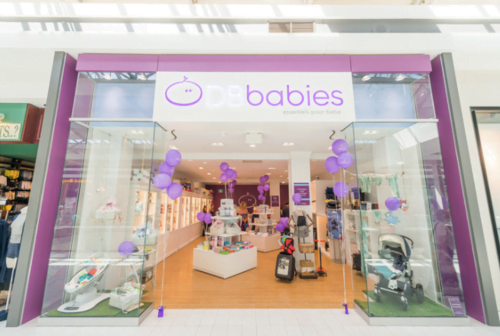
DBbabies
DBbabies: High-end children’s retailer from Dubai, DBbabies, made its debut in the Canadian market with a new boutique near Montreal, marking what was expected to be the beginning of a cross-country expansion for the brand. It didn’t last long, however — it appears that both of its locations in Montreal have closed.
DBbabies specializes in essentials for children ranging in age from newborns to eight years old. Co-founded by Montreal native Danny B. Haddad in 2007, the chain operates seven boutiques throughout the UAE and Oman, as well as an online store serving those regions.
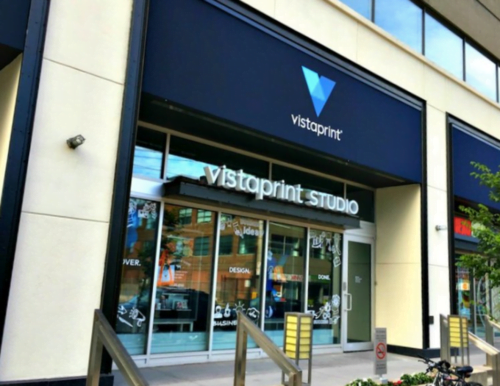
Vistaprint: Dutch ecommerce brand Vistaprint opened its first ever brick and mortar retail space, and it chose Canada, specifically Toronto, as the launch city. The new Vistaprint Studio targets small businesses in the area with Vistaprint services, and also offers workshops throughout the year. Vistaprint says that the initiative is a “truly seamless experience between the online shop and retail space.”
Located at 720 King Street West, the new 1,700 square foot Vistaprint Studio is contained in a bright, south-facing retail space just west of Toronto’s downtown core. Consumers can touch and feel products, and get face-to-face assistance from ‘VP Coaches’. Vistaprint recognized that in a recent survey of the company’s North American customer base, 64% of business owners want more one-on-one in-person support when designing their new marketing materials.
Minotti
Minotti: Upscale Italian furniture brand Minotti launched a Canadian flagship showroom in the summer, with potentially more planned as the brand continues to establish itself in the Canadian market. Minotti recently opened at 102 Berkley Street in Toronto’s upscale King East Design District, joining a number of other high-end home furnishings retailers in the area.
Minotti’s new Toronto flagship showroom was opened under the direction of Roman Cholasta and Maryse Fafard — Roman’s family brought the brand to Canada almost two decades ago. The Berkley Street showroom is a relocation of the previous Minotti location on Davenport Road — the new space is roomier, and joins a number of new home furnishings retailers in the burgeoning King East Design District.
Michael Jordan/Jordan Brand
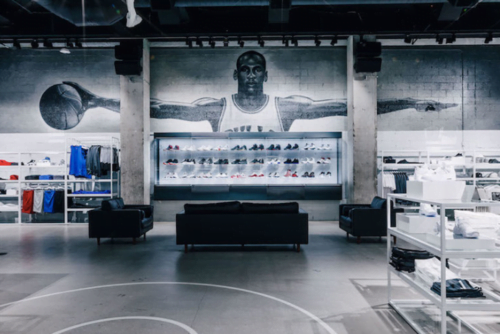
Michael Jordan/Jordan Brand: In June of 2017, Nike in partnership with Footaction (a Foot Locker subsidiary) launched North America’s second Jordan Brand store. The 9,000 square foot 306 Yonge Street Toronto location follows the successful 2015 launch of the Jordan Brand’s flagship store in Chicago.
Touted as a landmark for basketball culture in Toronto, the new store seeks not only to be a world destination for Jordan brand apparel and sneakers, but a hub for Toronto’s vibrant basketball community.
We coordinated a 3D tour of the Toronto Jordan store with Warren Vandal of GEOmarketing Solutions, who uses an innovative Matterport platform to photograph stores to make it appear that one is walking through the live space’s three levels.
Pablo Cheesetarts: Osaka, Japan-based Pablo Cheesetarts opened its first Canadian location in the summer on Dundas Street West in downtown Toronto. If its lineups are any indication, the concept could see a rollout Canada-wide.
We have yet to try it, and have heard mixed reviews — taste and consistency are subjective, feel free to comment at the end of this article with what you think.
Hyundai launched Genesis as a standalone marque in November of 2015 and in November of 2016, the company launched its Canadian eCommerce site.
“Genesis goes beyond offering exceptional vehicles by providing a human-centred purchase and ownership experience,” said Brand Director Michael Ricciutto. “Genesis delivers personalized service every step of the way with the Genesis-at-Home concierge service and now, with the first retail store in Genesis Downtown, luxury boutiques.”
By 2021, Genesis Motors anticipates operating 32 Canadian locations, according to Mr. Ricciutto. These will include freestanding stores (both mall and street-front) as well as showrooms in other dealerships. Genesis plans to have six new vehicle models by 2021, which the company expects to be a hit with its all-inclusive pricing, Genesis at Home concierge for sales and service, complimentary scheduled maintenance, and comprehensive warranty.
Lorna Jane: Australian activewear brand Lorna Jane has quietly entered the Canadian market with a new store that opened at CF Shops of Don Mills over summer, and a popup shop at Yorkdale Shopping Centre that ran for the month of December. The company also has retail spaces in Calgary and Vancouver under different licensees, resulting in a complicated situation with what appears to be a lack of communication amongst them (including coordinating with the press to discuss their local operations).
The company, which operates more than 220 stores across Australia and 20 stores in the U.S., offers what is says is high quality, fashionable activewear for women.
Fall/Winter 2017: The latter part of 2017 saw a whirlwind of store openings in Canada — 17 opened first stores in Canada in a period of less than four months.
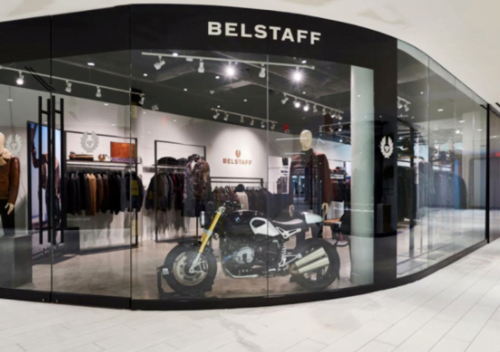
Belstaff: British luxury heritage brand Belstaff opened its first freestanding Canadian boutique at Toronto’s Yorkville Village shopping centre in the fall. The 1,100 square foot storefront is operated in partnership with Zappacosta family that has been in business in the area for a generation. Belstaff was the first of several upscale boutiques that opened at Yorkville Village (formerly ‘Hazelton Lanes’) this fall, as the centre regains its position as the heart of the affluent Yorkville community.
“Since the launch of Eleventy North America, Toronto has been our top performing market. This is an exciting opportunity to offer the full line to the city that has shown its appreciation for Eleventy from the very beginning,” said Geoff Schneiderman, President of Eleventy North America. “The partnership with TNT to open our first freestanding boutique is a very natural marriage between the brands,” added Mr. Schneiderman.
Eleventy was founded in 2007 by Marco Baldassari and Paolo Zuntini, and it’s particularly known for its upscale casual fashion design with a soft sartorial style. Eleventy has a network of 20 mono-brand boutiques in Europe and Asia, and is sold in over 500 speciality and department stores worldwide.
Zadig & Voltaire (PHOTO: CRAIG PATTERSON)
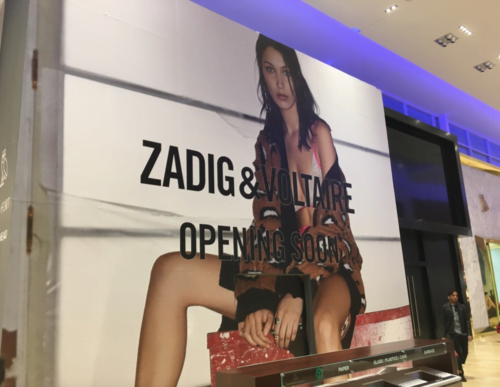
Zadig & Voltaire: Paris-based fashion brand Zadig & Voltaire opened two standalone Canadian stores in the fall — one in Toronto at Yorkdale Shopping Centre, and another soon after in Montreal’s Westmount area on Sherbrooke St. West. The standalone store openings coincide with Zadig & Voltaire’s exiting Holt Renfrew as a vendor earlier this year.
Seafood City: California-based Filipino grocery chain Seafood City opened its first store in Canada in Mississauga in September. Considered to be ‘more than just a grocery store’, the wildly popular concept is expected to open locations in selected markets nationwide.
Located at Heartland Town Centre in Mississauga, the new 50,000 square foot Seafood City store features fresh seafood as well as meat, fruits and vegetables, and “special spices and ingredients that Filipinos grew up with and have learned to love,” according to the company. Included are “Traditional products that they have missed and remind them of home, but also new products from the different regions of the Philippines”.
More Canadian locations are planned, and the Mississauga store is said to be very busy.
RH Gallery
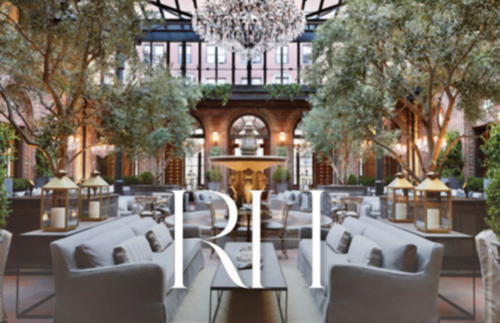
RH Gallery: RH, aka Restoration Hardware, opened a massive four-level Toronto Yorkdale Shopping Centre flagship in the fall. While it’s not the first location for the retailer in Canada, Yorkdale marks a first for the company’s super-sized flagship concept. The store looks like a spectacular mansion, with indoor and outdoor retail spaces, a courtyard café, interactive design atelier, and rooftop conservatory/park.
The flagship spans a total of almost 70,000 square feet of interior and exterior space, including entire floors dedicated to RH Interiors, RH Modern and RH Outdoor. This store also includes an interactive Design Atelier, offering professional interior design services in a studio environment.
The family business was founded in 2010 by father-son team Daniel and Jonathan Abbitan, with a goal of offering quality, affordably accessible eye and hearing care while also providing personalized, customer-centric service. Acuitis offers an ‘all inclusive’ service for its eyewear including eye examinations, mounting, lenses and any required adjustments. Glasses are often ready within an hour, with prices ranging from $120 to $550.
The 2,750 square foot retail space, designed by award-winning Burdifilek, aims to capture “the brand’s ethos for community, freedom, authenticity and balls-to-the-wall attitude,” by providing a “concept of a modern rebellion that emerges in this global brand concept”, according to Moose Knuckles. Flooring is real wood tiles, a wall is clad in raw steel, and there’s a deerskin couch covered in vinyl — it was explained that it was a take on ‘grandma’s sofa’.
The Yorkdale Moose Knuckles lease deal was negotiated by the broker team behind DWSV Remax Ultimate Realty Inc. (David Wedemire and Stan Vyriotes).
Cheesecake Factory
Cheesecake Factory: While not exactly retail, popular US-based restaurant chain Cheesecake Factory opened its first Canadian location at Toronto’s Yorkdale as well, spanning in excess of 10,400 square feet with two covered patios.
Cheesecake Factory replaced a Milestones restaurant that occupied a space facing north, near Yorkdale’s Hudson’s Bay store. The restaurant features imported limestone floors and custom wood columns, hand-painted murals and modern lighting.
Sugarfina (PHOTO VIA TONY FLANZ)
Sugarfina: Los Angeles-based luxury ‘grownup’ candy retailer Sugarfina opened its first freestanding Canadian retail location in the fall at Metropolis at Metrotown east of Vancouver. There are plans for more as the brand expands with the help of a newly announced $35 million growth equity financing from private equity firm Great Hill Partners, and Tony Flanz of Think Retail represented Sugarfina in its deal with Metropolis at Metrotown’s landlord Ivanhoé Cambridge.
Sugarfina confirms that the company intends on operating standalone stores in Vancouver as well as in the Toronto market, with as many as 10 locations in Canada in the coming years.
Sugarfina stores feature premium items made from high-quality ingredients, sourced directly from artisan candy makers around the globe. Products include gourmet chocolates, caramels, gummies, malt balls, licorice and other delicious confections. Champagne-infused gummies and maple bourbon caramels have been popular, with celebrity endorsements helping grow brand awareness. The Sugarfina concept has grown rapidly, now boasting 29 boutiques in the United States with three of those being located in Nordstrom stores.
Beretta: Firearms brand Beretta Italy opened its only boutique store-in-a-store in Canada at Al Flaherty’s Outdoor Store in Toronto in the fall of 2017. The boutique occupies about 300 square feet of space, while Al Flaherty’s exists in about 15,000 square feet which includes its warehouse.
The boutique offers a variety of the high-end Beretta product from firearms to clothing to shooting accessories and equipment.
Dyson
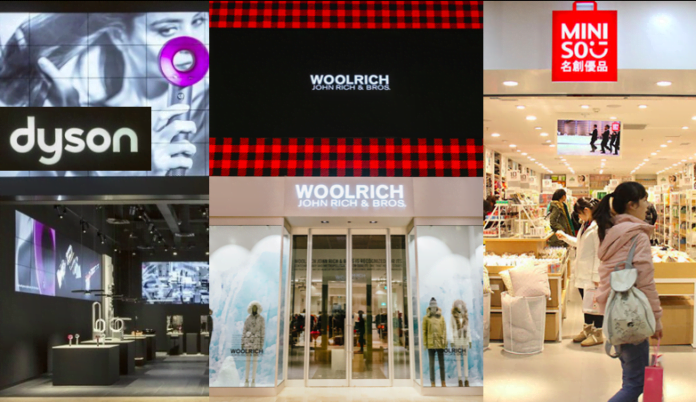
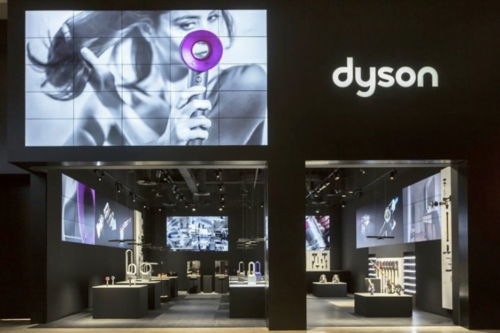
Dyson: UK-based household and technology ‘reinvention’ brand Dyson opened its first freestanding Canadian ‘Dyson Demo’ store at Toronto’s Yorkdale Shopping Centre in December. It’s Dyson’s fourth retail space in North America, as well as one of only 19 showrooms globally.
The highly experiential 1,720 square foot Yorkdale retail space is designed to encourage people to pick up, test, and understand Dyson’s technology. Interactive demonstrations bring to life the science at the core of Dyson machines, with ‘Dyson Experts’ on-hand to explain machines and provide recommendations that will best suit customers’ lifestyles.
Woolrich
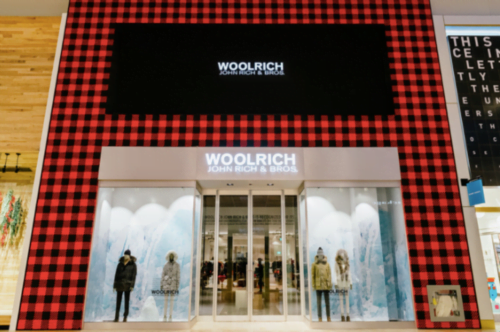
Woolrich: America’s oldest outdoor clothing company entered the Canadian retail scene with its first store at Toronto’s Yorkdale Shopping Centre. The company’s president says he expects to open at least three stores in Canada by the year 2019, targeting Montreal in 2018 and Vancouver in 2019 for standalone Woolrich store locations.
The Yorkdale store occupies a 2,875 square foot retail space in Yorkdale’s Nordstrom Wing, between Warby Parker and Mendocino. Woolrich’s facade features the trademark red-and-black ‘Woolrich Buffalo Check™ similar to its Tokyo flagship, as well as a video screen above the storefront.
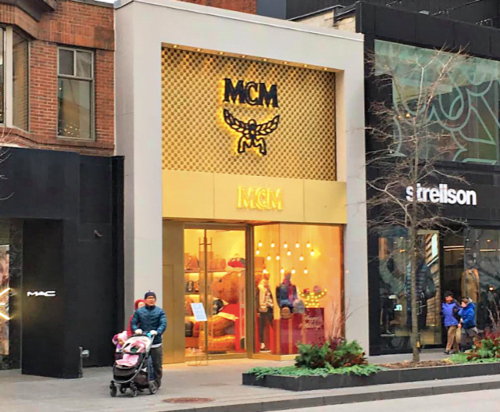
Located at 93 Bloor Street West, the new 2,150 square foot MCM flagship’s interiors feature trademark gold accent fixtures and bright lighting, housing the country’s most extensive collection of MCM fashions, including accessories, leather goods, ready-to-wear and even footwear. MCM says that the Bloor Street store is at its ‘Diamond Level’, which means it carries a full assortment with a focus on its highest quality product offerings.
The company intends on opening at least two more stores — one in Vancouver, as well as a second store in Toronto. MCM’s second targeted Toronto location is Yorkdale Shopping Centre, it says.
APM Monaco
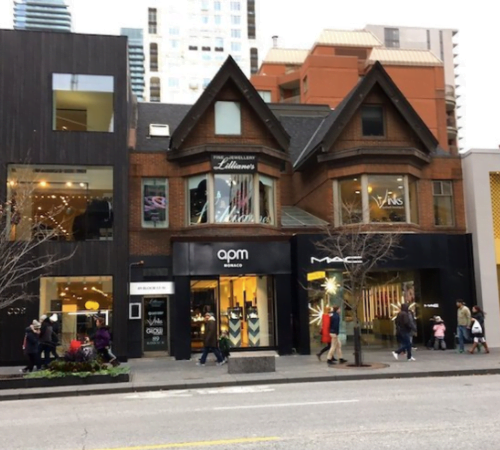
APM Monaco: Monaco-based jeweller APM Monaco opened its first Canadian boutique in Toronto in the fall, with more expected to follow. The 1,700 square foot Toronto store is located at 89 Bloor Street West, across from Harry Rosen and Holt Renfrew Men.
APM Monaco’s store design is inspired “by the Monaco lifestyle” with a signature navy and white colour combination. APM Monaco was founded in 1982 by Ariane Prette as a jewellery brand specializing in creating traditional gold, diamond and precious stone pieces for other jewellers. It has over 160 stores worldwide, and it’s growing quickly — a rapid US store expansion is currently in the works and sources confirm that Vancouver is a target for at least one APM Monaco store location.
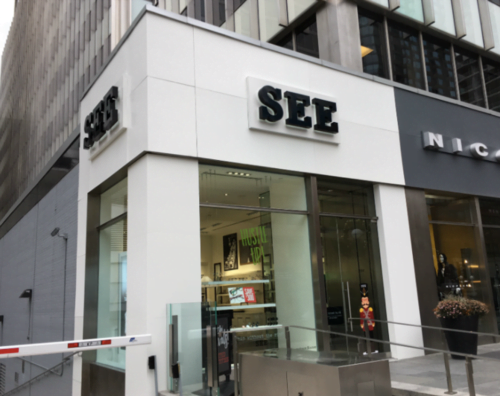
SEE Eyewear (PHOTO: CRAIG PATTERSON)
SEE Eyewear: In November, edgy and popular SEE Eyewear officially launched its Canadian expansion with its first standalone store, located in Toronto on Cumberland Street. SEE has set its sights on potentially more Canadian boutiques, as it carefully expands its operations by opening locations where it sees synergies.
SEE, which stands for ‘Selected Eyewear Elements’, was founded in 1997 by optical pioneer Richard Golden, with an aim to provide consumers with affordably priced, fashion-forward eyewear. The company’s prices encourage shoppers to create a ‘wardrobe’ of glasses, with a wide variety of styles available. In the Toronto stores, SEE’s collection ranges from $199 to $599 for eyeglasses and include single vision plastic or polycarbonate lenses, and all sunglasses are priced at a reasonable $149 per pair.
Targeted Canadian cities for SEE include Montreal and Vancouver, which could both see more than one location open, depending on if the right space can be acquired. Other cities could follow as the brand gains traction among Canadian consumers.
CEO Vincent Wauters explained that Hunter is seeking out store locations in a selection of the world’s most cosmopolitan cities, where locals and tourists can converge to experience the Hunter brand in its entirety. Having a retail store allows Hunter to showcase its brand in a way that isn’t possible in a multi-brand retailer.
Given the rainy climate on Canada’s West Coast, Vancouver could eventually see a Hunter Boots flagship store, explained Mr. Wauters.
Burton Snowboards: Burton Snowboards opened its first Canadian store in the fall at 98 Ossington Avenue in Toronto, in an innovative 1,400 square foot retail space. More are expected to follow.
Jake Burton founded Burton Snowboards out of his Vermont barn in 1977, dedicating his life to snowboarding. He’s been instrumental in growing snowboarding from a backyard hobby to a global world-class sport.
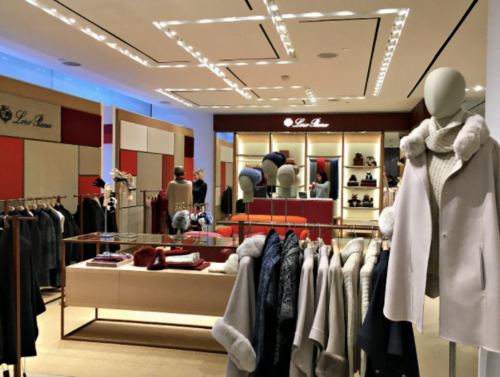
Loro Piana (HOLT RENFREW BLOOR STREET, PHOTO: CRAIG PATTERSON)
Loro Piana: Italian luxury brand Loro Piana has launched a retail expansion into Canada in the fall of 2017, and now operates four concessions at Holt Renfrew. Toronto’s Yorkdale Shopping Centre was the first Holt Renfrew location for a Loro Piana boutique, followed by shop-in-store boutiques in Vancouver, Toronto (50 Bloor Street West) as well as at Holt Renfrew in downtown Calgary.
The Holt Renfrew concessions carry a range of Loro Piana women’s ready-to-wear and accessories, in attractive branded environments.
While there are no immediate plans for standalone Loro Piana boutiques in Canada, sources confirm that the brand has many Canadian clients who buy Loro Piana internationally — Loro Piana has boutiques in many major US cities as well as globally.
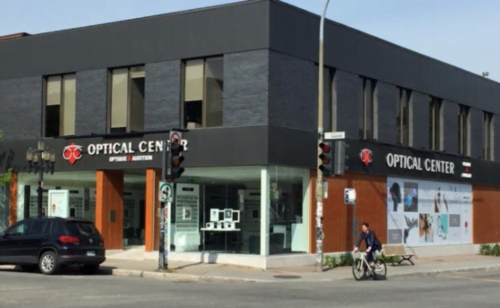
The first Canadian store opened in LaSalle, Quebec followed by one in Montreal and then another in Pointe-Claire.
Optical Center has opticians and optometrists as well as audiologists. It sells eye frames, lenses and contact lenses online. About 12 years ago the company began to offer audiology services.
Montreal-based Construction Vergo built all three stores. “It’s our first stores in North America and we wanted to share this adventure with someone who truly understands our concept store. Working with them was one of our best decisions.”
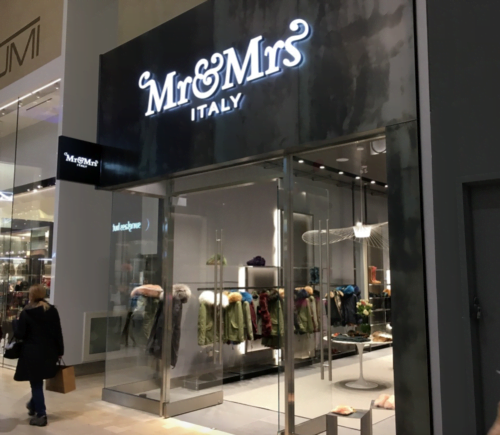
Mr. and Mrs. Italy (PHOTO: CRAIG PATTERSON)
Mr. and Mrs. Italy: Pricey Italian luxury brand Mr. and Mrs. Italy opened its first Canadian store at Toronto’s Yorkdale Shopping Centre in December of this year. Toronto joins a handful of cities globally to boast having a Mr. and Mrs. Italy store location.
Mr. and Mrs. Italy was founded in 2007 in Milan and is known particularly for its parkas lined with fur detailing. Prices aren’t cheap — parkas are generally priced between about $2,000 and $6,000 each, with some approaching $10,000. The brand also features men’s and women’s ready-to-wear clothing and accessories, including collections of unique and expensive footwear that often features fur accents.
According to its website, there are only eight standalone Mr. and Mrs. Italy stores in the world, in seven cities. There’s one store location in Milan — its flagship, as well as locations in New York City, Bal Harbour Florida (Bal Harbour Shops), Paris, Shanghai, Beijing, and Hong Kong, which has two stores.
Have we missed any? It’s quite possible — feel free to comment below, or email Retail Insider’s Editor-in-Chief, Craig Patterson, at: craig@retail-insider.com. It remains to be seen if 2018 is as busy as 2017 as per above, and we’re already compiling a list and will be reporting on new store openings throughout the year.
Luxury brands have always been associated with status, quality and their uniqueness. However, changes in consumer behaviour and influence of the western societies have altered the definition of luxury to a great extent. ‘New luxury’ is synonymous to aspirations and experience.
Marketers realize that designing a luxury experience is a completely different proposition, counterintuitive to the managerial principles of mass marketing.
So where traditional management principles fail to flatter, how do luxury brands market to their consumers?
Strategies to market luxury brands
1. Sensory Branding: British Airways is encashing big on a recent study on sensory sciences by Oxford about how sound influences the taste of food. Based on the findings of this study, they launched a list of 13 in-flight tracks to enhance the taste of the meals served during the flight, providing a truly luxurious experience.
Soundwich in Portugal is another fine example of sensory branding. They deliver gourmet sandwiches packed in metal boxes that play music chosen by the chef when opened.
2. Storytelling: Rolex has completely nailed the art of storytelling. Each masterpiece on their website is associated with a celebrity and the reason why they own it. The brand establishes a clear connect between the owner and the product; at the same time endorsing it as one for the elite.
Brands like Chanel have often been quoted as perfect examples of storytelling too. The brand walks its visitors through ‘Inside Chanel’, where different artistic directors share their vision about the brand.
3. Advocating Beliefs: More than brand values, luxury marketers must spin their strategies to advocate beliefs through their marketing efforts. Consider the example of Ferrari. The brand believes in high-performance and advocates the same by investing in Formula 1 events.
Similarly, Louis Vuitton demonstrated its belief in ‘practicality’ by starting to produce only square-bottomed suitcases that are easy to stack. They also completely did away with the round-shaped bags.
4. Exclusivity: There is nothing better than the ‘just-for-me’ feeling that a consumer can get from a brand. Most luxury brands believe in giving the consumer just what he desires, irrespective of how much it adds to the price tag.
Le Labo perfumes, for example, are crafted for an unmatched, personalized experience. No two Le Labo perfumes are the same as each perfume is hand-blended according to the specifications placed by the consumer.
Talking of exclusivity, let’s not miss out on the Absolut Vodka. The brand has done a great job of designing four million unique bottles that are an absolute delight to own.
5. Customer Taste over need: Luxury marketing is different from regular marketing in the sense that you don’t pander to customer’s needs. The product or the marketing strategy are not made to fill any void that may exist due to individuals needing a certain product, but are focussed on high-brow taste, indulgence or affluence.
Your brand does not have to stand on a pedestal where everybody likes it. It only needs to be conditioned to suit very specific tastes. Sell excitement, not predictability.
Conclusion
Unlike a rational consumer, luxury consumers are tremendously impacted and motivated by the feeling of self-worth. They take pride in ‘owning’ a brand and associating it with self-identity and social comparison.
Of course, this is one piece of a much bigger puzzle. For every brand that requires an extra push, there needs to be an analytical report or metric that ensures the success of promoting the brand in this manner. But for all the marketing strategies, such as search engine optimization, press release distribution, social media marketing, business are pushing to get their product onto the next level, that feeling of exclusivity is a lot to do with how comfortable a customer feels with a brand.
Though quality and social status are still considered to be major buying motivations for the luxury consumer, experience too has become a vital factor for purchase. The strategies and examples given above show how some famous brands differentiate on the basis of experience, to market to the high-end consumer.
Have you seen another luxury marketing strategy that is worth mentioning here? Would love to know more about it too – Feel free to comment below.
Filipino fast food giant Jollibee has entered the Canadian market with its first two locations in Winnipeg and it plans further Canadian expansion including into the Greater Toronto Area beginning in the first half of 2018.
Dianne Yorro
Dianne Yorro, brand manager for Jollibee North America, says the company definitely intends to expand further into Canada.
“We’re going to open our first store in the Greater Toronto Area in the first half of next year – Scarborough and then Mississauga,” she says. “And then there are plans to open in Edmonton. We’re looking at 2019 to go to Edmonton.”
“We just opened our stores in Canada and we’ve seen very good response from those two stores in Winnipeg. And there are definitely plans to expand further in other areas of Canada. Vancouver is also an area we’re looking at but there are no definite plans yet . . . Canada is one of our key areas for expansion.”
GRAND OPENING OF FIRST CANADIAN RESTAURANT IN WINNIPEG
GRAND OPENING OF FIRST CANADIAN JOLLIBEE RESTAURANT IN WINNIPEG
Yorro says Jollibee has about 1,200 stores around the world with 37 in the United States and two in Canada.
The first Winnipeg store opened in December a year ago with the second store opening at the end of November, 2017.
Jollibee began when Tony Tan and his family opened a Magnolia ice cream parlor at Cubao in 1975 which became the first Jollibee outlet. In 1978, Jollibee was incorporated as a 100 per cent Filipino-owned company with seven fast food restaurants within Metro Manila as its initial network.
In 2015, it reached its 1,000th store with its first location in Dubai, UAE.
Today, it is the largest fast food chain in the Philippines and it has embarked on an aggressive international expansion plan in the U.S., Vietnam, Hong Kong, Saudi Arabia, Qatar and Brunei.
Its menu includes favourites Chickenjoy, Yumburger, Champ burger and Jollibee Spaghetti.
“It’s the largest Asian restaurant company in the world in terms of market capitalization,” says Yorro.
She says Filipinos who have moved to other countries eagerly anticipate the opening of Jollibee locations in different parts of the world because “it gives them a taste of home.”
“It gives them a chance to experience the Philippines again.”
**Photos provided by Jollibee Canada (via Facebook profile)
While there’s plenty of news of a so-called ‘retail apocalypse’ (mainly in the United States), it appears to be generally untrue for many retailers in Canada over the past 12 months.
The following is an analysis by noted retail consultant Ed Strapagiel, who publishes a monthly report with his perspective on the state of the Canadian retail industry. This is Mr. Strapagiel’s take on the year 2017, showing that retail sales were strong in many categories, overall, compared to the year before. Included are several charts laying out Mr. Strapagiel’s analysis, followed by a summary of sales by store-type and e-commerce sales.
By Ed Strapagiel
For the 3 months ending October, total Canadian location-based retail sales increased 7.5% year-over-year on a not seasonally adjusted basis, according to the latest Statistics Canada data. The positive momentum just keeps on rolling.
Year-to-date retail sales are now 7.0% ahead of last year after 10 months of 2017, and the underlying 12 month growth rate (green line in the above chart) is also up 7.0%. If October is any indication, both these measures should at least maintain their current levels to year end. At this pace, 2017 is poised to be one of the strongest years for Canadian retail in recent memory.
The big growth drivers are new car dealers and gasoline stations, where retail sales growth is at a high level versus a year ago, as expected. Supermarkets and other grocery stores are the chief drag on overall retail sales, which has been the case for several years. The real star of 2017 however is the Store Merchandise sector, where sales gains have really taken off.
For the 3 months ending October 2017, retail sales in the Food & Drug sector were up a modest 2.9% year-over-year. This is within the historical range, but still not particularly robust. The underlying 12 month trend (green line in the above chart) has been slowly weakening for most of the year.
Retail sales at grocery stores were up just 0.7% year-over-year for the 3 months ending October, and have gained only 1.0% year-to-date in 2017. Of note is that the small specialty food stores group is bucking the trend with retail sales up 7.5% year-to-date so far this year.
In 2016, strong retail sales increases at health & personal care stores more than offset the weakening picture at food & beverage retailers. This effect is not nearly as pronounced as it was a year ago.
The exceptionally high retail sales growth rates in the Store Merchandise sector have cooled somewhat in the last couple of months. Nevertheless, the 3 month trend (orange line in the above chart) is still above historical norms and continues to run ahead of the underlying 12 month trend (green line). Early reports also indicate that many retailers had a good Christmas season. At the current pace, Store Merchandise could have a 2017 sales growth rate that’s a 10 year high.
Building material & garden equipment/supplies dealers are having a particularly good year in 2017, with year-to-date sales up 13.2%. Electronics & appliance stores are also up by double digits, recording an 11.1% gain year-to-date after 10 months.
In fact, all retail store types in this sector are up on a year-to-date basis. The main laggard is home furnishings stores, with retail sales up a relatively modest 1.6% so far this year.
Note that Statistics Canada is now suppressing the breakdown of general merchandise stores for confidentiality reasons. The figures in the table below are estimates based on previous trends.
Retail sales growth in the Automotive & Related sector remains at record high levels. The two main components, vehicle dealers and gasoline stations, are both producing strong sales increases.
New car dealers are likely to hit an all-time sales record in 2017, in terms of both units and dollars. Their year-to-date retail sales are up 10.5% after 10 months of the year.
Gasoline station sales have gained even more, with retail sales up 12.8% year-to-date. This is mostly due to increasing pump prices rather than people buying more gas.
Overall, e-commerce represents about 2.5% of Canadian retail sales for the 12 months ending October 2017, including both pure play operators as well as the online operations of brick & mortar stores. Canadian consumers however also buy online from foreign websites, spending which is not captured in these numbers.
Year-to-date results for 2017 (10 months) show that Canadian e-commerce sales are up 35.5% from a year ago, a much higher gain than for retail in general.
Note that location based retail is the same as that in the preceding large “By The Numbers” table. It’s what’s normally reported as Canadian retail sales. Except that it isn’t. Location based retail excludes another section called Non-Store Retailers (NAICS code 454), which covers electronic shopping and mail-order houses, which in turn is where (mostly) pure play e-commerce businesses are. For the 12 months ending October, electronic shopping and mail-order houses had an estimated $8.5 billion in e-commerce sales.
But that’s not the only source of e-commerce, as (mostly) bricks & mortar location-based retailers also sell online. For the 12 months ending October, this group had an estimated $6.6 billion in e-commerce sales. With electronic shopping and mail-order houses, there’s a grand total of $15.1 billion in e-commerce sales by Canadian operators over a 12 month period. Note that this does not include foreign e-commerce purchases made by Canadian consumers, but it does include purchases made by foreigners at Canadian e-commerce businesses.
For electronic shopping and mail-order houses, an estimated 82.7% of their sales are allocated to e-commerce. For the (mostly) bricks & mortar crowd, it can be estimated that just 1.1% of their total sales come from e-commerce.
In the final section of the above table, (mostly) pure play operators (namely, under electronic shopping and mail-order houses) generate an estimated 56.4% of all e-commerce sales in Canada, while (mostly) bricks & mortar location-based retailers’ share of e-commerce is 43.6%.
According to our research, about 50 international retailers entered Canada in 2017 by either opening standalone stores, or by opening concessions within a larger host retailer. It’s the most that we’ve seen in the 5+ years that Retail Insider has been publishing, and could be a record.
The number is particularly surprising, given widely reported news that there is a ‘retail apocalypse’ — though there’s no doubt that some homegrown retailers may be struggling amid all of the new competition that is fighting for Canadian consumer dollars. We think that Canadian retail is in transition and that those offering the best value proposition will succeed, though there are segments that could be close to the saturation point as stores continue to open.
Canadian shopping centres continue to outperform those in the United States on average, for example, and Retail Council of Canada’s newly released Canadian Shopping Centre Study shows that Canada’s top malls continue to thrive, with Toronto’s Yorkdale Shopping Centre again coming out on top with annual sales per square foot of $1,653. It’s a fact that many of the new international retailers that enter Canada do so by opening their first locations at Yorkdale, and 10 of them did so in 2017, according to our research.
In order to give us time to put it all together with descriptions, we’ll publish our list of international retailers that entered Canada in 2017 in a lengthy post later this week.
For 2018, we’ve already got a rather extensive list of brands that will be opening their first retail stores in Canada, and we’ll be reporting on these throughout the year. It’s unclear if 2018 will see as many new openings as in 2017 — though in 2016, we thought we’d seen a lot when we mapped out 21 new international retailers and in 2015, when we counted 28 of them. Things are getting interesting and a lot of retail space will be coming available when Sears Canada shutters its Canadian operations, resulting in millions of square feet of retail space to absorb.
Happy New Year, and welcome back to Retail Insider.
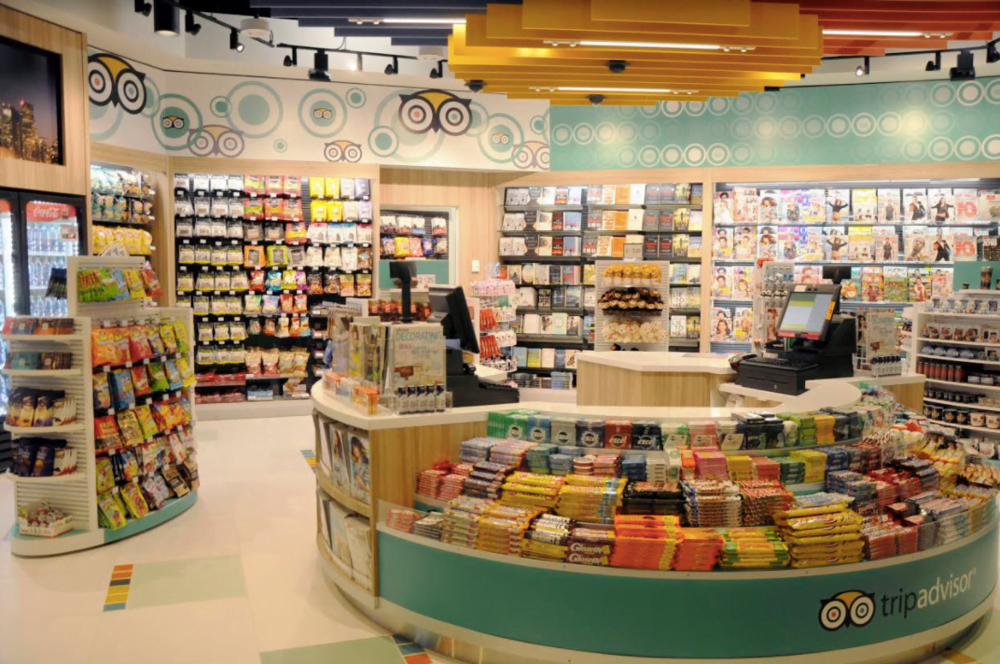
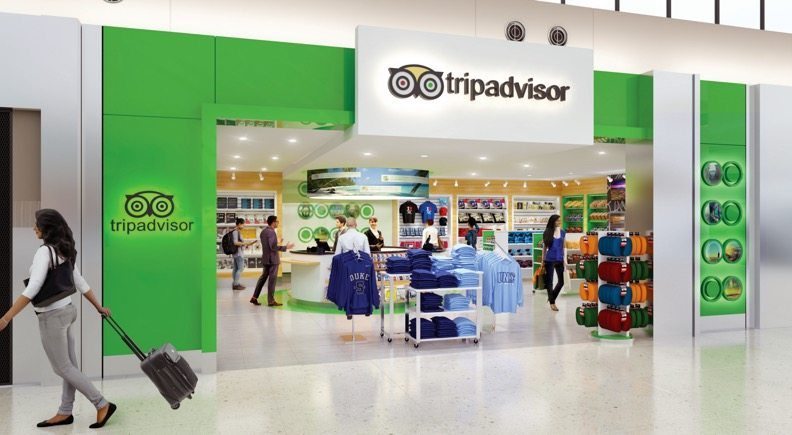
The retail space, located in Pearson Airport’s Terminal 1 Domestic, is as much experiential as it is about the products contained within. In addition to offering travel essentials, the store includes a large, interactive screen that visitors can use to learn more about Toronto and the surrounding area. Customers can access the latest TripAdvisor reviews and traveler photos for nearby hotels, attractions and restaurants.
The Paradies Lagardère/TripAdvisor partnership began in 2016, with a goal of working in partnership on the retail concept which will be expanded to other airports in 2018 such as Raleigh–Durham International Airport (RDU), George Bush Intercontinental Airport in Houston (IAH), and Phoenix Sky Harbor International Airport (PHX).
“Paradies Lagardère works with its airport and brand partners to create enhanced customer experiences and stay on the cutting edge of offering innovation and technology,” said Gregg Paradies, president and CEO at Paradies Lagardère. “What’s most exciting about introducing the world’s very first-ever TripAdvisor travelessential store is that we’ve incorporated an interactive tool that’s not only entertaining and fun, but is truly useful in helping travelers. This unique store is a great addition to the Toronto Pearson program and an exciting destination for its guests.”
Image: TripAdvisor
“We are thrilled to be partnering with Paradies Lagardère and extending the reach of the TripAdvisor brand into the Toronto Pearson International Airport,” said Nicole Brown, Senior Director of Brand Partnerships, TripAdvisor. “The TripAdvisor travel retail store concept allows us to further our mission of helping travelers worldwide plan and book the perfect trip by offering them a convenient way to purchase all the travel essentials, as well as quick access to our more than 570 million reviews and opinions on 7.3 million accommodations, restaurants and attractions via innovative in-store touchscreens.”
Paradies Lagardère specializes in three key airport concessions areas: Food and Beverage, Travel Essentials and Specialty Retail. Within Travel Essentials and Specialty Retail, the company offers a mix of categories including fashion, luxury, electronics, convenience, sports, luggage, jewelry, and souvenirs. The company has won a few awards recently — it was recognized for excellence in specialty retail, earning ARN Awards for Best Specialty Retail Brand Operator for its Brooks Brothers concept stores, and Best Airport Retail Store Design for its Dylan’s Candy Bar location at Dallas Fort Worth International Airport.
TripAdvisor is the world’s largest travel website with more than 570 million reviews and opinions covering the world’s largest selection of travel listings worldwide — that includes 7.3 million accommodations, airlines, attractions, and restaurants. TripAdvisor also compares prices from more than 200 hotel booking sites, with TripAdvisor-branded sites being available in 49 markets with a whopping 455 million monthly unique visitors.
RENDERING OF THE RALEIGH–DURHAM INTERNATIONAL AIRPORT TRIPADVISOR LOCATION
Photos of the new Pearson Airport TripAdvisor retail space are courtesy of Paradies Lagardère.
There has been a lot of noise on cryptocurrencies and Bitcoin of late. While some suggestcryptocurrencies are a fraud, others believe them to be the next biggest economic revolution the world has seen since the internet. Bitcoin has brought to light blockchain technology, which offers great potential for food safety and verification in the agrifood sector. Yet it is far from being the panacea for a range of issues affecting the industry — at least for now.
Simply put, blockchain technology is a way of storing and sharing information across a network of users in an open virtual space. Blockchain technology allows for users to look at all transactions simultaneously and in real-time. In food, for example, a retailer would know with whom his supplier has had dealings. Additionally, since transactions are not stored in any single location, it is almost impossible to hack the information.
For consumers, blockchain technology can make a difference. By reading a simple QR code with a smartphone, data such as an animal’s date of birth, use of antibiotics, vaccinations, and location where the livestock was harvested can easily be conveyed to the consumer.
Food safety
Blockchain makes a supply chain more transparent at an all-new level. It also empowers the entire chain to be more responsive to any food safety disasters. Massive organizations such as Nestlé and Unilever are considering blockchain technologies for that reason.
Walmart, which sells 20 per cent of all food in the U.S., has just completed two blockchain pilot projects. Prior to using blockchain, Walmart conducted a traceback test on mangoes in one of its stores. It took six days, 18 hours, and 26 minutes to trace mangoes back to its original farm.
By using blockchain, Walmart can provide all the information the consumer wants in 2.2 seconds. During an outbreak of disease or contamination, six days is an eternity. A company can save lives by using blockchain technologies.
Blockchain also allows specific products to be traced at any given time, which would help to reduce food waste. For instance, contaminated products can be traced easily and quickly, while safe foods would remain on the shelves and not be sent to landfills.
Preventing fraud
However, it will work only if the data at the source is accurate, as current practices in the industry are much more open to human error. Much of the compliance data is audited by trusted third parties and stored either on paper or in a centralized database. These databases are highly vulnerable to informational inaccuracies, hacking, high operating costs, and intentional errors motivated by corruption and fraudulent behaviour.
Blockchain operates anonymously, so mistakes would be traceable to individual culprits. Considering recent food-fraud scandals in Canada and elsewhere, this feature is not trivial. Blockchain technology provides a method with which records are kept permanently.
Most importantly though, it facilitates data-sharing between disparate actors in a food value chain. Many retailers have sold fraudulent food products unknowingly. With the use of blockchain, those days could come to and end.
Faster, fairer payment
Blockchain will allow everyone to be paid more quickly, from farm to plate. Farmers could sell more quickly, and be properly compensated as market data would be readily available and validated.
Blockchain technology could represent a legitimate option for farmers who feel compelled to rely on marketing boards to sell their commodities. The use of blockchain could prevent price coercion and retroactive payments, both of which we have seen across the food supply chain.
Blockchain technologies could “Uberize” the agrifood sector by eliminating middlemen and lowering transaction fees. This can lead to fairer pricing and even help smaller outfits desperate to get more market attention.
Limits of blockchain
Our current traceability systems need work, and blockchain technologies could be the evolution they need. Given its architecture, blockchain technology offers an affordable solution to both small-to-medium enterprises (SMEs) and large organizations. However, there are noteworthy limitations.
The amount of information which can be processed is limited. Since all of the information would be out there and accessible, several contracts between organizations would need to be secured for some level of confidentiality to be retained. How to balance confidentiality with transparency would need to be worked out.
The agrifood arena is filled with secrets. Blockchain technology as it is currently being deployed would be problematic for many food companies. For many, blockchain is just a solution looking for a problem. Simply put, some companies, like Walmart, have more power and influence over other companies within the same supply chain.
Marketplace confusion limits participation
In addition, blockchain is really in its infancy and most people are uncertain about its potential. The innovation in blockchain architectures, applications and business concepts is happening rapidly. It’s a decentralized, open-source organism which is challenging to grasp for many, including governments.
In food, innovation is always desirable until it becomes real. Once it manifests itself, guards go up. Some organizations are moving ahead while others wait to see what happens. The marketplace is currently fueled with confusion due to the Bitcoin phenomenon, which is labelled by many as being irrational and ridiculous. Cryptocurrencies allow for transactions to occur while using blockchain technology, but it remains just an option.
Nevertheless, the most important challenge for blockchain technology remains participation. All parties must adopt the technology in order for it to work. In food distribution, not all companies are equal and some can exercise their power more than others.
A successful integration of the blockchain requires the engagement of all participating organizations. Walmart’s blockchain will likely be successful because it’s Walmart. But thousands of companies do not have the same clout.
Blockchain technology in agrifood has potential but it needs work. Industry public leaders should embrace blockchain as an opportunity and should be added to a digitalization strategy currently affecting the entire food industry. Transparency, productivity, competitiveness and sustainability of the agrifood sector could be enhanced.
Nonetheless, research should look at how to generate evidence-based blockchain solutions to democratize data for the entire system before we get too excited.
Dr. Sylvain Charlebois is Dean of the Faculty of Management at Dalhousie University in Halifax. Also at Dalhousie, he is Professor in food distribution and policy in the Faculty of Agriculture. His current research interest lies in the broad area of food distribution, security and safety, and has published four books and many peer-reviewed journal articles in several publications. His research has been featured in a number of newspapers, including The Economist, the New York Times, the Boston Globe, the Wall Street Journal, Foreign Affairs, the Globe & Mail, the National Post and the Toronto Star. Follow him on twitter @scharleb.