Proceeds from the transaction will be used by Birks to continue its strategic growth initiatives, specifically to invest in its Canadian flagship stores and new store concepts, as well as in its high-growth brand wholesaling activities and e-commerce, as part of the company’s omni-channel plan.
Jean-Christophe Bédos, president and chief executive officer of Birks Group, told Retail-Insider the transaction is an important part of its vision to establish itself as a global luxury jewelry brand.
“The Canadian market is a growing market,” said Bédos.
He said the company will use capital to grow its business on the e-commerce side as well as invest in store re-development.
Also, flagship stores in Toronto, Vancouver and Montreal will go through some changes to enhance customer experience. That will include areas for events and exhibitions, coffee bars and libraries, which will have bookshelves with books about watches and jewelry.
“So people can come and spend good time. They don’t have to buy. They just have to hang around in the store. It will be very lifestyle,” said Bédos.
The renovated Montreal flagship at 1240 Phillips Square will be unveiled in June of next year, including converting part of the 58,450 square foot building into a luxury boutique hotel and a high-end restaurant. The Toronto Manulife Centre store transformation will debut in the fall of 2018, followed by modifications to Vancouver’s 698 West Hastings Street flagship.
“We are going to renovate our stores,” he said. “For us, the future is in the combination between bricks and mortar, web experience and what we call the wholesale strategy because we are expanding Birks’ jewelry collections via a network of independent jewelry retailers.”
(BIRKS AT TORONTO’S MANULIFE CENTRE WILL BE COMPLETELY REDONE. THE ONE-LEVEL RETAIL SPACE WITH STREETFRONT BOUTIQUES FOR BREITLING AND VAN CLEEF & ARPELS, WILL BE DIRECTLY BELOW A NEW EATALY. BIRKS WILL TEMPORARILY MOVE INTO ANOTHER RETAIL SPACE AT MANULIFE CENTRE WHILE THE EXISTING SPACE IS OVERHAULED. RENDERING: MANULIFE/B+H ARCHITECTS)
Birks operates 26 stores under the Birks brand in most major metropolitan markets in Canada and two retail locations in Calgary and Vancouver under the Brinkhaus nameplate. It was founded in 1879. Mayors was founded in 1910 and operates 16 stores in Florida and Georgia under the Mayors brand and one store under the Rolex brand name. Birks will continue operating Mayors until the deal closes this fall.
Aurum is the largest fine watch and jewelry retailer in the U.K
As part of the transaction, Birks entered into a five-year distribution agreement with Aurum to sell Birks jewelry in the U.K. in 14 locations at its Mappin & Webb and Goldsmiths stores, including on their e-commerce sites. The Birks collections will continue to be sold in the United States through Mayors’ stores in Florida and Georgia.
“We believe that monetizing the value of Mayors gives us the ability to execute our strategic vision of investing in the Birks brand together with the retailing of internationally-renowned jewelry and timepiece brands in Canada, thus transforming Birks into a global, omni-channel business,” said Bédos. “This transaction with Aurum also opens the doors to the U.K. market for our jewelry collections.”
(THE 58,450 SQUARE FOOT MONTREAL FLAGSHIP IN 1895. BIRKS CONTINUES TO OCCUPY THIS BUILDING, THOUGH ITS CURRENT STORE WILL BE REDUCED IN SIZE TO 7,500 SQUARE FEET IN ORDER TO FACILITATE AN ON-SITE LUXURY BOUTIQUE HOTEL AND RESTAURANT. IMAGE: BIBLIOTHÈQUE ET ARCHIVES NATIONALES DU QUÉBEC / 52327/2082991)
“We have admired Mayors for some time and see a great deal of similarities with how we operate our business in the U.K. Mayors has built a fantastic reputation in Florida and Atlanta, Georgia over many decades,” said Brian Duffy, president of Aurum
Birks will also expand the offerings of some of the exclusive brands carried in its Canadian stores, including Van Cleef & Arpels, Chaumet and Messika.
*Editor’s note: Birks is represented in Canada by Jeff Berkowitz of brokerage Aurora Realty Consultants.
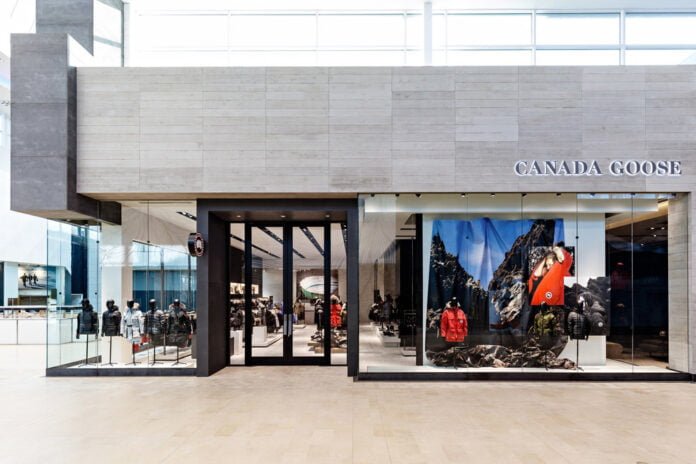
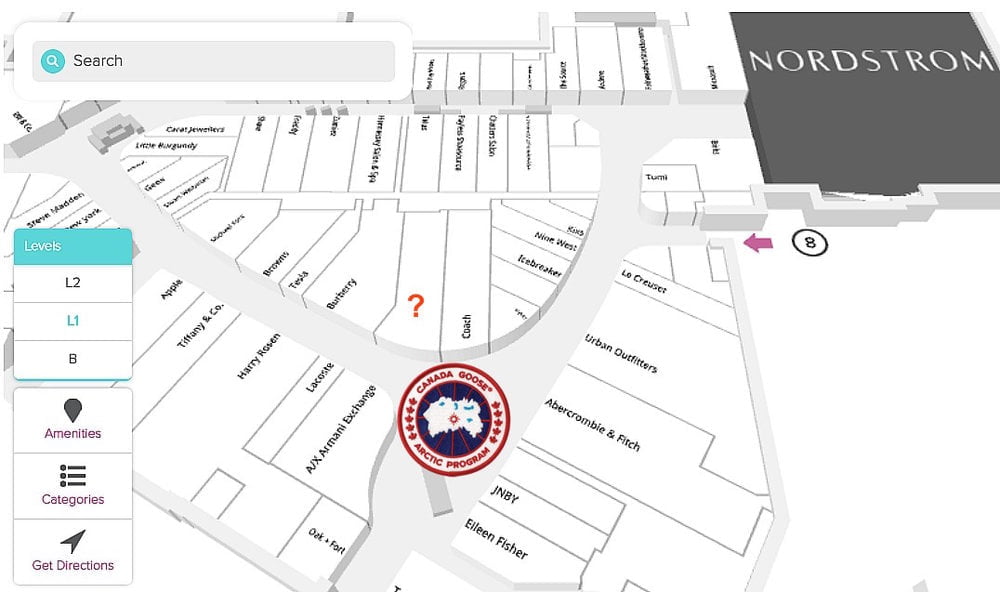
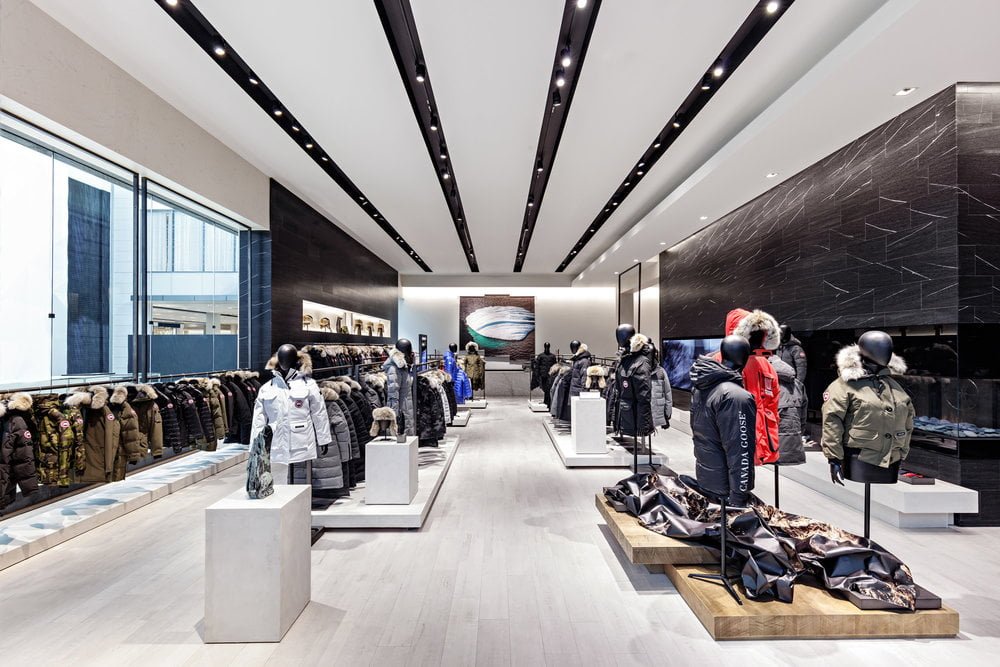
Popular fashion brand Canada Goose will open three new stores this fall including the brand’s second location in the country at CF Chinook Centre in Calgary.
The company will also open stores in Boston and Tokyo.
“I’m so excited to open our doors and welcome our first customers here in Calgary, a city that’s no stranger to unpredictable weather. This store will be the best place for people to find the perfect Canada Goose product in an environment that tells our story, unfiltered,” said Dani Reiss, president and chief executive officer of Canada Goose, in a written statement to Retail Insider. He was not available for further comment.
The company said the Calgary store will be located in one of the city’s most prominent neighbourhoods and is home to some of the world’s best consumer and luxury brands.
While unconfirmed, sources say that Canada Goose will move into the 3,984 square foot retail space recently vacated by American women’s fashion retailer BCBG.
Canada Goose, one of the world’s leading makers of performance luxury apparel, was established in a small warehouse in Toronto in 1957.
The company today employs more than 2,000 people worldwide.
Canada Goose opens its doors in the city it calls home (CNW Group/Canada Goose)
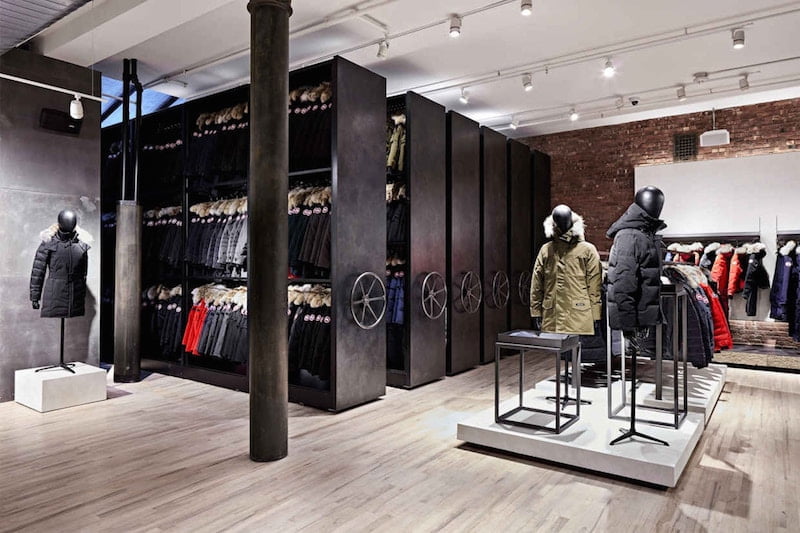
In fall 2016, Canada Goose opened the company’s first two flagship stores in Toronto, at Yorkdale Shopping Centre (4,500 square feet) and in New York City’s Soho area. Previously announced additional stores in London, U.K. (Regent Street), and Chicago (800 N. Michigan Avenue) will also open in fall 2017.
On Thursday, Canada Goose announced its fiscal 2018 first quarter results for the period ended June 30, 2017 Total revenue increased $12.5 million to $28.2 million driven by growth in direct-to-consumer channel and accelerated timing of wholesale shipments; gross margin expanded to 46.9 per cent from 29.7 per cent in the prior year; net loss was $12.1 million, or $0.11 loss per share, and adjusted net loss was $13.2 million, or $0.13 loss per share.
In a news release announcing the new store openings in the fall, Reiss said the company is excited to extend its footprint in North America “where we know our brand’s proud Canadian heritage and unparalleled product innovation and design resonates with locals and tourists alike.”
“Having a flagship store in Tokyo is particularly exciting as Japan continues to be one of our strongest growing markets and we can now better answer the call of our Asian customers by giving them an opportunity to engage with our brand, unfiltered,” said Reiss.
Operated by the company’s distribution partner, the new Canada Goose 3,100-square-foot flagship store in Tokyo will be located in the Sendagaya neighborhood, recognized as one of the high-end fashion centres of Japan. In Boston, the Canada Goose store will be located in the Prudential Center, one of New England’s top shopping destinations, boasting more than 75 specialty stores.
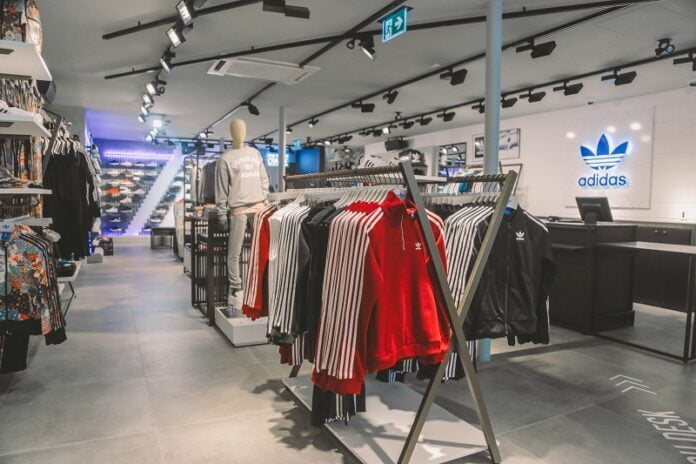
German fashion and athletic brand adidas has unveiled its renovated adidas Originals store in Toronto, and renovations are now underway on its Vancouver and Montreal ‘Neighbourhood Concept’ locations, as well. Included are elements of ‘localization’, with each store being unique.
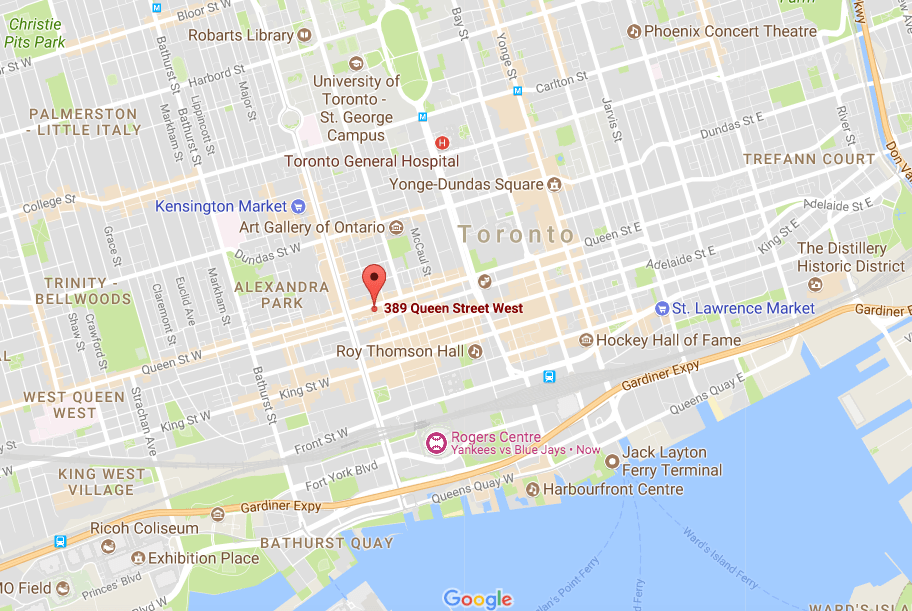
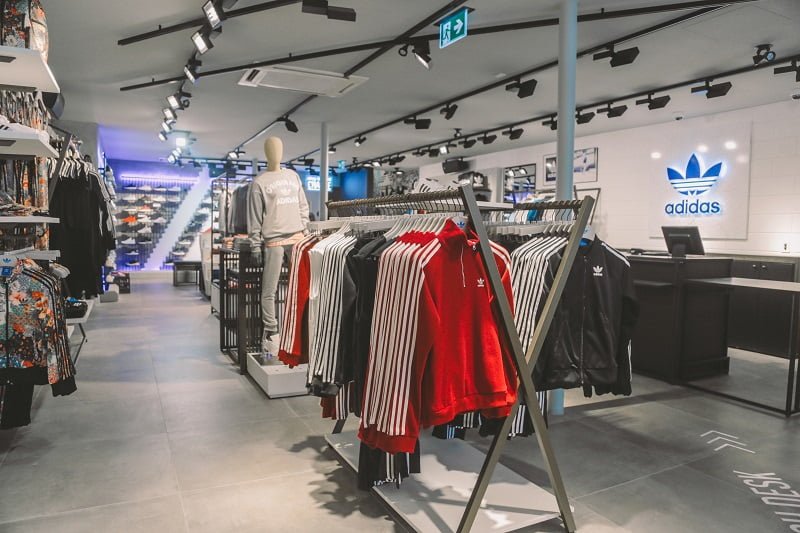
The Toronto store, which opens to the public at 11:00am Friday morning, is located at 389 Queen Street West, in the heart of one of the city’s trendiest shopping areas. Renovations of the existing location commenced several months ago. The store features adidas Original fashion apparel as well as some designer collaborations and limited edition pieces.
Adidas operates ‘Neighbourhood Concept’ locations around the globe. Each of these stores is similar in design, but also feature their own unique local elements that embody the neighbourhood they are located in. For the Queen West location, adidas Canada partnered with Toronto-based illustrator, Gyimah Gariba, who created bespoke art installations for the new store. As well, designers Sean Brown, Amrit Kumar and Mriga Kapadiya of NORBLACK/NORWHITE and artist Mango Peeler collaborated on a collection of customized t-shirts that will be available as an exclusive gift with purchase when the store opens.
The Toronto Queen Street store’s ground level features a retail space open to the public. Upstairs is a unique ‘activation space’ that plays “an important role in connecting and celebrating Toronto’s creative culture that embodies the adidas Originals brand ethos and the ‘Neighbourhood Concept’ mandate,” according to the company.
Renovations are now underway on adidas Originals’ Montreal (1258 Ste-Catherine St. West) and Vancouver (848 Granville Street). In an interview with Retail Insider several months ago, John Summers, Vice President of ‘direct to consumer’ for Adidas Canada, explained how the Toronto Queen Street location reflects a “trend savvy” aesthetic as per the area’s demographics, while the Vancouver Granville Street store will cater to a similarly ‘hip’ demographic. The Montreal fashion store will see an “elevated execution” to address the high-fashion shopper on Ste-Catherine Street West, Mr. Summers explained. Both stores will open later this year.
Links of London at Yorkdale Shopping Centre (Image: NKPR)
UK-based luxury jewellery brand Links of London has opened its third freestanding Toronto store. According to Leela Petrakis, North American President at parent company Folli Follie Group, more will follow as the brand continues to see success in the Canadian market.
Links of London opened its first two Canadian boutiques in the summer of 2016, both in Toronto. The 860 square foot CF Toronto Eaton Centre location opened first, followed by a 1,200 square foot store at CF Sherway Gardens (featuring a small in-store tea salon). With three freestanding Toronto boutiques, New York City is the only place in North America with more Links of London locations.
Last week, Links of London opened a boutique at Toronto’s Yorkdale Shopping Centre, marking its third for Toronto. The 615 square foot boutique is located in the mall’s expanding luxury wing, next to the mall’s future location for Ladurée and across from French luxury brand Saint Laurent.
“Our Toronto Eaton Centre and Sherway locations are doing fantastic,” explained Ms. Petrakis, and the Yorkdale store is expected to be a strong performer. Ms. Petrakis explained that Links has been seeking space at Yorkdale for about three years, and that its current location is ideal.
Links of London at Yorkdale Shopping CentreLinks of London at Yorkdale Shopping Centre (Image: NKPR)Links of London at Yorkdale Shopping Centre (Image: NKPR)Links of London at Yorkdale Shopping Centre (Image: NKPR)
“There is a different customer in each mall, and we see room for even more stores in Toronto,” she explained. “I love Toronto. It is big, diverse, and every neighbourhood has its own experience. The city is in constant change, with people coming from various parts of the world. Retail is thriving in Toronto, and there is an incredible energy in its various malls,” she said.
The Yorkdale boutique has a design aesthetic that is more ‘sleek’ than Links’ first two Toronto stores. And despite its jewel-box size, the store has a family-friendly functionality. “There is room for strollers at the Yorkdale store and there is also seating in the back”, explained Ms. Petrakis. Rather than product being in wall displays, much of it is in ‘bars’, including a bracelet bar, where consumers can view product from above in a user-friendly environment. It was important that customers be able to see into the store and with that, Links has ensured that its facade provides visibility to what is contained within.
Product customization is a unique feature to the new Yorkdale boutique — an engraving corner allows customers to personalize pieces. The customization area is located towards the front part of the store, allowing passers-by to easily view its presence.
Freestanding stores allow Links of London to showcase its expanded offerings, while also providing an intimate one-on-one experience between customers and floor staff. Links also has a VIP program, with promotions held throughout the year, she explained.
Links of London at Yorkdale Shopping Centre (Image: NKPR)Links of London at Yorkdale Shopping Centre (Image: NKPR)Links of London at Yorkdale Shopping Centre (Image: NKPR)
Looking to the future, Ms. Petrakis said that she expects more freestanding Links of London locations to open in Canada. “We are definitely looking at the West Coast,” she said.
Links of London also operates a network of shop-in-store concessions at several Holt Renfrew stores across Canada. Ms. Petrakis described how the Mississauga Square One concession, which opened in the summer of 2016, has done so well that it recently expanded to more than double its original size. Links also operates concessions at Holt Renfrew stores in Vancouver, Edmonton, Calgary, Toronto Bloor Street, and in Montreal at Ogilvy, which operates under Holt’s parent company Selfridges Group.
Links of London currently operates five freestanding U.S. locations, with four stores in New York City and a brand new store at Forum Shops in Las Vegas. Links of London also operates shop-in-shops at select Bloomingdale’s on both coasts in the United States. The Links of London brand was founded in 1990 and has grown to become a global luxury brand. In July of 2006, the company was sold to Greek conglomerate Folli Follie SA. The name ‘Links’ originated from the brand’s first product — the iconic salmon cufflinks, which became the springboard for its unique jewellery, timepieces and gifts for both genders.
*Photos are all of the new Yorkdale boutique, courtesy of Links of London, via NKPR. See below for more photos.
Links of London at Yorkdale Shopping Centre (Image: NKPR)Links of London at Yorkdale Shopping Centre (Image: NKPR)Links of London at Yorkdale Shopping Centre (Image: NKPR)Links of London at Yorkdale Shopping Centre (Image: NKPR)Links of London at Yorkdale Shopping Centre (Image: NKPR)
Escents at Toronto's Holt Renfrew Centre (Image: Craig Patterson)
Escents, the Canadian beauty and wellness retailer, is celebrating the opening of its twenty-third national location, a stand-alone boutique in Saskatoon’s Midtown Plaza, the first for that city.
Founded by Jacqui MacNeill in 1992, the company started with a small location in North Vancouver’s Lonsdale Quay, a prime tourist destination. The move proved to be a savvy one, as the brand’s organic growth is attributed to its niche product. Boasting a comprehensive aromatherapy and beauty line including bath bombs, essential oils, soaps and shampoos, Escents is an originator of the plant-based wellness movement that has since been parlayed into a national retailer. MacNeill is the Escents CEO, and remains connected with her customers through her eponymous blog. The brand’s most recent widespread expansion occurred in 2015, which saw Escents double their national presence in a single year.
Escents recently entered into a retail partnership model to cultivate entrepreneurs who wish to run their own business. Locations are hand-picked by the brand, and partners and brokers work closely with the head office to ensure there is market reach without oversaturation. Partners are responsible for building, opening, and running the store on a daily basis. The Midtown Plaza Saskatoon location, for instance, is being opened in partnership with the Regina location’s retail partner, in collaboration with corporate entities to ensure that the location will best serve their market. Of the brand’s 22 domestic locations, four are currently in the partnership model.
Image: Escents
Conversely, Escents operates under a franchise model in Taiwan, where they have 30 locations throughout the country, including several in the venerable Mitsukoshi department store. The brand has performed strongly in Asia, with four Japanese locations including Tokyo and Osaka. Escents has been in partnership with Air Canada and Eva Air for several years, as they are the provider of in-flight beauty products for the carrier.
Escents is now focusing on the greater Toronto area, with a location opening at Richmond Hill’s Hillcrest Mall in August of 2017. The plan is to expand to as many as ten stores between now and 2020. The Hillcrest location is a natural choice, as the neighbourhood is home to a large portion of the GTA’s Asian population who are already familiar with the brand from its presence in Asia.
In addition to the GTA expansion, Escents will also focus on wholesale merchandising. The brand provides training and product knowledge to build increased brand identity for markets in which they have less penetration or retail presence. The brand has also recently launched a new baby line, focusing on child-friendly 100%-natural infant products such as shampoo, lotion and wash. This signifies a move for the brand from a pure retail model to a blended one.
With 52 locations in Canada, Taiwan and Japan, and an increasing presence in the wholesale market, Escents Aromatherapy will be expanding into the national retail consciousness for years to come.
Poppy Barley at Edmonton's Southgate Centre (Image: Poppy Barley)
Poppy Barley, Edmonton’s famed leather bespoke footwear company, opened a 1,000-square foot flagship at Edmonton’s Southgate Centre last week.
Opening day festivities included a meet-and-greet at noon with Style at Home’s Editor-in-Chief, Erin McLaughlin. The brand’s Mexican Operations Manager, Laura Obregon-Cordova (who is also the brand’s first employee), traveled to Edmonton for the occasion. Taking a cue from Willy Wonka, five lucky customers who purchased in-store received an envelope at checkout containing a Golden Ticket that entitles them to free shoes. Select designs from the brand’s fall 2017 collection were also unveiled.
The flagship not only contains made-to-measure design styles, but also a select number of ready-to-wear designs. The brand is bringing the online experience to the store through a made-to-measure consultation lounge and a tactile leather wall displaying the designs. This is intended to introduce new customers to Poppy Barley’s bespoke business model, and also provide an offline experience for the initiated clientele. Poppy Barley intends to convert its long-standing Whyte Avenue location into office space, with client-facing measurements migrating to the new flagship.
Poppy Barley was founded in 2012 by sisters Justine and Kendall Barber, creating bespoke shoes for women. The brand, known for their distinct colours and unique eye for detail, eschews the traditional ready-to-wear line in favour of bespoke shoes, which are designed and created online by their clientele. In order to accommodate varying requirements, customers are invited to submit their measurements online, and the shoes will be hand-made and delivered right to their door (for a flat fee of $9.95), creating the ultimate bespoke footwear experience. Due to demand, the brand has expanded to include a men’s line, while remaining at an affordable price point for consumers.
Poppy Barley at Edmonton’s Southgate Centre Poppy Barley at Edmonton’s Southgate Centre (Image: Poppy Barley)Poppy Barley at Edmonton’s Southgate Centre (Image: Poppy Barley)Poppy Barley at Edmonton’s Southgate Centre (Image: Poppy Barley)
Poppy Barley’s aesthetic crosses numerous demographics, and easily transitions from day-to-night. It remains the very first North American footwear brand to offer made-to-measure boots online. As their designs are not intended to be mass-produced, their more popular designs often sell out. Prior to the launch of its first-ever brick-and-mortar location, Poppy Barley hosted pop-up shops in Edmonton, Calgary, Regina, Toronto, and Vancouver. The pop-up shops are so in-demand that appointments for their events sell out weeks in advance. Those familiar with the brand have long sought it out at select boutiques, such as their very recently expanded shop-in-shop at Vancouver’s Nicole Bridger in historic Gastown.
The brand is noted for its involvement with the community and for sustainability. Poppy Barley shoes are made in León, Mexico. Partner factories are chosen to commit to the brand’s goals for environmentally-friendly footwear and reduce its carbon footprint. “Our suppliers are exceptionally innovative, environmentally conscious and forward-thinking”, says Caroline Gault, the brand’s Director of Content and Community. “Right now, our tannery cleans and recycles the water it uses in the leather tanning process so that the water can be safely restored into the water system”.
Poppy Barley brings an edgier, design-conscious aesthetic to Southgate Centre, representing a homegrown Canadian success story. “We’re focused on making our first physical retail environment in Edmonton a rich and fulfilling experience for our customers, and our team”, Gault said. Long known as a best-kept secret, Poppy Barley has developed a fiercely devoted clientele of tastemakers, and should enjoy much success in its new flagship. And the Southgate location might not be the brand’s last permanent freestanding store — Calgary and Vancouver could be next, pending performance at the Southgate flagship.
See below for more store photos, courtesy of Poppy Barley.
Poppy Barley at Edmonton’s Southgate Centre (Image: Poppy Barley)Poppy Barley at Edmonton’s Southgate Centre (Image: Poppy Barley)Poppy Barley at Edmonton’s Southgate Centre (Image: Poppy Barley)Poppy Barley at Edmonton’s Southgate Centre (Image: Poppy Barley)Poppy Barley at Edmonton’s Southgate Centre (Image: Poppy Barley)Poppy Barley at Edmonton’s Southgate Centre (Image: Poppy Barley)Poppy Barley at Edmonton’s Southgate Centre (Image: Poppy Barley)Poppy Barley at Edmonton’s Southgate Centre (Image: Poppy Barley)Poppy Barley at Edmonton’s Southgate Centre (Image: Poppy Barley)
Let’s Talk! Email Me @: Contact_Me@raange.com; Text Me @: (514) 613-3324 with Keyword ‘Listen’
I love talking about the customer lifecycle because I spend my days acting as the bridge connecting my clients with their customers.
And sometimes I’m left wondering if we’re truly listening to the customer, not customers – each unique customer. It doesn’t seem like it.
I cringe as companies blast one message across an entire database. Your database should be your lifeline. Your golden ticket to loyalty, to sales targets and to increased customer lifetime value.
Demand Better Results From Your Database
You’ve invested so much time and effort into building this beautiful database full of loyal clientele, not to mention the team you invest in (operating costs) to craft the perfect communique for distribution; you should never risk letting one message push customers away and diminish your brand.
The larger your database, the more powerful your ROI should be.
I’m not talking figuratively either, according to a recent 2017 Mobile Consumer Report retailers found that their average database subscriber spends over $300 a year more than customers who haven’t opted-in.
Optimizing the way you utilize your database to increase retention will drive better customer engagement and sales.
How Do You Make Amends with your Database? Commit to Personalization.
New Adlucent research found that consumers prefer a personalized advertising experience and that 71% of respondents prefer ads tailored to interests and shopping habits.
Personalization powered by preferences.
Quite often we make decisions backed by research-driven assumptions, when sometimes you just have to ask your customers what they want. Sounds old school, but it works.
Businesses need to start collecting unique customer preference data. By giving each customer control over the information s/he receives, you can ensure they get the information they want.
Collecting preferences to power a personalized experience is a good approach to showing each customer that you are listening.
Eric Nykamp is CEO of Raange, Inc., Founder at Mamoth-Group, TAARGA, RAANGE and Mamoth-Labs! Internet Strategist, Entrepreneur, Inventor, Investor, Husband, Father, Insomniac.
My goal is to elevate traditional brick & mortar retailers to quickly and easily transition to the latest marketing concepts and communication channels, to rebuild trusted dialogue with their past, present, and future customers.
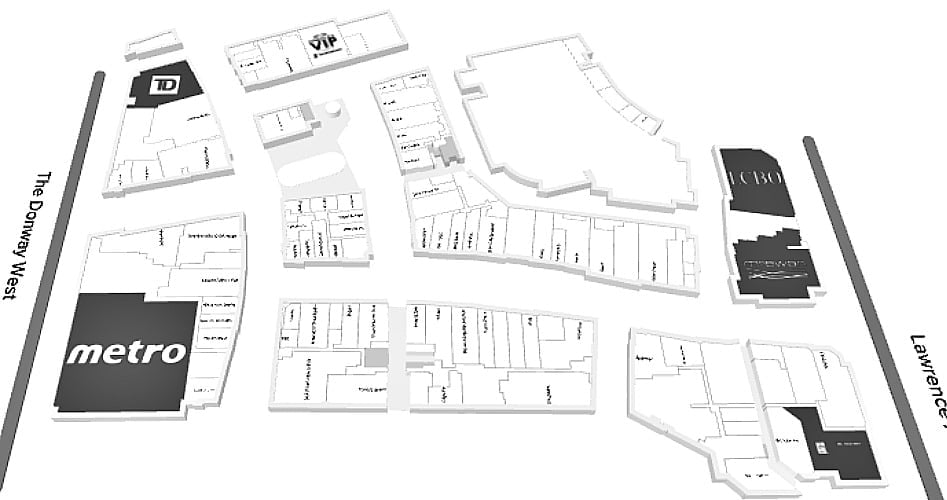
Landlord Cadillac Fairview has completed a $21 million redevelopment of its 40-acre CF Shops at Don Mills property in Toronto. Renovations include public realm upgrades, expanded entertainment zones, and an overall enhancement of the amenity offerings to the outdoor lifestyle shopping centre.
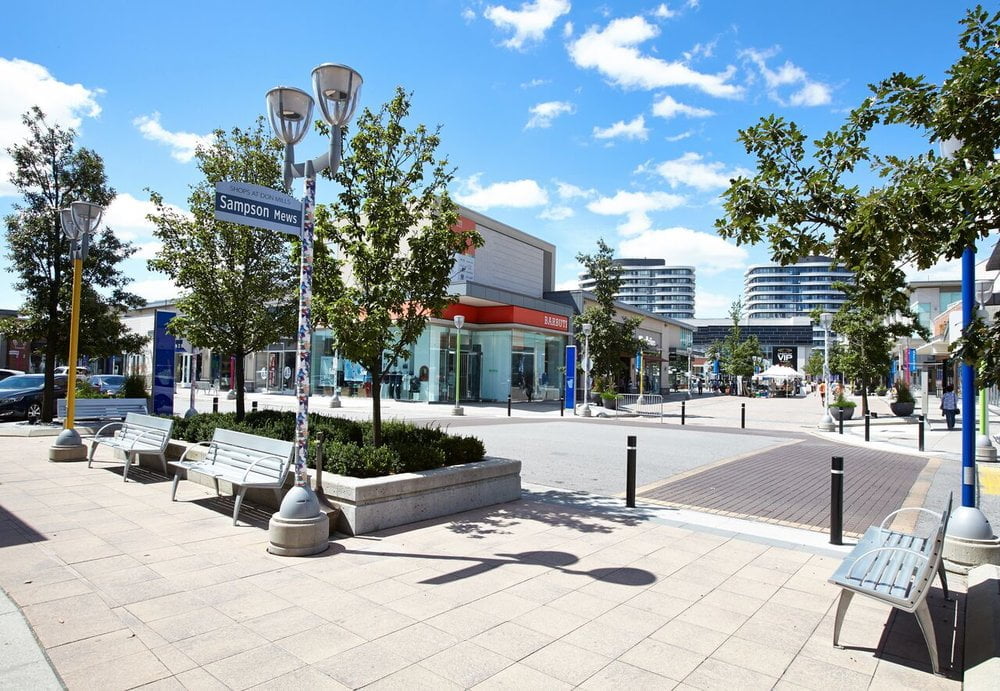
The centre, which opened to the public in 2009, upgraded its landscaping, furniture, and seating options, as well as added new art installations that have revitalized the look of the property. The centre’s existing water feature has been refreshed to include ‘artistic features’, according to Cadillac Fairview.
“CF Shops at Don Mills is more than a shopping centre, it’s a 40-acre, integrated community, featuring a range of independent and international retail brands, office space, elevated dining options, as well as a community park, three residential towers, with four to follow, and a future community centre,” said Niall Collins, Senior Vice President, Development, Cadillac Fairview. “When we began transforming the centre last year, our intent was to provide further integration with the growing condo community and amplify what was already a vibrant, mixed-use destination where people come together.”
Customer feedback led to updated wayfinding for pedestrians includes improved walkways which include wider sidewalks, new access points, and improved site-wide signage. A new pedestrian connection off Karl Fraser Road was installed to offer better access from the centre’s four-level parking structure. Mr. Collins explained how, after studying pedestrian traffic patterns, it was decided that the new connection should be created by relocating the centre’s Browns Shoes store to create the pedestrian access, which will soon include several smaller retail concepts facing onto the walkway.
Vehicular navigation also saw a recent revamp, including adding new illuminated digital signage and large entry identifier pylons. The centre’s four-level parkade has been updated with digital signage that displays real-time parking counts — the 1,000 stall structure offers free parking for visitors. In total, CF Shops at Don Mills has over 2,900 parking spaces for visitors.
CF Shops at Don Mills’ entertainment experience zones at the junction of Leadly Lane and Karl Fraser Road have been expanded, as well as O’Neil Road with patio zones and overhead catenary lighting. These spaces, along with the centre’s ‘Town Square’, offer opportunity to host outdoor events and activities throughout the year, assisted by a property-wide music speaker system meant to heighten the ambiance.
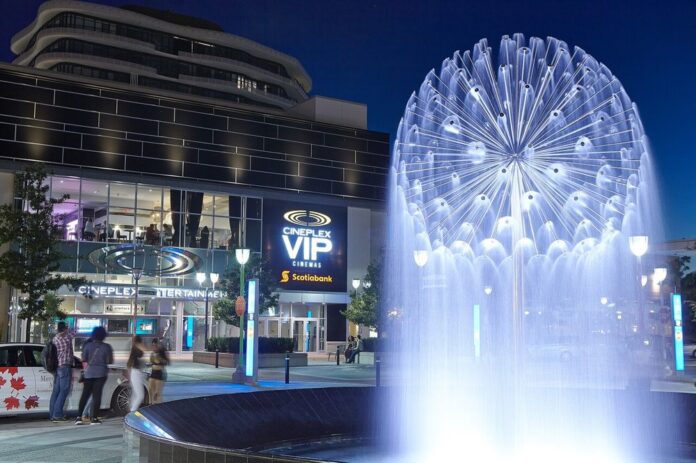
Nick Iozzo, Director, Leasing at Cadillac Fairview, explained how CF Shops at Don Mills has provided the landlord the opportunity to incubate, curate, experiment and innovate. He noted that Cineplex launched and tested its first VIP theatre concept at CF Shops at Don Mills, and how a number of unique concepts have become part of the mix. High-end performance bike shop ‘The 11’ recently launched at the centre, and King Street-based body art concept Black Line Studio will soon open its first uptown location at CF Shops at Don Mills. What’s resulted is a unique outdoor community centre that has also seen a number of ‘firsts’ added to its premises, including the fall 2017 opening of Toronto’s first Starbucks Reserve Bar, which will span an impressive 3,800 square feet.
Mr. Iozzo also noted that the centre saw the opening of sporting goods retailer Salomon‘s first store in North America in the spring of 2009, Anthropologie‘s first Canadian store (also in 2009), art photography retailer YellowKorner‘s first Canadian location, Mark McEwan‘s first grocery store, and online retailer Well.ca‘s first brick-and-mortar location. Frank and Oak‘s first shopping centre store opened at CF Shops at Don Mills in 2015, spearheading a partnership with Cadillac Fairview that will see the Montreal-based brand open in multiple centres across Canada.
As well, “live-in” customers are being added to the centre, with developers building several new condominium towers that will eventually see an estimated 4,500 residents in 2,800 residential units on-site. Mr. Collins explained that three projects have been completed, and four more are in the works. Adding residential buildings to shopping centres is a trend increasingly seen in major malls, and the next wave is expected to include rental towers, according to experts.
A SPACIOUS LAYOUT WITH AN EASILY ACCESSABLE CASH DESK AT LA MAISON SIMONS IN DOWNTOWN CALGARY. PHOTO: SIMONS
Psychologists have long posited that people’s first impressions are formed upon sight. Visual and other sensory cues such as physical appearance, mannerisms, and voice help form an impression of a person. The same can be said of commercial spaces, as consumers often decide if they want to enter a boutique based on their first impression of a shop. Retailers have in recent years been paying increasingly more attention to and analyzing the traffic flow into their shops and determining what factors from a visual perspective draw their customers into the space. We discussed the topic recently with one of the foremost national experts on integrated traffic flow analysis, Sense of Space’s Mark Ainley, who gave us some notable examples of how visual cues can alternatively invite or repel traffic into major stores.
Mark Ainley
Mark Ainley is the owner and proprietor of Sense of Space, a flow and spatial analysis consulting firm based in Vancouver. A longtime practitioner of this discipline, Mark provides both residential and commercial consultations that are designed on a bespoke basis to create the energy and flow his clients seek. His portfolio encompasses condos in Vancouver to palatial homes in Silicon Valley to commercial spaces in Tokyo, with an international clientele from New York to Bali. On a recent trip to Toronto, we invited Mark to analyze a number of commercial spaces and how they align with best practices in flow analysis.
Describe what you do.
I work with home and retail spaces to help create a natural sense of balance and integration. In homes, this means ensuring that everything is functional and having all decor embody the character of everyone living there while reflecting the inherent integrity of the natural world. In commercial properties, I create flow to and within the space so that potential customers are naturally drawn to the space and want to walk through and explore more. The use of colour, lighting, signposting, displays, and accessories – in addition to the overall layout – can all be customized to increase a sense of flow and comfort in the space. It’s a bit like subliminal advertising, but physically throughout the space.
We’ve all walked into spaces, be they private residences or public buildings, where we felt either invigorated and welcomed or oppressed and uncomfortable. The ancient practice of Feng Shui likens the flow of energy to the flow of water and air. The physical world can be aligned so that things feel like you’re flowing with ease like a relaxing stream, rushing like a raging torrent, or stuck and stagnant like a swamp. My training has helped me hone my awareness of what can create a balanced and inviting space beyond what the untrained eye can see, although the feedback I hear in each consultation is that my suggestions are ‘common sense’ … yet it seems that common sense very often isn’t automatically applied! Once it is, the feeling of the space and the experience of those who are there can indeed start to shift for the better.
What are some of the biggest mistakes that you see in commercial properties?
I think the belief that there are spaces that don’t matter is a huge mistake. There are designers who don’t take into account every second of the customer’s experience walking through a property, in particular some of the seemingly less important areas (like staircases, washrooms, rear entrance). Additionally, employee-only spaces are very important: when a business puts on a slick appearance for customers but doesn’t ensure the comfort and ease of their employees, it creates resentment and inequality. Staff rooms and washrooms need to be well appointed. The offices of administrators are extremely important, as their decisions filter down through the entire chain of command to impact the customer. If the executives are uncomfortable and ill-at-ease, they won’t be making the best decisions. Functionality is absolutely key: if there are issues for cashiers accessing bags, pens, or receipts, the flow of a transaction is compromised, while administrators who can’t easily access their paperwork or devices can find their tasks more cumbersome and stressful.
Why is “flow” so important in drawing people into a space?
First I think it’s important to demystify the word “flow“. I think we all have an innate sense of what it is, but it can end up sounding more mysterious and abstract than is really the case. What we’re looking at is a combination of appeal, accessibility, and user-friendliness. Stores create window displays to entice customers to enter and in-store arrangements to encourage them to explore. The flow that I’m looking for is to some degree connected to that – it involves streamlining the visual and physical invitation to enter the space and then to continue to move through it. If customers don’t feel drawn to enter a store, the potential for earnings decreases – it’s as simple as that. Of course there is more to sales than just getting people into the space, but it is a very important first step.
I once witnessed an arrangement in a well-known store on Robson Street in Vancouver that had set up a display table inside the store so that the corner of the table was facing towards the door. Corners look sharp and threatening to our nervous system and are therefore not seen as welcoming (it’s a little like having someone point at you – it feels intimidating and insulting). I stood outside the shop for several minutes and witnessed one potential shopper after another walk up to the door, glance in, and then walk back out and down the street, certainly consciously unaware that they were being repelled from the store by a sharp corner of a table that was doing the opposite of creating an invitation to enter. About one in ten people who went up to the door actually entered the shop. It was astounding to witness! And this is a very popular, well-known store that regularly changes its configurations… it was clear that this particular arrangement wasn’t working for them.
Eye-catching colours and CREATIVE arrangements create an inviting space at hunter store in London, UK.
Why do customers put such a high premium on “welcoming” spaces when they shop? How would this affect business? Would a customer knowingly avoid a shop that they deem to be uninviting?
We all want to feel welcomed in our lives and everyone harbours at least a couple of unpleasant memories of not having been made to feel invited in certain familiar or social situations. If customers are going to spend money at a store, they should most certainly feel welcome. We wouldn’t expect a customer to be willing to spend money when they are treated impolitely, and indeed many businesses have some very clear protocols in place as to how to communicate respectfully with potential clients (not all of them effective, by the way – in fact, overly enthusiastic and chatty greeters can have the opposite effect to what is intended and discourage more introverted shoppers to spend time in the store). If customers don’t feel welcome in the space on a physiological and emotional level, they simply won’t feel at ease enough to feel a connection to the business and what they have available for sale.
I recently went to a very high-end shop in Toronto that I gather is not doing as well as it could, certainly nowhere near what its reputation warrants, and all of the display tables were too close to the product counters – this made it more difficult for customers of even an ‘average’ body size to walk through, let alone someone who might be considered ‘plus size’. This subconsciously translates into body shaming and ends up creating an unwelcoming and even antagonistic environment for some shoppers. Even though I’m on the slender side, the spatial limitation between display tables and counters felt oppressive to me – they weren’t even particularly close, but there certainly wasn’t as much room as there should be for optimal flow, so it certainly would feel like this for anyone of even slightly larger stature. This hardly put me in the mood to linger and look at products, which of course would have an impact on my wanting to spend money there.
Can you give us some examples of shops that exemplify great flow?
The renovated food court at Toronto’s Yorkville Village (formerly Hazelton Lanes) has a wonderful sense of flow: there’s a marvellous seating area where the counter has a meandering wave (much more inviting to sit at than a straight counter and easier for passers-by to walk by) which is outlined in gorgeous rich-toned wood. This space offers a much warmer, more inviting atmosphere than most food courts, which are usually overly metallic and plastic and which can feel very transient and boxy. I was very impressed by the comfortable seating and quality lighting as well.
Nearby, I saw a bustling Italian cafe that everyone apparently raves about – seeing the atmosphere and hearing about its popularity impelled me to go in to try it out myself. There were a couple of tweaks I would make, but the warm inviting colours and ease of access to the order counter (and cash register) made it easy for me to enter and get what I had envisioned wanting when I walked in.
Can you give us examples of where you think flow could be better established to create a more inviting space that would increase customer flow?
Entrances are most important because that’s where we will actually cross the threshold to potentially become a paying customer, so several factors here need to be considered: visibility and lighting, ample space, attractive colours, and appropriate displays are among the key aspects to be considered here.
A while back in Toronto when I walked to the entrance of a famous high-end business, there was a display of 5 mannequins adorned in some aggressive spiky garb just a couple of meters inside the main door. A few things didn’t work here: the five mannequins created a broad display that immediately narrowed down the pathway that allowed for entry into the store; they were facing the door, which made it look like they were leaving the store en masse; and the aggressive clothing made anyone wanting to enter subconsciously feel that they were being accosted by ruffians, the last thing one expects from a high-end shop like this! Three mannequins would be enough for any display (anything more is too distracting), and angling is important to create an inviting and inspiring sense of flow.
A shopping mall that I gather isn’t doing as well as it could be had a rather confusing entrance – sign-posting wasn’t ideally placed, the walkway through a passageway to the actual door was uneven and uninviting, and then next to the staircase heading up into the mall was another staircase going down into a rather undefined space, creating a split view between left and right eyes. Add to this the spiky plants (which look antagonistic) next to the doors and the lack of symmetry in their placement and you have a long list of energetic obstacles that basically cut back on the ease of flow from the sidewalk to the door.
With consultations that can include reviewing proposed floorplans prior to construction to rearranging existing layouts, Ainley can provide practical solutions to streamline the arrangement and ambiance of commercial properties so that they serve consumers, employees, and owners alike.
UK-based fashion brand Hunter, known for its rubber wellington boots, is opening its first freestanding North American location, and third location in the world, in Toronto. The 2,800 square foot store will open in October in the Nordstrom-anchored expansion wing at Yorkdale Shopping Centre, in a retail space located between Samsung and a new Roots flagship that will open later this month.
The store is being designed by Hunter’s in-house interior design team, led by Creative Director Alasdhair Willis (husband of fashion designer Stella McCartney). The store’s design is described as follows: “It reveals the sky and exposes the space to the elements, with the store’s internal envelope acting as a protective canvas to the external landscape lining the perimeter of the space. Visitors will ‘look out’ from the contemporary barn architecture onto a backdrop of the Scottish Highlands – the birthplace of the Hunter brand.” Additionally, Hunter confirms that “in-store weather elements will be changed seasonally.”
Flooring will be fashioned from strips of rubber from the Original green boot, according to a report in WWD, and the store will also feature mid floor tables that will double as seating, using natural oak and Douglas fir.
Hunter’s Yorkdale storefront, which will be about 30 feet wide according to lease plans, will “be reminiscent of a contemporary greenhouse giving the sense that the sky is surrounding customers upon entry where they are immediately immersed into the brand world of Hunter.”
Alasdhair Willis, said: “Toronto’s diversity and vibrancy makes it one of North America’s most exciting places to be and reflects the Hunter ethos, which is why it’s where we decided to open our third stand-alone store and the brand’s first in North America.”
The store will launch by carrying Hunter’s fall/winter 2017 collections for men, women and children, including Hunter Original footwear, outerwear and accessories collections alongside the Hunter Field technical collection. As well, to mark Canada’s 150th birthday, Hunter will release a limited-edition backpack in red and white that will be adorned with a red maple leaf. The ‘Toronto Limited Edition Original Top Clip Backpack’ will be crafted from rubberised leather and it will be exclusive to the Yorkdale location.
According to the report in WWD, prices at Toronto’s Hunter store will range from $14 for a boot buffer set to $575 for a down coat.
Hunter’s first freestanding retail store opened on Regent Street in London in the fall of 2014, with about 5,300 square feet of retail space. A second location opened in the spring of 2016 in Tokyo’s Ginza district, spanning about 3,100 square feet. In Taiwan, Hunter also has a partner store in Taipei.
Hunter Boot Ltd. was originally established as North British Rubber Company in 1856 and it is headquartered in Edinburgh, Scotland with offices in London, New York and Düsseldorf, Germany. In the past, the company was also involved in the manufacturing of rubber tires, conveyor belts, combs, golf balls, hot water bottles and rubber flooring. Being a heritage brand, Hunter holds several Royal Warrants by Appointment as suppliers of waterproof footwear. One of Hunter’s most recognizable products is its ‘Green Welly’ boot, which is now manufactured in China and is favoured by the hunting set.
See below for more photos of Hunter’s London and Tokyo stores.