Advertisement
Advertisement
Home Blog Page 1115

Black Friday 2016 Canada Projections

Since 2010, Vancouver-based think tank DIG360 has been tracking Black Friday behaviour in Canada. This year, DIG360 has released the following projections: 

1) Black Friday, now ubiquitous in Canada, is in effect blurring into a weeks long promotion that is continuing on into December Holiday sales. Moneris called 2015 Black Friday bigger than Boxing Day.  DIG360 expects that sales in 2016 may diffuse away from Black Friday.  In a few years, Black Friday may lose its focus and simply be one part of a ‘November-December’ series of promotions, according to DIG360 head, David Ian Gray, and from a consumer perspective, Cyber Monday is fast becoming meaningless since the extended Black Friday is now firmly online as much as offline.

2) Black Friday promotions had plateaued at about 50% of adults in 2013 and 2014. With data collected by partner NRG Research, DIG360 determined that last year’s participation jumped to 68% of Canadians.  DIG360 attributes this to a combination of the longer Black Friday selling period and increased shopping on the Internet for deals by the crowd-averse. They expect physical store shopping will level out, with any increases coming from the web, estimating that 72% of Canadian adults will be Black Friday promotional browsers and buyers.

3) Retailers continue to teach us to wait; more than 1/3 of purchasers will postpone Holiday shopping until this weekend, based on patterns in 2014 and 2015. DIG360 will also be watching for what we call “Black Friday Shadow”, a week long lull in store traffic after the Black Friday weekend ends. This first appeared in 2015 and could be a major concern for retailers.

4) Many shoppers will continue to browse without buying, underwhelmed by the breadth and depth of the deals; retailers will continue to protect margins and sell close to regular price as far into the Season as possible.

5) Almost half of shoppers will be seeking deals for themselves rather than gifts; this group is also more likely to participate on Boxing Day, and for the same purpose.

6) The low Canadian dollar will mean a drop in cross-border Black Friday shopping (online and offline) but from a very low proportion of Canadians (only 5-7% of Canadians shop the US for Black Friday).  When will Canadian retailers exploit the exchange rate to lure American web shoppers?

It will be interesting to see how Canadians shop Black Friday this year, and how Cyber Monday will play out, based on the above. The DIG360-Leger 2016 Black Friday Surbey will be conducted next week, and we’ll report back with the results. 

LUX Beauty Boutique Expands to New Location

Image: LUX Beauty Boutique

Independent Edmonton retailer LUX Beauty Boutique has opened a replacement location in the city’s upscale High Street shopping area, steps away from its original location and about 40% larger. The new store has several unique features and product lines, as founder/owner Jennifer Grimm looks to further expand operations. 

Jennifer Grimm (Image: LUX Beauty Boutique)

The new store features an 850 square foot main level that is devoted to beauty retail, as well as a 900 square foot lower level being broken down into two spaces — a 450 square foot “living room” for makeup bookings, community events and private parties, and a 450 square foot lower level office space & shipping/receiving space to accommodate LUX Beauty’s growing ecommerce business (luxbeauty.com ecommerce and Seasons of LUX subscription orders). 

The previous store was a total of 720 square feet, including office, all on one level. We first reported on it in December of 2013, when Lux Beauty Boutique was the first retailer in Canada to introduce ‘SelfPay’ technology, allowing customers to pay-and-go without waiting in line. 

Image: LUX Beauty Boutique

LUX Beauty features a curated collection of exclusive, hard-to-find beauty brands, many of which are organic and cruelty-free. Ms. Grimm opened LUX Beauty Boutique and launched luxbeauty.com 17 years ago. 

The High Street area has recently seen significant challenges, including the two-year closure of the nearby 102 Street bridge. The LUX Beauty Boutique team were able to maintain a loyal clientele during the construction using creative techniques such as curbside service, special events and home deliveries. Ms. Grimm says that she’s considering expanding operations at some point, with location scouting ongoing. 

Small Retailers Finding Support from their Service Providers

By Millie Davies

Small retailers face a multitude of challenges when entering the market and becoming operational quickly. A combination of the increase in overall costs of doing business that comes with a physical location, alongside today’s consumer constantly seeking a better price point, can make it difficult for less-established retailers to compete against big box retailers.  

Small business owners traditionally turn to online and offline resources to alleviate these obstacles, with platforms including Mentorworks.ca and the Canadian government’s Small Business Financing Program useful as a starting resource. 

Service providers that cater to the small business demographic have also taken notice of the specific needs of their client base, and have been taking action accordingly. An example would be businesses transitioning from online to physical locations; e-commerce businesses often rely on service providers such as Shopify before turning brick and mortar. Now the company has leveraged this position by providing a service called ‘Hardware’, a ‘complete kit’ for setting up a retail store from scratch. This includes card readers, receipt printers, barcode scanners and cash drawers. 

Other service providers are also demonstrating their allegiance to small business; banks including BMO have targeted plans for small businesses that fall into different monetary categories, while TD Canada Trust also carries specific small business banking products. Other service providers have taken different routes; Bullfrog Insurance, a commercial general liability company, has invested in its small retail clients by donating its own marketing dollars into promoting its clients business enterprises. 

Bullfrog takes the position that in between coordinating business grants, leasing and day-to-day operations, small businesses are left little time to devote to marketing campaigns that will actually drive sales and increase foot traffic. The company has localized its campaign to support its small business clients in Hamilton and London, Ontario, with a view to expand. By highlighting the brands of its entrepreneurial client base through logo design, social media, and donating advertising billboards, the insurance firm boosts its own reputation while those same customers receive the benefits of its marketing channels. 

Today’s service providers are realizing that supporting and investing in their small business clients results in a long-term pay-off. Through boosting start-ups and ensuring their businesses operate as smoothly as possible, clients are likely to stay loyal to their providers who go the extra mile. 

Retail Insider Partners with Indeed Jobs


Retail Insider has partnered with job site Indeed.com to post retail industry positions. Jobs may range from sales floor to management roles. 

Indeed is considered by many to be the world’s top job site, with over 200 million unique monthly visitors from 60 different countries. 

Below is a multi-page job board and as well, you may search for positions in the boxes below. The page will be constantly updated, and job seekers are encouraged to check back regularly. 

*****

Pusateri’s Fine Foods Reopens Fire-Devastated Flagship (and it’s Better than Ever)

exc-582ce2eb893fc023f9cbc9bd

Upscale Toronto-based grocery retailer Pusateri’s Fine Foods reopened its flagship store last Friday, located at 1539 Avenue Road in Toronto. The 15,000 square foot store, designed by Montreal-based GH+A, brings Pusateri’s original store up-to-par with its new locations across the Greater Toronto Region.

The reopening follows a devastating fire that closed the store in August of last year. The team at Pusateri’s worked hard over the past several months to bring the store back to life, as the company has been eager to reopen its doors to its loyal clientele. 

An excited crowd of over 100 people stood outside the store the morning of the opening. The first 500 guests in line were treated to a Pusateri gift bag, containing Pusateri branded t-shirts, and an assortment of grocery offerings including coconut water, yogurt-covered pretzels, and biscotti. 

The Pusateri family arrived for the 9am ribbon cutting, alongside a trendy and stylish Mr. and Mrs. Claus to celebrate the upcoming holiday season. As the gates open, a long line of shoppers gathered inside the store to explore the new changes to the space.

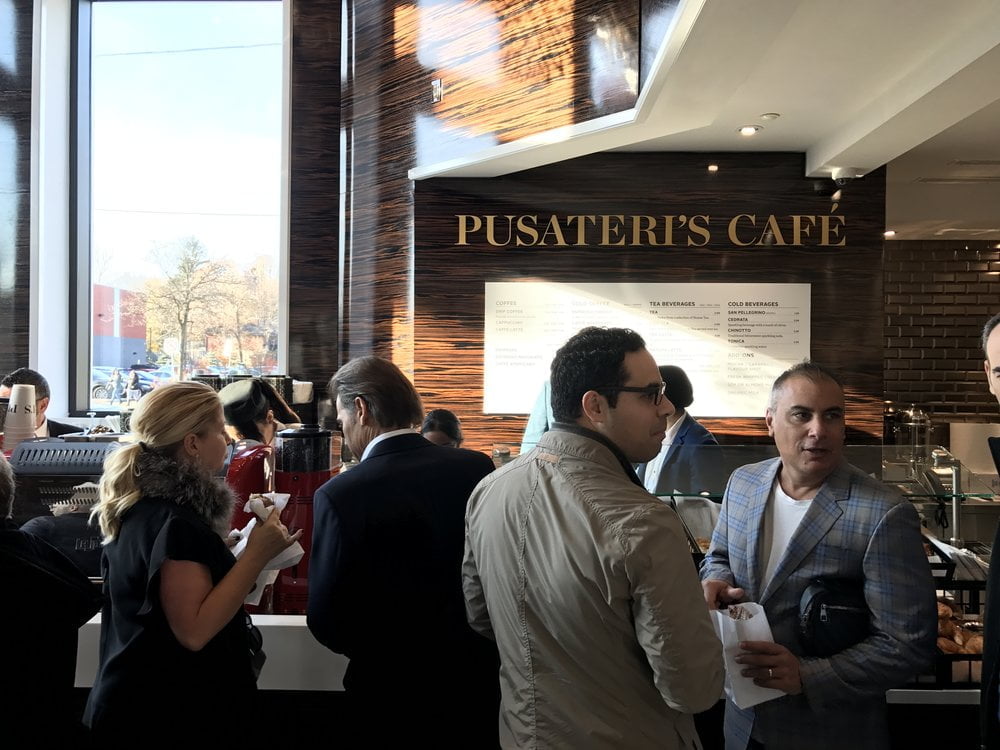
In the store, customers are greeted by a large two-storey atrium, featuring an impressive lighting addition that rises above Pusateri’s Cafe. Found here are artisanal baked goods including croissants, danishes, cakes, and macarons. A variety of different coffee and espresso drinks are available to order – with the same friendly and familiar service that was here before the renovation.

The finishings at Pusateri’s are top notch. White and grey patterned marble floors line the entire store, with rich wood fixtures and detailing giving the grocery store a sophisticated feel.

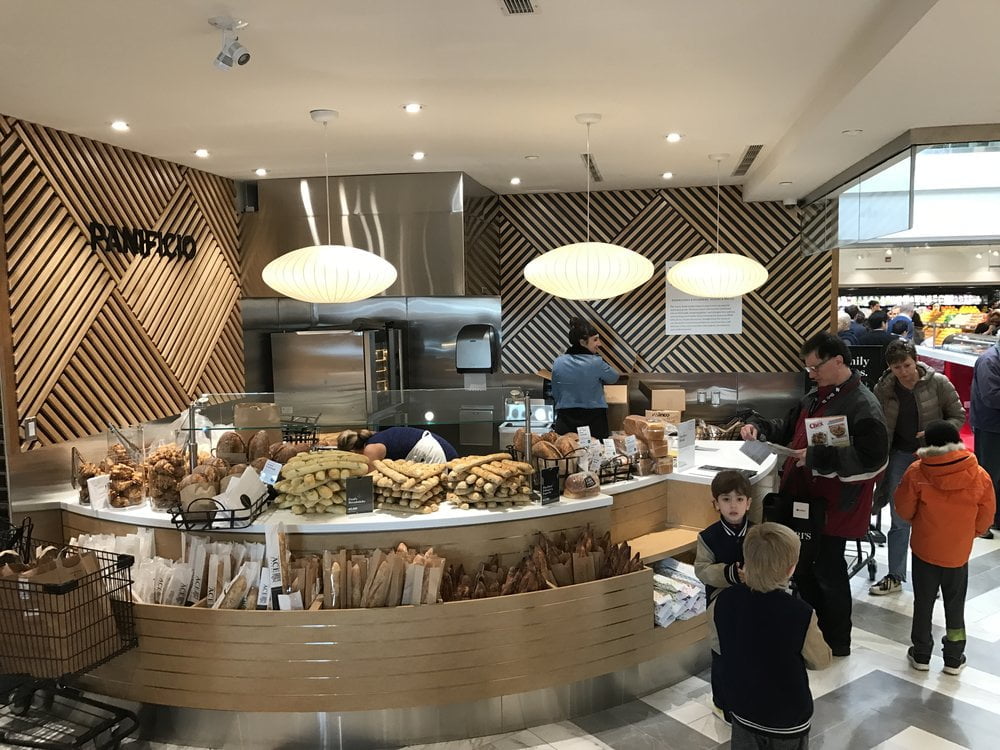
Just to the right of the cafe area lies the Pasticceria, where a selection of cakes and pies can be found. Fresh loaves and baguettes of bread are baked right in front of customers in Pusateri’s Panifico section.

The renovated location improves on what Pusateri’s flagship location had before. A new booth at Pusateri’s is a live cooking area, called the Rosticceria, featuring gourmet fresh foods and rotisserie items available for purchase. This cooking area can be found inside their new food hall at Saks Fifth Avenue on Queen Street West.

This area also has an elevated array of handmade sushi offerings, hand-rolled by expert sushi chefs.

The second floor offers a view over the grab-and-go food area. On this level, customers will find Christmas merchandise (seasonal) available for purchase, as well as customer washrooms. 

This floor will also house a Pusateri branded full-service Italian restaurant, set to open early next year, but was not ready in time for opening day.

Pusateri’s Fine Foods is also continuing its relationship with Toronto-based Greenhouse Juice Co. The juice company has opened a shop-in-shop featuring all varieties of their cold pressed juices. Greenhouse representatives kicked off the launch with complimentary samples of their ‘East of Eden’ and ‘Wake Up’ juices to an enthusiastic crowd. 

Pusateri’s Avenue Road has added over 100 new products to their grocery offerings. An increased selection of local and international cheeses, bolstered deli meat offerings, and an expanded selection of breads were made possible by the added space from the renovation. The product offering aligns with their offerings at their other locations, focusing on a selection of foods not typically found at big box grocery retailers.

This location was Pusateri’s first store, and has been operating for nearly 30 years. The company has since expanded to include grocery locations in Toronto’s affluent Yorkville area, Toronto’s Bayview Village, and at Oakville’s RioCan Oakville Place. Pusateri’s also operates two food halls within Saks Fifth Avenue at Toronto’s CF Sherway Gardens and at CF Toronto Eaton Centre-Queen Street.

Study Finds ‘Generation Z’ to be a Driving Force for Holiday Consumption [With Video]

A new study from HRC Retail Advisory finds that ‘Generation Z’, that is, youth between the ages of 10 and 17, will have a significant influence in holiday spending patterns in Canada this year. The study notes that there’s a generational shift in consumers, with younger shoppers having different expectations of how they wish to interact with retailers. As well, Generation Z is having a profound influence on their Millennial parents, including dictating household spending and consumption patterns. 

“Generation Z has significant influence over household purchases,” said Farla Efros, President of HRC Retail Advisory. “Retailers must appreciate the different expectations and habits of this group,  develop and execute strategies that address their needs in order to stay competitive with this increasingly important consumer segment.”

The Generation Z consumer is heavily influenced by friends, bloggers and social media, noted Ms. Efros, who coordinated a study on behalf of HRC Advisory by surveying 3,100 participants  in the US and Canada on their shopping habits, attitudes, and the influences driving their purchasing decisions. Significant findings of the survey include the following: 

Malls are not dead, and are being shopped differently: According to the study, malls are still popular, especially with Generation Z shoppers. While more than 60% of all survey respondents said they visit a mall or shopping centre at least once a month, 72% of Generation Z respondents (youth aged 10-17) and Millennial parents with Generation Z-aged children say they do so (having a specific mission and in search of specific items). Generation Z shoppers also spend more time at the mall and they visit more stores, according to the study, with 22% of frequent Gen Z visitors saying their typical trip to a mall is more than 90 minutes and they visit, on average, four-to-five targeted retailers.  

Gift cards are the most desired gift: Among the 3,100 study respondents with a preference, 62% would rather receive a gift card than an actual gift. Among Gen Z children, this number climbs to 69% — further indicating their desire to make their own purchase decisions. The majority of respondents, particularly parents, plan to include gift cards among their holiday purchases and remarkably, among Millennials that have children and earn more than $150,000 per year, 96% plan to include gift cards in their holiday shopping.  

Social influences/media are changing shopping behaviours: Younger shoppers are more influenced by their peers and social influences now than ever, according to the study. Generation Z shoppers tend not to be strongly influenced by celebrity endorsements from athletes, actors and singers, contrary to what some may expect. Rather, more than 61% of their purchase decisions are most strongly influenced by friends, with 13% being influenced by bloggers. As well, social media is a significant influencer, with about 50% of Millennial and Generation Z shoppers surveyed saying that they use social media while they shop. Of their social media time, most is on Facebook (61%), followed by YouTube (38%) and Instagram (24%).

Amazon is the most popular shopping site – by far: In the study, 66% of Millennials say that they place an online order at least once a month and of those, 79% purchased on Amazon. Other popular sites include Ebay, Groupon and Apple, respectively.

Ms. Efros said, “As Generation Z begins to gain a foothold in the consumer spending environment, and Millennials mature, their expectations are transforming the retail landscape. In order for retailers to remain competitive, they must begin to develop a balanced approach to serving Baby Boomers and Generation X  and Millennials who still have the great majority of the spending budget – while positioning themselves to best serve the emerging and future consumer segments who have an attention span of seven seconds, have on average five devices and prefer to be spoken to with short bursts using emojis, for longer term success.

New Company Helps Retailers and Shopping Centres Recoup Billions in Lost Sales

A whopping 90% of retailers in North America are failing to take advantage of a significant marketing channel that they’re already paying for, and a new company is helping both retailers and shopping centres address this problem to recover the collective billions in lost consumer impressions and sales to their stores, websites and social media platforms.

Engagement Agents, which launched earlier this year, helps retailers engage their shopping centre’s physical and digital marketing channels, which they already pay for as part of their lease.

Unfortunately, very few retailers make use of these marketing opportunities due to logistical challenges, operational and communication issues between their stores and shopping centres, and time constraints. Although the shopping centres seek content and campaigns from their retailers to include in their marketing channels, the shopping centres consistently struggle to obtain the necessary content. Engagement Agents streamlines that process for both retailers and shopping centres.  

“It is estimated that 50% of shopping centres in North America will close within the next decade — those that fail to adapt to consumer desires as well as innovate to remain profitable and relevant. We have the solution to a huge, huge problem that has a compounding negative effect on shopping centres, retailers and consumers, along with employment. Also, there are many other risks and costs which we can prevent or mitigate, in addition to opportunities and advantages which we can create for both shopping centres and retailers,” says Sean Snyder, President of Engagement Agents. “As one example, if you visit a shopping centre’s mobile/web site or app, as a starting point, click on ‘Promotions’ or ‘What’s In Store’ and only see 10 retailer promotions out of 200 retailers – that’s a huge problem. There is a major disconnect because if you walk the shopping centre almost every retailer has one or more campaigns to promote to consumers, whether it be a featured product, shopping event or sale. This does not give consumers the impression there is anything exciting happening in the shopping centres, and 190 less reasons to come to the shopping centre, when in fact there is! More importantly, one of the risks to the shopping centre and the retailers is that consumers shop outside the shopping centre or at pure-play ecommerce stores. We’re helping both retailers and shopping centre strengthen their relationships, maximize their marketing dollars, providing a measurable ROI, while driving more consumer awareness, excitement and sales!”

The physical and digital marketing channels available through shopping centres offer widespread reach for retailers to promote featured products and services, new arrivals, sales, contests, loyalty programs and other campaigns. Many shopping centres have digital directories or screens which feature retailer promotions, as well as a section of their website highlighting retailer promotions. And, in many cases, the shopping centres have email newsletters for communicating such promotions, along with a large social media following to feature the retailer campaigns.

One of the many challenges for retailers is co-ordinating the relevant content with each of the shopping centres in which they have locations. Since many shopping centres currently have their own unique platform, with varying processes and image requirements, providing the appropriate content to multiple shopping centres is a time-consuming and cumbersome process. 

“Before using Engagement Agents, one of our many clients, a 140-store retail chain was only obtaining a 26% engagement rate with their campaigns via their shopping centres. Within one week of using Engagement Agents they are now averaging 97% shopping centre engagement per campaign, translating into more impressions and sales to their stores, website and social platforms, while also gaining a competitive advantage!” says Mr. Snyder.

For large retailers, in particular, facilitating campaigns in dozens – or potentially hundreds – of different shopping centres, every time they launch a new marketing campaign, is unmanageable, says Jennifer Baird, President of clothing alterations chain Stitch It, which has 85 shopping centre-based locations.

“It would take almost four days to post a campaign, including tracking down the right people, following up, and getting the images and content right for each shopping centre to ensure the campaign was posted,” says Ms. Baird. “We contribute a lot of dollars to the shopping centres’ marketing funds every month but we were not taking full advantage of the marketing resources our shopping centres provide us.”

Engagement Agents changes that.  The company has created a solution that simplifies the process of using these marketing channels to help retailers and shopping centres drive sales.   

Specifically, retailers can use the Engagement Agents platform to upload their marketing campaigns just once, in order to distribute that content to every shopping centre at which they’d like to highlight the campaign. The Engagement Agents platform automatically formats the images and content to meet each shopping centre’s marketing requirements, thus saving both retailers and shopping centres a tremendous amount of time and money, while also helping both parties drive more awareness and sales.

“I absolutely love Engagement Agents and I wish all retailers would use their service. They provide me with all required information we need about a retailer’s marketing campaign, eliminating the back and forth, so that we can immediately promote the campaign and drive more sales to their store and our mall!” says Heather Dickson, Concierge Supervisor at RioCan Oakville Place.

Through the Engagement Agents platform, retailers and shopping centres are provided with a suite of analytics and reporting to track results, help make better business and marketing decisions,which ultimately fosters stronger relationships between the shopping centre and retailer. 

“It saves thousands of hours of manual labour for retailers and shopping centres,” says Mr. Snyder. “It simplifies the process and automates the distribution of marketing campaigns and much more Engagement Agents provides a win-win-win solution for consumers, retailers and the shopping centres!”

Once the retailers’ content is in the platform, shopping centres can easily promote it via their website or apps, in-centre digital signage, email newsletters, social media platforms, and any other marketing channels. 

The solution also helps retailers’ human resource teams to streamline the distribution of their job postings to the shopping centres’ in-centre or online career sections, making it easier and quicker to fill the retailers’ talent pipeline.

Stitch It, one of Engagement Agents’ first clients, has used the system for several promotions in recent months. Baird says it now takes less than 5 minutes to deploy a campaign across their 85 shopping centres

“It’s so much easier,” she says. “Now it’s a one-stop process.”

Ms. Baird says more and more consumers are relying on the shopping centres’ marketing channels for retailer and promotional content, which ultimately benefits customers, retailers and shopping centres alike.  

“As more retailers use it,” she says. “It’s really going to benefit all of us.”

Study Cautions Retailers To Find the Right Balance in Allocating Capital Spending between E-commerce and Stores

A new study by HRC Advisory cautions North American retailers against investing too high a percentage of their capital spending on e-commerce, at the expense of not updating/ modernising aging store fleets. The study noted that for most Canadian retailers, brick and mortar operations comprise 85-95% of their total company sales and virtually all of their operating earnings. HRC Advisory examined detailed data for more than 40 national chains and found that online sales are less profitable than store sales, with online sales adding as much as three percentage points to a retailer’s cost structure when factoring in fulfillment costs, free returns, the high cost of digital marketing and IT costs, and associated costs of re-selling/refurbishing product from online returns.

The new study, led by HRC Advisory CEO Antony Karabus, suggests that Canadian retailers should consider how much and how they invest in online versus brick-and-mortar, particularly in light of four key factors:

  • The rapid growth of pure play online retailers such as Amazon and Wayfair, which are taking significant market share from traditional retailers, 
  • The high variable cost of enabling and fulfilling online orders,
  • Declining productivity at suburban and other non-prime brick-and-mortar retail locations for many retail chains, and
  • The increased occupancy rates at the leading malls as the competition for prime space grows in those locations from international and US entrants.  

Mr. Karabus’ report on specialty retailers and e-commerce follows a related study in April of 2016, where HRC Advisory examined department stores and specialty retailers, revealing that online sales had eroded both sales of physical stores and company profitability — and how Canadian retailers might learn from missteps made in the US.  

Costs to successfully operate Canadian e-commerce can be substantial, particularly given this country’s vast geography and limited economical shipping options. Costs to ship product, not to mention fulfillment time/costs and costs to refurbish returned product into a resalable state and at regular margins, are creating a potentially unsustainable situation for many retailers in Canada — particularly smaller businesses, according to Mr. Karabus. He noted that some Canadian retailers have recently been “playing catch up with the US” by investing heavily to enable e-commerce capabilities, while under-investing in their more profitable brick and mortar stores. At first glance, this is understandable according to Mr. Karabus, given:

  • The demands of consumers wishing to interact with retailers “at any time and any way they want to”, 
  • The rapid growth of the e-commerce channel, and
  • Amazon’s continued aggressive investment in its distribution infrastructure in Canada in the same fashion as it is investing globally, thus raising the bar for traditional retailers.

The study notes that Amazon continues to increase its market share and expand into new categories, with Mr. Karabus noting that Amazon’s merchandise sales rose 32% in North America in the most recent quarter, on top of a 31% gain in the same period last year. This contrasts with other retailers examined, with specialty retailers posting a 9% gain from their online channel last year, and department stores achieving a 19% increase from their online operations during the same year. Although these gains are significant, these growth rates have declined from prior years, indicating that the online channel may be beginning to trend towards maturity — a potential risk for retailers putting all of their eggs into the e-commerce basket. 

At the same time, some specialty retailers continue to add new physical stores, which in certain situations could prove to be less productive when considering that there’s only so much retail sales to go around. The study notes that the “combination of so many physical store additions plus the shift to online resulted in these chains experiencing a median 6% decline in sales per store between 2011 and 2015, with 2015 itself reflecting a 4% decline in sales per store”. While adding store capacity into new geographical areas is a positive, over-investment into both physical stores and the online channel could further erode a retailer’s bottom line, noted Mr. Karabus.  

Other retailers continue to close unprofitable stores in order to right-size their infrastructure in the light of the above factors. The HRC study notes that about 40% of North American retailers have “fine-tuned the size of their store fleets to better cope with the sales shift from physical stores to the online channel, with recent announcements of store closures coming from Le ChateauKenneth ColeAbercrombie & FitchGapAeropostaleSears and numerous others. 

There’s hope for Canadian retailers looking to effectively and profitably allocate capital and operating expenditures, with HRC Advisory’s Mr. Karabus recommending the following five factors to ensure that retailers have the right economic model to profitability, given the rapidly changing retail environment: 

  1. Decide which omni-channel capabilities will be most valued by their specific customer, rather than investing in all capabilities,
  2. Design and prioritize important decisions such as price-matching, free shipping, free returns, dedicated fulfillment centers and inventory visibility,
  3. Establish a methodology to better exploit data insights to drive customer-focused decisions,
  4. Determine how to re-think and enhance their real estate decisions in the light of the channel sales productivity issues, and
  5. Ensure store, supply chain and home office infrastructure cost is properly sized and structured to profitably serve customers and drive shareholder returns. 

In summary, Mr. Karabus advises retailers to find the right balance between investing in their various growth strategies and in protecting their base of older profitable stores to mitigate the inevitable decline in productivity as existing stores age and become less attractive in the face of increased competition. Nordstrom and Saks Fifth Avenue‘s arrival in Canada have raised the bar for the better and luxury sector, he noted, with  Hudson’s BayHarry Rosen and Holt Renfrew having upgraded many of their stores in the prime Canadian shopping locations. 

HRC Advisory has assisted numerous retail chains to adapt their business operations to operate more profitably in this complex retail environment. For more information on HRC Advisory’s study, visit: Adapting the Traditional Retail Economic Model to Profitably Compete

*Custom content. For more information, contact craig@retail-insider.com

The ‘Cashman’ Russell Oliver Goes Back to His Retail Roots [Feature/Photos]

Oliver Jewellery Yonge Street

Toronto businessman Russell Oliver, aka ‘The Cashman’, has opened a luxury goods retail store in downtown Toronto. It marks the first time that the well-known public figure has been in the retail business since 1991, and his store already seeing tremendous success since opening last month. We interviewed Mr. Oliver last week inside of his new store, where he’s now spending much of his time after previously focusing on multiple purchasing/wholesaling outlets.

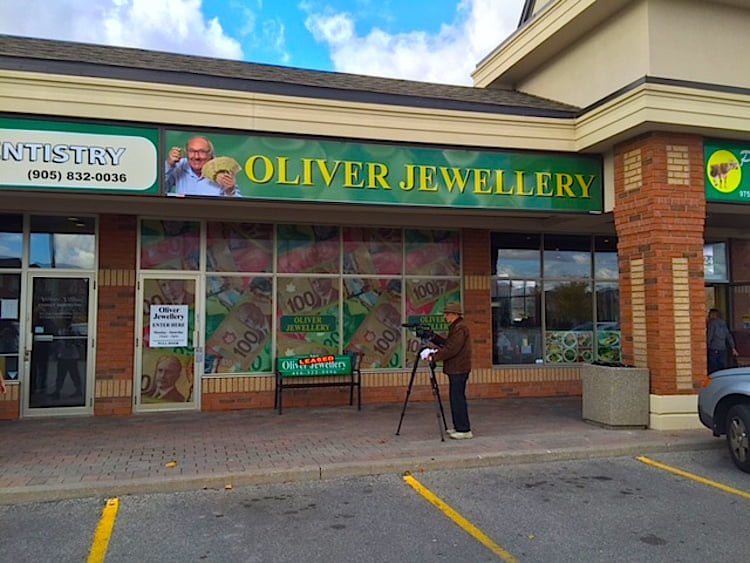
The new 1,000 square foot Oliver Jewellery retail space is located at 620 Yonge Street, just north of Wellesley Street, and is less than 500 metres/1,500 feet south of prestigious Bloor Street West. The store features refurbished luxury products including designer handbags and jewellery, in an intimate retail space prominently located at the northwest corner of St. Joseph Street. We’ll discuss it in more detail below.

We interviewed Mr. Oliver about the new store, as well as the interesting history of how he got started in the retail and gold wholesaling business. In 1971, Mr. Oliver had set aside funds to attend Dalhousie University’s law school in Halifax but instead of registering for classes, he used the money to buy out a small jewellery business on the third floor of a building near the intersection of Queen Street and Yonge Street in Toronto. Being upstairs, business was slow due to lack of awareness/foot traffic, so Mr. Oliver hired youth to hand out fliers promoting his business. Business immediately picked up, and Mr. Oliver soon recognized the ability to drive sales through promotions.

(RUSSELL OLIVER IN HIS NEW YONGE STREET STORE)

In 1973, Mr. Oliver moved operations to Toronto’s Yorkville area which, just a few years before, had been home to the city’s ‘hippie scene’. His first Yorkville store was on Yorkville Avenue, just west of Bay Street, and he relocated to nearby Cumberland Street in 1973. Mr. Oliver’s wife Barbara was an employee at his Yorkville store, and they married after several months of courtship. Promotions became part of Mr. Oliver’s business, ranging from commercials with ‘The A-Team’ TV star ‘Mr. T’ (who was also a customer) to giving away a Mercedes with the purchase of an 8-carat diamond (Canadian actor John Candy bought it, foregoing the car as he already owned a Mercedes). Business in Yorkville also wasn’t without potential danger — in April of 1984, then-36 year old Mr. Oliver was shot by two robbers who entered his store at 11:30am on a Saturday, and he fortunately only sustained injury to his right foot.

Oliver Jewellers, as it was then called, operated in Yorkville until 1991. Prior to that time, the area boasted about 40 jewellery retailers. Mr. Oliver notes that almost all have since closed, with a handful of jewellers now operating in the area. The 1991 closure of Oliver Jewellers marked the closing of the first chapter of his retail business, which eventually morphed into the business of buying jewellery and gold in a wholesale capacity.

(WOODBRIDGE BUYING CENTRE. PHOTO: OLIVER JEWELLERY)

In 1992, Russell Oliver opened a storefront on Toronto’s Ellington Avenue West, operating as a buying centre for gold, jewellery, and gemstones. Mr. Oliver has since expanded to four buying locations, with his Oakville premises now being the most productive. Mr. Oliver utilized advertising extensively to create brand awareness, becoming a personality in his own right. TV, radio commercials, billboards on transit — Mr. Oliver says that he’s spent over $20 million on advertising in 20 years, now spending between $1.5 million and $1.8 million annually to be ahead of the competition. Given the proliferation of cable television and other media sources, Mr. Oliver has become a recognizable face not just in Toronto, but across Canada.

About five years ago, Mr. Oliver started collecting brand name jewellery and handbags, occasionally selling a few pieces by appointment only. Several months ago, he made the decision to get back into retailing, recognizing that he had product of interest to the public. After deciding against a retail space at 703 Yonge Street, just south of Bloor Street (the rent was too high and there was a three-year demolition clause in the lease), Mr. Oliver found the prominent retail space at 620 Yonge Street, formerly occupied by a women’s fashion retailer. The space sees over 1,500 people walk by every hour, he explained, and is strategically located near the University of Toronto (with brand-aware international students), multiple hospitals, the Government of Ontario, and the city’s vibrant Church-Wellesley ‘village’. The new store is already busy throughout the day, to the point that Mr. Oliver is concerned that he could run out of stock if he’s not able to consistently secure new product.

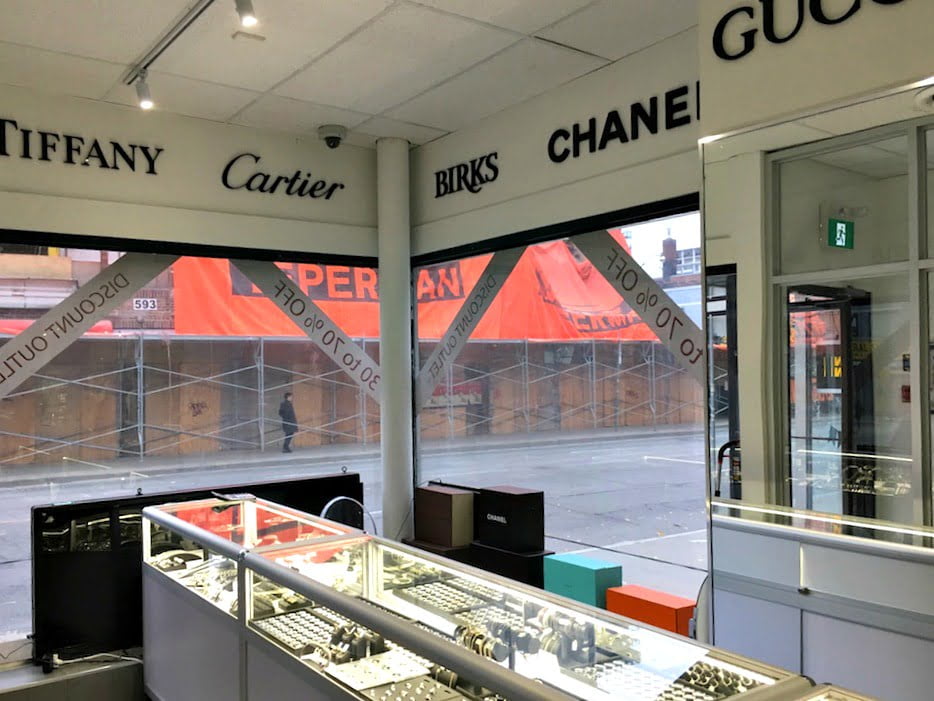
Luxury-branded handbags are particularly popular, Mr. Oliver explained, with some designers, particularly Chanel, flying off the shelves. Some shoppers are making the five-minute stroll south of Bloor Street for bargains, which are generally priced between 30% and 70% less than retail, with product that is refurbished so that it appears new. Interestingly, the new Oliver Jewellery store also stocks some designer items unavailable or otherwise difficult to find — one crocodile Hermes Birkin bag that we saw was priced at $90,000, and other rare designs were priced in excess of $10,000 each. Names abound, including Louis Vuitton, Tiffany & Co., Prada, Gucci, Celine, Chloé, and other brands you’d find on nearby Bloor Street West and further south down Yonge Street at Saks Fifth Avenue and Nordstrom.

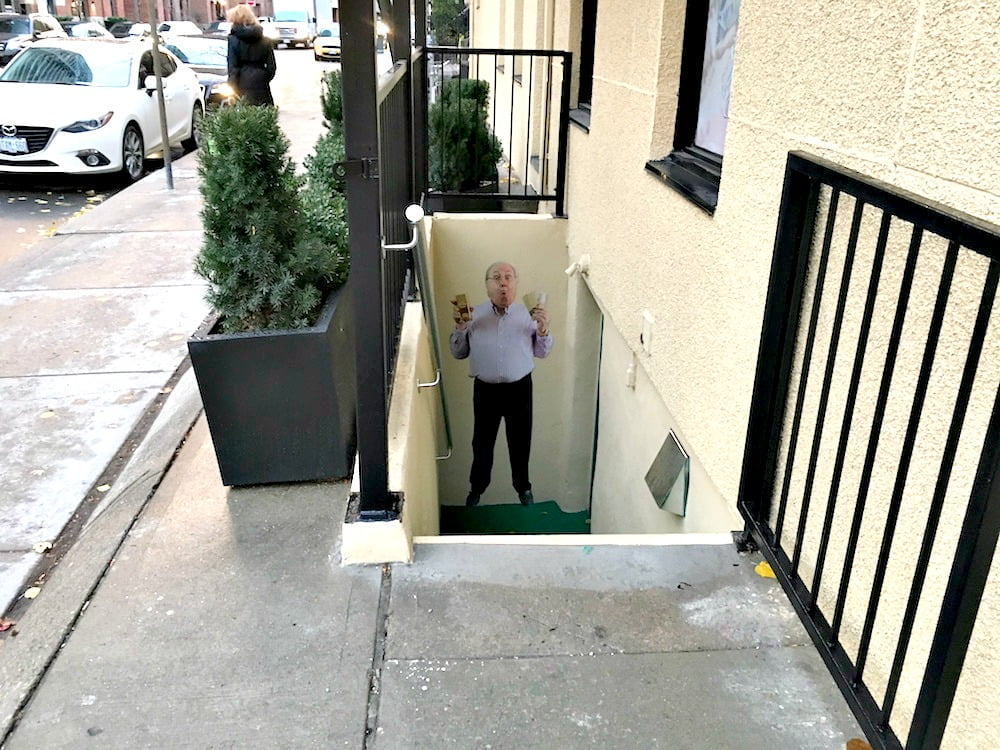
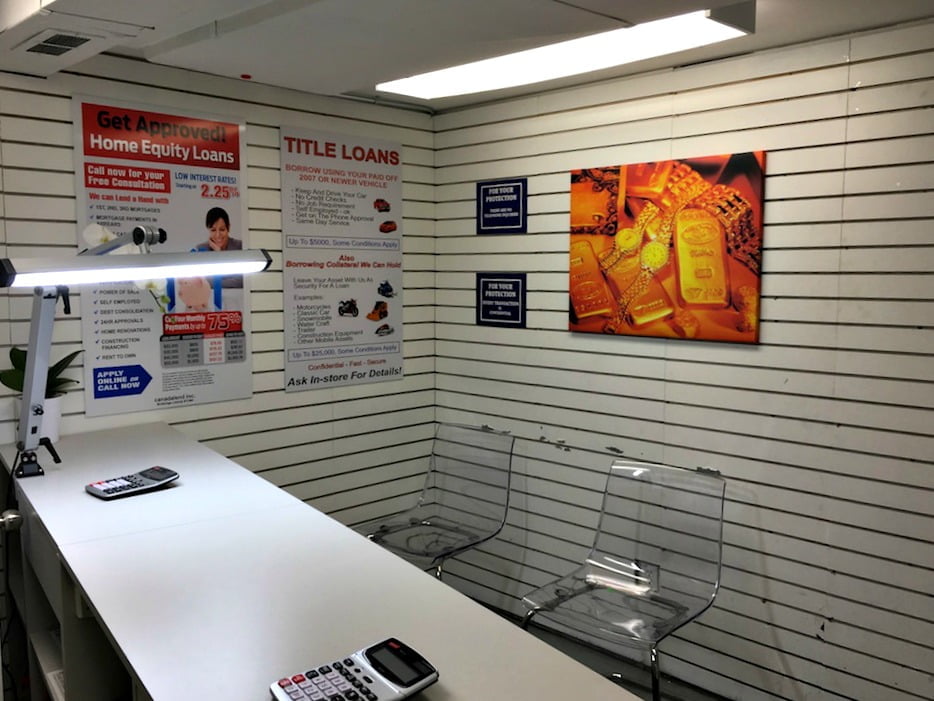
The Yonge Street store, being true to Russell Oliver’s concept, also features a buying centre on its lower level (accessed from an exterior side stairway on St. Joseph Street with an image of Mr. Oliver on the back wall). Customers can bring their jewellery/gold/watches/handbags into the premises for evaluation and purchase. We were shown some high-tech measuring devices in the lower-level evaluation room, including a machine that can determine the level of gold in a product, as well as a device that can accurately weigh diamonds.

Mr. Oliver expressed a true passion for being back into the world of retailing, saying that he’ll regularly be at his new Yonge Street store. While he discussed his enjoyment of working out of his multiple buying centres throughout the Greater Toronto Area, it’s the busy buzz and immediate profitability of retailing that has now caught his attention. His passion for retail is contagious, with his four sons (all names beginning with the letter ‘J’) also being part of the expanded family business.

See below for more photos of the new Yonge Street Oliver Jewellery store.

Richemont Launches Canadian Luxury Boutique Expansion [Feature Article]

Geneva Switzerland-based luxury goods holdings company Richemont has big plans for Canada in 2017, including opening boutiques as well as renovating/expanding some existing locations. At least nine freestanding Richemont-owned luxury boutiques are confirmed to be opening next year, with the possibility of even more as negotiations continue, according to sources.

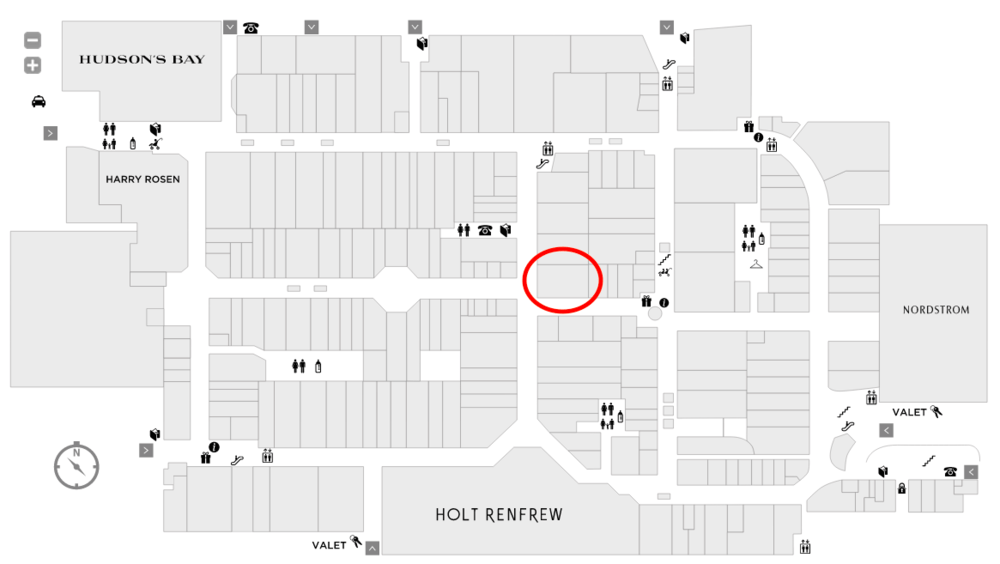
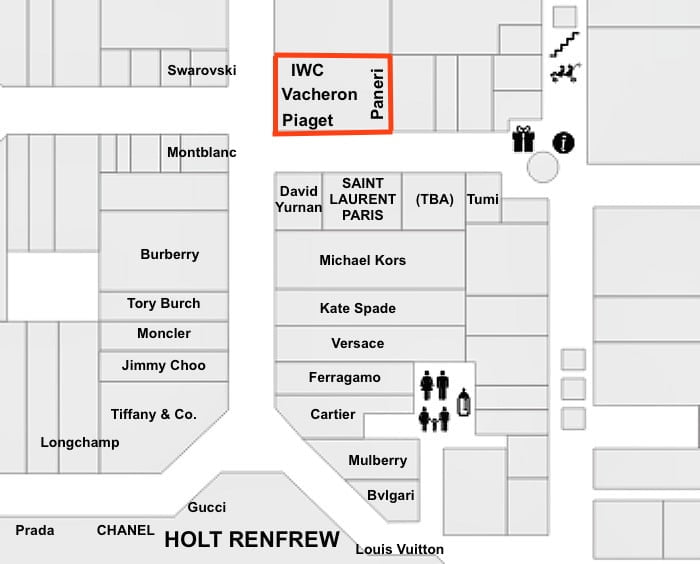
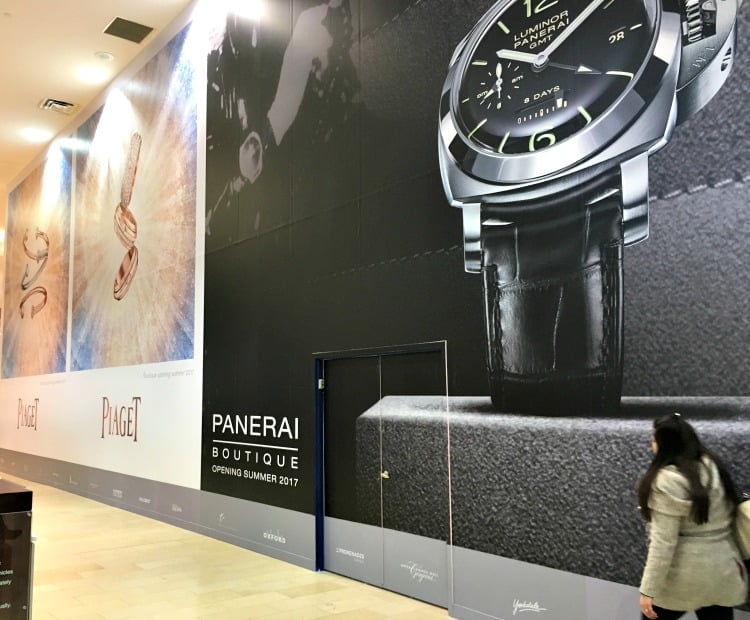
Construction hoarding went up at Toronto’s Yorkdale Shopping Centre this week, revealing what industry insiders have been aware of for months — that four of Richemont’s top luxury brands would occupy the mall’s former Williams Sonoma space (Williams Sonoma relocated to its new space in the mall’s recently opened ‘Nordstrom Wing’). The four boutiques will include Piaget, IWC Schaffhausen, Vacheron Constantin and Officine Panerai, and will expand the mall’s ‘luxury wing‘ northward. 

(CLICK MAPS ABOVE OR BELOW FOR INTERACTIVE VERSIONS, VIA YORKDALE.COM) 

The following is a brief description of each brand, including where it operates in the United States: 

Piaget: The luxury jewellery and watch brand, founded in Geneva in 1874, is considered to be one of the world’s most prestigious brands, according to the Luxury Institute. Piaget operates seven locations in the United states — in New York City (Madison Avenue), Beverly Hills (Rodeo Drive), Costa Mesa CA (South Coast Plaza), Miami (Miami Design District), Las Vegas (Wynnn Encore), DFS ’T Galleria’ in Honolulu, and at Saks Fifth Avenue in Houston. There’s also a Piaget concession at Saks Fifth Avenue’s Canadian flagship at CF Toronto Eaton Centre, and with the opening of the Yorkdale boutique, Toronto will become the only city in North America to boast two Piaget stores. Toronto’s Saks Piaget concession opened in February of this year

IWC Schaffhausen: International Watch Company (IWC) is a luxury Swiss watch brand headquartered in Schaffhausen, Switzerland, and was founded by American watchmaker Florentine Ariosto Jones in 1868. The brand has seven stores in the United States, including New York City (Madison Avenue), Beverly Hills (Rodeo Drive), Costa Mesa CA (South Coast Plaza), Miami (two stores: Miami Design District, Bal Harbour Shops), and Las Vegas (two stores: Wynn Encore and Palazzo). 

Officine Panerai: The luxury watch brand was founded in Florence, Italy, in 1860, and operates 10 US stores. Locations include New York City (Madison Avenue), Beverly Hills (Brighton Way), Miami/South Florida (four stores: Miami Design District, Bal Harbour Shops, Boca Raton, Palm Beach), Aspen CO, Dallas (NorthPark Center), San Diego (La Jolla), and at the Forum Shops in Las Vegas. 

(ALL PHOTOS WERE TAKEN AT TORONTO’S YORKDALE SHOPPING CENTRE BY CRAIG PATTERSON ON THE EVENING OF TUESDAY, NOVEMBER 15, 2016)

Vacheron Constantin: Founded in Geneva in 1755, the luxury watch brand operates six stores in the United States, including stores in New York City (Madison Avenue), Beverly Hills (Rodeo Drive), Costa Mesa (South Coast Plaza), Miami (Miami Design District), Honolulu (DFS ’T Galleria’) and at the Palazzo in Las Vegas. 

Vancouver is also part of Richemont’s expansion plans, with sources at the City confirming that the company has purchased stratified retail space for at least one of its more prominent brands. We’ll discuss more on Richemont’s Vancouver expansion at a later date when permitted, though we’re able to confirm, through the original source of Business in Vancouver, that Richemont’s Van Cleef & Arpels nameplate will open a large store on Alberni Street in the heart of the city’s downtown ‘Luxury Zone’. 

Van Cleef & Arpels will also open a freestanding Toronto location in 2017, with details to be revealed at a later date when permitted. The brand will also gain prominence on Bloor Street West with the renovation of Maison Birks at Manulife Centre, which will see a Van Cleef & Arpels shop-in-store gain its own street-front entrance, near an exterior entrance to Italian food concept Eataly which will be located directly above. Manulife Centre’s renovations will be completed in 2019. 

*Looking for exposure to thousands of Canadian and international retailers? There’s still room to advertise in a high profile Retail Council of Canada Canadian shopping centre study, which will be distributed widely and promoted heavily. For information on Sponsorship opportunities, contact: cpatterson@retailcouncil.org*

Richemont’s Cartier brand is also seeing movements in Canada. The brand is currently renovating its two-level Bloor Street West flagship in Toronto, and sources say that another important location could be expanded. A new Cartier store could open in a major Canadian city next year, while another existing location will be relocated, according to sources familiar with the deals. 

Luxury watch brand Jaeger-LeCoultre, also under the Richemont ownership umbrella, expanded into Canada in the fall of 2015 with stores on Alberni Street in Vancouver, and at Yorkdale Shopping Centre in Toronto. The company’s Montblanc nameplate has also been growing in Canada over the past several years, now operating six corporately-owned and franchised locations in Montreal, Toronto and Vancouver. Richemont’s Chloé and Azzedine Alaïa women’s fashion brands have also seen recent growth in Canada. Separate Chloé women’s ready-to-wear and accessory shops opened at Nordstrom in Vancouver in September of 2015, followed by the same at Saks Fifth Avenue in downtown Toronto in February of 2016, and at Nordstrom at Toronto’s Yorkdale last month. Pricey Azzedine Alaïa, with limited distribution globally, saw the opening of a women’s ready-to-wear boutique on the third floor of Saks Fifth Avenue’s Toronto flagship in February of 2016 — remarkable, considering Hudson’s Bay’s ‘The Room’, located on the same floor in the same building as Saks Fifth Avenue, also boasts a well-stocked Alaïa section. 

A number of other luxury houses and luxury brands have recently been expanding in Canada, including Prada, Chanel and Kering Group (the latter opened two Saint Laurent boutiques in Canada in 2016, including a Yorkdale location last week). Canada is increasingly seeing luxury brands opening stores as well as expanding distribution, addressing rising incomes among the country’s elite, not to mention increasing tourism numbers in Vancouver and Toronto. We’ll do a follow-up article in the coming weeks discussing the expansion of luxury brands into Canada, as it’s a remarkable trend at a time when some global markets are contracting, and some brands are seeing lowering sales.