A new Canadian e-commerce retailer is offering one-on-one personalized service, seeking to bridge the gap between online and brick-and-mortar by providing comprehensive online styling services. Created by entrepreneur Juliana Gallimore, the new Forty-Eight 10 site launched in Canada last week, and plans to expand internationally next year.
The company has partnered with fashion stylists throughout Canada, who will help online shoppers pick out the best looks to suit their busy lifestyles. Stylists create a profile for each client, constantly updating them on new product to suit their needs. With a styling background herself, Ms. Gallimore came up with a series of key questions that allow staff stylists to “virtually step into the client’s closet” to gain an understanding of what she wears, morning-to-evening. Styling is an added bonus and is included in the price of the site’s products.
After its Canadian launch, Ms. Gallimore will look to expand Forty-Eight 10 into the United States, U.K. and Australia. That expansion is expected for the latter part of 2017, she said.
By any measure, empirical and anecdotal, the number of people visiting retail stores is down. There are plenty of theories about why: it’s the mass movement of shoppers to online; it’s changing consumer preferences; it’s the weather; it’s those pesky, hard-to- figure-out millennials who would rather hunt for Pokémon than bargains at the mall.
As Jim Quinn of The Burning Platform describes in his compelling and disturbing article, The Retail Death Rattle, the decline in retail traffic may be a result of more obvious and, ultimately, troubling reasons. Too many retail stores chasing too few consumers who have less money to spend. This is a bad combination.
As someone who has studied brick-and-mortar store traffic trends for more than 20 years, I believe that Jim’s apocalyptic conclusions may be directionally correct. Headlines like Gap Tumbles as Dismal Store Traffic Drags Down July Sales recently published on Bloomberg.com supports his thesis.
As retail traffic analysts, my team and I analyze store traffic from thousands of retail stores across North America monthly, and it’s not unusual to see year-over-year store traffic declines of 5%, 10% and even 20% or more. When you put this in absolute terms, it can be startling.
We recently analyzed the store traffic data from a 600-store specialty retailer. Last year, their stores averaged about 200 traffic counts per day, which over the course of the year adds up to some 43 million store visits. For the first half of 2016, the chain experienced a 7% decline in store traffic – that’s about 1.5 million fewer people visiting their stores so far this year. If this trend holds, there will be some 3 million fewer people visiting this retailer in 2016 compared to 2015. Ouch.
Instead of hoping that traffic will return like a flock of migrating birds, retailers need to face the very real possibility that store traffic might not return – at least not in the numbers they had in the past.
I agree that declining store traffic is a real concern and that cauterizing the traffic hemorrhage may be difficult if not impossible for some retailers to do. However blaming poor sales results on store traffic is giving up the battle too easily and too early. Based on our work, we know that if retailers focused as much attention on converting the traffic they already get in their stores as they do worrying about the traffic they don’t get, their results would be significantly better. There’s a lot retailers can do to improve their results despite lower store traffic.
Before we get to the ‘what retailers can do about it’ part, we need to clear up a couple of persistent and unhelpful misconceptions about the connection between store traffic and sales and the use of sales transaction counts as a proxy for store traffic counts.
Store Traffic and Sales: Correlation vs. Causation
All retailers know that store traffic and store sales are connected. In fact, based on the mountains of traffic data I’ve studied, I can categorically say that store traffic and sales are indeed correlated. Store traffic defines the sales opportunity: less traffic, smaller sales opportunity and, often, lower sales; more traffic, bigger sales opportunity, often higher sales.
But store traffic is only one piece of the retail sales puzzle. While store traffic and sales are correlated, a decline in store traffic does not necessarily cause lower sales, just as an increase in store traffic doesn’t necessarily cause higher sales. Here’s a simple example using actual data from two stores in the same chain.
In store #1, year-over-year traffic was up 16%, yet sales were down 3%. In store #2, traffic was down 16%, yet sales were up 4%. If there were a causal relationship between store traffic and store sales, these results wouldn’t make any sense and it would be easy to write them off as anomalous. But these results are not anomalous. In fact, based on the work we do analyzing traffic data from thousands of retail stores every month, this is not uncommon at all.
So how is this possible? The answer is perfectly clear when you break the sales results down by sales driver. Sales are a function of three components: store traffic, conversion rate (i.e. the percentage of people who actually made a purchase) and average sale value. The calculation is simple: Traffic Count x Conversion Rate % x Average Sale $ = Sales.
Store #1 had 16% more traffic, but conversion rates fell by 17%, that is, they sold to 17% fewer people who visited, and even though average sale values were up 1%, it wasn’t enough to make up for the drop in conversion rate. Add it all up, and sales were down 3%. This retailer would be incorrect to blame traffic on these poor results.
In store #2 traffic was down 16%. The sales opportunity got 16% smaller but the store still delivered a 4% increase in year-over-year sales. In this store, conversion rates were up 15% and average sale values up 7%. This store had significantly less traffic, but was still able to deliver positive sales by converting more of the traffic into a sale and selling more to each buyer. This is really terrific performance, despite the traffic decrease.
I find it ironic that some retail executives use sagging store traffic to explain away poor sales results (at least publicly) when we know that excuse would never be tolerated from their own store managers. Traffic may not even be what’s driving results. Furthermore, even when traffic is down, it doesn’t mean sales need to follow.
When it comes to sales results, it’s not just how much traffic a store gets, it’s what the store does with the traffic that matters most. In this case, ignorance is not bliss. If a retailer does not have access to these basic facts, they are, by definition, going to be oblivious to the possible corrective actions. In some cases, it is because the retailer does not actually count traffic in their stores. Or worse, they use sales transaction counts as a proxy for store traffic so they think they know what their store traffic is when they actually do not. Retailers that don’t have traffic count data are literally flying blind.
Transaction Counts vs. Traffic Counts — Hits vs. At-Bats
As I described in an article I wrote years ago, The Trouble with Traffic — What Retailers Can Learn From Baseball, there is a profound difference between transaction counts and traffic counts. It’s mind-boggling to me that, in the data-savvy world we live in today, many retailers still do not get this simple concept.
To say that transaction count represents a reliable proxy for store traffic is analogous to saying that ‘hits’ are a reliable proxy for ‘at-bats’ in baseball. Yes, the two stats are related, but they are not proxies — not even close. Store traffic is a measure of all the people who visit the store, including buyers and non-buyers where transactions obviously only account for the number of buyers. Here’s what the numbers looked like in our two-store example.
If this retailer relied on transaction counts as a proxy for store traffic, the conclusion is obvious: store traffic is down in both stores! Comparing actual store traffic counts to transaction counts completely changes the conclusion. Store traffic was not down in store #1, it was up – 16%! In store#2, the transaction counts were down 3%, when in fact, store traffic was actually down 16%, much worse than the transaction counts indicated.
Here’s the point: using transaction counts as a proxy for store traffic will lead to wrong conclusions; wrong conclusions lead to bad decisions; bad decisions lead to poor results. And, it’s just wrong and reckless.
So when someone cries “Oh no…store traffic is down!” the first question you should ask is, “Are you using transactions as a proxy for store traffic?” If the answer is ‘yes’, tell him/her to calm down until he/she has the right data.
OK, enough about traffic, let’s get on to what retailers can do to improve their results.
Productivity – making the most of the traffic you have
Retailers are always talking about how they plan to deliver better financial results by improving ‘productivity’ in their stores – great, but what does that actually mean? The obvious answer is, sell more stuff with essentially the same resources. It’s a worthy pursuit. But how should we think about this nebulous notion called productivity?
Recall, sales are a function of store traffic, conversion rate and average sale. Since store personnel don’t control the amount of traffic their store receives, the only two variables they can influence are conversion rate and average sale – sell to more of the people who visit and/or sell more to each buyer.
As my two-store example illustrates, store #2 delivered positive year-over-year sales despite having a significant decline in store traffic. If you think about productivity in terms of conversion rates and average sale values, it’s clear that store #2 was more ‘productive’ with its traffic than store #1 – despite having less of it.
Some stores may have higher conversion rates while others may have higher average sale values – frankly, it doesn’t matter how the store delivers the results, as long as they do. I think it’s helpful to amalgamate these two metrics into one metric that reflects the sales generated for every traffic count logged in the store. This can be done by either multiplying the conversion rate by average sale or by simply dividing sales by traffic counts. I call it ‘traffic productivity’. The results for the two stores are below.
Store #2 increased sales generated for each traffic count in their store by 23% and that’s why it was able to generate a 4% increase in year-over-year sales despite a 16% decrease in store traffic. It’s also clear why results at store#1 sucked – it squandered its traffic opportunity, generating a buck less for every visitor than the prior year.
I like the idea of traffic productivity – a lot. Some call it revenue per visitor, or sales per guest, but whatever you call it, it’s a terrific way to measure, trend and compare store performance, and it’s a great way to keep store personnel focused on making the most of every visit to their store, regardless of whether traffic is increasing or decreasing.
Here’s the catch: you can’t calculate conversion rates or traffic productivity unless you actually count store traffic. If you’re one of those ‘the earth is flat’ misguided retailers who still use transactions as a proxy for traffic, forget about everything you just read because you don’t have the data to create these important insights.
What drives Productivity?
So even if we all agree that driving traffic productivity is a smart thing to do (which of course it is), the obvious question is, How?
There are many things that influence productivity. For brevity sake, I’ll boil it down to three general areas: (1) inventory/merchandising, (2) promotional activity and 3) labor/scheduling.
I know what you’re thinking: “Duh! Thanks for the blinding insight…a part-time sales associate could have come up with this list.” I agree. The reasons people buy or don’t buy are well understood by most retailers. It’s a profound statement of the obvious to say a retailer needs to have the right inventory and merchandise it well or that promotions, sales events or discounting will influence purchase behavior. Of course it all does. But what about labor and scheduling?
Surely every retailer knows they need to have enough trained staff to facilitate the sale, whether that’s efficiently processing sales transactions at check-out, helping locate a particular stock item or answering questions. Furthermore, you don’t need to be a rocket scientist to know that labor should be scheduled according to when people are actually visiting the store. No brainer, right
Store Labor and Productivity
Retailers today are rightly hyper-sensitive to wage expense. However, the cost of understaffing or misaligning labor relative to traffic is not well understood. One retail executive euphemistically described their conscious understaffing as a “lean staffing model.” The concern about overstaffing is legitimate. Excessive wage costs will kill profitability, but understaffing and/or misaligning labor can be even worse.
The chart below shows what happens to conversion rates when the store gets busy and there’s not enough staff to serve customers. It’s not pretty. These conversion rate ‘sags’ represent missed sales opportunities that can add up to many millions in lost sales annually.
Not having enough staff at the right times not only impacts conversion rates and therefore immediate sales, but it creates a lousy in-store experience that can turn a once happy customer into a social media terrorist bashing your brand, leaving a permanent digital scar.
Declining store traffic is a serious matter and we are sympathetic to the plight of retailers who are experiencing dramatic store traffic declines. However, it is hard to have sympathy for the retailer who squanders their store traffic, delivers poor sales results and then blames it on declines in store traffic. These are self-inflicted wounds resulting from ignorance or arrogance and retailers like these should accept whatever fate retail Darwinism provides.
The plain truth of it is that in today’s retail environment, no retailer can afford to squander their store traffic – it should be treated as a precious, non-renewable resource. Don’t count on “be-backs” and it does no good to think of your stores as responsible for traffic. They aren’t and can’t. Hold your marketing team responsible for traffic, but hold your store team responsible for conversion.
For those retailers who are doing all the right things – measuring store traffic, focusing store teams on productivity, providing enough labor to serve customers – keep going. That’s the formula to deliver the best results – even in a retail world of declining store traffic.
For everyone else, there are a number of things you need to do – the five most important are listed below.
5 Things Retailers need to do to thrive in a declining store traffic world
1) Get serious about measuring traffic in ALL of your stores – if you don’t have traffic counters installed in all your stores, install them now. Having traffic counters in only some of your stores and extrapolating results across your chain is imprecise. If you use sales transactions as a proxy for store traffic, stop it. It’s just wrong and reckless. If you have traffic counters installed in your stores, but you don’t believe the data or the data is sketchy, clean it up and keep it clean.
2) Understand your sales drivers – map performance of every store by breaking results into the underlying drivers: traffic, conversion rate and average sale. You can’t improve results unless you know what’s driving the results and without breaking them out, you’re guessing and very likely to make the wrong decisions.
3) Focus your store and district managers on driving conversion and average sale – store/district managers don’t control store traffic, but they absolutely influence conversion and average sale values. Provide your managers with easy-to-digest insights on traffic/conversion/average sale results, train them on what to do with the insights and then hold them accountable for results. It’s not good enough to dump data on these managers and hope they understand what conversion means – most of them do not have the time nor the expertise to do the analysis and develop the insights you need them to have.
4) Stop understaffing your stores – what’s the point of driving traffic to the store if you don’t have enough staff to service it? It’s pointless. Make rational allocations of labor for each store based on the traffic volume it receives. Compare performance across your entire chain to establish optimal staff to traffic ratios and then staff accordingly. Allocating labor based on store sales and/or sales transaction counts will guarantee that you under or over-staff your stores.
5) Rationalize your store base – review the long-term traffic trends and conversion/average sale productivity of every store. If you have stores that have significantly less traffic opportunities, either invest marketing dollars to try to drive up traffic or close the store. High productivity won’t matter if you have no traffic. Closing stores suck; operating stores that have pitiful and declining traffic opportunities sucks more. And, these stores become a drag on the chain’s resources and results.
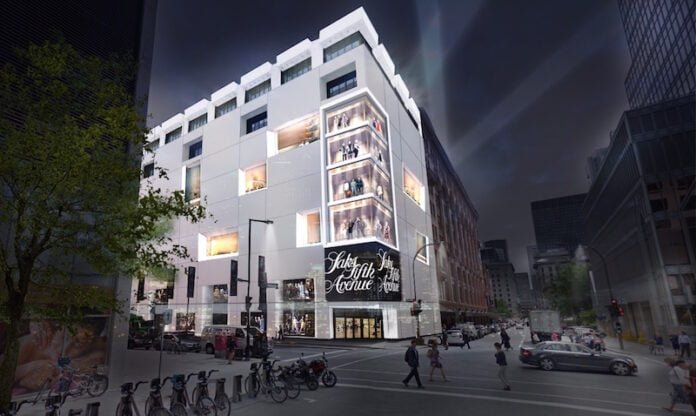
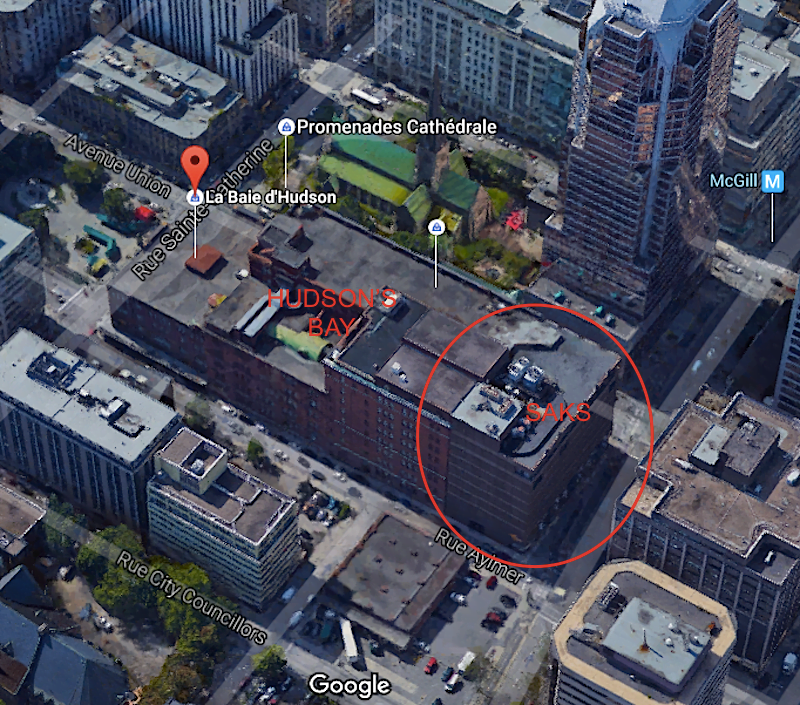
The Hudson’s Bay Company has announced that Montreal will become home to Canada’s largest Saks Fifth Avenue store. The massive four-level flagship will open with the downtown Montreal Hudson’s Bay building at 585 Sainte Catherine Street West in the fall of 2018.
The new Montreal Saks store will span approximately 200,000 square feet, making it larger than the Toronto Saks flagship, which measures 170,000 square feet (including a soon-to-open 25,000 square foot Saks food hall by Pusateri’s Fine Foods and an 11,000 square foot restaurant). Like the Toronto location, Montreal’s Saks will occupy part of the city’s flagship Hudson’s Bay building, with frontage on Boulevard de Maisonneuve.
Unique to the Montreal store will be an 80,000 square foot Quebec-themed Saks Fifth Avenue food hall (including restaurant space), similar to the Pusateri’s at Saks in Toronto. Montreal’s Saks will also feature women’s designer ready-to-wear, handbags, accessories, beauty, men’s, Fifth Avenue Club with private suites/personal shopping consultants and the women’s 10022-SHOE floor.
EXTREME MAKEOVER: CURRENT BOULEVARD DE MAISONNEUVE FACADE TO SEE OVERHAUL. THE STUCCO EXTERIOR WILL BE REMOVED AND REPLACED WITH A DRAMATIC SAKS STOREFRONT. PHOTO: MAXIME FRECHETTE. Saks Fifth Avenue Montreal Rendering
The 655,000 square foot Hudson’s Bay building will undergo an extensive renovation that will reconfigure the store layout, redefine departments and enhance the overall shopping environment, according to the company. The store will remain open throughout the renovation process.
Montreal’s Saks will become one of the company’s largest stores. Larger units include locations on Fifth Avenue in New York City (about 650,000 square feet), Houston (Houston Galleria, 210,000 square feet) and two units (separate men’s and women’s stores) in Beverly Hills, California, which together occupy about 260,000 square feet on prestigious Wilshire Boulevard.
RENDERING OF THE COMPLETELY RENOVATED HUDSON’S BAY FLAGSHIP, FRONTING ONTO SAINTE CATHERINE STREET WEST.
Saks will compete vigorously with another new luxury department store, also opening in 2018, located at the opposite end of busy Sainte Catherine Street West. Ogilvy, owned by Selfridges Group, will merge with Holt Renfrew and expand to about 225,000 square feet, coinciding with Holt’s closing its 1300 Sherbrooke Street West store. Ogilvy is located at 1307 Sainte Catherine Street West, about 800 metres/2,600 feet west of the new Saks Fifth Avenue.
Welcome to Montreal Friday. After a terrific summer, we’re happy to present you with the new version of MONTREAL FRIDAY, in collaboration with the new Montreal blog: Montreal Weekly. As well, this week we’ve got a contest where you can win $100.
Many assume that smaller city downtowns are either abandoned or at least considerably less-vibrant than local shopping centres. Not so for some communities, however.
Downtown Sherbrooke, Quebec, is a perfect example. Although it’s not as strong as some urban cores, it’s enjoying a retail resurgence, and here are some examples of some terrific local retailers.
Glori.us
Glori.us tarted as a simple multi-brand boutique in 2007, and it has evolved into a retail concept store featuring two shop-in-stores.
The owners, Jean-Francois Bédard and Tanya Cloutier, sought to democratize fashion in their region by encouraging locals to dress as well as those in major centres. What resulted was a 1,500 square foot boutique selling men’s and women’s fashions, with about 80% of its brands being exclusive to the region (including Tiger of Sweden , Ted Baker, 7 For All Mankind and Lindeberg. New products arrive weekly, keeping customers coming back to check out the new product.
Glori.us sought to diversify its offerings in a similar way to retailer Frank + Oak, and a unique partnership resulted with another innovative, prominent Quebec retailer:
Surmesur X Glori.us Shop-in-Store
Glori.us is home to a shop-in-store location for Quebec City-based custom menswear retailer Surmesur. This is the second Surmesur shop-in-store, following a successful location in Rimouski. Glori.us also offers their own tailoring services with high quality fabrics such as Zegna, and it also plans to soon offer tailoring services to women.
Lunetterie Generale Shop-in-Store
Glori.us partnered with the recently launched optical retailer Lunetterie Générale, opening a 125 square foot boutique offering glasses and sunglasses. The small shop features over 500 frames from brands such as Gentle Monster and Frank Custom. Lunetterie is also launching its own branded frames, and has also partnered with the local Opto Reseau for prescription glasses.
The small boutique’s design is upscale and well executed, featuring marble, dyed wood and gold accents.
Glori.us is considering expanding its retail concept into other parts of Quebec. As well, Glori.us plans to launch a mobile tailoring service, visiting customer’s homes and offices, to provide better and expanded services.
After a visit to Glori.us, it’s natural to go next store and grab something to eat at Auguste. I had the opportunity to meet the charismatic and friendly owner, Anick Beaudoin, who has been making downtown Sherbrooke a more vibrant place since 2008.
I could not resist the beef tartare (a favourite of mine), which as delicious. The pulled pork burger with bacon, Jarlsberg cheese and french onions were divine, particularly when finished off with a rhubarb turnover, which is well worth the preparation time.
Even though Danny St-Pierre is no longer the co-owner and chef, the menu still reflects some of his influence. His signature dish which put Auguste on the map, “La Poutine Inversée” (which translates to “the inverted poutine’) is delicious with ever bit. Its simple and classic decor adds to the vibrancy of downtown.
There’s also an association between Glori.us and Auguste — the restaurant will deliver directly to the boutique, for hungry shoppers wanting a nourishing in-store break.
Montreal-based multi-brand footwear retailer Browns Shoes will open three new stores this fall, including a Browns Outlet as well as two full-line Browns stores. The retailer is in the process of expanding its store operations for its Browns, B2 and Browns Outlet concepts.
On October 5 of this year, Browns Shoes will open a 3,564 square foot Browns Outlet at Tsawwassen Mills, south of Vancouver. On October 27 of this year, Browns Shoes will open two Browns stores — a 3,860 square foot store at CF Masonville Place in London, Ontario, as well as a 3,434 square foot unit at Kingsway Mall in Edmonton.
The CF Masonville store is the first Browns location for the city of London, while the Kingsway Mall store will be Edmonton’s third Browns location. The Tsawwassen Mills store will be the company’s first Browns Outlet for British Columbia, and the ninth Browns Shoes location in the province.
Browns Shoes currently operates 60 stores throughout Canada, and will open between four and six stores each year between 2017 to 2020, according to Senior Operations Manager Eric Ouaknine. Browns Shoes is a national retailer that operates stores coast-to-coast, from Vancouver to Halifax. The retailer is represented in Canada by brokerage Oberfeld Snowcap.
Browns Shoes is a family-owned business, founded in 1940 in Montreal by Benjamin Brownstein. The company is now third-generation run. Stores feature designer brands as well as in-house brands including Mimosa, Browns Couture, The Wishbone Collection, Luca Del Forte, Intensi and B2. The B2 brand became so successful in its own right that it now boasts its own freestanding stores, which also carry various other designer brands.
Holt Renfrew has opened part of its expanded CF Pacific Centre Vancouver store, which includes an expanded menswear area with its own street-front entrance, as well as a new area for several luxury boutiques. An 80-seat Holt’s Café will open at the end of the week, with more departments and amenities to open in 2017. The 40,000 square foot expansion brings the Vancouver store to about 187,700 square feet in size.
The store’s ground floor has been expanded by more than 20,000 square feet, featuring relocated larger boutiques for brands Louis Vuitton, Tiffany & Co., and David Yurman. The Louis Vuitton boutique measures about 2,000 square feet.
The expanded lower-level men’s store features an exterior entrance from Howe Street. A Christian Louboutin men’s footwear concession is now open, and Tom Ford and Berluti Boutiques will open shortly. Designer collections include brands such as Thom Browne, Alexander McQueen and Dries van Noten, as well as new brands such as Amiri, Officine Générale, Lardini and Wooster/Lardini. Services include two personal shopping suites for men, and a master tailor shop, shoe shine and sneaker cleaning service, and made to measure.
The 40,000 square foot expansion was designed by New York-based architect firm Janson Goldstein, which also designed the original 2007 CF Pacific Centre flagship. Expansion design details include abundant natural light from the Howe Street façade and a custom mosaic tile floor anchoring an atrium. Grey stone tile is used on columns and floors set against custom shelving fixtures in grey stained white oak and blackened stainless steel. The footwear area features a hand knotted custom carpet and is accented with polished stainless steel chairs luxuriously upholstered in deep blue leather (as well as the Christian Louboutin boutique).
In 2017, Holt’s will add a 7,000 square foot multi-level personal shopping area that will include the by-invite-only ‘The Apartment’ shopping suite. Women’s footwear will triple in size, and expansions will also be revealed for jewellery, leather goods and an expanded beauty hall.
Italian food concept Eataly is a confirmed anchor tenant for a significant expansion of Toronto’s Manulife Centre retail podium. The three-level Eataly will span 50,000 square feet, and will be part of a $100 million expansion that will add about 35,000 square feet of new retail space to Manulife Centre, with construction beginning in early 2017 with an anticipated completion date of early 2019.
Eataly partnered with Selfridges Group and Terroni Restaurants for its entrance to Canada. Eataly’s Canadian operations are 52% owned by the billionaire Weston family, who also own Holt Renfrew, directly across the street from Manulife Centre.
The Manulife Centre redevelopment will include an overhaul of the podium’s exterior, adding a glass façade and expanding the retail area. There will be a reconfiguration of the interior space as well as the renovation of several tenant spaces, including the existing Maison Birks store at the southeast corner of Bloor Street West and Bay Street.
Eataly currently operates 27 locations worldwide. In the United States, Eataly has locations in New York City, Chicago and Boston, with more to follow. The Chicago Eataly is the largest in the chain, spanning 63,000 square feet.
Manulife Centre currently has more than 40 stores, services and eateries including Cineplex, Bloor Street Market (grocer), Indigo, William Ashley, Bay Bloor Radio and Maison Birks. The centre is connected underground to the east-west Bloor subway line and the north-south Yonge subway line.
For more details on the configuration of Eataly, floor plans and details of a lawsuit that almost derailed the entire deal, please read our article from May 1 of this year: Eataly Manulife Plans Revealed — If it’s Not Cancelled.
Toronto-based retailer BRIKA is using a combination of permanent brick-and-mortar, online, and pop-up retail to sell its wares.
The company, founded four years ago as a pureplay online retailer, sells unique crafted products from “the most talented, authentic artisans and makers”, according to the company. BRIKA now has two permanent Toronto retail locations as well as a series of pop-ups in partnership with Oxford Properties, and the retailer is also launching online through a variety of retailers, including Lord & Taylor in the United States.
The company’s vision is to inspire individuals to “discover the beauty” of a “well-crafted life” through its product stories.
The name BRIKA comes from the Spanish word “Fabrica”, which means “Factory”. The company points out that there’s irony to its name, considering that products sold are neither generic nor mass-produced.
The company was founded by Jennifer Lee Koss, a Harvard MBA graduate and Kena Paranjape, a University of Toronto MBA graduate, former retail buyer and blogger. Ms. Lee Koss hailed from the world of finance and all the while, was a fan of unique fashions. She came across Ms. Paranjape’s blog which led to a conversation over coffee, which evolved into a business idea to retail unique products not readily available in the marketplace. Their target market were busy women who wanted unique, hand-crafted products but didn’t have time to scour online sites such as Etsy.
The two women launched the BRIKA website in 2012 with five “makers”, and business quickly grew and about six months later, the founders had the opportunity to open a temporary brick-and-mortar location. They opened a 300 square foot boutique on the concourse level of Hudson’s Bay‘s Toronto Queen Street flagship in October of 2013 and after seeing considerable sales, expanded to 600 square feet.
Seeing how brick-and-mortar locations complimented and augmented online sales, the founders opened a store at 642 Queen Street West in Toronto in the spring of 2015, followed by a second Leslieville location at 768 Queen Street East in the spring of this year.
A unique partnership with Oxford Properties saw Brika open a temporary 3,000 square foot store at Toronto’s super-productive Yorkdale Shopping Centre for the 2015 winter Holiday Season. The store featured crafted products as well as a cafe and workshop at the back. The concept was a huge success, and Brika has now partnered with Oxford Properties to open temporary locations this year both at Yorkdale as well as at Mississauga’s Square One.
BRIKA continues to utilize a shop-in-store pop-up model both in Canada as well as in the United States. The company has hosted pop-ups in American locations for Hallmark, Lord & Taylor and Lolli and Pops, among others. It has also hosted pop-ups in Canadian retailers ranging from Her Majesty’s Pleasure in Toronto to Holt Renfrew, all carrying unique, curated collections to keep shoppers interested and coming back.
The company’s shop-in-store strategy also transcends to the online world — BRIKA is launching on the Lord & Taylor US website this fall and again, curated collections targeting those audiences are key. Despite being a Canadian retailer, the majority of BRIKA’s online sales have always been, and continue to be online, according to Ms. Lee Koss.
Montreal-based women’s plus-size retailer Penningtons (operating under the Reitmans corporate umbrella) expanded into the United States this month.
Macy’s, Nordstrom and Lord & Taylor have all signed on to carry the brand’s new plus-size women’s line, mblm by Tess Holliday, which is a brand created by Penningtons in collaboration with celebrity blogger and plus-size model Tess Holliday.
Penningtons created the mblm brand in 2013 in an effort to provide the plus-size woman with younger, edgier fashion options, according to the company. A partnership was formed and the collection officially launched earlier this year in March.
The company has been innovating over the past year, having recently received accolades for its celebrity collaborations with Melissa McCarthy for the Canadian launch of her Seven7 collection, as well as its mblm by Tess Holliday collection. The brand also promoted its ‘body positive’ movement with its #iwontcompromise campaign. Consisting of a series of YouTube videos, the campaign went viral and garnered over 19 million views — and received several notable industry awards.
The mblm by Tess Holliday collection is currently available at Penningtons stores across Canada and online at Penningtons.com. The brand is also being sold online at, Macys.com, Nordstrom.com, LordandTaylor.com and select Lord & Taylor stores in the United States.
Penningtons has been in business for over 65 years and operates 135 Canadian stores.
Nordstrom opened its CF Toronto Eaton Centre flagship
Nordstrom opened its CF Toronto Eaton Centre flagship to huge crowds on the morning of Friday, September 16, and staff were busy throughout the weekend as hordes of shoppers descended on the store to check out its wares. The store is reportedly expected to be one of the company’s top performers.
Excited fans waited outside of the store’s mall entrances for the 10:00 am opening. As opposed to a traditional store ribbon cutting, Nordstrom staff lined up and clapped as customers streamed into the store and explored all three floors. There was a remarkable number of smiling patrons who were examining merchandise in a variety of departments. The store’s third-floor Sugarfina candy shop had a lineup to purchase almost immediately, and Nordstrom shopping bags were seen throughout the new store as purchases were being made. Sales staff we spoke with said that the store was consistently busy throughout the day, with one comparing it to Macy’s Manhattan flagship during the busy Christmas season.
The 220,000 square foot store replaces a Sears Canada location that was once occupied by Eaton’s Canadian flagship. Antony Karabus, CEO of leading consultancy HRC Retail Advisory, said that Nordstrom did an extraordinary job in transforming the former Sears space into a world class flagship which is both “beautiful and shoppable”, while also featuring exceptional food and beverage offerings. He praised sales staff as being genuinely attentive and helpful, as opposed to a high-pressure transactional environment. Mr. Karabus described the store’s mix of moderate-to-luxury brands as compelling and given its unpretentious vibe, the store will attract a wide range of consumers, including consumers who are not typically accustomed to shopping in luxury stores and consumers who typically shop in boutiques. “Nordstrom is an incredible addition to Toronto and to the downtown core, filling the gap in the market between the traditional department store and very high-end retailers”, he said, going on to say that the store’s “catchment will extend well beyond downtown Toronto itself”, creating a situation where affluent shoppers may now be tempted to head to CF Toronto Eaton Centre as opposed to the nearby upscale retail offerings in affluent Yorkville.
Shoppers and curious onlookers continued to visit the new Nordstrom store throughout the weekend — adding considerable pedestrian traffic to CF Toronto Eaton Centre, which is already the busiest shopping centre in North America in terms of footfall. The store’s second-level Habitant bar and third level Bar Verde restaurant were both busy, with several patrons we spoke with expressing overall satisfaction. Nordstrom is a welcome addition to CF Toronto Eaton Centre, which has recently seen a number of new retailers open, including Mackage and Links of London.
Nordstrom Inc. co-president Pete Nordstrom told WWD that he expects the CF Toronto Eaton Centre Nordstrom to become one of the chain’s top five selling stores, joining top performing units in downtown Seattle, Bellevue Square (east of Seattle), Chicago Michigan Avenue and Vancouver BC (CF Pacific Centre, which opened in September of 2015). All but the Bellevue Square store are downtown flagships. A large Manhattan store is expected to become the chain’s highest-volume unit when it opens in 2019.
Nordstrom, as well as the entire CF Toronto Eaton Centre, is expected to only become busier after September 30 of this year when Uniqlo opens its first Canadian store at the north end of the centre. Uniqlo will be located next to Nordstrom’s north mall entrance, with signage facing Dundas Square — Canada’s answer to Times Square in New York City.
Nordstrom will be opening its next Toronto store on October 21 of this year, with a charity gala to be held two days prior. Tickets are still available for the gala, with 100% of ticket proceeds going to several notable charities. Sources at Nordstrom confirm that the Yorkdale store will carry a number of popular luxury brands not found at the downtown store, and we’ll discuss these more towards the Yorkdale store’s opening date next month.
Below are floor plans and lists of brands at the new CF Toronto Eaton Centre store, all provided by Nordstrom.
Below are more photos of of Nordstrom at CF Toronto Eaton Centre, all taken on the morning of Friday, September 16. Included are a number of ‘firsts’ for Nordstrom, including its first Moncler, Miu Miu and Loewe women’s ready-to-wear boutiques.