Advertisement
Home Blog Page 1122

Still Time to Register For PRSM Retail Facility Management Events in Toronto on October 19

exc-59dfc15ce5dd5b04cc084801

There’s still time to register for PRSM‘s (Professional Retail Store Maintenance Association) autumn meeting event on October 19 in Toronto, which will include education as well as networking [Register Here]. As well, the conference is accepting on-site registrations. 

Two (2) Continuing Education Credits are available towards your RFMP Designation Renewal by attending this event.

The ‘Canada East’ event will be held at the Sheraton Toronto Airport Hotel & Conference Centre. Speakers will include opening remarks by Bill Yanek, CEO, PRSM Association as well as Keynote and Facilitator: Jennifer Spear, President & Creative Strategist, Clean Slate Strategies

There will also be a networking lunch and in the afternoon, Quick Connect will place retailers at their own exhibit tables during a dedicated two-hour speed-networking event. That will be followed by a networking reception that ends at 3:00 p.m.

Due to the overwhelming positive response to last year’s events, PRSM is bringing back its ‘Quick Connect’ networking component to this year’s event. Quick Connect replaces a traditional trade show event and places Retailers at their own exhibit tables where Suppliers can visit during the allotted time. Suppliers are urged to bring flyers, information and promotional items to the event.

Time’s running out, so act fast. For more information, schedule and to sign up, visit: https://www.prsm.com/p/cm/ld/fid=435.

*Partner content. For more information, contact craig@retail-insider.com.

Canadians Shopping Less at Department Stores and Fashion Retailers: Study

CF Toronto Eaton Centre (Image: CF)

A new national study finds that department store and fashion shopping are in decline overall in the retail industry in Canada.

The DIG360Leger Canadian Department Store Fashion Shopper Study determined that 31 per cent of Canadians 18 years and older are shopping for fashion less often in the past two years, while only 14 per cent are shopping more.

And the declines correspond to income as 37 per cent of those with under $40,000 household income are shopping less, compared with just 22 per cent of those with over $100,000.

The study was based on a survey conducted by Leger of 1,566 adults Canadians between May 15 and May 18.

“There’s so much going on in the Department Store space right now,” says David Ian Gray, of Vancouver-based DIG360 Consulting Ltd. This week, for example, Sears Canada announced it would be liquidating and selling all its stores.

HUDSON’S BAY, YORKDALE SHOPPING CENTRE. (PHOTO: HUDSON’S BAY CO.)

“We see the continued shift to value shopping . . . It’s a collective psyche we noticed kicking in around 2010. Not 2008 when we heard about the economic crisis in the States but for us it was about two years later. After many years of people just spending on credit cards and ‘retail therapy’, suddenly budgeting was becoming a mainstay.

“The frugality isn’t just about shifting to Walmart. It also means just buying less.”

The report says 18 per cent shopped at a Canadian discount outlet mall in the past year.

“We expect this to grow with the addition of more of the concepts in the Canadian retail landscape,” says the study. “Originally, Department Stores were a modern solution to the shopping convenience demanded by a growing urbanite population. They housed a wide range of products in one building and were a beacon of traffic. Then came the explosion of enclosed shopping centres, then global specialty retailers, power centres and now high streets and ecommerce.

“Notably, 72 per cent of Canadians wait for sales to shop at Department Stores, reflecting the national propensity to more budget conscious households and the fiscal challenge facing these stores. And there are the naysayers: 35 per cent of us feel the Department Store concept is tired and dated, and 35 per cent say they are too big and a waste of time.”

(LA MAISON SIMONS AT GALERIES D’ANJOU IN MONTREAL. PHOTO: SIMONS)

Gray says where that retail therapy has picked up has been in the personal care sector and the cosmetics category within Department Stores “is going through the roof right now.”

The study also found:

  • fashion shopping continues to be a young person’s sport, as 31 per cent of those 18-24 are increasing their fashion shopping in the past two years (compared to 23 per cent of this age group shopping less);

  • there is a significant drop in fashion shopping around age 45, with just seven per cent of those 45 and older reporting an increase in fashion shopping and 36 per cent a decrease;

  • That 37 per cent  of women reported shopping less for fashion should alarm retailers of women’s apparel, particularly at a time of greater competition and choice.

    The report said 54 per cent of Canadian adults shopped Department Stores for clothes in the past 12 months and of those shopping more for fashion in the past two years, 76 per cent shopped Department Stores in the past year.

Two-thirds of Canadians like the variety and brands carried by Department Stores and only 25 per cent prefer shopping brands’ own standalone stores over the fashion they sell in Department Stores.

“As a reminder that many shoppers reside outside the downtown cores of our major cities, the highest shopping incidence is for those with the broadest regional coverage of stores.

Hudson’s Bay Company leads at 31 per cent of adult Canadians buying in the past year. Sears was a close second at 28 per cent, with the advantage of substantial store coverage in Quebec. Over half of adult Canadians (55 per cent) shop Walmart for at least some fashion in the past 12 months,” says the study.

(SEARS CANADA ANNOUNCED THIS WEEK THAT IT PLANS TO SHUT ITS ENTIRE OPERATIONS. PHOTO: SEARS CANADA)

“For many, Sears was a very important part of their shopping lives – closures here will leave a void.”

The study also says Nordstrom is introducing younger shoppers back to Department Stores.

“Those who are generally shopping less are favouring Walmart, Sears, Winners and other value-priced department and specialty stores. While not a full-range fashion department store, the regular traffic Walmart generates for other merchandise has led two-thirds (66 per cent) of Canadians with household income under $40,000 to report a clothing purchase in the past year. Notably, almost half (46%) of those with income over $100,000 also report purchasing clothes at Walmart,” it says.

“Another notable player is Winners with 39 per cent of shoppers buying. This is far ahead of other specialty chains and certainly elevates it to a department store-like impact. Of chain retailers, Winners had 48 per cent and H&M captured 34 per cent of those Canadians who increased their fashion shopping.”

*David Ian Gray of DIG360 and Leger will be discussing the study as part of a presentation today at Retail Council of Canada‘s Retail West conference in Vancouver. 

Visual Merchandising Expert Focuses on Smaller Retailers to Help them Get Ahead

Image: VM ID

A visual merchandising expert, who has worked with some of the top retail brands in North America, is now working with smaller stores to help them get ahead.

Ani Nersessian, of Toronto-based VM ID, is also helping train those smaller retailers in the art of visual merchandising so they can do it for themselves. Her passion is helping smaller businesses become successful in a way that is affordable to them in maximizing window displays and in-store merchandising.

“I started VM ID because I loved the idea of using my role and background to help smaller businesses across Canada who think that they don’t have access to the same resources as large companies to build up and sustain their image,” says Nersessian, who has worked for Adidas and Holt Renfrew.

“Now I offer hands-on labour to re-vamp, but what is unique about my business is I also create tools like standards guidelines and zoning plans, offer training workshops and consultations to help equip them to be more self-sufficient and use their existing staff for a most cost-efficient solution.”

After more than 14 years of industry experience with various retailers, Nersessian established VM ID at the beginning of July to help retailers get set-up with a visual merchandising culture that is right for them.

She says VM ID helps to diagnose the opportunities to maximize the productivity of the selling space and elevate the store image, while catering to each business’ specific needs.

“This could involve staff training, creation of handy VM tools, or in-store merchandising and display services,” explains Nersessian, adding that she works with businesses to create a service package which optimizes their selling space, while letting them focus on the bottom line and selling their product.

She holds a B.Des from Ryerson University’s Fashion Communications program. She has worked at various retailers of all sizes, including Holt Renfrew as part of the Visual Presentations team, Adidas Canada as a Visual Merchandising Coordinator overseeing the visual direction and training in Adidas and Reebok stores nationwide, and has also worked as Instructor of the Visual Merchandising & Display course at Ryerson University’s School of Fashion.

Nersessian says retailers can’t afford to be without a strong visual merchandising system in place. It attracts the right customers, engaging them in-store, and converting them to returning customers. It increases space productivity and product turnover. It silently yet strategically sells merchandise through impactful visual presentation. It elevates and strengthens brand identity.

“Every retailer naturally decides what their setup should be looking like whether it’s based on store design or product feature and groupings,” she says. “Every store naturally does that. Visual merchandising is setting up a store and strategizing how to organize it in a way that will sell impactfully.

“I’m focusing on small Canadian businesses because they are the backbone of the country. So my inspiration coming out of larger companies like Holt Renfrew and Adidas group was that a lot of these smaller companies don’t have the same access to resources.”

Often for smaller businesses, visual merchandising gets neglected because of a lack of resources.

“There’s a huge opportunity to help the stores to sell much better,” says Nersessian.

Email Ani Nersessian: ani@vm-id.com 

New Technology: How Bricks & Mortar Retail Can Measure the In-Store Customer Shopping Experience

Image: Ripple

Halo Metrics, which recently launched Ripple Metrics, uses a proprietary combination of sensors and algorithms which anonymously and accurately counts and tracks visitor movement within a store.

Ravinder Sangha, marketing manager of Halo Metrics, says the result is an extremely accurate suite of visitor traffic metrics that include customer presence, return frequency, stay time as well as the ability to map out the customer journey through a store, all of which is easily accessible through a cloud based dashboard.

“In the new world of retailing consumers can make purchases anywhere so why should they come into your store? The fact is that people still enjoy shopping in bricks and mortar stores for several reasons including the opportunity for socializing, the ability to touch and feel the products they want to purchase, and to experience something unique while in the store,” says Sangha. “Experience is the key term.  Retailers who create in-store experiences with their displays or hold in-store events and have product available to try, test, or taste are winning over customers. It makes sense.  

“With people being as connected as ever and posting everything on social media, they want to share their experiences and even show them off. How do you measure the success of your experience driven initiatives? Retail business is driven by sales data and rightly so. But some measures of performance need a new view or even a new way to be able to measure the true success of the bricks and mortar store.”

Image: Ripple

“For example many retailers don’t trust, the data they collect for traffic counts.  A recent study found that retailers using sales transactions as a proxy to measure visitor traffic are underestimating their numbers on average by 90 per cent,” says Sangha.

And that’s where Ripple Metrics, launched earlier this year, fits in.

“It essentially provides you in-store shopper analytics similar to what you can get online . . . We use a combination of sensors and apply an algorithm that differentiates shopper traffic from staff presence.  The result is an extremely accurate TRUcount visitor traffic metric. We’re able to get a highly-accurate count of shoppers coming into the store that retailers can trust.” explains Sangha

“We can actually map out a customer journey within a store . . .  We can drill down to departments as well . . . Those are all metrics that give us insights on how customers are behaving. Are they engaging in the events and experiences that we’re creating within the store? At the end of the day, Ripple is offering retailers a way to measure that in-store shopping experience.” 

Ripple

The company says the days of relying on sales per square foot or sales transactions alone to measure the success of a bricks and mortar retail business are dwindling. It is becoming more and more important to understand the shopping experience and behaviour of customers while they are in the store. Because the sale may happen anywhere but the experience in-store will help to close that sale.

It cites the following benefits of using its technology for the retailer:

  • Track store sales conversion metrics across the chain
  • Quickly identify opportunities to improve shopper traffic
  • Gain valuable insights for strategic planning
  • Receive actionable reports that track key performance indicators
  • Measure the in-store traffic impact of events and campaigns
  • Learn what percentage of traffic are new customers versus returning
  • Identify ideal product positioning based on in-store shopper movement patterns
  • Identify the most valuable shoppers
  • Learn about a customer’s journey within the store
  • Optimize staffing schedules to maximize productivity while saving labour dollars
  • Learn how staffing impacts the shopping behaviour
  • Identify opportunities to reduce customer wait time and improve the shopping experience
  • Compare store performance against previous time periods and other locations
  • Understand the customer journey with the Visitor Flow report to improve store layout
  • Streamline store layout designing and save money and time
  • Measure the effect of product positioning and create optimal retail store layout

“Online stores have had a great advantage with the analytics that are available to measure how customers interact with the website and tracking their every movement through to purchase,” explains Sangha. “These include a key set of metrics used to measure the customer experience.  But now we have the technology to put bricks and mortar stores on an even playing field as online stores.

“Using specialized sensors we can anonymously track shopper movement within the store, provide accurate shopper traffic counts, and recognize new customers versus returning customers, measure frequency of visits, and capture average stay time and more.  These metrics are important in measuring the success of your experience driven initiatives.”

Visit www.ripplemetrics.com to learn more.

Sears Canada Seeks to Shutter Operations and Close All Stores 

exc-59dd736ff43b5531826bd150

Sears Canada has announced that it will be applying to the Ontario Superior Court of Justice for approval to liquidate all of its remaining assets, following announcements of previous store closures. Some mall landlords will struggle to repurpose some of the spaces vacated by Sears, though an expert says that there are opportunities to be had with these closures. 

The Ontario Superior Court is set to hear the motion on Friday, October 13, and pending court approval, it is expected that liquidation sales at Sears Canada retail locations will commence by October 19, continuing for between 10 and 14 weeks. This follows the September 30 announcement that Sears would close an additional 10 full-line department stores and a Sears Home store, after a June announcement that the company would shutter 59 mostly smaller locations in this country, while also announcing that it was entering bankruptcy protection that month. 

In total, about 12,000 people will lose their jobs as a result of the Sears Canada store closures — about 75% of those are part-time. Sears currently operates 74 full-line stores in Canada, as well as 8 Sears Home stores and 49 Hometown locations. Sears Canada was founded as Simpsons-Sears in 1952, and was known for its extensive catalogue offerings from its mail-order business in partnership with Toronto-based Robert Simpson Company, and Sears Roebuck of Chicago. 

Executive Chairman Brandon Stranzl was recently working with a group to rescue the money-losing retailer, but they failed to reach an agreement after Stranzl bid on the company again last week. In a press release, Sears Canada said, “following exhaustive efforts, no viable transaction for the Company to continue as a going concern was received. Accordingly, Sears Canada, with the recommendation of its advisors and approval of the Monitor, FTI Consulting Inc., is seeking an order to commence a liquidation that would result in a wind-down of its business following Court approval.” Sears Canada went on to say, “The Company deeply regrets this pending outcome and the resulting loss of jobs and store closures.” 

Related: 

Sears Canada Announces 11 Store Closures (September 30, 2017)

Sears Canada’s Most Valuable Real Estate [Analysis] (July 26, 2017) 

In a recent study conducted in partnership with DIG360 and Leger, it was determined that 28% of Canadians have shopped at a Sears store over the past year — that’s second to Hudson’s Bay, with 31%. The study also notes that Sears is strongest in small towns where people have more frugal fashion tastes, and that 65% of its shoppers in the past year are over the age of 45 — an age where fashion spending begins to decline. DIG360’s David Ian Gray notes that loyal Sears shoppers, who are older and don’t spend as much, will miss the store the most. As well, he noted that locations in smaller communities will be harder to replace. Just 5% of shoppers aged 18-14 shopped at a Sears Canada store over the past year. In addition, 11% of shoppers had reduced their shopping at Sears and 13% had stopped shopping at Sears in the recent past — significantly higher than other department stores. 

We spoke with several major mall landlords about Sears Canada’s closures, and they agreed to provide insight provided that they were not directly quoted. One major Canadian landlord explained how Sears Canada’s exit will be good news for some of its malls, noting that Sears (along with Eaton’s and Hudson’s Bay) had a considerable amount of power in the 1970’s and 1980’s when they were opening many stores, and some of those leases had clauses that include ‘no-build zones’, basic veto on development, and no parking alterations, for example. Those restrictions will be lifted with the exit of Sears Canada for some of these malls. 

Another landlord noted that it would be a “pain in the ass” to have to fill space, and that some landlords will have a lot of work ahead of them to repurpose the large spaces vacated by Sears Canada. The same landlord noted the complexities around ‘co-tenancy clauses’, where other retailers (usually smaller) may exercise their right to vacate a mall if another tenant leaves. “This can be a struggling tenant’s get out of jail free card if they have the proper co-tenancy clause,” said the one landlord who wished not to be identified. 

Alternatively, rent reductions may be given if an anchor leaves — all potentially bad news for landlords. Sears Canada was paying low rents at many of its locations, however, and the landlord noted that there will be opportunities to fill these with higher-paying tenants, though there are costs associated with repurposing spaces. 
(Continued after the advertisement) 

One expert willing to go on record is Peter Morris, Founder of consultancy Greenstead Consulting Group in British Columbia. He literally wrote the book on landlord leasing strategy, and provided us with some insight into the challenges and opportunities landlords may face with Sears Canada’s demise. 

Mr. Morris explained how some malls will struggle more than others — strong malls will have few issues repurposing Sears boxes into new uses, which might range from leasing to a single large tenant, or demising for multiple tenants. Some weaker malls will no doubt struggle, especially those where Sears is the only major anchor. The loss of an anchor can have a ripple effect — less foot traffic means less sales for retailers remaining in the mall and even if a Sears space is repurposed, there’s still a construction period that would be disruptive. 

‘Cascading co-tenancies’ may occur, he said, with some leases including clauses where tenants may leave if others exit a centre. He noted that he’s seen some malls ‘virtually empty out’ with such a situation. Another concern, he noted, is that in the process of divesting of its assets in bankruptcy, Sears Canada may sell some real estate to third parties. Landlords, as a result, might not get a say into who acquires the Sears space in their malls.  

Mr. Morris also noted a few positives for landlords as Sears closes stores. Many of Sears Canada’s leases were at below market rents, and landlords may be able to fill these spaces with higher-paying tenants. Losing such an anchor can also create redevelopment opportunities previously not possible — some Sears leases prohibited development intensification at some malls. He noted that in malls with vast parking lots, acquiring Sears’ space would help facilitate intensification, which could range from adding retail space to adding residential, food/beverage and entertainment uses. Many malls are “parking lot pigs” and some landlords are seeking to intensify, which could include adding vertical parking structures in order to facilitate additional uses. 

He explained that while a downside will be reduced traffic at malls, at least temporarily, Sears Canada isn’t the draw that it used to be. “The reason that Sears is liquidating is because it’s not the draw that it once was,” he said, going on to explain that replacing Sears with other tenants may ultimately increase traffic to the affected shopping centre. 

There’s extensive news coverage on Sears Canada’s demise, and below are links to a few different articles that focus on a few different areas. 

Sears Canada throws in towel, seeks to close all stores, lay off 12,000 (Hollie Shaw/Financial Post) 

‘End of an era’: Sears Canada seeks to close all remaining stores (CBC) 

Customers ‘devastated’ as Sears Canada announces plan to shutter all operations (Toronto Star) 

Lessons from Target could help landlords deal with Sears Canada’s exit (BNN)

‘Business as usual:’ Mall manager reacts to Sears Canada news (New 650)

From catalogues to collapse: the history of Sears Canada (Toronto Star) 

Timeline: The rise and decline of Sears Canada (CTV) 

As well, here’s a link to Peter Morris’ book: Masterguide to Leasing for Retail Landlords

Zvelle Opens 1st International Pop-up in NYC, in Partnership with Marie Saint Pierre and Other Designers

Image: Zvelle NYC Soho

Fashion-forward Toronto-based women’s shoe brand Zvelle has opened a pop-up retail space in New York City’s Soho area, in collaboration with four other brands. Zvelle opened its first pop-up in the fall of 2015, after launching as an e-commerce brand. 

The 4,000 square foot space, coordinated byMontreal-based fashion designer Marie Saint Pierre at 70 Wooster Street, will be activated until October 30, in a partnership with Montreal-based Lampi Lampa sculptural lamps, Montreal-based artist Fran Lamothe, as well as France’s OOB Magazine. The pop-up is being described as “a collective space with a distinctive point of view.” 

Zvelle has been experimenting with pop-ups since late last year and has extended its Yorkdale Shopping Centre pop-up until the end of 2017. The brand was founded by entrepreneur Elle AyoubZadeh in 2015 as an online-only brand selling directly to consumers. In September of  2016, it opened its first pop-up at CF Toronto Eaton Centre, followed by a temporary space at Toronto’s CF Sherway Gardens in November of 2016. 

Ms. AyoubZadeh said, “We want to be around 100 years from now and when you have that long term perspective it is important to stay focused and patient. Our goal since the start has been to make the best products in the world, crafted by artisans and bring them to our customers at attainable prices. This is the reason we did not go in to wholesale immediately.”

Image: Zvelle NYC Soho

Wholesale is now also in the works for Zvelle, with Ms. AyoubZadeh saying, “We are currently exploring some wholesale partnerships that will allow us to expand in the right way. I have always envisioned Zvelle as more than footwear and we started with footwear because it is one of the most complex categories and we wanted to share our own point of view.”

The pop-up marks the first time that Zvelle has collaborated with another brand. Montreal-based women’s fashion brand Marie Saint Pierre, which is celebrating 30 years of operation, is offering a variety of looks in the Soho pop-up. It’s the first time that the Saint Pierre brand has hosted a pop-up in New York City, though the brand already has an American presence — in 2015, Marie Saint Pierre opened a flagship store in Miami’s Wynwood area. 

“I am delighted that our first ever brand collaboration is with Maison Marie Saint Pierre. I have the utmost respect for Marie Saint Pierre as a designer, entrepreneur and a woman who has lived her life and made her mark on the world of fashion and business on her own terms,” said Ms. AyoubZadeh. She went on to say, “We share the same maniacal passion for craftsmanship and quality and creating works of art for a woman of substance who wants to invest in things she can continue to treasure for years to come. Marie and I are both fearless in our pursuits just like the women wearing our brands.” 

Ms. AyoubZadeh says that she has lofty goals to expand her brand further into Canada as well as internationally, and we’ll be following its progression as it continues to see success. Zvelle’s shoes are considered to be of high quality, stylish and practical, at an accessible price point. We recently profiled the company when it opened its current Yorkdale space, in an article that also discussed Zvelle’s progression from being a pure-play online retail to an omni-channel brand with physical stores.  

Michael Kors Opens 1st Dedicated Men’s Store in Canada

exc-59d6e6f67131a5cab6efdd4d

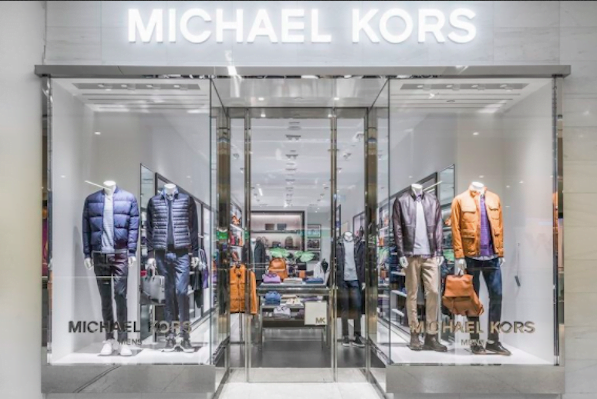
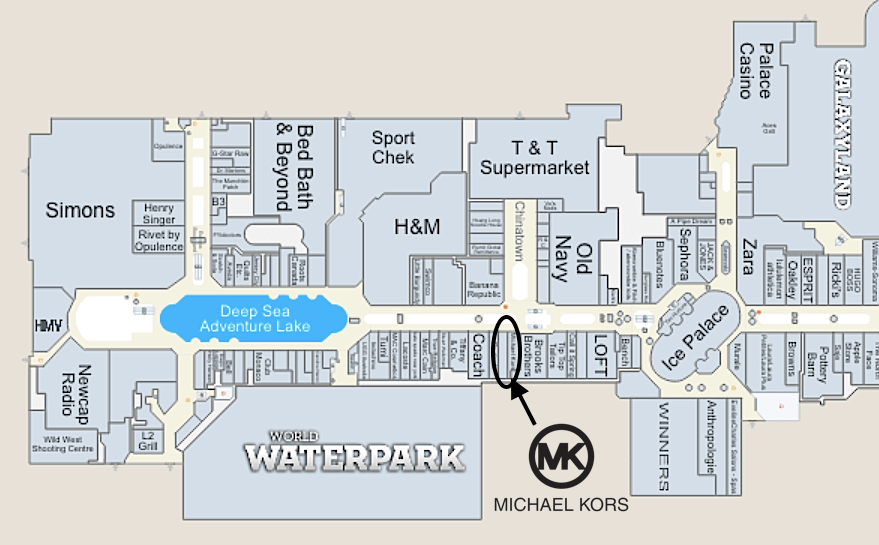
New York City-based fashion brand Michael Kors has opened its first dedicated men’s store in Canada, at West Edmonton Mall. The 1,895 square foot store is located next to the mall’s Michael Kors women’s store that is located on the second level, alongside a number of other upscale retailers. 

The new men’s store offers an extensive selection of apparel, accessories and leather goods from the Michael Kors Men’s collection, including sportswear, footwear, suede and leather outerwear, tailored apparel, dress shirts, bags, briefcases, wallets, watches and eyewear. The collection is sleek and modern. 

The store’s interior, designed by an in-house team, features polished stainless steel displays and a spectrum of finishes including dark oak wood, blackened stainless steel and Calacatta marble. A palette of soft browns and grays, mixed textural finishes and luxe materials “provide a refined and inviting ambience, while black-and-white photography and custom seating complete the sophisticated, jet-set effect,” according to the company. 

West Edmonton Mall’s Michael Kors men’s store is one of only a few globally — there are only 11 of them in the United States, with three more to open before the end of the year. Michael Kors also operates dozens of standalone stores in Canada, coast-to-coast, catering primarily to women. The brand is also available at retailers such as Hudson’s Bay, Simons and at Saks Fifth Avenue in CF Sherway Gardens in Toronto. Michael Kors was founded by the designer of the same name in 1981, and has an extensive network of retail and wholesale accounts globally. 

West Edmonton Mall is also seeing the addition of a number of new premium brands. Montreal-based Rudsak recently opened in the mall, as has Icebreaker Merino Wool, Marc Cain and soon, Nespresso will open its first freestanding location in Edmonton across the hall from the new Michael Kors men’s store. 

UNIQLO Opens 1st Vancouver Store [Photos]

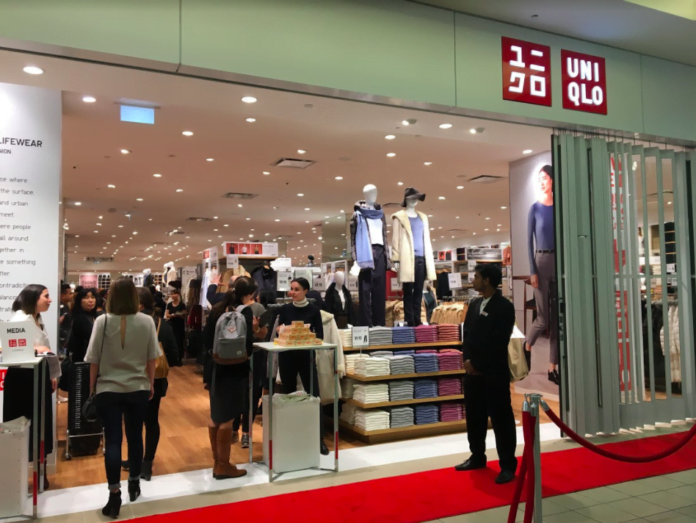
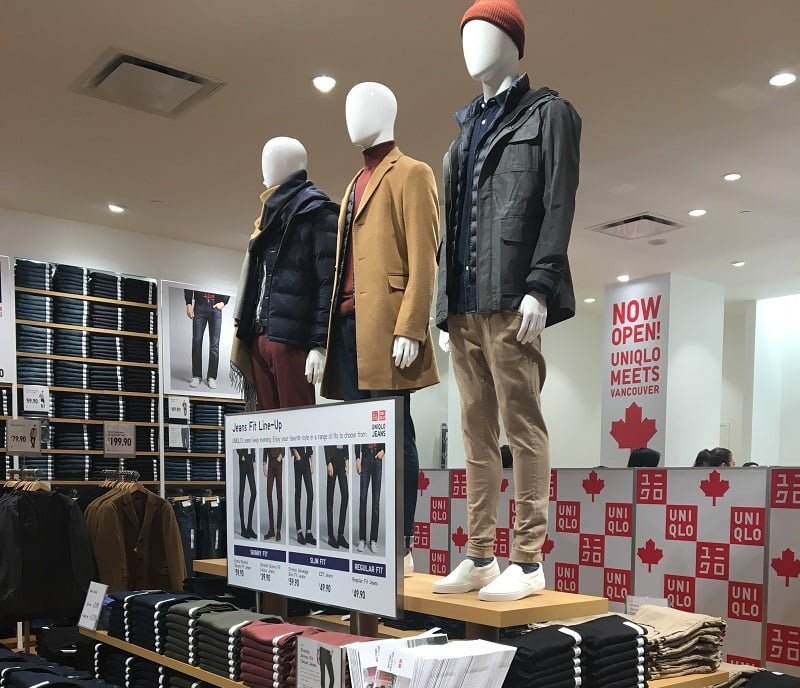
Uniqlo Metrotown Opening- Photo Susanne Milner

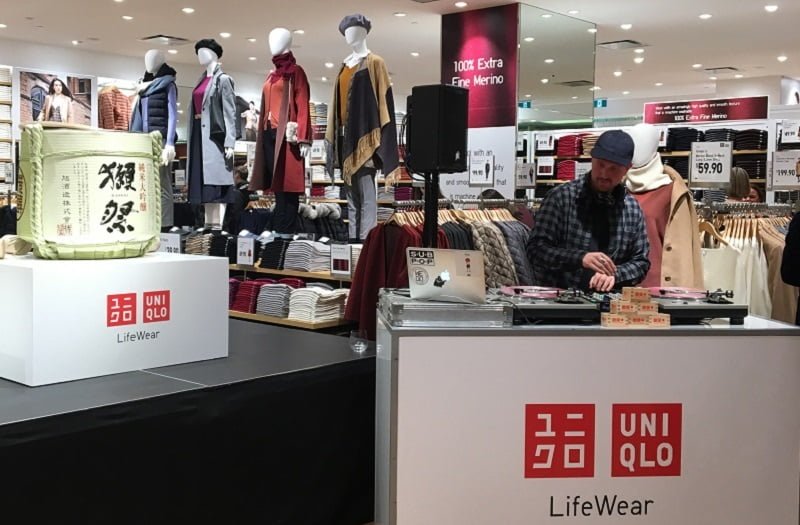
Popular Japanese retailer UNIQLO has opened its first location in Western Canada at Metropolis at Metrotown in Burnaby, east of Vancouver. More locations will follow as the company embarks on a national store expansion. 

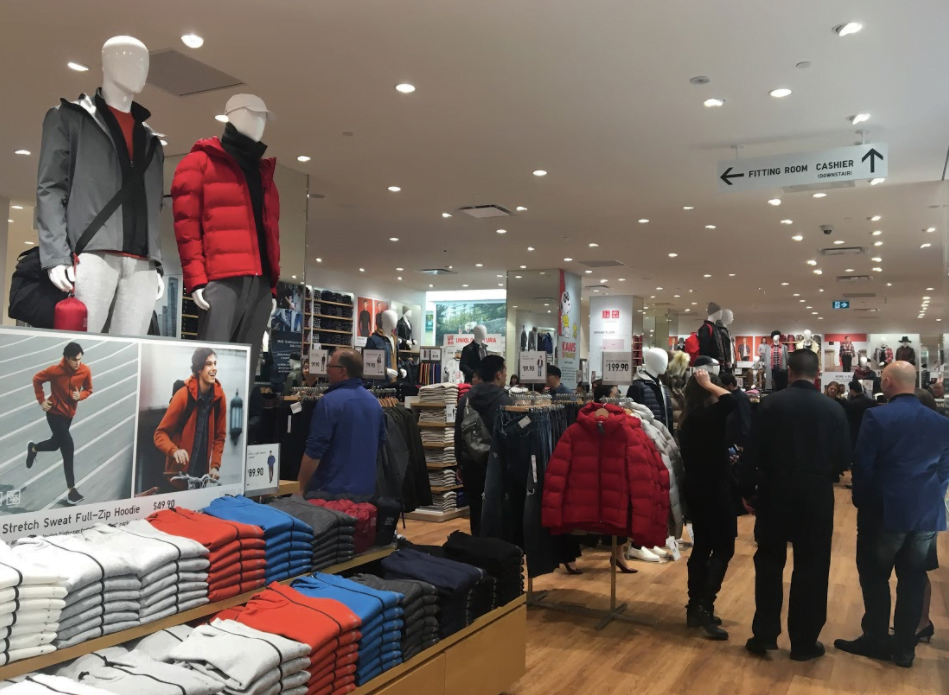
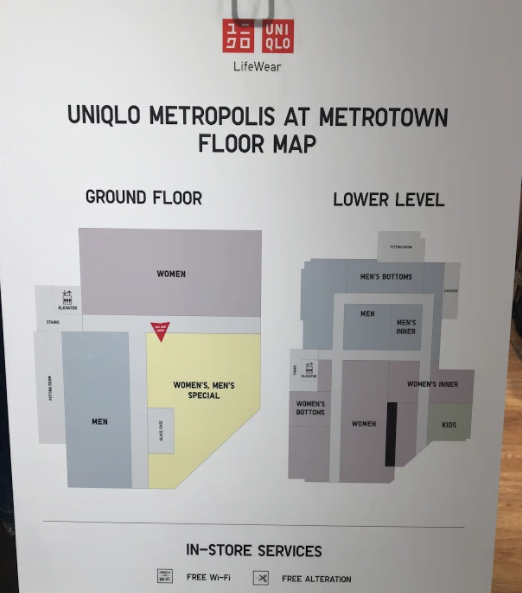
The 20,630 square foot Metrotown store occupies two levels in the mall, facing onto the mall’s ‘Grand Court’. The store features a range of core items for men, women, kids and babies, including signature items such as BLOCKTECH, Ultra Light Down, HEATTECH, Cashmere, Extra Fine Merino, Jeans and Oxford Shirts, as well as the Uniqlo U collection and the “UNIQLO and JW ANDERSON” collection. Men’s and women’s collections are on both floors of the new store. 

UNIQLO’s Metrotown store includes a corner retail space formerly occupied by Ben Moss jewellers, as well as two adjacent spaces. UNIQLO’s lower level will be in part of the space formerly occupied by Home Outfitters

(CLICK FOR INTERACTIVE MALL FLOOR PLAN)

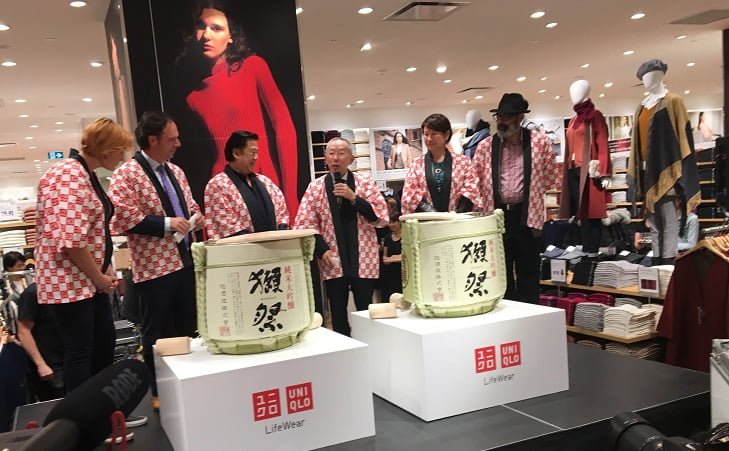
Retail Insider correspondent Susanne Milner attended the press launch of the store on October 5, which included a Kagamiwari ceremony — a traditional ceremony held in Japan for celebrations and for UNIQLO’s store openings. Sake was served from Dassai — a sake brand from Yamaguchi Prefecture, where Uniqlo was founded 33 years ago. UNIQLO founder Tadashi Yanai explained that the retailer had received many requests to open in Vancouver. Ms. Milner provided the photos that are featured in this article. 

The Metropolis at Metrotown UNIQLO is the company’s third Canadian store, following the opening of two stores last year in Toronto. In September of 2016, UNIQLO opened its first Canadian flagship, spanning 33,400 square feet, at CF Toronto Eaton Centre. A 30,000+ square foot Yorkdale Shopping Centre UNIQLO store subsequently opened in October of 2016, in the mall’s Nordstrom-anchored expansion wing

Jeff Berkowitz of Aurora Realty Consultants represents UNIQLO as broker in Canada, and he also negotiated the first two Toronto lease deals. 

Online news publication Daily Hive reports that UNIQLO Founder and CEO Tadashi Yanai told them his company will focus its attention on Montreal, after the opening of a flagship store in downtown Vancouver in spring 2018. Mr. Yanai did not provide a timeline for the Montreal expansion or possible locations.

In September of 2016, Mr. Yanai told Marina Strauss of the Globe & Mail that UNIQLO could eventually operate as many as 100 stores in Canada. 

The Metropolis at Metrotown, owned and operated by Ivanhoé Cambridge, is the largest mall in British Columbia/third largest in Canada, and also one of Canada’s most productive centres, according to a recently released Retail Council of Canada Shopping Centre study. A 2017 study is set to be released next month, and there are sponsorship opportunities available

UNIQLO now operates approximately 1,900 stores in 19 countries worldwide, including Japan, Australia, Belgium, Canada, China, France, Germany, Hong Kong, Indonesia, Malaysia, Philippines, Russia, Singapore, South Korea, Spain, Taiwan, Thailand, U.K. and the United States.

*All photos in this article are courtesy of Susanne Milner. As well, video below was created by Lee Rivett. 

Boutique Colori Prepares to Open First Store Outside of Quebec

exc-59d2c6b4f5e2319b86a77f2b

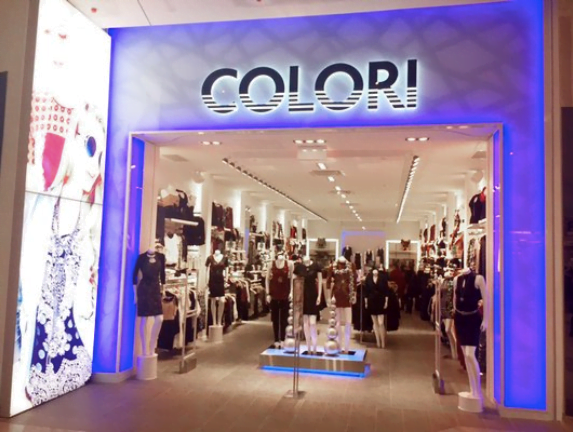
Quebec-based women’s clothing retailer Boutique Colori Inc. is making its first stride outside of the province, with a new store set to open in Halifax in November.

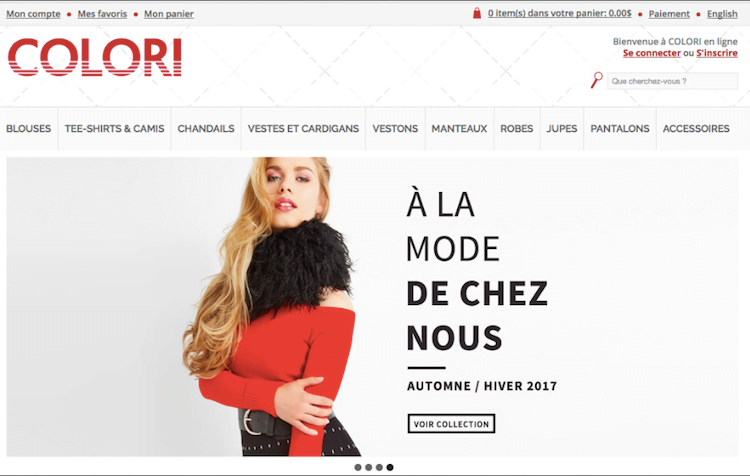
The chain, which has approximately 40 locations throughout Quebec, offers trendy clothing geared towards women between the ages of 18 and 35. Merchandise ranges from casual tops and sweaters to evening wear, as well as a range of jewellery and other accessories.

After having fostered a well-established presence in the Quebec market over the course of many years, Colori is now testing the waters outside of that province.

“They fit a nice niche,” says Nat Weinstein, vice president of leasing at 20 Vic Management Inc., which manages Halifax Shopping Centre. “It’s a good mix for Halifax.”

The new store in Halifax Shopping Centre is 1,460 square feet in size. It is located on the upper level of the mall, across from La Vie en Rose and RW&CO.

The new Colori location comes as Halifax Shopping Centre recently underwent a major $70-million redevelopment project that created 75,000 square feet of additional retail space. The mall has since welcomed several new retailers to its corridors, including large new two-storey H&M and Zara locations that opened over the summer.

The new Colori store will add another name to the mall’s list of new additions. Since Halifax Shopping Centre is the top-performing mall in the Maritimes, it was an obvious choice for Colori’s first location in that region, Weinstein says.

He notes that the retailer’s locations in 20 Vic’s Quebec properties have performed very well, and the company is hoping for similar success in Halifax.

The new Colori location will serve as an experiment for the retailer, Weinstein says, to gauge how the brand performs outside of its home province. With little brand recognition outside of Quebec, the extent to which Nova Scotia shoppers embrace the clothing company remains to be seen.

“This is the litmus test for them,” Weinstein says.

Depending on how well the new location performs, he says the retail chain will likely consider opening more locations outside of Quebec.

Sweet Jesus Ice Cream Launches Massive Expansion

Vaughan Mills Sweet Jesus (Image: Sweet Jesus)

Hand-crafted ice cream brand Sweet Jesus, which recently opened in Vaughan Mills near Toronto, has huge plans for expansion across the country and around the world.

“The initial consumer response has been tremendous, which validates our strategy of developing franchise units in super-regional enclosed malls in Canada. Positioning the brand in malls takes advantage of built-in traffic with an impulse purchase item, as well as smooths out the sales fluctuation of a seasonality product,” says Jeff Young, chief development officer of Monarchs & Misfits, the parent company of Sweet Jesus.

“Our development strategy is to target super-regional enclosed shopping centres and very selective high street storefront locations. Over the next 12 to 18 months, we’ll probably open another 20-25 units.”

Sweet Jesus opened its first location in downtown Toronto in 2015 at the back of the La Carnita restaurant and since its inception has quickly become one of the hottest franchises in the industry. To date, it has been awarded franchises throughout Canada, in the United States, Dubai, India and Bangladesh.

Sweet Jesus features hand-crafted, chef inspired, pimped out soft serve ice cream, with flavours such as Cookies Cookies Cookies & Cream, Bangin Brownie, Rocky Road Rage, Lemon Coconut Cream Pie, Birthday Cake, Hella Nutella, Sweet Baby Jesus, and Red Rapture. It also has “pimped out pints” for takeaway and “mind blowing” milk shakes such as Red Velvet Cake Batter, Peanut Butter Pretzel & Nutella, Triple Chocolate.

The brand also serves an assortment of hot and cold beverages including S’more’s Hot Chocolate, Cake Batter Hot Chocolate and Salted Dark Hot Chocolate as well as bottled Holy water and cold brew.

“I think it’s successful for a number of reasons. The branding is absolutely on point. Everything from the name, the design package, the colour,” says Young. “The product itself is sensational in terms of product quality and flavour. And most importantly it really resonates with the Millennials who are not only social media savvy but real foodies. We have now garnered more than 109,000 loyal Instagram followers. It’s probably the most Instagramed food in all of Canada.

“This recent store opening reinforces our position as the market leader in the specialty frozen dessert segment. As one of Canada’s fastest growing franchise brands, we have many new locations under development.”

Internationally, it’s expanding into the USA and will be opening in Mall of America and Baltimore Airport. It is also finalizing deals in Florida and Hawaii. Overseas, it will be opening soon in Dubai, India and Bangladesh under the trade name Sweet Salvation.

“All of our products are artisanal in the sense they’re fresh, made-to-order, hand-made toppings, using ingredients and recipes, created and curated by our executive chef,” says Young.

There are currently seven open locations: Ottawa’s Byward Market; Niagara Falls; 106 John Street, Toronto; Vaughan Mills; 780 Queen Street, Toronto; 130 Eglington, Toronto; and Scarborough Town Centre. Two other locations at the CNE and in Port Carling are not open right now.

Young says locations under development over the next 12 to 18 months in the Greater Toronto Area include: The Annex at 416 Bloor Street in Toronto; CF Toronto Eaton Centre; CF Sherway GardensSquare One; Upper Canada Mall; CF Markville mall; Yonge Sheppard Centre; Woodbine Centre; 499 Danforth Avenue, Toronto. Deals have also been in done in the West Edmonton Mall and Southgate Centre in Edmonton.