One of Canada’s first shopping centres, Le Boulevard, in eastern Montreal, will undergo a major redevelopment of 100,000 square feet which anchor Hudson’s Bay will vacate in the fall of 2018.
Mitchell Moss, president of Crofton Moore, which manages the mall, told Retail-Insider the redevelopment is slated for completion in 2019.
“It is 100,000 square feet on two levels. We could do one 100,000-square-foot tenant on two levels which is possible or most likely there will be multiple tenants. Probably one or two on the second floor and three to five on the ground floor,” says Moss.
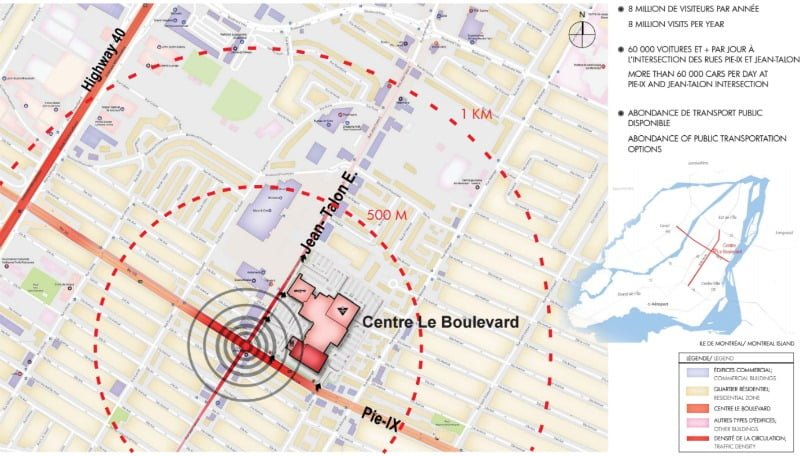
Le Boulevard, a 400,000-square-foot enclosed shopping centre, is located at the corner of Jean Talon Street and Pie IX Boulevard. The property benefits from major exposure on Pie IX Boulevard, with easy access to highway 40, and is just a short 20-minute car ride from downtown Montreal.
Map: Le BoulevardLe Boulevard
“We’re happy to invest. We’re happy to make it happen. We’re happy to bring in new tenants to the shopping centre,” says Moss. “It’s a huge positive.”
He says the property intersection sees more than 60,000 cars per day and more than 160,000 people live within 2.5 kilometres of Le Boulevard.
“We have a ton of traffic for a mall of this size,” he says, adding that the shopping centre has nearly eight million visitors per year.
The redevelopment consists of leasing possibilities ranging from 10,000 to 60,000 square feet.
Moss, who is a managing partner of the shopping centre with a financial partner, says possible uses for the redeveloped space include fashion, restaurants, fitness, home fashion.
“This is one of the first shopping centres in Canada. We bought it about 10 years ago. It was built in the late 50’s as a strip centre . . . It was enclosed in the early 70’s,” he says. “We bought this shopping centre and it was about 20 per cent vacant. We renovated the shopping centre and rented all the vacant space.
1 of 3
(OPTION: 4 ANCHORS)
(GROUND FLOOR, OPTION: 4 ANCHORS)
(2ND FLOOR, OPTION: 4 ANCHORS)
“It went from a mall that was okay with decent traffic but with lots of mom and pop tenants to a mall with around two-thirds being regional or national tenants.”
Crofton Moore has been active in the management, leasing, construction and development/repositioning of retail and office space in the Canadian real estate market for the last 20 years. The portfolio of properties currently under its management is about five million square feet which is concentrated in the Montreal and Toronto markets.
For more information, contact:
Abie Grunspan, Vice-President, Retail Leasing, Crofton Moore
Despite all the teeth gnashing about extra wage costs, there are some real positives to expect in 2018 when the Ontario raises the minimum wage to $14.00 per hour that are not just about the trickle down economics of more money in the hands of consumers to spend. Employers simply can’t fill these jobs right now at $11.40 per hour. Jobs that once “weren’t worth taking”, from the employee point of view, now will be.
From a recruiter’s’ point of view, the absolute hardest roles to fill are the very lowest paid jobs.
Check any corporate sites or job posting boards and you will find thousands of vacancies. In Toronto, there are over 500 fresh new public postings this month for what are essentially minimum, or close to minimum wage positions…on one job board alone! Walk into any big box store or franchise outlet and you will surely see ‘Apply Now’ signs.
The battle to fill these positions is on-going. Not only are these jobs hard to fill, but they are next to impossible to keep the turnover at less than 20%. Many retailers report up to 80% annual turnover.
When you factor in training costs for a new entry level hire (about $5,500.00 average) plus recruiting costs, these roles are vastly more expensive to fill than even slightly more senior roles.
So what is going on here?
A full-time minimum wage position delivers $1,690.00 a month in net income. If we focus on the Toronto market, where a 1 bedroom condo is now $2,000.00 per month (July 2017), you can clearly see the problem. Rent is up 11%. Wages have not kept pace.
Take this problem one step further. Who exactly fills these roles?
“In 2013, 39.8% of minimum wage workers were between the ages of 15 and 19; in 1997, it was 36%. 50.2% of workers in this age group were paid minimum wage in 2013, an increase from 31.5% in 1997. Statistics Canada notes that “youth, women and persons with a low level of education were the groups most likely to be paid at minimum wage.”
It’s easy to see that it’s our women, youth and least educated that are falling behind drastically in our economy. It is now to the point where they cannot even afford to take these jobs. They can’t afford to live where the jobs are. They cannot afford the transportation to even get to work. A bus pass in Toronto is about $150.00 a month (that’s if you stay only in one zone). Let’s not even try to factor in the costs of child care. That’s just a non-starter when it comes to “minimum” wage roles.
Far from pushing these people out of the job market by reducing the numbers of jobs available to offset the wage increases, these people aren’t in the job market anyway! They are working. They are working in the underground cash economy because it’s simply not possible to accept a tax paying position.
Benefits of a $14.00 an hour job begin with an income of $2,863.00 per month. That’s nearly a living wage even in Toronto and suddenly it’s worth taking a retail job for many more people.
Vacancies and turnover are the most costly, yet controllable expense for retailers.
Without quoting the actual M.I.T. study right now that analyzed it, a vacancy costs a retailer about 4x the base monthly salary of the person who should be in the role: costs to recruit, costs to hire, costs to train, costs in lost sales while the role is vacant, costs in lost productivity to the existing staff shouldering the excess workload.
What retailers will experience very quickly once the base level wages rise is simple….their vacancies will shrink. Related costs will go down. Sales will go up.
The benefits to society are obvious. The benefits to retailers are even greater.
For more information on Suzanne Sears and Best Retail Careers International Inc. please visit www.brcareers.com.
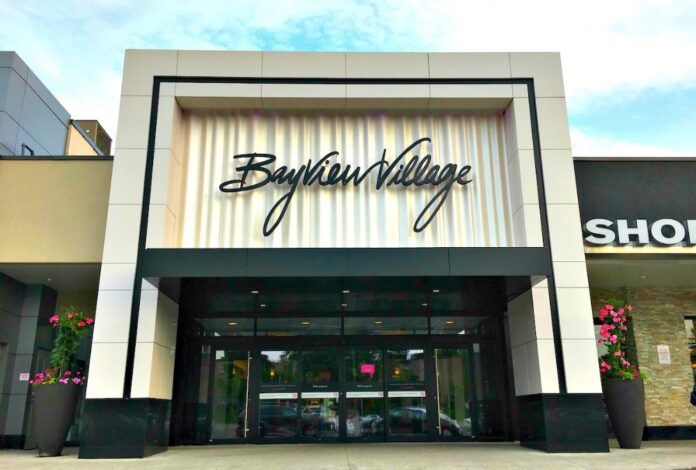
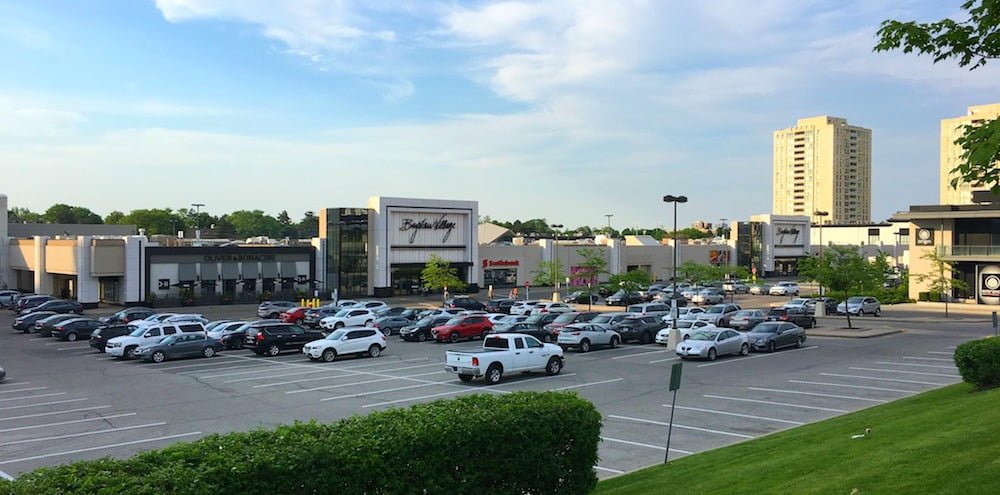
Toronto’s upscale Bayview Village Shopping Centre occupies a unique space in the city’s retail realm — it serves a local base of affluent shoppers with a unique variety of local and international retailers, differentiating its offerings from a range of larger regional malls.
The formula is working. Bayview Village was recently recognized as being one of Canada’s most productive malls in terms of sales per square foot by Retail Council of Canada’s Shopping Centre Study. It’s a remarkable feat for a mall that lacks traditional large anchors found in most Canadian fashion malls — or an Apple Store, for that matter.
Bayview Village is managed by QuadReal Property Group, an independent and privately held global real estate company with managed assets totalling more than $18-billion. QuadReal is a wholly owned company of one of Canada’s largest institutional pension fund managers from British Columbia. In November of 2013, the company paid $500 million for the centre, making it the biggest property sale of that year in all of Canada.
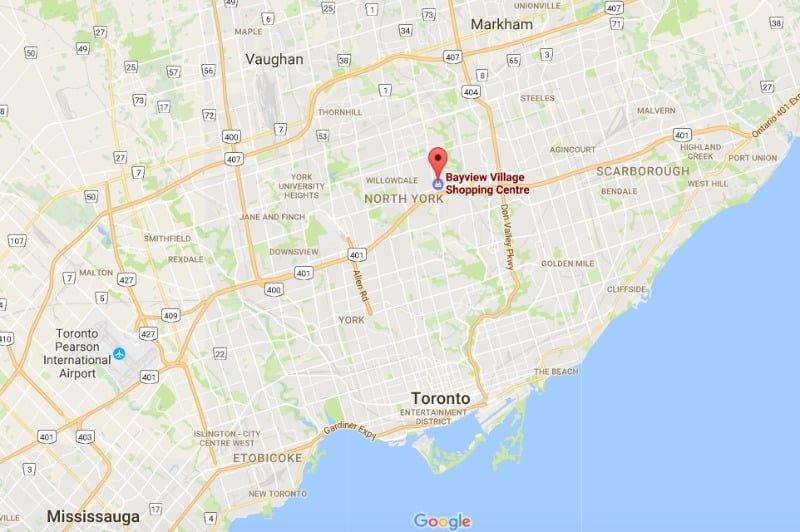
(CLICK IMAGE FOR INTERACTIVE GOOGLE MAP)
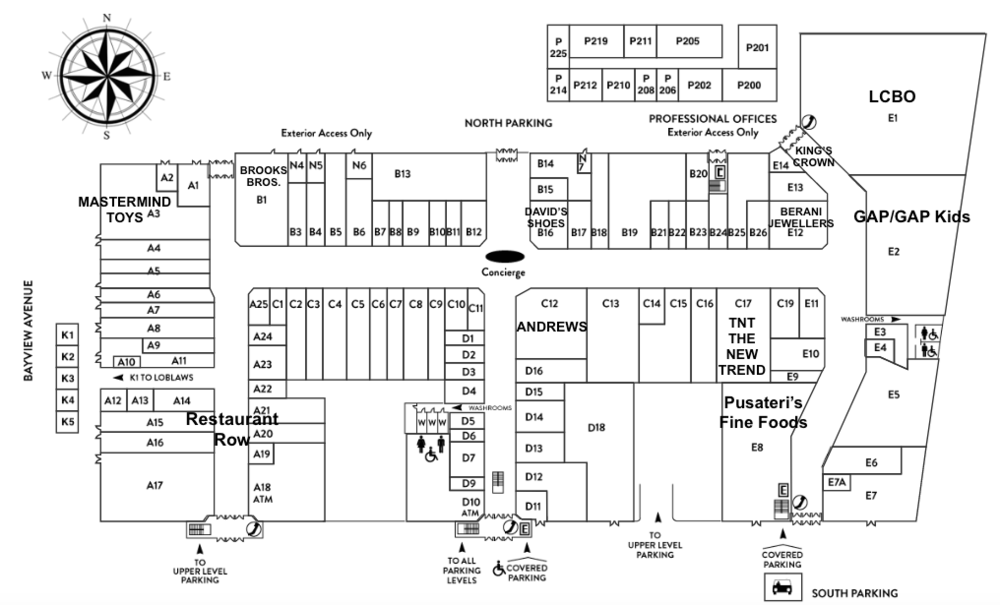
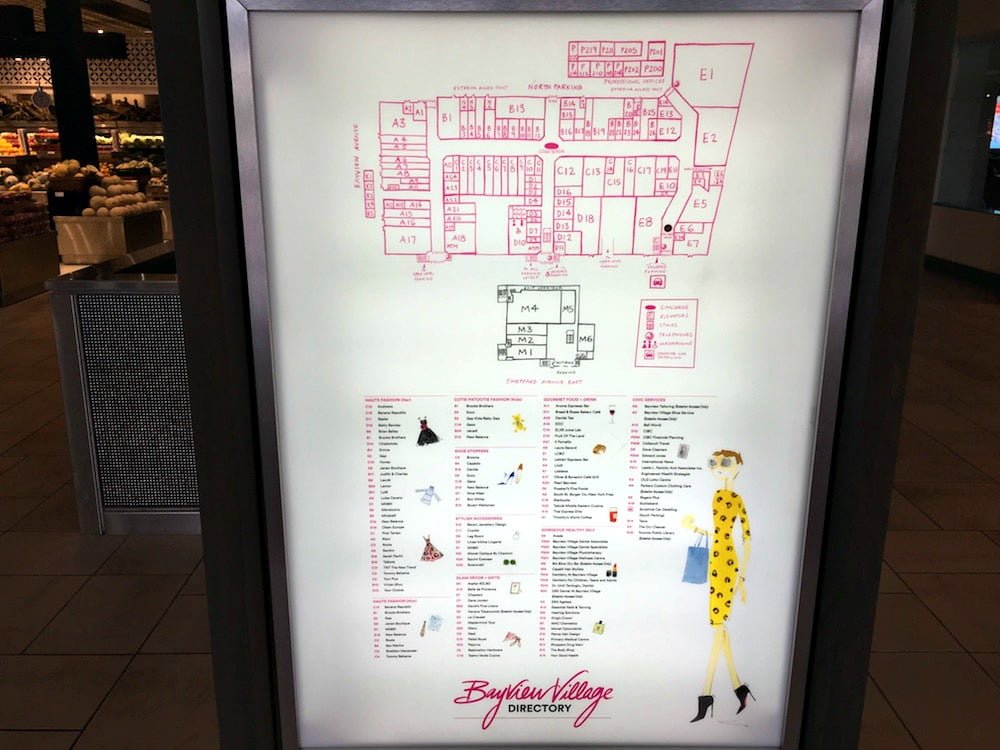
Bayview Village(CLICK IMAGE FOR INTERACTIVE MALL FLOOR PLAN)
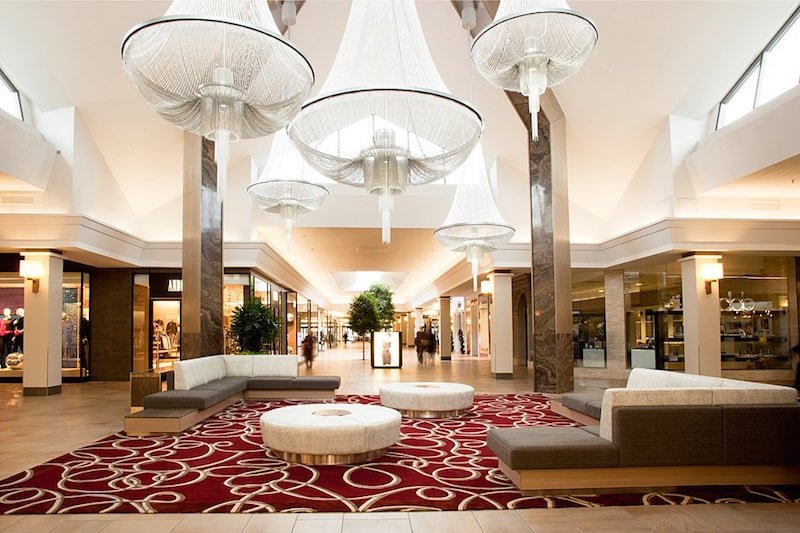
(CENTRE COURT. THE MALL FEATURES COMFORTABLE SEATING THROUGHOUT. PHOTO: BAYVIEW VILLAGE)
QuadReal is planning a mixed-use expansion of Bayview Village, which will include additional retail and a new residential component to complement the existing 320,000 square foot enclosed regional shopping centre, which is shadow anchored by a 95,000 square foot Loblaws food store. More details regarding the expansion will follow.
Bayview Village’s location is notable, boasting a catchment area that includes some of the most affluent neighbourhoods in the Greater Toronto Area. It features exceptional access from both the Bayview TTC Subway Station (Line 4) as well as from the busy 401 Freeway, Sheppard Avenue and Bayview Avenue. The area’s population is also booming with the construction of new condominium towers nearby and as well, the mall’s on-site population will eventually grow with the addition of new residential towers over the next several years.
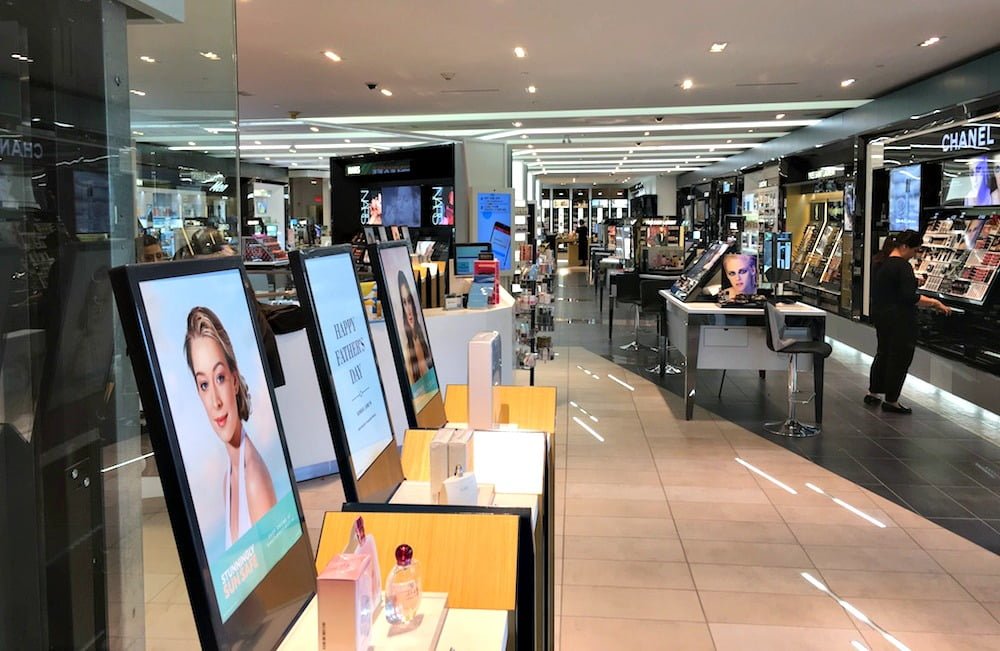
(2-LEVEL SHOPPERS DRUG MART. THE MALL LEVEL FEATURES AN ASSORTMENT OF UPSCALE COSMETICS, AND THE LOWER LEVEL FEATURES SHOPPERS DRUG MART’S MORE TYPICAL OFFERINGS)
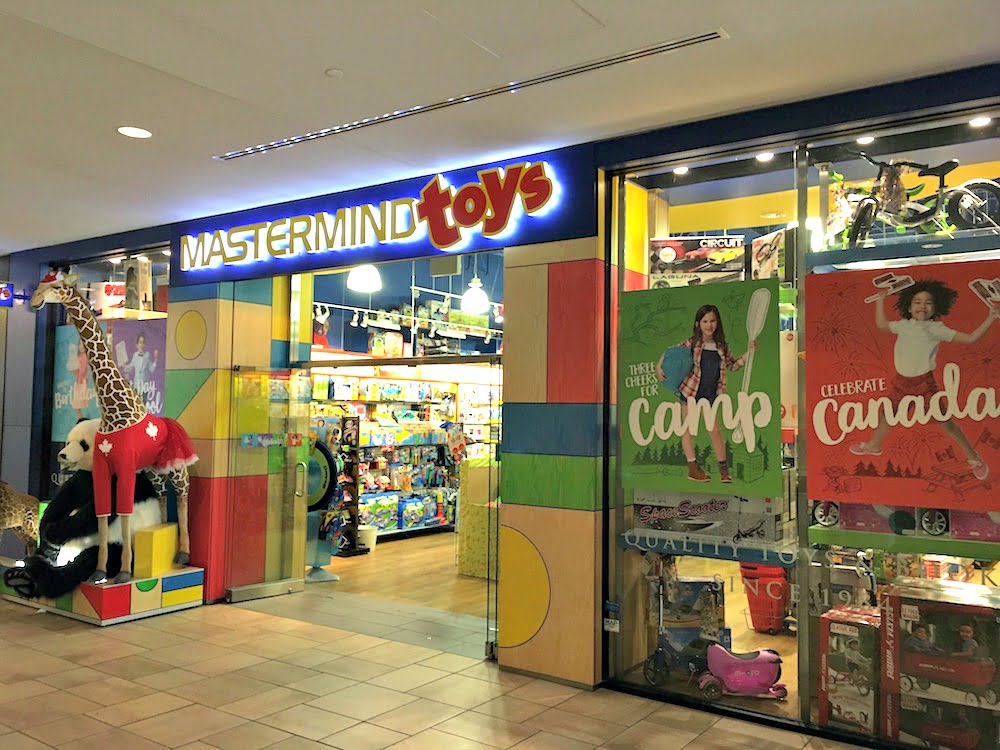
(ONE OF ONLY A HANDFUL OF MASTERMIND TOYS STORES LOCATED WITHIN A SHOPPING CENTRE. MASTERMIND TOYS SEEKS OUT RETAIL SPACE IN AREAS THAT ARE AFFLUENT AND FEATURE A HIGHLY-EDUCATED POPULATION. BAYVIEW VILLAGE IS A NOBRAINER)
The 110+ retailer enclosed Bayview Village opened in 1963 and, at the time, was an open-air shopping centre catering to the local community. While other similar centres closed over the years, Bayview Village’s owners continued to invest in the centre, adding a roof in 1977 and adding a variety of unique retailers — some of which can’t be found elsewhere in Canada, or even in North America.
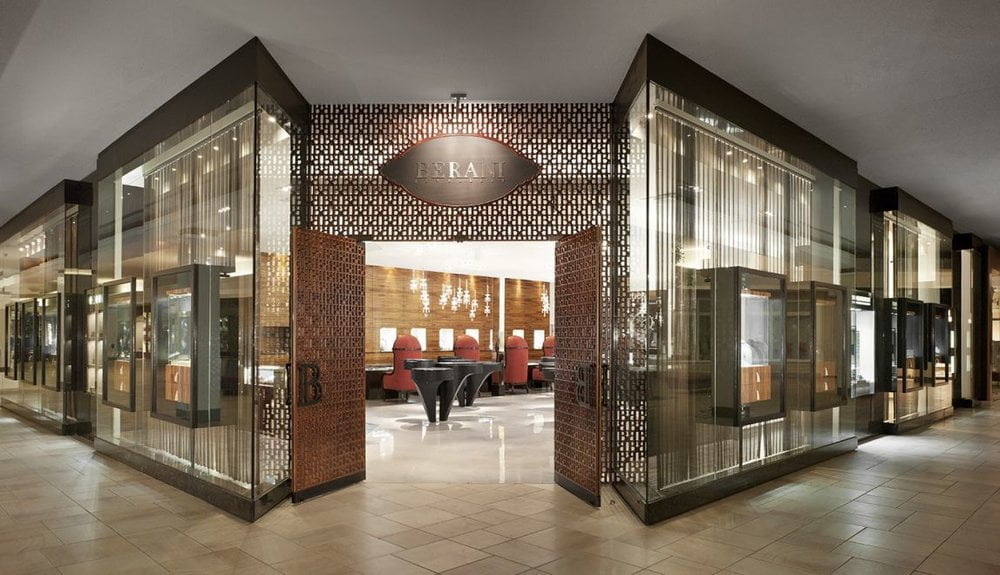
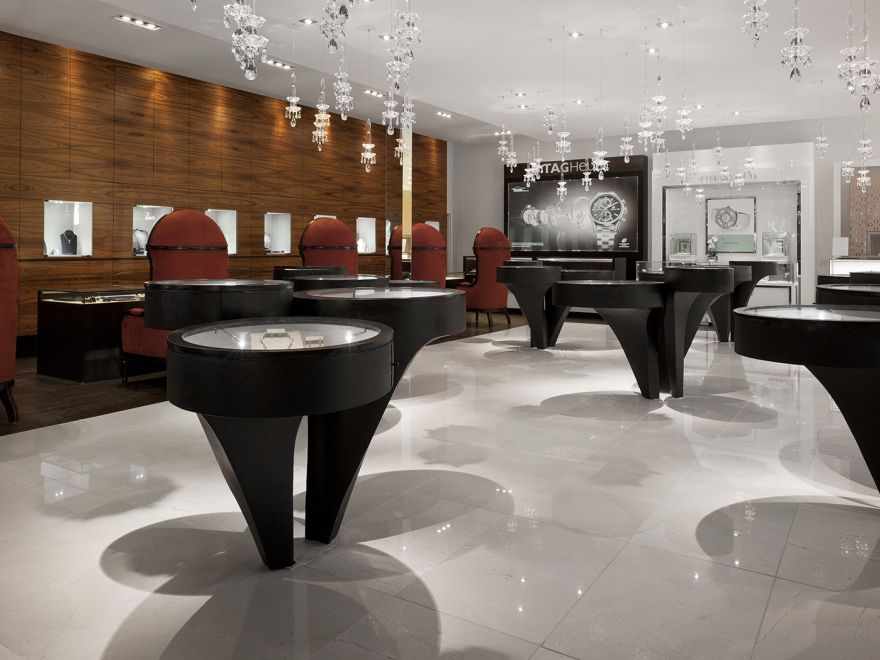
(BERANI JEWELLERS FEATURES SOME OF THE WORLD’S TOP LUXURY BRANDS, INCLUDING CARTIER, GUCCI, AND BREITLING. PHOTO: PDLAB.CA)
(BERANI JEWELLERS – BEAUTIFUL STORE. PHOTO: PDLAB.CA)
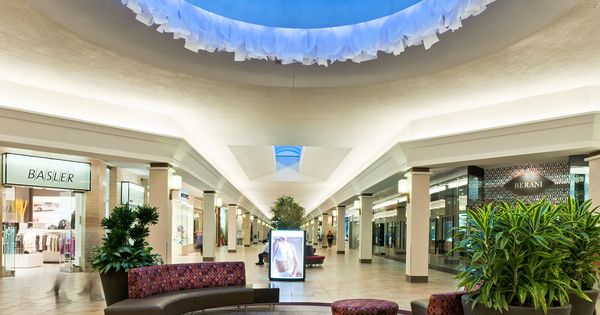
(UNIQUE RETAILERS, INCLUDING BASLER’S ONLY NORTH AMERICAN STORE ON THE LEFT, AND BERANI JEWELLERS IS ON THE RIGHT)
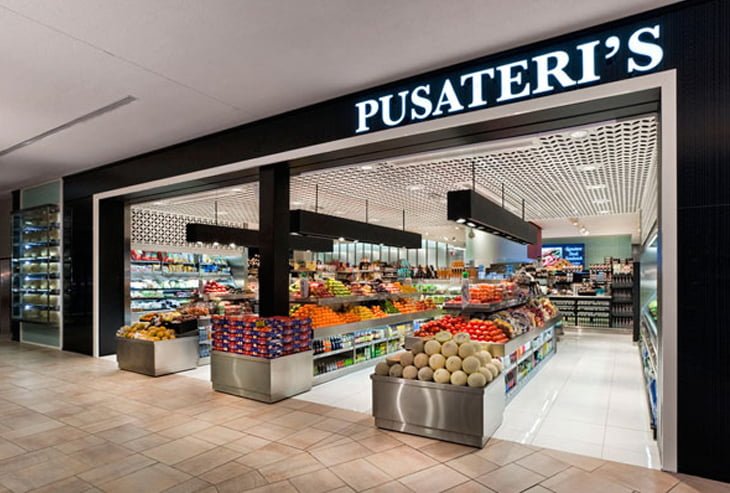
While Bayview Village lacks traditional major anchors such as Hudson’s Bay and Sears, the mall houses locations for a number of popular retailers, as well as two grocery anchors. Mall ‘mini-anchors’ include a Chapters bookstore (30,365 sq ft), Gap/Gap Kids (13,700 sq ft), LCBO (26,000 sq ft), Shoppers Drug Mart (12,200 sq ft), and even a small branch of the Toronto Public Library. Pusateri’s Fine Foods operates an attractive 9,325 square foot store in the mall, offering upscale groceries as well as grab-and-go offerings.
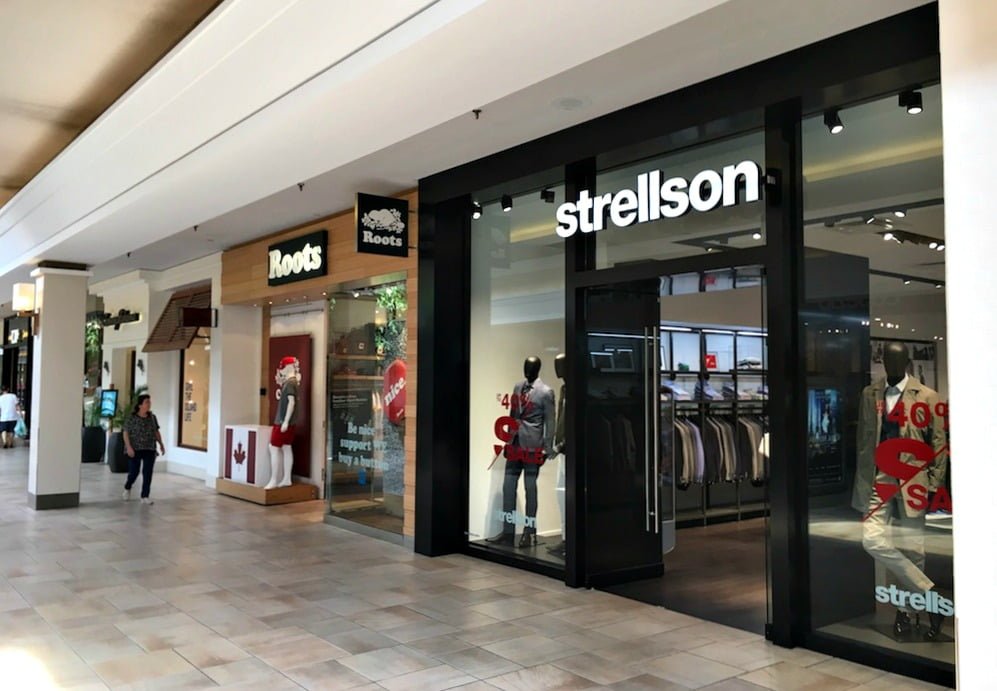
(STRELLSON’S 2ND CANADIAN STORE OPENED AT BAYVIEW VILLAGE IN 2014)
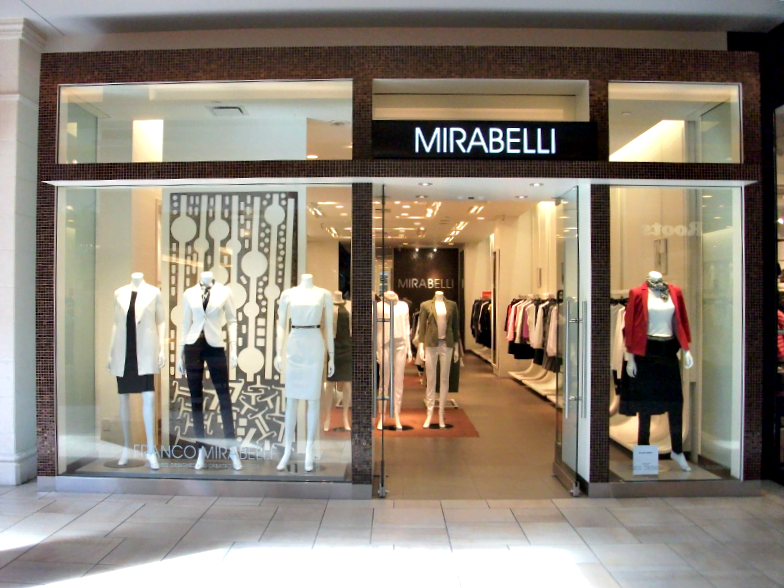
(CANADIAN DESIGNER FRANCO MIRABELLI HAS ONLY TWO STORES, WITH ONE OF THEM BEING AT BAYVIEW VILLEAGE. PHOTO: MIRABELLI)
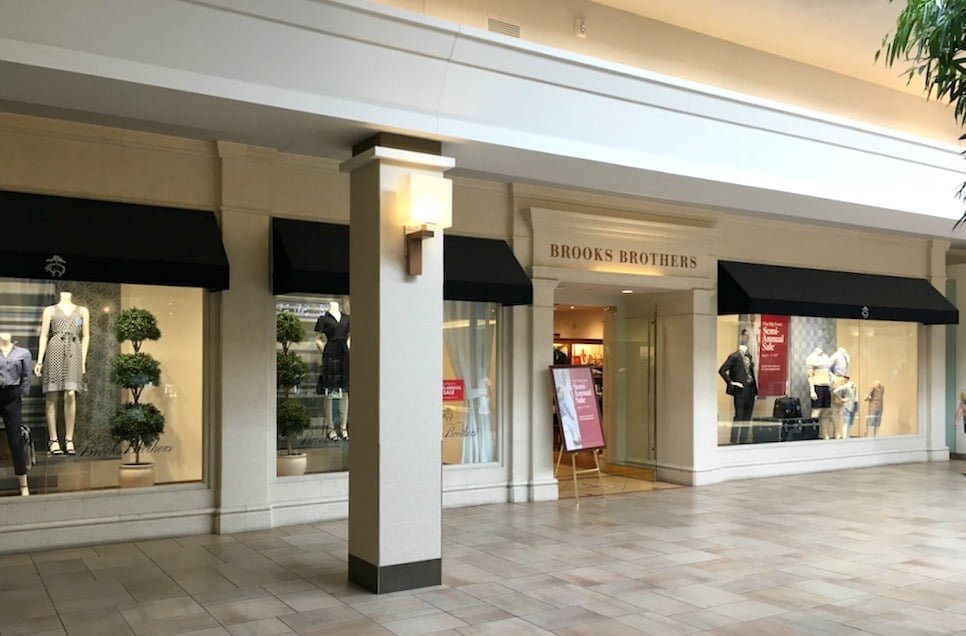
(UPSCALE MEN’S/WOMEN’S FASHION RETAILER BROOKS BROTHERS HAS A 5,500 SQUARE FOOT STORE AT BAYVIEW VILLAGE)
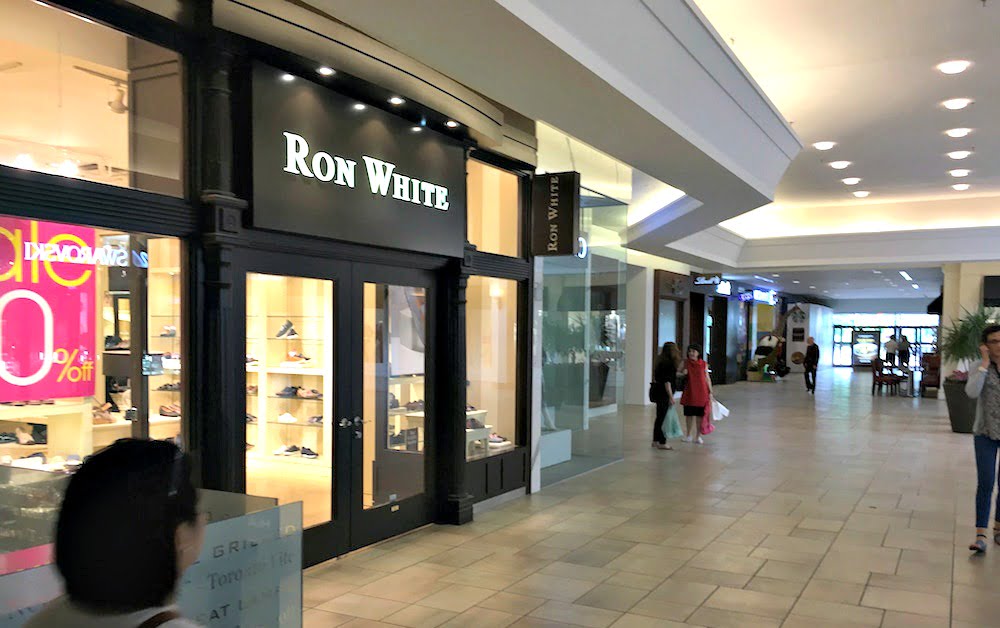
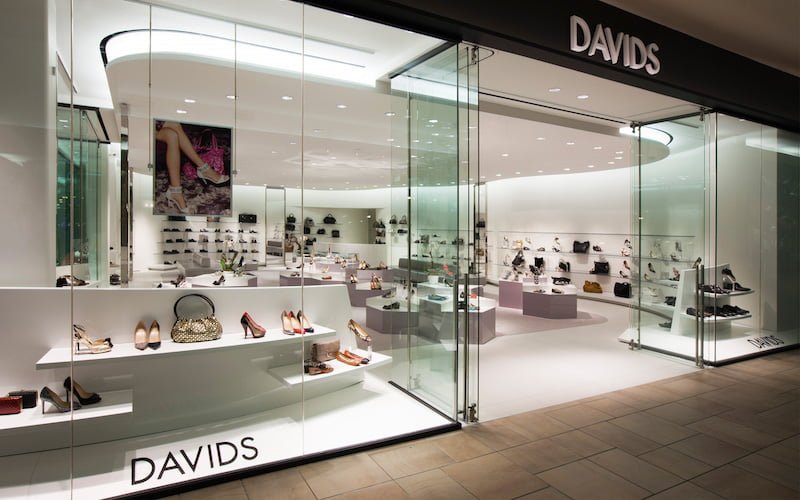
Bayview Village also boasts nine footwear retailers, all relatively upscale. These include David’s Footwear (carrying luxury brands such as Christian Louboutin, Manolo Blahnik and Jimmy Choo), Capezio, ECCO, GEOX, New Balance, Nine West, Browns Shoes, and Stuart Weitzman. As well, Canada’s leading shoe designer Ron White (aka Canada’s ‘Shoe-Ru’) has a store in the mall — one of only five in the chain.
(CANADA’S ‘SHU-RU’, RON WHITE, HAS A STORE AT BAYVIEW VILLAGE)
(MULTI-BRAND DAVID’S FOOTWEAR BOASTS SOME OF THE WORLD’S TOP LUXURY BRANDS, INCLUDING MANOLO BLAHNIK, JIMMY CHOO AND CHRISTIAN LOUBOUTIN)
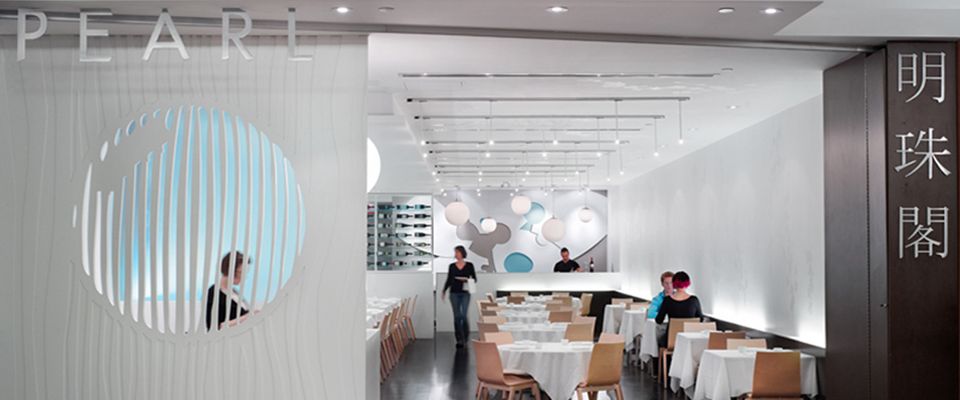
Instead of the traditional mall food court (or ‘food hall’ as some malls are now calling them), Bayview Village features a collection of restaurants along its western corridor, called ‘Restaurant Lane’, featuring cuisine ranging from upscale Chinese food to Middle-Eastern to Italian. On a recent visit during a weekday noon hour, all restaurants appeared to be full.
(‘RESTAURANT LANE’ FEATURES A NUMBER OF RETAIL AND RESTAURANT LOCATIONS, SOME WITH ‘PATIOS’ IN THE FRONT. THE ATMOSPHERE IS CASUAL, YET UPSCALE)
(PEARL RESTAURANT ON ‘RESTAURANT LANE’ WAS PACKED FOR LUNCH [FOOD WAS AMAZING]. PHOTO: PEARL)
(PHOTO: PUSATERI’S)
Overall, the mall’s interior is understated and elegant. Hallways are wide because they lack kiosks found in many malls, and lighting is kept moderate so as to not overwhelm shoppers. Ample seating is provided throughout, encouraging shoppers to take a moment to relax, be it on a sofa or a table with chairs. The centre court beside the concierge desk is notable — gigantic crystal chandeliers hang from above, adding a level of drama and grandeur to the area. The landlord has set out strict design guidelines for retailers — high quality exteriors should also appear to mimic street-front storefronts, as opposed to the typical open facades found in major shopping malls. The result is a comfortably upscale interior that is attractive, and almost ‘residential’. The residential feel of the centre is also reflected in its use of lamps, wall textures, and fixturing both in common areas as well as in washrooms. The mall therefore reflects the neighbourhood at large — elegant and upscale.
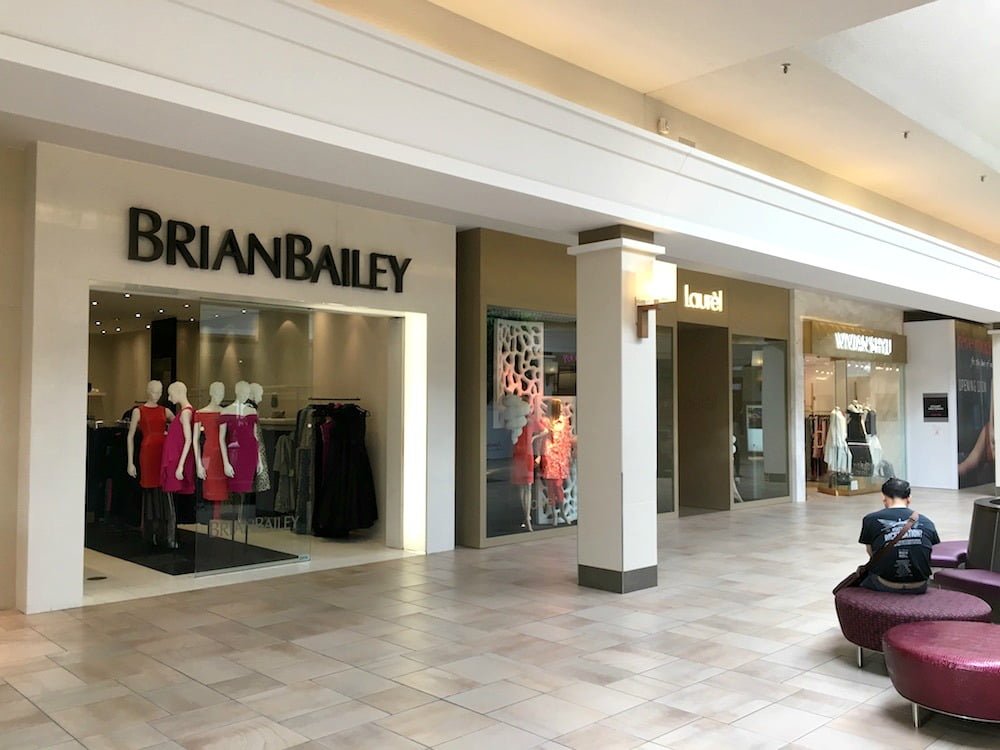
(HARD-TO-FIND RETAILERS — BRIAN BAILEY, LAURÈL, AND VIVIAN SHYU)
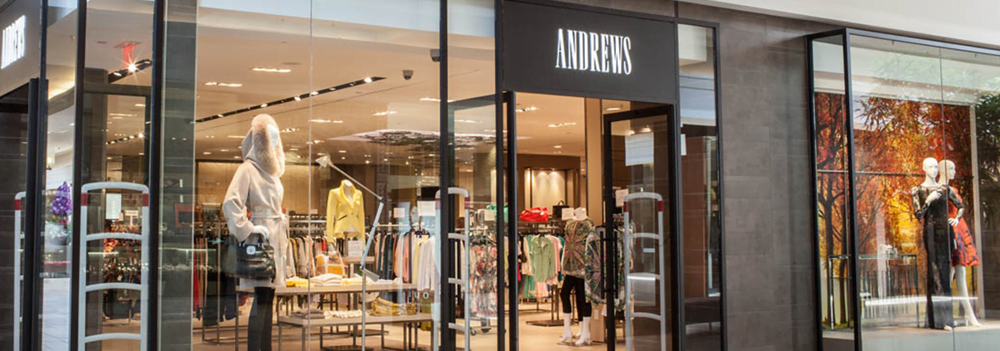
(UPSCALE TORONTO-BASED WOMEN’S MULTI-BRAND RETAILER ANDREWS HAS A 5,540 SQUARE FOOT STORE AT BAYVIEW VILLAGE)
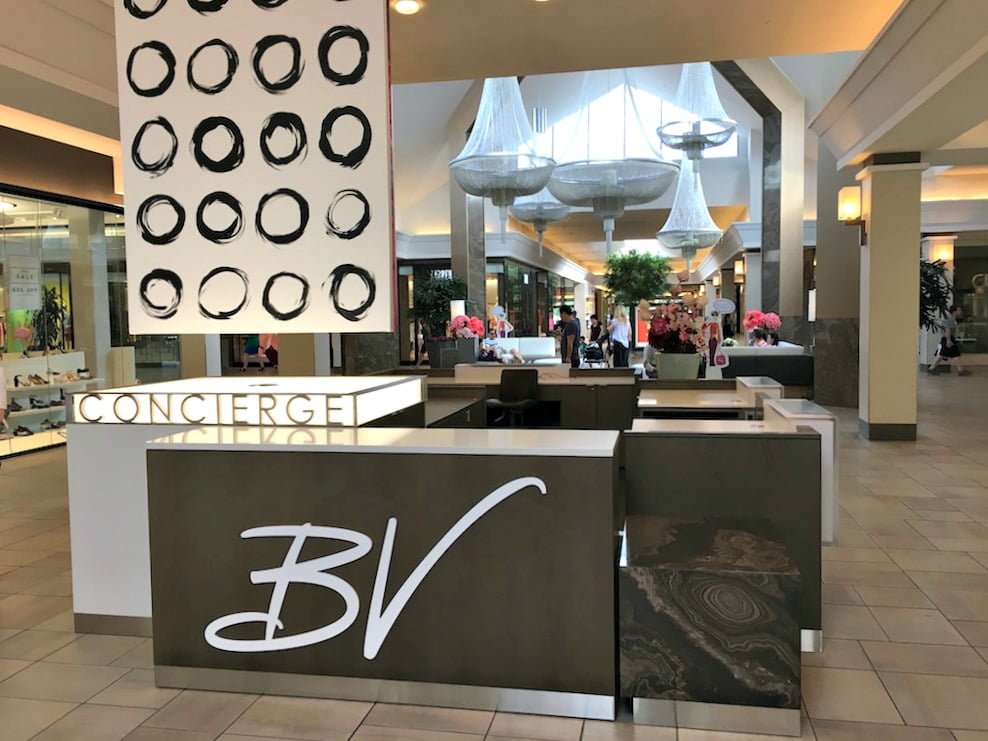
Services are an important component of Bayview Village, and the mall features a concierge desk near the chandelier centre court, and it’s not just an information service — Bayview Village’s concierge is a ‘one-stop shop’, that can make various appointments (such as manicures), restaurant reservations, arrange for car detailing while customers shop, gift wrapping, assistance carrying parcels, connecting shoppers with the mall’s personal shopper, and various other services. It’s all part of the “glam experience”, according to mall Marketing Director Melissa Evans-Lee — the target consumer is female aged 30+ with an annual household income exceeding $100,000.
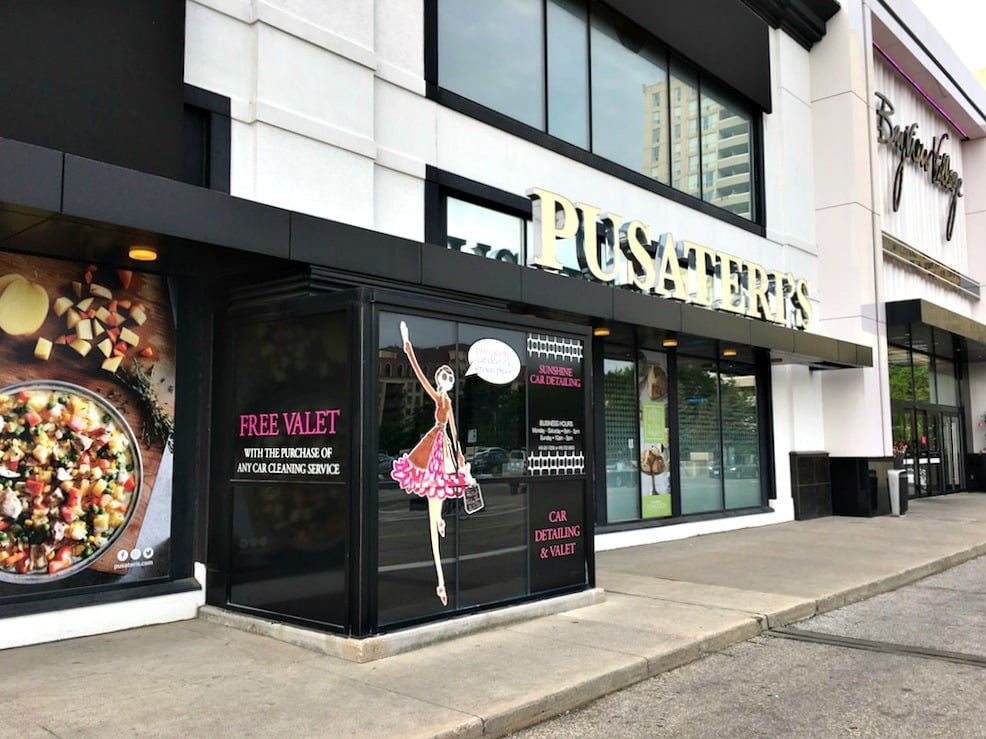
(SERVICES: VALET AND CAR DETAILING AT PUSATERI’S)
(CONCIERGE DESK AT BAYVIEW VILLAGE [USUALLY ATTENDED, BUT WE TOOK SOME OF THESE PHOTOS RIGHT AFTER THE MALL CLOSED ON A SATURDAY])
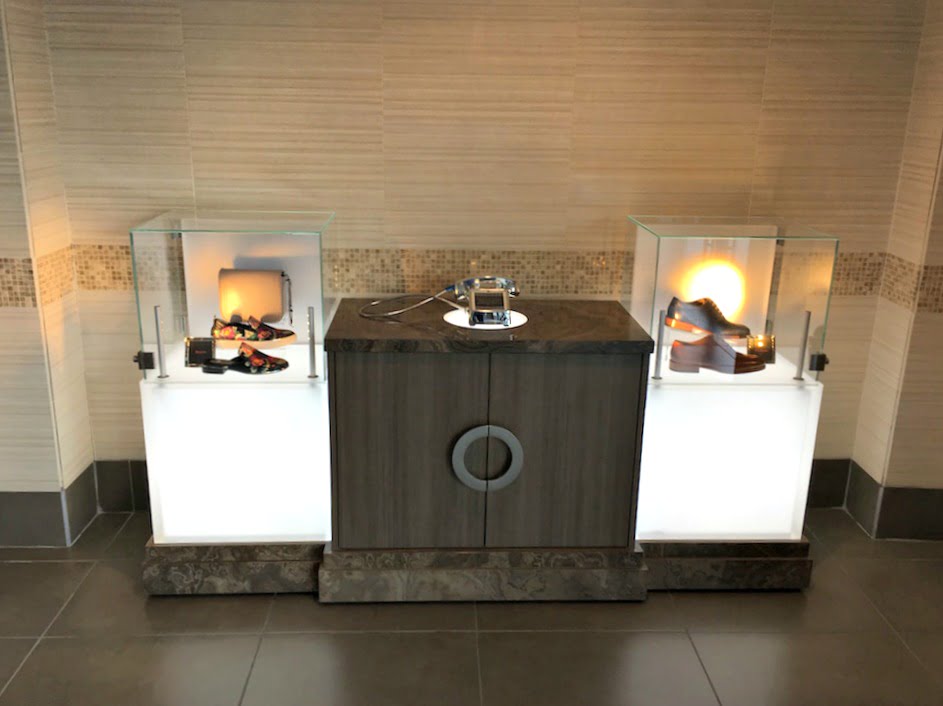
(DISPLAY CASES AT AN ENTRANCE FEATURING A SILVER PHONE THAT DIALS DIRECTLY TO THE MALL’S CONCIERGE)
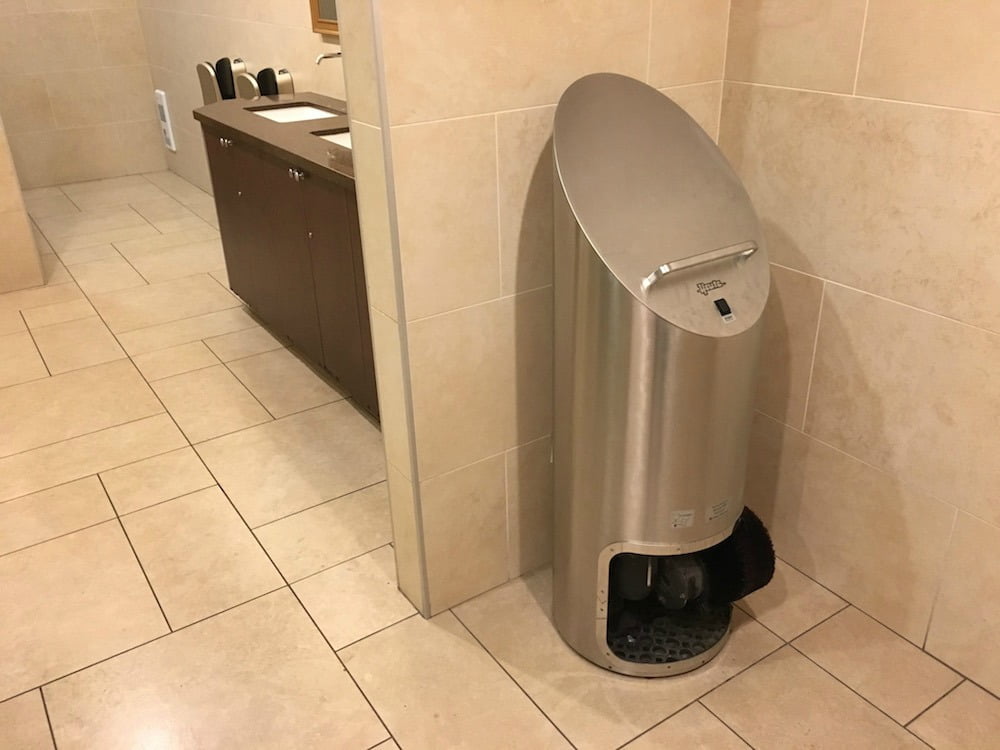
(IT’S THE LITTLE THINGS: SHOE SHINE MACHINE IN THE MEN’S PUBLIC WASHROOM)
Toronto is a city with some of Canada’s biggest and busiest malls. Bayview Village stands out, as discussed above, for being a relaxed, upscale fashion centre with a unique tenant mix, as well as extensive services lacking in many larger centres. Retail Insider will now be regularly featuring shopping centre profiles, targeting different malls across the country.
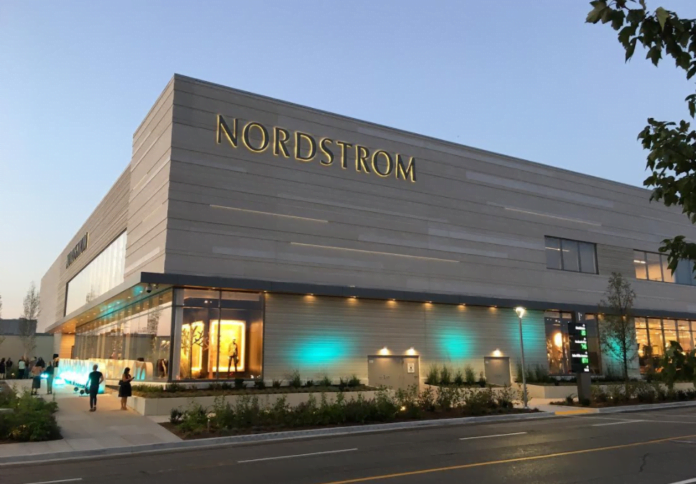
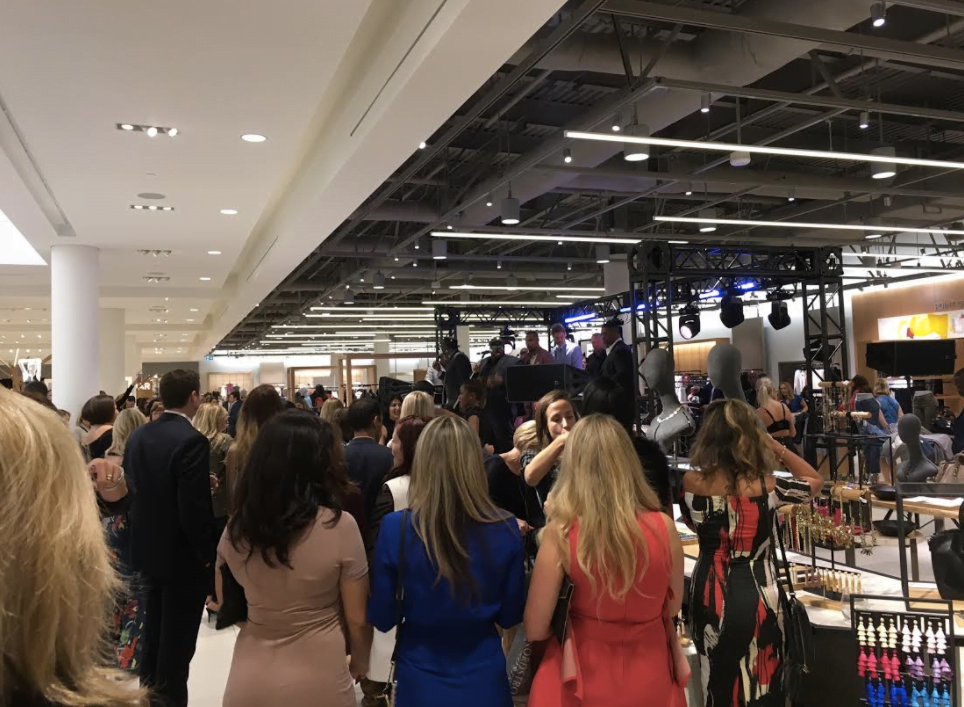
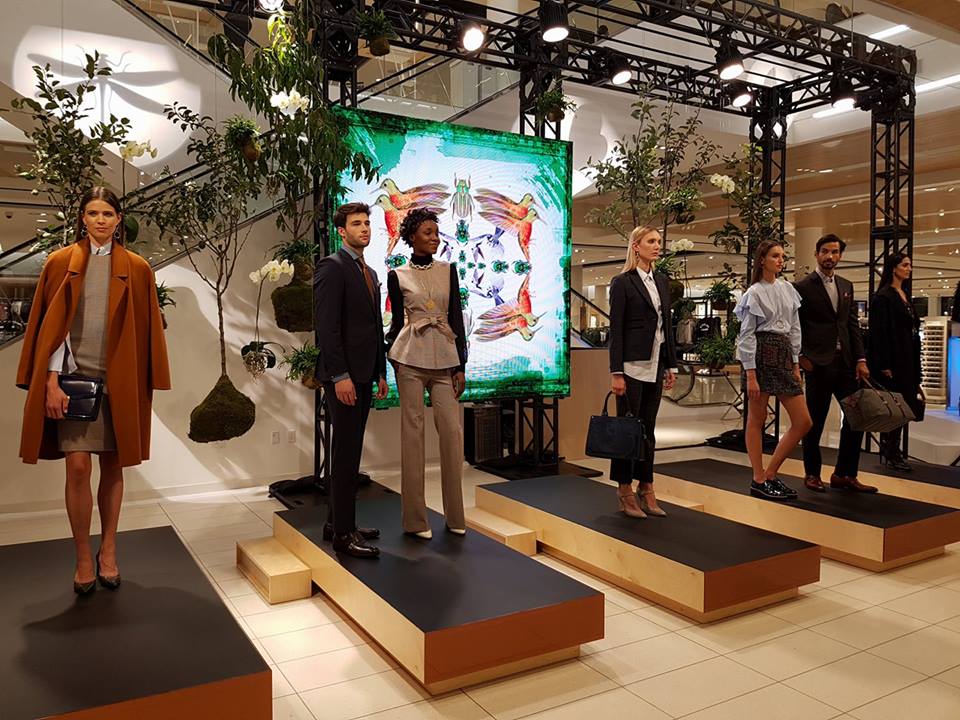
Seattle-based Nordstrom opens its CF Sherway Gardens location to the public today, and we toured and photographed the new 140,000 square foot space ahead of its grand opening. The new store reflects the architectural style of Nordstrom’s other Canadian stores, featuring ample natural light, modern interiors, and fashions for women, men, children, and for the home.
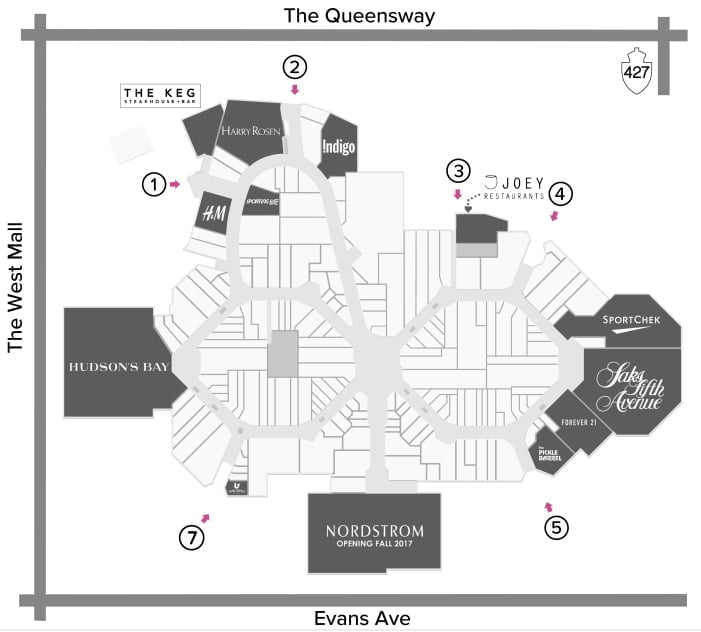
CF Sherway is the second Nordstrom store in Canada to be built from the ground up — all other stores, except for the Yorkdale store, were carved out of former Sears Canada locations. CF Sherway’s Nordstrom anchors a new south wing in the mall, which we toured and profiled last month. Building Nordstrom involved demolishing a 48,000 square foot retail building that housed Sporting Life, which relocated in the mall.
The CF Sherway Nordstrom is also smaller than its other two Toronto locations — the CF Toronto Eaton Centre store is about 220,000 square feet and the Yorkdale store is almost 200,000 square feet.
The two-level CF Sherway store features a ground floor with departments for shoes, beauty, accessories and menswear, and a second floor with fashions for women, children and for the home. There’s also a Bazille restaurant upstairs, with coffee concept Ebar anchoring the mall entrance on the ground floor.
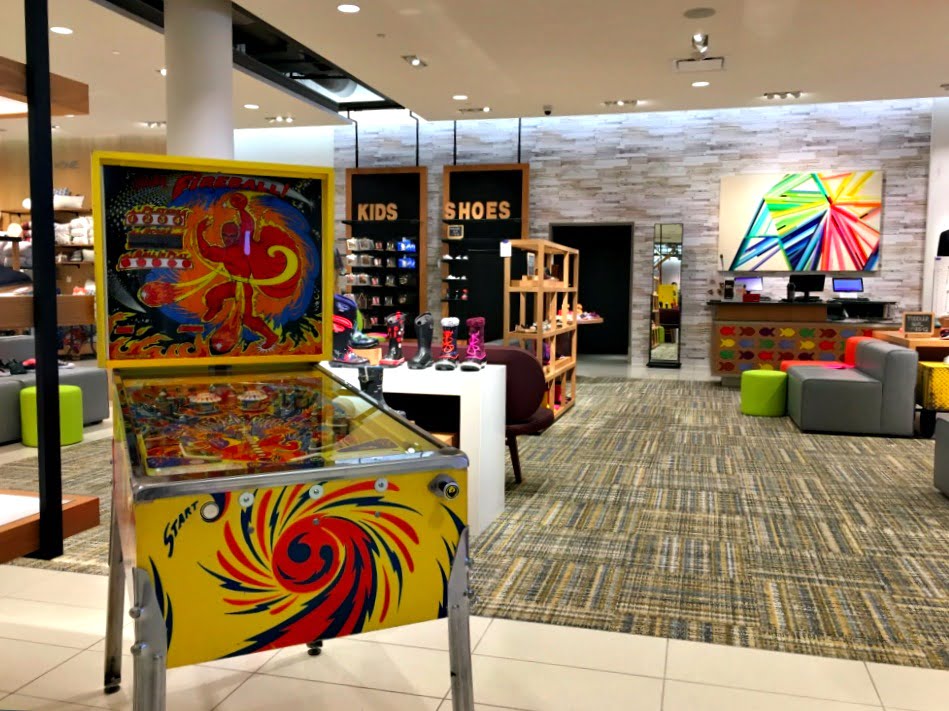
Many of Nordstrom’s typical departments are included in the new CF Sherway Gardens store. Women’s fashions range from the conservative to the emerging brands found in its ‘Via C’ department — and there are thousands of pairs of shoes, which Nordstrom is particularly known for. Men’s fashions range from the casual to dressy, and there’s a children’s department that includes a playhouse and pinball machine.
The store also features a ‘Nordstrom at Home’ department — the second in Canada. Nordstrom’s CF Toronto Eaton Centre will be the second to feature such a department when it’s unveiled next month.
CF Sherway Garden’s Nordstrom is also the first in the entire company to feature a KBeauty section, which includes a number of popular Korean brands.
The store stocks a considerable number of contemporary brands, as well as a few luxury brands, such as Canali suits for men. Overall, the store is less luxury brand-heavy when compared to Nordstrom’s CF Toronto Eaton Centre and Yorkdale units. The company’s Vancouver flagship features the most extensive luxury offerings of any Nordstrom store in the country, helping make it the top performer in the entire Nordstrom chain.
CF Sherway’s Nordstrom features a number of amenities, including: Personal Stylists, Beauty Concierge, Service Bar, Free Wi-Fi, Certified Shoe Fitters, Alterations & Tailoring, Family Restroom, Nordstrom To You (home/office delivery), Beauty Stylists, Cell Phone Charging, Certified Bra & Prosthesis Fitters, Complimentary Gift Boxes and a Mother’s Lounge. The store also accepts the China UnionPay card — a necessity in multicultural Toronto.
Single-surface flooring spans much of Nordstrom’s CF Sherway store, allowing departments to change their size and configuration by adding new carpeting and moving displays and shelving. The purpose-built store features ample natural light from exterior facing windows, as well as attractive interior lighting that highlights the store’s warm wood ceilings in various departments. The store also houses one of Nordstrom’s trademark escalator atriums that acts as a centrepiece to both of the store’s two retail levels.
Nordstrom is the third major anchor to be added to CF Sherway Gardens, joining a large Saks Fifth Avenue location as well as a fully renovated Hudson’s Bay department store. CF Sherway Gardens is considered to be one of Canada’s top malls in terms of productivity — last year’s Retail Council of Canada Shopping Centre Study ranked it as the country’s 11th most productive centre with sales just shy of $1,000 per square foot annually. Retail Council of Canada will be releasing its 2017 Canadian Shopping Centre study this fall, and there are opportunities to advertise/sponsor it — for more information, contact Craig Patterson at: cpatterson@retailcouncil.org.
And while CF Sherway’s Nordstrom marks the end of the company’s full-line store expansion in Canada for now, off-price concept Nordstrom Rack will debut its first Canadian stores in the spring of 2018. First up will be a unit at Toronto’s Vaughan Mills that will open in March, followed by stores at Deerfoot Meadows in Calgary, and at One Bloor Street East in Toronto. In the fall of 2018, Nordstrom has confirmed that it will open three stores, including at Ottawa Train Yards, South Edmonton Common, and at Heartland Town Centre in Mississauga. Nordstrom plans to eventually operate between 10 and 15 Nordstrom Rack stores in Canada, competing with the likes of Winners, Marshalls, and Saks OFF 5TH.
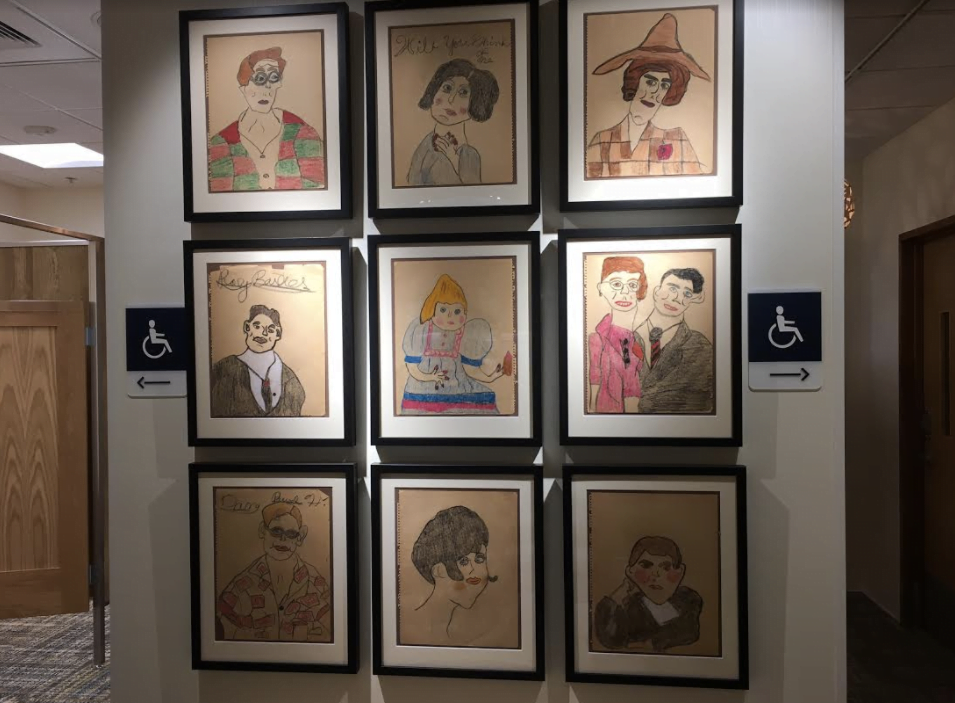
See below for more photos of Nordstrom’s CF Sherway Gardens store.
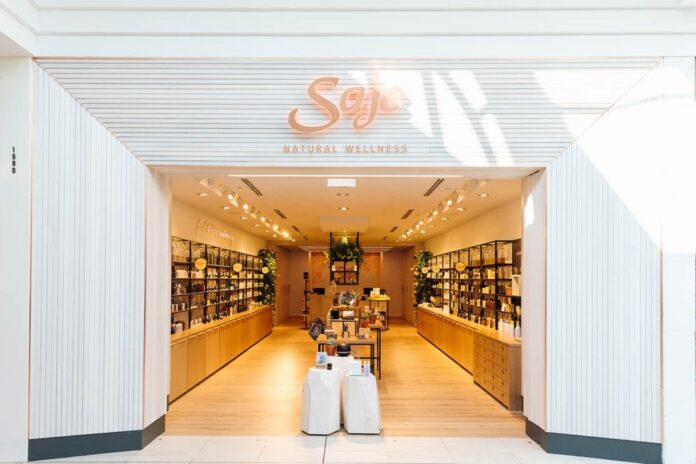
PROFIT 500 ranks Canadian businesses by their five-year revenue growth, and Saje Natural Wellness scored high with a whopping 1,547% growth rate — in 2016 Saje ranked 74th on PROFIT 500 and in 2015, it ranked at 154.
“We are so grateful to again see growth in our PROFIT 500 ranking, marking continued success as we expand our retail presence and spread wellness further into the North American market,” says Saje Natural Wellness co-founder and CEO, Kate Ross LeBlanc. “The year’s ranking is a true testament to our dedicated, passionate teams who continue to educate our communities on the healing power of plants. We are thrilled to celebrate this new milestone on our journey to spread global wellness.”
JEAN-PIERRE LEBLANC (LEFT) AND KATE ROSS LEBLANC (RIGHT)
Saje Natural Wellness is also marking its 25th anniversary this year. Founded by entrepreneurs Kate Ross LeBlanc and Jean-Pierre LeBlanc in 1992, the company now has 52 retail locations in Canada and 16 in the United States. The company credits its impressive progress to several factors, including the growing international movement towards wellness, word-of-mouth advocacy from loyal customers, their social media presence, and consistent community engagement and education.
The ambitious company aims to have 250 retail locations open by the year 2020 — an impressive goal that will continue to see it ranked as a leader in terms of growth.
Saje Natural Wellness co-founder Kate Ross LeBlanc will be speaking at this year’s Retail West conference in Vancouver on October 12, hosted by Retail Council of Canada. Ms. Ross LeBlanc will provide her perspective on the opportunities retailers must focus on in order to thrive. In the afternoon session titled “Building for the future: Opportunities for retailers in the new retail ecosystem”, Ms. Ross LeBlanc will be joined by Kate Furber, PwC’s BC lead partner for retail and consumer, as well as Retail Insider’s Founder and Editor-in-Chief Craig Patterson, who will provide insight into Canadian and global retail environments. For more information, visit: www.RetailWest.ca.
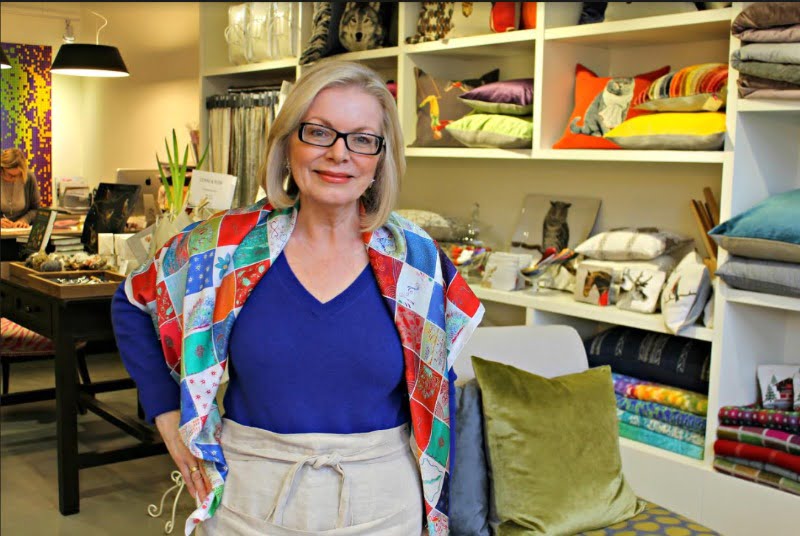
For as long as she can remember, Wendy Brownie, a Calgary-based entrepreneur, has had a passion for the forgotten art of textiles and fabrics.
One of her most treasured belongings is a handmade tablecloth passed down from her grandmother. And during her adult life Brownie became known for the beautiful, artisanal tea towels and linens she collected for families and friends throughout her travels to Europe.
Seven years ago, that passion led to her establishing Inspirati, a Parisian-inspired, home-finishing boutique in Calgary’s Mission district, just outside of the downtown core.
“Tea towels, tablecloths and even flatware were once made and selected with such great care that they could be passed from generation-to-generation, carrying the story of a home and an entire life with them. They were showpieces of our lives and an extension of one’s self,” says Brownie.
“As time goes on, we’ve lost our ability to share these timeless treasures because we’re no longer investing in them the way we used to. Inspirati is a place where these treasures and experiences are made real again.”
On September 15, the unique boutique is launching a new online shopping platform to extend its retail reach. Despite a struggling economy in Calgary for the past two to three years, Brownie says Inspirati’s sales in June, July and August were the store’s best months ever.
“We’re a shining example of creativity and working at what you love,” says Brownie.
WENDY BROWNIE (Image: Inspirati)
Brownie has generated a million-dollar business specializing in fine linens and home essentials in just seven years with annual sales surpassing those of some of the world’s most-renowned home-finishing shops.
Brownie partners with more than 50 producers across Africa, Australia, Europe and North and South America.
Her business started out of her home seven years ago as her daughter’s wedding approached. Frustrated at the lack of quality linens in Calgary, Brownie contacted European producers who shipped her material and she began selling the product out of a trunk in her home. Her first trunk show in the last week of May 2010 attracted 257 people.
Image: Inspirati
The business grew from there. Six years ago, she rented space in a building near downtown Calgary and by October she could see that her store had become a destination. More space was needed. She has been at her current location of about 1,100 square feet since February 2014.
“We do everything for the home,” she says. “Home finishing items. Home furnishings. Specifically linens. In the old-fashioned sense linens used to mean everything. Your bedding, your towels, your blankets. All of that. We branched out to a number of home decor items as well.”
“Shops like ours do not exist anymore.”
Brownie says if the right situation presented itself she would contemplate expanding to other locations.
Quebec-based sporting goods retailer Sportium has opened its third store in the province with plans for five to six new stores in both Quebec and Ontario over the next three years.
Norman Décarie, SAIL’s President and Chief Executive Officer, which owns the brand, says the new 70,000-square-foot store in Centre Laval required an investment of $15 million and created about 110 jobs. It officially opened to the public on Wednesday.
Saint-Hubert and Quebec City stores opened in 2015.
“The Laval store is part of an ambitious business plan that includes the opening of five to six new stores in Quebec and Ontario over the next three years,” says Décarie. “There’s room in Quebec for another three, four or five stores and in the Greater Toronto Area.
“Of course we need to establish ourselves properly and we need to be solid in Quebec and hold our share of the market before we spread ourselves out West to Ontario . . . I want to have the stores closer to head office to have a good supervision and a good understanding of the customer’s profile and then we will be more than ready to spread ourselves.”
Décarie says there is certainly room for close to five to 10 stores in the Toronto region depending on the availability of land and buildings. The Ottawa-Gatineau region is also a possibility for expansion.
All the future stores would be large format ones of close to 70,000 square feet.
The brand’s biggest competitor is Sport Chek and all the specialized boutique stores, says Décarie.
The Laval store has two floors in the Centre Laval shopping centre located in the Chomedey district.
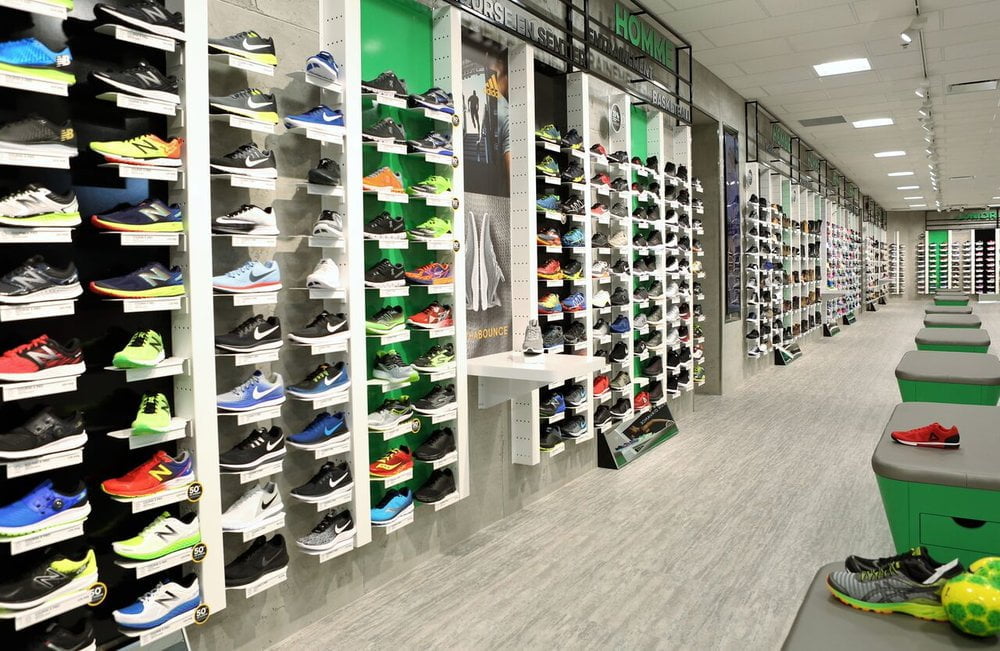
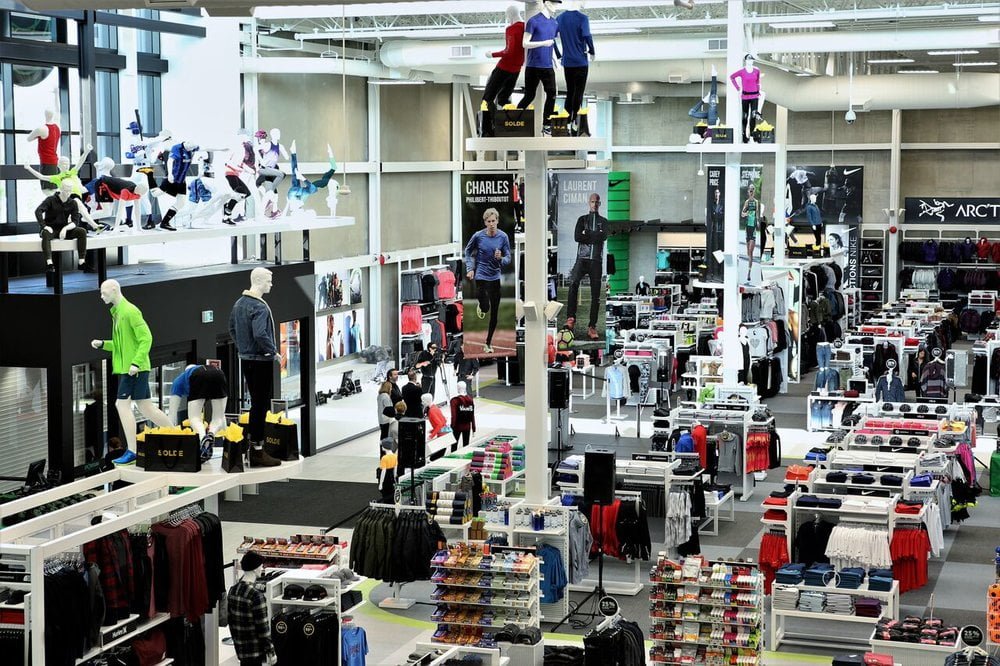
The company says the ground floor is devoted to personal clothing and training accessories for activities such as running and yoga, but also features many casual wear collections. It also has a wall of shoes with more than 700 models, offering sports enthusiasts the largest selection of brands in Quebec. The second floor has everything needed for team sports such as hockey, soccer, football, basketball, baseball and volleyball, as well as a section reserved for tennis.
“Sportium’s goal is to offer a wider selection and more brand-name sports products in a store that is larger than a football field,” says Décarie. “Sports lovers, from beginners to seasoned athletes, will find everything they need in terms of equipment as well as specialized clothing and footwear, including several exclusive brands. All of our products can also be found on our website, which allows all Canadians to take advantage of Sportium’s unique product offering.”
Décarie says the urban concept of Sportium is reflected in a refined decor with concrete walls and white lacquered displays. At the entrance to the store, a wall of 16 screens showcases promotional videos, interviews with athletes and even occasional sporting events.
Sportium (Photo: Communications Infrarouge)
On Tuesday, it announced it will be the official sports store of the Laval Rocket of the American Hockey League. Sportium also has partnerships with major sporting events such as the Montreal International Triathlon, IRONMAN Mont-Tremblant as well as well-known athletes such as Montreal Canadiens goaltender Carey Price.
Décarie says the sporting goods industry has always held its place despite economic challenges.
“Sport is also a hobby and a lot of hobbies are sport . . . Right now there’s a lot of spinoff with running and fitness and people getting in shape. We’ve never seen so many runners and so many subscribers in gyms and working out is in style,” he says.
“This is exactly the path that Sportium is taking.”
The College by Tribute Communities. (RENDERING: CORE ARCHITECTS)
By Rami Kozman, Director of Landlord Services and Sales Representative, The Behar Group
Many years ago, before the peak of Toronto’s development boom, ground floor retail spaces in new multi-story condominium projects were often treated as an afterthought; an obligation imposed upon developers by unyielding planning requirements. Over time, the value of ground floor space has become increasingly appreciated by developers, both as an amenity for residents as well as a long-term income producing asset. Accordingly, there has been a growing appetite for truly mixed-use developments which offer functional and attractive rather than perfunctory retail space, but accommodating this kind of space carries its own unique challenges. Here are several general guidelines that should be taken into account when designing retail spaces in mixed-use developments:
Layout & Columns
It may sound obvious but the ideal retail space is typically rectangular, as it allows clear sightlines and is more adaptable for retailers that have developed and rely on a standard prototype floorplan. L-shaped, irregularly shaped, or excessively narrow units should be avoided. Typically 20’ of frontage will accommodate most small-format retailers. As a general principle, the fewer the columns the better, but being at the bottom of a multi-story tower, columns are unavoidable. Ideally, columns should be at least 20’ away from any wall or demising partition and especially where there are any doors, windows, or entryways. Where they are close to the building façade, consider integrating them with the façade itself, so that they are a component of the external wall of the unit. In order to maintain the option of demising a space into smaller units, columns should be aligned with each other along any grade changes and with any window mullions in a grid-like pattern.
(RENDERING: GREAT GULF/HULLMARK)
Entrances
Generally different uses (e.g. condo, hotel, office, retail) should have separate and distinct lobbies/street entrances in order to avoid the complications of shared maintenance, business hours and security; however, in the case of office buildings, some retailers such as cafes and restaurants, often enjoy having internal access to the office lobby in addition to a street front entrance. This is especially true in foul-weather cities such as Toronto where building occupants often prefer to stay inside or underground rather than venturing into the rain and snow for lunch. When planning entrance locations, the ability to add additional entrances along the façades, or to move entrances, allows for greater flexibility in demising those spaces.
Ventilation
Different kinds of uses will have unique HVAC, power and gas requirements. One issue that restaurants often face is ventilation. Where retail space is envisioned as being tenanted by restaurant users, the ideal scenario is that a ventilation exhaust conduit be integrated with the design of the building, such that cooking fumes can be carried directly to the roof of the building. Where this is not possible, some municipalities may require the use of an ecologizer unit to purify the exhaust; however, this can represent a large upfront cost to purchase and install, as well as to maintain over time, thereby decreasing the viability of the space as a potential restaurant.
Loading
Loading is a critical issue, especially for larger tenants or tenants that have multiple deliveries throughout the day. Dedicated and covered loading docks are preferred, especially for retailers that carry goods that are highly valuable or prone to theft (e.g. alcohol), but in more restrictive urban settings rear laneways with proximate loading areas such as laybys may be sufficient. Any grade changes, turns or doors/access points between the loading area and the retail spaces should be minimized. Other important considerations include the size of trucks that can be accommodated, floor load capacity of both the retail space and corridors, and whether the loading area is shared with other building residents (and if so what restrictive rules may apply).
Other Important Considerations
Sound: Sound attenuation measures, such as a thicker concrete slab above the retail, may help to expand the range of potential tenants that produce excessive or unusual noise (e.g. restaurants, gyms, music schools, pet care).
Signage: One of the most important considerations for retailers is visibility, including where their signage will be permitted (e.g. building façade, canopy, window cling, pylon/standalone, sandwich board) and what kind of signage will be permitted (e.g. boxes, channel letters, blade signage, illuminated). In mixed-use buildings, this may include wayfaring signage within the building lobby and underground parking levels.
Parking: Though underground customer parking is not necessarily crucial in the kinds of urban settings where mixed-use developments are popular, where there is customer parking, it is important to understand how customers will be directed through the development, where they will exit at grade, and who will ultimately pay for their parking fees.
Top photo: The College by Tribute Communities. The Behar Group Realty Inc., Brokerage worked on leasing the retail space in the building.
Rami Kozman is Director of Landlord Services, Sales Representative, at The Behar Group in Toronto.
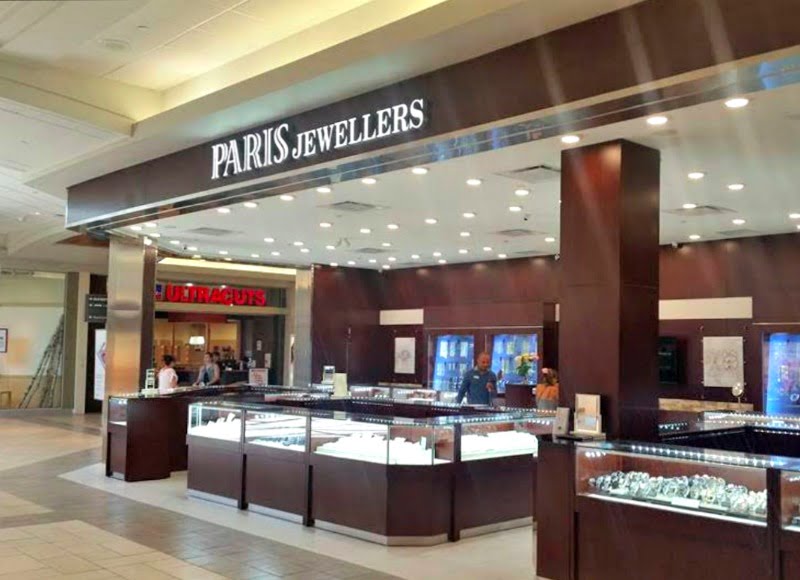
Family-run business Paris Jewellers began with one store in St. Albert, Alberta and the owners never in their wildest dreams thought the retail operation would expand to its current level – with plans for continued growth across the country.
Today, the company has 28 locations in Alberta, Saskatchewan, British Columbia and Ontario.
“Our first store was a tiny, tiny store in 1987 like 400 square feet and it was just based on we did goldsmith services. We did them within an hour and really for us having one store was such a dream. Five years later we were approached by a mall in Red Deer (Bower Place) and they asked if we wanted to join the mall,” says Chau Lui, director of operations and a co-owner of Paris Jewellers.
“Having more than one store we never even thought it could be achievable. So we decided to take a chance and open in Red Deer. And then we continued to expand from there.”
Image: Paris Jewellers
The company wants to be known as Canada’s most customer-centric retail jewellery brand.
Lui says Paris Jewellers opened two new stores this year and it plans to continue on its growth path as long as expansion is a manageable number.
“We want to expand without jeopardizing the foundation that we built. It could be one or two stores a year but it has to be in the right mall or the right location. It’s important for us to make really, really educated right decisions,” she says.
Chau Lui
Lui says the company is not really looking at other provinces to expand into but will focus its expansion plans on becoming stronger in the near future in the provinces where stores are located.
In the longer term, she says Paris Jewellers will be open to the idea of expanding into other provinces.
“I think originally our vision was if we ever got to 20 stores, that was the biggest dream. Now that we’re at 28 stores . . . our vision comes back to no matter the number of stores that we have we want to make sure that every customer is happy and has a good experience no matter how much they’re spending,” says Lui.
“Could we see 50 stores? If the location and the mall is right, absolutely.”
Paris Jewellers sells retail jewellery but at its heart, and where it started from, is goldsmith services.
“We carry a selection of jewellery that is for everybody. We want to make sure that we have what our customers want. But most importantly what we do is we celebrate every special occasion for our customers. If they are happy about their special occasion, we feel like we have done our job no matter how much they spend,” says Lui.
(SCREEN SHOT FROM PARIS JEWELLERS WEBSITE)
Considering the tough economic times in the past few years, especially in Alberta, people might wonder how the jewellery business has fared.
“In these economic times, there are so many things we can’t control but what we can control is when the customer comes in and that experience,” says Lui.
“There’s so much opportunity still. I feel really optimistic.’
Modern clothing retailer Frank And Oak is making a definitive push into the womenswear market, with initial plans to open two new stores dedicated to its women’s collection.
The retailer, based in Montreal, launched as an online men’s clothing retailer and subscription service in 2012, focused on providing “elevated basics” for millennial customers. The company has since opened more than a dozen brick and mortar stores throughout Canada and the U.S.
Frank and Oak Montreal (Image: Frank and OakFrank and Oak Montreal (Image: Frank and Oak
Frank And Oak launched a womenswear collection in 2016, which strives to cater to fashionable and creative female shoppers.
“We knew that we had a female clientele at Frank And Oak when we where only carrying menswear. Women were buying our men’s button-down shirts to wear them as dress-shirts or our t-shirts to get more of an oversized fit,” says Ethan Song, CEO and co-founder of Frank And Oak. “With that in mind, we knew we had the clientele for a new womenswear offering. This category is a fast growing part of our business and launching dedicated stores is a natural progression for us.”
Frank And Oak’s womenswear offerings have received an “awesome” response from customers, Song says. The brand releases new styles every week, and recently, it launched its first women’s suiting collection in collaboration with Canadian musicians Tegan and Sara.
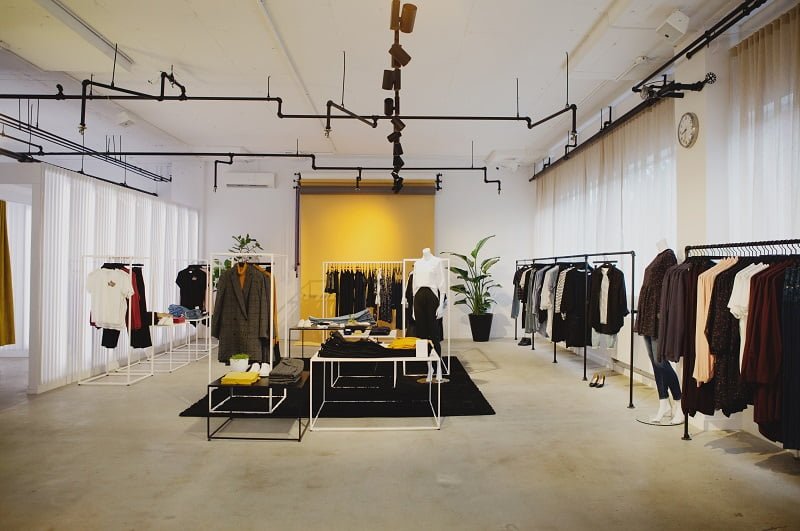
The Montreal store, located at 160 St-Viateur St. E., suite 110, is situated next to one of Frank And Oak’s existing men’s stores in the artistic Mile End area. At a hefty 2,500 square feet in size, the new store was inspired by the look of a studio.
“The space is very vast and white is dominating,” says Song. “There are pops of colour here and there in the furniture we selected.”
The Montreal store opened to the public on Friday, Sept. 8th.
The new Toronto store, meanwhile, is located at 634 Queen Street West – a space formerly occupied by fashion boutique Leigh & Harlow, and just half a block from Frank And Oak’s Canadian flagship men’s store. The new store is 1,000 square feet in size, and will open to the public on Friday, Oct. 13 at 12 p.m.
Frank And Oak’s internal design team worked with an interior designer to create the new stores. The company also partnered with local Montreal-based companies to furnish and accessorize the stores, including furniture companies Élément de base and Mobilier de Gaspé, and lighting provider D’armes Luminaires.
Frank and Oak Montreal (Image: Frank and Oak)Frank and Oak Montreal (Image: Frank and Oak)
In addition to featuring the brand’s latest womenswear collections, the two new stores will also feature large communal tables and lounge areas, where members of the community can gather for events and meetings.
“Frank And Oak always has been about its community and the experience. We believe that it is important to offer more than a shopping experience to our clients,” says Song. He says the event spaces could be used for conferences, magazine launches or even book club meetings. “We will also be very open to suggestions from our community,” he says.
Montreal and Toronto were “natural” choices for Frank And Oak’s first two womenswear stores, Song says, since the two cities represent the company’s biggest markets in Canada. The Mile End and Queen West neighbourhoods were strategically chosen, he adds, since they represent “the essence of our brand.”
Frank and Oak Montreal (Image: Frank and Oak)Frank and Oak Montreal (Image: Frank and Oak)
Frank and Oak opened its first brick and mortar store in Montreal in 2013. Once the two new stores have opened, Frank And Oak will be operating a total of 16 stores in Canada and the U.S.
In addition to the two new dedicated women’s stores, Frank And Oak operates six stores that carry both menswear and womenswear. The company plans to add more brick and mortar stores, according to Song, however specific locations have not yet been confirmed.
Additional photos below are of the new Montreal Frank and Oak women’s store. All photos are courtesy of Frank and Oak.