A new study from Shell finds that for a significant segment of the population, convenience is paramount when making purchases. The subgroup, identified as “Convenience Cravers”, could help boost retailer’s revenues if targeted. Conversely, retailers could lose out if they ignore this group and its demands.
The study surveyed 1,000 Canadians over the age of 18, finding that 18% of respondents ranked convenient and personalized retail experiences as a “must-have, non-negotiable part of the retail experience”. Convenience Cravers are most likely to be males between the ages of 25 and 44 with a higher-than-average disposable income, working more than 40 hours per week. Above all else, these shoppers said that they’re looking for retailers that offer:
Quality interaction — that is, a humanized customer experience;
Efficient payment, including a variety of options to speed up check-out;
Digital details, including a place where they can go to review a business and compare its products to other retailers online; and
Great partnerships — that is, a place that carries more of what they need, so they have to make fewer stops.
The study goes on to note that for retailers looking to entice this group to spend more in-store, retailers should first focus on humanizing the customer service experience, while also expediting the checkout process. The Shell study further notes that:
14% of Convenience Cravers said that good customer service that led to a convenient experience would drive them to spend more, and
21% of Convenience Cravers said they would be prepared to pay more to check out faster – with a remarkable 38% willing to pay up to 5% more on top of their purchase for speedy service.
The Shell study also found that retailers not meeting Convenience Cravers’ growing expectations will pay the price. Some respondents saying that they’d switch brands/retailers over an ‘inconvenient experience’, and across four retail segments (fuel, convenience, fashion and technology), Convenience Cravers said:
Four in 10 Convenience Cravers would share a bad retail experience, according to the study, amplifying its negative impact. Furthermore, a substantial 61% of members of this group would lose trust in a brand after an inconvenient experience, according to the study. That loss of trust means that Convenience Cravers would consider switching to another brand, with a startling 13% of Convenience Cravers saying that they would walk away from a brand forever after an inconvenient experience.
The infographic above visualizes the Shell Canada study’s findings, which should be of interest to many Canadian retailers.
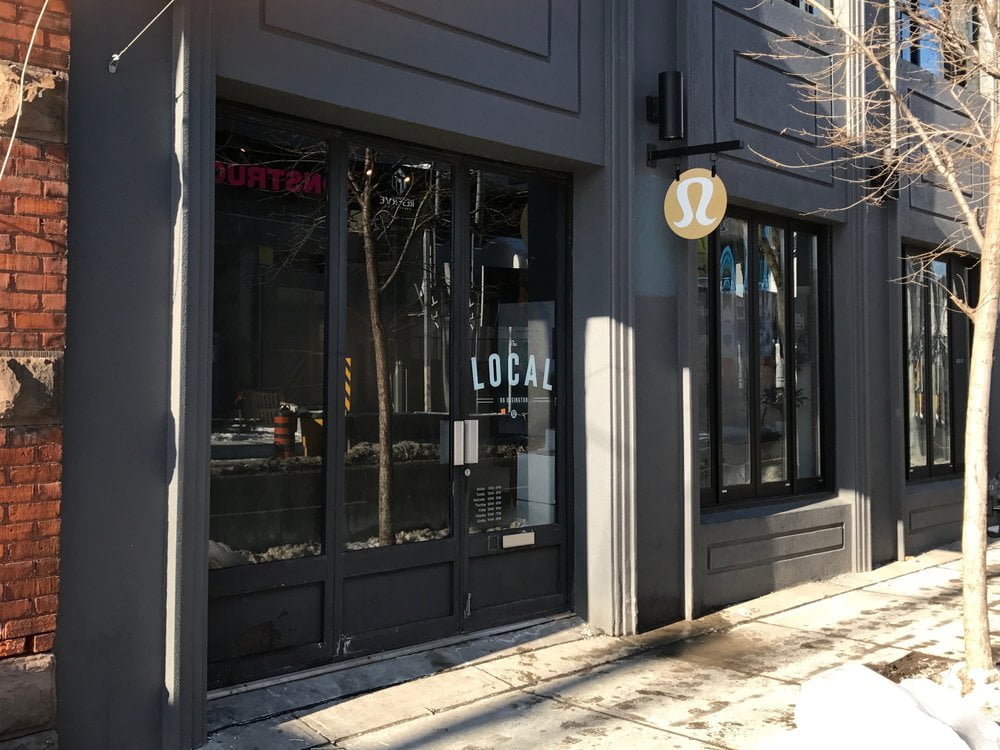
Vancouver-based athletic apparel brand Lululemon has opened its first Canadian men’s store in Toronto’s west end. The 2,200 square foot space, located at 96 Ossington Avenue, is one of several retailers that have recently opened on the street, alongside names such as Shinola, Reigning Champ, and Tiger of Sweden.
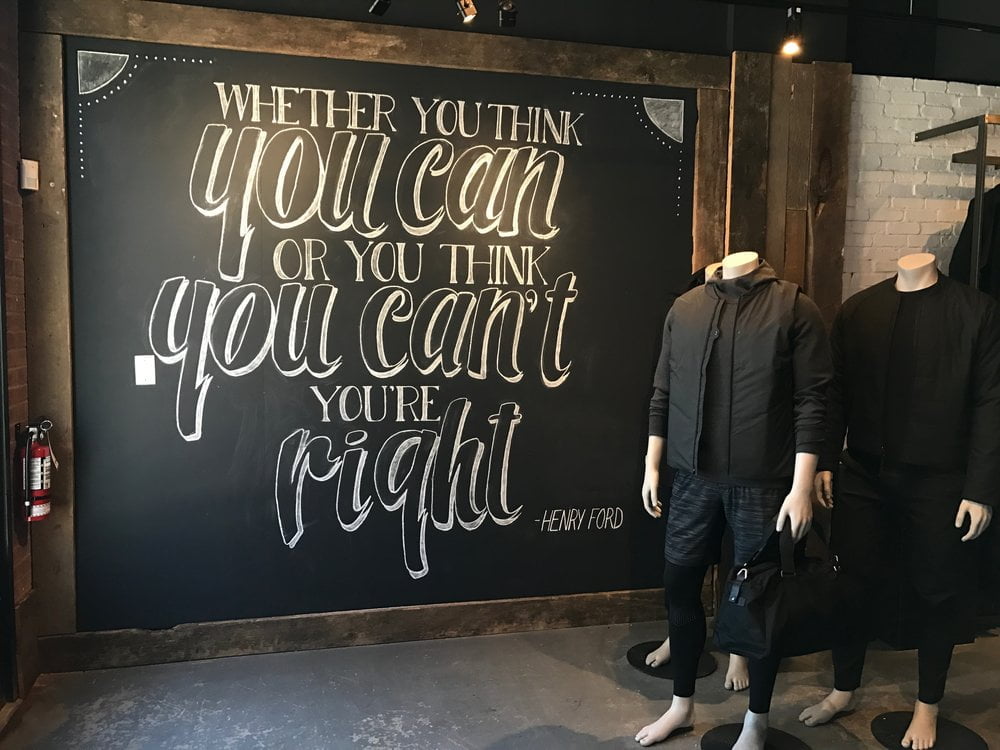
The men’s only store has been dubbed The Local Toronto, a neighbourhood spot where “sweat” meets “community”. Lululemon describes The Local as a “new spot to grind out daily to-do’s, connect with the crew, or perhaps [to] just do nothing at all”.
Upon first glance, one might not realize the retail space is a Lululemon store. Missing in action is the signature red Lululemon logo – the store has opted for a small gold-coloured variation of it’s logo hanging above the store’s main entrance. The store blends in with Ossington Avenue’s neighbouring businesses, with the front door reading ‘The Local 96 Ossington Avenue’.
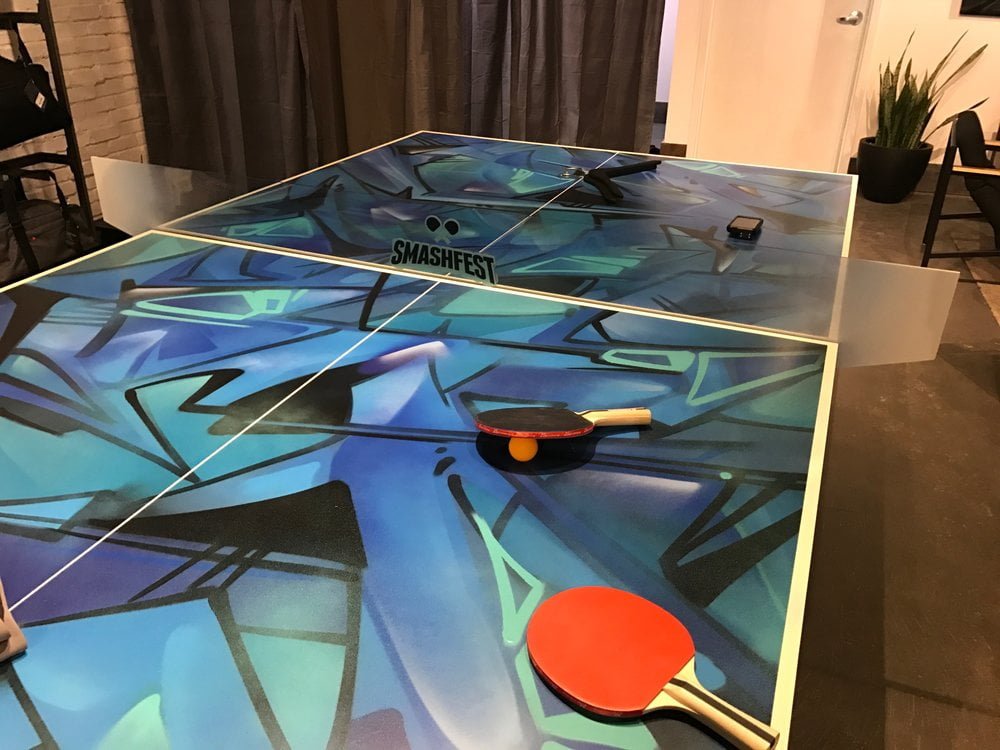
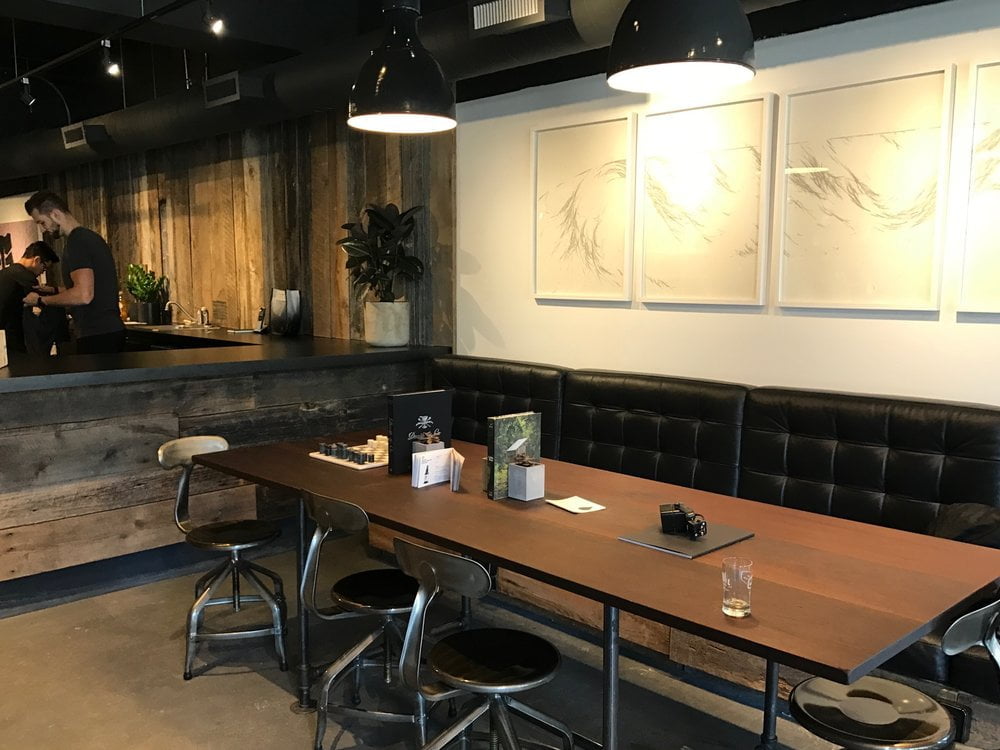
What makes this concept store unique is nearly half of its square footage is a dedicated ‘community space’, acting both as a retail store as well as a community hub for the surrounding Ossington neighbourhood. Expect The Local to house art events, screen sports games, and host ping-pong tournaments, for example.
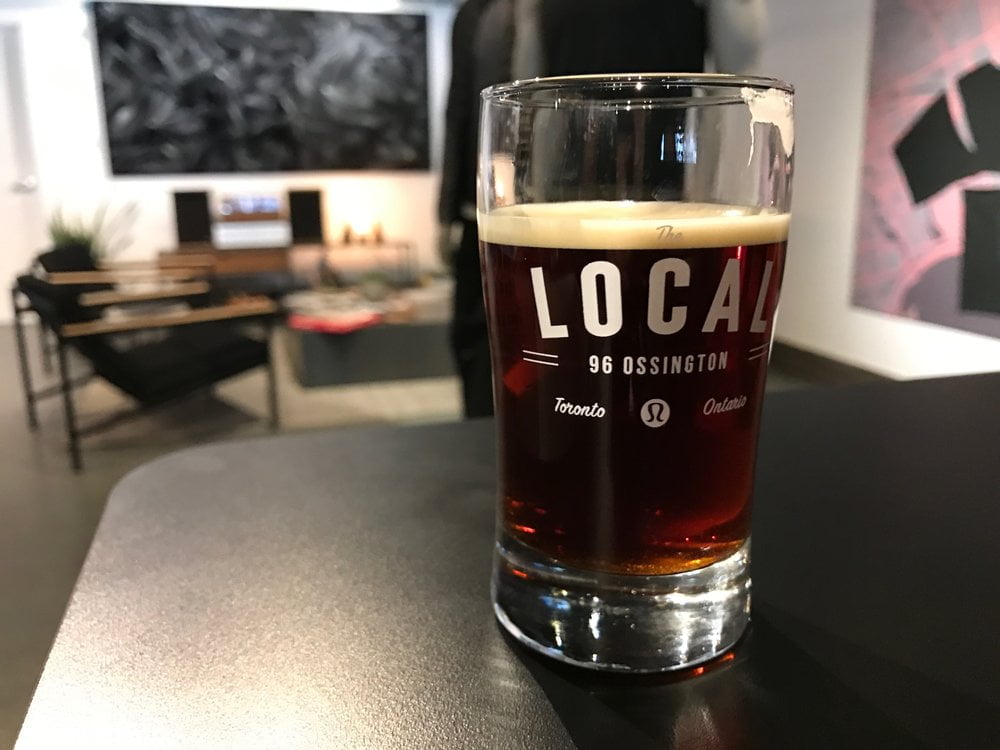
A large bar is located along the right side of the store, where customers are offered complimentary STATION Cold Brew Coffee “on the house” upon arrival (the photo above is a glass of coffee).
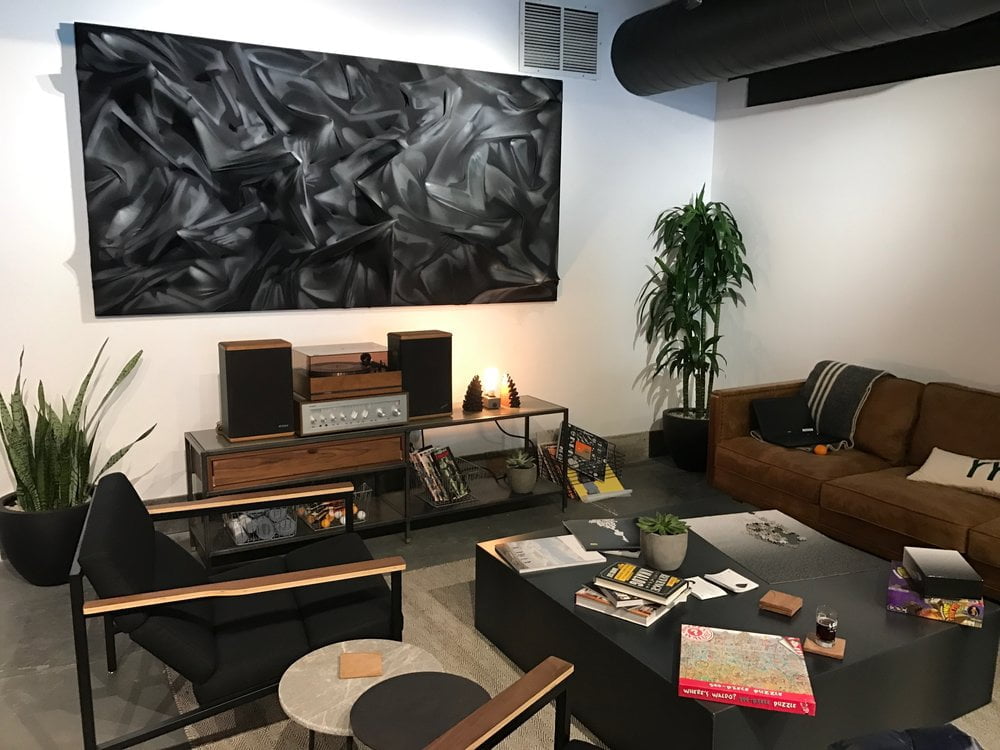
This Local has an undoubtable ‘cool’ factor to it. On the morning of Monday, December 19 when we visited, a vinyl record player had the latest Drake album on rotation while one guest relaxed on a couch reading one of a large selection of coffee table books. At the same time, a pair of guests were playing chess on a marble chess board towards the front of the store, while other guests were playing an intense game of ping-pong on a dedicated large blue table. This concept space appears to focus less on selling clothes, and more on acting as a community hangout spot.
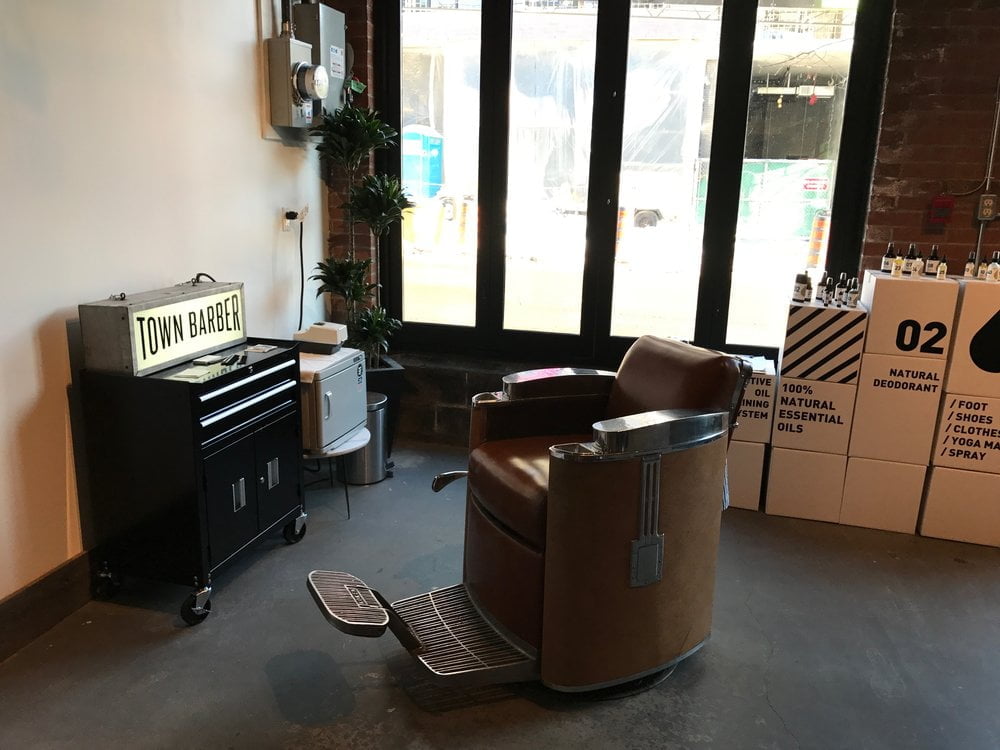
Taking it’s name quite literally, The Local has also teamed up with local businesses to celebrate its opening. Toronto barber shop Town Barber has a station near the front entrance, where guests can receive haircuts, shaves and clean-ups. Toronto-based essential oil company Way of Will is also hosting a pop-up at the new location until January 2017, selling its selection of oils, deodorants, and skincare.
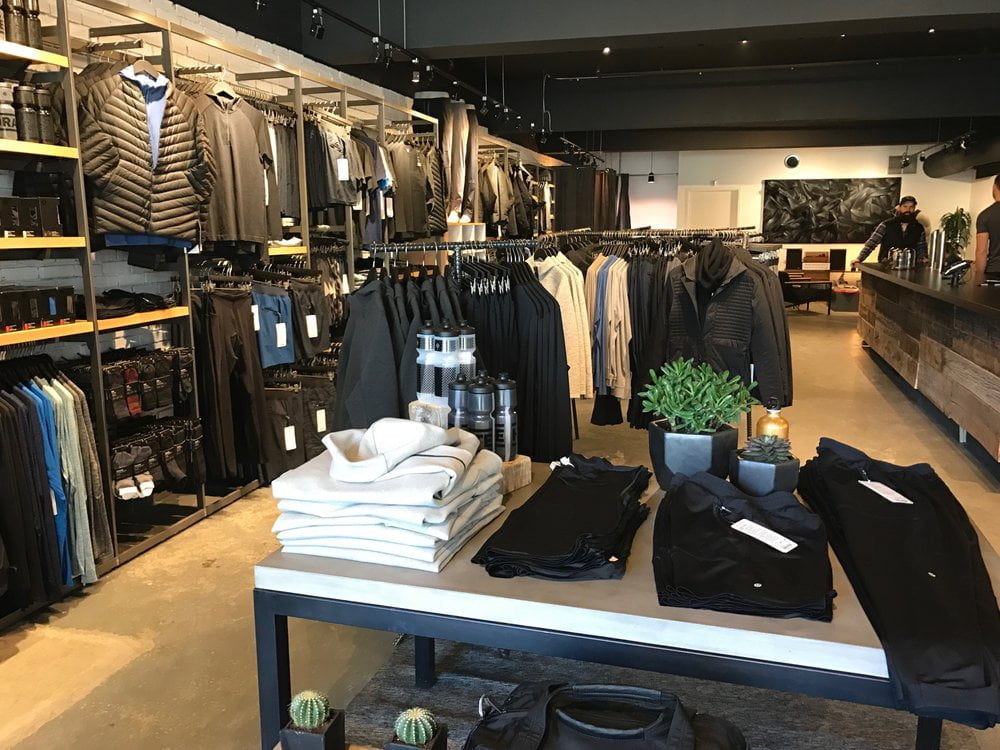
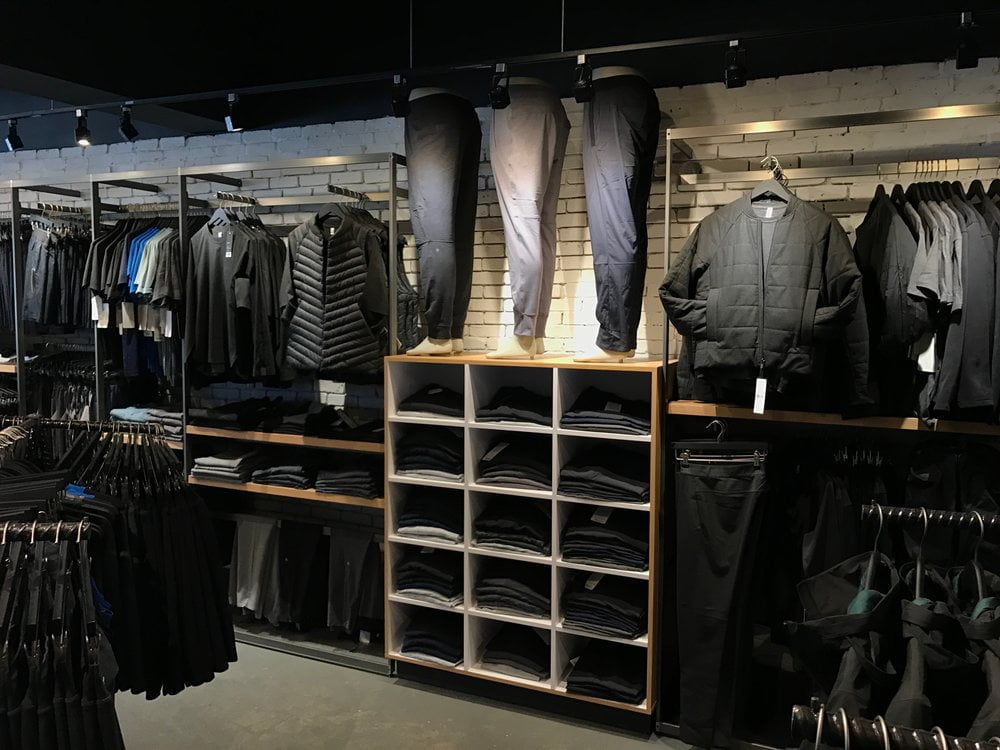
As for Lululemon apparel, there is plenty of it to choose from. The store features the largest selection of Lululemon menswear in Canada, which rivals the company’s latest Yorkdale store (which features a comprehensive men’s section). Yoga, running, and training gear fills the front of the store, with familiar pieces that can also be found at Lululemon’s other locations across Canada.
The store also features pieces from Lululemon Lab, the company’s premium line of apparel that is less focused on athletic wear, and more focused on casual wear outside the gym. Select items sold at The Local include cotton shirts, dress pants, jackets, and reversible bombers. Prices range between $60 and $450 for its core pieces.
Lululemon has undergone several major changes over the past few years, including increasingly focusing on its ‘hyper-local’ stores to play on it’s community strengths. As e-commerce grows in Canada, brick-and-mortar stores are increasingly acting as brand statements rather than just sales-oriented spaces. Newly renovated stores, including a 10,000 square foot men’s and women’s Lululemon store on Queen Street West, follow this new focus where in-store community spaces rival the merchandise itself.
The company has also been increasing its focus on menswear offerings. Lululemon’s Chief Financial Officer John Currie has stated that men’s same store sales have been higher than the rest of the business, and that this research has refocused Lululemon’s energy on producing retail spaces specifically designed for their male shopper.
‘The Local’ is the second Lululemon men’s store in North America. In 2014, Lululemon opened it’s first men’s-only store in New York City’s Soho. Lululemon men’s store in Toronto is the first of several expected in the Canadian market.
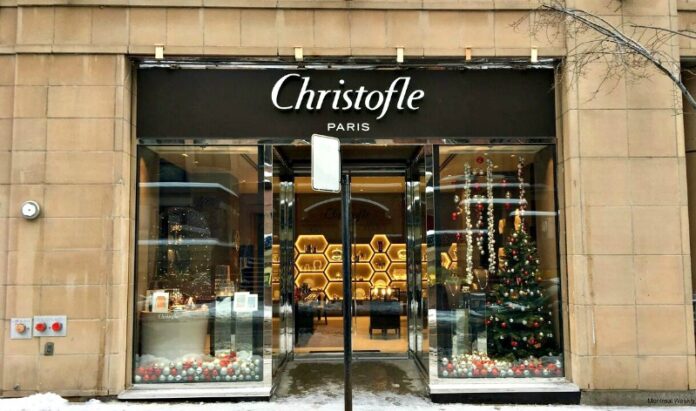
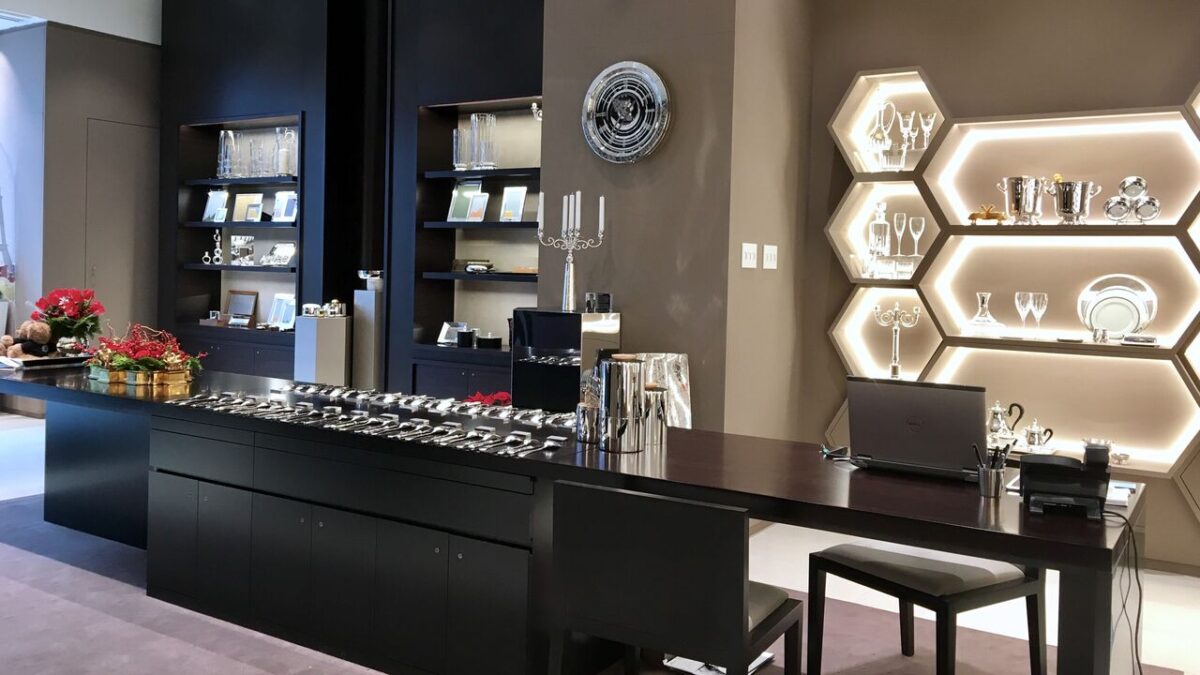
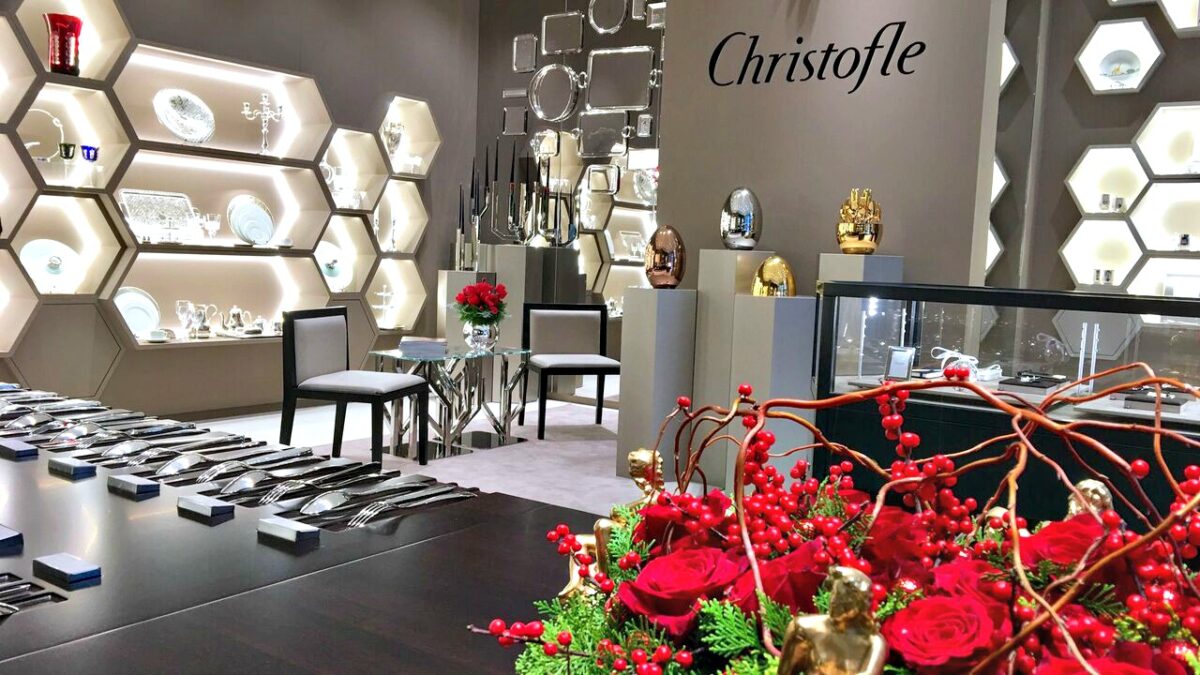
Paris-based luxury brand Christofle has opened a freestanding boutique in Montreal, with further plans for Canada as it launches a North American store expansion. Christofle is the latest luxury boutique to open in an area that is fast becoming a luxury destination for the city.
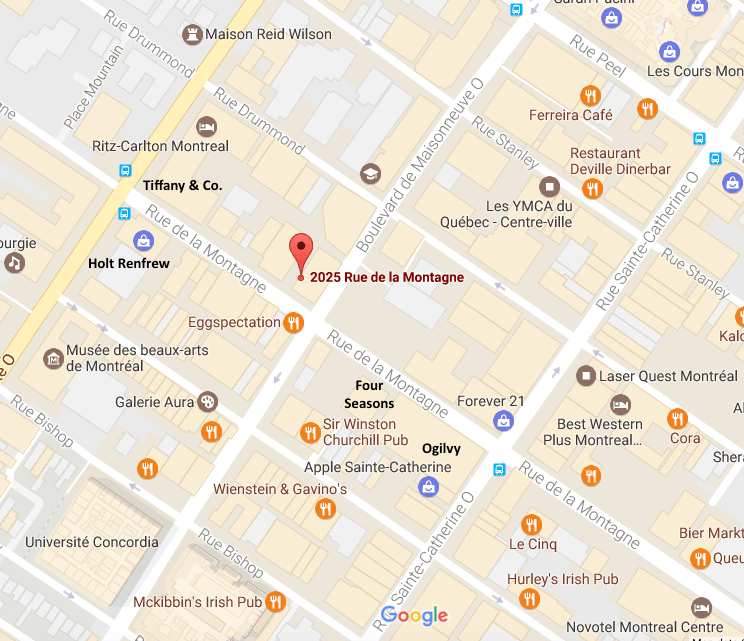
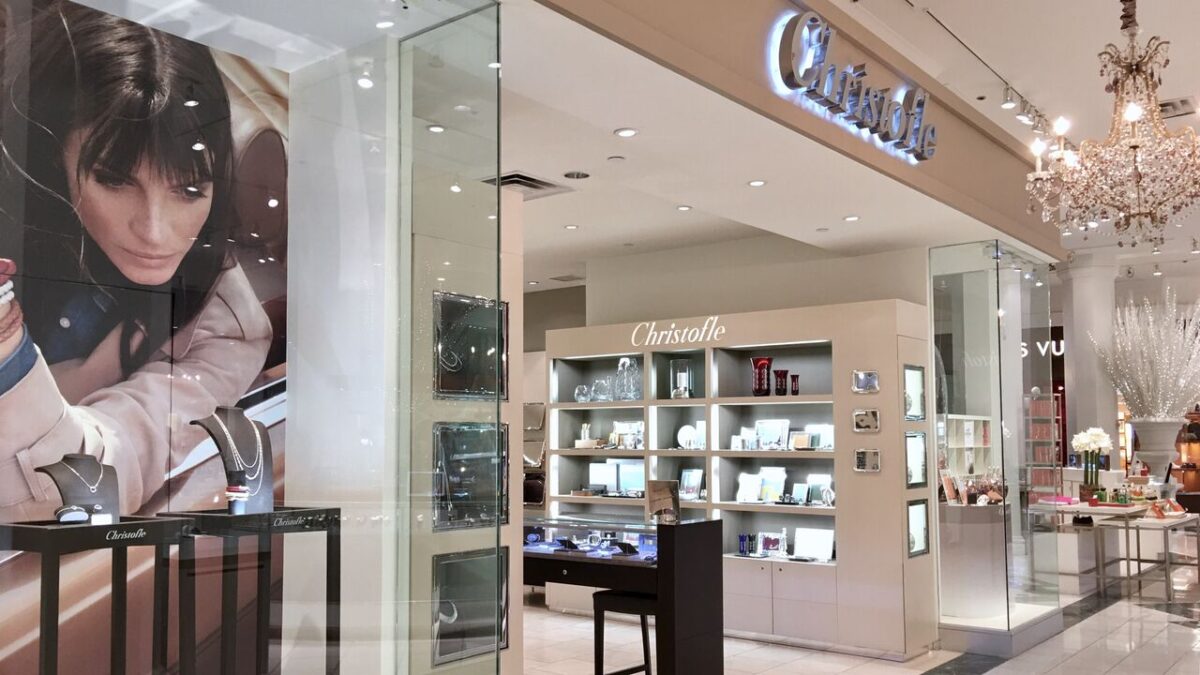
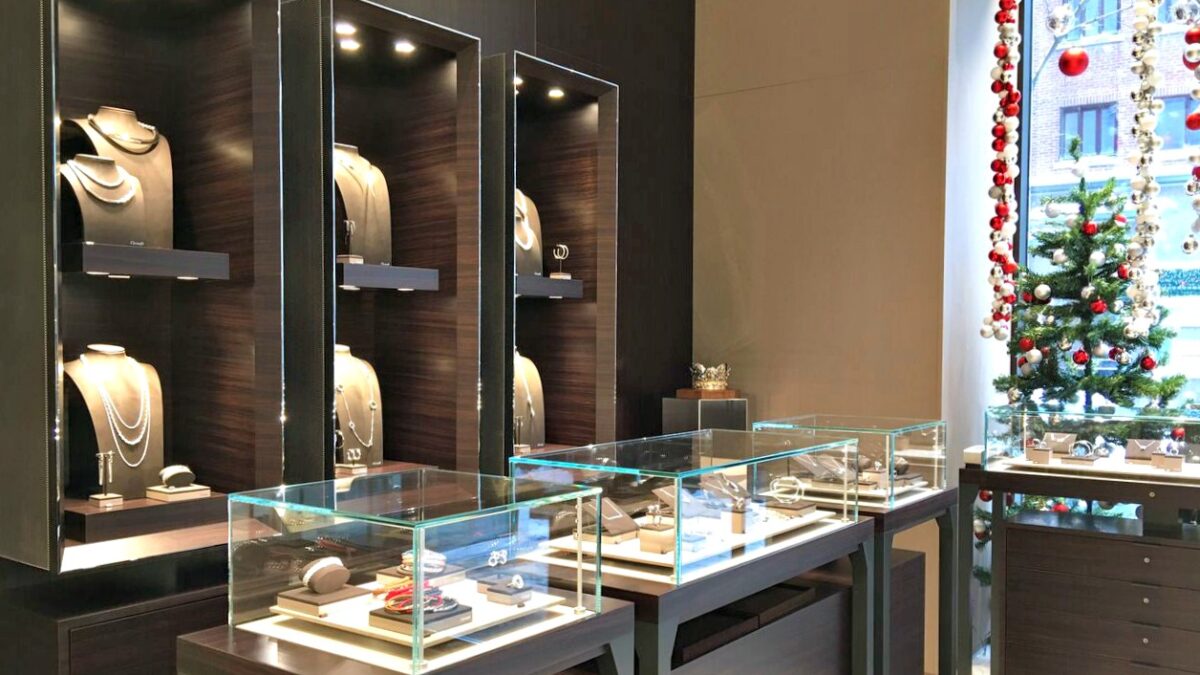
The Montreal boutique, located at 2015-2025 Rue de la Montagne, measures about 1,100 square feet and features Christofle’s range of jewellery as well as flatware, tableware, home and gift items. The space includes honeycomb-shaped display cases and dark fixtures with bright lighting, highlighting merchandise that can sometimes be priced into the thousands. More Canadian locations are expected to follow as Christofle expands its base of corporately-owned stores in North America. Christofle, which was founded in Paris in 1830, recently opened U.S. stores in New York City (Soho) as well as on prestigious Oak Street in Chicago. It now operates 10 freestanding boutiques in eight U.S. cities (New York City x2, Los Angeles x 2, Boston, Chicago, Dallas, Houston, and Florida: Bal Harbour and Palm Beach) and is also carried in leading jewellers and department stores.
Christofle’s existing concession on the ground floor of Montreal’s Ogilvy store will close at the end of January, according to Christofle. A freestanding Toronto Christofle boutique at 150 Bloor Street West closed several years ago, prior to a building renovation that saw the opening of flagship Louis Vuitton and Tiffany & Co. stores in the 150 Bloor podium.
Christofle’s Rue de la Montagne store is the latest luxury boutique to open in the area. A franchised Montblanc boutique, located adjacent to Christofle at the corner of Montagne and Boulevard de Maisonneuve, opened in the spring of 2014. Tiffany & Co. opened half a block north at 1290 Sherbrooke Street West in February of 2012. Other retailers on the street include luxurious Chateau d’Ivoire jewellers, AllSaints, Anthropologie and Diesel, with SuitSupply set to open its largest Canadian location on the street soon, as well. More luxury brands are expected to secure space on the street with the opening of a 220,000 square foot combined Holt Renfrew/Ogilvy store at Sainte Catherine Street and Montagne, expected to be finished in late 2018. A Four Seasons Hotel and Residences will also open adjacent to Ogilvy/Holt’s in the winter of 2018, featuring pricey hotel rooms and 18 condominium units believed to be priced between $4 million and $20 million each — further adding to the luxury cachet of Montreal’s Rue de la Montagne.
*Thank you Maxime Frechette, Retail Insider Montreal correspondent and founder of Montreal Weekly, for alerting us to this store opening.
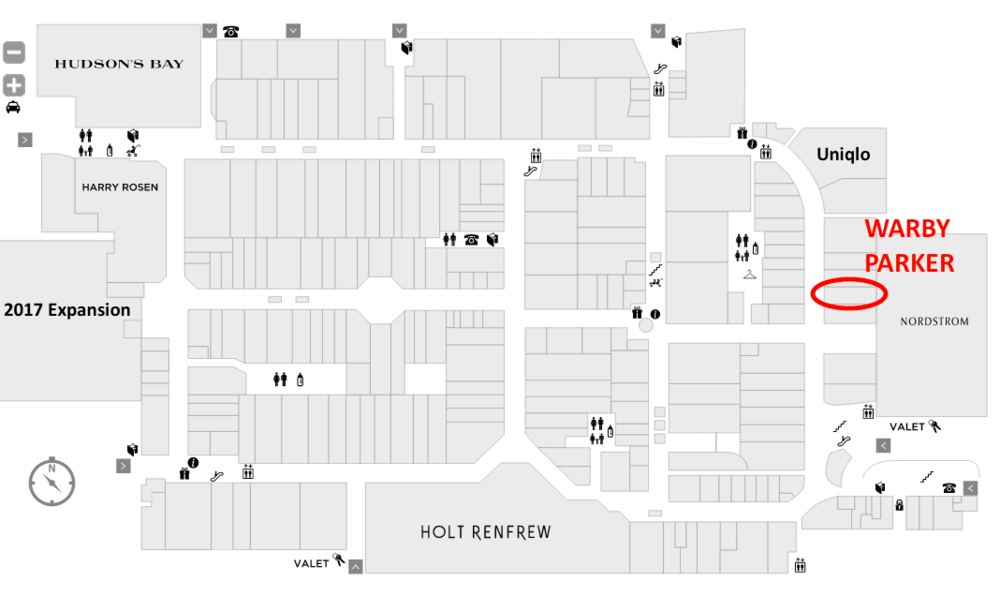
Innovative New York City-based eyewear retailer Warby Parker officially opens its second Canadian store at Toronto’s Yorkdale Shopping Centre on Saturday, December 17, and we toured the space ahead of the date to take photos for this article. The spacious 1,825 square foot Warby Parker is one of only a handful in an enclosed shopping centre, with most of the company’s stores being located on urban street-fronts.
Yorkdale’s Warby Parker features a unique facade by local artist Micah Lexier, including a text-based piece that spans the store’s entire facade. Local art is also featured inside, with a vibrant mural behind the store’s ‘Reference Desk’ by artist Adrian Forrow. The store’s design is library-inspired with terrazzo-tiled flooring, suspended globe lighting, walnut shelving, and colourful book displays overhead. Books by Canadian authors are also available for purchase in the store.
In honour of the new Yorkdale store, Warby Parker has released a limited edition style of sunglasses. The style is called ‘Haskell’ and includes a new acetate colour, Striped Pacific, and a striking new lens colour — Flash Mirrored Chrome.
Yorkdale is Warby Parker’s second Canadian store, following the August opening of a location at 684 Queen Street West in Toronto’s hip ‘West Queen West’ neighbourhood. That location spans just over 1,000 square feet on its ground floor. More Canadian Warby Parker stores are expected to follow, though the company won’t confirm any new locations.
Inside the Warby Parker Yorkdale Store
1 of 6
With many of its glasses/frame combos priced at $150, Warby Parker is entering an increasingly competitive value-priced eyewear market in Canada. Clearly Contacts began opening Canadian locations in the spring of 2013 (now with two Vancouver stores and one in Toronto), and Australia’s Bailey Nelson began opening stores in the summer of 2014. Montreal-based BonLook, with many of its designs priced at $135/pair (including lenses), opened its first Ontario stores this month — with plans to operate about 10 Ontario locations, 10 in Quebec, and several in Western Canada.
Warby Parker is expanding rapidly within the United States as well, now boasting 46 store locations. Most of these are on urban street-fronts, with only a handful of Warby Parker stores being in enclosed malls. The company has ambitious plans to open many more physical stores, we’re told, so more shopping mall stores are likely in the works for the United States in the coming years.
The company was founded in 2010 as a pure play online retailer. Having since expanded into brick-and-mortar, Warby Parker designs its glasses in-house and sells directly to customers, with prices that are generally lower than regular optical stores.
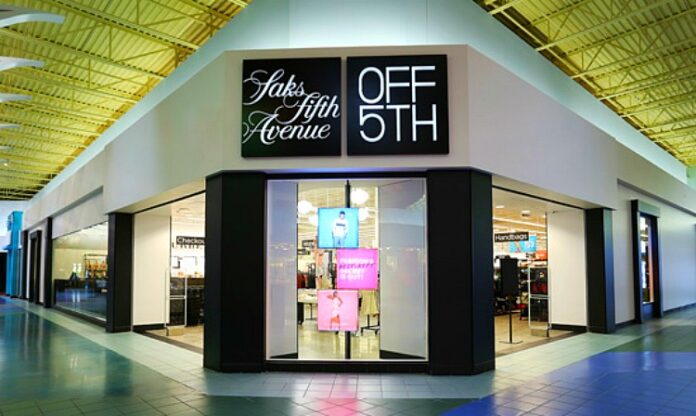
Saks Fifth Avenue/Hudson’s Bay Company have announced that off-price Saks OFF 5TH will open its second Lower Mainland location in affluent West Vancouver, at Park Royal shopping centre. The 33,000 square foot Saks OFF 5TH is scheduled to open in the summer of 2017.
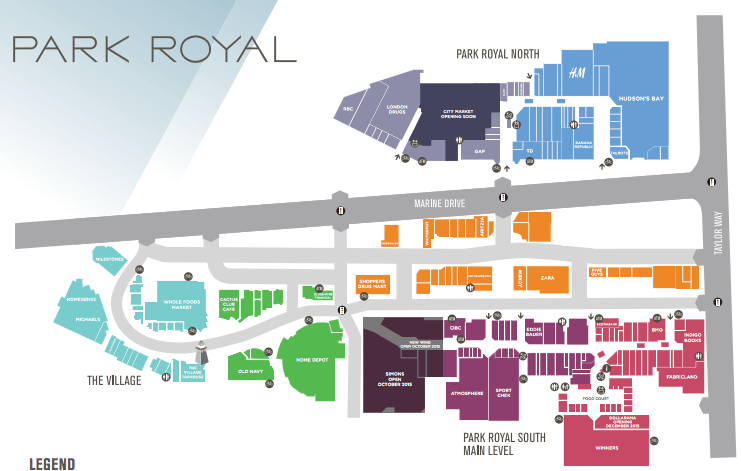
The store will be located in the mall’s ‘Park Royal North’ component, which is anchored by Hudson’s Bay (see floor plan below).
“We’re excited to bring Saks OFF 5TH to metro Vancouver and open in one of the area’s premiere shopping destinations,” said Jonathan Greller, President Saks OFF 5TH and Gilt. “Saks OFF 5TH Park Royal will join the company’s store in Tsawwassen Mills as the second store in the market.”
(SAKS OFF 5TH WILL BE LOCATED IN ‘PARK ROYAL NORTH’. CLICK IMAGE ABOVE FOR PDF PARK ROYAL MALL FLOOR PLAN)
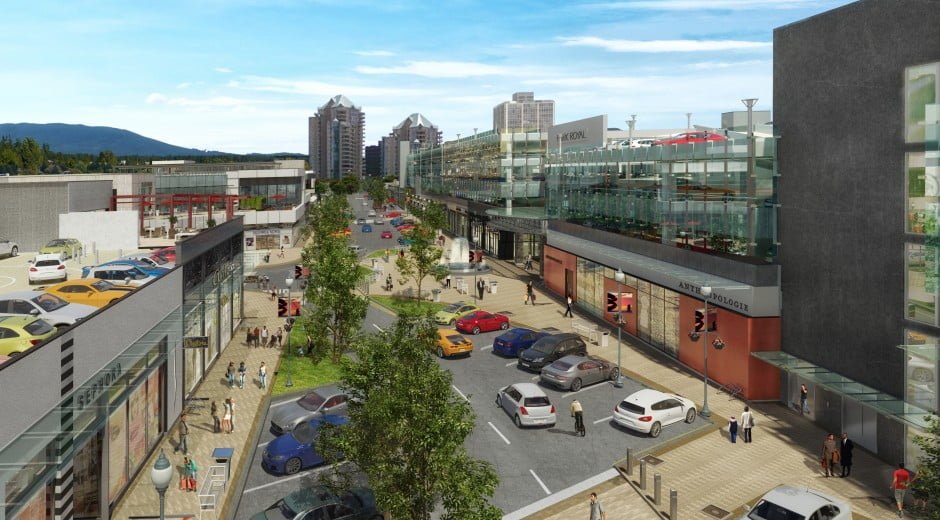
(RENDERING: PARK ROYAL)
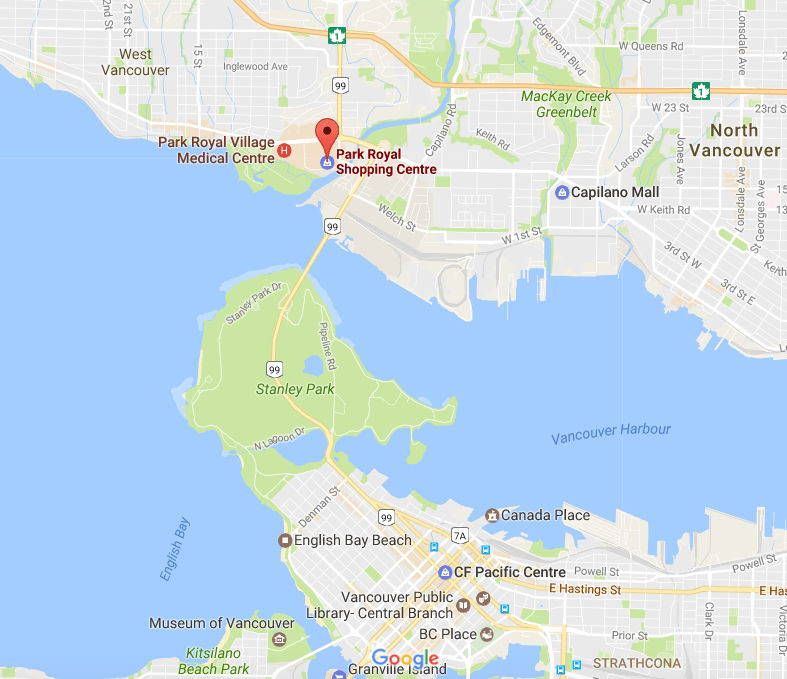
Park Royal is the second-largest mall in British Columbia, with over 200 stores, restaurants and services. It is located across the iconic Lion’s Gate Bridge from Stanley Park and Downtown Vancouver, and features indoor and outdoor shopping components. La Maison Simons opened its first BC store in the mall in October of 2015 and recently, the mall saw the openings of Loblaws City Market and a Steve Nash Sports Club. The mall is owned and managed by Larco Investments.
Park Royal marks the 17th confirmed Saks OFF 5TH location in Canada, with nine of those stores already being open. The Hudson’s Bay Company plans to open/operate 25 Canadian Saks OFF 5TH locations by 2018 — the same year that Nordstrom Rack will enter Canada.
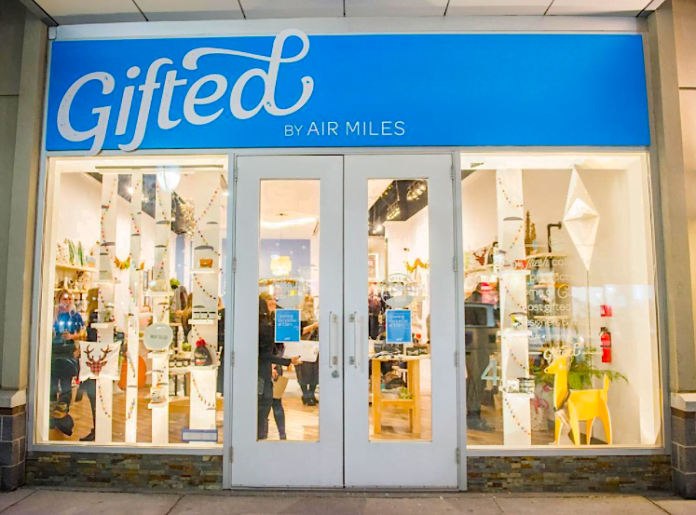
LoyaltyOne’s rewards program Air Miles has opened its first brick-and-mortar retail store. Called ‘Gifted by Air Miles’, the temporary 1,290 square foot boutique at Toronto’s CF Shops at Don Mills will remain open for the Holiday Season until December 28.
“We thought this would just be a nice way to engage with our collectors face-to-face, but at the same time we’re bringing them a unique experience because most of what they’ll find in the shop is stuff you can’t find anywhere else,” said Rachel MacQueen, VP of marketing for Air Miles’ LoyaltyOne brand.
The new Gifted by Air Miles shop carries items from Canadian artisans including candles, artwork and home decor. The store also promotes the use of Air Miles’ various rewards programs, allowing users to cash in their miles on the items, as well as earning miles on their purchases. Ms. MacQueen said that the goal is to align the Air Miles brand more closely with holiday shopping.
Pop-up retail is a phenomenon that’s here to stay, according to Linda Farha, Founder and Chief Connector of pop-up go, an online platform that helps pair retailers with available temporary retail spaces. “Pop-ups create an air of excitement and scarcity due to their temporary nature, and also allow retailers to test out new concepts and new locations prior to opening permanent stores”, she noted. Retail Insider recently published an in-depth analysis on temporary retail space in Canada, which has seen unprecedented growth over the past couple of years.
Gifted by Air Miles is the latest first-in-the-world retail concept to open at Toronto’s CF Shops at Don Mills, which continues to innovate by adding new retail concepts. Pure-play online retailer Well.ca opened its first brick-and-mortar location at the centre over the summer, and more new retailers will be announced in early 2017. As well, on Saturday, December 17, Terhan-based jeweller Azadi Jewellery will open its first North American boutique at CF Shops at Don Mills, across from the new Gifted by Air Miles pop-up.
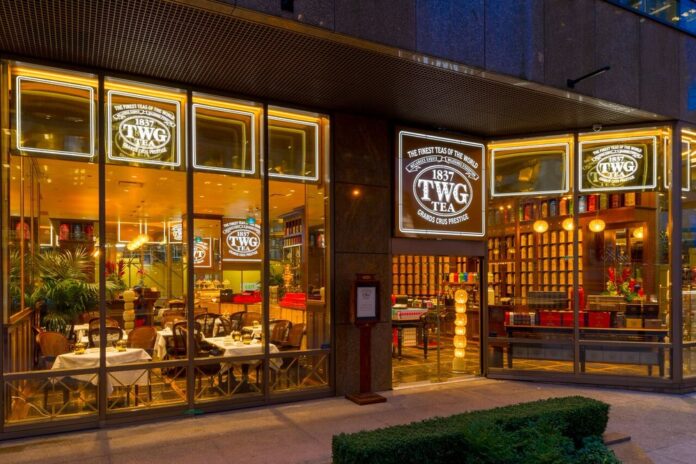
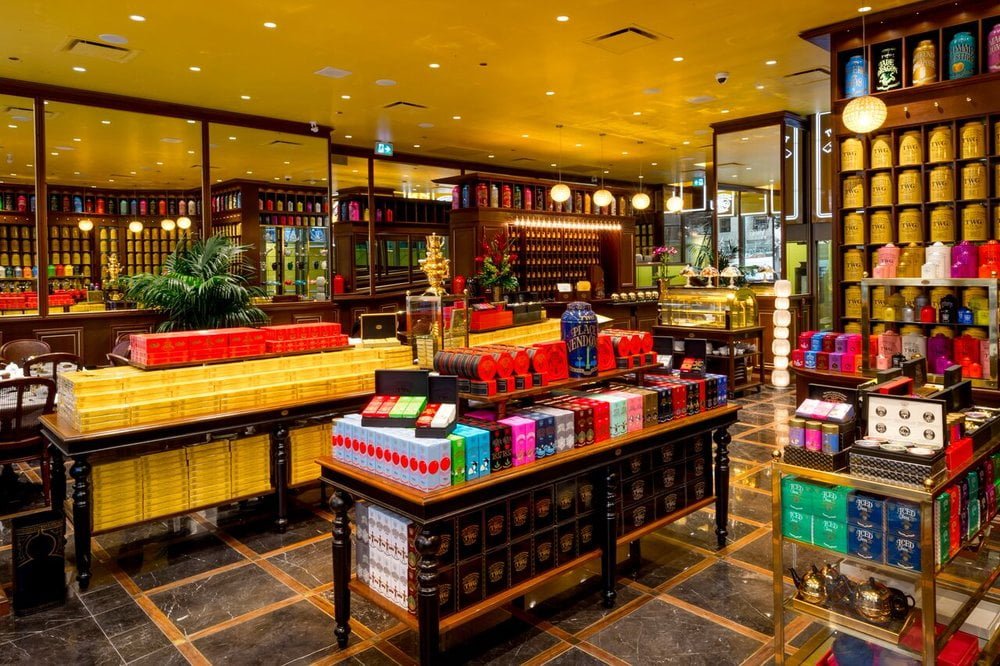
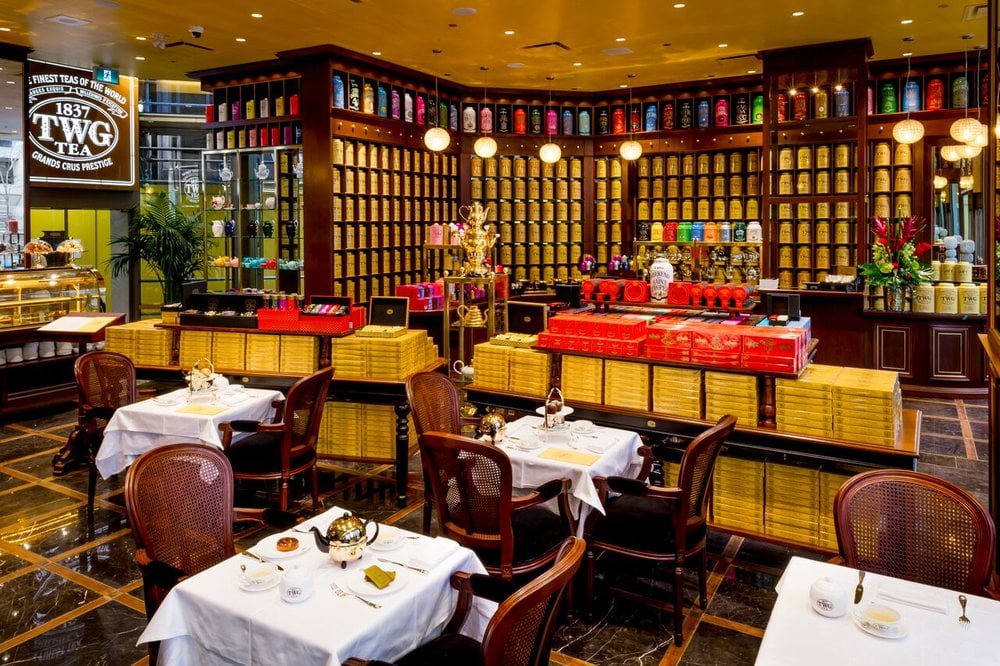
Singapore-based TWG Tea has established its first North American retail presence in Vancouver.
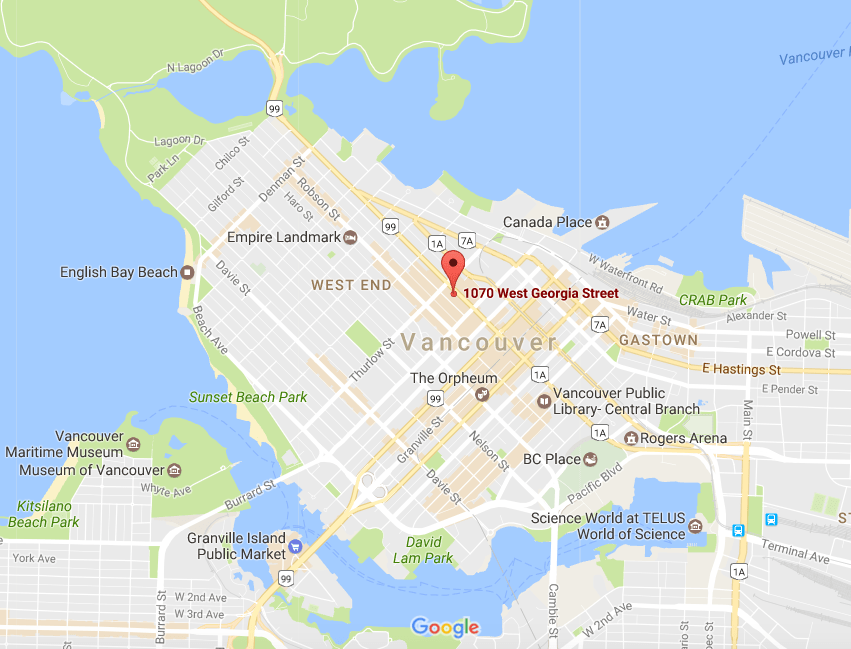
The 3,000 square foot hybrid retail space and tea salon is located in the city’s ‘luxury zone’ at 1070 West Georgia Street, in a location formerly occupied by the Urban Tea Merchant. According to TWG co-founder and Director of Corporate Communications, Maranda Barnes, more Canadian TWG locations are expected to follow as the brand establishes itself in North America.
TWG Tea was founded in Singapore in 2008, as a division of The WellnessGroup (hence the ‘TWG’ name), and now operates 57 locations globally, mostly in Asia. The brand is expanding internationally into new markets such as Europe, the Middle East and Oceania, and has set its sights on North America. TWG offers more than 800 varieties of tea and single-origin harvests, at a variety of price points. While some varieties are affordably priced, some rare teas are priced into the thousands for as little as 50-100 grams.
Image: TWG Vancouver
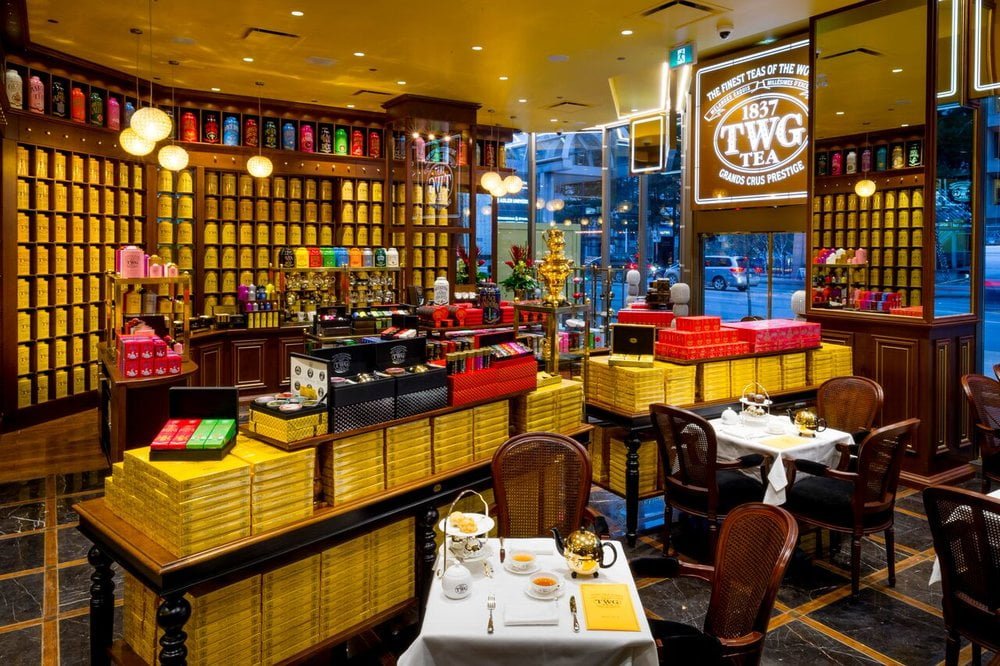
The new 3,000 square foot Vancouver boutique, one of the largest in the world according to Ms. Barnes, features retail area for teas, as well as tea accessories, including tea pots, kitchenware, tins, candles, tasting sets, and gifts. It also features a 50-seat salon serving tea by the cup, as well as tea-infused edibles that include various sweet and savoury recipes.
Vancouver was chosen for its tea-drinking culture and high Asian population, according to Ms. Barnes, in a telephone interview. The city is also a tourist destination, being both relaxed and cosmopolitan, she said.
TWG referenced a recent Euromonitor report noting that “in 2015, tea sales in Canada amounted to CDN $1.3 billion and consumption is expected to grow an additional 40% by 2020.”
Image: TWG VancouverImage: TWG Vancouver
TWG’s Canadian operations are franchised under VanSing Distribution Group, operated by CEO Tom James and president and COO Karinna James — also the founders of the former Urban Tea Merchant which operated in the same location from 2004 until several months ago.
Ms. Barnes said that she expects more TWG locations to open in Canada. Airports such as Vancouver International Airport could be targeted, she said, as could department stores to operate boutique concessions.
Markets such as Toronto and Montreal could also eventually see TWG Tea salons, she said, though the company will first gage the popularity of its first North American venture, in Vancouver, prior to making any concrete national expansion plans.
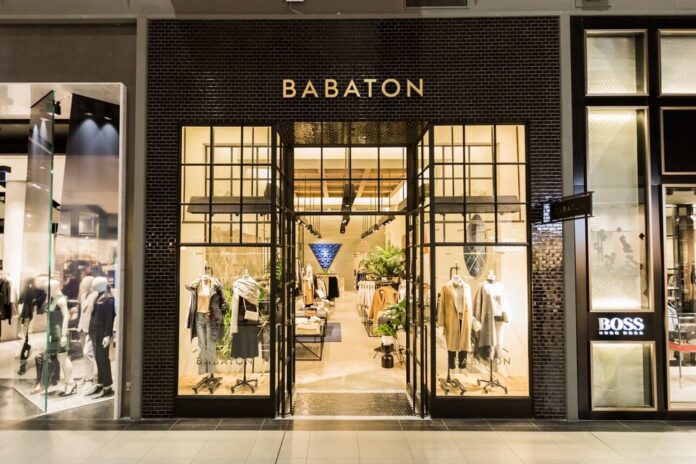
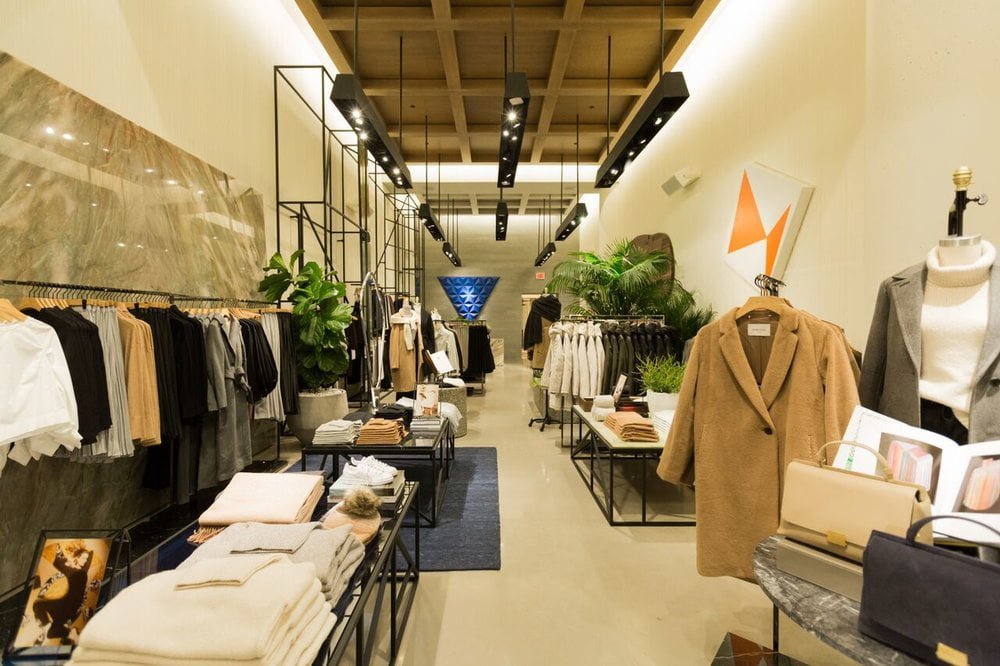
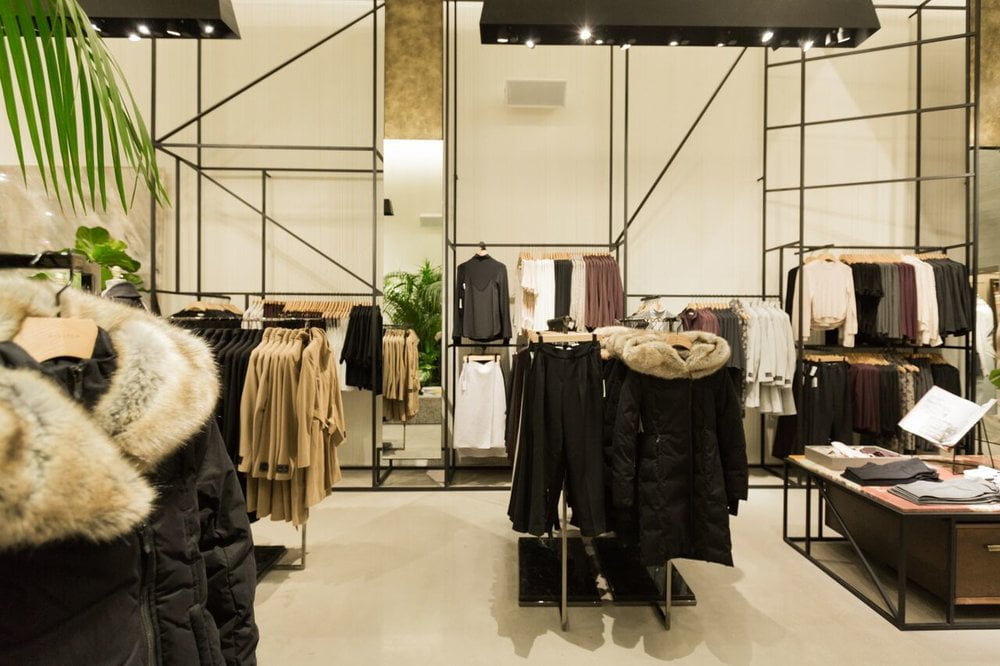
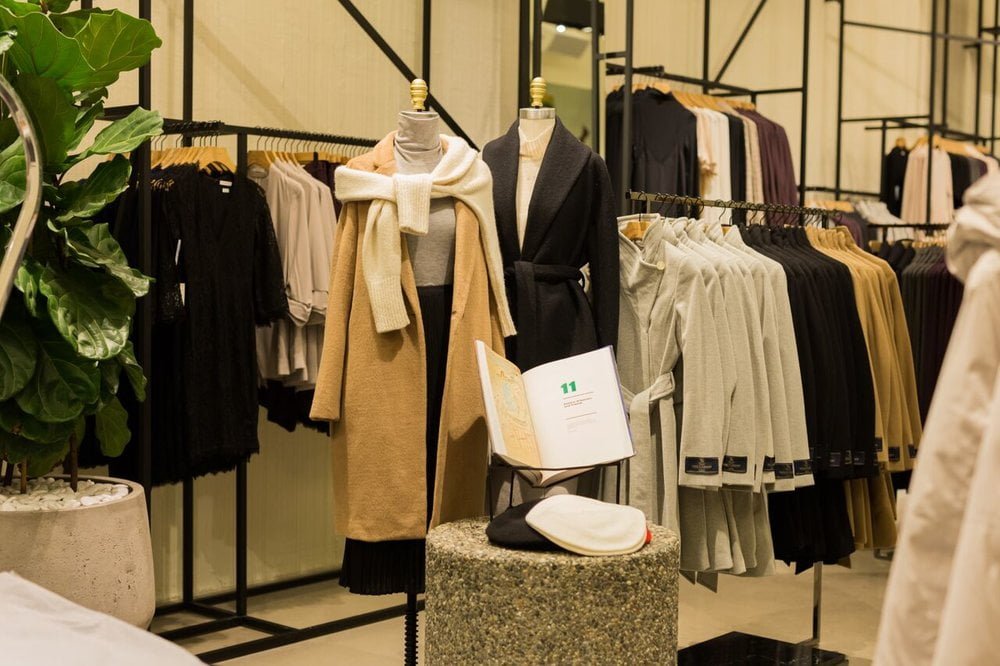
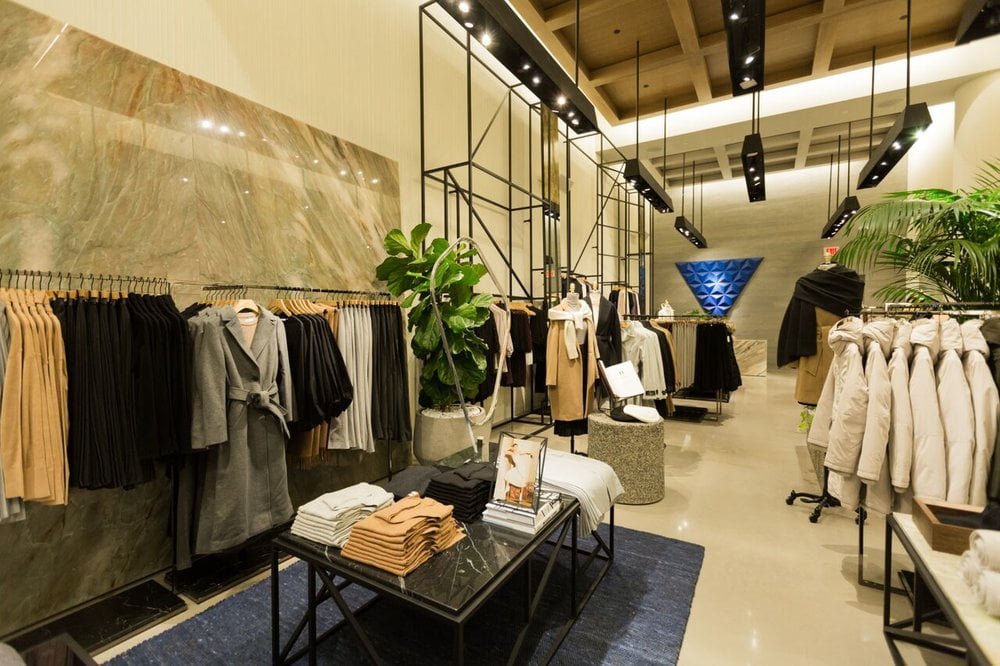
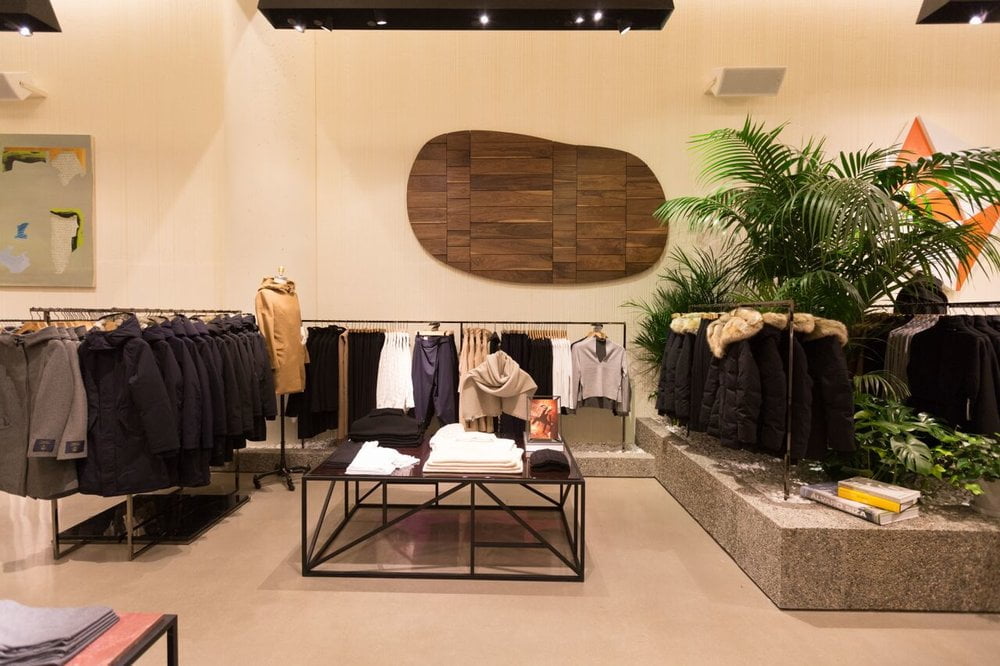
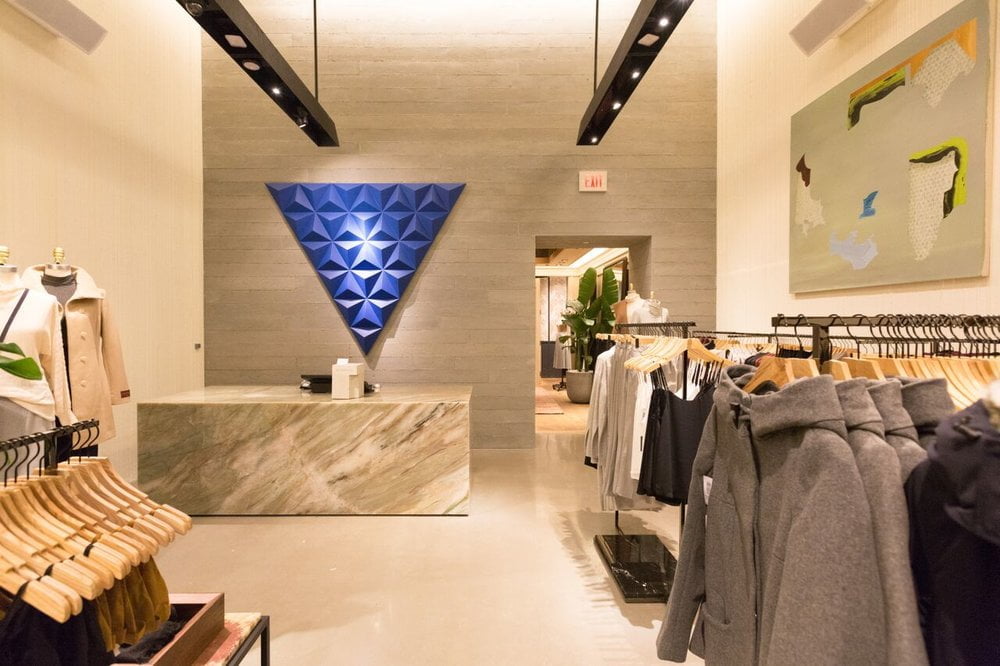
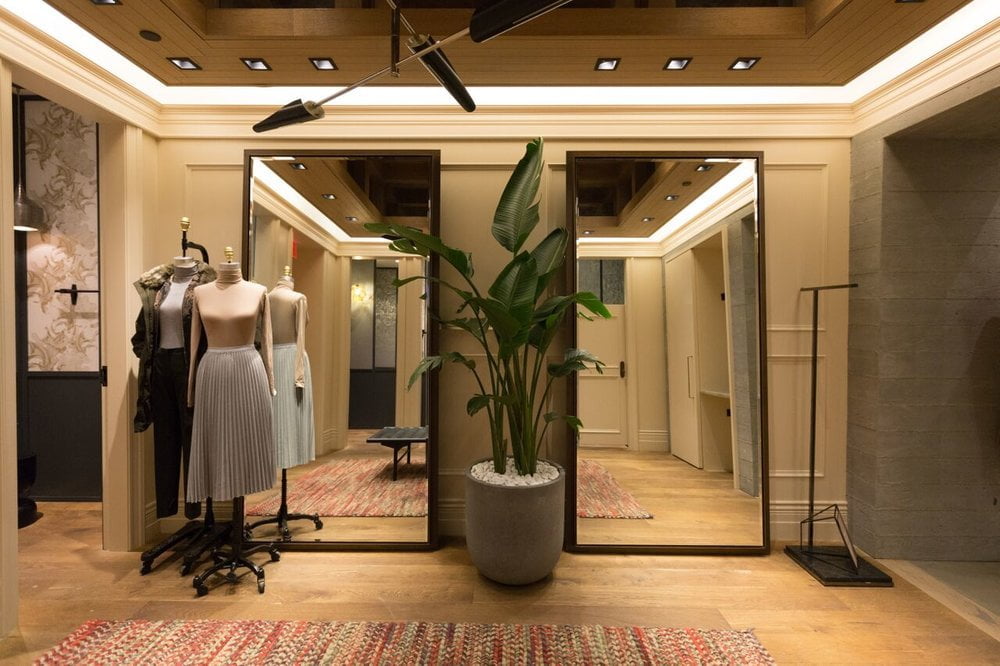
Vancouver-based Aritzia has launched its latest retail concept by spinning off another one of its in-house labels into freestanding stores. The company’s first Babaton store opened at CF Toronto Eaton Centre last week, and will be the first of several Babaton locations as the new concept expands.
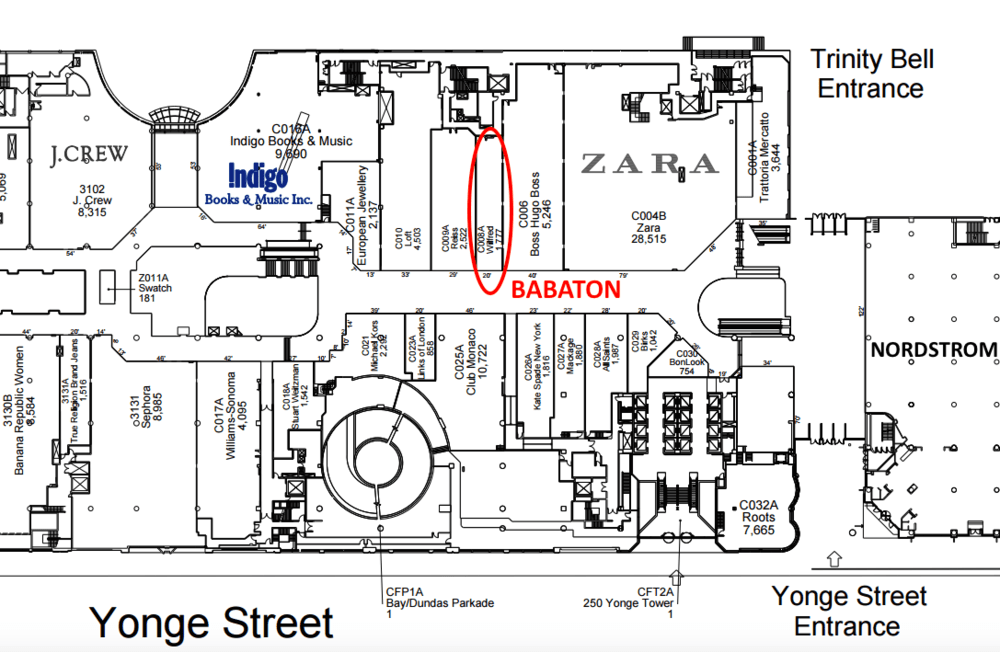
Babaton’s CF Toronto Eaton Centre store, measuring 1,777 square feet, is located on the mall’s ‘level 3’, in the busy corridor between Nordstrom and Saks Fifth Avenue/Hudson’s Bay. Babaton is located between Hugo Boss and Reiss and replaces Wilfred, another Aritzia in-house-brand retail spinoff, which relocated to a 5,245 square foot space on the mall’s second level in October of this year. Interestingly, Wilfred’s former CF Toronto Eaton Centre space was the brand’s first freestanding location as well, launching in Toronto instead of in Aritzia’s home city of Vancouver.
(CLICK IMAGE FOR FULL PDF CF TORONTO EATON CENTRE LEASE PLAN, VIA CADILLAC FAIRVIEW)
The CF Toronto Eaton Centre Babaton deal was negotiated by Northwest Atlantic Principal/Broker Dianne Lemm, who represents Aritzia in Canada.
Babaton is the third Aritzia brand to launch its own stores. In-house brand TNA has seven locations, and Wilfred has six freestanding stores, all in British Columbia, Alberta and Ontario. The Wilfred brand will see more store locations opening in Canada, according to Aritiza’s Chief Marketing Officer Oliver Walsh in an interview in April of this year.
Babaton Toronto Eaton Centre
1 of 5
Babaton will be opening more stores in Canadian shopping centres in 2017, according to several landlords that we spoke with. Details about new Babaton locations will be revealed in the New Year, as permitted.
(BABATON BRANDING)
Founded in 1984, Aritzia’s target market is women aged 14 to 30. Much of the clothing sold in its stores are its own exclusive brands, including Auxiliary, Babaton, 1-01 Babaton, Community, Wilfred, Le Fou by Wilfred, Wilfred Free, TNA, Golden by TNA, Parklife, and Talula. Stores also carry clothing from brands such as Mackage, J Brand, Citizens of Humanity, A Gold E, Frame, Levi’s, Rag & Bone, Adidas, One Teaspoon, and Herschel.
Vancouver-based think tank DIG360 partnered with Leger this year to produce the latest, definitive insight on Canadian reactions to retail Black Friday promotions. These reports have been conducted immediately after Black Friday weekend annually since 2010, filling critical gaps in understanding of this major shopping event, while debunking myths arising from anecdote and speculation. The latest study finds that Black Friday has grown substantially in popularity since its meager beginning in 2009 in Canada, and is now being one of the biggest shopping events of the year in this country.
The study specifically notes that Black Friday is now ubiquitous in Canada, with 30% of 1,578 Canadian adults surveyed between November 28 and December 1 having bought at least one Black Friday bargain in 2016. The remaining 18% browsed without purchasing (compared to 24% in 2015). Notably, 25‐44 year olds have caught up to 18‐24 year olds in Black Friday participation, including online.
Retailers have been sharing mixed results. The study notes that for those retailers who think Black Friday weekend traffic was up over 2015, the following variables should be considered:
Are retailers looking at a day, a weekend, a week or a month of promotions? The study tracks shopper reaction to any perceived Black Friday promotion at any time and shopping was spread over a longer period in 2015.
Is the number of transactions up? The dollars spent? Both? If so, the study would then conclude a smaller group than last year is transacting more and/or spending on higher priced items.
Are all stores and channels up in transactions? The study notes differences by region (BC traditionally trends lower in participation, and Alberta has rebounded this year).
Is web traffic up, but online sales less so? The study captures both sales and browsing/research in its data.
Since 2015, Black Friday is starting early and blending into December
The study notes that retailers have actually been offering Black Friday deals much earlier, beginning in 2015. Over half (54%) of respondents reported first seeing Black Friday deals on or before the second week in November. Of those who bought deals, 43% began buying before the Black Friday Weekend. This finding supported the DIG360 prediction that Black Friday would continue to diffuse into an ongoing cycle of deals from late October through to Boxing Week.
“A rise from 25% to 44% of Canadians purchasing deals in 2015 coincided with the first time there was an extended season; we see 30% in 2016 as a settling in overall participation in Canadian Black Friday”, says DIG360 Principal David Ian Gray, “and make no mistake, with 17% of us waiting until November 25 to begin to buy the deals combining with those ongoing shoppers, this is a significant weekend for Canadian retail and a major indicator of prospects for individual retailers this Holiday Season.”
Avid Bargain Hounds drive shopping, while others disconnect as deals underwhelm
The study notes that this year saw the highest level of Canadians (51%) ignoring Black Friday entirely since 2012, due to a reduction of ‘window shoppers’ who are only browsing. Mr. Gray’s theory is “many of these are not the avid bargain hounds, and they believe through past experience they will get better deals later on in December.We expect that a significant number are simply averse to the promotion-‐driven hype and not browsing; this shopper is likely to sit out Boxing Day as well,” he said.
The data complements anecdotal reports that shoppers are not seeing the deals expected given the pre‐Black Friday ‘hype’ of past years, and whispers that some vendors are refusing to offer promotional discounts for both Black Friday and Boxing Day. Canadians who made purchases rated Black Friday deals 7.1 out of 10 (17% rated it less than 6.0) while those who browsed without buying rated only 5.8 (38% rated less than 6.0). This is the first time that DIG360 has utilized this metric, and will continue to track it in future.
Online Black Friday gaining momentum, especially for browsing
Mr. Gray notes that online Black Friday activity has caught up to in‐store purchasing, “of those buying promotions, 40% bought or browsed in-‐store only, 39% online only and the rest did both,” says Mr. Gray.
Of the browsers who did not end up buying on Black Friday, 71% still perused websites, supporting the Canadian trend of researching products before making purchases. That said, only 4% of consumers bought deals via 3rd party Black Friday deal websites in 2016, with a further 10% of non‐buyers browsing those sites. This was the first year that the study tracked this behaviour, as well.
“Stepping back from 2016, one of the more interesting long-‐term trends in our data is the shift in Canadians browsing or buying from stores to online Canadian websites for Black Friday sales”, notes Mr. Gray. In 2013, 38% of Canadians shopped (browsed or bought) at a Canadian website for Black Friday deals, and this proportion has grown steadily to 56% this year. This has come at the expense of physical stores, which has seen a shift in activity from 73% in 2013 to 48% in 2016. Mr. Gray said that he believes this could be a sound proxy for overall trends in online shopping in Canada, at least for Holiday promotions where many shoppers are averse to the crowds.
Canadians shopping Black Friday from US is flat online and down cross‐border
The study found that while the percentage of Canadians browsing or buying deals doing so from US websites peaked in 2015 at 21%, it’s still fairly constant at 19% this year, despite the poor Canada/US exchange rate. And cross‐border store shopping, while always a small minority of Canadian shoppers, has expectedly declined from its peak in 2014.
Cyber Monday becoming less relevant to Canadian shoppers
Black Friday has blended into Cyber Monday — the latter was created in the Unites States in 2005 to draw attention to emerging internet retailers, while providing an alternative shopping day to physical store Black Friday.
The study notes that Cyber Monday is becoming less relevant to Canadians given the breadth of Black Friday deals offered online — 13% of Canadians bought Cyber Monday promotions, while 21% browsed those deals without buying. Two‐thirds of Black Friday buyers were finished by Cyber Monday; they either didn’t participate, or browsed without buying. Leger’s Sandie Sparkman added, “Canadians are still less aware of Cyber Monday (at 94%) than Black Friday at 99%; notably in French Canada with 10% unaware”.
Black Friday Buyers rated Cyber Monday deals lower at 6.6 out of 10.0 (28% rated them less than 6.0). And interestingly, a full 76% of Canadians do not recognize a difference between Cyber Monday and Black Friday deals.
Black Friday disrupts traditional timing of Seasonal shopping, does not increase buying
The study notes that many of the sales made on Black Friday are simply a shift in when shoppers are buying, as opposed to an overall “lift” in sales across the Holidays. The study found that 28% of Canadians who bought deals had postponed purchases this fall until they could see what Black Friday offered, for example.
Black Friday is also the time for self‐gifting, noted the study, with 41% of Canadians browsing or buying on Black Friday weekend doing so mostly for themselves — which is more likely to impact Boxing Day than gift buying for others in December. Only 37% of 2016 Black Friday buyers, largely a bargain‐hunting crowd, reported buying items on Boxing Day last year (10% could not recall), suggesting a shift in spending.
Finally, the study mentions that in 2015, retailers noticed an unusual drop in store traffic in the full week following Black Friday weekend. Mr. Gray said, “we called this “Black Friday Shadow,” and we’re concerned that it may be an ongoing pattern resulting from some momentary bargain-‐hunting fatigue; however, our research suggests this will not occur in 2016”. Almost 2/3 of Black Friday buyers and half of Canadians overall expected to be Holiday shopping the following week, according to the 2016 DIG360‐Leger Canadian Black Friday Study.
International luxury brands are increasingly opening stores in suburban Canadian shopping malls, as opposed to traditional urban street-front locations. It’s a recent phenomenon that is seeing Canadian retail becoming more ‘Americanized’. Canada is now home to several suburban shopping centres that feature luxury brands otherwise not located in urban cores, with the trend spreading from Toronto to other Canadian markets.
In Canada, freestanding luxury brand boutiques have traditionally conglomerated in the downtown cores of Toronto, Montreal and Vancouver. Toronto’s ‘Mink Mile’ (Bloor Street West between Yonge Street and Avenue Road) has been the city’s main luxury retail thoroughfare for decades, along with adjacent Yorkville and the shopping complex formerly called Hazelton Lanes. Montreal’s Sherbrooke Street West, housing Holt Renfrew, Tiffany & Co. and Escada, once featured freestanding luxury boutiques for names such as Yves Saint Laurent, Ungaro, Cartier, Sonia Rykiel, Davidoff, Versace and Georg Jensen. Downtown Vancouver’s Alberni/Burrard Street ‘luxury zone’ got its start in 1991 with the opening of Chanel at 755 Burrard Street, with the area centred around Alberni Street’s 1000 block now boasting some of the world’s top luxury brands such as Louis Vuitton, Prada and Hermes.
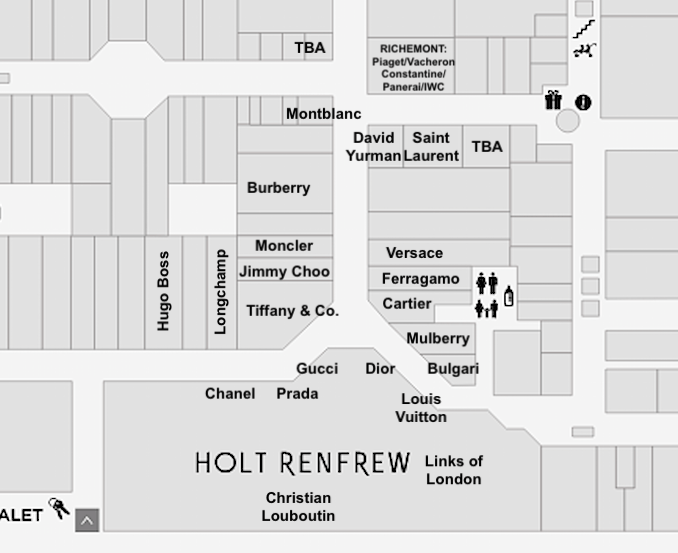
(YORKDALE’S ‘LUXURY WING’ NEAR HOLT RENFREW. CLICK IMAGE FOR INTERACTIVE YORKDALE MALL MAP)
(YORKDALE’S ‘LUXURY WING’, LOOKING SOUTH FROM DAVID YURMAN/MONTBLANC. PHOTO: CRAIG PATTERSON)
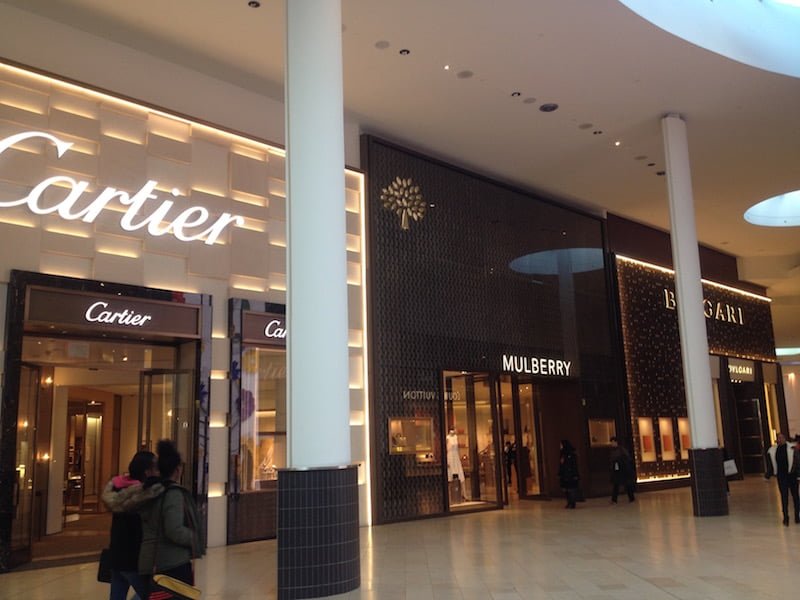
(CARTIER, MULBERRY AND BULGARI IN YORKDALE’S ‘LUXURY WING’. PHOTO: CRAIG PATTERSON)
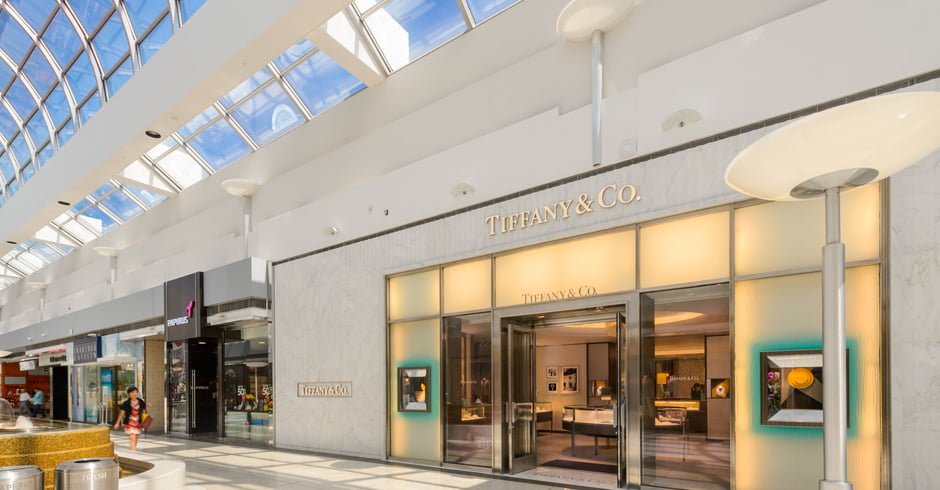
Although Canadian shopping malls have had upscale multi-brand stores for decades (Holt Renfrew used to operate smaller stores in several of Montreal and Toronto’s leading malls, while Harry Rosen dominated menswear nationally), mono-branded luxury stores didn’t really take off until April of 2009 when Tiffany & Co. opened a boutique at Toronto’s Yorkdale Shopping Centre. That marked the beginning of the mall’s ‘luxury wing’, which now boasts the highest concentration of luxury boutiques of any location in Canada. Under the direction of landlord Oxford Properties, Yorkdale has secured a ‘who’s-who’ of luxury stores, including freestanding locations for Jimmy Choo, Moncler, Versace, Cartier, Bulgari, David Yurman and others, as well as concessions in Holt Renfrew for Chanel, Prada, Louis Vuitton, Gucci, Dior and others. It’s estimated that the mall’s luxury boutiques now account for more than 30% of total sales, which is impressive considering that Yorkdale houses close to 300 stores.
(WEST EDMONTON MALL’S EUROPA BOULEVARD IS EARMARKED TO BECOME THE MALL’S NEW ‘LUXURY WING’. PHOTO: CHRISTA PATTERSON)
Other Canadian shopping malls have also been adding luxury retailers to the mix, resulting in increased productivity. Vancouver’s Oakridge Centre, which has had a Hugo Boss and Max Mara presence for a number of years, also added Tiffany & Co. in late 2011. Calgary’s suburban CF Chinook Centre, going head-to-head with a downtown anchored by Holt Renfrew, added Burberry in 2010 and Tiffany & Co. in 2011 — followed by Canada’s first Nordstrom which opened in September of 2014. West Edmonton Mall, looking to draw high-end shoppers from downtown Edmonton, scored Tiffany & Co. in October of 2013 and it now plans to add a Yorkdale-like luxury wing to its Simons-anchored ‘Europa Boulevard’. The Greater Toronto Area also includes two malls looking to give Yorkdale a run for its luxury money. CF Sherway Gardens, where Saks Fifth Avenue opened a 143,000 square foot store in February, now boasts freestanding locations for De Beers, Links of London, Loding, Tiffany & Co. and Chopard. Mississauga’s Square One now has Canada’s largest Salvatore Ferragamo boutique as well as Wolford and Rolex, as well as a spectacular Holt Renfrew that opened over the summer. Holt’s features concessions for Tiffany & Co., Hugo Boss, Links of London and Gucci, with Moncler set to open its concession in the coming weeks. More luxury brands will open stores in these malls in 2017 and beyond, we’re told.
(DE BEERS AT TORONTO’S CF SHERWAY GARDENS. PHOTO: CF SHERWAY GARDENS VIA TWITTER)
Luxury brands are locating closer to where affluent Canadian consumers reside, according to Retail Council of Canada’s Director of Education and Events, Kyle Tomlin. He theorized that given the increasing affluence within the catchment areas of malls such as Square One, CF Sherway and Yorkdale in the GTA, brands are securing space that’s more convenient, rather than opening in more traditional business core locations. It’s a sentiment shared by HRC Retail Advisory President Farla Efros, who also noted the advantages of climate controlled enclosed malls which are seeing both growing foot traffic as well as increasing productivity.
Luxury brands in suburban American malls are nothing new and in some cities, particularly those lacking substantial downtown retail (which, unfortunately, is now most American cities), suburban malls continue to dominate. In metropolitan regions such as Atlanta, Denver, Philadelphia, Houston and Detroit, luxury retailers are confined to upscale malls with names such as Lenox Square, Cherry Creek, King of Prussia, Houston Galleria and Somerset Collection. Sprawling metropolitan regions such as Los Angeles and New York City feature both urban and suburban luxury retail, though there are no Canadian regions that can compare in terms of population. The Chicago region is a unique case study in luxury retail, which may be compared to the Greater Toronto Area.
Metropolitan Chicago has a population of about 9.5 million over 28,000 square km. The ‘Greater Golden Horseshoe’, including 31,500 square km surrounding Toronto, has a population of about 9.3 million. Both cities feature downtown areas with considerable luxury brands — Chicago’s luxury retail is centred around the ‘Magnificent Mile’ of North Michigan Avenue and adjacent Oak/Rush/Walton Streets, while Toronto’s luxury retail focuses on Bloor Street West’s ‘Mink Mile’ and the adjacent Yorkville area.
Both regions feature suburban malls with luxury retailers and, remarkably, Toronto may have become more ‘American’ than Chicago in terms of a retail luxury mix. While Chicago’s suburban luxury retailers are often second regional locations for stores already downtown, some of Toronto’s suburban luxury retailers only operate in the suburbs, bypassing traditional luxury addresses in the urban core.
The Chicago area has three large suburban malls that include luxury retailers. Oakbrook Center, west of Chicago, features freestanding locations for Louis Vuitton, Omega, Burberry, Tiffany & Co. and David Yurman, as well as a branch location for anchor luxury store Neiman Marcus. Northbrook Court, located in the city’s affluent north side, includes Armani Collezioni, Burberry, Louis Vuitton and Tiffany, all located near the mall’s anchor Neiman Marcus. Westfield Old Orchard, also on Chicago’s north side, features Tiffany & Co. as well as a franchised Rolex location. Its should be noted that every one of these luxury brands also operate stores downtown in Chicago’s Magnificent Mile area (Giorgio Armani, on Oak Street, is considered to be a ‘step above’ Collezioni).
(LONGCHAMP AT TORONTO’S YORKDALE SHOPPING CENTRE. PHOTO: PAUL AMATO)
Toronto, as discussed above, includes three leading malls each with several luxury retailers. CF Sherway Gardens and Square One can hold their own when compared to the Chicago malls mentioned above. CF Sherway’s luxury retailers De Beers and Chopard do not have locations downtown, though Chopard is available in some major jewellers. Square One managed to score Ferragamo before any freestanding downtown Toronto location, though sources say that a freestanding Yorkville unit is on the way. Yorkdale is the champion in terms of securing luxury retailers before downtown Toronto, with Bulgari, Saint Laurent, Versace, David Yurman Jimmy Choo, Moncler, Longchamp, John Varvatos and Jaeger Le-Coultre having their only freestanding Toronto locations at Yorkdale (though Moncler will open on Bloor next year). Swiss conglomerate Richemont Group will open at least five luxury boutiques at Yorkdale in 2017, and a soon-to-be revealed LVMH-owned luxury brand, currently with no freestanding locations in Canada, will open in the retail space next to Saint Laurent in 2017, as well.
(TIFFANY & CO. AT VANCOUVER’S OAKRIDGE CENTRE. PHOTO: IVANHOÉ CAMBRIDGE)
Yorkdale has far surpassed any suburban Chicago mall in terms of luxury offerings, and has become one of the top luxury shopping destinations in North America. Yorkdale’s luxury store count is beginning to approach that of esteemed centres such as South Coast Plaza in California’s Orange County, Houston Galleria, The Mall at Short Hills near New York City, and even Miami’s Bal Harbour Shops, which is considered to be one of the world’s most prestigious and comprehensive luxury centres, with annual sales per square foot in excess of $3,000. The Retail Council of Canada is about to release a shopping mall study that will reveal updated numbers for Yorkdale, as well as Canada’s top 30 malls.
While Toronto’s luxury retail is spread over several areas including the suburbs, Vancouver’s luxury offerings continue to remain focused primarily downtown. The city’s downtown ‘luxury zone’ continues to attract international retail tenants, giving Toronto’s Bloor-Yorkville a run for its money in terms of number of luxury brands. That could change, however, as some luxury brands lament at the lack of exceptional retail space in Vancouver’s core, which is highly desirable and boasts some of Canada’s most productive retail spaces. Suburban landlords are taking notice and some are looking to attract luxury brands in a similar way as in Toronto. Ivanhoé Cambridge plans to overhaul Oakridge Centre, which attracts customers from a catchment area that boasts many very wealthy households. West Vancouver’s Park Royal is continuing to make improvements, with plans to add new tenants as renovations continue. Other Lower Mainland landlords have their sights on luxury retailers as well — Brentwood Mall, for example, which is being repositioned as ’The Amazing Brentwood’, has spoken to retailers such as Louis Vuitton, Burberry, Saks and Holt Renfrew, according to sources.
It remains to be seen if Canadian downtowns will continue to be strongholds of luxury retailing, or if suburban malls will step in and possibly even take over. While there’s a cachet to having a Bloor Street West or Burrard Street address, the high proven sales numbers at malls such as Yorkdale have luxury brands such as Bulgari and David Yurman choosing the suburbs over downtown. We’ll continue to monitor these retail trends into 2017 and beyond — information that we’ve received indicates that luxury brands are interested in both urban cores as well as leading suburban malls, and that Canadian luxury retail will include a mix of both in the coming years.