Advertisement
Home Blog Page 1162

Study Discusses Primary Drivers of Holiday Consumption in Canada

A new study by HRC Retail Advisory finds that sales and coupons are most influential in driving consumers to shop this holiday season, with apparel being most popular among those in the 10-17 year ‘Generation Z’ age range. The study surveyed 3,100 participants in Canada and the United States to determine attitudes, behaviours and influences driving holiday gifts and shopping.

The study, conducted in October of this year, targeted four distinct demographics: Millennials with no children, Millennial parents of children under 18, ‘Generation X’ and Baby Boomer parents of children under 18, and children ages 10-17 (‘Generation Z’). Overall, the survey found that gift cards remain an extremely popular item, while apparel will surprisingly top many gift lists for both family and friends this year. Other significant findings of the survey include the following:

Sales and Coupons Drive Store Traffic: Consumers are still price sensitive and despite more modern approaches, 89% of respondents said that deep discounts (including coupons) are the key determinant of what stores they will visit for holiday shopping this year. Consumers are also motivated by visuals, with 87% of consumers saying that they are likely to enter a store based on store window displays. Additionally, 79% of consumers surveyed said they would be influenced on what stores to visit based on a retailer’s website.

Youth are Choosing Apparel Over Games for Holiday 2016: The study found that when children were asked what they’d want most if given $500 in gifts, apparel was tops, surpassing even games. Respondents said that they plan to allocate more than 30% of their budget on apparel and footwear purchases for family and friends this year. Millennial and Generation-X parents said that they are planning to spend 40% of an assumed $500 holiday budget for their children on clothing and shoes, versus a small 16% on gaming consoles and games.

Increased Popularity of Gift Cards: A whopping 83% of Millennial parents plan to include gift cards in their holiday purchases, and 32% of respondents who intend to buy gift cards indicated that gift cards will comprise at least half of their holiday budget, according to the HRC Advisory study. As well, 62% of all study respondents with a preference preferred to receive a gift card rather than an actual gift. This was consistent across all generations studied, which indicates that people would like to select their own gifts, rather than receive a gift that may be wrong for them.

Gift Card Giving Goes Up with Income: The higher one’s income, the more likely one will purchase gift cards. The study found that 83% of Millennial parents earning between $50,000 and $75,000 plan to include gift cards this year, while a remarkable 96% of Millennials that have children and earn over $150,000 plan to include gift cards in their holiday shopping. Higher earners won’t necessarily spend a greater percentage of their holiday budget on gift cards, however, as overall purchases are generally higher among those who are more affluent. 

“There are limited doorbusters to drive consumers to the store this holiday season,” said Farla Efros, President of HRC Retail Advisory. “As we’ve seen over the weekend, gift cards and free shipping allow this new consumer to shop however and wherever they want. Importantly, our survey found several key attitudes and behaviours for holiday shopping that were consistent throughout the generations. Recognizing and responding to these trends, while catering to a younger group of shoppers who are gaining more and more influence within their household will be essential to a retailer’s success this holiday season and a necessary step for them to remain competitive going forward.”
NYX Cosmetics Plans 2017 Canadian Expansion

Photo: NYX PROFESSIONAL MAKEUP

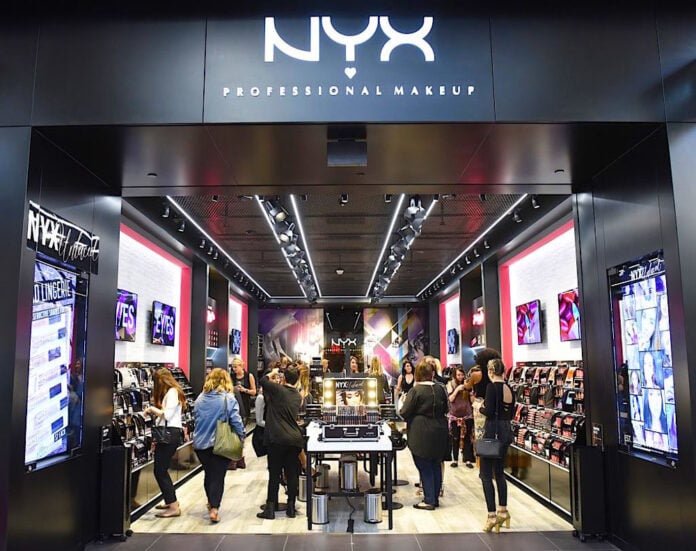
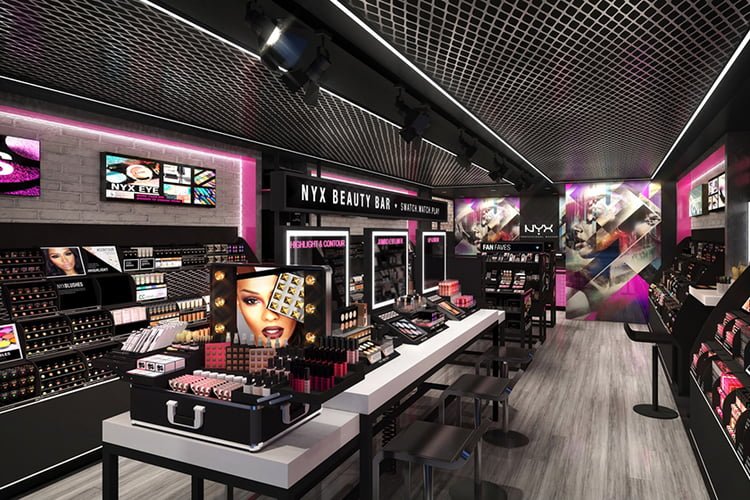
L’Oréal-owned NYX Cosmetics is seeing tremendous success with its first Canadian stores and according to its parent company’s Canadian head, NYX will look to double its Canadian store count in 2017. NYX’s first freestanding Canadian store opened in the fall of 2015, and the company now operates eight stores in this country. 

Seven of those eight stores are in the Greater Toronto Area, and one is at Ottawa’s CF Rideau Centre. NYX’s first Canadian store opened at Mississauga’s Square One in October of 2015, followed by a freestanding unit shortly thereafter on Toronto’s popular Queen Street West. More locations opened in 2016 and last month, we attended the Yorkdale Shopping Centre store debut which saw hundreds of excited fans line up for an in-store promotion. 

NYX (Named after the Greek goddess of the night, pronounced ‘Nix’) was founded by Toni Ko in 1999, and is headquartered in Los Angeles. The brand is known for its high quality, affordably priced rich-pigment cosmetics, which have gained a loyal following both with makeup artists as well as the general public. L’Oréal bought NYX in 2014, and has expanded the brand significantly to include product lines in retailers selling cosmetics such as Canadian retailers Shoppers Drug Mart, Rexall and London Drugs.

Photo: NYX PROFESSIONAL MAKEUP

According to L’Oréal Canada’s Chief Retail Officer, Jared MacKay, the NYX brand is “on fire” in this country. NYX is seeing exceptional growth with its freestanding stores, which compliment the brand’s wholesale accounts by enhancing brand awareness while featuring expanded product lines and experiences. He credits social media for contributing to NYX’s popularity, which has a huge following among younger consumers seeking out cosmetics at a popular price point. The brand also features a wide variety of pigment-rich cosmetics, including foundation in various shades that match almost any skin tone, unlike many competitors. 

Following NYX’s Ontario expansion, the brand will look to open stores in selected Canadian markets, with a target of about eight locations in 2017. Mr. MacKay said that target markets would include British Columbia and Alberta, among other regions, and said that a number of potential deals are in the works. NYX is working with brokerage Northwest Atlantic for its Canadian store expansion, and is ideally seeking retail space in the 1,000 to 1,200 square foot range.

Why Large-Format Retailers Should Consider Product-Focused Urban Locations

While the suburbs provide opportunity for retailers to open large stores with a wide range of product, dense urban cores can be challenging and as a result, some retailers may choose not to locate downtown. There are some innovative solutions available, according to Marjorie Mackenzie, Vice President of Retail at leading Toronto-based design firm figure3

Small-format real estate may prove strategic to retailers seeking to sell to customers in dense urban areas. Rather than carrying a store’s entire line of products, smaller stores with curated product assortments could be a strategic move, catering to local tastes by carrying product tailored to local demographics. 

Sears Canada is one example, noted Ms. Mackenzie. The retailer typically occupies store locations in excess of 100,000 square feet, with a wide product offering ranging from fashion to cosmetics to tools and appliances. While the fashion side of Sears struggles amid considerable competition, its Craftsman (tools) and Kenmore (appliances) brands are strong enough to spin off into their own retail locations in Canada, which would take considerably less real estate and could be accommodated in dense urban centres. 

Sears Canada has a considerable amount of competition in the market, and yet its focus continues to be on fashion apparel. Ms. Mackenzie said that Sears should look at ‘what it does best’, particularly in categories of appliances, tools and baby items, and consider opening smaller freestanding locations devoted specifically to these categories.

Ms. Mackenzie explained how home furnishings brands, even possibly Sears Whole Home, could open smaller locations near thriving urban cores to cater to locals moving into the area. A store could promote paint one week, for example, with locals being invited to check out the newest shades, potentially leading to sales. 

As Canada’s urban cores continue to see an increasing number of new residents, retail can strategically follow, she said. At the base of new condominium towers, for example, a furniture retailer may choose to open a location, if even for a limited time period, to cater to new residents. Transporting purchases could therefore become relatively simple and in some instances, only be an elevator ride away. 

A ‘hub and spoke’ model could also be used for optimal retail productivity, according to Ms. Mackenzie, where a large retail location (such as a department store), or distribution centre could act as a ‘hub’ for a series of smaller ‘spokes’, each of which would be tailored to local areas based on postal code data. Ms. Mackenzie also used the example of a large-format fashion retailer that has a number of in-house brands. If the large retailer is unable to find enough real estate for a store housing all of its brands, it may choose to focus brands on local markets. For example, a dressier in-house fashion brand could locate in the Bloor-Yorkville area, while trendier fashion offerings might better serve a retail location on Queen Street West. 

The ‘hub and spoke’ model is already being tested by some retailers in Canada, though in a somewhat different way. Ikea, for example, has launched a number of smaller ‘pick up and order point’ locations in a market that also features full-sized comprehensive locations, with fulfillment from smaller stores coming from the regional warehouses. Some financial institutions are doing it as well. For example, a full-service financial institution may also include smaller branches that may feature ATM’s and a US depository, or even a separate mortgage lending centre within close proximity to new condominium communities.

Ms. Mackenzie went on to describe the concept of a downtown ‘Ikea Design Centre’, located near burgeoning condominium communities. As locals move into the area, they may look to make furniture purchases. Furthermore, in nearby areas where established buildings are seeing unit renovations, unit owners may visit the Design Centre with dimensions of kitchens or bathrooms, for example, and purchase fixtures that can be easily shipped and built within the renovated unit. 

Stores don’t need to be big to be compelling, according to Ms. Mackenzie. She used the example of the figure3-designed 158 square foot Penguin Random House store in downtown Toronto, which opened over the summer. Although the retail space is small by most standards, its configuration, functionality and branding are on-trend with the ‘Seven Principles’ of retail design. We also discussed these seven principles in more detail in a previous article discussing La Maison Simons at Square One, which has seen considerable positive feedback since opening last spring. 

PINKO Opens 1st Canadian Store [Photos]

Pinko Montreal

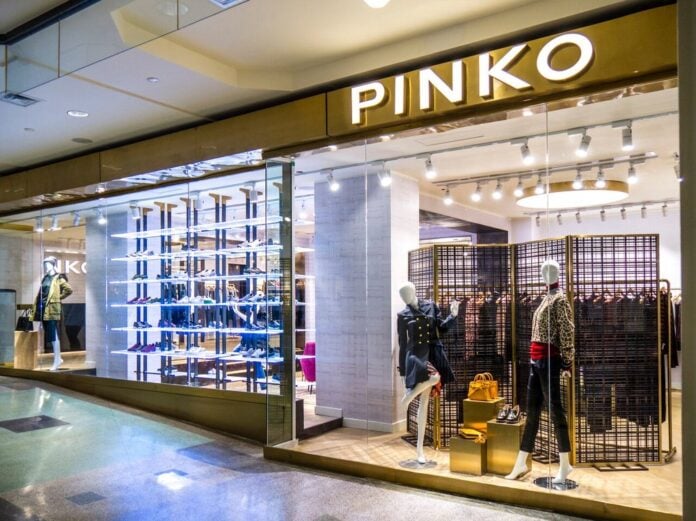
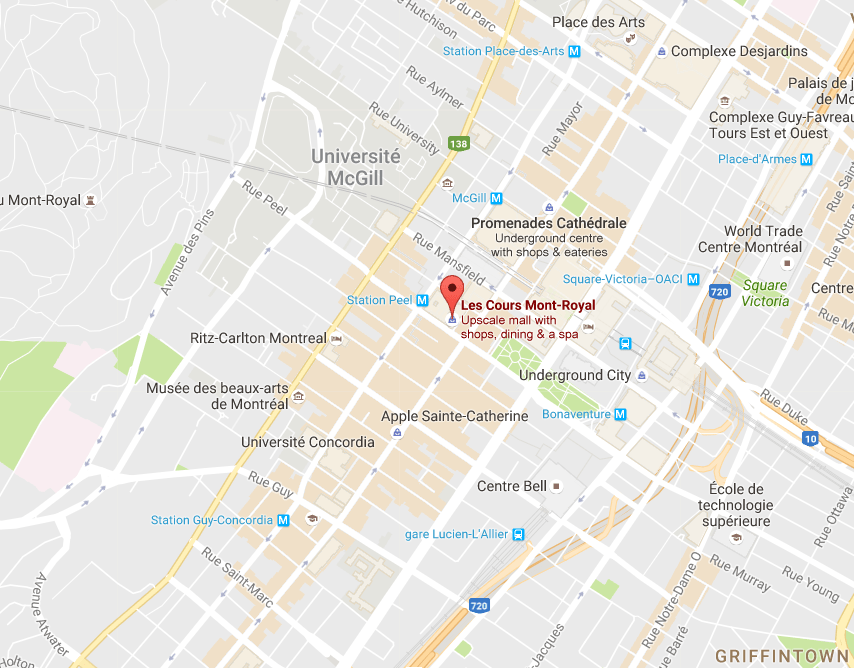
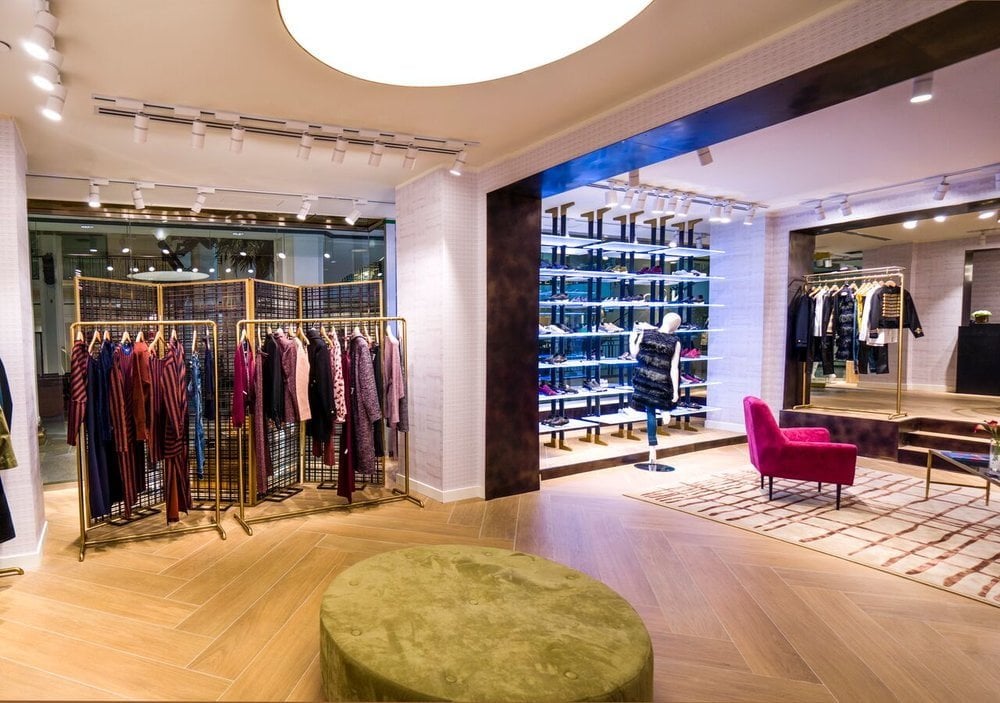
Contemporary, trend-focused Italian women’s fashion brand PINKO has opened it’s first Canadian location at downtown Montreal’s upscale Les Cours Mont-Royal. The 2,204 square foot boutique is located on the mall’s third level, and is the brand’s second North American store, following the opening of a unit earlier this month in New York City’s Soho area. 

Founded in 1986 by Pietro Negra and Cristina Rubini, the PINKO fashion brand features styling that reflects the ‘Italian Spirit’, according to the company. Fun and quality are key components to the brand’s identity, with clothing styles ranging from dressy to casual/trendy. 

“We are thrilled to welcome this distinctive brand,” says Valerie Law, Vice-President of Marketing for the Soltron Group (which also owns Les Cours Mont-Royal). “Our vibrant city is known for our trendsetting fashions, making Montreal and Les Cours an ideal place for PINKO’s cutting-edge collections.”

(CLICK ABOVE FOR INTERACTIVE MONTREAL MALL MAP, VIA GOOGLE)
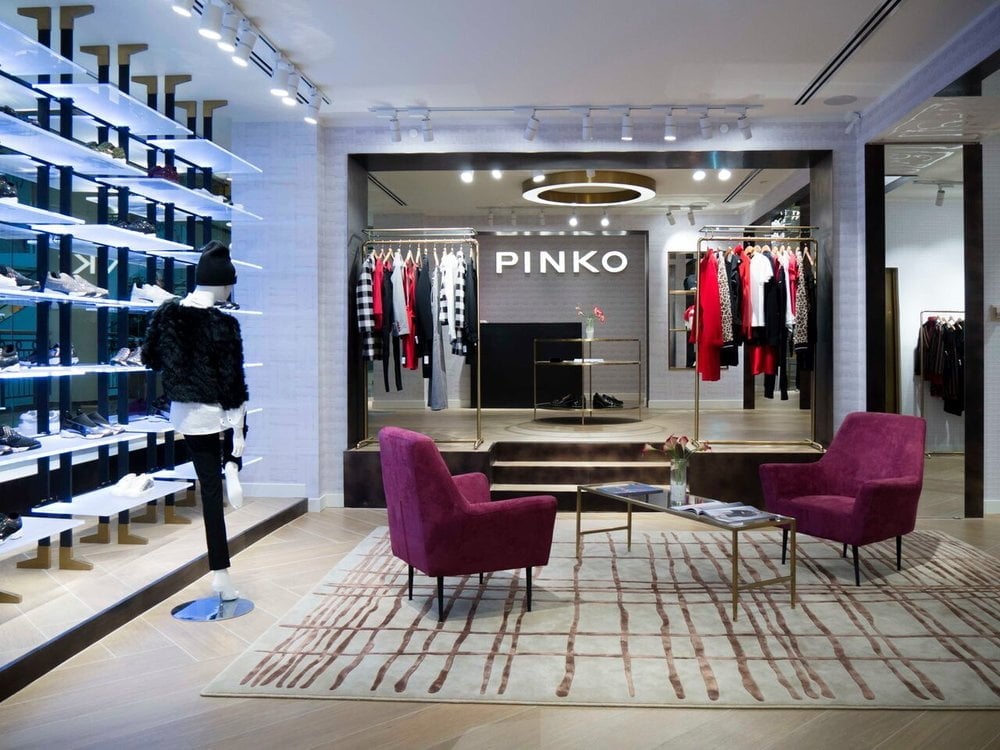
(FOOTWEAR AREA, WITH READY-TO-WEAR BEHIND)

PINKO has stores in 24 countries (mostly in Europe) with over 170 retail stores (both corporately-owned and franchised) as well as 970 wholesale outlets. The brand can also be found in upscale international department stores and is expanding into the travel retail sector with 10 recently inaugurated stores in Italy and abroad.

Canada could see more PINKO locations, according to Ms. Law, though the company will test the Canadian market with its first Montreal store. The company is taking a similar approach to an American store expansion, she noted. 

PINKO joins a number of other international retailers that have opened their first Canadian locations at Les Cours Mont-Royal. In the past, Maledetti Toscani, Desigual, and DKNY opened their first Canadian stores here, prior to expanding into other Canadian markets.

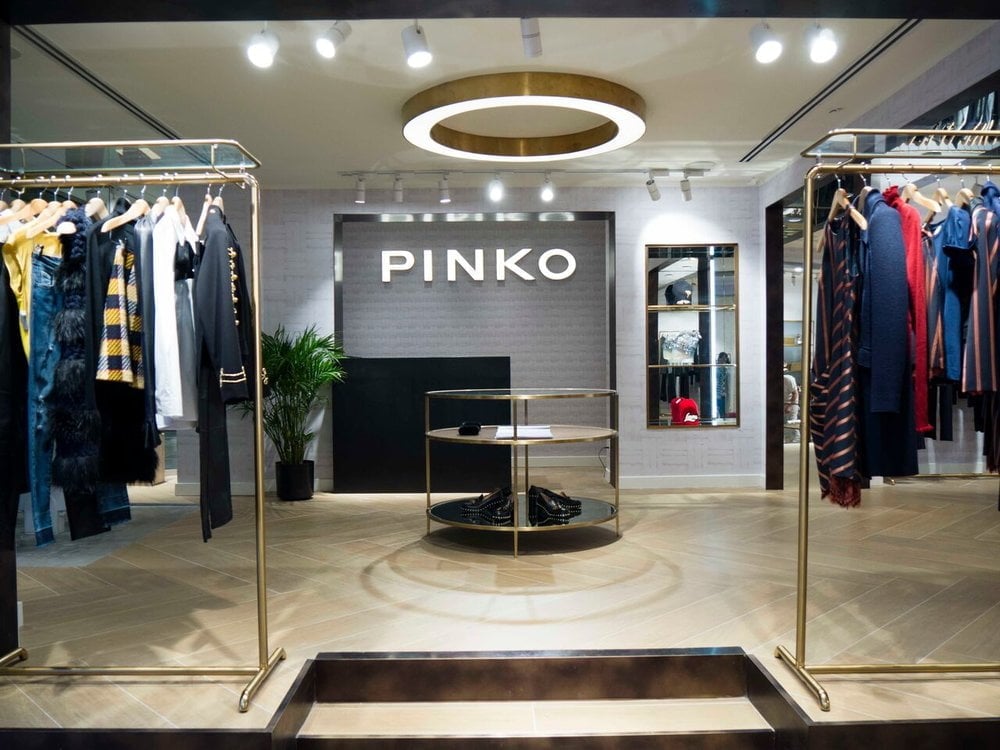
(FOOTWEAR TO THE RIGHT, READY-TO-WEAR TO THE LEFT)

*Photos of the new Montreal store, above, were supplied.

Black Friday 2016 Canada Projections

Since 2010, Vancouver-based think tank DIG360 has been tracking Black Friday behaviour in Canada. This year, DIG360 has released the following projections: 

1) Black Friday, now ubiquitous in Canada, is in effect blurring into a weeks long promotion that is continuing on into December Holiday sales. Moneris called 2015 Black Friday bigger than Boxing Day.  DIG360 expects that sales in 2016 may diffuse away from Black Friday.  In a few years, Black Friday may lose its focus and simply be one part of a ‘November-December’ series of promotions, according to DIG360 head, David Ian Gray, and from a consumer perspective, Cyber Monday is fast becoming meaningless since the extended Black Friday is now firmly online as much as offline.

2) Black Friday promotions had plateaued at about 50% of adults in 2013 and 2014. With data collected by partner NRG Research, DIG360 determined that last year’s participation jumped to 68% of Canadians.  DIG360 attributes this to a combination of the longer Black Friday selling period and increased shopping on the Internet for deals by the crowd-averse. They expect physical store shopping will level out, with any increases coming from the web, estimating that 72% of Canadian adults will be Black Friday promotional browsers and buyers.

3) Retailers continue to teach us to wait; more than 1/3 of purchasers will postpone Holiday shopping until this weekend, based on patterns in 2014 and 2015. DIG360 will also be watching for what we call “Black Friday Shadow”, a week long lull in store traffic after the Black Friday weekend ends. This first appeared in 2015 and could be a major concern for retailers.

4) Many shoppers will continue to browse without buying, underwhelmed by the breadth and depth of the deals; retailers will continue to protect margins and sell close to regular price as far into the Season as possible.

5) Almost half of shoppers will be seeking deals for themselves rather than gifts; this group is also more likely to participate on Boxing Day, and for the same purpose.

6) The low Canadian dollar will mean a drop in cross-border Black Friday shopping (online and offline) but from a very low proportion of Canadians (only 5-7% of Canadians shop the US for Black Friday).  When will Canadian retailers exploit the exchange rate to lure American web shoppers?

It will be interesting to see how Canadians shop Black Friday this year, and how Cyber Monday will play out, based on the above. The DIG360-Leger 2016 Black Friday Surbey will be conducted next week, and we’ll report back with the results. 

LUX Beauty Boutique Expands to New Location

Image: LUX Beauty Boutique

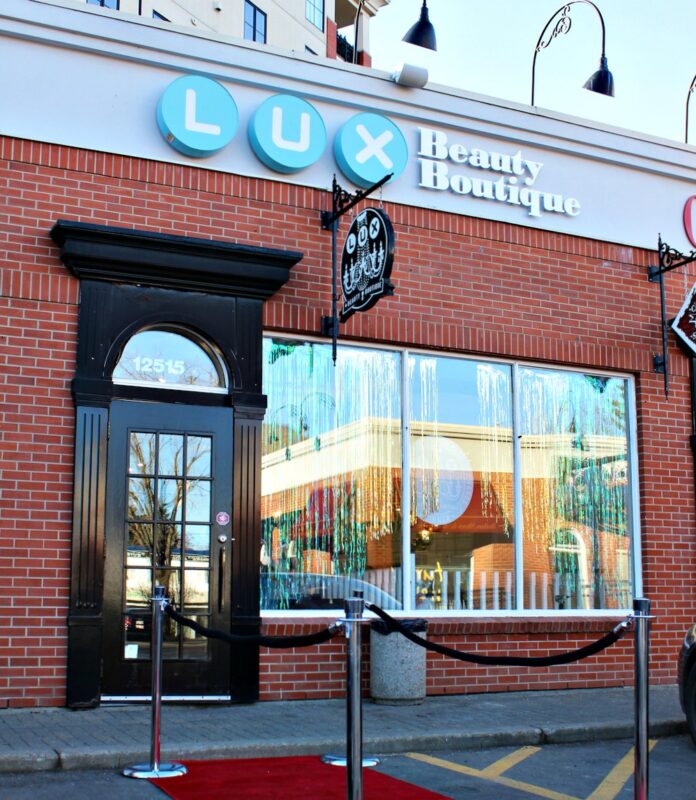
Independent Edmonton retailer LUX Beauty Boutique has opened a replacement location in the city’s upscale High Street shopping area, steps away from its original location and about 40% larger. The new store has several unique features and product lines, as founder/owner Jennifer Grimm looks to further expand operations. 

Jennifer Grimm (Image: LUX Beauty Boutique)

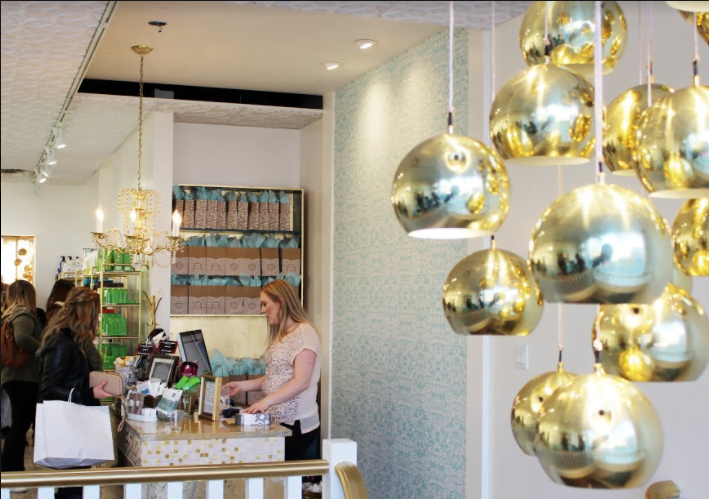
The new store features an 850 square foot main level that is devoted to beauty retail, as well as a 900 square foot lower level being broken down into two spaces — a 450 square foot “living room” for makeup bookings, community events and private parties, and a 450 square foot lower level office space & shipping/receiving space to accommodate LUX Beauty’s growing ecommerce business (luxbeauty.com ecommerce and Seasons of LUX subscription orders). 

The previous store was a total of 720 square feet, including office, all on one level. We first reported on it in December of 2013, when Lux Beauty Boutique was the first retailer in Canada to introduce ‘SelfPay’ technology, allowing customers to pay-and-go without waiting in line. 

Image: LUX Beauty Boutique

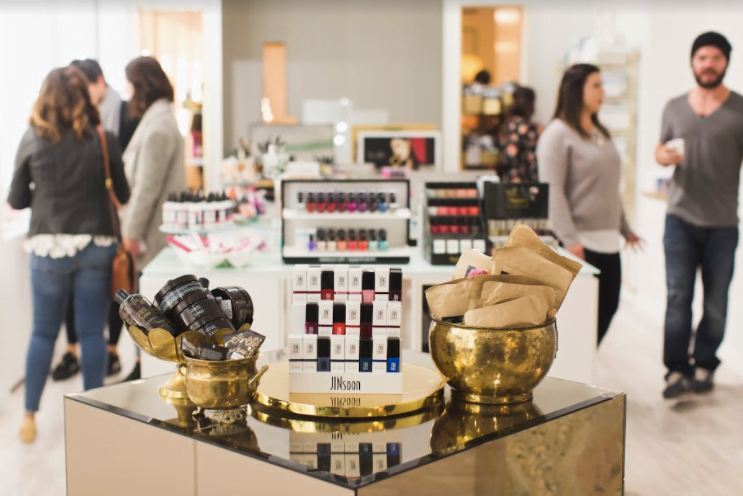
LUX Beauty features a curated collection of exclusive, hard-to-find beauty brands, many of which are organic and cruelty-free. Ms. Grimm opened LUX Beauty Boutique and launched luxbeauty.com 17 years ago. 

The High Street area has recently seen significant challenges, including the two-year closure of the nearby 102 Street bridge. The LUX Beauty Boutique team were able to maintain a loyal clientele during the construction using creative techniques such as curbside service, special events and home deliveries. Ms. Grimm says that she’s considering expanding operations at some point, with location scouting ongoing. 

Small Retailers Finding Support from their Service Providers

By Millie Davies

Small retailers face a multitude of challenges when entering the market and becoming operational quickly. A combination of the increase in overall costs of doing business that comes with a physical location, alongside today’s consumer constantly seeking a better price point, can make it difficult for less-established retailers to compete against big box retailers.  

Small business owners traditionally turn to online and offline resources to alleviate these obstacles, with platforms including Mentorworks.ca and the Canadian government’s Small Business Financing Program useful as a starting resource. 

Service providers that cater to the small business demographic have also taken notice of the specific needs of their client base, and have been taking action accordingly. An example would be businesses transitioning from online to physical locations; e-commerce businesses often rely on service providers such as Shopify before turning brick and mortar. Now the company has leveraged this position by providing a service called ‘Hardware’, a ‘complete kit’ for setting up a retail store from scratch. This includes card readers, receipt printers, barcode scanners and cash drawers. 

Other service providers are also demonstrating their allegiance to small business; banks including BMO have targeted plans for small businesses that fall into different monetary categories, while TD Canada Trust also carries specific small business banking products. Other service providers have taken different routes; Bullfrog Insurance, a commercial general liability company, has invested in its small retail clients by donating its own marketing dollars into promoting its clients business enterprises. 

Bullfrog takes the position that in between coordinating business grants, leasing and day-to-day operations, small businesses are left little time to devote to marketing campaigns that will actually drive sales and increase foot traffic. The company has localized its campaign to support its small business clients in Hamilton and London, Ontario, with a view to expand. By highlighting the brands of its entrepreneurial client base through logo design, social media, and donating advertising billboards, the insurance firm boosts its own reputation while those same customers receive the benefits of its marketing channels. 

Today’s service providers are realizing that supporting and investing in their small business clients results in a long-term pay-off. Through boosting start-ups and ensuring their businesses operate as smoothly as possible, clients are likely to stay loyal to their providers who go the extra mile. 

Retail Insider Partners with Indeed Jobs


Retail Insider has partnered with job site Indeed.com to post retail industry positions. Jobs may range from sales floor to management roles. 

Indeed is considered by many to be the world’s top job site, with over 200 million unique monthly visitors from 60 different countries. 

Below is a multi-page job board and as well, you may search for positions in the boxes below. The page will be constantly updated, and job seekers are encouraged to check back regularly. 

*****

Pusateri’s Fine Foods Reopens Fire-Devastated Flagship (and it’s Better than Ever)

exc-582ce2eb893fc023f9cbc9bd

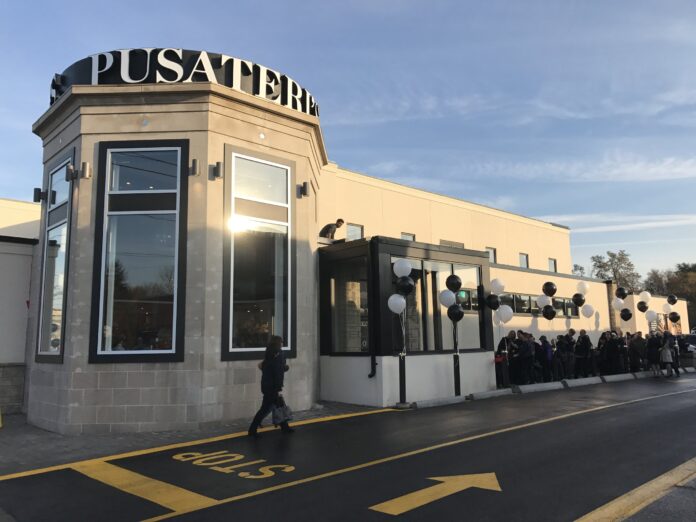
Upscale Toronto-based grocery retailer Pusateri’s Fine Foods reopened its flagship store last Friday, located at 1539 Avenue Road in Toronto. The 15,000 square foot store, designed by Montreal-based GH+A, brings Pusateri’s original store up-to-par with its new locations across the Greater Toronto Region.

The reopening follows a devastating fire that closed the store in August of last year. The team at Pusateri’s worked hard over the past several months to bring the store back to life, as the company has been eager to reopen its doors to its loyal clientele. 

An excited crowd of over 100 people stood outside the store the morning of the opening. The first 500 guests in line were treated to a Pusateri gift bag, containing Pusateri branded t-shirts, and an assortment of grocery offerings including coconut water, yogurt-covered pretzels, and biscotti. 

The Pusateri family arrived for the 9am ribbon cutting, alongside a trendy and stylish Mr. and Mrs. Claus to celebrate the upcoming holiday season. As the gates open, a long line of shoppers gathered inside the store to explore the new changes to the space.

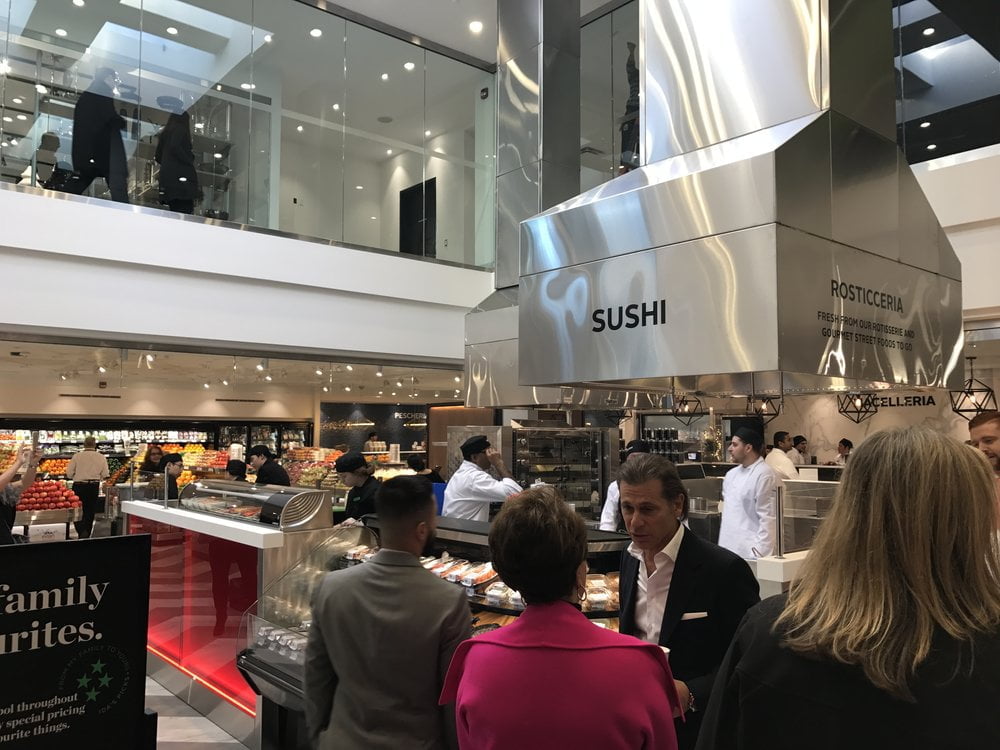
In the store, customers are greeted by a large two-storey atrium, featuring an impressive lighting addition that rises above Pusateri’s Cafe. Found here are artisanal baked goods including croissants, danishes, cakes, and macarons. A variety of different coffee and espresso drinks are available to order – with the same friendly and familiar service that was here before the renovation.

The finishings at Pusateri’s are top notch. White and grey patterned marble floors line the entire store, with rich wood fixtures and detailing giving the grocery store a sophisticated feel.

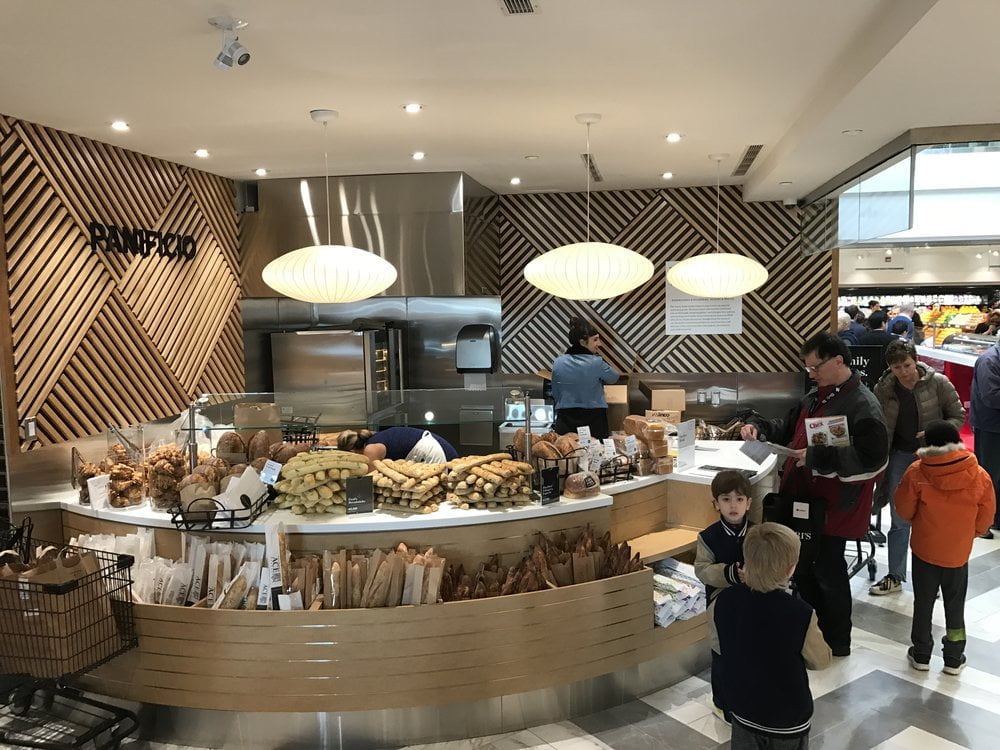
Just to the right of the cafe area lies the Pasticceria, where a selection of cakes and pies can be found. Fresh loaves and baguettes of bread are baked right in front of customers in Pusateri’s Panifico section.

The renovated location improves on what Pusateri’s flagship location had before. A new booth at Pusateri’s is a live cooking area, called the Rosticceria, featuring gourmet fresh foods and rotisserie items available for purchase. This cooking area can be found inside their new food hall at Saks Fifth Avenue on Queen Street West.

This area also has an elevated array of handmade sushi offerings, hand-rolled by expert sushi chefs.

The second floor offers a view over the grab-and-go food area. On this level, customers will find Christmas merchandise (seasonal) available for purchase, as well as customer washrooms. 

This floor will also house a Pusateri branded full-service Italian restaurant, set to open early next year, but was not ready in time for opening day.

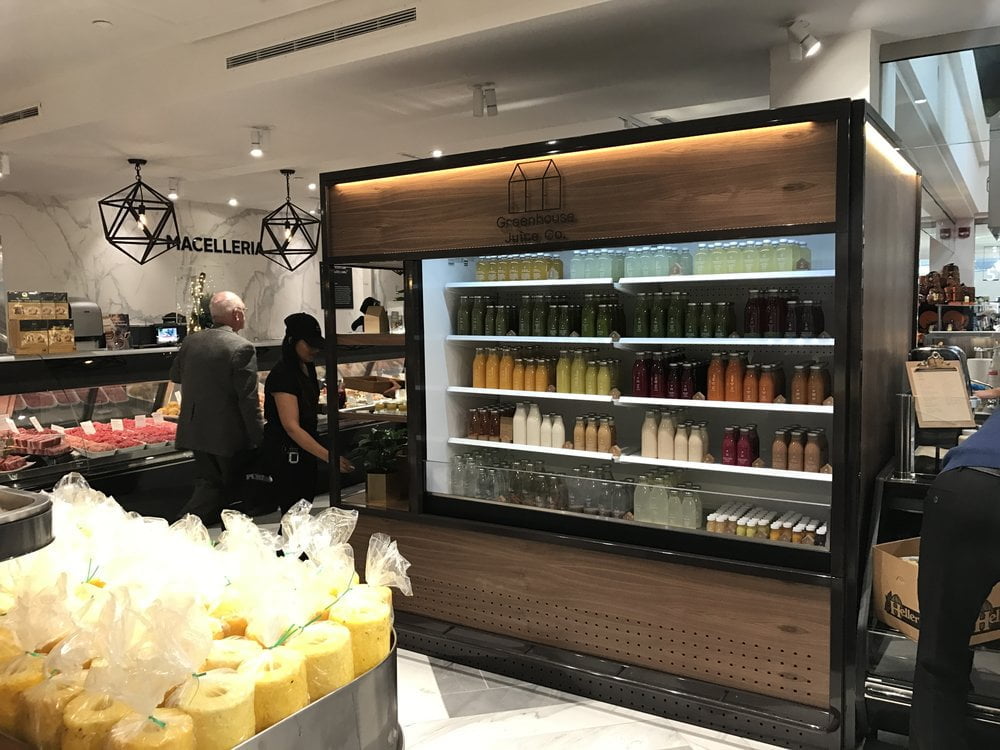
Pusateri’s Fine Foods is also continuing its relationship with Toronto-based Greenhouse Juice Co. The juice company has opened a shop-in-shop featuring all varieties of their cold pressed juices. Greenhouse representatives kicked off the launch with complimentary samples of their ‘East of Eden’ and ‘Wake Up’ juices to an enthusiastic crowd. 

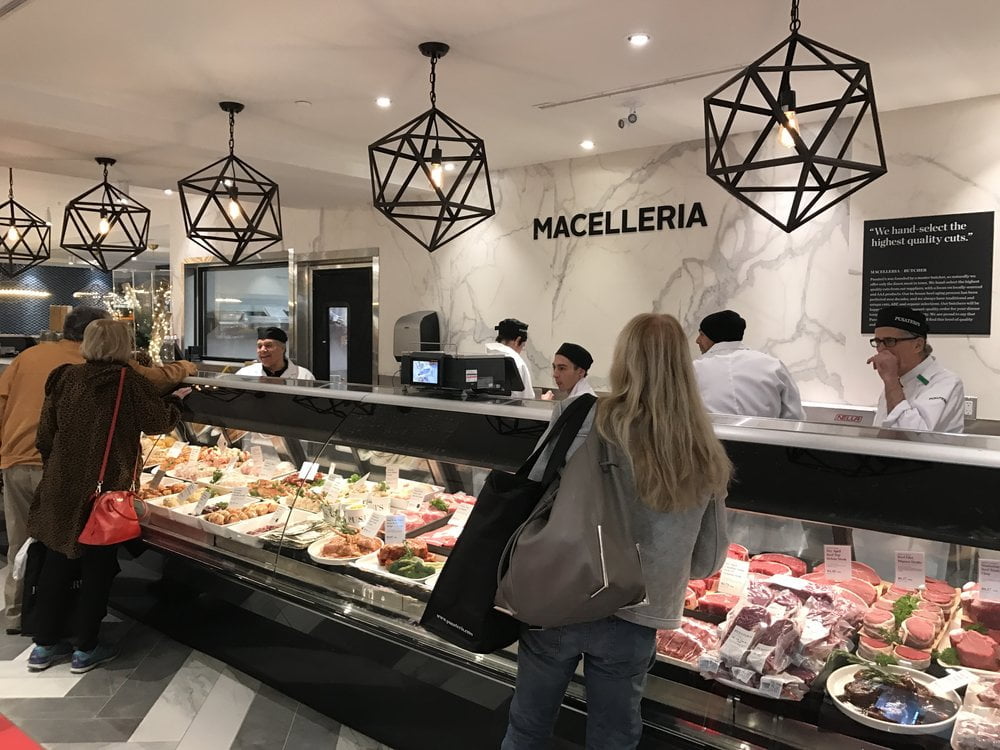
Pusateri’s Avenue Road has added over 100 new products to their grocery offerings. An increased selection of local and international cheeses, bolstered deli meat offerings, and an expanded selection of breads were made possible by the added space from the renovation. The product offering aligns with their offerings at their other locations, focusing on a selection of foods not typically found at big box grocery retailers.

This location was Pusateri’s first store, and has been operating for nearly 30 years. The company has since expanded to include grocery locations in Toronto’s affluent Yorkville area, Toronto’s Bayview Village, and at Oakville’s RioCan Oakville Place. Pusateri’s also operates two food halls within Saks Fifth Avenue at Toronto’s CF Sherway Gardens and at CF Toronto Eaton Centre-Queen Street.

Study Finds ‘Generation Z’ to be a Driving Force for Holiday Consumption [With Video]

A new study from HRC Retail Advisory finds that ‘Generation Z’, that is, youth between the ages of 10 and 17, will have a significant influence in holiday spending patterns in Canada this year. The study notes that there’s a generational shift in consumers, with younger shoppers having different expectations of how they wish to interact with retailers. As well, Generation Z is having a profound influence on their Millennial parents, including dictating household spending and consumption patterns. 

“Generation Z has significant influence over household purchases,” said Farla Efros, President of HRC Retail Advisory. “Retailers must appreciate the different expectations and habits of this group,  develop and execute strategies that address their needs in order to stay competitive with this increasingly important consumer segment.”

The Generation Z consumer is heavily influenced by friends, bloggers and social media, noted Ms. Efros, who coordinated a study on behalf of HRC Advisory by surveying 3,100 participants  in the US and Canada on their shopping habits, attitudes, and the influences driving their purchasing decisions. Significant findings of the survey include the following: 

Malls are not dead, and are being shopped differently: According to the study, malls are still popular, especially with Generation Z shoppers. While more than 60% of all survey respondents said they visit a mall or shopping centre at least once a month, 72% of Generation Z respondents (youth aged 10-17) and Millennial parents with Generation Z-aged children say they do so (having a specific mission and in search of specific items). Generation Z shoppers also spend more time at the mall and they visit more stores, according to the study, with 22% of frequent Gen Z visitors saying their typical trip to a mall is more than 90 minutes and they visit, on average, four-to-five targeted retailers.  

Gift cards are the most desired gift: Among the 3,100 study respondents with a preference, 62% would rather receive a gift card than an actual gift. Among Gen Z children, this number climbs to 69% — further indicating their desire to make their own purchase decisions. The majority of respondents, particularly parents, plan to include gift cards among their holiday purchases and remarkably, among Millennials that have children and earn more than $150,000 per year, 96% plan to include gift cards in their holiday shopping.  

Social influences/media are changing shopping behaviours: Younger shoppers are more influenced by their peers and social influences now than ever, according to the study. Generation Z shoppers tend not to be strongly influenced by celebrity endorsements from athletes, actors and singers, contrary to what some may expect. Rather, more than 61% of their purchase decisions are most strongly influenced by friends, with 13% being influenced by bloggers. As well, social media is a significant influencer, with about 50% of Millennial and Generation Z shoppers surveyed saying that they use social media while they shop. Of their social media time, most is on Facebook (61%), followed by YouTube (38%) and Instagram (24%).

Amazon is the most popular shopping site – by far: In the study, 66% of Millennials say that they place an online order at least once a month and of those, 79% purchased on Amazon. Other popular sites include Ebay, Groupon and Apple, respectively.

Ms. Efros said, “As Generation Z begins to gain a foothold in the consumer spending environment, and Millennials mature, their expectations are transforming the retail landscape. In order for retailers to remain competitive, they must begin to develop a balanced approach to serving Baby Boomers and Generation X  and Millennials who still have the great majority of the spending budget – while positioning themselves to best serve the emerging and future consumer segments who have an attention span of seven seconds, have on average five devices and prefer to be spoken to with short bursts using emojis, for longer term success.